Generator Power Ratings Explained: ISO 8528-1 Complete Guide
The mining operation in northern Chile acquired a “1000 kW diesel generator” to serve their remote gold extraction site, which they believed would provide them with dependable power for multiple years. The engine reached total failure after eight months. The investigation found the equipment was incorrectly assessed because it had an ESP rating that allowed operation for only 200 hours each year. The mine had run for 4,000 hours. The warranty became invalid. The repair bill exceeded $80,000. The lesson was clear that generator power ratings function as engineering boundaries that protect your investment.
Any facility generator specification requires power rating knowledge as essential information. Understanding power ratings enables you to choose a power solution that provides reliable performance for multiple decades instead of selecting one that will break down and render your business powerless.
The good news? International standards define generator power ratings through a written system. You will learn to understand the four ISO 8528-1 ratings (ESP, PRP, LTP, and COP), load factor calculation, and consequences of rating misapplication and correct rating selection for specific duty cycles at the end of this guide.
What Are Generator Power Ratings and Why Do They Matter?
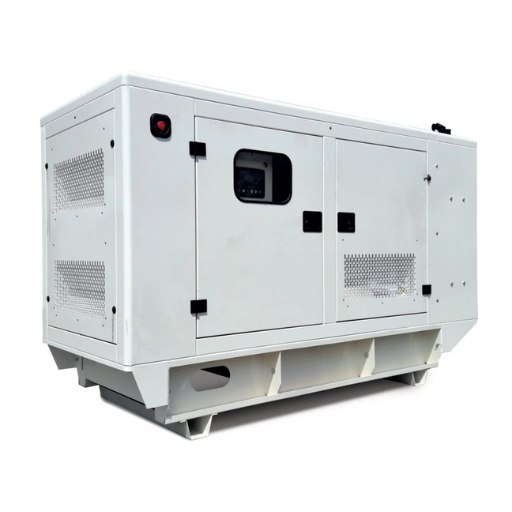
Generator power ratings establish standard classifications that describe the operational design of generator sets according to their expected annual operation time and load pattern fluctuations, and their typical load usage. The ratings function as engineering specifications which determine component dimensions and cooling system requirements, maintenance schedules and warranty protection.
The ISO 8528-1 Standard
The International Organization for Standardization (ISO) publishes ISO 8528-1, the global standard for “Reciprocating internal combustion engine driven generating sets.” The standard establishes four power ratings that all major generator manufacturers, including Caterpillar, Cummins, MTU, and Kohler, must follow.
Why does this matter to you? Because ISO 8528-1 ensures that a 500 kW generator from any reputable manufacturer meets the same operational specifications. The system establishes international standards that guide industrial generator specifications and purchasing and operational practices throughout the world.
At Shandong ZC POWER, every generator we manufacture is tested and certified to ISO 8528-1 standards in our national standard testing center. The performance of our unit, which we designate as “PRP 500 kW,” will fulfill its performance requirements when used under defined conditions according to our assurances.
Why Rating Selection Affects Your Investment
Selecting the wrong generator rating creates a cascade of problems:
Warranty Implications: Using an ESP-rated generator for continuous prime power operation voids virtually all manufacturer warranties. When the engine fails prematurely, you bear the full replacement cost.
Operational Lifespan: A standby generator pressed into prime service will experience accelerated wear, increased maintenance, and significantly shortened service life—often failing within months rather than decades.
Total Cost of Ownership: The “cheaper” standby unit becomes exponentially more expensive when you factor in premature replacement, emergency repairs, and operational downtime.
The Four ISO 8528-1 Power Ratings Explained
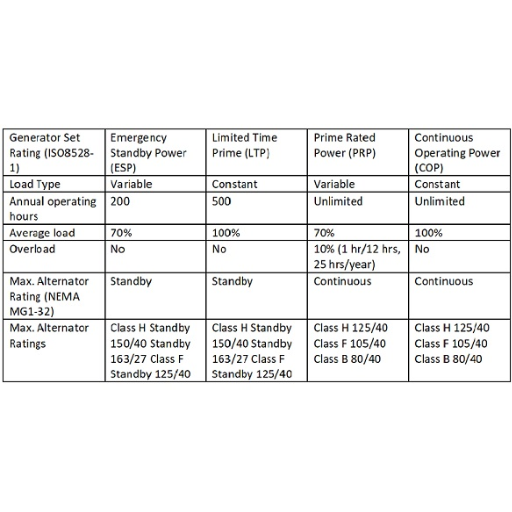
ISO 8528-1 defines four power ratings based on three criteria: annual runtime expectation, load variability (constant vs. variable), and permissible average power (load factor).
ESP – Emergency Standby Power
Definition: Power available for emergency use during a utility power outage
Key Specifications:
- Maximum Runtime: 200 hours per year (some manufacturers allow up to 500 hours)
- Load Type: Variable load
- Average Load Factor: Must not exceed 70% of ESP rating over 24 hours
- Overload Capability: None—100% of rated capacity is the absolute maximum
- Hardware: Standard-duty components sized for intermittent operation
Typical Applications:
- Hospital life safety systems
- Data center backup power
- Commercial building emergency systems
- Fire protection and alarm systems
- Elevator emergency power
Critical Limitation: ESP generators are strictly for emergency backup. They cannot be used for peak shaving, load management, or planned operational power. Using an ESP unit for regular power supply—even if within the 200-hour annual limit—constitutes misuse and voids warranties.
PRP – Prime Rated Power
Definition: Power available for unlimited hours where a utility grid is unreliable or unavailable
Key Specifications:
- Maximum Runtime: Unlimited hours per year
- Load Type: Variable load (fluctuating demand)
- Average Load Factor: Must not exceed 70% of PRP rating over 24 hours
- Overload Capability: 10% overload permitted for 1 hour in every 12-hour period (maximum 500 hours per year at overload)
- Hardware: Heavy-duty components with enhanced cooling and lubrication systems
Typical Applications:
- Remote mining operations
- Off-grid construction sites
- Oil and gas installations
- Agricultural operations without grid access
- Areas with unreliable utility power
Key Advantage: PRP is the most flexible rating for off-grid applications. It accommodates variable loads—meaning your power demand can fluctuate throughout the day without damaging the generator. The 10% overload capability provides headroom for temporary demand spikes.
LTP – Limited-Time Running Power
Definition: Power available for a limited duration under constant load conditions
Key Specifications:
- Maximum Runtime: 500 hours per year
- Load Type: Constant load (steady, non-varying)
- Average Load Factor: Up to 100% of LTP rating
- Overload Capability: None
- Hardware: Similar to ESP but with components sized for 100% load operation
Typical Applications:
- Peak shaving operations (reducing demand charges)
- Interruptible load curtailment programs
- Seasonal power needs
- Parallel operation with utility under contractual agreements
Key Distinction: LTP bridges the gap between ESP and PRP/COP. It allows longer runtime than ESP but does not provide the unlimited hours or variable load flexibility of PRP. LTP is specifically for applications where the generator runs under steady load for defined periods.
COP – Continuous Operating Power
Definition: Power available continuously for unlimited hours under constant load
Key Specifications:
- Maximum Runtime: Unlimited hours per year
- Load Type: Constant load (steady, non-varying)
- Average Load Factor: Up to 100% of COP rating
- Overload Capability: Strictly prohibited—no overload permitted
- Hardware: Maximum durability design with continuous-duty components
Typical Applications:
- Base-load power generation
- Industrial processes requiring uninterrupted power
- Remote area power supply (RAPS)
- Continuous grid export agreements
- Data centers with isolated power systems
Key Distinction: COP represents the highest durability rating. These generators are engineered for heavy-duty continuous operation where the load remains relatively constant. They typically feature enhanced cooling systems, heavy-duty alternators, and robust engine blocks designed for 24/7 operation.
Generator Rating Hierarchy: Understanding the Relationships
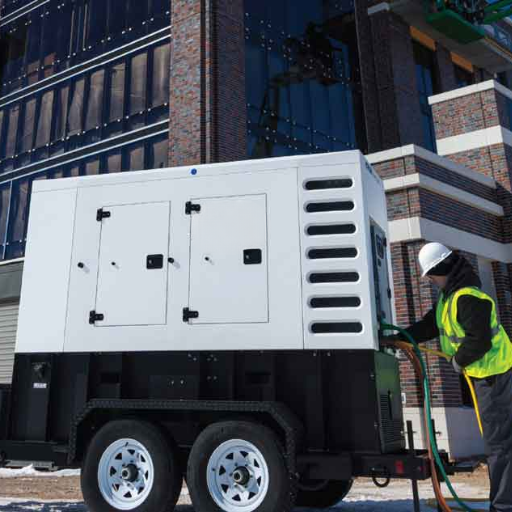
For the same physical generator hardware, power ratings follow a consistent hierarchy:
COP < PRP < LTP < ESP
This means:
- A generator rated 1000 kW ESP might only be 800 kW PRP
- That same unit might be 700 kW COP
- The hardware is identical—the rating reflects operational limits, not physical differences
Practical Example:
| Rating Type | Rated Output | Actual Hardware Capability |
|---|---|---|
| ESP | 1000 kW | 1000 kW max (200 hrs/year) |
| PRP | 800 kW | 800 kW average (unlimited hours) |
| LTP | 900 kW | 900 kW constant (500 hrs/year) |
| COP | 700 kW | 700 kW continuous (unlimited) |
Why This Matters: If your application requires 800 kW of continuous base-load power (COP), purchasing a generator rated “1000 kW” without verifying the rating type could leave you significantly underpowered. That 1000 kW rating might be ESP—which actually delivers only ~700 kW in continuous operation.
Always verify the specific rating type (ESP/PRP/LTP/COP), not just the kilowatt number on the nameplate.
How to Calculate Average Load Factor
Load factor is a critical concept for generator power ratings. It represents the ratio of average power demand to maximum power demand over a defined period.
Load Factor Formula
The basic formula for calculating load factor is:
Load Factor = Average Load ÷ Maximum DemandAlternatively, using energy consumption:
Load Factor = kWh Consumed in Period ÷ (Peak Demand kW × Hours in Period)Example Calculation:
A 500 kW PRP generator operates as follows over a 24-hour period:
- 8 hours at 400 kW
- 10 hours at 250 kW
- 6 hours at 150 kW
Total energy consumed: (8 × 400) + (10 × 250) + (6 × 150) = 3,200 + 2,500 + 900 = 6,600 kWh
Average load: 6,600 kWh ÷ 24 hours = 275 kW
Load factor: 275 kW ÷ 500 kW = 0.55 or 55%
ISO 8528 Load Factor Requirements
ISO 8528-1 specifies maximum load factors for each rating:
| Rating | Maximum Average Load Factor | Implication |
|---|---|---|
| ESP | 70% over 24 hours | Can run at 100% briefly, but average must stay ≤70% |
| PRP | 70% over 24 hours | Variable loads okay, but 24-hour average ≤70% of PRP rating |
| LTP | 100% | Designed for constant load at full rating |
| COP | 70-100% | Can run continuously at 70-100% of rated capacity |
Why Exceeding Load Factor Limits Damages Engines:
Running consistently above the rated load factor causes:
- Excessive thermal stress on engine components
- Accelerated wear on pistons, rings, and cylinder liners
- Overheating of alternator windings
- Reduced oil life and increased contamination
- Premature failure of cooling system components
Conversely, running significantly below the load factor (under 30% for extended periods) causes “wet stacking”—unburned fuel accumulation in the exhaust system, leading to carbon buildup and poor performance.
Common Mistakes and Warranty Consequences
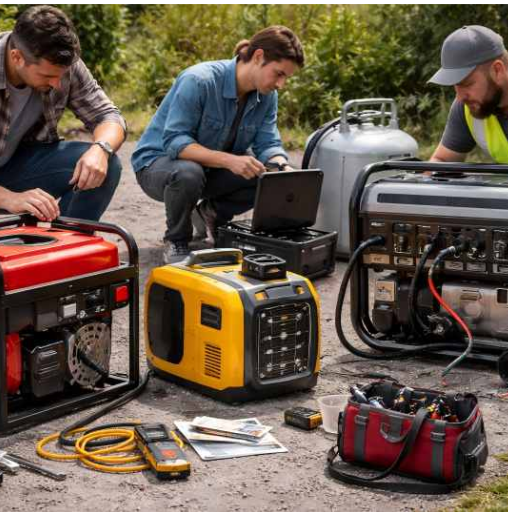
Understanding generator power ratings is only half the battle. Avoiding these common mistakes protects your investment and ensures warranty coverage remains intact.
Mistake #1: Using Standby Rating for Prime Power
A construction company in West Africa purchases a “500 kW diesel generator” for their remote site. The supplier does not specify the rating type. The company assumes it is suitable for continuous operation. The engine suffered complete failure after six months of operation.
The Investigation: The unit was ESP-rated. The company had operated it 3,000 hours in six months—15 times the annual limit. The cooling system, which had been designed for intermittent operation, failed to manage continuous thermal load requirements. The crankshaft bearings failed because thermal stress had built up to dangerous levels.
The Consequence: The manufacturer denied the warranty claim citing rating plate violation. The construction company spent $45,000 to replace the engine and experienced two weeks of operational downtime.
The Lesson: Always verify the rating type in writing before purchase. An ESP unit costs less than PRP because it uses lighter-duty components. If the price seems too good to be true for continuous operation, verify the rating.
Mistake #2: Exceeding Hour Limits
The Scenario: A hospital operates its ESP-rated emergency generator for monthly testing which lasts two hours and three actual outages which total 18 hours. The total operational time reaches 42 hours which remains below the 200-hour threshold.
The Problem: The generator operated for 400 hours because they used it to “peak shave” during the heat wave which reduced their electricity demand charges. Total annual hours: 442.
The Consequence: The warranty became void because the total operating time reached the maximum limit although the generator remained operational. The deferred maintenance which should have been handled during warranty service intervals led to generator failure when an actual emergency occurred in month 14.
The Lesson: Maintain strict records of all operational time. ESP generators are for emergencies only-not operational cost savings.
Mistake #3: Ignoring Load Factor Limits
The Scenario: A data center specifies a 1000 kW PRP generator for their backup power. Their generator operates at 950 kW continuous load during an extended outage for 72 hours which technically violates the 1000 kW rating.
The Problem: PRP ratings assume a 70% average load factor. The system reaches thermal design limits when it operates at 95% rated capacity during extended time periods. The alternator overheats. The engine cooling system cannot maintain acceptable temperatures.
The Consequence: The generator automatically shuts down on high temperature. The data center loses power. The analysis of post-failure showed that the unit was too small to handle the actual required duty cycle operations.
The Lesson: For continuous high-load applications, specify COP (Continuous Operating Power) rating, not PRP. The 30% headroom in PRP is not safety margin—it is a requirement for variable load averaging.
Selecting the Right Rating for Your Application
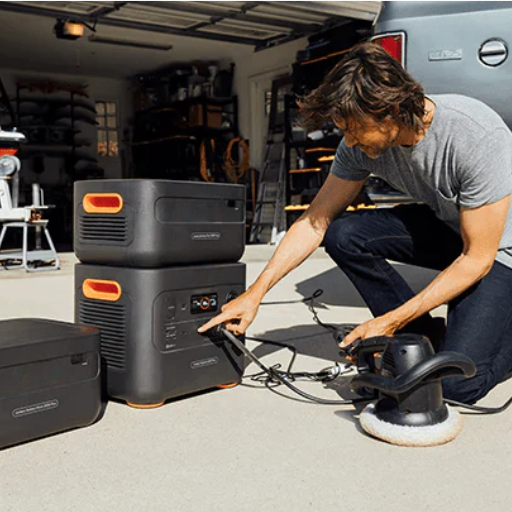
Use this decision framework to select the correct ISO 8528-1 rating:
Decision Tree
Question 1: Will utility power be available as the primary source?
- Yes → Proceed to Question 2
- No → You need PRP or COP (skip to Question 3)
Question 2: How many hours per year will the generator operate?
- Less than 200 hours → ESP (Emergency Standby Power)
- 200-500 hours → LTP (Limited-Time Power) or PRP
- More than 500 hours → PRP or COP
Question 3: Will the electrical load be constant or variable?
- Constant (steady demand) → COP (if >70% load) or PRP (if <70% load)
- Variable (fluctuating demand) → PRP (Prime Rated Power)
Question 4: Is overload capacity needed for temporary demand spikes?
- Yes → PRP (allows 10% overload for limited duration)
- No → ESP, LTP, or COP depending on other factors
Industry-Specific Recommendations
Hospitals and Healthcare:
- Rating: ESP with N+1 redundancy
- Rationale: Emergency use only; life safety requires backup to the backup
- Special considerations: AMF (Auto Mains Failure) panels for automatic switching; 10-second start requirement
Data Centers:
- Rating: COP or 70% PRP
- Rationale: High reliability requirement; potential for extended outages
- Special considerations: Integration with UPS systems; 10-15 minute battery bridge time for generator startup
Mining and Construction:
- Rating: PRP
- Rationale: Remote locations; variable equipment loads; unlimited runtime requirement
- Special considerations: High-altitude derating; dust filtration; trailer mounting for mobility
Manufacturing (Grid-Connected):
- Rating: ESP
- Rationale: Backup for outages only; short-duration operation
- Special considerations: Motor starting surge calculations; selective load shedding
Peak Shaving/Utility Programs:
- Rating: LTP
- Rationale: Defined operational hours; constant load during operation
- Special considerations: Parallel operation with utility; control systems for automatic dispatch
How Manufacturers Test and Certify Ratings
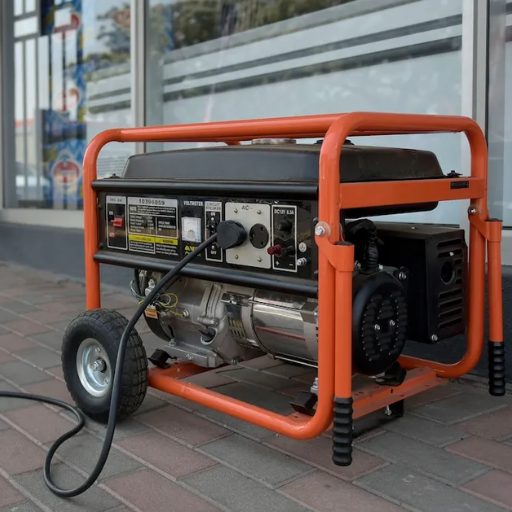
Understanding how manufacturers validate power ratings helps you evaluate supplier claims and ensure you receive genuine, certified equipment.
Factory Testing Procedures
Reputable manufacturers conduct rigorous testing before shipment:
Load Bank Testing: Every generator undergoes full-load testing at rated capacity for a defined period (typically 1-4 hours). This validates:
- Actual kW output matches nameplate rating
- Voltage and frequency stability under load
- Cooling system performance
- Exhaust temperature within specifications
ISO 8528-5 Transient Response Testing: For applications requiring fast load acceptance (data centers, hospitals), manufacturers test:
- Voltage dip during load application
- Frequency dip and recovery time
- Ability to handle step loads (sudden large load increases)
Documentation and Certification: After successful testing, manufacturers issue:
- Test certificates showing actual performance data
- Nameplates stamped with certified ratings
- Factory acceptance test (FAT) reports
ZC POWER’s National Testing Center Advantage
At Shandong ZC POWER Electromechanical Co., Ltd., our commitment to rating integrity goes beyond standard practice:
Every Unit Tested: Our organization performs complete load testing for all generators which leave our facility at our national standard testing center because small assembly shops only conduct testing on selected parts.
Guaranteed Rating Compliance: When we label a unit “PRP 500 kW,” we verify it delivers 500 kW continuously under ISO 8528-1 conditions. No exceptions. No guesswork.
Custom Rating Certification: For specialized applications, we can certify custom ratings (e.g., high-altitude derated ratings, enhanced cooling for tropical environments) with full documentation.
Traceable Documentation: Every unit ships with a unique test certificate showing the actual load test results, ambient conditions during testing, and certified ratings.
This testing rigor is why global project contractors, hospital facility managers, and mining operators trust ZC POWER for critical power applications.
Downloadable ISO 8528 Rating Selection Checklist
Ready to apply these principles to your generator selection? Download our comprehensive ISO 8528 Rating Selection Checklist (PDF) including:
- Decision tree flowchart for rating selection
- Load factor calculation worksheet with formulas
- Duty cycle analysis template
- Warranty protection guidelines
- Specification checklist for vendor comparison
Conclusion
Generator power ratings are not arbitrary numbers—they are engineering specifications that protect your investment and ensure reliable performance. Understanding the four ISO 8528-1 ratings (ESP, PRP, LTP, and COP) empowers you to select the right generator for your specific duty cycle.
Key takeaways:
- ESP is for emergency backup only (≤200 hours/year)—never use for continuous operation
- PRP provides unlimited hours with variable load flexibility—ideal for off-grid applications
- LTP bridges the gap for limited-duration constant load applications
- COP delivers maximum durability for continuous base-load operation
- Load factor (average load ÷ maximum demand) must stay within ISO 8528 limits to prevent damage
- Rating misapplication voids warranties and causes premature, expensive failures
The proper understanding of rating selection will help you avoid a $50000 mistake, which occurs when someone selects the wrong rating. The right rating selection will deliver three benefits, which include dependable service for multiple decades, warranty protection, and continuous operational capability.
Do you require expert assistance for selecting your rating? Our team of 80+ technical engineers at Shandong ZC POWER Electromechanical Co., Ltd. will analyze your duty cycle, load profile, and operational requirements to recommend the optimal ISO 8528-1 rating. Your power solution will deliver exactly what your application needs because we have 25 years of manufacturing excellence and a national standard testing center that certifies every unit.