Silent Generator: Complete Technical Guide 2026 [How Noise Reduction Technology Works]
The Melbourne hospital received a $50,000 fine in 2021 because local residents reported that their emergency generator testing activities produced noise violations during its monthly operational tests. The generator operated perfectly because its 85-decibel sound output exceeded the residential zone limit of 65 decibels which the city established. The solution required people to learn about the different acoustic characteristics which exist between various types of backup power systems.
The generator market creates confusion through its contradictory claims about “quiet” and “silent” operation because noise-sensitive environments require special evaluation methods for backup power systems. Manufacturers disclose decibel ratings without providing details about the specific circumstances under which they performed their measurements. Marketing materials need to provide clear distinctions between inverter technology used in portable devices and sound-attenuated enclosures which industrial units use. The selection process needs to follow proper procedures because incorrect choices lead to serious problems which include regulatory penalties and neighborhood conflicts and unsuccessful installation projects.
The ZC Power engineering guide shows how silent generators function and which noise reduction methods exist and which acoustic solutions correctly match your needs. Power system manufacturing experience spanning 25 years across more than 100 countries allows us to help you comprehend essential concepts which result in compliant and budget-friendly investments.
Wondering about the full scope of electric generators? (Read Electric Generators: Complete Guide to Types, Applications & Selection) for all-around insights into their categories, uses and selection tips.
What Is a Silent Generator?

A silent generator is a power generation system that generates lower noise output through its built-in sound dampening features when compared to traditional open-frame generators. Professional silent generators produce noise levels that meet the strict requirements of residential areas and commercial spaces and healthcare facilities because no generator can achieve absolute silence.
Key Characteristics
Silent generators occupy distinct categories based on technology and scale:
- Target Noise Levels: 50-75 decibels at 7 meters (compared to 75-95 dB for standard generators)
- Sound Attenuation Methods: Enclosed canopies, inverter technology, acoustic insulation, vibration isolation
- Applications: Hospitals, data centers, residential areas, urban commercial sites, events
- Certification Requirements: Often must meet specific noise regulations (OSHA, EU directives, local ordinances)
How Decibel Ratings Work
People need to understand the decibel scale because it helps them assess generator noise claims. Decibels measure sound intensity on a logarithmic scale, meaning small numerical changes represent large perceived differences.
Key Principles:
- Logarithmic Scale: Every 10 dB increase represents a tenfold increase in sound intensity
- Perceived Loudness: Every 10 dB reduction equals approximately 50% perceived loudness reduction
- Measurement Standards: Industry standard measures at 7 meters in free field conditions (no reflective surfaces)
Common Sound References:
- Normal conversation: 60 dB
- Vacuum cleaner: 70 dB
- Lawn mower: 85 dB
- Heavy traffic: 80-90 dB
The case of David Chen shows what occurred to him after he worked as a data center operations manager in Singapore. He installed a standby generator that emitted sound at 78 dB because he did not understand how the logarithmic scale works. The noise from the property line reached 7 meters, which exceeded the city’s 65 dB nighttime limit. Neighbors filed complaints within the first month of operation. David discovered that 13 dB of sound exceeded the legal limit, which caused the generator to produce sound that exceeded double the allowed level, which required him to install new sound barriers through expensive retrofitting.
Types of Silent Generators
| Type | Noise Level | Best For | Size Range |
|---|---|---|---|
| Inverter Portable | 50-60 dB | Camping, RV, light home backup | 1-7 kW |
| Silent Portable | 60-70 dB | Residential, small commercial | 5-15 kW |
| Silent Diesel (Canopy) | 65-75 dB | Commercial, industrial | 10-3,000+ kW |
| Super Silent | 55-65 dB | Hospitals, data centers, residential | 10-2,000 kW |
Curious about inverter generator fundamentals and selection timing? (Read Inverter Generator: Complete Technical Guide for 2026 [How It Works + When to Choose]) for clear explanations of its working principle and applicable scenarios.
How Silent Generators Work: Sound Attenuation Technology

Silent generators use various engineering fields to create less noise through their design which includes acoustic enclosures and exhaust silencing and cooling system design and vibration isolation systems. The technologies need to be understood by you because they help you assess manufacturer claims and make proper solution choices.
Sources of Generator Noise
Generator noise originates from four primary sources:
Engine Mechanical Noise
The engine block transmits mechanical noise produced by combustion events and piston movement and valve actuation and gear trains which then spreads into the surrounding environment as airborne sound.
Cooling Fan Airflow
High-speed cooling fans generate two types of sound because they create a strong airflow that passes through radiators and their blades produce noise at their outermost edges.
Exhaust Gas Pulsation
Pressure waves from cyclic exhaust valve opening create pulsating gas flow that generates significant noise at the exhaust outlet.
Structural Vibrations
Engine vibration transmits through mounting systems to the generator frame and surrounding structures, causing them to radiate noise.
Sound Attenuation Enclosure Design
Professional silent generators use engineered enclosures that block, absorb, and redirect sound energy while maintaining proper cooling and maintenance access.
Multi-Layer Acoustic Construction:
- Outer Steel Shell: Weather-resistant galvanized or powder-coated steel (typically 1.5-2.0 mm gauge) provides structural integrity and weather protection
- Acoustic Insulation Layer: Mineral wool, fiberglass, or specialized acoustic foam (50-100 mm thickness) absorbs sound energy through porous material interaction
- Perforated Inner Liner: Protects insulation while allowing sound penetration into absorption layers
- Vibration Isolation Mounts: Rubber or spring mounts decouple the generator from the enclosure frame and foundation
Engineered Air Pathways:
Airflow for cooling and combustion must enter and exit the enclosure without creating noise leakage. This requires:
- Acoustic Louvers: Angled blade designs that block direct sound paths while allowing air passage
- Baffle Chambers: Multi-turn air chambers that absorb sound through repeated reflection
- Intake/Exhaust Ducting: Lined ducts that attenuate noise while directing airflow
Exhaust Silencing Technology
Exhaust noise represents the dominant noise source in diesel generators, requiring specialized silencing systems.
Industrial-Grade Mufflers:
- Chamber-Type Mufflers: Use expansion chambers and internal baffles to reflect and cancel sound waves
- Absorptive Mufflers: Packaged with acoustic material that absorbs high-frequency noise
- Combination Designs: Integrate both reflective and absorptive elements for broadband noise reduction
Spark Arrestors:
Required for applications in forested or hazardous areas, these devices also contribute to exhaust noise reduction through tortuous flow paths.
Cooling System Acoustics
Cooling system noise reduction requires balancing thermal performance with acoustic control.
Low-Speed High-Volume Fans:
Larger diameter fans operating at lower RPM move equivalent air volume with significantly less noise than smaller high-speed alternatives.
Ducted Cooling Systems:
Enclosed ductwork with acoustic lining directs cooling air while containing fan noise within the attenuation system.
Vibration Isolation Technology
Vibration transmitted to surrounding structures can account for 20-30% of perceived generator noise.
Engine Mounting Systems:
- Rubber Mounts: Vulcanized rubber elements in metal housings provide cost-effective isolation for smaller generators
- Spring Mounts: Coil spring isolators with damping elements for larger industrial units
- Inertia Bases: Concrete-filled steel bases that increase mass and reduce vibration transmission
Flexible Connections:
Exhaust systems and fuel lines use flexible connections to prevent vibration transmission through piping.
Inverter Technology for Portables
Inverter generators achieve quiet operation through a different approach: variable speed operation matched to electrical load.
Rather than running at constant 3,600 RPM like conventional generators, inverter units use microprocessor control to adjust engine speed based on demand. At light loads, the engine runs slower, dramatically reducing mechanical noise. Combined with compact enclosed designs, this produces the quietest generator technology available (50-60 dB).
Silent Generator Decibel Comparison
| Generator Type | Noise Level (dB at 7m) | Comparable To | Applications |
|---|---|---|---|
| Normal conversation | 60 dB | Reference point | – |
| Inverter portable | 50-60 dB | Quiet conversation | Camping, RV |
| Super silent diesel | 55-65 dB | Normal conversation | Hospitals, residential |
| Standard silent | 65-75 dB | Vacuum cleaner | Commercial, light industrial |
| Open-frame diesel | 75-85 dB | Heavy traffic | Construction, agriculture |
| Standard portable | 70-90 dB | Lawn mower | Emergency use only |
Applications Requiring Silent Generators

Healthcare Facilities
Hospitals and healthcare facilities operate under the strictest noise requirements. Patients require quiet environments for recovery, and emergency generators must start without disrupting care.
Typical Requirements:
- Maximum 65 dB at property lines (often 55-60 dB for premier facilities)
- 24/7 operation capability for critical systems
- Vibration isolation to prevent transfer through building structure
- Compliance with Joint Commission and CMS standards
Considerations:
Monthly testing must not disturb patients or violate noise ordinances. Super silent generators (55-65 dB) are typically required for urban hospitals.
Data Centers
Urban data centers face dual challenges: neighbor proximity and technician working environments. Multiple generators compound noise issues.
Requirements:
- Property line compliance in mixed-use areas
- Acceptable noise levels for technician access during outages
- Coordinated operation of multiple units without additive noise
- Vibration control to protect sensitive equipment
Residential and Urban
Homeowners and urban businesses face increasing scrutiny of generator noise through HOA rules and municipal ordinances.
Common Regulations:
- Daytime limits: 55-65 dB at property lines
- Nighttime limits: 50-55 dB (often 10 dB lower than daytime)
- Distance calculations from property boundaries
- Permit requirements for permanent installations
Practical Impact:
Silent generators enable backup power where standard units would face neighbor complaints or code violations. The 20-30% price premium often proves justified by avoiding conflicts and enabling installation approval.
Commercial and Events
Outdoor events, film production, and retail applications require power without disrupting the experience.
Applications:
- Outdoor Events: Weddings, concerts, festivals requiring sub-70 dB operation
- Film/TV Production: Strict sound stage requirements during location shooting
- Retail/Hospitality: Background power without customer impact
- Military/Defense: Stealth requirements for forward operating bases
Remote and Wildlife Areas
Environmental compliance increasingly requires noise minimization in sensitive ecological areas.
Regulatory Drivers:
- National park noise regulations
- Wildlife disturbance studies
- Research station requirements
- Environmental impact assessments
Sizing and Selecting a Silent Generator

Power Requirements First
Before selecting based on noise level, accurately determine your electrical load requirements:
- List all equipment requiring backup power
- Record running watts for each device
- Identify starting surge requirements (typically 3-7x running watts for motors)
- Add 20% safety margin for calculation errors and future expansion
Example Calculation:
- Refrigeration: 700W running / 2,200W starting
- HVAC: 3,000W running / 9,000W starting
- Lighting: 500W
- Total: 4,200W running + 9,000W highest surge = 13,200W minimum generator size
Noise Level Requirements
Research applicable regulations before selecting equipment:
Local Ordinance Research:
- Contact municipal planning or environmental departments
- Request specific decibel limits and measurement protocols
- Determine distance requirements (property line vs. residence)
- Understand time-of-day restrictions
Measurement Methodologies:
- Standard: 7 meters from generator enclosure in free field
- Some jurisdictions measure at property lines
- Nighttime measurements often have stricter limits
- Wind conditions can affect outdoor measurements
Enclosure Options by Size
| kVA Range | Typical dB Level | Enclosure Type | Applications |
|---|---|---|---|
| 8-50 kVA | 65-75 dB | Standard silent | Small commercial, residential |
| 50-200 kVA | 68-75 dB | Enhanced silent | Mid-size commercial |
| 200-1000 kVA | 70-80 dB | Industrial silent | Large commercial, industrial |
| 1000+ kVA | 75-85 dB | Containerized | Utility, large industrial |
Location and Installation Considerations
Distance from Property Lines:
Every doubling of distance from the noise source provides approximately 6 dB reduction. Locating generators as far as possible from sensitive receptors significantly helps compliance.
Airflow Requirements:
Silent enclosures restrict airflow and require careful attention to:
- Intake and exhaust clearances
- Ambient temperature considerations
- Hot air recirculation prevention
- Maintenance access space
Foundation and Vibration Isolation:
Proper foundation design prevents structure-borne noise transmission. Concrete inertia bases with spring isolation provide the best performance for large industrial units.
Silent Generator Regulations and Compliance
United States OSHA Standards
The Occupational Safety and Health Administration regulates workplace noise exposure under 29 CFR 1910.95.
Key Requirements:
- Permissible Exposure Limit: 90 dBA over 8-hour time-weighted average
- Action Level: 85 dBA requiring hearing conservation programs
- Hearing Protection: Required above 85 dBA exposure
Generator Operator Implications:
Even “silent” generators operating at 75 dB can exceed OSHA limits for maintenance personnel working extended periods. Hearing protection requirements and exposure time limits must be calculated for maintenance activities.
European Union Noise Directives
The EU Machinery Directive (2006/42/EC) and Outdoor Noise Directive (2000/14/EC) establish noise emission standards for equipment marketed in Europe.
Key Requirements:
- Guaranteed Sound Power Level: Manufacturers must declare and guarantee sound power levels
- CE Marking: Generators must meet noise requirements for CE compliance
- Measurement Standards: Harmonized EN standards define measurement protocols
Implementation:
Professional silent generators marketed in the EU must undergo certified noise testing and display guaranteed sound power levels in decibels.
Local Noise Ordinances
Municipal noise regulations vary significantly but typically follow similar patterns.
Typical Residential Limits:
- Daytime (7 AM – 10 PM): 55-65 dB at property lines
- Nighttime (10 PM – 7 AM): 50-55 dB at property lines
- Measurement: Often at property boundary or nearest residence
Variance and Permitting:
Some jurisdictions allow temporary variances for emergency generators during actual outages while requiring compliance during testing. Permanent installations typically must comply during all operations.
Healthcare Specific Requirements
Healthcare facilities face additional regulatory layers beyond standard noise ordinances.
Joint Commission Standards:
Environment of Care standards address noise as a patient safety and comfort issue. Emergency power systems must not disrupt patient care during operation or testing.
CMS Conditions of Participation:
Medicare and Medicaid participation requires compliance with life safety codes including emergency power requirements that consider patient impact.
Silent vs Standard Generator: Cost Analysis

Initial Purchase Premium
Silent generators command price premiums reflecting additional engineering and materials.
Portable Generators:
- Inverter generators: 50-100% premium over conventional portables
- Silent portable canopies: 30-50% premium over open-frame equivalents
Industrial Generators:
- Standard sound-attenuated canopy: 20-30% premium over open type
- Super silent enclosures: 30-50% premium
- Custom acoustic solutions: 40-60% premium
Operating Cost Considerations
Fuel Efficiency:
Inverter technology in silent portable generators typically provides 20-40% better fuel efficiency than conventional constant-speed units. This efficiency gain partially offsets the higher purchase price over time.
Maintenance Access:
Enclosed generators may require slightly longer service times due to access constraints. However, the protected environment often extends component life by reducing dust, moisture, and debris exposure.
Total Cost of Ownership
| Factor | Standard Generator | Silent Generator |
|---|---|---|
| Purchase price | Lower | Higher (20-50%) |
| Compliance risk | Higher | Lower |
| Property value impact | Neutral/Negative | Positive |
| Neighbor relations | Potential conflicts | Smoother approvals |
| Operating costs | Baseline | Similar to slightly lower |
| Resale value | Standard | Premium for compliant units |
ROI Calculation:
For commercial installations, avoiding a single project delay due to noise complaints or achieving approval in noise-sensitive locations can justify the entire premium. In regulated environments, silent generators may be the only viable option.
When ZC Power Silent Diesel Generators Are the Solution
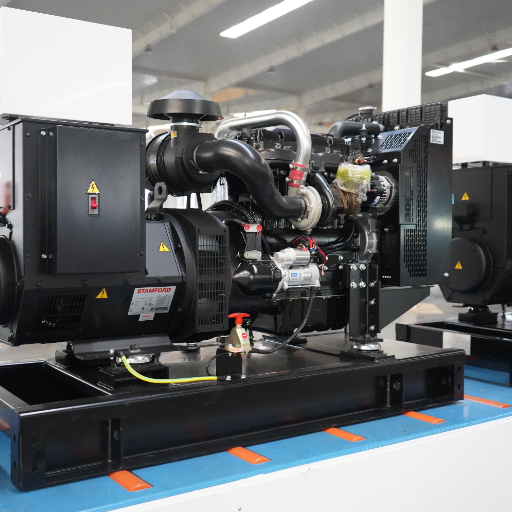
While portable inverter generators serve residential and light commercial needs, certain applications require industrial-grade silent diesel generator sets with verified acoustic performance.
Applications Requiring Industrial Silent Generators:
- Power needs exceeding 50 kVA with strict noise limits (hospitals, data centers, urban commercial)
- Urban hospitals requiring <65 dB operation at property lines with 24/7 availability
- Data centers in residential-adjacent locations with neighbor agreement requirements
- Mission-critical applications requiring both silence and industrial reliability
- International export projects requiring certified noise compliance with EU directives
ZC Power Silent Generator Advantages:
At Shandong ZC Power CO., LTD., our silent diesel generator sets combine industrial power ratings with engineered acoustic performance:
- National Standard Testing Center: Every silent generator verified for actual sound levels before shipment, not estimated
- Customizable Acoustic Enclosures: Engineered to specific dB targets from 65 dB (super silent) to 75 dB (standard silent)
- Complete Size Range: 8kVA to 4,000kVA with sound attenuation options
- 80+ Technical Engineers: Custom noise solutions for challenging installations
- 25 Years Export Experience: Compliance with global noise standards including OSHA, EU directives, and local ordinances
For hospitals, data centers, and urban commercial installations where both power reliability and noise compliance are non-negotiable, ZC Power manufactures silent diesel generators with sound levels as low as 65 dB at 7 meters, verified in our national-standard testing facility.
Maintenance Considerations for Silent Generators

Enclosure Maintenance
Air Intake/Exhaust Clearance:
Keep all air pathways clear of debris, vegetation, and obstructions. Blocked airflow causes overheating and can trigger automatic shutdowns.
Corrosion Protection:
Inspect enclosure steel regularly, particularly in coastal or industrial environments. Touch up paint damage promptly to prevent rust that can compromise acoustic performance.
Door Seal Integrity:
Acoustic door seals must remain intact for proper noise attenuation. Replace damaged or compressed seals during scheduled maintenance.
Acoustic Material Care
Insulation Protection:
Avoid damage to internal acoustic insulation during service work. Punctured or oil-soaked insulation loses absorption effectiveness and may require replacement.
Cleaning Methods:
Use vacuum extraction rather than compressed air when cleaning dust from acoustic surfaces. Compressed air can drive particles deeper into porous materials.
Replacement Schedules:
Acoustic insulation typically lasts 10-15 years in normal conditions. Consider replacement if noise levels increase over time, indicating material degradation.
Access for Service
Service Door Design:
Quality silent generators feature strategically positioned service doors that provide component access without requiring major enclosure disassembly.
Maintenance Planning:
Schedule service during daylight hours when noise limits are less restrictive, even for compliant generators, as a courtesy to neighbors.
Frequently Asked Questions
What is the quietest generator available?
Inverter generators operate at low noise levels because their top models produce sound measurements between 50 and 55 decibels during operation at 25 percent load. Super silent diesel generators equipped with advanced enclosure systems for industrial use can achieve noise levels between 55 and 65 decibels when measured from a distance of 7 meters for units that have a capacity of up to 500 kVA.
How many decibels is considered a silent generator?
Industry convention considers generators “silent” when operating at 75 dB or below at 7 meters. “Super silent” classification typically requires 65 dB or below. The 75 dB generator maintains silence when compared to an 85 dB construction generator although it fails to meet residential regulations which permit 65 dB or lower sound levels.
Can you make a regular generator silent?
The process of retrofitting sound attenuation systems to current generators fails to achieve results which match the performance of factory-built silent generators. The combination of aftermarket enclosures and upgraded mufflers together with barriers enables a noise reduction range between 5 and 15 decibels. The most effective solution for achieving major noise reduction needs requires the installation of a dedicated silent generator instead of performing extensive retrofitting work.
Are silent generators less powerful?
Silent generators deliver equivalent electrical power to standard units of the same engine and alternator specifications. The enclosed canopy of the system prevents proper cooling airflow which results in the need to derate the system during high-temperature and high-altitude conditions. Quality manufacturers design cooling systems to sustain their products’ maximum performance during standard operating conditions.
How much more do silent generators cost?
Portable inverter generators cost 50-100% more than conventional portables of equivalent wattage. Industrial silent generators with sound-attenuated canopies typically carry 20-40% premiums over open-frame equivalents. Super silent enclosures which contain advanced acoustic engineering add 40-60% to base generator costs.
Can silent generators run overnight?
Silent generators are designed to operate during nighttime hours in areas with restrictions on noise emissions. The units which have a sound rating of under 65 dB at 7 meters distance usually meet the residential nighttime noise regulations which permit 50 to 55 dB at property lines with distance taken into account. The rules for overnight operation should always be verified through local regulations.
What is the best silent generator for home use?
Inverter generators between 3,000 and 7,000 watts provide the most effective home backup solution through their ability to operate silently at 50-60 dB while delivering power that operates electronic devices with high fuel efficiency. The residential standby generators with sound-attenuated enclosures which operate between 65 and 70 decibels provide permanent installation convenience for whole-house backup systems which need 10,000 watts or more.
How do you measure generator noise levels?
The professional noise measurement process uses a sound level meter which must meet Type 2 or superior requirements to be placed at different angles seven meters away from the generator enclosure. The background noise measurements use averaging methods to produce results. The third-party certified measurements which follow standardized protocols such as ISO 8528 are required for regulatory compliance.
Are inverter generators silent?
Inverter generators are the quietest portable generator technology, typically producing 50-60 dB at 25% load. However, “silent” is relative; they are still audible during operation. The term “silent” in marketing refers to comparison with conventional generators producing 70-90 dB, not absolute silence.
Do silent generators need special maintenance?
Silent generators need standard engine maintenance which includes oil changes and filter replacement but they also require specific maintenance tasks for enclosure components which involve keeping air pathways clear and inspecting acoustic insulation and maintaining door seals. The enclosed environment actually protects components from dust and debris which results in extended service intervals for operations in harsh environments.
Conclusion
Silent generators solve critical challenges which standard generator noise creates through regulatory violations and neighbor conflicts and operational disruptions. The process of selecting suitable equipment becomes possible through knowledge of decibel ratings and sound attenuation technologies and their specific application requirements.
Key takeaways:
- Decibel ratings use logarithmic scales; small numerical differences represent large perceived changes
- Multiple technologies reduce generator noise: enclosures, exhaust silencing, cooling optimization, vibration isolation
- Applications like hospitals, data centers, and urban residential require silent generators for compliance
- The 20-50% purchase premium often justifies itself through avoided conflicts, smoother approvals, and expanded installation options
- Match generator technology to application: inverter portables for small loads, sound-attenuated diesel for industrial needs
ZC Power’s silent diesel generator solutions deliver professional-grade performance which complies with verified acoustic ratings for their applications that need industrial power capacity while maintaining noise restrictions. Our testing center which meets national standards tests each unit to ensure it meets its required noise specifications before we send it out for delivery.
Shandong ZC Power CO., LTD. has developed silent power solutions since its establishment in 1999. Our manufacturing facility of 300,000 square meters produces sound-attenuated diesel generators which range from 8kVA to 4,000kVA. We verify all products through testing at our national-standard testing center to measure their electrical output and acoustic performance.