
UPS Backup Power: Industrial Systems, Generator Integration & Sizing [2026]
In March of 2024, nearly 2-seconds-long voltage sags affected a semicon fab in Arizona. The generator dutifully started up in just 12 seconds, within acceptable industry limits. But the key lie: lithography units lacked any UPS backup. All this sector chaos ultimately caused an intangible delay of three weeks in delivering a major customer contract because the two million dollars’ worth of wafers produced were rendered veritably worthless representing a setback rather than a monetary loss.
Diesel generators serve as a vital aspect of the management of critical infrastructure and the long-term rehabilitation of damages, while the instant starting infrastructure giving instant power is crucial. A lot of loss depends on this instant gap between the failure of a utility and the stabilization of a diesel generator.
The discussion held in here tells us what amount of infrastructure paralysis can be reached and what UPS really needs to operate in the industrial context. We are going to discuss topics like how does UPS really work, what will be the considerations that an industrial UPS should follow, and how do they then integrate an uninterruptible power supply with a diesel generator power system, size calculation, and the best-method maintenance of the UPS system.
Need the full emergency power picture first? (Read our complete guide to emergency power systems before diving into UPS specifics.)
What Is UPS Backup Power?
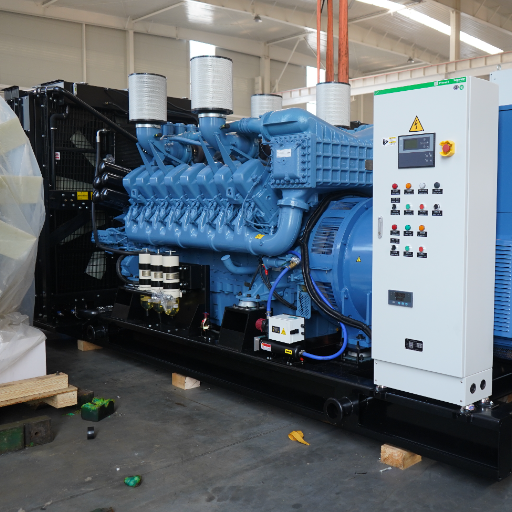
A UPS is an electromechanical or solid-state system that supplies instant or even very near instantaneous protection when the primary power source fails and fluctuates from acceptable parameters. UPS stands for uninterruptible power supply.
Depending on the size of the UPS, it will take some milliseconds after the blackout even to initiate but the use of a supercapacitor will permit this to be regenerated. The interruption time should be stable the moment after the blackout becomes rebalanced, instead of varying with the voltage applied.
Types of UPS Systems
Not all UPS topologies provide the same level of protection. The right choice depends on your load sensitivity, runtime requirements, and budget.
Standby UPS (Offline)
Standby UPS is the simplest and most cost-effective topology. Under normal conditions, utility power passes directly to the load. When a failure is detected, the UPS switches the load to its internal battery inverter.
Transfer time typically ranges from 4 to 10 milliseconds. This is acceptable for desktop computers and basic office equipment. However, it offers no power conditioning during normal operation. Voltage sags and minor disturbances pass straight through to the load.
Line-Interactive UPS
Line-interactive UPS adds automatic voltage regulation (AVR) to the standby design. An AVR transformer corrects low-voltage sags and high-voltage surges without draining the battery.
This topology is well-suited for network gear, small servers, and point-of-sale systems. Transfer time remains in the 4 to 10 millisecond range. It is a good middle-ground solution for small business IT closets where complete power isolation is not required.
Double-Conversion (Online) UPS
Double-conversion UPS provides the highest level of protection. The system continuously converts incoming AC power to DC, then inverts it back to clean AC power.
Because the load always runs on the inverter, there is zero transfer time. The load is completely isolated from utility disturbances. This topology is mandatory for data centers, hospitals, semiconductor manufacturing, and any application where even a single cycle of interruption is unacceptable. Modern static online UPS units achieve 93% to 96% efficiency at full load.
Diesel Rotary UPS (DRUPS)
DRUPS is a hybrid kinetic-power system that consists of a flywheel and a diesel engine. The flywheel spins at high speed under regular operating conditions and stores kinetic energy. Upon a failed utility grid, the flywheel will at once drive the generator to ensure output.
In cases where the outage continues longer than the flywheel’s reserve, the diesel engine, on the signal from the dynamic bypass, will start. The DRUPS’ energy efficiency figures range from 97% to 98% in the energy domain and eliminate the necessity for battery banks. It is the most popular among Tier III/IV data centers, AI hyperscale facilities, simply because it reduces the footprint by up to 50% compared with static UPS plus battery solutions. As per DataIntelo, the DRUPS market size is estimated to surpass $4.9 billion by 2034.
How UPS Backup Power Works with Diesel Generators
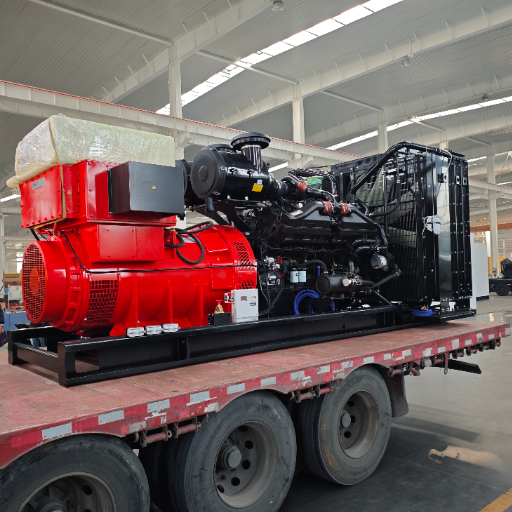
A UPS and a diesel generator are not competitors. They are partners in a layered defense strategy. Each covers a different time domain and a different type of power problem.
The UPS Bridge
When a utility power outage triggers the UPS to kick in, it keeps the voltage and frequency in a tiny envelope with a small margin while a generator cranks up, reaches rated speed, and idles in stable operation. This gap usually goes from 10 to 40 seconds, depending on temperatures and engine starting-air systems.
Without a UPS, sensitive equipment sees the full duration of that gap. Servers reboot. Manufacturing controllers lose their place. Medical devices alarm. The UPS is what makes the transition invisible.
In 2017, a Miami data center discovered a hidden sizing risk during Hurricane Irma. Their generator plant was correctly sized for the IT load. But when utility power returned after an extended outage, the UPS battery recharge surge overloaded the generators within 18 minutes. The facility experienced a total outage it was designed to prevent. The remediation required a 35% larger generator plant and $85,000 in electrical upgrades.
Generator-UPS Compatibility Challenges
Double-conversion UPS systems draw current in short pulses rather than smooth sine waves. This creates harmonic distortion. Older UPS designs with six-pulse rectifiers can force you to size the generator at up to 2.5 times the UPS capacity to avoid overheating and voltage instability.
Modern IGBT-based UPS systems with active power factor correction reduce this ratio significantly. For current designs, generator capacity should be at least 150% of the UPS maximum input. Additional critical parameters include frequency matching within ±0.5 Hz, voltage matching within ±5%, and phase alignment displacement under 3 degrees. ProStar Solar provides an excellent technical overview of these integration requirements.
Integrated System Benefits
When properly engineered, integrated UPS-generator architectures achieve 99.9999% uptime, also known as six nines availability. The UPS buffers short outages and power quality events, reducing diesel generator starts by 40% to 60%. This extends engine life and cuts maintenance costs. Over a 10-year lifecycle, integrated systems lower total cost of ownership by 28% compared to standalone setups, according to ProStar Solar.
How to Size UPS Backup Power
Sizing a UPS is more complex than matching a nameplate rating. An undersized UPS will overload and shut down. An oversized UPS wastes capital and may run inefficiently at low loads.
Step 1: Calculate the Critical Load
Start by listing every piece of equipment that must remain online during an outage. Sum their actual measured power draw, not the nameplate ratings. Nameplate values are typically 20% to 30% higher than real operating loads.
For example, a server rack with 20 units rated at 500W each might actually draw 7.5kW in operation, not 10kW.
Step 2: Apply the Power Factor
UPS systems are rated in volt-amperes (VA), which represents apparent power. Your equipment consumes watts, which represents real power. The relationship is governed by the power factor.
Required VA = Total Watts ÷ Power Factor
Legacy equipment often has a power factor of 0.8. Modern IT gear typically achieves 0.9 to 1.0. Using the wrong power factor is one of the most common UPS sizing mistakes.
Step 3: Add a Safety Margin
Industry best practice is to size the UPS at 125% of the calculated critical load. Furthermore, never exceed 80% of the UPS rated capacity during normal operation. This headroom accommodates temporary surges, future growth, and battery aging.
Example: If your critical load is 20kW with a 0.9 power factor, you need 22.2kVA minimum. With the 125% margin, the UPS should be rated for at least 27.8kVA. A 30kVA unit would be the appropriate selection.
Step 4: Determine Runtime Requirements
Runtime defines how long the UPS must sustain the load without generator support.
- Data centers and standard IT facilities typically need 10 to 15 minutes of battery runtime to bridge generator startup.
- Hospital life-safety systems may require 30 minutes or more to accommodate generator acceptance testing and load transfer sequences.
- Remote facilities without on-site generators may need hours or even days of battery autonomy.
Step 5: Coordinate with Generator Capacity
The generator must be sized for the total facility load, including the UPS maximum input current and any non-UPS loads. Critically, you must also account for the battery recharge surge that occurs after an extended outage.
UPS Backup Power for Industrial Applications
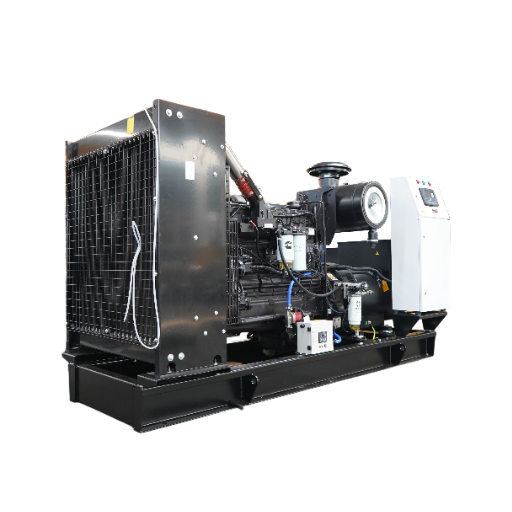
Different industries impose different demands on UPS backup power architecture. One size does not fit all.
Data Centers
Tier III and Tier IV data centers require online double-conversion UPS or DRUPS systems. N+1 redundancy applies to the UPS plant just as it applies to the generator plant. A single UPS failure cannot interrupt the IT load. For a full breakdown of Tier requirements, (read our data center backup power guide.)
Hospitals and Healthcare
NFPA 99 mandates that Type 1 Essential Electrical Systems transfer to backup power within 10 seconds of utility failure. UPS backup power protects operating room equipment, ICU monitors, ventilators, and imaging systems where even a brief interruption could endanger patients. (See our hospital emergency power compliance guide for detailed healthcare requirements.)
Manufacturing and Semiconductors
Voltage sags cost U.S. manufacturers an estimated $15 billion annually in scrap, rework, and lost production. In semiconductor fabrication, a sub-cycle interruption can ruin an entire batch of wafers. Online UPS is the only topology that provides the isolation these processes require.
Telecommunications
Cell towers, data switches, and network operations centers must maintain five-nines or six-nines availability to meet service level agreements. UPS backup power ensures that call routing, emergency services, and enterprise connectivity remain uninterrupted during grid disturbances.
Maintenance and Battery Best Practices
An unmaintained UPS is a liability waiting to happen. Batteries degrade. Connections loosen. Cooling fans fail. A disciplined maintenance program is essential.
Battery Technologies
Valve-regulated lead-acid (VRLA) batteries have been the industry standard for decades. They offer low upfront cost but typically last only 3 to 5 years. They are also sensitive to temperature; every 10°C above 25°C roughly halves their service life.
Lithium-ion batteries, particularly LiFePO4 chemistry, now account for 45% of UPS market revenue, according to Strategic Market Research. They last 8 to 15 years, operate efficiently across a wider temperature range, and require significantly less physical space. The higher initial cost is usually offset by lower replacement and labor costs over the system lifecycle.
Maintenance Schedule
A hospital facilities director in Michigan learned the cost of neglect in 2024. His team skipped quarterly impedance testing for 18 months because “the UPS status light was green.” When a summer storm caused a brief outage, three battery strings failed simultaneously. The UPS collapsed under load, forcing an emergency evacuation of the cardiac catheterization lab.
Best practice calls for:
- Weekly: Visual inspection of indicators, alarms, and environmental conditions.
- Monthly: Voltage checks, thermal scanning of terminals, and fan operation verification.
- Quarterly: Battery impedance or conductance testing to detect weak cells before they fail.
- Annually: Full load-discharge test to verify actual runtime against design specifications.
Replacement Indicators
Replace batteries immediately if you observe swollen cases, extended recharge times, reduced runtime during tests, or elevated internal resistance readings.
ZC Power Integrated Backup Power Solutions
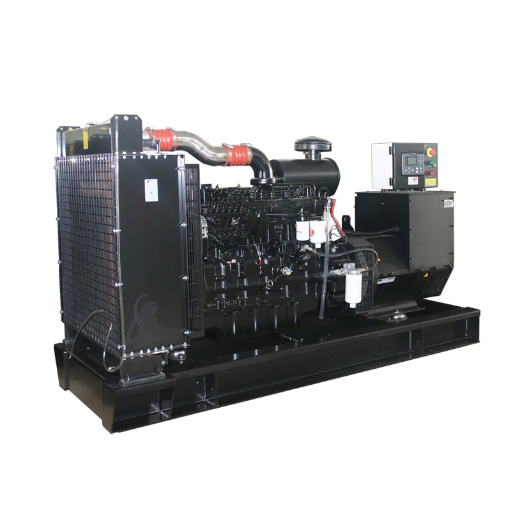
At Shandong ZC Power CO., LTD., we do not just manufacture diesel generators. We engineer complete backup power architectures that specify the right UPS topology, harmonics profile, and transfer logic for your critical load.
Factory-Direct Generator Plants:
- Engineered for seamless UPS integration with proper voltage regulation and frequency stability
- Pre-wired paralleling switchgear and ATS coordination
- Load tested at 110% of rated capacity in our national standard testing center
DRUPS and Static UPS Consulting:
- For Tier III/IV data centers and mission-critical hospitals, our engineers design integrated solutions using either diesel rotary UPS or battery-based online UPS
- Harmonic analysis and generator sizing studies to prevent compatibility failures
Global Engineering Support:
- Configurations from 8kVA to 4000kVA
- Custom voltage and frequency for international grid requirements
- ISO9001, CE, and CCC certified
- 80+ technical engineers providing commissioning, startup assistance, and lifetime parts supply
Frequently Asked Questions
What is the difference between a UPS and a generator?
UPS provides instantaneous or near-instantaneous or backup power with batteries or kinetic energy storage. On the other hand, generators such as diesel use longer-duration backup power, usually 10 or 40 seconds to start and stabilize. So, both are complementary systems and not replacements for each other.
How long does UPS backup power last?
Runtime depends on battery capacity and load. Standard IT UPS systems provide 10 to 15 minutes of runtime, enough to bridge generator startup. Extended runtime systems can provide hours of backup. DRUPS systems provide 10 to 30 seconds of flywheel coverage before the diesel engine takes over.
Can a UPS and generator work together?
Yes, and they should in any mission-critical facility. The UPS covers the startup gap and power quality issues. The generator covers extended outages. Proper sizing and harmonic analysis are essential for seamless compatibility.
What size UPS do I need for a data center?
Size the UPS at 125% of the actual measured critical load, accounting for power factor. Add N+1 redundancy for Tier III/IV facilities. Coordinate generator capacity to handle both the IT load and the UPS battery recharge surge.
How often should UPS batteries be replaced?
VRLA lead-acid batteries typically require replacement every 3 to 5 years. Lithium-ion batteries last 8 to 15 years. Quarterly impedance testing and annual load testing will identify weak cells before they cause a failure.
Conclusion
UPS backup power is not an IT accessory or a compliance checkbox. It is the first line of defense in a layered emergency power strategy that protects revenue, equipment, and lives.
Key takeaways:
- Match the UPS topology to your load sensitivity: standby for desktops, line-interactive for small servers, online for data centers and hospitals, DRUPS for large-scale Tier III/IV facilities
- Integrate UPS and diesel generators as a unified architecture, not separate afterthoughts
- Size the UPS at 125% of critical load and never exceed 80% of rated capacity in normal operation
- Account for battery recharge surge when sizing the generator plant
- Maintain a disciplined inspection and testing schedule to catch battery degradation before it causes a failure
- Choose a manufacturer that understands the complete power chain from millisecond UPS protection to multi-day generator runtime
At ZC Power, we have spent 25 years building emergency power systems that perform when seconds count. Our ISO9001/CE-certified diesel generator plants are engineered for seamless UPS integration, tested at 110% of rated load in our national standard testing center, and backed by 80+ technical engineers worldwide.


