Emergency Power Requirements: NFPA 110, NEC 2026 & Sector Sizing Guide
In 2025, 74% of businesses worldwide experienced at least one unplanned power outage. The equipment in a hospital data center or high-rise manufacturing facility will suffer financial losses and safety problems from a single interruption. Many facility managers treat emergency power requirements as a box-checking exercise instead of treating them as a strategic engineering decision.
You already know that downtime is expensive. Most people do not know that code minimums and true operational resilience represent two completely different concepts. This guide breaks down the emergency power requirements that govern hospitals data centers and commercial buildings in 2026. The presentation will include NFPA 110 classifications NEC 2026 updates sector-specific sizing rules and the actual differences between compliance and operational readiness.
Here is what you will learn:
- The difference between emergency, legally required standby, and optional standby power
- How NFPA 110 Level, Type, and Class define your system obligations
- Hospital, data center, and commercial building emergency power requirements
- Emergency generator sizing requirements and the 125% rule
- New NEC 2026 mandates affecting grounding, surge protection, and hybrid integration
Want the complete picture first? (Read our complete guide to emergency power systems before diving into emergency generator specifics.)
What Are Emergency Power Requirements?
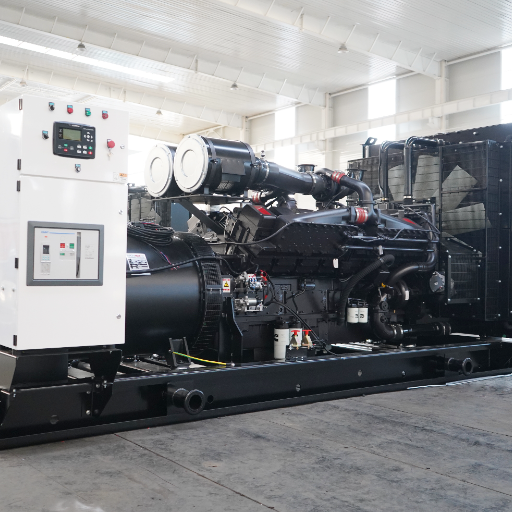
The emergency power requirements establish code-mandated standards that specify the required activation time for backup power systems, which essential loads the systems must sustain, and which building systems require protection. The rules establish binding requirements that need to be followed by all parties involved. The National Electrical Code (NEC) and NFPA 110 and NFPA 99 for healthcare facilities create mandatory legal standards that need to be followed.
Emergency vs. Legally Required Standby vs. Optional Standby
Understanding the three categories of backup power is essential before you size a single generator.
- Emergency Systems (NEC Article 700): Power life-safety systems. The system requires egress lighting and fire alarms and elevator rescue systems and hospital operating rooms to function properly. The systems need to start working automatically while they must provide power after 10 seconds following a utility outage.
- Legally Required Standby Systems (NEC Article 701): Power systems that function as vital safety systems but require government regulations for their operation. The system requires power for both hazardous area ventilation and sewage pump operation and certain industrial processes. The standard transfer time for the system is 60 seconds.
- Optional Standby Systems (NEC Article 702): The building owner selects which power loads to protect vital for their business operations. The protection covers data center server racks manufacturing lines and HVAC systems. Most facilities design their systems to achieve transfer times under 10 seconds yet there exists no code requirement for this purpose.
The initial step for your facility design process requires you to determine the electrical system elements which belong to different operational categories. The emergency power requirements for a hospital operating room differ completely from the emergency power requirements of a commercial office’s optional IT equipment.
The Primary Codes: NFPA 110, NFPA 99, NEC Article 700/701/702
- NFPA 110 is the dominant standard for emergency and standby power systems. It specifies performance standards which generator sets and transfer switches and fuel storage systems must meet.
- NFPA 99 governs healthcare facilities. It divides the hospital electrical system into three parts which are the Essential Electrical System (EES) the life safety branch and the critical branch and the equipment branch.
- NEC 2026 introduces updated grounding and bonding and surge protection mandates which impact generator connections to current electrical distribution systems.
NFPA 110 Explained: Level, Type, and Class
NFPA 110 is the backbone of most emergency power requirements in North America and is widely adopted internationally. It organizes requirements into three dimensions: Level, Type, and Class. Getting these right determines whether your installation will pass inspection and, more importantly, whether it will perform when it matters.
Level 1 vs. Level 2 Emergency Power Systems
The definition of Level 1 systems applies to systems whose failures create danger to human life and severe bodily harm. Level 1 systems find application in hospitals and air traffic control towers and high-rise building evacuation systems. The systems require their highest level of system reliability together with their quickest system transfer and their complete system maintenance records.
The definition of Level 2 systems applies to systems whose human safety requirements become less important when they fail. The manufacturing plants and agricultural facilities and certain commercial buildings represent typical examples of these facilities. Level 2 still requires automatic transfer and reliable fuel supply, but the inspection and testing intervals are slightly less stringent.
Default to Level 1 if you cannot determine which level applies to your facility. The cost difference between Level 1 and Level 2 equipment usually remains minor when compared to the financial risks of non-compliance.
Type 10, Type 60, and Other Transfer Time Requirements
The “Type” in NFPA 110 refers to the maximum time allowed for the emergency power source to deliver power to the load. The most common classifications are:
- Type 10: Power must be available within 10 seconds. Required for Level 1 life safety loads.
- Type 60: Power must be available within 60 seconds. Common for legally required standby loads.
- Type 120: Power must be available within 120 seconds. Occasionally used for non-critical standby loads.
Most hospital emergency power requirements mandate Type 10 systems. Data centers often design to Type 10 as well, even when optional standby would technically permit 60 seconds, because modern server infrastructure cannot tolerate extended outages.
Class Fuel Requirements (Class 48, Class 96, and Extended Runtime)
The “Class” defines the minimum fuel supply duration at full rated load. Common classes include:
- Class 2: 2 hours of fuel
- Class 6: 6 hours of fuel
- Class 48: 48 hours of fuel
- Class 96: 96 hours of fuel
Hospital emergency power requirements exceed the base NFPA 110 Class. Healthcare facilities must provide 72 to 96 hours of on-site fuel storage or maintain a fuel delivery contract according to the Joint Commission and multiple state health departments. Data centers with Uptime Institute Tier III or IV certification typically store enough fuel for 24 to 48 hours of continuous operation.
Featured Snippet Table: Level 1 vs. Level 2 + Type 10 vs. Type 60
| Classification | Definition | Typical Applications | Transfer Time |
|---|---|---|---|
| Level 1 | Failure risks loss of life | Hospitals, high-rise egress, ATC | Type 10 (10 seconds) |
| Level 2 | Failure is less critical | Manufacturing, agriculture, retail | Type 10 or Type 60 |
| Type 10 | Power within 10 seconds | Life safety, critical care, servers | 10 seconds max |
| Type 60 | Power within 60 seconds | Ventilation, sewage, industrial | 60 seconds max |
Hospital Emergency Power Requirements
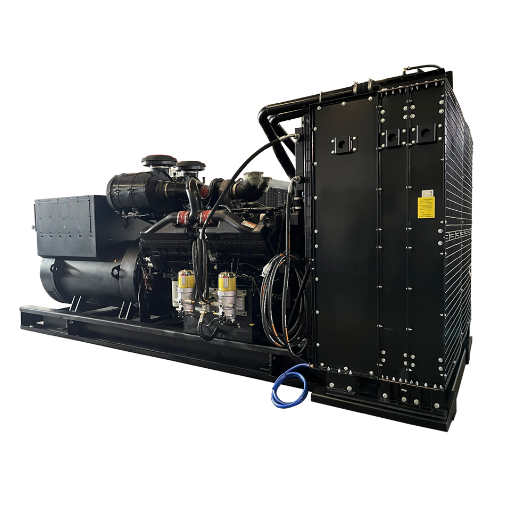
Healthcare facilities need to comply with their most stringent emergency power requirements which surpass all other building types. A power interruption during surgical procedures or dialysis treatments or intensive care operations creates a life-safety emergency situation.
NFPA 99 Essential Electrical System (EES)
NFPA 99 requires hospitals to divide their electrical distribution into three branches:
- Life Safety Branch: Egress lighting, alarm systems, fire pumps, and elevator rescue power. Must restore within 10 seconds.
- Critical Branch: Operating rooms, intensive care units, emergency department treatment rooms, and isolation rooms. Must restore within 10 seconds.
- Equipment Branch: Central suction, medical air compressors, sterilizers, and select HVAC. Must restore within 10 seconds.
Every circuit in these branches must be clearly identified, color-coded, and separated from normal power wiring. Inspectors will trace these circuits during commissioning and annual audits.
The 10-Second Rule and Life Safety Branch
The 10-second rule is non-negotiable. The hospital will fail its inspection if your generator with its automatic transfer switch system cannot restore power within ten seconds to life safety and critical branches. The generator must start up within that time frame to achieve its rated voltage and frequency before it can transfer electrical load.
For large hospital campuses, this often requires multiple synchronized generators rather than one oversized unit. The standard practice of N+1 redundancy enables the remaining generators to power all essential loads when one generator becomes inoperable.
Sizing Guidelines: ORs, ICUs, and Imaging Suites
Accurate load calculation is essential for hospital emergency power requirements. Typical benchmarks include:
- Operating Rooms: ~10 kVA per room for surgical lights, anesthesia machines, and monitoring equipment
- ICU Beds: ~3 kVA per bed for ventilators, infusion pumps, and patient monitors
- Imaging Suites: CT scanners typically require 75–150 kVA; MRI suites can demand 200+ kVA
- Emergency Department: ~5 kVA per treatment bay
These figures are starting points. A full load analysis must include starting surges, power factor, and future expansion. Our team has found that many hospitals underestimate imaging suite loads by 20% or more.
Fuel Storage: 72–96 Hour Mandates and Joint Commission Compliance
The NFPA 110 Class 48 standard which requires 48 hours of fuel to operate hospital generator systems serves as the minimum requirement for hospital generator systems. The Joint Commission standards together with state emergency preparedness regulations now mandate hospitals to maintain 72 to 96 hours of operational fuel at their facilities or establish delivery contracts which remain uninterrupted during regional emergency situations.
The northern Michigan 400-bed hospital achieved its NFPA 110 inspection certification without any violations in January 2024. The facility found its 48-hour base tank capacity insufficient when an ice storm caused a power outage that lasted four days and prevented fuel delivery truck access. The staff at the facility needed to transport diesel fuel between 55-gallon drums to maintain generator operations. The facility installed a 10,000-gallon primary tank which provides 72 hours of fuel capacity after the event. The upgrade cost $85,000. The near-miss saved them from a catastrophic evacuation.
Data Center Emergency Power Requirements
Data centers are the engine rooms of the digital economy. Their emergency power requirements are driven by a combination of NFPA 110, Uptime Institute Tier standards, and the simple reality that every second of downtime can cost thousands of dollars.
Uptime Institute Tier III/IV vs. NFPA 110 Alignment
Uptime Institute Tier III and Tier IV certifications are the gold standard for data center resilience. Here is how they map to code requirements:
- Tier I/II: Basic redundancy. One generator may serve the facility. NFPA 110 Level 2, Type 10 is common.
- Tier III: Concurrently maintainable. Any component can be taken offline without affecting IT operations. Requires N+1 generator redundancy.
- Tier IV: Fault tolerant. The system must continue operating even after an unplanned failure. Requires 2N or 2(N+1) redundancy.
While Uptime Institute standards are voluntary certifications, they have become de facto requirements for enterprise data center clients. Most hyperscale facilities now design to Tier III or Tier IV.
Power Density: 5–20 MW Small Facilities, 100+ MW Hyperscale
The power density of contemporary data centers has reached unprecedented levels. A small regional data center may draw 5 to 20 MW. A hyperscale campus can exceed 100 MW, comparable to a small city.
The loads of the system exceed normal capacity while also showing high sensitivity to changes. Servers and networking equipment require voltage regulation at a precision of ±5% together with frequency stability of ±0.5 Hz. The generators that power data centers need to be designed to handle both thermal loads and the power quality needs of IT systems.
N+1 Redundancy and the “2N” Philosophy
N+1 means that if your critical load requires N generators, you install N+1. For example, if three 2,000 kW generators can handle the full load, you install four. If one fails or is offline for maintenance, the remaining three still carry the facility.
2N means every critical component is duplicated. If you need three generators, you install two independent sets of three generators, each capable of handling the full load on its own. 2N is the standard for Tier IV facilities and is becoming common in financial services and healthcare IT data centers.
In March 2024, a semiconductor fabrication plant in Arizona experienced a brief utility outage. The facility had generators, but they were sized too close to the maximum load and lacked proper UPS backup power integration. It took 90 seconds for the generators to stabilize voltage and frequency within server tolerances. That 90-second gap caused a $2.3 million loss in scrapped wafers and production delays. The facility later upgraded to an online double-conversion UPS paired with N+1 generators. The total cost of the upgrade was recovered in under 18 months through avoided downtime.
Commercial Building Emergency Power Code
Not every building is a hospital or a data center. Office towers, retail complexes, schools, and assembly occupancies have their own emergency power requirements governed by NEC Articles 700 and 701.
NEC Article 700 (Emergency Systems) and Article 701 (Legally Required Standby)
NEC Article 700 applies to systems that must operate automatically to ensure safe egress and firefighter safety. Required loads include:
- Emergency lighting for egress paths
- Fire alarm and detection systems
- Fire pumps and smoke control systems
- Elevator rescue power for designated cars
NEC Article 701 applies to legally required standby systems. These systems do not protect human life but their breakdown would create dangerous conditions that would obstruct rescue efforts. The system provides ventilation for hazardous processes and operates sewage pumps and designated industrial machinery.
High-Rise, Assembly Occupancy, and Elevator Requirements
High-rise buildings (typically over 75 feet) need to install emergency power systems which support at least one elevator system that enables firefighters to access the building and rescue trapped occupants. Assembly occupancies which include theaters and stadiums and convention centers need to install emergency lighting systems which illuminate all egress paths and their respective exit signs.
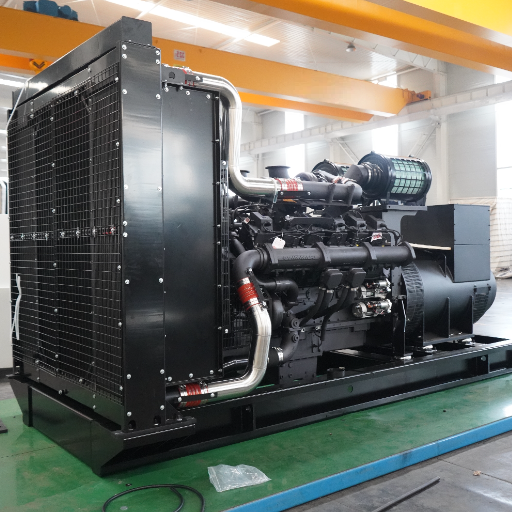
The emergency power requirements for these buildings are normally met through the installation of one automatic-start diesel generator set which operates with an ATS system. The system requires fire pumps and elevator motors to be sized according to their locked-rotor amps because these devices will draw 5 to 7 times their normal operating current during their startup process.
The 74% Statistic: Why Code Minimums May Not Equal Business Continuity
Meeting NEC Article 700 gets you a certificate of occupancy. It does not guarantee business continuity. In 2017, a Miami data center that housed financial trading servers complied fully with local emergency power requirements. The building had a code-compliant generator, proper ATS, and illuminated egress paths.
However, the maintenance contractor had been skipping monthly exercise runs to save money. When Hurricane Irma caused a multi-day outage, the generator failed to start because of clogged fuel filters and a weak starting battery. The building passed code on paper, but the operational reality was a 36-hour outage that cost the primary tenant $4.7 million. Code compliance and operational readiness are not the same thing.
Emergency Generator Sizing Requirements
Sizing is where engineering judgment separates reliable systems from expensive failures. The emergency generator sizing requirements for your facility depend on load type, starting characteristics, future growth, and environmental conditions.
The 125% Rule for Critical Load Sizing
The NEC Article 700 regulation demands that emergency generators must have capacity to operate all emergency circuits at their full power requirements. Most engineering firms use 125% of total critical load calculations as the standard practice for generator sizing.
The system maintains stable voltage and frequency during motor starts because this margin provides additional capacity to handle rising power demands. Your generator needs to have a minimum rating of 1000 kW because your emergency load calculation shows an 800 kW requirement.
Generator ≥ 150% of UPS Maximum Input
When a UPS is installed upstream of critical IT or medical equipment, the generator must be sized to handle both the critical load and the UPS charging current. A common rule of thumb is that the generator capacity should be at least 150% of the UPS maximum input rating.
UPS battery chargers draw harmonic current. If the generator is too small relative to the UPS, the generator can overheat, voltage can become unstable, and the UPS may transfer to battery or shut down entirely. For more on this integration challenge, see our article on UPS backup power systems.
Harmonic Distortion and Load Power Factor
Modern buildings contain non-linear electrical loads which include variable frequency drives and LED drivers and switch-mode power supplies and uninterruptible power supply rectifiers. The loads create harmonic distortion which causes generator windings and transformers to heat up.
Engineers must calculate total harmonic distortion (THD) for data centers and hospitals to determine the appropriate generator size which requires them to apply a derating factor. A generator which suits a resistive load requires 15 to 25 percent additional capacity to handle a highly non-linear load.
Voltage Dip Tolerances (±5% Voltage, ±0.5 Hz Frequency)
Sensitive equipment cannot tolerate large voltage or frequency swings. Typical design targets for emergency power systems serving critical loads are:
- Voltage regulation: ±5% of nominal
- Frequency stability: ±0.5 Hz
- Phase imbalance: Less than 3 degrees
The system needs both sufficient generator capacity and high-quality voltage regulators and governor controls to meet its step-load requirements. The system requires generators that meet its power needs because low-cost generators will produce voltage drops when large motors start.
For a deeper technical breakdown of generator standards,(see our emergency generator guide).
NEC 2026 Changes Affecting Emergency Power
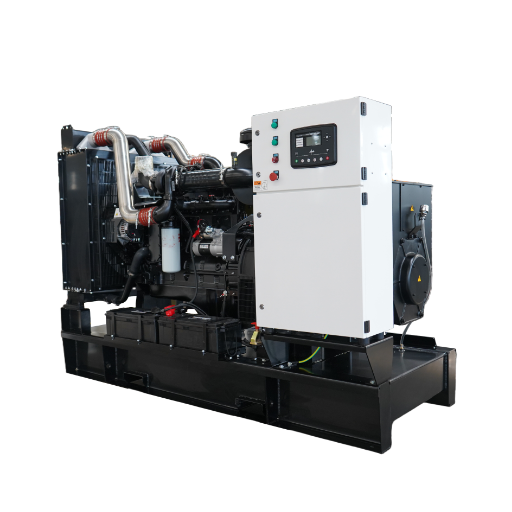
The 2026 edition of the National Electrical Code introduces several updates that directly affect emergency power requirements. If you are designing or upgrading a system in 2026, these changes matter.
Enhanced Grounding and Bonding Requirements
NEC 2026 establishes more stringent requirements for generator grounding electrodes and equipment grounding conductors. The goal is to reduce the risk of touch voltage and arc flash events during emergency operation. The new language establishes that the generator neutral needs solid grounding because it serves as the separately derived source, and bonding jumpers need to be sized according to the maximum available fault current.
Higher Fault Current Ratings for Switchgear
The switchgear and automatic transfer systems require capacity ratings to handle the increased fault currents produced by generators and utility grids. The National Electric Code of 2026 requires that both overcurrent protection devices and transfer equipment must have ratings that match the short-circuit current which exists at their installation location. The typical requirement for larger facilities involves equipment upgrades which need to go from 10 kAIC to either 22 kAIC or 42 kAIC equipment.
Surge Protection Device (SPD) Mandates
NEC 2026 requires additional surge protection measures for emergency system feeders. The installation of Type 1 or Type 2 surge protective devices for service entrances and emergency load distribution panels has become mandatory. The facility needs this protection because its delicate medical and information technology equipment suffers from damage caused by transient overvoltage events.
Energy Storage and Hybrid Generator Integration
The system now recognizes energy storage systems (ESS) and hybrid generator-ESS systems as valid emergency power sources. NEC 2026 establishes new installation standards for battery energy storage systems (BESS) which operate together with diesel generators.
The system enables advanced architectural designs which use batteries to deliver immediate Type 10 power and diesel generators to supply extended Class 96 operational time. Facility managers who want to build resilient designs can now use hybrid systems as compliant solutions instead of testing new technologies.
Maintenance and Testing Requirements
Even the best-engineered emergency power system will fail if it is not maintained. NFPA 110 and Joint Commission standards prescribe specific testing intervals.
NFPA 110 Monthly and Annual Testing Protocols
- Monthly: The generator must be exercised under load for at least 30 minutes. Some jurisdictions accept no-load exercise, but loaded exercise is strongly preferred because it validates fuel and cooling systems under realistic conditions.
- Annual: A full-load test using a resistive load bank for at least 2 hours. This confirms the generator can deliver 100% of its nameplate rating and helps burn off carbon deposits from wet stacking.
- Transfer Switch: The ATS must be exercised monthly to verify mechanical transfer and return-to-utility operation.
Load Banking and Transfer Switch Exercise
Load bank testing is not optional for critical facilities. It is the only way to prove that a generator can deliver its rated kW output at rated power factor. Many generator problems, weak fuel pumps, clogged injectors, and overheating radiators, only appear under full load.
Similarly, the ATS must transfer under load at least once per year. A switch that has been sitting in the utility position for 11 months may fail to transfer when needed because of oxidized contacts or seized mechanisms.
Documentation for Inspectors and Insurance
Every test must be documented. Inspectors, insurance underwriters, and accreditation bodies will ask for:
- Date and time of each test
- Load level (kW and power factor)
- Generator voltage, frequency, and oil pressure readings
- Transfer switch operation times
- Any anomalies or corrective actions taken
Digital monitoring systems can automate much of this documentation. Modern controllers from Deep Sea Electronics or SmartGen can log every test event and email reports directly to facility managers.
How ZC Power Helps You Meet and Exceed Emergency Power Requirements
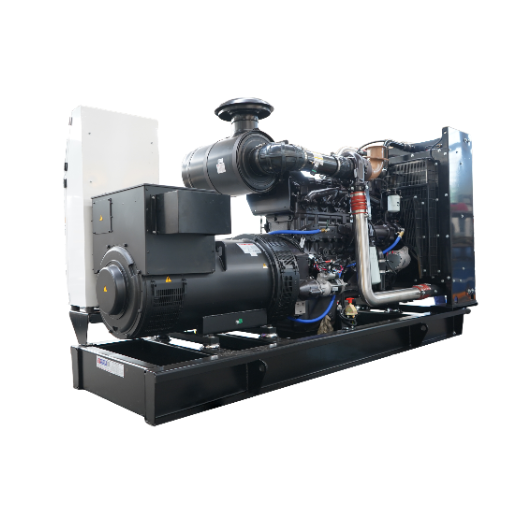
Understanding emergency power requirements is the first step. Engineering a system that not only meets code but also protects your revenue and reputation is the second. That is where factory-direct manufacturing makes the difference.
Factory-Direct Engineering for Code Compliance
Shandong ZC Power CO., LTD. has developed diesel generator sets since its founding in 1999. Our national standard testing center combined with our 300,000-square-meter facility enables us to manufacture and assess all units according to your project specifications. We do not trade stock. We engineer solutions.
Our team of 80 engineers provides assistance to clients who require a silent canopy generator for their hospital courtyard needs or a containerized N+1 parallel system for their Tier IV data center needs or a heavy-duty prime power genset for their remote mining camp requirement.
Custom Sizing and Integration with ATS/UPS
We do not believe in guesswork. Our engineers perform detailed load analyses that account for motor starting surges, harmonic distortion, UPS integration, and altitude derating. We then size your industrial diesel generators to meet the 125% rule, the 150% UPS input rule, and your specific voltage stability requirements.
We also integrate seamlessly with automatic transfer switches, parallel synchronization cabinets, and double-conversion UPS systems to create a layered defense against outages.
300,000 Sqm Manufacturing and National Testing Center
Every ZC Power generator set undergoes rigorous full-load testing in our national standard testing center before shipment. The testing process evaluates essential parameters such as kW output and voltage regulation and frequency stability and acoustic performance. A certified test report accompanies every unit that you receive.
Our manufacturing capacity enables us to maintain this high standard of quality assurance. The engine and alternator components originate directly from the manufacturer without any intermediary parties. You speak directly to the engineers who designed your system.
Conclusion
Emergency power requirements are not just about passing inspections. They are about protecting lives, equipment, and revenue when the grid goes down. In 2026, facility managers must navigate NFPA 110 Level and Type classifications, hospital-specific NFPA 99 rules, data center Tier standards, and new NEC mandates for grounding, surge protection, and hybrid energy storage.
Here are the key takeaways:
- Know your level: Level 1 for life safety, Level 2 for less critical loads.
- Size with margin: Follow the 125% rule for critical loads and the 150% rule for UPS-integrated systems.
- Fuel for the real emergency: Code minimums are a baseline. Plan for 72–96 hours of fuel or guaranteed delivery.
- Test under load: Monthly exercise and annual load bank testing are non-negotiable for operational readiness.
- Prepare for NEC 2026: Enhanced grounding, higher fault current ratings, and SPD mandates are now part of the code.
If you are evaluating a new installation or an upgrade, do not settle for minimum compliance. Partner with a manufacturer that engineers for resilience. Shandong ZC Power CO., LTD. delivers certified, factory-direct emergency power systems designed to exceed the standard and protect what matters most.


