Emergency Generator Guide: Sizing, Standards & Selection for Critical Infrastructure [2026]
The San Juan hospital learned that their 500kW emergency generator could not support essential power needs together with UPS battery charging requirements after Hurricane Maria destroyed electricity service throughout Puerto Rico in September 2017. The system reached its maximum capacity after 18 minutes which required operators to reduce power output because the surgical area needed to remain illuminated. The post-storm investigation showed that the generator had been sized according to steady-state calculations while actual emergency conditions required higher power output for safe operation. The project required 127000 dollars in expenses, which needed six months for regulatory evaluation.
The entire situation could have been avoided through preventive measures. The process of choosing an emergency generator requires facility managers, project contractors, and procurement officers to make decisions that extend beyond financial choices. The decision involves technical work, which will impact business operations and enterprise regulations and protect employee well-being.
Healthcare institutions and data centers and industrial operations need reliable backup power because they face increasing risks of power outages. The actual number of emergency generators that fail during crucial times exceeds what you understand about properly acquired equipment. The guide will present the complete system requirements which include sizing methods and regulatory guidelines and equipment selection criteria that you must follow to achieve emergency operational performance.
Want the complete picture first? (Read our complete guide to emergency power systems before diving into emergency generator specifics.)
What Is an Emergency Generator?
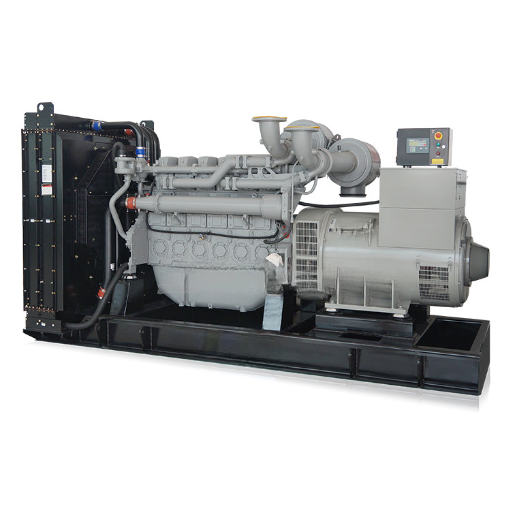
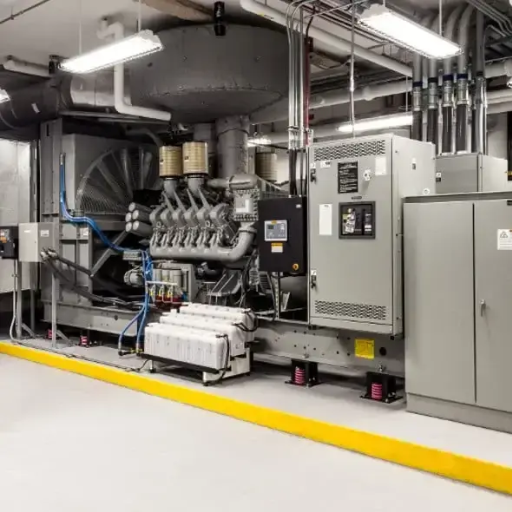
An emergency generator system known as an emergency power supply system (EPSS) functions as an independent electrical power source which activates automatically when standard utility power sources experience failure. The emergency generator system establishes permanent installation through its direct connection to the building’s electrical network which it operates according to established safety regulations.
The complete system includes more than just an engine and alternator. A fully engineered EPSS comprises:
- Prime mover (diesel or gas engine): The system transforms fuel into mechanical power. Diesel fuel provides essential benefits for critical operations because it enables quick engine starts while delivering high starting torque and permits fuel storage without needing pipeline connections.
- Alternator: The system transforms mechanical energy into electrical power. Stamford and Leroy-Somer manufacturers produce copper-wound alternators that maintain steady voltage output through changing load conditions.
- Automatic transfer switch (ATS) or auto mains failure (AMF) panel: The system detects power outages from the utility grid and initiates generator startup while switching the building’s power supply to emergency systems. Deep Sea Electronics and SmartGen produce modern AMF panels that can complete their operating cycle within a 10-second timeframe.
- Fuel system: The system consists of main storage tanks and day tanks together with transfer pumps and fuel filtration systems. The NFPA 110 standard requires different fuel storage times for different facility types.
- Control and monitoring panel: The system enables users to observe operating conditions and system faults through both local and remote monitoring capabilities.
The term “emergency generator” is commonly used in conversation, but engineers and compliance officers should specify the complete emergency power supply system. Our factory builds every EPSS as an integrated unit, testing engine, alternator, and controls together before shipment.
For cross-referenced emergency power rules from NFPA 110 and NEC 2026, plus sector-specific sizing, (explore our comprehensive requirements guide.)
Emergency Generator Applications by Industry
Not every facility needs the same class of emergency generator. The application dictates the rating, redundancy architecture, and compliance framework.
Healthcare and Hospitals
The healthcare sector has the strictest rules for operating its emergency power systems. The NFPA 99 standard and CMS Conditions of Participation require hospitals to maintain emergency generators at Level 1 Type 10 standards. The EPSS system needs to detect a utility power outage and start operations while handling complete emergency power within 10 seconds of the outage.
Hospitals also face the 96-hour fuel rule. CMS requires dedicated on-site fuel storage sufficient for 96 hours of continuous operation at full load. Because NFPA 110 adds a 133% safety margin, a hospital consuming 50 gallons per hour needs: 50 gallons × 96 hours × 1.33 = 6,384 gallons minimum.
Urban hospitals require silent emergency generators because they need to operate their emergency systems without creating any noise. The regulations for noise control restrict equipment operation to 75 dB(A) at a distance of 7 meters from the sound-attenuation canopies. Our acoustic enclosures keep operational noise below 75 dB while maintaining full airflow for engine cooling.
Data Centers
Data centers measure reliability through the Uptime Institute Tier classification system, and the emergency generator architecture must match the Tier level:
| Tier | Redundancy | Generator Rating | Runtime Requirement |
|---|---|---|---|
| Tier I | None (N) | Standby (ESP) | Limited emergency use |
| Tier II | N+1 partial | Standby (ESP) | Limited emergency use |
| Tier III | N+1 full | Prime (PRP) or Continuous (COP) | Unlimited alternate source |
| Tier IV | 2N or 2N+1 | Prime (PRP) or Continuous (COP) | Unlimited alternate source |
The EPSS has to function as an emergency backup system which can operate without time restrictions during long power outages. The system needs to operate with prime power or continuous power ratings.
The emergency generator for a data center needs to be sized according to the power usage effectiveness (PUE) factor. A highly efficient facility achieves a PUE of approximately 1.2, meaning total facility load is 1.2 times the IT load. Engineers typically size the generator at 2× the UPS load multiplied by PUE, then add 15-25% for growth.
Manufacturing and Construction
Industrial facilities use emergency generators for both standby backup and remote prime power. A pharmaceutical plant in Ohio cannot afford even a 60-second outage without risking an entire production batch. The remote mining operation in the Andes needs 24-hour power supply because of its lack of utility grid access.
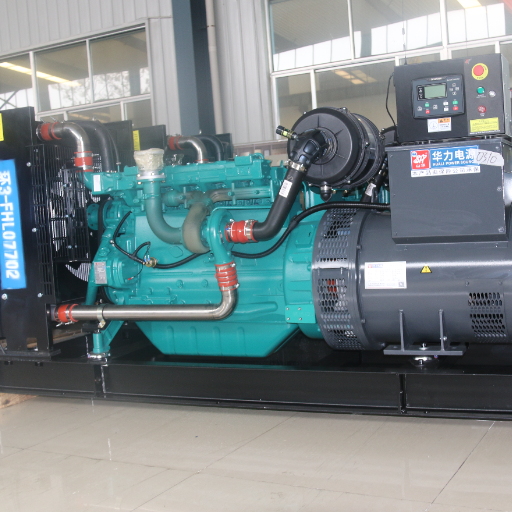
We design containerized diesel generators and trailer-mounted units for these applications. Containerized systems can endure dust and salt spray and extreme temperature conditions. Trailer-mounted generators enable quick movement across extensive construction sites and disaster recovery areas.
How to Size an Emergency Generator
Sizing is the most critical step in specifying an emergency generator. An undersized unit will overload and trip offline when motors start. An oversized unit will suffer from wet stacking, fuel waste, and premature engine wear.
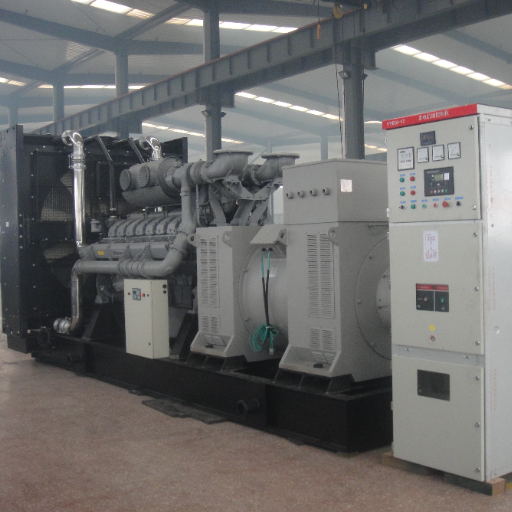
Step 1: Calculate the Critical Electrical Load
Start by inventorying every piece of equipment the emergency generator must power. Do not guess. Use actual nameplate data or clamp-meter readings where possible.
Running watts represent the continuous power required to keep equipment operating. Starting watts (locked rotor amps) represent the surge current electric motors draw at startup. Industrial motors can draw 6 times their running current during the first few seconds of starting.
The emergency generator becomes completely unusable when cooling equipment needs to start because its design only permits continuous power operation. Data center operators have learned this lesson the hard way: a Tier III facility in Denver initially sized its emergency generator based on steady-state IT load alone. The facility experienced a 22% voltage drop when utility power failed and the CRAC units tried to restart, which caused the generator protective relay to shut down. The data center experienced a complete power loss after the UPS batteries completely ran out. The project needed a generator that could handle 40% more power and required $85,000 worth of electrical system enhancements.
For three-phase systems, calculate total demand in kVA (kilovolt-amperes), not just kW. The relationship is:
kVA = kW / Power FactorMost industrial loads have a power factor between 0.8 and 0.95. Generators must be sized for the kVA demand.
Step 2: Apply Derating Factors
A generator rated at sea level in cool weather will not deliver the same output in hot, high-altitude conditions.
- Altitude derating: Capacity drops approximately 3.5% per 1,000 ft above sea level. At 5,000 ft elevation, a generator loses roughly 17.5% of its nameplate rating.
- Temperature derating: Capacity drops approximately 1% per 10°F above 77°F (25°C). A generator operating in a 107°F desert environment loses another 3%.
- Harmonics and power factor: Non-linear loads (servers, VFDs) and poor power factor require additional alternator capacity.
Step 3: Add a Growth Margin
Emergency generators are 20-year investments. Your facility’s load will grow.
The 80% Rule: Generators operate most efficiently and safely when loaded between 70% and 80% of their rated capacity. Always add a 20-25% margin above your calculated maximum load.
Example Calculation:
- Total calculated load (including motor starting): 750 kVA
- Altitude derating at 3,000 ft (10.5%): 750 ÷ 0.895 = 838 kVA
- Temperature derating at 95°F (1.8%): 838 ÷ 0.982 = 853 kVA
- Apply 80% rule: 853 ÷ 0.80 = 1,066 kVA minimum
- Round up to nearest standard size: 1,250 kVA emergency generator
This systematic approach prevents the costly mistakes that destroy both budgets and uptime.
Standards and Compliance Requirements
Emergency generators in the United States and many international markets are governed by a layered regulatory framework. Understanding these standards is essential for both specification and ongoing compliance.
NFPA 110: The Foundation Standard
NFPA 110, the Standard for Emergency and Standby Power Systems, establishes the minimum requirements for installing, maintaining, and testing EPSS. The standard applies to all emergency generators used in critical facilities.
NFPA 110 uses a three-part classification system:
Level (Consequence of Failure):
- Level 1: Failure could result in loss of human life or serious injury. Applies to hospitals, fire pumps, emergency egress lighting.
- Level 2: Failure means economic loss or operational disruption. Applies to HVAC, refrigeration, and many data center applications.
Type (Transfer Time):
- Type 10: Power restored within 10 seconds. Required for healthcare and life safety.
- Type 60: Power restored within 60 seconds. Acceptable for many business-critical loads.
- Type 120: Power restored within 120 seconds. Suitable for non-critical standby loads.
Class (Fuel Duration):
- Class 48: 48 hours of operation at full load without refueling. Standard minimum for most Level 1 commercial facilities.
- Class 96: 96 hours of operation. Required by CMS for hospitals.
For a deeper dive into testing schedules, recordkeeping, and the 2025 edition updates, see our dedicated guide to NFPA 110 compliance requirements.
NEC Articles 700-702
The National Electrical Code governs how emergency power systems are wired and protected:
- Article 700: Emergency systems (roughly equivalent to NFPA 110 Level 1)
- Article 701: Legally required standby systems (roughly equivalent to NFPA 110 Level 2)
- Article 702: Optional standby systems (business continuity, not life safety)
International Standards
For global projects, additional certifications apply:
- ISO 8528-1: Defines generator duty ratings (COP, PRP, ESP)
- CE marking: Required for export to European Union markets
- ISO 9001: Quality management system certification
ZC Power tests all its emergency generators at its national standard testing center while the generators receive ISO9001 and CE and CCC certification. We provide customized voltage and frequency solutions according to local grid standards because customers need either 400V/50Hz or 480V/60Hz or specific regional requirements for their projects.
Fuel Systems and Storage
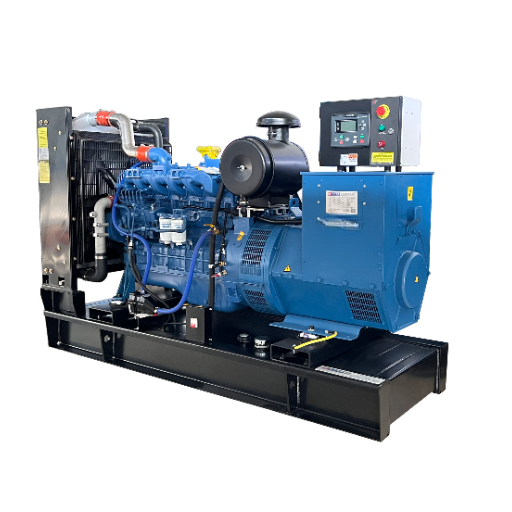
Fuel strategy is often the weakest link in an emergency power system. A perfectly sized generator is useless if it runs out of fuel or cannot start because of contaminated diesel.
Diesel vs. Natural Gas
Diesel continues to be the primary fuel choice for emergency generators that operate in essential services. Diesel fuel provides better operational reliability than natural gas because it does not require utility pipelines which can break during earthquakes or hurricanes or cyberattacks. Diesel provides two advantages because it enables quicker engine starting through its cold-start capability and it delivers greater power for motor activation.
Natural gas can be appropriate for Level 2 applications with reliable utility gas service and less stringent runtime requirements. However, for hospitals, data centers, and remote construction, diesel is the engineering standard.
The 133% Fuel Rule
NFPA 110 Chapter 7 requires fuel storage capacity equal to 133% of calculated consumption for the assigned Class duration. This 33% buffer accounts for:
- Fuel degradation and incomplete combustion
- Cold-start inefficiency
- Load fluctuations during actual emergencies
- Inability to secure fuel deliveries during widespread disasters
For a Class 48 system consuming 40 gallons per hour at full load:
40 gallons/hour × 48 hours × 1.33 = 2,554 gallons minimumMain Tank vs. Day Tank
Large commercial emergency generators typically use a two-tank fuel system:
- Main storage tank: Holds bulk fuel underground or aboveground. Must account for unusable bottom volume (typically 10%).
- Day tank: Located near the generator, holds 4-8 hours of fuel directly supplying the engine.
- Transfer pumps: Automatically refill the day tank from main storage under level control.
Fuel Quality Maintenance
Diesel fuel starts its degradation process after 6 to 12 months of storage. Water contamination leads to microbial growth, which results in filter blockages and injector corrosion. The maintenance operations require annual fuel testing according to ASTM D975 standards, fuel polishing, and biocide treatment. The complete information about our generator maintenance best practices exists in our detailed document.
Installation and Environmental Considerations
Where and how you install an emergency generator directly affects reliability, safety, and regulatory acceptance.
Indoor vs. Outdoor Placement
Indoor installations require a dedicated room with a minimum 2-hour fire-resistance rating along an outside wall. The room must never be used for storage, and ventilation must be engineered for both combustion air intake and heat rejection.
Outdoor installations require weatherproof enclosures. For extreme environments, we recommend containerized generators with anti-corrosion powder coating, winterized heating blocks, and heavy-duty air filtration systems.
Noise Restrictions
Urban hospitals, data centers, and commercial buildings typically face noise ordinances limiting mechanical equipment to 75 dB(A) at 7 meters. Open-type generators routinely exceed 100 dB. A properly engineered sound-attenuated canopy reduces noise below 75 dB without restricting airflow. Our silent generator guide covers acoustic engineering in detail.
Flood and Seismic Protection
Best practice places outdoor generators on elevated pads at least 1 ft above the 500-year flood elevation. In seismic zones, generators must be anchored to resist earthquake forces. Fuel tanks require secondary containment that should match the complete volume of the tank.
Automatic Transfer Switch Integration
The ATS is the most failure-prone component in many emergency power systems. The design for critical facilities needs a bypass isolation switch which enables maintenance work to continue without power disruption. Our article on automatic transfer switch integration provides a complete technical overview of the subject.
Testing and Maintenance Best Practices
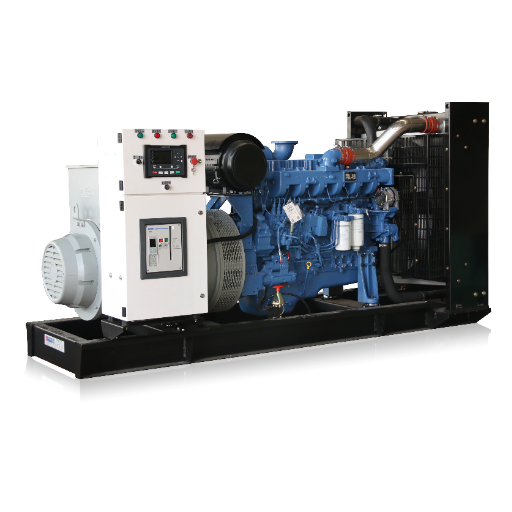
An emergency generator that is not regularly tested is not an emergency generator. It is a decorative steel box.
Weekly Inspections
Every week, a qualified technician must visually inspect:
- Fuel level, leaks, and water contamination
- Coolant level and freeze protection
- Engine oil level and condition
- Battery electrolyte, terminals, and voltage
- Control panel indicators and fault codes
- Enclosure ventilation and block heater operation
Monthly Loaded Testing
NFPA 110 requires a minimum 30-minute loaded test every month. The generator must attain 30% of its nameplate kW rating or reach the exhaust temperature level established by the manufacturer.
Operating at loads lower than 30% causes wet stacking which results in unburned fuel and carbon build-up within the exhaust system. Wet stacking leads to a 15-25% efficiency decline which progresses until it eventually results in complete engine failure.
A manufacturing plant in Ohio skipped annual load bank testing for two consecutive years because “the generator always started fine during the monthly 5-minute no-load runs.” The generator experienced carbon deposits after a winter storm caused a 14-hour power outage which resulted in a generator overload that required total engine repairs to be performed. The repair bill: 47,000. Thelostproduction:47,000. Thelostproduction:220,000.
For proper load bank testing procedures aligned with NFPA 110, (refer to our step-by-step testing guide.)
Annual and Triennial Testing
The 2025 edition of NFPA 110 revised the annual load bank test protocol to 1.5 continuous hours:
- 50% load for 30 minutes
- 75% load for 60 minutes
Level 1 systems also require a 4-hour continuous test every 36 months (triennial). This extended test reveals problems that shorter intervals miss: fuel pump starvation, overheating under sustained load, control system drift, and vibration-related connection failures.
Battery Maintenance
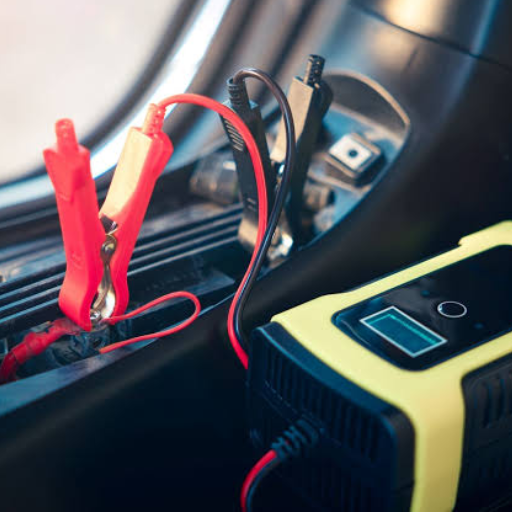
Approximately 80% of generator starting failures are battery-related. Causes include sulfation, loose terminals, temperature extremes, and simple aging. Best practice calls for weekly inspections, monthly testing (impedance or conductance), and replacement every 3-5 years.
Why Source Directly from the Manufacturer?
The equipment needs to be sourced after you have completed generator sizing and compliance requirement definition. The selection process determines system costs, product customization options, required documentation materials, and future technical assistance.
Trading companies add 20-40% markup while offering zero engineering accountability. They sell whatever is in stock, regardless of whether it matches your site requirements. When a part fails three years later, they have no warehouse, no schematics, and no technical staff to help.
As a source manufacturer established in 1999 with a 300,000-square-meter facility, ZC Power operates differently:
- Factory-direct pricing: You pay the true manufacturing cost, not a middleman markup.
- Custom engineering: We configure emergency generators from 8kVA to 4000kVA for exact voltage, frequency, canopy, and environmental requirements.
- Certified pre-shipment testing: Every unit undergoes rigorous load bank testing in our national standard testing center. We guarantee 100% of rated output before the generator leaves our facility.
- OEM and ODM capabilities: Distributors can brand our equipment with their own logos, colors, and canopies.
- Lifetime support: Our team of 80+ technical engineers provides installation guidance, commissioning assistance, and direct OEM parts supply to facilities worldwide.
Frequently Asked Questions
What is the difference between an emergency generator and a standby generator?
Technically, an emergency generator serves life-safety systems (NFPA 110 Level 1, NEC Article 700) while a standby generator provides power to essential loads which must be maintained according to regulations and optional loads which companies choose to implement. The public uses the two words as if they have the same meaning.
How do I size an emergency generator for a hospital?
You need to determine total electrical load which includes motor starting inrush and then apply both altitude and temperature derating factors before adding a 20-25% growth margin to select a unit that meets prime or continuous power requirements. Hospital systems must also meet NFPA 99, NFPA 110 Level 1 Type 10, and CMS 96-hour fuel requirements.
How often should an emergency generator be tested?
NFPA 110 requires weekly visual inspections, monthly loaded tests (30 minutes at 30% minimum load), annual load bank tests (1.5 hours under the 2025 edition), and triennial 4-hour tests for Level 1 systems.
Can I buy a custom emergency generator direct from the manufacturer?
Yes. As a true source manufacturer, ZC Power builds custom emergency generators with your exact voltage, frequency, canopy, and control specifications. We support OEM branding and export to over 50 countries.
Conclusion
Specifying an emergency generator is one of the most consequential engineering decisions a facility manager or project contractor makes. The correct system delivers trustworthy protection for multiple decades. The incorrect system establishes a deceptive security feeling which breaks down at the most dangerous time.
Key takeaways:
- Size for starting watts, not just running watts, and always apply environmental derating.
- Match the generator rating (standby, prime, or continuous) to your facility’s uptime requirements.
- Understand NFPA 110 classifications and testing schedules before the AHJ inspector shows up.
- Design fuel storage around the 133% rule, and maintain fuel quality proactively.
- Source directly from a certified manufacturer with proven load bank testing and long-term engineering support.
An emergency generator should be treated as permanent infrastructure instead of being treated as a temporary product acquisition. ZC Power has dedicated 25 years to building emergency power systems which hospitals and data centers and industrial facilities use during power outages. Our ISO9001/CE-certified generators undergo testing at 110% of their rated capacity in our national standard testing center while our team of 80 engineers is available to support your project throughout the globe.
To optimize UPS systems, generator integration, and sizing for industrial use, (see our complete UPS backup power guide.)