
Prime vs Standby Power: How to Choose the Right Generator Rating
A 500 kW generator set is not always a 500 kW generator set. The same engine can carry three different ratings depending on how long and how hard it runs. Prime vs standby power is the most misunderstood distinction in generator procurement, and choosing the wrong rating can void your warranty, cut engine life in half, and cost more than the original machine.
In 2023, a construction contractor in West Africa learned this the expensive way. The project needed eight hours of reliable power every day at a remote quarry with no grid connection. To save capital, the procurement team bought a 500 kVA standby-rated genset because the nameplate kW matched the load. Within 18 months the engine overheated, the cylinder head cracked, and the manufacturer refused warranty coverage because the unit had been run in prime duty. The rebuild cost exceeded the price difference of a correctly specified prime-rated set.
This guide explains the difference between prime and standby power ratings, introduces continuous and limited-time power, and shows how to match the ISO 8528-1 rating to your real operating conditions. You will also see how Shandong ZC Power CO., LTD. validates PRP, ESP, and COP ratings in our national standard testing center before shipment.
Key Takeaways
- Standby power (ESP) is for emergency backup, typically up to 200 hours per year, with variable load and a 70% average load factor.
- Prime power (PRP) is for continuous or frequent operation as the primary source, with unlimited annual hours and a 70% average load factor.
- Continuous power (COP) is for constant 100% load baseload applications, unlimited hours, no overload allowance.
- A prime-rated genset usually costs 10–20% more than a standby-rated equivalent, but misrating can cut overhaul life by 50–70%.
- Always match the rating to annual run hours, load profile, and environmental derating, not just the nameplate kW.
What Is Standby Power (ESP)?
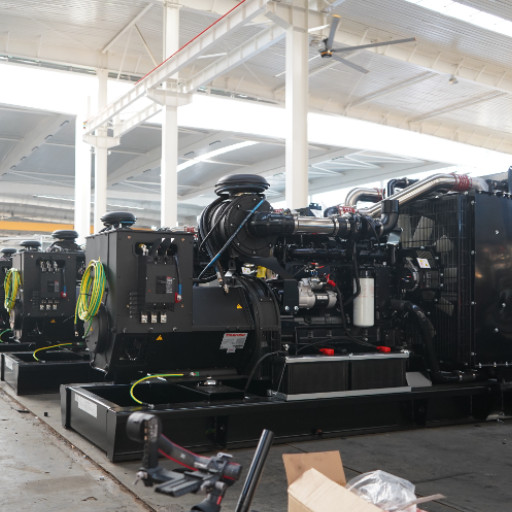
Standby power, also called Emergency Standby Power (ESP) under ISO 8528-1, is the rating used when a generator set supplies power only during utility failure. Under the strict ISO definition, an ESP-rated unit runs no more than 200 hours per year at a variable load with an average load factor not exceeding 70% of the rated power.
Many engine manufacturers also offer a broader standby rating that allows up to 500 hours per year. This is common in regions with unstable grids where outages are frequent but still measured in hours, not days. The key point is that standby duty is not continuous duty. The engine, alternator, cooling system, and lubrication are sized for intermittent operation with rest periods between runs.
Typical standby power applications include:
- Hospitals, surgical suites, and critical care units
- Data centers and server farms
- Commercial high-rise emergency systems
- Fire pumps, elevators, and egress lighting
- Telecom towers and cellular base stations
If your facility normally runs on a reliable grid and the generator exists only for outages, standby power is the right choice. For a deeper look at standby procurement, see our complete commercial standby generator buying guide.
What Is Prime Power (PRP)?
Prime power, or Prime Rated Power (PRP), is the rating used when the generator set is the main source of power. ISO 8528-1 allows unlimited annual operating hours for PRP, provided the average load factor over any 24 hours does not exceed 70% of the rated power and the load is variable.
PRP units also include a 10% overload allowance for one hour in every twelve, but the total overload hours are limited. This means a 1,000 kVA PRP genset can briefly deliver 1,100 kVA, yet its 24-hour average should stay near 700 kVA. If your load is steady and near 100%, you do not need PRP; you need COP.
Because the engine runs far more hours under thermal and mechanical stress, prime-rated gensets use:
- Heavier-duty cooling radiators and fans
- Larger oil sumps and enhanced filtration
- More robust governors and voltage regulators
- Alternators with better transient response and insulation
Typical prime power applications include:
- Remote mining and quarry operations
- Off-grid construction sites
- Oil and gas exploration camps
- Primary power for unreliable or rural grids
- Industrial plants in regions with frequent long outages
A diesel standby generator is built for emergencies. A prime-rated genset is built to be the primary workhorse. For more on diesel standby solutions, read our guide on diesel standby generator for critical applications.
What Is Continuous Power (COP)?
Continuous Operating Power (COP) is the rating used when a generator set runs at a constant load for an unlimited number of hours per year. Unlike PRP, COP allows no overload allowance. The average load factor is effectively 100% of the rated power.
COP units are physically similar to PRP units in terms of heavy-duty construction, but they are tuned for steady-state operation rather than load variation. They require larger fuel systems, oversized radiators, and alternators designed for constant thermal stress.
Typical continuous power applications include:
- Remote pumping stations and irrigation systems
- Baseload industrial processes
- Parallel grid support and peak shaving
- Constant-load mining operations
- Offshore platforms with steady demand
If your load profile is flat and continuous, specifying PRP instead of COP leaves money on the table in fuel efficiency and maintenance. Conversely, specifying COP for a variable load wastes capital on unnecessary capacity.
Prime vs Standby vs Continuous: Side-by-Side Comparison
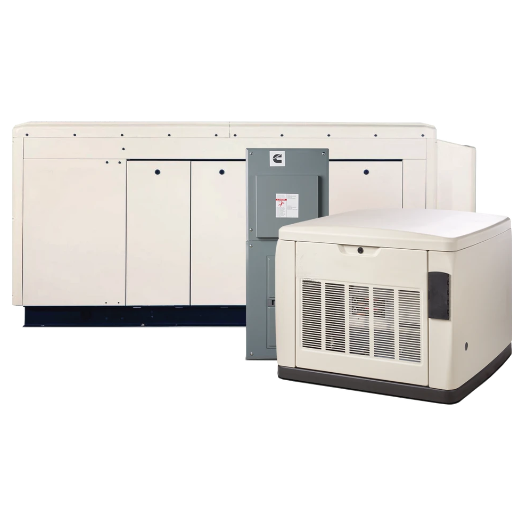
The table below compares the four ISO 8528-1 ratings side by side.
| Rating | Code | Annual Hours | Load Factor | Overload | Typical Use |
|---|---|---|---|---|---|
| Emergency Standby Power | ESP | ≤ 200 | Variable, ≤70% average | Brief motor-starting spike | Hospitals, data centers, emergency backup |
| Limited Time Power | LTP | ≤ 500 | Variable, ≤70% average | Limited | Seasonal or project-based power without grid |
| Prime Rated Power | PRP | Unlimited | Variable, ≤70% average | 10% for 1 h/12 h, limited total | Remote construction, mining, unreliable grids |
| Continuous Operating Power | COP | Unlimited | Constant, ~100% | None | Baseload, pumping, parallel grid support |
The same diesel engine is physically capable of all four ratings. The difference is the nameplate output. A given engine may be rated 550 kVA in ESP, 500 kVA in PRP, and 450 kVA in COP. The lower rating for PRP and COP accounts for the longer thermal cycles and reduced maintenance intervals that continuous operation demands.
Why the Same Engine Has Different Ratings
A generator set rating is not a physical limit. It is an engineering contract between the manufacturer and the buyer. The contract defines how long the machine can run, how much load it can carry, and how often it must be serviced before overhaul.
Thermal Stress and Load Factor
Diesel engines generate heat. In standby duty, the engine runs briefly and then cools down. In prime duty, heat builds up over long runs and must be removed continuously. That is why PRP engines need larger radiators, higher-capacity coolant pumps, and sometimes tropical-grade cooling packages.
The 70% average load factor rule protects the engine from sustained high combustion temperatures. Running a PRP unit at 95% average load is outside the rating and will accelerate piston, ring, and bearing wear.
Maintenance and Overhaul Life
Standby gensets typically need oil and filter changes based on calendar time because the operating hours accumulate slowly. Prime gensets need maintenance based on running hours. A PRP unit running 4,000 hours per year may need an overhaul after 12,000–18,000 hours, while an ESP unit running 100 hours per year can last decades before overhaul.
Warranty Implications
Manufacturer warranties are tied to the declared duty. If you buy an ESP-rated unit and run it in prime duty, the manufacturer can void the warranty on the engine, alternator, and controls. The data loggers on modern controllers make this easy to prove.
Environmental Derating
Altitude, temperature, humidity, and dust all reduce output. A 500 kVA PRP unit at sea level may deliver only 425 kVA at 2,000 meters altitude. The same applies in reverse: a properly specified unit must be rated for the actual site conditions, not the brochure conditions.
Common Applications by Industry
Choosing between prime vs standby power starts with the application. Below are the most common industry mappings.
Hospitals and Healthcare
Hospitals need standby power for life-safety and critical loads. Most healthcare essential electrical systems fall under ESP or manufacturer-extended standby ratings. In regions with unstable grids, some non-critical branches may use PRP. For more on healthcare standby requirements, see our NFPA 110 Type 10 vs Type 60 guide.
Data Centers
Data centers traditionally use standby-rated units with fast-start ATS systems. Large hyperscale facilities sometimes use prime-rated units in a “Prime-DCP” style configuration that allows higher average load factors. The right rating depends on the facility tier and expected annual run hours.
Mining and Remote Construction
These sites almost always need PRP because there is no grid, or the grid is too unreliable to count on. The units often run 8–24 hours per day under variable load from crushers, conveyors, and camp facilities. Trailer-mounted or containerized prime-rated gensets are common.
Manufacturing Plants
A plant connected to a stable grid with occasional outages needs standby power. A plant in an area with daily load shedding or rolling blackouts may need PRP or LTP. See our guide on how to size a standby diesel generator for a manufacturing plant for the load calculation side.
Baseload Industrial
Constant-load applications such as remote pumping, gas compression, and parallel grid support need COP. The unit runs at a steady setpoint, so the rating is matched to 100% load rather than variable load.
Cost and Lifecycle Impact
The upfront price difference between a standby-rated and a prime-rated genset is usually 10–20%. The real cost difference appears over the lifecycle.
Upfront Cost
A 500 kVA ESP genset costs less than a 500 kVA PRP genset because the same engine is derated less aggressively in standby duty. The manufacturer can quote a higher kVA number for the same hardware. A prime-rated unit with the same kVA requires a larger engine or a heavier-duty cooling and alternator package.
Fuel and Maintenance
Prime-rated units run more hours, so fuel and maintenance costs are higher in absolute terms. However, they are designed for that duty. Running an ESP unit in prime duty increases oil consumption, causes wet stacking from low-load operation, and shortens overhaul intervals.
The Cost of Misrating
Running an ESP-rated unit in prime duty can reduce overhaul life by 50–70% and void the warranty. When the engine fails prematurely, the buyer pays for:
- Engine rebuild or replacement
- Rental power during downtime
- Lost production revenue
- Potential contractual penalties
In almost every case, the “savings” from buying a smaller standby unit disappear after the first major failure.
How to Select the Right Rating for Your Project
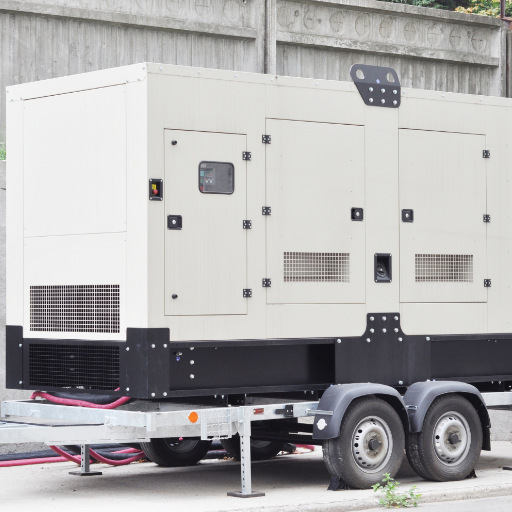
Use this five-step process to choose between prime vs standby power for your next generator set.
Step 1: Estimate Annual Run Hours
If the unit will run fewer than 200 hours per year, ESP is usually correct. Between 200 and 500 hours, consider LTP or manufacturer-extended standby. Above 500 hours, lean toward PRP. Unlimited continuous operation requires COP.
Step 2: Determine Load Variability and Average Load Factor
Calculate the average load over a representative 24-hour period. If it stays below 70% and varies, PRP is appropriate. If it is steady and near 100%, choose COP.
Step 3: Check Grid Reliability and Outage Duration
A reliable grid with short outage points to standby power. An unreliable grid with multi-hour or multi-day outage points to prime power.
Step 4: Account for Environmental Derating
Adjust the required kVA for altitude, ambient temperature, humidity, and dust. A unit rated at ISO conditions may not deliver the same output at your site.
Step 5: Confirm Warranty and Service Intervals
Match the warranty conditions, service schedule, and spare-parts plan to the intended duty. If the manufacturer limits the warranty to 500 hours per year, do not run the unit 2,000 hours per year.
ZC Power: Factory-Tested Ratings from 8 kVA to 4000 kVA
Shandong ZC Power CO., LTD. has manufactured diesel generator sets since 1999. Our 300,000-square-meter facility in Jining, Shandong, includes dedicated production lines and a national standard testing center where every genset is load-bank tested before shipment.
Our standard scope for prime and standby power projects includes:
- Diesel generator sets from 8 kVA to 4000 kVA
- Cummins, Perkins, Yuchai, and Weichai engine options
- Stamford, Leroy-Somer, and Faraday copper-wound alternators
- Deep Sea Electronics and SmartGen digital controllers
- Open, silent, trailer-mounted, and containerized configurations
- Custom voltage and frequency for global grids
- Full-load testing with rated-duty documentation
- OEM and ODM services for distributors and large projects
For a mining microgrid project in South America, we supplied two 1000 kVA PRP containerized gensets running in parallel. Factory testing confirmed each unit could sustain the 70% average load factor under tropical ambient conditions before commissioning on site. The project has operated for more than 12,000 hours without an unplanned outage.
If you are unsure whether your project needs prime, standby, or continuous power, our engineering team can review your load list, operating hours, and site conditions before you commit to a specification. Contact our engineering team for a free duty-cycle review and factory-direct quotation.
Conclusion
Prime vs standby power is not a marketing label. It is an engineering definition of how a generator set can be operated without voiding the warranty or shortening its life. Standby power is for emergency backup with limited annual hours. Prime power is for frequent or continuous use as the primary source. Continuous power is for a steady baseload at 100% rated load.
To choose correctly, follow this sequence:
- Estimate annual run hours.
- Determine load variability and average load factor.
- Check grid reliability and expected outage duration.
- Apply environmental derating for altitude, temperature, and dust.
- Confirm warranty terms and maintenance intervals match the duty.
At Shandong ZC Power CO., LTD., we engineer and factory-test diesel generator sets for ESP, PRP, and COP duty. Our 80+ technical engineers, national standard testing center, and 25 years of manufacturing experience give facility managers and project contractors the confidence that every unit will perform to its rated duty. Contact our engineering team today to request a duty-cycle review, factory tour, or factory-direct quotation for your next generator project.


