
Diesel Standby Generator: Why Diesel Remains the Fuel of Choice for Critical Commercial Facilities
A diesel standby generator is the dominant backup power choice for hospitals, data centers, fire suppression systems, and mission-critical manufacturing because it provides on-site fuel independence, meets strict NFPA 20 fire pump requirements, and starts reliably within 10 seconds regardless of external utility infrastructure. While natural gas standby units work well for some commercial buildings, diesel gensets remain the standard where failure is not an option.
Consider what happened during Hurricane Sandy in 2012. NYU Langone Medical Center in Manhattan had diesel standby generators and on-site fuel storage. When the storm flooded the basement electrical rooms and Con Edison cut power, the hospital’s diesel gensets kept critical care running for five days. Meanwhile, several nearby facilities that depended on natural gas infrastructure found their standby systems useless when pipeline pressure dropped across the region. The difference between operational continuity and catastrophic evacuation came down to one decision: diesel standby power with stored fuel on site.
In this guide, we will explain exactly why diesel dominates critical standby applications, when diesel is the clear choice versus natural gas, how NFPA codes govern fuel storage requirements, and what you need to know about fuel consumption, tank sizing, and cold-weather operability. You will also see how Shandong ZC Power CO., LTD. engineers diesel standby generator sets from 8kVA to 4000kVA for facilities that cannot afford to lose power.
Key Takeaways
- Diesel standby generators provide on-site fuel independence that natural gas cannot match during widespread infrastructure failures.
- NFPA 20 fire pump codes and NFPA 110 Level 1 systems typically require or strongly favor diesel standby power for hospitals and high-rise buildings.
- Most healthcare facilities must store 96 hours of diesel fuel on site; other critical facilities commonly need 48 to 72 hours.
- Diesel fuel stores 6 to 12 months without treatment and 24+ months with fuel polishing, making it ideal for rarely used standby systems.
- A diesel standby generator typically consumes 0.25 L/kWh at 75% load; use this to size fuel tanks accurately and avoid compliance violations.
What Is a Diesel Standby Generator?
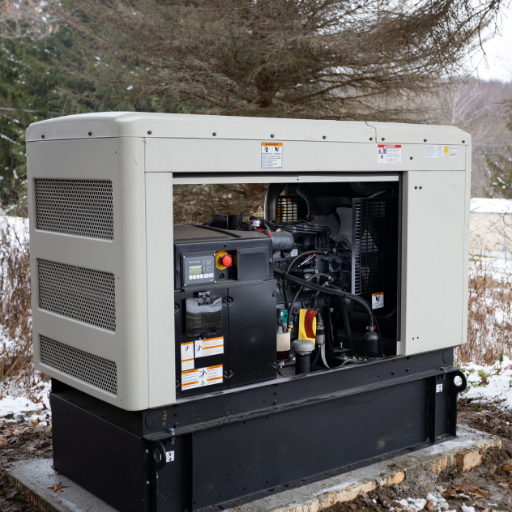
A diesel standby generator is a complete generator set (genset) powered by a diesel compression-ignition engine and rated for Emergency Standby Power (ESP) under ISO 8528-1. Unlike prime power or continuous duty diesel generators, a standby-rated diesel genset is designed to run only during utility power outages, typically for a limited number of hours per year at full load.
Diesel engines are uniquely suited for intermittent standby duty for three reasons. First, compression ignition eliminates the need for spark plugs and complex ignition systems that degrade during long idle periods. Second, diesel fuel has a high energy density of 35.8 MJ per liter, meaning a relatively small on-site tank can support many hours of runtime. Third, diesel engines accept heavy electrical loads faster than most spark-ignited alternatives, which matters when large motors must restart during an outage.
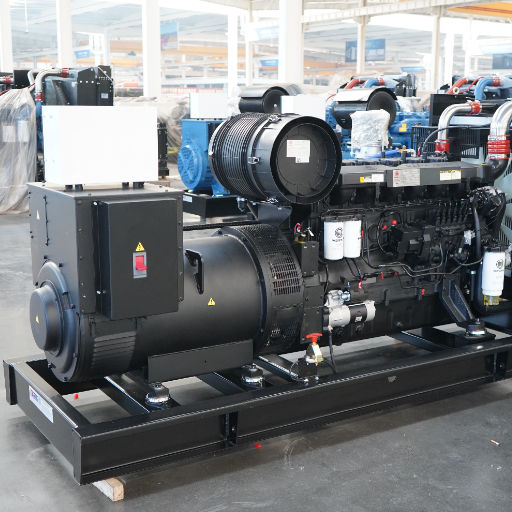
At ZC Power, our diesel standby generator sets integrate world-leading diesel engines from Cummins, Perkins, Yuchai, and Weichai with copper-wound alternators and digital Deep Sea or SmartGen controllers. Every unit undergoes full-load testing in our national standard testing center before shipment. If you are evaluating standby power for the first time, our complete commercial standby generator buying guide provides a broader system-level overview.
5 Reasons Diesel Dominates Critical Standby Applications
1. On-Site Fuel Independence
Natural gas standby generators depend on pressurized pipeline infrastructure. During earthquakes, hurricanes, ice storms, and grid-collapse events, those pipelines can lose pressure or be deliberately shut down for safety. A diesel standby generator stores its own fuel in tanks located at your facility. As long as the tank has fuel, the genset runs.
During the Texas Winter Storm in February 2021, natural gas production and pipeline pressure collapsed across the state. Facilities with gas-dependent standby systems discovered that their “backup” power was no backup at all. Hospitals, data centers, and water treatment plants with diesel standby generators and stored fuel maintained operations while others went dark.
2. NFPA 20 Fire Pump Requirements
NFPA 20, the Standard for the Installation of Stationary Pumps for Fire Protection, either mandates diesel engine drivers for fire pumps or requires an extremely reliable standby electrical supply when electric fire pumps are used. In practice, this means most high-rise buildings, hospitals, and large industrial facilities end up with diesel either driving the fire pump directly or powering a diesel standby generator that feeds the electric fire pump.
This regulatory reality gives diesel a structural advantage in critical commercial construction. A facility manager cannot simply choose natural gas standby power if the local authority having jurisdiction (AHJ) requires diesel-driven fire suppression support.
3. Faster Starting and Load Acceptance
A well-maintained diesel standby generator can reach rated speed and accept full load in 8 to 12 seconds. This meets the NFPA 110 Type 10 requirement, which mandates restoration of emergency power within 10 seconds for Level 1 systems such as hospital life safety circuits and surgical suites. Natural gas spark-ignition engines often take longer to start, especially in cold conditions, because they must establish fuel-air mixture and ignition before loading.
4. Higher Torque for Motor Starting Surge
Industrial and healthcare facilities are full of large electric motors: chillers, air handlers, compressors, pumps, and manufacturing equipment. These motors draw 3 to 6 times their running current when starting. Diesel engines produce high torque at low RPM, which helps the alternator maintain voltage and frequency during these locked-rotor amp (LRA) surges. For facilities with significant motor loads, a diesel standby generator often provides better surge performance than a similarly rated natural gas unit.
Rajesh Kumar managed a textile finishing plant outside Chennai. After the 2015 floods cut natural gas supply for 72 hours, his gas standby genset sat useless while refrigerated dye stocks spoiled. He replaced it with a 500kW diesel standby generator and installed a 10,000-liter on-site diesel tank with a fuel polishing system. When Cyclone Michaung hit in 2023, the plant maintained continuous production for four days while competitors lost inventory.
5. Proven Long-Term Storage and Stability
Diesel fuel is a liquid that stores easily in tanks with minimal infrastructure. With proper additive treatment, it remains stable for 6 to 12 months. With a fuel polishing system that removes water, algae, and particulates, diesel can remain usable for 24 months or longer. This makes diesel ideal for standby systems that may sit idle for months between outages. Natural gas, by contrast, requires a continuous pipeline connection that depends on external infrastructure working perfectly at the moment of crisis.
Diesel vs Natural Gas for Commercial Standby: Decision Framework
Not every facility needs diesel. The right fuel choice depends on criticality, load profile, local infrastructure, and code requirements. Use the following framework to decide.
When Diesel Is the Clear Choice
Choose a diesel standby generator when:
- Your facility is a hospital, surgical center, or nursing home with NFPA 99 life safety requirements.
- You operate a data center that needs N+1 redundancy and guaranteed runtime independent of utility gas.
- Your load includes large motor starting surges from chillers, compressors, or manufacturing equipment.
- You are in a seismically active, hurricane-prone, or winter-storm-prone region where pipeline disruption is a realistic risk.
- Your site has no natural gas service, which is common for remote mining, agriculture, and industrial installations.
- Local code requires diesel fire pump drivers or diesel standby power for fire suppression.
When Natural Gas May Be Viable
Natural gas can be a reasonable standby fuel when:
- Your building is a low-criticality office or retail space in an urban area with highly reliable gas utility service.
- Local emissions restrictions make diesel particulate or NOx compliance prohibitively expensive.
- You need exceptionally long runtime for a non-critical load and do not want to manage fuel delivery and rotation.
- The load is primarily electronic with minimal motor starting surge.
Diesel vs Natural Gas Comparison for Standby Applications
| Factor | Diesel Standby Generator | Natural Gas Standby Generator |
|---|---|---|
| Fuel storage | On-site tank; independent | Pipeline dependent |
| Start-to-load time | 8-12 seconds | 15-45 seconds |
| Motor starting surge | Excellent torque | Good; lower torque per displacement |
| Fuel energy density | 35.8 MJ/L | 0.036 MJ/L (compressed) |
| NFPA 20 fire pump | Required or preferred | Limited acceptance |
| Runtime in disaster | Unlimited with fuel delivery | Limited by pipeline pressure |
| Maintenance interval | Longer (diesel robustness) | Shorter (spark ignition systems) |
| Emissions | Higher particulates/NOx | Lower particulates |
| Initial cost | Lower per kW | Higher per kW for large units |
For a deeper general comparison of these two fuels across all generator applications, see our diesel vs natural gas generator comparison.
NFPA Code Requirements for Diesel Standby Systems
Code compliance is where diesel standby power distinguishes itself. Three NFPA standards govern most diesel standby installations.
NFPA 110 Fuel Supply Requirements
NFPA 110, the Standard for Emergency and Standby Power Systems, requires that Level 1 emergency systems have sufficient fuel on site to operate the full connected load for a duration specified by the authority having jurisdiction (AHJ). Typical AHJ interpretations include:
- Hospitals and healthcare Level 1 systems: 96 hours of fuel on site
- Critical communication and data centers: 48 to 72 hours
- High-rise building emergency systems: 24 to 48 hours
- Other commercial Level 2 systems: As determined by local code
The fuel storage calculation is straightforward. For a diesel standby generator rated at 500kW running at 75% load:
- Hourly consumption: 500 kW x 0.75 x 0.25 L/kWh = 93.75 L/hour
- 72-hour requirement: 93.75 x 72 = 6,750 liters
- Add 15% tank unusable volume: 6,750 x 1.15 = 7,763 liters minimum tank size
In practice, most engineers round up to the next standard tank size to provide additional contingency.
NFPA 20 Fire Pump Integration
NFPA 20 requires that fire pumps have a reliable power supply. For electric fire pumps, this usually means connection to a standby generator. For diesel-driven fire pumps, the pump has its own diesel engine and does not rely on the building’s electrical system. In either case, diesel is the default fuel for life safety fire suppression.
When sizing a diesel standby generator for a facility with electric fire pumps, you must include the fire pump motor in the total standby load. Fire pumps commonly account for 30% to 50% of the total standby kW requirement in hospitals and high-rise buildings.
NFPA 30 and NFPA 37 Fuel Storage Codes
NFPA 30 governs the storage of flammable and combustible liquids, including diesel fuel. NFPA 37 covers the installation and use of stationary combustion engines and gas turbines. Key requirements include:
- Above-ground diesel storage tanks must be listed and labeled for the purpose.
- Tanks require secondary containment sized to hold 110% of the largest tank volume or 10% of total storage, whichever is greater.
- Tank fill and vent piping must be properly sized to prevent spillage and pressure buildup.
- Fuel transfer pumps and day tanks must meet electrical classification requirements for the area.
Working with a manufacturer that understands these codes reduces installation risk. At ZC Power, our engineering team provides tank sizing and integration guidance as part of the diesel standby generator specification process.
Diesel Fuel Storage Economics and Maintenance
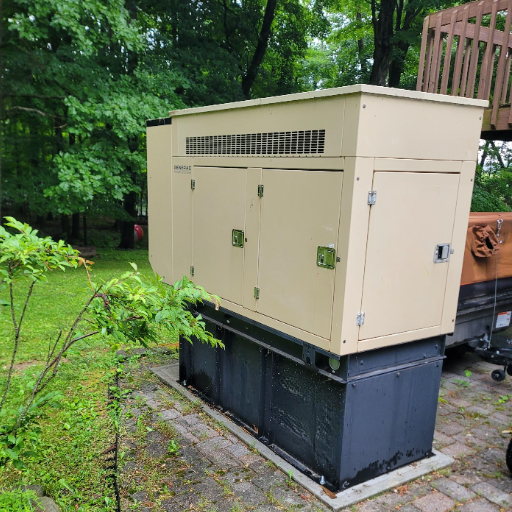
Buying the genset is only part of the investment. Fuel storage economics determine whether your standby system works when needed.
Fuel Consumption by Standby Rating
The table below shows approximate diesel consumption at 75% load for common standby ratings. Consumption will vary by engine brand, ambient conditions, and load power factor.
| Standby Rating | Fuel Consumption at 75% Load |
|---|---|
| 100 kW | 25 L/hour |
| 250 kW | 63 L/hour |
| 500 kW | 125 L/hour |
| 1,000 kW | 250 L/hour |
| 1,500 kW | 375 L/hour |
| 2,000 kW | 500 L/hour |
Use these figures for initial fuel tank sizing, then confirm with the engine manufacturer’s official fuel consumption curve.
Tank Sizing Formula
The minimum tank size for code compliance is:
Minimum tank volume = (Hourly consumption x Required hours) x 1.15
The 1.15 multiplier accounts for unusable volume at the bottom of the tank and slight variations in consumption. For a 1,000kW diesel standby generator with a 96-hour hospital requirement:
- Hourly consumption: 250 L/hour
- 96-hour fuel need: 24,000 liters
- With 15% margin: 27,600 liters minimum tank size
A standard 30,000-liter above-ground tank would be the practical choice.
Fuel Rotation and Polishing
Diesel fuel degrades over time through oxidation, water contamination, and microbial growth (commonly called “diesel bug”). Without treatment, fuel quality begins to decline after 6 to 12 months. Most facilities rotate fuel annually by running it through active equipment or replacing it.
A fuel polishing system circulates fuel through filters and water separators continuously or on a timed schedule. This extends storage life to 24 months or longer and reduces the risk of generator failure caused by contaminated fuel during an outage. For facilities with 10,000+ liters of stored diesel, fuel polishing typically pays for itself within two years by reducing disposal and replacement costs.
Cold Weather Operability
Standard #2 diesel fuel begins to gel around -15°C (5°F). In cold climates, this creates a real risk of fuel starvation during a winter outage. Solutions include:
- Winter blend diesel with cloud-point depressants, rated for -30°C or lower.
- Fuel heating systems that warm fuel before it enters the engine.
- Engine block heaters and coolant heaters that keep the engine warm for fast starting.
- Insulated or heated enclosures for the genset and day tank.
At ZC Power, we regularly configure diesel standby generator sets for arctic environments with heated enclosures, cold-weather starting aids, and fuel heating loops. If your project is in a cold climate, mention this early in the specification process.
Diesel Standby Generator Sizing and Selection
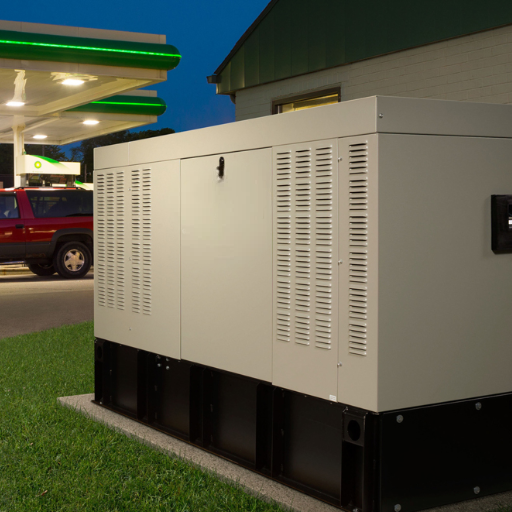
Diesel-Specific Sizing Considerations
Diesel fuel has consistent energy density, so a diesel standby generator does not require additional derating for fuel type. However, standard derating rules still apply. Altitude above 1,000 meters and ambient temperatures above 40°C will reduce output. You must also add the electrical load of block heaters, coolant heaters, and fuel transfer pumps to your total load calculation.
For a complete sizing methodology, refer to our commercial standby generator sizing guide. The principles are the same whether you choose diesel or natural gas; the difference is that diesel handles motor starting surge and environmental extremes more reliably.
Capacity Ranges for Commercial Applications
Most commercial and industrial facilities fall into one of these capacity tiers:
- Small commercial: 50 to 150 kW for retail, restaurants, and small offices
- Medium commercial: 200 to 500 kW for manufacturing plants, clinics, and mid-size data centers
- Large industrial: 600 to 2,000 kW for heavy manufacturing, hospitals, and large logistics centers
- Critical facilities: N+1 redundant configurations where two or more diesel standby generators share the load
ZC Power Diesel Standby Range
Shandong ZC Power CO., LTD. manufactures diesel standby generator sets from 8kVA to 4000kVA in open, silent, trailer-mounted, and containerized configurations. Our standard scope includes:
- Premium diesel engines from Cummins, Perkins, Yuchai, and Weichai
- Copper-wound alternators from Stamford, Leroy-Somer, and Faraday
- Deep Sea Electronics or SmartGen digital controllers with AMF capability
- Sound-attenuated canopies rated below 75 dB at 7 meters
- Custom voltage and frequency configurations for global grids
- National standard testing center load-bank validation before shipment
If your facility needs a diesel standby generator for a critical application, our engineering team can provide a complimentary specification review, fuel tank sizing assistance, and factory-direct quotation.
Common Mistakes When Specifying Diesel Standby
Even experienced facilities teams make these errors when purchasing a diesel standby generator:
Mistake 1: Undersizing fuel storage tanks. Some buyers install the minimum tank required by code without considering actual load factor, delivery lead times during disasters, or AHJ interpretations. Always size fuel storage for a realistic worst-case runtime.
Mistake 2: Ignoring fuel rotation requirements. A generator with contaminated fuel is worse than no generator at all, because it creates false confidence. Budget for annual fuel testing, additive treatment, or a fuel polishing system.
Mistake 3: No cold-weather preparation. Facilities in northern climates that skip winter diesel blends or fuel heating discover their diesel standby generator will not start precisely when winter storms cause the most outages.
Mistake 4: Confusing standby and prime ratings for consumption calculations. Standby ratings are higher than prime ratings for the same engine. Always use the standby rating when sizing fuel tanks for emergency operation.
Mistake 5: Forgetting fire pump load in total sizing. A 500kW facility load plus a 200kW fire pump equals 700kW total standby requirement. Omitting the fire pump produces an undersized diesel standby generator that cannot carry the full emergency load.
Diesel Standby Generator Quick Reference
The table below summarizes typical diesel standby generator configurations by facility type. These are budgetary estimates only; always confirm with a professional load study and local AHJ requirements.
| Facility Type | Typical kW Range | Fuel Tank Size (72 hours) | Key Code Requirement |
|---|---|---|---|
| Small retail/restaurant | 50-150 kW | 2,000-6,000 L | NFPA 110 Level 2 |
| Medical clinic | 150-300 kW | 6,000-12,000 L | NFPA 99, NFPA 110 |
| Hospital | 500-2,000+ kW | 25,000-100,000+ L | NFPA 110 Level 1, 96-hour fuel |
| Data center | 500-2,000+ kW | 25,000-100,000+ L | Tier III/IV uptime standards |
| Manufacturing plant | 300-1,500 kW | 15,000-60,000 L | NFPA 70, local industrial codes |
| High-rise building | 200-800 kW | 10,000-40,000 L | NFPA 20 fire pump integration |
Estimates assume 75% average load factor and include 15% tank margin. Actual requirements vary by facility design and local authority having jurisdiction.
Conclusion
Diesel standby power remains the standard for hospitals, data centers, fire suppression systems, and critical manufacturing because it delivers what other fuels cannot: on-site fuel independence, code-compliant reliability, and proven performance under disaster conditions. A properly specified diesel standby generator with adequate fuel storage, regular fuel maintenance, and cold weather preparation provides a 15-to-20-year insurance policy against grid failure.
When you plan your next standby power project, follow this sequence:
- Determine your facility’s critical load and largest motor starting surge.
- Calculate required runtime based on NFPA 110 level and AHJ requirements.
- Size the diesel fuel storage tank using actual consumption at 75% load.
- Specify cold weather, fuel polishing, and enclosure features for your climate.
- Select a manufacturer with certified testing, proven components, and engineering support.
At Shandong ZC Power CO., LTD., we have built diesel standby generator sets since 1999. Our 300,000-square-meter facility, national standard testing center, and team of 80+ engineers give facility managers and project contractors the confidence that their standby power will perform exactly when it matters most. Contact our engineering team today for a free diesel standby generator specification review and factory-direct quote tailored to your critical facility.


