Diesel Generator Price Guide 2026: Cost per kW by Size
Diesel generator equipment costs 125−125−800 per kW in 2026, with small commercial units (20-75 kW) at the high end and industrial sizes (600+ kW) at the low end. A fully equipped 100 kW silent Tier 4 diesel genset typically runs 45,000−45,000−65,000 before installation.
When Ramesh Patel received quotes for a 500 kW standby unit for his Mumbai data center, he was prepared for the 85,000 equipment cost.What did not expect was the 85,000 equipment cost. What he did not expect was the 42,000 premium for Tier 4 Final compliance required by his client’s ESG mandate. That 49% increase blew his CapEx budget and forced him to renegotiate the entire project timeline.
You already know diesel generators are the workhorse of commercial backup power. What you need now is exact pricing data you can take to your finance team. This guide gives you cost-per-kW figures from 20 kW to 2 MW, explains how emissions tiers impact your budget, compares open-skid vs silent canopy configurations, and shows how factory-direct pricing changes the equation. We will cover size-class breakdowns, Tier 4 premiums, enclosure costs, brand tier comparisons, and the real total cost of ownership you should plan for.
Key Takeaways
- Diesel generator equipment costs 300−300−800/kW for small units, 250−250−600/kW for medium, and 125−125−400/kW for industrial sizes
- Tier 4 Final emissions compliance adds 40-50% to base equipment cost
- Silent canopy enclosures add 15-40% over open-skid pricing
- Factory-direct FOB pricing eliminates 15-40% dealer markup
- 2026 lead times range from 18 weeks (Tier 2 assemblers) to 100 weeks (Tier 1 large engines)
For natural gas equipment quotes and pipeline infrastructure costs, see our natural gas generator price comparison.
Diesel Generator Price Overview
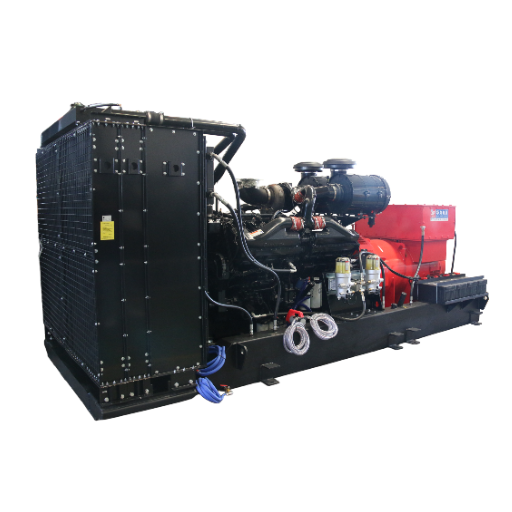
Diesel gensets dominate the commercial backup power market because they deliver reliable starting, high torque, and fuel energy density that no other technology matches at scale. Before you evaluate specific models, you need to understand what drives the base diesel generator price.
The cost-per-kW curve is inverse. Small units carry higher per-kW pricing because the fixed costs of the engine block, alternator, and control panel are spread across fewer kilowatts. Large industrial units achieve economies of scale that significantly push per-kW costs down. However, large units also require more expensive ancillary equipment. Cooling systems, exhaust aftertreatment, and fuel storage scale with output.
For a complete picture of how diesel pricing fits into the broader commercial market, see our full commercial generator price guide. That resource covers natural gas and propane alternatives, plus installation cost adders that apply regardless of fuel type.
Three factors determine where your specific quote falls within each range. First, the engine brand and alternator quality set the base equipment cost. Second, the enclosure type (open skid, standard silent, or super-silent) adds 15-40%. Third, emissions compliance tier (Tier 2/3 vs Tier 4 Final) can increase equipment cost by 40-50%.
Want to see how our factory-direct diesel gensets are engineered for your specific application? Explore our industrial diesel generator range to view standard and custom configurations.
Diesel Generator Price by Size Class
The most useful way to benchmark diesel generator price is by power class. Below are 2026 equipment-only ranges for open-skid and silent canopy configurations.
| Size Class | Open Skid (Equipment Only) | Silent Canopy (Equipment Only) | Typical Applications |
|---|---|---|---|
| 20-75 kW | 6,000−6,000−22,500 (300−300−400/kW) | 8,500−8,500−32,000 (425−425−550/kW) | Retail, small office, restaurant |
| 100-500 kW | 25,000−25,000−180,000 (250−250−360/kW) | 35,000−35,000−260,000 (350−350−520/kW) | Manufacturing, hospital, data center |
| 600-2000 kW | 75,000−75,000−400,000 (125−125−200/kW) | 110,000−110,000−600,000 (185−185−300/kW) | Mining, utility backup, industrial plant |
Small Commercial (20-75 kW)
Small diesel gensets in the 20-75 kW range serve retail stores, restaurants, small medical clinics, and remote telecom towers. Open-skid units start around 6,000fora20kWmodelandreach6,000fora20kWmodelandreach22,500 for a 75 kW unit. Standard silent canopies push that range to 8,500−8,500−32,000.
These units typically run on compact 3-cylinder or 4-cylinder diesel engines from manufacturers like Perkins, Deutz, or Yuchai. The alternator is usually a single-bearing brushless unit rated for standby duty. Control panels are often basic SmartGen or Deep Sea Electronics modules without remote monitoring.
Medium Commercial (100-500 kW)
The 100-500 kW segment represents the bulk of commercial standby power installations. Open-skid units range from 25,000fora100kWmodelto25,000fora100kWmodelto180,000 for a 500 kW unit. Silent canopy versions run 35,000−35,000−260,000.
Engines in this class typically come from Cummins, Perkins, Weichai, or Yuchai. Alternators are usually Stamford, Leroy-Somer, or Faraday copper-wound units. Control panels include AMF (Auto Mains Failure) functionality as standard. Fuel tanks are integrated into the base frame for silent canopy models.
For a precise sizing analysis, see our commercial generator cost per kW guide.
Large Industrial (600-2000 kW)
Industrial diesel gensets from 600 kW to 2 MW serve mining operations, utility peaking plants, large manufacturing facilities, and district heating backup. Open-skid units range from 75,000(75,000(125/kW) to 400,000(400,000(200/kW). Silent canopy versions run 110,000−110,000−600,000.
At this scale, engines come from Cummins, MTU, or MHI. Cooling systems transition from radiator-cooled to heat exchanger or remote radiator configurations. Exhaust aftertreatment becomes mandatory for Tier 4 compliance. Fuel systems require external storage tanks with secondary containment.
How Emissions Tier Affects Diesel Generator Price
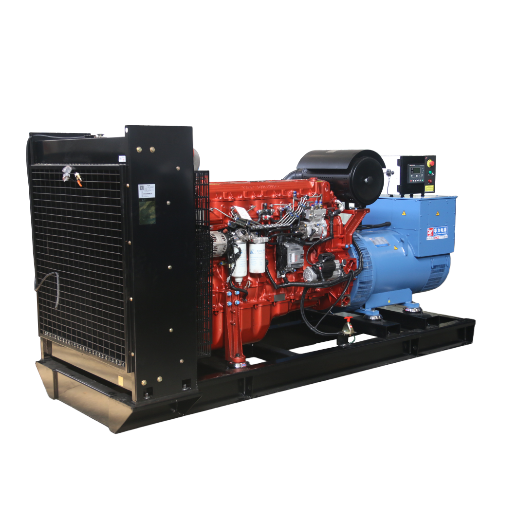
Emissions compliance is the single largest variable in diesel generator price today. If your project operates in a regulated market, the tier you must meet can swing your equipment cost by 40-50%.
Tier 2 and Tier 3 Units
Tier 2 and Tier 3 diesel engines lack the complex aftertreatment systems required under modern standards. They are mechanically simpler, more fuel-efficient per liter, and significantly less expensive to manufacture. In 2026, these units will remain available for export to non-regulated markets and certain developing economies.
A 500 kW Tier 2 open-skid genset might cost 65,000−65,000−85,000 equipment-only. The same unit in Tier 4 Final configuration could run 95,000−95,000−130,000. That gap matters enormously for budget-constrained projects in regions where Tier 4 is not legally mandated.
Tier 4 Final Premium Explained
Tier 4 Final is the current emissions standard for off-road diesel engines in regulated markets including the United States, Canada, and the European Union. To meet it, manufacturers must install three additional aftertreatment components.
The diesel oxidation catalyst (DOC) reduces carbon monoxide and hydrocarbons. The diesel particulate filter (DPF) traps soot and requires periodic regeneration. The selective catalytic reduction (SCR) system injects diesel exhaust fluid (DEF, also called AdBlue) to neutralize nitrogen oxides.
These components add 15,000−15,000−50,000 to the equipment cost depending on engine size. They also introduce ongoing operational costs. DEF consumption runs 2-5% of diesel fuel volume. DPF maintenance requires ash cleaning every 3,000-6,000 hours. The engine control unit (ECU) is more complex, requiring specialized diagnostics.
For buyers in regulated markets, Tier 4 Final is not optional. For buyers in exempt regions, the choice between Tier 2/3 and Tier 4 depends on client requirements, ESG mandates, and long-term resale value. Our engineers can advise on the optimal emissions strategy for your specific project location.
Open Type vs Silent Canopy Pricing
The enclosure choice is the second major cost driver after emissions tier. Your operating environment and local noise ordinances determine whether an open-skid unit is acceptable or if you need sound attenuation.
Open-type generators expose the engine, alternator, and radiator to ambient air. They are lighter, cheaper, and easier to service. However, they operate at 95-105 dB(A) at 1 meter. That is roughly equivalent to a jackhammer. In urban, hospital, or residential-adjacent settings, open units are often prohibited by local noise regulations.
Standard silent canopies use heavy-gauge steel panels lined with fire-retardant acoustic insulation. Airflow is managed through baffled intake and exhaust paths. The result is 65-75 dB(A) at 7 meters, comparable to normal conversation. For ultra-sensitive environments, super-silent enclosures achieve 55-65 dB(A) through additional mass-loaded barriers and tuned exhaust silencers.
The pricing premium breaks down as follows. Standard silent canopies add 15-25% over open-skid pricing. High-quality silent canopies with premium insulation and powder-coated steel add 25-40%. Super-silent configurations add another 10-20% on top of standard silent pricing.
A logistics warehouse in Sao Paulo installed a 200 kW open-skid diesel unit at 48,000topowertheircoldstorage.Withinsixmonths,neighboringbusinessesfilednoisecomplaints.Themunicipalfinewas48,000topowertheircoldstorage.Withinsixmonths,neighboringbusinessesfilednoisecomplaints.Themunicipalfinewas15,000, and retrofitting a sound-attenuated enclosure cost another 22,000.Thatisnearly8022,000.Thatisnearly8012,000 silent canopy upgrade at the time of purchase.
When evaluating your diesel generator price, always confirm local noise limits before selecting an enclosure. In many jurisdictions, the silent canopy is not a luxury. It is a legal requirement.
Brand Tier Pricing Comparison
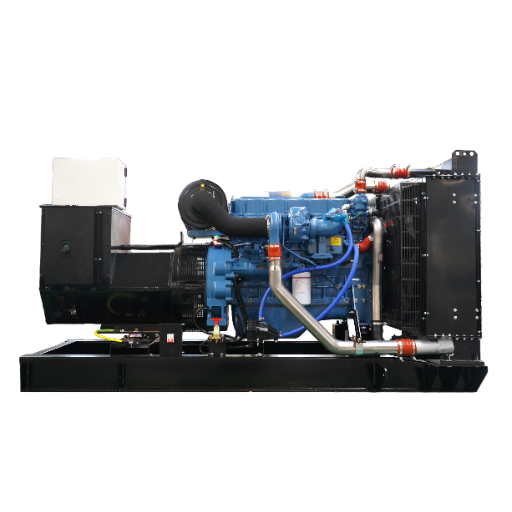
Not all diesel generators are priced equally, even at the same kW rating. The engine and alternator brands inside the skid determine which tier the unit occupies.
Tier 1 Brands (Caterpillar, Cummins, MTU, Kohler)
Tier 1 manufacturers design and manufacture their own engines from the block up. Their products command premium pricing, typically 400−400−800/kW depending on size and configuration. A 500 kW silent Tier 4 genset from a Tier 1 brand might cost 200,000−200,000−280,000 equipment-only.
Buyers choose Tier 1 brands for mission-critical applications where uptime is paramount. Data centers, Tier III hospitals, and nuclear facilities often specify Caterpillar or Cummins in their engineering standards. The tradeoff is cost and lead time.
In 2026, lead times for Tier 1 large engines stretch to 60-100 weeks. Engine allocation is tight due to global demand and supply chain constraints. If your project timeline is fixed, a Tier 1 brand may not be deliverable.
Tier 2 Certified Assemblers
Tier 2 assemblers purchase engines from Cummins, Perkins, Deutz, or Yuchai and pair them with Stamford or Leroy-Somer alternators in their own frames. They offer certified quality at mid-range pricing, typically 250−250−500/kW.
These manufacturers hold ISO 9001 certification and conduct full load-bank testing. Their products suit commercial buildings, manufacturing plants, and mining operations where brand prestige matters less than reliable performance. Lead times run 18-30 weeks, significantly shorter than Tier 1.
For a deeper brand comparison, see our generator brand price comparison guide.
Factory-Direct / Export Manufacturers
Factory-direct manufacturers like ZC Power operate integrated production facilities that build gensets from 8 kVA to 4,000 kVA. By eliminating dealer networks and managing the supply chain directly, these manufacturers deliver equivalent power output at 125−125−350/kW.
A Nigerian construction contractor ordered a 1 MW Caterpillar genset in January 2025 with a promised 32-week delivery. By May 2026, the engine was still in allocation queue. The project delay cost him the contract. A Tier 2 assembler delivered an equivalent spec unit in 22 weeks at 60% of the price.
This is not a story about cutting corners. It is a story about understanding where brand premium adds value and where it simply adds cost. For many international projects, factory-direct units with authentic components, ISO 9001 certification, and full load-bank testing deliver the same reliability at a fraction of the capital expenditure.
Ready to compare factory-direct pricing against your current quotes? Contact our engineering team for a customized assessment with exact specifications and delivery timelines.
Factory-Direct vs Dealer Retail Diesel Pricing
The distribution channel you buy through affects your diesel generator price as much as the specifications do. Dealer markup typically adds 15-40% over the factory cost.
Consider a 500 kW silent diesel genset. At the factory level, the unit might cost 70,000−70,000−90,000 to produce depending on engine brand and enclosure quality. A regional dealer adding 25% markup would sell that same unit for 87,500−87,500−112,500. A dealer in a remote market with higher logistics costs and lower volume might add 35-40%, pushing the price to 94,500−94,500−126,000.
Factory-direct FOB pricing eliminates that markup. You pay the true manufacturing cost plus export documentation and container loading. What FOB pricing does not include is international shipping, customs clearance, import duties, and local delivery. Those costs apply regardless of whether you buy from a dealer or direct. The difference is that with factory-direct, you control the logistics chain and avoid paying margin on top of margin.
There are legitimate reasons to buy through a dealer. Local dealers provide immediate parts availability, factory-trained technicians, and warranty administration in your time zone. For buyers who prioritize convenience over cost, the dealer premium is justified. For international project contractors, global distributors, and cost-conscious facility managers, factory-direct sourcing captures significant savings without sacrificing technical accountability.
How to Get an Accurate Diesel Generator Quote
Accurate diesel generator pricing requires more than picking a kW rating from a table. Your quote depends on load profile, runtime expectations, environmental conditions, and local regulatory requirements.
To get a precise figure, prepare the following information before contacting any supplier. First, a complete load list showing running watts and starting watts for every piece of equipment the generator must power. Second, your required runtime on a full tank or your planned refueling interval. Third, your local emissions regulations and noise limits. Fourth, your site conditions including altitude, ambient temperature range, and dust exposure.
Armed with this data, a qualified engineering team can specify the exact engine, alternator, enclosure, and control panel configuration you need. They can also calculate fuel consumption, maintenance intervals, and total cost of ownership over your planned operational life.
For a complete analysis of generator financing options, see our generator financing guide covering equipment finance agreements, capital leases, and operating leases.
Get a factory-direct diesel generator quote tailored to your project. Our team of 80 engineers will review your load profile, site conditions, and delivery requirements, then deliver a detailed proposal with exact pricing and lead times. Contact ZC Power Engineering today.