Generator Brand Comparison Price: Tier 1 vs Factory-Direct Cost per kW
Ultimately, determining which generator brand is best suited for your project boils down to a single question: Are you paying for operational reliability, or merely for the brand logo—for the sake of appearances? A 500 kW Cummins diesel generator sells for approximately $120,000, whereas a Caterpillar generator of comparable specifications commands a price tag as high as $150,000. In stark contrast, a 500 kW unit sold directly by the manufacturer—equipped with the very same Stamford alternator and certified diesel engine—costs a mere $45,000. This represents the true reality of the price disparity among generator brands—a truth that no dealer would ever dare to print in their promotional brochures.
Dr. Amara Okafor, the Facilities Director at a 300-bed hospital in Lagos, once received two quotes for a 500 kW backup diesel generator set. One quote, from an authorized dealer for a Cummins-branded unit, came in at $118,000; the other—offered directly by an ISO 9001-certified manufacturer and featuring the exact same Cummins engine, Stamford alternator, and Deep Sea controller—was priced at a mere $42,000. Ultimately, she opted for the Cummins-branded unit because the hospital’s Board of Directors placed its trust in the brand’s reputation. Three years later, the cumulative runtime of both generator sets—accrued solely during routine testing—totaled just 47 hours, and neither unit had experienced a single malfunction. In other words, the hospital effectively spent an extra $76,000 simply to purchase a dealer network and a brand logo—two assets that, in actual practice, never once proved necessary.
You are reading this generator brand comparison guide because you need to know precisely this: What is the actual cost per kilowatt for that “brand badge”? When is this brand premium a worthwhile investment, and when is it merely a wasteful drain on your budget? This article will provide a detailed breakdown of specific pricing across different brand tiers, comparing the “Total Cost of Ownership” over the unit’s entire lifecycle among Tier-1 brands, Tier-2 brands, and direct-from-manufacturer options. Furthermore, we will provide you with a clear decision-making framework to help you select the generator brand that best aligns with your specific application requirements.
Key Takeaways
- This generator brand comparison price guide breaks down exact cost per kW for Caterpillar, Cummins, Kohler, Generac, and factory-direct OEM manufacturers
- Caterpillar commands a 10-15% premium over Cummins and a 30-50% premium over factory-direct units for the same kW rating
- Cummins leads on integration and data center applications; Caterpillar dominates mining and heavy prime power
- Kohler (now Rehlko) excels in healthcare and coastal compliance with 180 mph wind-rated enclosures
- Generac targets small-to-mid commercial standby; not competitive for heavy industrial prime power
- Factory-direct ISO9001/CE-certified units deliver comparable mechanical reliability at 30-50% lower upfront cost
- Tier 1 brand premiums are justified only for mission-critical uptime where downtime costs exceed $10,000 per hour
The Three-Tier Generator Market: What Generator Brand Comparison Price Really Means
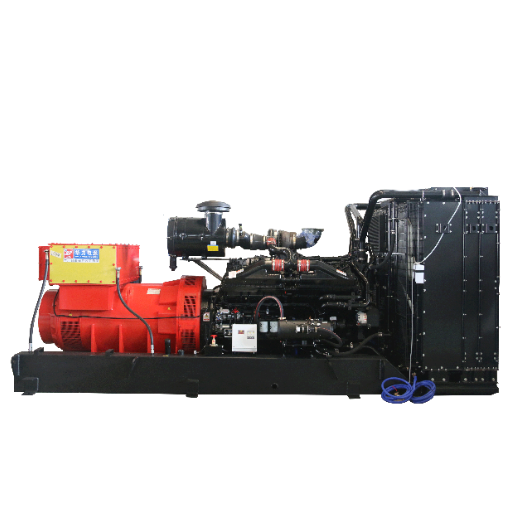
The global industrial generator market is not one market. It is three distinct tiers, and generator brand comparison price only makes sense when you compare within the correct tier. Buyers who cross-shop CAT against factory-direct without understanding tier differences often reach the wrong conclusion about value.
Tier 1: Mission-Critical Brands. Caterpillar, Cummins, and MTU occupy this tier. These manufacturers engineer for absolute uptime in data centers, hospitals, and mining operations. Their engines are designed for decades of service. Their global parts networks guarantee availability. Their resale values are the highest in the industry. You pay 30-50% more upfront for the badge, the network, and the warranty infrastructure.
Tier 2: Commercial Heavyweights. Kohler (now Rehlko), Generac, and Mitsubishi fill this space. These brands serve large commercial real estate, airports, hotels, and light industrial facilities. They offer strong reliability at moderate prices. Kohler specializes in seismic and wind-load compliance. Generac dominates the small-to-mid commercial standby segment. Mitsubishi handles large inertia loads. Tier 2 units typically cost 15-25% less than Tier 1 equivalents.
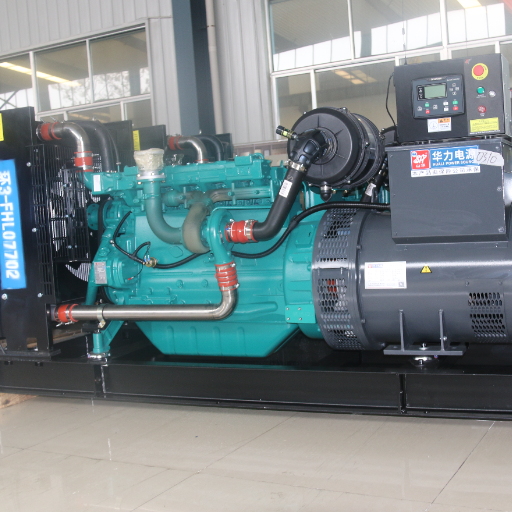
Tier 3: Factory-Direct OEM. This tier includes ISO9001/CE-certified manufacturers like Shandong ZC Power that assemble generator sets using branded engines, Stamford or Leroy-Somer alternators, and Deep Sea or SmartGen controllers. The mechanical package is comparable to Tier 1. The difference is the absence of the global dealer network, the brand badge, and the certified Tier 4 Final emissions compliance required for regulated Western markets. For construction, mining backup, prime power, and export markets, Tier 3 delivers the same kilowatts at 30-50% lower capital cost.
For a complete overview of how these tiers fit into the broader commercial power landscape, see our commercial generator price guide.
Generator Brand Comparison Price by Tier: Exact Cost per kW
This generator brand comparison price section contains exact equipment-only prices compiled from dealer listings, GSA contracts, and manufacturer data for 2026. The tables below are your Caterpillar generator price list, Cummins generator price list, Kohler generator price list, and Generac commercial generator price reference all in one place.
100 kW Class Equipment Price Comparison
| Brand / Tier | Model | Equipment Price (2026) | Price per kW |
|---|---|---|---|
| Caterpillar (Tier 1) | C4.4 100 kW | ~55,000−55,000−65,000 | 550−550−650/kW |
| Cummins (Tier 1) | C100D6 100 kW | ~45,000−45,000−55,000 | 450−450−550/kW |
| Kohler / Rehlko (Tier 2) | 100REOZJF | ~25,500−25,500−35,840 list | 255−255−358/kW |
| Generac (Tier 2) | SG100 100 kW | ~28,000−28,000−35,000 | 280−280−350/kW |
| Factory-Direct OEM (Tier 3) | 100 kW silent set | ~12,000−12,000−18,000 | 120−120−180/kW |
500 kW Class Equipment Price Comparison
| Brand / Tier | Model | Equipment Price (2026) | Price per kW |
|---|---|---|---|
| Caterpillar (Tier 1) | C15 500 kW | ~150,000−150,000−180,000 | 300−300−360/kW |
| Cummins (Tier 1) | C500D5 500 kW | ~120,000−120,000−150,000 | 240−240−300/kW |
| Kohler / Rehlko (Tier 2) | 500REOZJC | ~113,000−113,000−154,000 | 226−226−308/kW |
| Generac (Tier 2) | SD500 500 kW | ~90,000−90,000−110,000 | 180−180−220/kW |
| Factory-Direct OEM (Tier 3) | 500 kW silent set | ~35,000−35,000−55,000 | 70−70−110/kW |
1,000+ kW Class Equipment Price Comparison
| Brand / Tier | Model | Equipment Price (2026) | Price per kW |
|---|---|---|---|
| Caterpillar (Tier 1) | 3512 1,000 kW | ~350,000−350,000−450,000 | 350−350−450/kW |
| Cummins (Tier 1) | QSK60 2,000 kW | ~1,349,000−1,349,000−1,399,000 | 675−675−700/kW |
| MTU (Tier 1) | Series 4000 1,500 kW | ~400,000−400,000−500,000 | 267−267−333/kW |
| Factory-Direct OEM (Tier 3) | 1,000 kW silent set | ~78,000−78,000−120,000 | 78−78−120/kW |
The price-per-kW gap narrows at the very top end because Tier 1 engines at 2,000+ kW are genuinely specialized machines with custom engineering. Below 1,000 kW, the gap is staggering. A 500 kW factory-direct unit with a Cummins engine, Stamford alternator, and Deep Sea controller costs roughly one-third of the equivalent Cummins-branded package from an authorized dealer.
For a deeper dive into 500 kW pricing specifically, see our 500 kW generator price breakdown. For the 100 kW class, see our 100 kW generator price analysis.
Head-to-Head: Caterpillar vs Cummins vs Kohler vs Generac
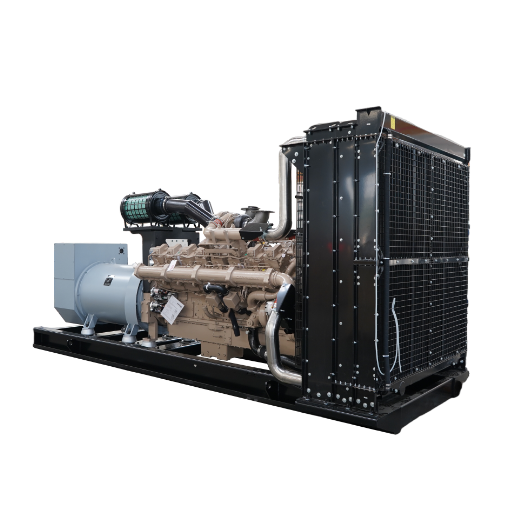
This generator brand comparison price analysis moves from tier-level averages to individual brand profiles. Each manufacturer has a specific mechanical identity that determines where it adds value and where it simply charges more for the same kilowatts.
Caterpillar: When the Yellow Paint Is Worth It
Caterpillar builds the most mechanically rugged industrial engines on the market. The legendary 3500 series and the newer C-series engines are over-engineered for longevity. CAT excels in mining, heavy construction, and continuous prime power applications where engines run 4,000+ hours per year at high load factors.
Key strengths include superior altitude derate performance, ISO 8528-5 G3 transient response, and unmatched resale value. A used CAT generator is described in dealer circles as “liquid cash.” The downside is cost. Caterpillar commands a 10-15% premium over Cummins below 1,500 kW and requires dealer-locked service, meaning you cannot source parts or maintenance from independent shops. For buyers researching the Caterpillar generator price list, this premium is the price of the global dealer network and the highest resale value in the industry.
Cummins: The Data Center Standard
Cummins pioneered the “Power of One” philosophy, designing the engine, alternator, and PowerCommand control system as an integrated package. This vertical integration delivers the best transient response in the industry, which is why Cummins dominates data center and healthcare paralleling applications.
The Masterless Load Demand (MLD) logic is considered best-in-class for complex paralleling operations. The Quantum series (QSK60) offers extreme power density for 2,000+ kW installations where floor space is limited. Cummins is generally priced 10-15% below Caterpillar for equivalent ratings, making it the best reliability-to-value ratio in Tier 1. Cold-weather performance is also excellent, with certified starting kits down to -40 degrees Fahrenheit. For buyers evaluating the Cummins generator price list against Caterpillar, the 10-15% discount per kW is consistent across most size classes.
For buyers comparing diesel options across all brands, our diesel generator price guide covers equipment and installation costs by size class.
Kohler / Rehlko: Healthcare and Coastal Compliance
Kohler rebranded its power systems division to Rehlko in 2024, though many units are still marketed under the Kohler name. The KD series engines are purpose-built for power generation, not adapted from truck or marine use. This results in high power density and fast response.
Kohler’s standout advantage is enclosure engineering. Their units are frequently rated for 180 mph winds, a critical specification for Florida, the Gulf Coast, and hurricane-prone regions. The Decision Maker controllers provide medical-grade monitoring accuracy. For hospitals and coastal facilities requiring strict seismic and wind certifications, Kohler is often the only choice that satisfies building codes without custom engineering.
The downside is a larger physical footprint and premium pricing. For buyers reviewing the Kohler generator price list, expect list prices 30-40% above transaction prices after dealer negotiation. Rehlko rebranding also means buyers should verify whether “SDMO” branded units are new-old stock or current production.
Generac: Small Commercial Value
Generac dominates the small-to-mid commercial standby market. The Protector Series and Industrial Diesel line are designed for retail, restaurants, clinics, and small offices that need emergency backup under 500 hours per year.
The Generac SG070 (70 kW) unit is priced at approximately $17,900, while the SD350 (350 kW) unit costs around $64,900. Among major brands, Generac commercial generators are positioned at the lowest price point for small-to-medium-scale backup power applications. However, Generac is typically not selected for heavy industrial prime power, continuous-operation applications, or mission-critical data centers. While its engineering design is robust enough to handle intermittent usage requirements, it has not been optimized for operating conditions involving more than 2,000 annual runtime hours.
The Hidden Cost of Brand Premium: TCO by Tier
Equipment price is only the first line item. The generator brand comparison price evaluation is incomplete without the total cost of ownership over 10 years.
Maintenance Cost Differential in Generator Brand Comparison Price
Tier 1 brands typically cost 1.50−1.50−2.00 per kW per year to maintain. A 500 kW Cummins or Caterpillar runs approximately 750−750−1,000 per year in scheduled maintenance, parts, and fluids. Tier 2 brands like Kohler and Generac run 1.20−1.20−1.60 per kW per year. Factory-direct Tier 3 units with the same engine core cost 0.80−0.80−1.20 per kW per year because maintenance can be performed by any qualified diesel technician without dealer authorization.
Parts Availability and Lead Times
Here is where Tier 1 brands justify a portion of their premium. Caterpillar and Cummins maintain global parts distribution networks. If a turbocharger fails on a remote mining site, a CAT dealer can air-freight a replacement within 48 hours. Factory-direct OEMs rely on the same engine manufacturers for parts, so engine-specific components are equally available. The difference is in proprietary control modules, enclosure parts, and alternator windings, which may require factory sourcing.
Resale Value Reality
A 5-year-old 500 kW Caterpillar in good condition typically resells for 60-70% of its original equipment price. A Cummins retains 50-60%. A Kohler retains 45-55%. A factory-direct OEM unit retains 30-40%. If your project has a defined end date and you plan to resell, the Tier 1 premium partially pays itself back. If you plan to run the unit until end-of-life, resale value is irrelevant.
Warranty and Service Network Coverage
Caterpillar offers comprehensive warranties tied to its dealer network. Cummins provides similar coverage with slightly more open service options. Factory-direct manufacturers typically offer 1-year or 1,000-hour warranties backed by the factory directly. The key difference is geographic coverage. A Tier 1 dealer can service your unit in Nairobi, Dubai, or Sao Paulo. A factory-direct manufacturer may require remote technical support and air-freighted parts for international locations.
When to Choose Which Tier
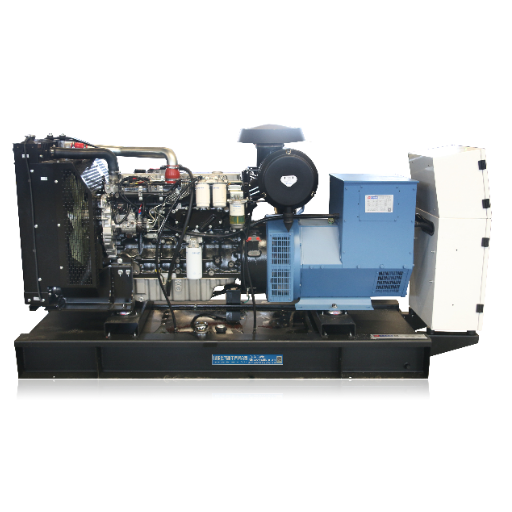
The right generator brand comparison price framework depends entirely on your application.
Choose Tier 1 (Caterpillar, Cummins, MTU) If:
- Your facility is mission-critical (Tier 3 data center, trauma hospital, 911 center)
- Downtime costs exceed $10,000 per hour
- You need Uptime Institute or NFPA 110 certification that requires Tier 1 documentation
- Your project has a defined end date and you will resell the equipment
- You operate in a region with an established Tier 1 dealer network
Choose Tier 2 (Kohler, Generac, Mitsubishi) If:
- You need large commercial standby power (hotels, airports, multi-tenant buildings)
- Local codes require seismic or high-wind certifications
- Your runtime is under 500 hours per year
- You want strong reliability without the full Tier 1 price premium
Choose Tier 3 Factory-Direct If:
- You need prime power or heavy-duty backup for construction, mining, or manufacturing
- Your runtime exceeds 1,000 hours per year and you will run the unit to end-of-life
- You are exporting to Africa, Southeast Asia, the Middle East, or South America
- Your budget is constrained and you need maximum kilowatts per dollar
- You have qualified local technicians who can perform maintenance without dealer support
A construction contractor in Jakarta needed six 500 kW diesel generator sets for a 24-month infrastructure project. His generator brand comparison price research showed a Caterpillar quote of 1,080,000.Thefactory−directISO9001quotewithCumminsenginesandStamfordalternatorswas1,080,000.Thefactory−directISO9001quotewithCumminsenginesandStamfordalternatorswas330,000. He bought factory-direct, ran the units 3,800 hours each over two years, and sold the six units at project completion for 180,000total.Netequipmentcost:180,000total.Netequipmentcost:150,000. The Caterpillar option would have cost 1,080,000withzeroresalerecoverybecausetheprojectbudgethadnoprovisionforassetliquidation.Thefactory−directchoicesaved1,080,000withzeroresalerecoverybecausetheprojectbudgethadnoprovisionforassetliquidation.Thefactory−directchoicesaved930,000 with zero operational failures.
The Factory-Direct Alternative: What $45K per 500 kW Actually Gets You
The most misunderstood element of generator brand comparison price is what factory-direct manufacturing actually includes. Critics assume “factory-direct” means lower quality. In reality, ISO9001-certified manufacturers like ZC Power build generator sets using the same core components as Tier 1 assemblers. The factory-direct generator price advantage comes from eliminating the dealer markup and global warranty infrastructure, not from cutting corners on the engine or alternator.
Engine Quality: Branded vs Custom
Factory-direct units use the same Cummins, Perkins, Yuchai, Weichai, and Deutz engines that power Tier 1 generator sets. The engine block, crankshaft, pistons, and fuel system are identical. The difference is not the engine. It is the emissions aftertreatment, the control system integration, and the warranty infrastructure.
Alternator Standards: Stamford, Leroy-Somer, Marathon
Top-tier factory-direct manufacturers specify Stamford, Leroy-Somer, or Marathon alternators. These are the same alternator brands used by Caterpillar and Cummins in their generator sets. Output quality, voltage regulation, and waveform distortion are identical. For buyers doing generator brand comparison price analysis, this is a critical point: the alternator is identical regardless of tier.
Testing and Certification: ISO9001, CE, CCC
Every unit from a certified factory-direct manufacturer undergoes load bank testing before shipment. ISO9001 certification ensures quality management systems. CE certification confirms compliance with European safety standards. CCC certification validates Chinese national standards. These certifications are not marketing labels. They are audit-backed guarantees of manufacturing process control.
Lead Time Advantage: 18-30 Weeks vs 40-100 Weeks
In 2026, Tier 1 manufacturers are quoting 40-100 week lead times for large industrial units. Factory-direct manufacturers with integrated production lines can typically deliver in 18-30 weeks. For projects with tight timelines, this lead time gap can be more valuable than the price gap.
Since 1999, ZC Power has manufactured diesel generator sets in our 300,000 square meter facility. Every unit is tested in our national standard testing center before shipment. We export to Africa, the Americas, the Middle East, and Southeast Asia with full OEM/ODM capabilities and factory-direct pricing.
For help calculating your exact load requirements, see our generator sizing calculator.
How to Evaluate Any Generator Brand Before You Buy
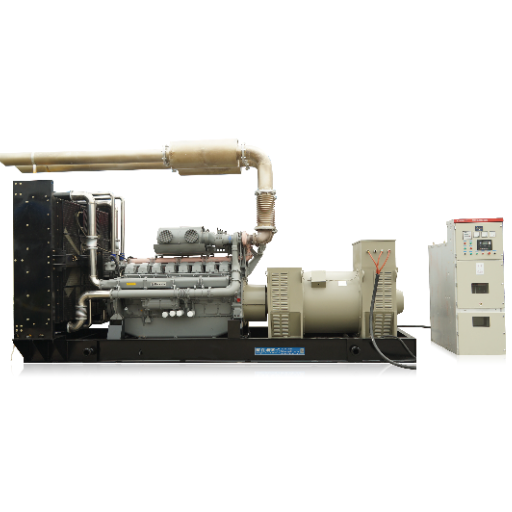
Generator brand comparison price data means nothing if the unit you receive is a rebadged counterfeit. Before you sign a purchase order, run every brand through this five-point vetting checklist.
First, verify the engine authorization. If a manufacturer claims to use a Cummins or Perkins engine, ask for the engine authorization certificate. Unauthorized assemblers sometimes use gray-market engines with no factory support.
Second, confirm alternator authenticity. Stamford and Leroy-Somer alternators have serial numbers that can be verified with the manufacturer. Cheap copies use aluminum windings instead of copper and fail under sustained load.
Third, check control panel pedigree. Deep Sea Electronics (DSE) and SmartGen controllers are industry standards. Verify that the controller is genuine, not a cloned copy with limited functionality.
Fourth, demand load bank test records. A reputable manufacturer will provide a test report showing the unit ran at 100% rated load for a defined period with voltage, frequency, and temperature data logged.
Fifth, inspect the canopy and base frame. Thickness of steel, quality of powder coating, and design of exhaust routing indicate whether the manufacturer builds for industrial duty or budget appearance.
Frequently Asked Questions
This generator brand comparison price FAQ answers the most common questions buyers ask when evaluating Tier 1, Tier 2, and factory-direct manufacturers.
What is the best industrial generator brand?
The best industrial generator brand depends on your application. Caterpillar leads for mining and heavy prime power. Cummins dominates data centers and complex paralleling. Kohler excels in healthcare and coastal compliance. For construction, prime power, and export markets, factory-direct ISO9001 manufacturers deliver comparable mechanical reliability at 30-50% lower cost.
How much more does a Caterpillar generator cost than a Cummins?
Caterpillar typically costs 10-15% more than Cummins for equivalent ratings below 1,500 kW. In the 500 kW class, a CAT C15 runs approximately 150,000−150,000−180,000 while a Cummins C500D5 runs 120,000−120,000−150,000. Both are Tier 1 mission-critical brands with comparable reliability.
What is the difference between Tier 1 and Tier 3 generator brands?
Tier 1 brands (Caterpillar, Cummins, MTU) engineer for absolute uptime with global parts networks, certified emissions compliance, and the highest resale values. Tier 3 factory-direct brands use the same core engines and alternators but lack the global dealer infrastructure and certified emissions aftertreatment required for regulated Western markets. Mechanical reliability is comparable. The difference is support network, compliance certification, and badge value.
Are Chinese OEM generators reliable compared to Cummins?
ISO9001-certified Chinese OEM generators with branded engines (Cummins, Perkins, Yuchai, Weichai) and Stamford alternators are mechanically reliable for construction, mining, prime power, and export applications. The critical factor is not geography but certification. Verify ISO9001, CE, load bank testing, and engine authorization certificates before purchasing.
What is the cheapest reliable industrial generator brand?
Generac offers the lowest entry cost for small-to-mid commercial standby applications (under 500 hours per year). For heavy industrial applications requiring 500+ kW and high annual runtime, factory-direct ISO9001 manufacturers provide the lowest cost per kilowatt while maintaining mechanical reliability comparable to Tier 1 brands.
Does generator brand affect resale value?
Yes, significantly. Caterpillar retains 60-70% of the equipment price after 5 years. Cummins retains 50-60%. Kohler retains 45-55%. Factory-direct OEM units retain 30-40%. If you plan to resell within 5-7 years, the Tier 1 premium is partially offset by higher resale recovery.
How long do industrial generator brands take to deliver in 2026?
Tier 1 brands currently quote 40-100 weeks for large industrial units. Tier 2 brands quote 30-60 weeks. Factory-direct manufacturers with integrated production lines typically deliver in 18-30 weeks. Lead times are a critical factor for projects with fixed start dates.
Get a factory-direct diesel generator quote with exact generator brand comparison price data. Our team of 80 engineers will review your application, runtime requirements, and site conditions, then deliver a detailed proposal showing Tier 1 vs factory-direct TCO side by side. Contact ZC Power Engineering today.
Conclusion
Generator brand comparison price is not about finding the “best” brand. It is about finding the right tier for your application. Caterpillar and Cummins justify their 30-50% premium when downtime costs exceed $10,000 per hour and global parts availability is non-negotiable. Kohler and Generac serve commercial standby needs where moderate premiums buy useful compliance certifications. Factory-direct ISO9001 manufacturers deliver the same kilowatts, the same alternators, and comparable engine reliability at a fraction of the cost for construction, mining, prime power, and export markets.
The Indonesian mining contractor who saved 930,000onsix500kWunitsmadetherightchoiceforhisapplication.TheDubaidatacenterthatpaid930,000onsix500kWunitsmadetherightchoiceforhisapplication.TheDubaidatacenterthatpaid300,000 extra per unit for MTU also made the right choice. The Lagos hospital that paid $76,000 extra for a Cummins badge they never used made an expensive mistake.
The three questions that should drive your decision are simple. First, what does one hour of downtime cost your operation? If the answer is under $1,000 per hour, Tier 1 is probably over-engineered. Second, will you run this generator to end-of-life or resell it? If end-of-life, resale value is irrelevant. Third, do you have qualified local technicians who can maintain the unit without dealer support? If yes, factory-direct is a viable and often superior economic choice.
Ready to compare generator brand prices for your project? Contact ZC Power Engineering for a factory-direct quote with exact Tier 1 comparison data, lead times, and delivery to your site.