
Generator Sizing Calculator: Complete Step-by-Step Guide [+ Free Worksheet]
In March 2024, a 500 kW generator was installed on the site at a production plant in Ohio for the purposes of backup to the facility. Six months later, the occurrence of a grid failure caused the generator to not be able to start up their biggest CNC machine. The purchasing manager had sized for running load, not starting surge. This 45-minute outage cost around $180,000 for scrapped materials and missed deadlines.
If you are eyeing the purchase of a generator, you already know all too well how much of a risk that can be. Go undersized, and the critical equipment would fail when needed most. Go oversize, and then you would throw money away while the engine suffers on account of under-loading. And yet, most online “calculators” simply tally up wattage numbers without accounting for motor starting, harmonics, or environmental derating.
In this entire book, with a base of 25 years of shop engineering experience from the Shandong ZC Power institution, we provided a complete outline on how to size a generator on a professional level. From household loads to sophisticated three phase industrial schemes, the methodology that these qualified engineers have been using for sizing generator sets for their projects initiated in over 100 countries is explained here. Also, we have provided you with an Excel sizing worksheet that can be downloaded.
Wondering about the full scope of electric generators? (Read Electric Generators: Complete Guide to Types, Applications & Selection) for all-around insights into their categories, uses and selection tips.
Why Generator Sizing Accuracy Matters
The Cost of Undersizing
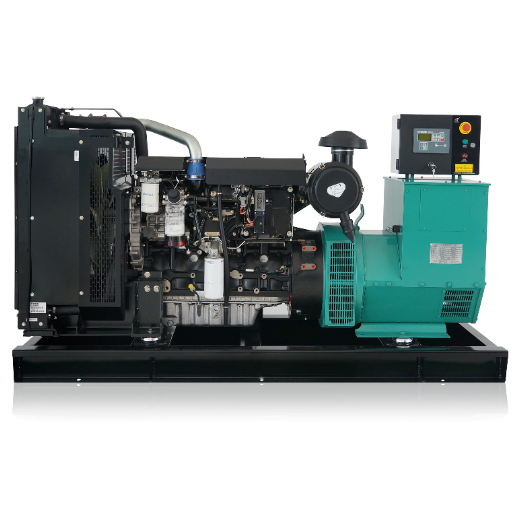
When a generator is too small for the load, the consequences are immediate and severe. Voltage dips during motor starting can cause sensitive electronics to fail. Repeated overloads lead to overheating, premature engine wear, and ultimately, complete generator failure during an emergency.
Consider what happened to Marcus Chen, facilities manager at a data center in Singapore. He installed a 750 kVA standby unit based on running load calculations. During the first outage, the UPS recharge current combined with cooling system starting surge pushed the generator to 115% capacity. The resulting voltage instability corrupted server data and forced a complete shutdown. The “savings” from undersizing cost his company 72 hours of downtime and $2.3 million in lost service agreements.
The Cost of Oversizing
Bigger is not always better. Diesel generators are best run at 70-80% of their rated capacity owing to the better efficiency. However, if continuously run at below a 30% load, the engine will develop “wet stacking” – accumulation of unburned fuel and carbon, reduction of the engine’s life, and thus increasing maintenance costs.
Aside from this, oversizing also results in wasted money. A generator rated for 1000 kW may be 40% costlier than a 750 kW generator of suitable size. At a minimum figure, this plenitude may fund other complementary infrastructures.
When to Call an Engineer
While this guide provides comprehensive sizing methodology, certain situations demand professional engineering consultation:
- Parallel generator installations requiring load sharing analysis
- Facilities with significant harmonic loads (VFDs, data centers)
- Critical life-safety applications (hospitals, emergency response)
- Extreme environmental conditions (high altitude, temperature extremes)
- Non-standard voltage or frequency requirements
Step-by-Step Generator Sizing Process
Step 1: Inventory All Electrical Loads
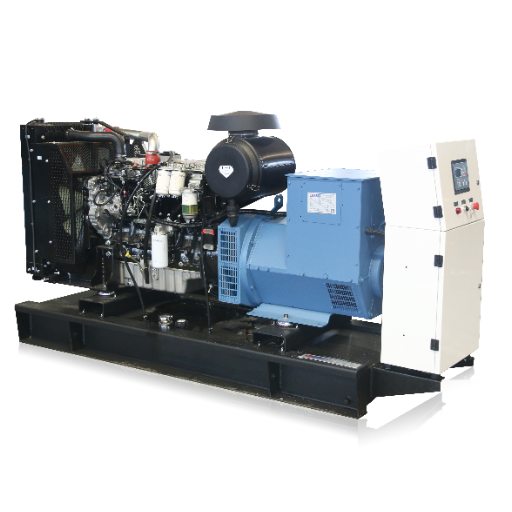
Accurate sizing begins with a complete load inventory. Don’t guess. Walk through your facility and document every piece of equipment that requires backup power.
Essential vs. Non-Essential Loads
You rarely need to back up 100% of your facility. Identify critical systems:
- Heavy machinery and CNC equipment
- HVAC systems and industrial chillers
- Server rooms and IT infrastructure
- Emergency lighting and security systems
- Air compressors and pumps
- Fire suppression and life safety systems
Gathering Nameplate Data
For each piece of equipment, record:
- Voltage (V)
- Full Load Amps (FLA)
- Power Factor (PF) if listed
- Horsepower (HP) for motors
Calculate running watts using the formula:
Watts = Volts × Amps × Power Factor
For three-phase equipment:
Watts = Volts × Amps × Power Factor × 1.732
Step 2: Determine Running Wattage
Once you’ve inventoried all loads, sum the continuous running wattage. However, not everything runs simultaneously. Apply diversity factors based on your facility type:
| Facility Type | Diversity Factor |
|---|---|
| Residential | 70-85% |
| Commercial Office | 60-75% |
| Industrial/Manufacturing | 80-90% |
| Data Center | 95-100% |
| Healthcare | 85-95% |
Example:
Step 3: Calculate Starting Wattage (Motor Surge)
This is the most common area where sizing errors occur. Electric motors need far more starting power as compared to running power.
Locked Rotor Amps (LRA) are the starting current which is usually from 3 to 6 times higher than the full load current (FLA). High-inertia loads armed with large size fans or compressors may have surge multipliers as high as 8 times.
Critical Rule: Size your generator for the largest single motor starting surge while carrying all other simultaneous loads.
Example Calculation:
- Facility running load: 400 kW
- Largest motor: 75 HP (56 kW running)
- LRA multiplier: 6×
- Starting surge: 56 kW × 6 = 336 kW
- Total starting requirement: 400 + 336 = 736 kW
Without accounting for this surge, your generator would trip the breaker the moment that motor starts.
Step 4: Apply Diversity Factor
Diversity factors avoid being conservative by recognizing that not all equipment runs simultaneously at peak loads. Nonetheless, one must be conservative with the critical technologies and situations. For example, hospital operating rooms, assume almost 100% diversity for data center cooling.
Step 5: Convert kW to kVA
Here’s where electrical theory becomes essential. Generators are rated in kVA (kilovolt-amperes), not kW (kilowatts).
Real Power (kW): The actual work-producing power your equipment consumes
Apparent Power (kVA): The total power the generator must supply, including reactive power
The relationship is defined by Power Factor (PF):
kVA = kW ÷ PF
Industrial diesel generators typically operate at 0.8 PF. This means a 100 kVA generator delivers 80 kW of usable power.
Example: Your facility requires 640 kW of real power.
640 kW ÷ 0.8 PF = 800 kVA generator minimum
For Three-Phase Systems:
kVA = (Voltage × Current × 1.732) ÷ 1000
Step 6: Add Safety Margin
Always include a 20-25% safety margin above your calculated requirements. This provides:
- Headroom for future equipment additions
- Capacity for seasonal load variations
- Operational buffer for optimal engine efficiency
- Tolerance for calculation uncertainties
Example: 800 kVA × 1.25 = 1000 kVA recommended generator size
Step 7: Apply Environmental Derating
Generators produce lesser alternating current as we go up the altitude and the temperature falls too. The usual standard rating is 25°C ambient air temperature and mean sea level.
Altitude Derating:
- Subtract 3% capacity for every 300 meters (1,000 feet) above sea level
- At 1,500 meters: 15% reduction required
Temperature Derating:
- Subtract 1% capacity for every 1°C above 40°C
- At 50°C ambient: 10% reduction required
Example: A 1000 kVA generator at 1,500 meters altitude:
1000 kVA × 0.85 = 850 kVA effective capacity
You would need to upsize to approximately 1200 kVA to achieve 1000 kVA usable output.
Step 8: Determine Duty Rating
Choose the appropriate operational rating per ISO 8528-1:
Extended Standby Power (ESP): Backup under emergency operation, up to 200 hours/year, will accept variable load. It will be able to take over the loads at exponential levels when the utility power stops functioning under unfavorable conditions.
Prime Power (PRP): It would be operating over unlimited hours under variable loads. Best fit for locations far away from the utility grid. Loading to an average of 70% should not be exceeded at any time over 24 hours.
Continuous Power (COP): It should function all the times nonstop with an average duration at 100%. Best for the load conditions like base loads, on parallel, and on-grid operations.
For most manufacturing and commercial facilities connected to a municipal grid, Standby Power is the correct rating.
Step 9: Verify with Measurements
For critical applications, verify calculations with actual measurements:
Clamp-On Ammeter Method:
Measure current on each phase during peak usage periods using a true RMS clamp meter. Record the highest readings over several days.
Utility Bill Analysis:
Review 12 months of electricity bills to identify peak demand (kW). This provides real-world maximum load data.
Power Quality Analyzer:
For facilities with VFDs or other non-linear loads, use a power quality analyzer to measure harmonic distortion and true power factor.
Step 10: Final Specification and Selection
Match your requirements to standard commercial generator sizes:
| kVA Range | Typical Applications |
|---|---|
| 50-150 kVA | Small commercial, retail |
| 200-500 kVA | Manufacturing, mid-size facilities |
| 600-1000 kVA | Large industrial, hospitals |
| 1250-2000 kVA | Data centers, heavy industry |
| 2000+ kVA | Utilities, large campuses |
Consider control system requirements, fuel tank capacity, and enclosure specifications during final selection.
Special Sizing Considerations
Three-Phase Industrial Loads
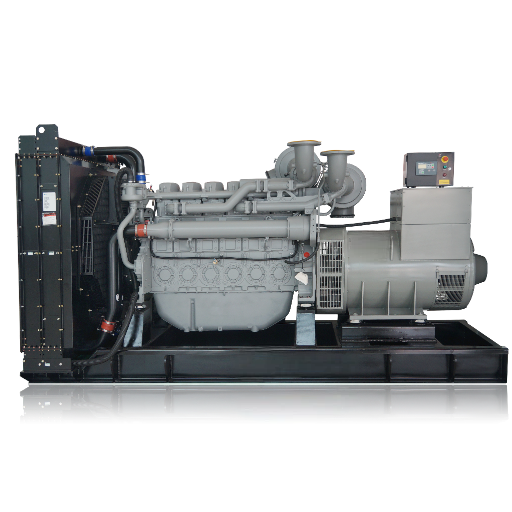
Industrial facilities present unique challenges:
Balanced Loading: The three-phase generators will run at their peak potential with the right balance among phases. The imbalance across any two phases cannot exceed 10%.
Motor Starting Sequence: As much as possible, try to stagger motor starts to lessen demands for starting current simultaneously. This is particularly so for extensive installations where automatic sequencing controllers could be used when starting.
Power Factor Correction: High levels up to 0.95-0.98 are easily attainable by installed capacitor banks thus decreasing the required kVA by 12-18%.
Harmonic Loads and THD
Modern facilities use Variable Frequency Drives (VFDs), LED lighting, and computer power supplies — all non-linear loads that generate harmonic distortion.
Total Harmonic Distortion (THD) affects generator sizing because:
- Harmonic currents increase heating in alternator windings
- Standard generators may require 15-25% oversizing for high THD loads
- Special alternator designs (2/3 pitch) reduce harmonic sensitivity
Sizing Recommendation: If THD exceeds 5%, add 20% to your calculated kVA requirement or specify a generator with enhanced harmonic tolerance.
Motor Starting Methods Impact
The motor starting method dramatically affects generator sizing:
| Starting Method | Surge Multiplier | Generator Impact |
|---|---|---|
| Direct On Line (DOL) | 6-8× | Largest generator required |
| Star-Delta | 2-3× | 33% reduction in surge |
| Soft Starter | 2-4× | 50-70% reduction |
| VFD/ASD | 1-1.5× | Minimal surge, harmonic concern |
Specifying soft starters or VFDs for large motors can reduce generator size requirements significantly, often justifying the additional motor control investment.
Multiple Generator Paralleling
For large or critical facilities, consider paralleling multiple smaller generators instead of one large unit:
Advantages:
- N+1 redundancy for critical applications
- Better efficiency at partial loads
- Maintenance flexibility (rotate units offline)
- Scalable capacity for future growth
Sizing Consideration: Each paralleled unit should be capable of handling the full critical load independently.
Sizing by Application Type
Residential Sizing Guide
| Load Type | Typical Requirements |
|---|---|
| Essential circuits only | 8-15 kW |
| Whole house (no AC) | 15-20 kW |
| Whole house (with AC) | 20-50 kW |
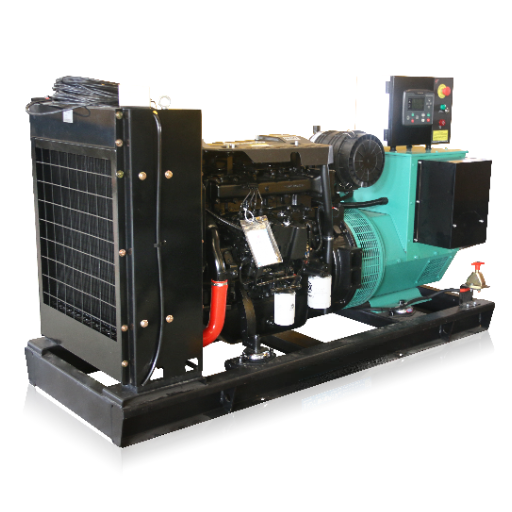
Example: A 2,500 sq ft home with central AC, electric range, and water heater typically requires a 22-25 kW standby generator.
Planning to purchase a home backup generator in 2026? (Read Backup Generator for Home: Complete 2025 Buying and Sizing Guide)for tailored purchasing advice and accurate sizing strategies.
Commercial Sizing Guide
| Facility Type | Typical Range | Key Considerations |
|---|---|---|
| Small retail | 50-100 kW | Refrigeration, POS systems |
| Office building | 100-300 kW | Elevators, HVAC, lighting |
| Healthcare | 150-500+ kW | Life safety, NEC Article 700 |
| Data center | 500 kW – 2 MW+ | N+1 redundancy, cooling |
Ready to invest in a commercial generator for your business in 2026? (Read Commercial Generator: Complete Buyer’s Guide 2026 [Sizing, Costs & Installation])for expert buyer-focused tips on sizing, expenses and setup.
Industrial Sizing Guide
Manufacturing:
Load factor analysis is critical. A facility with 1000 HP of motors rarely runs them all simultaneously. Use demand factor analysis from utility bills for accurate sizing.
Mining and Heavy Industry:
High-altitude derating is often critical. A mine at 3,000 meters elevation may lose 30% of generator capacity, requiring significant upsizing. Dust and vibration also demand ruggedized generator enclosures.
Oil and Gas:
Hazardous area classifications may require explosion-proof alternators and specialized enclosures. Remote locations often need extended fuel tanks or dual-fuel capability.
Common Sizing Mistakes to Avoid
1. Ignoring Motor Starting Surge
The most common error. Always identify the largest motor and calculate LRA impact.
2. Using Nameplate HP for Motor kW
Motor nameplate HP is mechanical output, not electrical input. Use FLA (Full Load Amps) for accurate calculations.
3. Forgetting Power Factor
Sizing in kW without converting to kVA results in undersizing by 20-25%.
4. No Altitude or Temperature Derating
High-altitude installations can lose 20-30% of rated capacity. Always apply environmental corrections.
5. Undersizing for Harmonics
Facilities with VFDs require additional capacity or harmonic-tolerant alternators.
6. Overlooking Future Expansion
Size for growth. A generator lasts 20-30 years; your facility will expand.
7. Incorrect Duty Cycle Selection
Using standby-rated generators for prime power applications leads to premature failure.
Downloadable Generator Sizing Worksheet
To simplify the sizing process, we’ve created a comprehensive Excel worksheet based on the methodology outlined above. This tool includes:
- Pre-formatted load inventory template
- Automatic kW to kVA conversion
- Motor starting surge calculator
- Environmental derating formulas
- Final specification summary
Simply enter your equipment data, and the worksheet calculates your total requirements, applies safety margins, and recommends appropriate generator sizes. It’s the same tool our engineers use for initial project assessments.
When to Consult a Professional
While this guide provides comprehensive sizing methodology, certain situations warrant professional engineering consultation:
Complex Parallel Installations:
Multiple generator synchronization requires detailed analysis of load sharing, protection coordination, and control system integration.
Critical Life-Safety Applications:
Hospitals, emergency response facilities, and data centers require compliance with NEC Article 700, NFPA 110, and industry-specific standards.
Non-Standard Requirements:
Custom voltages (415V, 480V, 600V), specialized frequencies (50Hz vs. 60Hz), or unique enclosure specifications demand manufacturer expertise.
Extreme Environments:
High altitude, corrosive atmospheres, or extreme temperatures require specialized engine tuning, cooling systems, and protective enclosures.
At ZC Power Shandong, there are 80 technical engineers available who provides free sizing consultation sessions regarding industrial projects. Therefore, with 25 years of experience in a 300,000 sq. meter manufacturing-premises setting, we do not merely sell generators; greater deals from the outset outline whole power solutions.
Frequently Asked Questions
How do I calculate generator size for my house?
At the beginning have an inventory of loads. au Essential circuits (mainly refrigeration, sump pump, furnace, and lighting circuits) called for in a home or building should be listed. Determine running watts, add highest motor starting surge (usually air conditioning compressor), convert it into kVA by using a power factor of 0.8, and add up 25% safety margin.
What happens if my generator is too small?
When a motor is started, the voltage drop causes equipment failure, and repeated overloads will trip the circuit breaker or stop the generator. Chronic operation above the rated capacity causes overheating, premature wear of the engine, and the inevitable catastrophic failure during emergency situations.
Can I run my whole house on a portable generator?
Portable generators only handle emergency like essentials needed (5-10 kW). Whole-house backup requires stationary standby generators (15-50+ kW), run in tandem with automatic transfer switches. Central air conditioning and electric heating cannot be powered by portable units.
How do you size a generator for a motor?
Find an electric motor’s Locked Rotor Amps (LRA) on the nameplate located on it. Multiply LRA by the voltage to find the starting watts. Scope out the fact that your generating system can sustain the first surge cum with the rest of the power. Large starters may lower the system’s surge in order to cope with it.
What is the difference between kW and kVA?
kW (kilowatts) is real power — the actual work-producing energy required by the user’s equipment. kVA (kilovolt-amperes) is apparent power — the power the generator must supply in total, including reactive power for inductive loads like motors. Rating of a generator is in kVA; hence, to get kVA for power factor 0.8, multiply the kW by 1.25.
How much should I oversize my generator?
Standard practice is 20-25% above calculated maximum load. This provides future expansion capacity, seasonal variation tolerance, and ensures operation in the optimal 70-80% load range for fuel efficiency and engine longevity.
Conclusion
Accurate generator sizing is both science and engineering judgment. The process requires careful load analysis, proper application of electrical formulas, and consideration of environmental factors that affect real-world performance.
Key Takeaways:
- Always size for motor starting surge, not just running load
- Convert kW to kVA using 0.8 power factor
- Apply 20-25% safety margin for future growth
- Account for altitude and temperature derating
- Consider harmonics in facilities with VFDs or significant electronic loads
- Match duty rating (standby/prime/continuous) to your application
A perfect size generator will ensure years of reliable service, highest efficiency of fuel, utmost peace of mind, and complete protection against power failure. But an over-sized genset could damage equipment, interrupt operation, and make a business endure unnecessary costs.
Shandong ZC Power CO., LTD. has been producing generators for friends in more than 100 countries since 1999. Strictly working on our testing standards makes sure that each machine produces 100% of its rated capacity. Call up our engineering staff to design standard stationary gen sets or something specially boxed for extremities.


