How to Size an Industrial Generator: Complete Engineering Guide 2026
The operations manager discovered that the genset purchased by their company operated at 40% capacity because they failed to account for altitude and temperature derating. The result? The company suffered losses exceeding six figures because of lost production and they paid emergency equipment rental costs at premium rates while learning why proper generator sizing requires accurate estimation instead of assumption.
The process of selecting an industrial generator stands as the most vital engineering choice that facility managers, project contractors, and procurement professionals need to decide. The system will experience overload and breaker trips, and complete failure during critical operational periods when the unit operates with an insufficiently sized motor. The system requires capital expenses to operate, but results in decreased fuel efficiency and increases the chance of engine failure through under-loading diesel applications, which results in wet stacking.
The good news? Proper generator sizing follows a systematic engineering process. This guide enables you to comprehend industrial generator sizing methods and common buyer errors, and the suitable timing for factory engineer involvement in advanced systems. This guide provides technical knowledge that helps you choose backup power for hospitals and prime power for remote mining locations, and standby power for manufacturing facilities.
Why Correct Generator Sizing Matters
Before diving into calculations, it is worth understanding what is at stake. Generator sizing errors do not just cause inconvenience—they cause measurable financial damage.
The True Cost of Undersizing
The undersized generator functions as a dangerous equipment because it creates the false impression of being beneficial. The facility’s main motor will cause an undersized unit to experience voltage drops which exceed 35% when it starts up. The motor contactors “chatter” and drop out at this point while variable frequency drives experience faults and sensitive electronic equipment undergoes resets or failures. The hospital environment requires constant power supply for life-support systems to function properly. The data center experiences complete server failures together with data loss.
The worst-case scenario occurs when the generator fails during an important power outage. When operators exceed the capacity of an undersized genset the system will activate its overcurrent protection which results in complete power loss for your facility. The backup power system you purchased creates operational failure during periods of essential use.
The Hidden Costs of Oversizing
People who heard frightening stories about undersizing generators now choose equipment which exceeds their actual requirements. The situation develops additional challenges.
Diesel engines require operation in their designated load limits which range between 50% and 80% of their maximum capacity to achieve their best performance. A diesel generator needs to operate at more than 30% load to achieve its required temperature range. The exhaust system develops a condition known as “wet stacking” because of unburned fuel and carbon deposits which build up in the system. The situation leads to the following outcomes:
- Reduced engine efficiency and increased fuel consumption
- Premature wear on engine components
- Exhaust smoke and environmental compliance issues
- Expensive maintenance to clean carbon buildup
Additionally, oversizing means higher upfront capital expenditure, larger fuel storage requirements, and bigger physical footprints than necessary.
Regulatory and Warranty Implications
The complete text explains that incorrect equipment sizing creates two main problems which include warranty violations and noncompliance with regulations. Backup power systems must meet rigorous standards established by NFPA 110 (Standard for Emergency and Standby Power Systems) and NEC Article 700 (Emergency Systems). An improperly sized generator may fail inspection, creating liability issues and preventing occupancy permits.
The correct sizing process provides three advantages which include investment protection, operational reliability and compliance maintenance. The time invested in proper calculations pays dividends for the 15-20 year lifespan of a quality industrial generator.
Understanding Generator Power Ratings
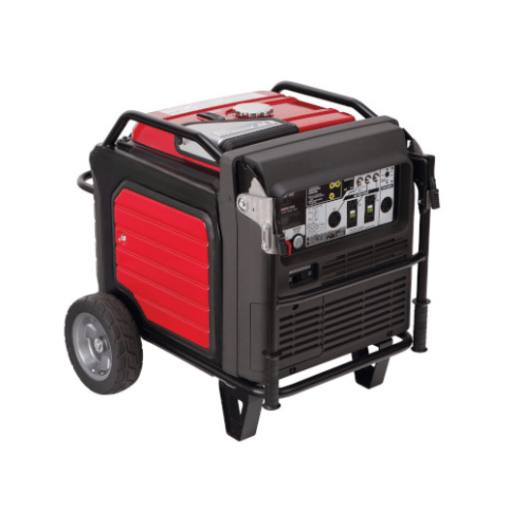
Before performing any calculations, you must understand how generators are rated and what those ratings mean for your application.
kW vs. kVA: The Critical Difference
This distinction confuses many buyers, but it is fundamental to correct sizing:
- kW (kilowatts) = Real power that performs actual work (runs your equipment)
- kVA (kilovolt-amperes) = Apparent power (total capacity the generator must produce)
- Power Factor (PF) = The ratio between kW and kVA, typically 0.8 for industrial applications
The conversion formula is straightforward:
kW = kVA × Power Factor
kVA = kW ÷ Power Factor
For a typical industrial generator with 0.8 power factor:
- A 100 kVA generator delivers 80 kW of usable real power
- A 500 kVA generator delivers 400 kW of usable real power
Why this matters: Industrial equipment is usually rated in kW (the actual work it performs). Generators are rated in kVA (their total capacity). When sizing, you must convert your kW load requirements to kVA generator requirements.
Single-Phase vs. Three-Phase Considerations
Most industrial and commercial facilities operate on three-phase power, but understanding the difference is important:
| Parameter | Single-Phase | Three-Phase |
|---|---|---|
| Voltage | 230V (typical) | 400V/415V (typical) |
| Formula | kVA = (V × I) / 1000 | kVA = (V × I × 1.732) / 1000 |
| Applications | Residential, small commercial | Industrial, manufacturing, data centers |
For three-phase calculations, the factor 1.732 represents the square root of 3 (√3), accounting for the phase relationships in three-phase systems.
Important note: Single-phase generators produce approximately 1.73 times higher current for the same kW rating compared to three-phase units. This affects cable sizing and breaker selection.
Standby vs. Prime vs. Continuous Power Ratings
ISO 8528 defines four power rating categories. Selecting the wrong rating is a common and expensive mistake:
| Rating | Use Case | Hour Limitations | Overload Capability |
|---|---|---|---|
| Emergency Standby (ESP) | Emergency backup during utility outages | Maximum 200 hours/year | None (no overload allowed) |
| Prime Rated (PRP) | Primary power where no utility exists | Unlimited hours; average load ≤70% of PRP | 10% overload for 1 hour per 12 hours |
| Limited-Time (LTP) | Peak shaving, parallel with utility | Maximum 500 hours/year | None |
| Continuous (COP) | Constant 100% load, unlimited hours | Unlimited | None |
Critical distinction: Standby Power ratings are typically 10-15% higher than Prime Power ratings for the same physical generator. However, a standby-rated generator used for prime power applications will void warranties and suffer premature failure.
When reviewing specifications from any industrial diesel generator manufacturer, always verify which rating is being quoted. At Shandong ZC POWER, we clearly specify ESP, PRP, or COP ratings for every genset and help clients select the appropriate rating for their operational profile.
Step-by-Step Generator Sizing Process
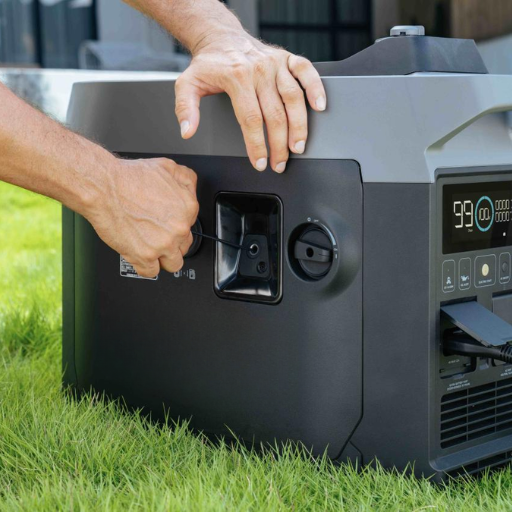
Now we move to the practical work of sizing your generator. This six-step process ensures accurate calculations every time.
Step 1: Conduct a Complete Load Inventory
Start with comprehensive data collection. List every piece of equipment that must run during a power outage, recording:
- Equipment name and function
- Rated voltage (V)
- Full Load Amps (FLA) or running kW
- Locked Rotor Amps (LRA) or starting kW (for motors)
- Quantity of identical units
Pro tip: Do not rely on breaker panel ratings. The main breaker size rarely reflects actual demand. Use nameplate data from each piece of equipment, or better yet, conduct temporary metering during peak operating hours to capture real-world load profiles.
Common equipment to inventory:
- HVAC systems (compressors, fans, pumps)
- Production machinery (CNC machines, presses, conveyors)
- Material handling (cranes, hoists, lifts)
- Lighting (emergency and operational)
- IT infrastructure (servers, network equipment)
- Fire suppression and security systems
- Pumps (water, fuel, process)
- Air compressors
Step 2: Calculate Running Load (kW)
Sum the continuous running power of all equipment. However, here is where engineering judgment matters: Not everything runs simultaneously.
Apply diversity factors (also called demand factors or simultaneity factors) to reflect realistic operating conditions:
| Equipment Type | Typical Diversity Factor |
|---|---|
| Lighting | 0.9 (most lights on during outage) |
| HVAC | 0.7 (not all zones at peak simultaneously) |
| Production machinery | 0.6 (typical manufacturing mix) |
| Pumps | 0.8 |
| IT/Server equipment | 1.0 (critical loads run continuously) |
Example calculation:
- 10 CNC machines @ 15 kW each = 150 kW nameplate
- Diversity factor for production: 0.6
- Calculated running load: 150 kW × 0.6 = 90 kW
Step 3: Account for Motor Starting Surge
Electric motors are the primary challenge in generator sizing. An induction motor requires 3 to 6 times its running current to start, creating a momentary surge that can overload an undersized generator.
Identify your largest motor and calculate its starting requirements:
Starting kVA = (LRA × Voltage × 1.732) / 1000 (for three-phase)
Starting kVA = (LRA × Voltage) / 1000 (for single-phase)
Where LRA (Locked Rotor Amps) is found on the motor nameplate.
Starting method significantly affects surge:
| Starting Method | Starting Current Multiplier |
|---|---|
| Direct-on-line (DOL) | 5-6 × FLA |
| Star-delta starter | 2-3 × FLA |
| Soft starter | 2-4 × FLA (adjustable) |
| Variable Frequency Drive (VFD) | 1-1.5 × FLA |
If your facility uses soft starters or VFDs, generator sizing becomes easier because starting surges are minimized. For direct-on-line starting, you must size for the full starting surge of your largest motor.
Total surge calculation:
Total Peak kVA = (All Running Loads except largest motor) + (Largest Motor Starting kVA)Step 4: Convert to kVA
Convert your total running kW to kVA using the power factor:
Running kVA = Running kW ÷ Power FactorFor most industrial applications, use 0.8 power factor unless you have specific power factor correction equipment.
Compare your running kVA to your peak kVA (including motor starting). Your generator must handle the higher of these two values.
Step 5: Apply Environmental Derating
Generator output decreases under non-standard conditions. Apply these derating factors based on your installation environment:
Altitude Derating:
- Decrease output by 3-4% per 1,000 meters (3,300 feet) above sea level
- Example: At 2,000m elevation, a 500 kVA generator delivers approximately 460-470 kVA
Temperature Derating:
- Decrease output by approximately 1% per degree Celsius above 25°C (77°F)
- Example: At 40°C ambient, a 500 kVA generator delivers approximately 425 kVA
Combined derating formula:
Derated Capacity = Rated Capacity × (1 - Altitude Derate) × (1 - Temperature Derate)Important: Always apply derating to the generator capacity, not increase your load. If calculations show you need 400 kVA at sea level, but your site is at 1,500m elevation, you need a generator rated for approximately 450 kVA (400 ÷ 0.88) to deliver 400 kVA actual output.
Step 6: Add Safety Margin
Industry best practice recommends sizing your generator 20% to 25% above your calculated requirement:
Final Generator Size = (Peak kVA ÷ Derating Factor) × 1.25This safety margin accounts for:
- Future expansion and equipment additions
- Load calculation uncertainties
- Performance degradation over time
- Voltage regulation headroom
Never size a generator for 100% continuous operation. Running at maximum rated capacity constantly reduces engine life, increases maintenance, and leaves no room for error.
Worked Example: Manufacturing Facility Sizing
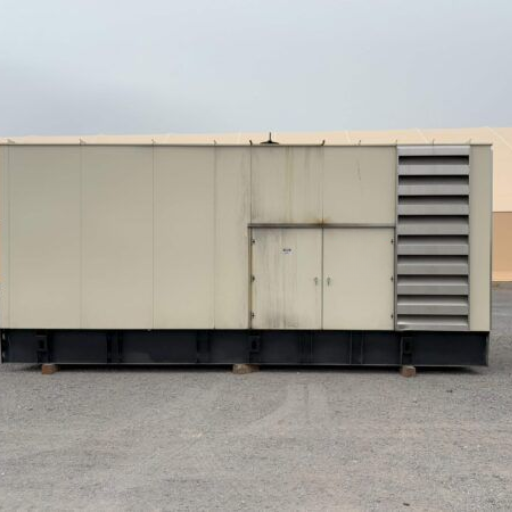
Let us walk through a complete real-world scenario to illustrate the process.
Scenario Parameters
Facility: Manufacturing plant in Peru
Location: 2,500m altitude (8,200 ft)
Climate: Hot, dry (average 35°C ambient)
Application: Standby power for critical production equipment
Equipment Inventory:
- 5 CNC machines: 20 kW running, 100 kW starting (DOL) each
- 3 Air compressors: 15 kW running, 75 kW starting each
- HVAC system: 80 kW running (multiple motors, largest 30 kW start)
- Lighting and misc.: 40 kW total
Step-by-Step Calculation
Step 1 – Running Load:
- CNC machines: 5 × 20 kW × 0.7 diversity = 70 kW
- Air compressors: 3 × 15 kW × 0.8 diversity = 36 kW
- HVAC: 80 kW × 0.9 = 72 kW
- Lighting: 40 kW × 0.9 = 36 kW
- Total Running Load: 214 kW
Step 2 – Peak Surge Load:
- All running except largest motor: 214 – 20 = 194 kW
- Largest motor starting (CNC, DOL): 100 kW
- Total Peak Load: 294 kW
Step 3 – Convert to kVA (PF = 0.8):
- Running kVA: 214 kW ÷ 0.8 = 267.5 kVA
- Peak kVA: 294 kW ÷ 0.8 = 367.5 kVA
Step 4 – Apply Derating:
- Altitude (2,500m): 10% derate
- Temperature (35°C): 10% derate
- Combined: 1 – (0.10 + 0.10) = 0.80 derating factor
- Derated requirement: 367.5 kVA ÷ 0.80 = 459 kVA
Step 5 – Add Safety Margin (25%):
- 459 kVA × 1.25 = 574 kVA
Recommendation: A 600 kVA (480 kW) standby-rated diesel generator with enhanced cooling for high-altitude operation.
This is exactly the type of scenario where partnering with a custom diesel generator manufacturer provides value. Off-the-shelf units rarely account for combined altitude and temperature derating. At Shandong ZC POWER, our engineers factor in environmental conditions during the specification phase, ensuring your genset delivers rated power regardless of local conditions.
Common Generator Sizing Mistakes to Avoid
After 25 years of manufacturing industrial generators, we have seen the same errors repeatedly. Learn from others’ mistakes.
Mistake #1: Ignoring Motor Starting Surge
This is the number one technical mistake. Buyers calculate based on running wattage alone, ignoring the fact that motors draw 3-6 times their running current at startup.
The consequence: When the largest motor attempts to start, the generator voltage collapses. Contactors drop out, VFDs fault, and the entire system fails. The generator is technically running, but the voltage dip prevents any useful work.
Solution: Always identify your largest motor and its starting method. Size for the starting surge, or specify soft starters/VFDs to reduce starting current.
Mistake #2: Using Service Panel Size Instead of Actual Load
A 400A main breaker does not mean you need a generator sized for 400A continuous load. Actual demand is typically 40-60% of service capacity.
Real-world example: A facility with a 400A, 480V three-phase service has theoretical capacity of 332 kVA. However, temporary metering showed actual peak demand of only 185 kVA. The owner nearly purchased a 400 kVA generator when a properly sized 250 kVA unit would have sufficed, saving ,000 in capital and ongoing fuel costs.
Solution: Conduct a load study using temporary metering, or at minimum, calculate actual connected loads with diversity factors applied.
Mistake #3: Confusing Standby and Prime Ratings
A procurement manager specifies a 500 kVA standby-rated generator for a remote mining camp where grid power does not exist. The generator runs 12 hours daily, every day. Within 18 months, the engine requires major overhaul because it was designed for occasional emergency use, not continuous operation.
The difference: Standby ratings assume limited annual hours. Prime ratings assume unlimited hours at variable load. Using standby ratings for prime applications voids warranties and causes premature failures.
Solution: Be honest about your operational profile. If the generator will run regularly as primary power, specify a Prime Rated (PRP) unit, even if it means selecting a slightly larger model.
Mistake #4: Overlooking Harmonic Distortion
Modern industrial facilities use variable frequency drives (VFDs), uninterruptible power supplies (UPS), and LED lighting. These are “non-linear loads” that create harmonic distortion in the electrical waveform.
Standard generators have higher internal impedance than utility transformers. Harmonic currents that are acceptable on grid power can cause significant voltage distortion on generator power, damaging sensitive electronics and reducing efficiency.
Solution: For facilities with high non-linear load content (greater than 25% of total load), consider:
- Oversizing the generator by 15-20% to handle harmonic heating
- Specifying a permanent magnet generator (PMG) for better waveform quality
- Adding harmonic filters at the distribution level
Mistake #5: Neglecting Future Expansion
Facilities grow. Equipment gets added. What suffices today may be inadequate in three years.
Solution: Include 20-25% expansion margin in all sizing calculations. When in doubt between two standard sizes, select the larger option. The incremental cost is usually modest compared to the cost of replacing an undersized generator later.
Special Considerations for Critical Applications
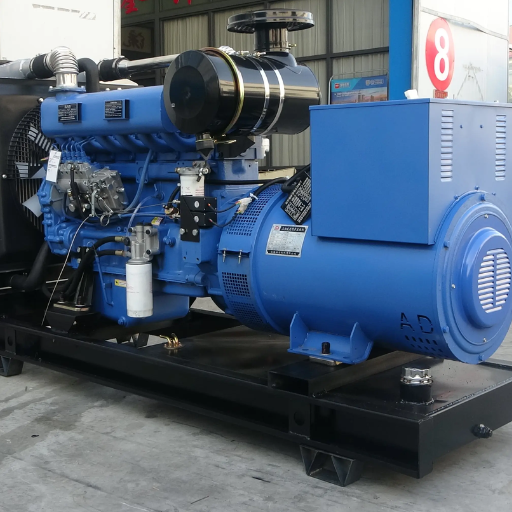
Certain applications have unique requirements that go beyond standard sizing calculations.
Hospital Backup Power Sizing
Healthcare facilities have strict regulatory requirements under NFPA 99 and NFPA 110. Key considerations:
- Life Safety Branch: Must support within 10 seconds of power loss
- Critical Branch: Patient care equipment, surgical suites
- Equipment Branch: HVAC, elevators, boilers
Hospitals typically require N+1 redundancy (one spare generator beyond minimum requirement) to ensure power even if one unit fails during maintenance. Silent diesel generator solutions with sound-attenuated canopies are essential for urban hospital locations where noise ordinances apply.
Data Center Generator Sizing
Data centers operate under Uptime Institute Tier standards:
| Tier | Redundancy | Generator Requirement |
|---|---|---|
| Tier I | None (N) | Single generator for full load |
| Tier II | Partial (N+1) | One spare for every four units |
| Tier III | Concurrent Maintainability (N+1) | Any unit can fail without impact |
| Tier IV | Fault Tolerant (2N) | Two complete independent systems |
Data centers also require seamless integration with UPS systems. The generator must start and stabilize within the UPS battery runtime window (typically 10-15 minutes).
Mining and Offshore Applications
Extreme environments require additional considerations:
- High Altitude: Derate for reduced air density and oxygen content
- Extreme Temperature: Both hot (cooling) and cold (starting) extremes
- Corrosive Atmospheres: Salt spray offshore requires enhanced coatings
- Vibration: Skid-mounted units for mining must withstand constant vibration
- Fuel Quality: Remote locations may have inconsistent fuel quality requiring enhanced filtration
For these applications, custom containerized generator solutions are often the best choice, providing integrated weather protection, noise attenuation, and fuel storage in a single transportable package.
When to Consult a Factory Engineer
While the sizing process outlined in this guide covers 80% of applications, certain scenarios warrant direct engineering consultation.
Complex Load Profiles
If your facility has:
- Multiple large motors starting simultaneously
- High harmonic content from VFDs and UPS systems
- Cyclic loads (cranes, hoists, presses) with rapid load changes
- Strict voltage regulation requirements (±1% or better)
Standard sizing calculations may not capture the dynamic behavior of these loads under generator power. Factory engineers can perform transient analysis and specify appropriate alternator excitation systems.
Custom Voltage and Frequency Requirements
International projects often require non-standard configurations:
- Specialized voltages (220V/380V, 277V/480V, 600V)
- 50Hz vs. 60Hz operation
- Single-phase extraction from three-phase generators
- Parallel operation with existing generators
As a direct manufacturer, we engineer alternator windings and control systems to match your exact grid requirements.
Parallel Operation Requirements
When multiple generators must operate together (N+1 redundancy, load sharing, peak shaving), sizing becomes a system design question, not just individual unit sizing. Considerations include:
- Generator-to-generator load sharing accuracy
- Reactive power (kVAR) management
- Synchronization and protection systems
- Expansion planning for future generator additions
Downloadable Generator Sizing Worksheet
Ready to apply these principles to your facility? Download our comprehensive Generator Sizing Worksheet (PDF) including:
- Load inventory template with pre-loaded formulas
- Motor starting surge calculator
- Environmental derating reference charts
- Step-by-step calculation checklist
- Specification summary for vendor quotes
Conclusion
Proper generator sizing is not guesswork—it is systematic engineering. By following the six-step process outlined in this guide, you can confidently specify the right generator for your facility:
- Inventory your loads completely, distinguishing running from starting requirements
- Calculate running load with appropriate diversity factors
- Account for motor starting surge, the most common sizing error
- Convert to kVA using proper power factor
- Apply environmental derating for altitude and temperature
- Add 20-25% safety margin for future growth and optimal operation
Remember: The most expensive generator is the wrong-sized one. An undersized unit fails when you need it most. An oversized unit wastes capital and fuel while risking engine damage from under-loading.
For complex applications—hospitals requiring N+1 redundancy, data centers needing seamless UPS integration, or mining operations in extreme environments—partnering with experienced factory engineers ensures your power solution is engineered for your specific site conditions.
Ready to size the right generator for your facility? Our team of 80+ technical engineers at Shandong ZC POWER Electromechanical Co., Ltd. is available for custom power assessments. With over 25 years of manufacturing excellence and a national standard testing center verifying every unit, we do not just sell generators—we engineer complete lifecycle power solutions.