
NFPA 110 Type 10 vs Type 60: Commercial Facility Selection Guide
An NFPA 110 Type 10 emergency power system must restore acceptable power to the load terminals of the transfer switch within 10 seconds after normal source failure. An NFPA 110 Type 60 system allows up to 60 seconds. Choosing the wrong Type can add tens of thousands of dollars in retrofit costs or, worse, leave life-safety loads without power when they need it most.
In 2023, a 200-bed hospital in Texas learned this the hard way. The design team specified Type 60 standby power for all loads to reduce the electrical budget. During final inspection, the Authority Having Jurisdiction (AHJ) cited NFPA 99 and required Type 10 for the life-safety and critical branches. The retrofit, faster automatic transfer switches, upgraded starting systems, and re-commissioning, cost $180,000 and delayed occupancy by six weeks. The savings from choosing Type 60 disappeared overnight.
In this guide, you will learn exactly what NFPA 110 Type 10 and Type 60 mean, which codes require each, how the equipment differs, what the cost impact is, and how to select the right Type for your commercial facility. You will also see how Shandong ZC Power CO., LTD. validates genset start-to-load performance in our national standard testing center to support both classifications.
Key Takeaways
- NFPA 110 Type 10 restores power within 10 seconds; Type 60 allows up to 60 seconds.
- Type 10 is typically required for Level 1 life-safety systems such as hospitals, emergency egress, and surgical suites.
- Type 60 is acceptable for many Level 2 legally required standby loads, including fire pumps, elevators, and smoke control in commercial buildings.
- The base genset cost is similar; the Type 10 upgrade usually adds 5,000−5,000−15,000 for faster ATS, starting system enhancements, and commissioning.
- Always confirm the required Type with the applicable code and the Authority Having Jurisdiction before procurement.
What Is NFPA 110 Type 10?
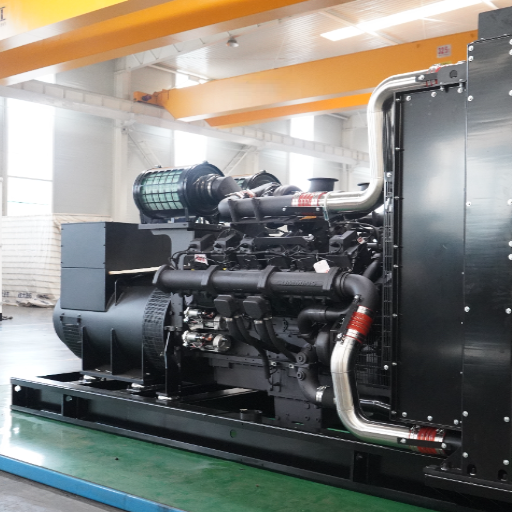
NFPA 110 Type 10 is a classification in the NFPA 110 Standard for Emergency and Standby Power Systems. The Type designation specifies the maximum time, in seconds, that the load terminals of the transfer switch may be without acceptable power after failure of the normal source. For Type 10, that maximum is 10 seconds.
The 10-second window is system-level. It includes the entire sequence from utility failure to load re-energization:
- The automatic transfer switch senses normal source failure.
- The start signal is sent to the generator set.
- The engine cranks and reaches rated speed.
- The alternator output reaches acceptable voltage and frequency.
- The transfer switch moves the load to the emergency source.
Acceptable power is generally defined as voltage and frequency within the ATS pickup settings, commonly 90% of nominal voltage and 90% of nominal frequency. Recovery from voltage and frequency dips after the load is transferred is not included in the 10-second requirement.
A typical timing budget for a diesel genset looks like this:
| Step | Typical Time |
|---|---|
| ATS programmed start delay | ~1 second |
| Engine cranking to rated speed | ~2-3 seconds |
| Voltage and frequency stabilization | ~2-3 seconds |
| ATS transfer mechanism operation | ~0.5-1 second |
| Total | ~8-9 seconds |
This leaves only a small margin. That is why Type 10 systems demand fast-starting engines, high-performance automatic transfer switches, and robust starting batteries. For a deeper look at how standby power fits into commercial procurement, see our complete commercial standby generator buying guide.
What Is NFPA 110 Type 60?
NFPA 110 Type 60 allows the load terminals of the transfer switch to be without acceptable power for up to 60 seconds after normal source failure. This longer window is acceptable for loads where a brief power interruption does not create an immediate life-safety risk.
Type 60 is commonly applied to Level 2 legally required standby systems and some optional standby loads. Examples include:
- Fire pumps in certain commercial high-rise configurations
- Smoke control and ventilation systems
- Emergency elevators and escalators
- Business-critical HVAC and refrigeration
- Industrial processes where a short outage causes economic loss but not injury
Because the window is 60 seconds instead of 10, the generator set and transfer switch do not need the same aggressive start profile. Standard emergency-rated ATS equipment and conventional starting systems are usually sufficient. This reduces both equipment cost and commissioning complexity.
However, Type 60 is not a universal default. Some fire pumps, emergency lighting circuits, and healthcare loads still require Type 10 even when they seem “non-critical” at first glance. The deciding factor is always the applicable code and the AHJ interpretation, not the procurement budget.
NFPA 110 Type 10 vs Type 60: Side-by-Side Comparison
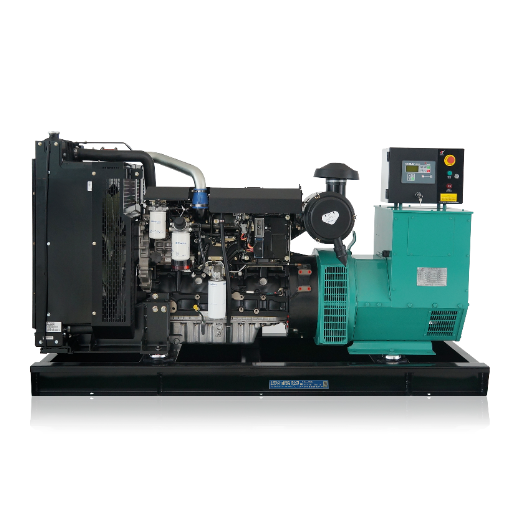
The table below compares the two classifications across the factors that matter for procurement and design.
| Factor | NFPA 110 Type 10 | NFPA 110 Type 60 |
|---|---|---|
| Power restoration time | ≤ 10 seconds | ≤ 60 seconds |
| Typical system Level | Level 1 (emergency) | Level 2 (legally required standby) |
| Common applications | Hospitals, ORs, ICUs, life safety, emergency egress | Fire pumps, elevators, smoke control, HVAC |
| ATS requirement | Fast-acting, listed for emergency service | Standard emergency-rated ATS |
| Starting system | Robust batteries, often pre-lubrication | Standard starting acceptable |
| Engine start budget | ~8-9 seconds | More flexible |
| Typical cost adder | Baseline or +5,000−5,000−15,000 | Baseline |
| Monthly testing focus | Verify 10-second transfer | Verify 60-second transfer |
When Type 10 Is Required
Type 10 is the standard for Level 1 EPSS where failure could result in loss of human life or serious injury. Common code drivers include:
- NFPA 99 healthcare essential electrical systems
- NFPA 101 emergency lighting, egress, and fire alarm systems
- NEC Article 700 emergency systems
- CMS Conditions of Participation for hospital accreditation
- AHJ-mandated life safety circuits
If your facility contains an operating room, intensive care unit, or emergency command center, Type 10 is almost certainly required.
When Type 60 Is Acceptable
Type 60 is acceptable where the code permits a longer transfer time. Typical drivers include:
- NEC Article 701 legally required standby systems
- NFPA 101 smokeproof enclosures and some elevator applications
- Business-critical HVAC, refrigeration, and industrial processes
- Optional standby loads where a brief outage is tolerable
The key distinction is consequence. If a 60-second delay causes economic loss or operational disruption, Type 60 may be fine. If it risks life or serious injury, Type 10 is required.
Code Requirements That Drive Type Selection
NFPA 110 does not itself assign Type, Level, or Class to specific buildings. It defines the classification system. Other codes tell you which classification your facility needs, and the AHJ enforces those codes.
NFPA 99 Healthcare Facilities
NFPA 99 establishes the essential electrical system for healthcare facilities. It divides the system into life safety, critical, and equipment branches. The life safety and critical branches typically require Level 1 EPSS with Type 10 transfer. The equipment branch may be served by Level 2 with Type 60, depending on the facility and the AHJ.
For more detail on healthcare standby requirements, see our guide to hospital emergency power requirements.
NFPA 101 Life Safety Code
NFPA 101 determines which building systems need emergency power. Examples include:
- Emergency lighting and egress: Type 10
- Fire alarm systems: Type 10
- Smokeproof enclosures: Type 60 in some configurations
- Fire command centers: Varies by AHJ
- Elevator recall and power: Varies by occupancy and code edition
Always verify the specific edition of NFPA 101 adopted in your jurisdiction, because transfer-time requirements can change between editions.
NEC Articles 700, 701, and 702
The National Electrical Code aligns closely with NFPA 110 classifications:
- Article 700 (Emergency Systems): Roughly equivalent to NFPA 110 Level 1; typically requires Type 10.
- Article 701 (Legally Required Standby): Roughly equivalent to NFPA 110 Level 2; often permits Type 60.
- Article 702 (Optional Standby): Not governed by NFPA 110; Type 120 or Type M may be acceptable.
NFPA 20 Fire Pump Integration
NFPA 20 covers stationary fire pumps. A fire pump can be diesel-driven or electric. If electric, it must have a reliable power supply, often from a standby generator set. The required Type depends on the overall system classification:
- High-rise building fire pumps often require Type 10.
- Some industrial fire pumps may be permitted at Type 60.
- Diesel-driven fire pumps have their own engine and may not rely on the building EPSS at all.
For a deeper explanation of diesel standby power in fire suppression systems, read our diesel standby generator for critical applications guide.
Equipment Differences Between Type 10 and Type 60 Systems
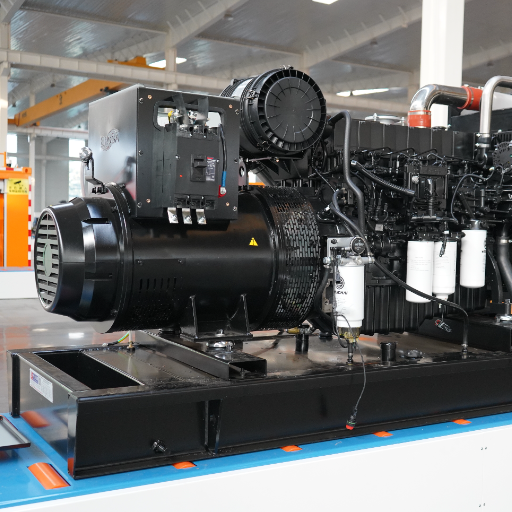
The base generator set price is often similar for Type 10 and Type 60. The real differences appear in the starting system, transfer switch, controls, and commissioning.
Generator Set Requirements
A Type 10 genset must reach rated speed and acceptable voltage/frequency in roughly 8-9 seconds to leave time for ATS transfer. This favors:
- Fast-start diesel engines from Cummins, Perkins, Yuchai, or Weichai
- Electronic governors with rapid frequency recovery
- Pre-lubrication systems that build oil pressure before cranking
- Properly sized alternators with good transient response
Natural gas engines can meet Type 10 in some sizes, but diesel is more common because compression ignition starts faster and accepts load more aggressively under cold conditions.
Automatic Transfer Switch (ATS)
The ATS is often the weakest link in the 10-second chain. Type 10 systems require:
- Transfer switches listed for emergency service
- Fast transfer mechanisms
- Mechanical interlocking to prevent paralleling normal and emergency sources
- Bypass isolation switches for critical facilities that cannot tolerate maintenance outages
For larger facilities, closed-transition ATS can reduce voltage dips during transfer, but the total transfer time must still remain within 10 seconds.
Starting and Battery Systems
Type 10 systems place higher demand on starting batteries. Common specifications include:
- Larger or redundant battery sets
- Battery heaters in cold climates
- Temperature-compensated charging
- Nickel-zinc or lithium-ion batteries, now accepted under NFPA 110-2025
NFPA 110-2025 expanded accepted battery technologies to include nickel-zinc and lithium-ion, provided they meet cranking performance and voltage-drop requirements.
Controls and Programming
Controller settings affect the timing budget directly. NFPA 110 specifies:
- Time delay on start: 1 second minimum
- Time delay on retransfer to normal: 5 minutes minimum
- Time delay on shutdown: 5 minutes minimum
Deep Sea Electronics and SmartGen controllers can be programmed for these delays, but the settings must be verified during commissioning. A controller configured with too long a start delay can push a Type 10 system out of compliance even if the engine starts instantly.
Cost Comparison: Type 10 vs Type 60
The base genset cost for Type 10 and Type 60 is usually close. The cost difference comes from the ATS, starting system, controls, and commissioning.
| Cost Component | Type 10 | Type 60 |
|---|---|---|
| Base genset | Similar | Similar |
| Faster ATS | +3,000−3,000−8,000 | Baseline |
| Starting system upgrade | +1,500−1,500−4,000 | Baseline |
| Pre-lubrication | +1,000−1,000−3,000 | Usually not required |
| Commissioning / AHJ witnessing | +5,000−5,000−15,000 | Less stringent |
| Typical total adder | +5,000−5,000−15,000 | Baseline |
In 2022, a pharmaceutical distribution center in New Jersey upgraded from Type 60 to Type 10 after its insurer changed requirements. The ATS and starting-system upgrade added 8,500totheproject.However,thechangeeliminateda8,500totheproject.However,thechangeeliminateda50,000 annual insurance premium surcharge. The upgrade paid for itself in under three months and reduced the facility’s 10-year operating cost by more than $400,000.
For a broader look at standby generator pricing, see our commercial standby generator cost breakdown.
Testing and Commissioning Requirements
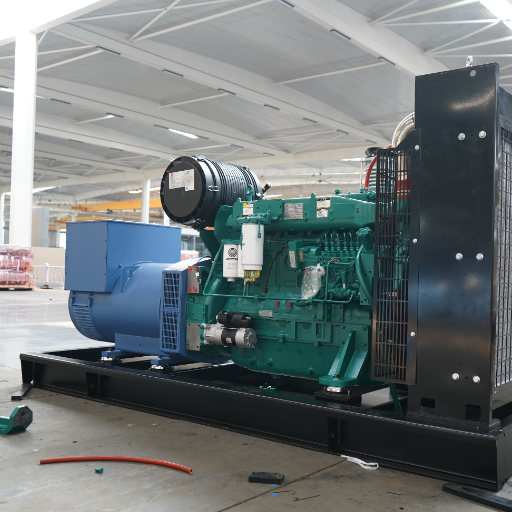
Both Type 10 and Type 60 systems require regular testing, but Type 10 systems must also verify the actual transfer time.
Monthly Testing
NFPA 110 requires a monthly test of at least 30 minutes under load. The load must be at least 30% of the genset nameplate kW rating or the manufacturer’s recommended minimum exhaust temperature, whichever is lower.
For Type 10 systems, the test must also confirm that the load is transferred within 10 seconds. Records should include:
- Load level achieved (kW and percentage of rating)
- Operating voltage and frequency
- Oil pressure and coolant temperature
- Transfer and retransfer times
- Any alarms or abnormal conditions
Annual and Triennial Testing
The NFPA 110-2025 annual load-bank test protocol was reduced from 2 hours to 1.5 hours. The new protocol is:
- 50% load for 30 minutes
- 75% load for 60 minutes
Level 1 systems also require a triennial 4-hour test at actual building load or 30% of nameplate, whichever is greater. This extended test reveals fuel system, cooling, and control issues that shorter tests miss.
Acceptance Testing
Before a new or modified EPSS enters service, NFPA 110 requires formal acceptance testing. The AHJ typically witnesses:
- Full-load test for the assigned Class duration
- Voltage and frequency stability verification
- Transfer switch operation under all modes
- Safety shutdown verification
- Documentation package delivery
At ZC Power, every genset undergoes full-load testing in our national standard testing center before shipment. For Type 10 projects, we record start-to-load timing to confirm the genset leaves adequate margin for the ATS transfer at site.
Common Mistakes When Selecting Type 10 or Type 60
Even experienced engineers make these errors when specifying NFPA 110 transfer times.
Mistake 1: Assuming all standby systems need Type 10. Not every load is life-safety critical. Specifying Type 10 for optional standby loads wastes budget without adding compliance value.
Mistake 2: Ignoring ATS transfer time in the 10-second budget. A genset that starts in 8 seconds will still fail Type 10 if the ATS takes 4 seconds to transfer.
Mistake 3: Selecting Type 60 for a Level 1 life-safety load. This is the most expensive error because it usually requires retrofit after inspection.
Mistake 4: Not confirming AHJ interpretation before procurement. Codes give minimum requirements; AHJs may enforce stricter local interpretations.
Mistake 5: Skipping monthly transfer-time verification. Testing that the genset runs is not enough. You must document that it meets the assigned Type.
Quick Reference: NFPA 110 Type Selection Matrix
Use the matrix below as a starting guide. Always confirm exact requirements with your project’s engineering specification and the Authority Having Jurisdiction.
| Facility / Load | Recommended Type | Typical Level | Reason |
|---|---|---|---|
| Hospital OR, ICU, life safety | Type 10 | Level 1 | Human life depends on immediate power |
| Hospital HVAC, non-critical | Type 60 | Level 2 | Brief outage acceptable |
| Data center critical load | Type 10 | Level 1 / custom | Uptime requirements |
| High-rise emergency lighting | Type 10 | Level 1 | Egress safety |
| High-rise fire pump | Type 10 or 60 | Varies | AHJ and code dependent |
| Manufacturing process | Type 60 | Level 2 | Economic loss only |
| Retail / office optional standby | Type 120 or Type M | Optional | Business continuity |
ZC Power: Factory-Tested Type 10 and Type 60 Gensets
Shandong ZC Power CO., LTD. has built emergency power systems since 1999. Our 300,000-square-meter facility in Jining, Shandong, includes dedicated production lines and a national standard testing center where every genset is validated before shipment.
Our standard scope for standby power projects includes:
- Diesel generator sets from 8kVA to 4000kVA
- Cummins, Perkins, Yuchai, and Weichai engine options
- Stamford, Leroy-Somer, and Faraday copper-wound alternators
- Deep Sea Electronics and SmartGen digital controllers
- Open, silent, trailer-mounted, and containerized configurations
- Custom voltage and frequency for global grids
- Full-load testing with start-to-load timing documentation
- OEM and ODM services for distributors and large projects
For a Type 10 project commissioned in Singapore in 2024, our engineers configured a 1,000kW Cummins-powered genset with a fast-acting ATS. Factory testing recorded 8.2 seconds from start signal to rated voltage and frequency, leaving 1.8 seconds of margin for the site ATS transfer. The commissioning agent accepted the unit on the first AHJ witness test.
If you are unsure whether your project needs NFPA 110 Type 10 or Type 60, our engineering team can review your load list, applicable codes, and AHJ requirements before you commit to a specification.
Conclusion
NFPA 110 Type 10 and Type 60 are not interchangeable labels. They define how quickly emergency power must reach your critical loads after utility failure. Type 10 is the standard for Level 1 life-safety systems. Type 60 is acceptable for many Level 2 legally required standby loads. The base generator set cost is similar, but the Type 10 upgrade typically adds 5,000−5,000−15,000 for faster ATS, starting system enhancements, and stricter commissioning.
To choose correctly, follow this sequence:
- Identify each load and its consequence of failure.
- Reference the applicable code: NFPA 99, NFPA 101, NEC Article 700/701, or NFPA 20.
- Confirm the Authority Having Jurisdiction interpretation.
- Specify genset, ATS, and controls that meet the assigned Type.
- Test and document transfer time every month.
At Shandong ZC Power CO., LTD., we engineer and factory-test diesel standby generator sets for both Type 10 and Type 60 applications. Our 80+ technical engineers, national standard testing center, and 25 years of manufacturing experience give facility managers and project contractors the confidence that every unit will perform to specification when seconds count. Contact our engineering team today to request a Type 10/Type 60 specification review, factory tour, or factory-direct quotation for your next emergency power project.


