500 kW Generator Price: 35K−35K−180K Equipment + Full Install Breakdown
A new 500 kW diesel generator costs 35,000−35,000−180,000 for equipment only in 2026 depending on engine brand, emissions tier, and enclosure type. With installation, automatic transfer switch, fuel storage, concrete foundation, and commissioning, total project cost typically ranges from 220,000to220,000to450,000.
Dr. Patricia Okonkwo, Facilities Director at a 200-bed hospital in Lagos, received a quotation from an authorized dealer for a 500-kilowatt Cummins backup generator set, totaling $120,000. She subsequently presented this figure to the Board of Directors to request budget approval. However—unbeknownst to her at the time, and a detail the dealer did not voluntarily disclose—the complete project would incur an additional $260,000 in costs once the concrete pad, 800-amp Automatic Transfer Switch (ATS), 1,000-gallon underground fuel tank, electrical interconnections, and NFPA 110-compliant commissioning were factored in. Ultimately, what she had identified as the “price of the generator” amounted to less than one-third of the actual total cost of the entire project.
You already know your facility needs industrial-scale backup power. What you need now is clarity on 500 kW diesel generator cost, 500 kW generator installation cost, why prices vary by 400%, and what you should budget for the complete project. This guide breaks down equipment pricing by brand tier, explains the critical kW versus kVA distinction at the 500 kW scale, shows exactly what a 500 kW unit can power, and itemizes installation costs that most suppliers do not disclose upfront.
Key Takeaways
- New 500 kW diesel generators range from 22,000(factory−direct)to22,000(factory−direct)to180,000 (Tier 1 certified retail)
- Installation costs including pad, ATS, electrical, and fuel system add 80,000−80,000−150,000
- A 500 kW generator powers a hospital wing, 100-150 server racks, or a mid-size manufacturing plant
- The kW vs kVA distinction matters: a “500 kVA” unit delivers only 400 kW of real power
- Factory-direct ISO9001/CE-certified units can save 50,000−50,000−100,000+ versus dealer retail
How Much Does a 500 kW Generator Cost?
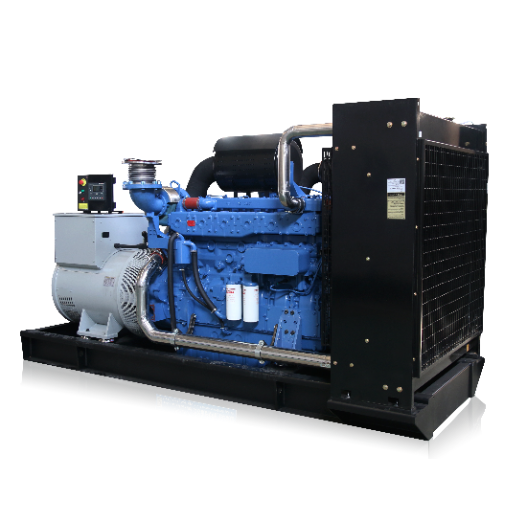
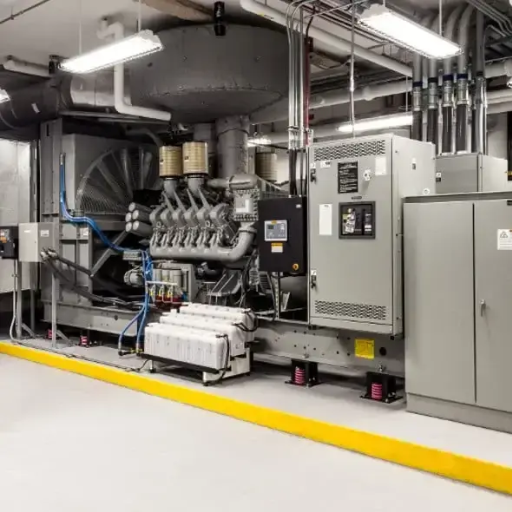
The 500 kW class crosses into industrial-scale territory. It is large enough to power a hospital wing, a small data center, or a mid-size manufacturing facility. It is small enough to avoid the specialized logistics and paralleling switchgear of megawatt-class installations.
However, the price range for such units is remarkably wide. At the low end of the market, a basic open-frame (un-enclosed) 500 kW diesel generator set—offered directly by a manufacturer or distributor—starts at approximately $22,000. Conversely, at the high end, a 500 kW backup generator from a top-tier brand—featuring a full suite of certifications (including compliance with EPA Tier 4 Final emission standards and UL 2200 certification) and equipped with a sound-attenuating enclosure—can cost upwards of $180,000. This vast price disparity often leaves buyers bewildered, as both categories of products are broadly lumped together under the general label of “500 kW generators.” Indeed, when you search online for “500 kW generator price,” the first page of results typically displays a diverse array of products—ranging from export-grade units priced at a mere $22,000 to premium retail models from leading brands costing as much as $180,000.
The difference comes down to four factors. First, the engine brand and alternator quality set the base cost. Second, certifications (EPA, UL, NFPA 110) add significant cost for regulated markets. Third, the enclosure type (open type, standard silent, or super silent canopy) changes the price by 15-40%. Fourth, the distribution channel (factory-direct versus dealer retail) adds 15-40% markup.
For context on how 500 kW generator price fits into broader commercial pricing, see our full commercial generator price guide. That resource covers commercial generator cost per kW analysis across all size classes.
500 kW Generator Price by Brand and Configuration
The most useful way to benchmark 500 kW generator price is by brand tier and configuration. Below are 2026 equipment-only ranges compiled from dealer listings and commercial generator pricing data.
| Brand Tier | Open Skid | Silent Canopy | Key Certifications | Typical Lead Time |
|---|---|---|---|---|
| Tier 1 (Cummins, Caterpillar, Perkins) | 95,000−95,000−130,000 (open type) | 120,000−120,000−180,000 | EPA Tier 4, UL 2200, NFPA 110 | 30-50 weeks |
| Tier 2 Certified Assemblers | 45,000−45,000−70,000 | 55,000−55,000−90,000 | ISO 9001, CE, CCC | 18-30 weeks |
| Factory-Direct / Export | 22,000−22,000−35,000 | 28,000−28,000−45,000 | ISO 9001, CE, CCC | 6-12 weeks |
| Used / Surplus | 55,000−55,000−135,000 | Varies by condition | Dependent on unit history | Immediate |
Tier 1 Brands (Cummins, Caterpillar, Perkins)
Tier 1 manufacturers design and manufacture their own engines or hold exclusive partnerships with engine makers. Their 500 kW units are purpose-built for commercial standby duty, also called standby power, with integrated control systems, advanced diagnostics, and nationwide dealer support networks.
A Tier 1 500 kW standby generator price from Cummins, for example, starts around 99,900−99,900−139,900 through authorized dealers according to 500 kW generator supplier listings. That price includes EPA Tier 4 Final compliance, UL 2200 safety certification, and a warranty backed by Cummins’ global service network. A comparable Caterpillar or Perkins unit falls in the same 120,000−120,000−180,000 range for silent canopy configurations.
Buyers choose Tier 1 brands when local codes require UL listing, when the facility is mission-critical, or when the procurement specification mandates a named brand. The tradeoff is cost and lead time.
Tier 2 Certified Assemblers
Tier 2 assemblers purchase engines from Cummins, Perkins, Deutz, Yuchai, Weichai, or Ricardo and pair them with Stamford or Leroy-Somer alternators in their own frames. They hold ISO 9001 certification and conduct full load-bank testing. Their 500 kW silent gensets typically run 55,000−55,000−90,000.
These units suit commercial projects where brand prestige matters less than reliable performance. The components are often identical to Tier 1 units. The difference is the badge on the canopy and the dealer markup.
Factory-Direct / Export Manufacturers
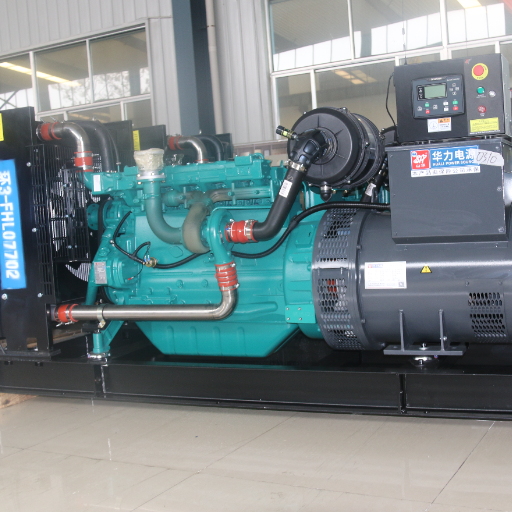
Factory-direct manufacturers like ZC Power operate integrated production facilities that build gensets from 8 kVA to 4,000 kVA for prime power and standby power applications. By eliminating dealer networks, these manufacturers deliver equivalent power output at 22,000−22,000−45,000 for 500 kW class units.
Every unit is tested in our national standard testing center before shipment. We use authentic Cummins or Perkins engines, Stamford alternators, and Deep Sea Electronics or ComAp control panels. The result is certified quality at factory pricing.
Used and Surplus Market
Used 500 kW diesel units from surplus dealers typically run 55,000−55,000−135,000. These may be hospital backup units with low runtime hours, or industrial units retired during facility upgrades. Always verify total runtime, maintenance history, and whether the control panel and alternator are original before purchasing used. Certified pre-owned programs from Tier 1 dealers offer inspected units with limited warranties at a premium over unverified surplus.
500 kW vs 500 kVA Generator Price: The $100K Mistake Buyers Make
Here is the single most expensive mistake buyers make when researching 500 kW generator price or 500 kVA generator price. They search for “500 kW” but receive quotes for “500 kVA” units. The difference is not semantic. It is 100 kW of missing power.
kW (kilowatts) measures real power. kVA (kilovolt-amperes) measures apparent power. In AC electrical systems, the relationship between the two is governed by the power factor, which is typically 0.8 for diesel generators.
A 500 kVA generator at 0.8 power factor delivers only 400 kW of real power. That missing 100 kW could be the difference between your entire data center staying online or half your server racks going dark. When comparing quotes, always confirm whether the supplier is quoting kW or kVA. If they quote kVA, multiply by 0.8 to get the real power output.
At the 500 kW class, this distinction is especially critical because facility loads are large and tightly calculated. A hospital that needs 480 kW of real power will be catastrophically undersized by a “500 kVA” unit that only delivers 400 kW. Always specify your requirement in kW, and always verify the real power rating of any unit you consider.
A data center operator in Singapore bought a “500 kVA” unit from a supplier who marketed it as “500 kW equivalent.” During load-bank testing, the unit peaked at 400 kW and tripped under the 480 kW design load. The operator had to parallel a second 250 kW unit, doubling the project cost and complicating the control system. A true 500 kW unit, which would be rated at approximately 625 kVA, would have handled the load with margin to spare.
What Can a 500 kW Generator Power?
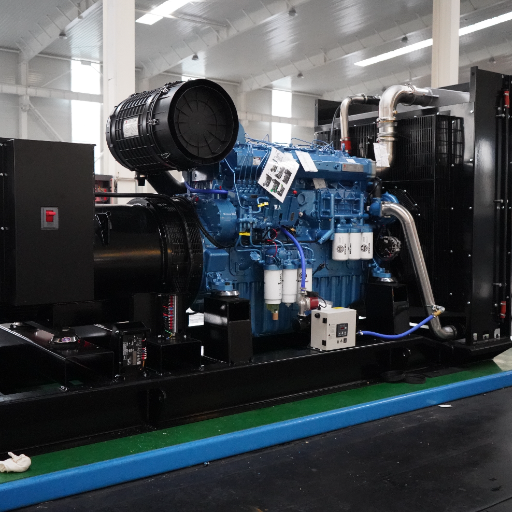
A 500 kW generator can power a hospital wing, 100-150 server racks, or a mid-size manufacturing facility. The exact load depends on your starting surge requirements and how many motor-driven loads start simultaneously.
Hospital / Healthcare
A typical 200-bed hospital wing runs roughly 350-450 kW of continuous load. That includes:
- HVAC system: 120-150 kW running, 180-220 kW starting
- Operating rooms and ICU equipment: 80-100 kW
- Imaging equipment (CT, MRI, X-ray): 60-80 kW
- Lighting, elevators, and security: 40-50 kW
- Kitchen and laundry: 30-40 kW
Total running load: ~350 kW. Total peak load if HVAC and imaging start together: ~450 kW. A 500 kW generator provides a comfortable margin for this application.
Data Center
A small data center with 100-150 server racks typically draws 300-450 kW continuously. That includes servers, cooling, UPS systems, and network infrastructure. A 500 kW unit leaves headroom for expansion but may require N+1 redundancy for Tier III compliance.
Manufacturing Plant
A mid-size manufacturing facility with CNC equipment, air compressors, and welding stations can push a 500 kW generator to its limit. A 50 HP air compressor draws 37 kW running but requires 110-130 kW to start. If multiple motor loads start simultaneously, a 500 kW unit may be undersized. Always calculate worst-case starting surge, not just running load.
Large Commercial Building
A 50,000-100,000 square foot hotel or shopping center typically runs 300-450 kW continuous including HVAC, elevators, lighting, and kitchen equipment. A 500 kW unit provides adequate coverage with modest margin.
500 kW Generator Installation Cost Breakdown
The equipment price is only half the story. A complete 500 kW generator price must include installation, which typically adds 80,000−80,000−150,000 to the project. Here is how that breaks down.
Concrete Pad and Foundation
A 500 kW genset with a silent canopy and sub-base fuel tank weighs 12,000-17,000 pounds. It requires a reinforced concrete pad minimum 6 inches thick with #4 rebar on 12-inch centers, rated to 3,000-4,000 psi. Pad construction including excavation, rebar, and concrete typically runs 8,000−8,000−25,000 depending on soil conditions, site prep requirements, and local labor rates.
Automatic Transfer Switch (ATS) and Electrical
The ATS monitors utility power and automatically transfers the building load to the generator when the grid fails. For a 500 kW unit, an 800-amp three-phase ATS with integrated AMF panel costs 15,000−15,000−30,000. Electrical interconnection including panel modifications, conduit, cabling, and grounding adds another 8,000−8,000−20,000. Total electrical: 25,000−25,000−50,000.
Fuel Storage and Delivery System
Most 500 kW diesel generators include a base fuel tank sufficient for 8-12 hours of runtime. For extended outages, facilities install external fuel tanks. A 1,000-gallon diesel tank with secondary containment, piping, and pump runs 8,000−8,000−15,000 installed. Underground double-wall tanks with leak detection and environmental compliance run 25,000−25,000−50,000+.
Exhaust and Ventilation
Exhaust piping must route safely away from air intakes, windows, and occupied spaces. For a 500 kW unit, exhaust installation including flex pipe, rain cap, wall penetration, and vibration isolation typically costs 5,000−5,000−15,000.
Permits, Inspections, and Commissioning
Commercial generator installations require electrical permits, fire department approval for fuel storage, environmental permits for exhaust emissions, and NFPA 110 acceptance testing. Permit fees, inspection costs, and witnessed commissioning range from 2,000−2,000−10,000 depending on jurisdiction.
Total Installed Cost Summary
| Cost Item | Low End | High End |
|---|---|---|
| Equipment (silent canopy) | $28,000 | $180,000 |
| Concrete pad and foundation | $8,000 | $25,000 |
| ATS and electrical | $25,000 | $50,000 |
| Fuel storage (external) | $8,000 | $50,000 |
| Exhaust and ventilation | $5,000 | $15,000 |
| Permits and commissioning | $2,000 | $10,000 |
| Total Project Cost | $76,000 | $330,000 |
A construction contractor in Nairobi budgeted 38,000forafactory−direct500kWsilentgenset.Whathedidnotbudgetwasthe38,000forafactory−direct500kWsilentgenset.Whathedidnotbudgetwasthe18,000 reinforced concrete pad, 32,000ATSandelectricalintegration,32,000ATSandelectricalintegration,22,000 fuel tank system, and $8,000 in customs duties and port handling. His “generator price” nearly tripled before the unit produced a single kilowatt.
For a complete breakdown of installation costs across all generator sizes, see our commercial generator installation cost guide.
500 kW Generator Price vs 300 kW and 750 kW: Size Comparison
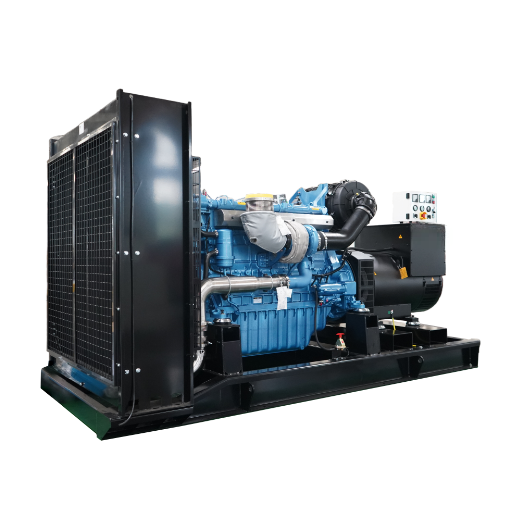
Selecting the right generator size is not about matching your peak load exactly. It is about providing margin for starting surges, future growth, and safe operating conditions.
300 kW vs 500 kW
A 300 kW generator suits smaller commercial loads under 200 kW continuous with minimal motor starting. The 500 kW class makes sense when your calculated peak load exceeds 250 kW, when you run multiple large motor loads, or when you need headroom for facility expansion. The additional 15,000−15,000−40,000 in equipment cost is negligible compared to the cost of a failed backup power event at the industrial scale.
500 kW vs 750 kW
A 750 kW generator adds 50% more capacity and typically costs 30,000−30,000−60,000 more than a 500 kW unit depending on brand. The 750 kW class makes sense if you anticipate significant facility expansion within five years, if your peak load already exceeds 350 kW, or if you run multiple motor loads that start simultaneously.
500 kW vs 1000 kW
A 1000 kW generator crosses into the megawatt class and typically costs 80,000−80,000−150,000 more than a 500 kW unit. The 1000 kW class requires paralleling switchgear, larger fuel infrastructure, and often dual-generator configurations. Most facilities that think they need 1000 kW can operate safely on 750 kW with proper load management.
The 80% rule applies here. Generators operate most efficiently and safely when running at 70-80% of rated capacity. If your calculated peak load is 350 kW, a 500 kW unit is appropriately sized. If your peak load is 420 kW, a 750 kW unit is the better long-term investment. See our 100 kW generator price guide if you are evaluating smaller commercial sizes.
Factory-Direct 500 kW Generator Pricing
The distribution channel you buy through affects your 500 kW generator price as much as the specifications do. Dealer markup typically adds 15-40% over the factory cost.
Consider a 500 kW silent diesel genset. At the factory level, the unit might cost 30,000−30,000−38,000 to produce depending on engine brand and enclosure quality. A regional dealer adding 30% markup would sell that same unit for 39,000−39,000−49,400. A dealer in a remote market with higher logistics costs might add 40%, pushing the price to 42,000−42,000−53,200.
Factory-direct FOB pricing eliminates that markup. You pay the true manufacturing cost plus export documentation and container loading. What FOB pricing does not include is international shipping, customs clearance, import duties, and local delivery. Those costs apply regardless of whether you buy from a dealer or direct. The difference is that with factory-direct, you control the logistics chain and avoid paying margin on top of margin.
There are legitimate reasons to buy through a dealer. Local dealers provide immediate parts availability, factory-trained technicians, and warranty administration in your time zone. For buyers who prioritize convenience over cost, the dealer premium is justified. For international project contractors, global distributors, and cost-conscious facility managers, factory-direct sourcing captures significant savings without sacrificing technical accountability. View our factory-direct 500 kW diesel generators with standard and custom configurations.
How to Get an Accurate 500 kW Generator Quote
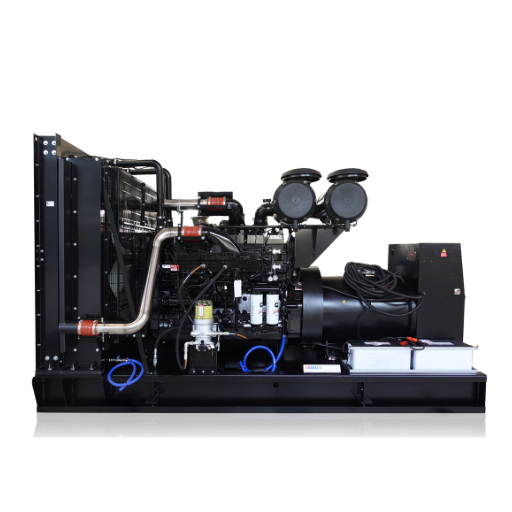
Accurate 500 kW generator price quotes require more than picking a kW rating from a table. Your quote depends on load profile, runtime expectations, environmental conditions, and local regulatory requirements.
To get a precise figure, prepare the following information before contacting any supplier. First, a complete load list showing running watts and starting watts for every piece of equipment the generator must power. Second, your required runtime on a full tank or your planned refueling interval. Third, your local emissions regulations and noise limits. Fourth, your site conditions including altitude, ambient temperature range, and dust exposure.
Armed with this data, a qualified engineering team can specify the exact engine, alternator, enclosure, and control panel configuration you need. They can also calculate fuel consumption, maintenance intervals, and total cost of ownership over your planned operational life.
For a detailed analysis of diesel generator pricing across all size classes, see our diesel generator price guide covering 20 kW to 2 MW.
Conclusion
A realistic 500 kW generator price ranges from 22,000atthefactory−directlevelto22,000atthefactory−directlevelto180,000 for Tier 1 certified retail. The equipment is only part of the budget. Installation, fuel storage, and commissioning typically add 80,000−80,000−150,000, pushing total project cost to 220,000−220,000−450,000.
The three takeaways for procurement officers and facilities managers are simple. First, always confirm whether your quote is in kW or kVA. A 500 kVA unit delivers only 400 kW of real power, a catastrophic undersize at this scale. Second, budget for the complete project, not just the genset on the pallet. Third, consider factory-direct sourcing from ISO9001/CE-certified manufacturers to capture 50,000−50,000−100,000 in savings without sacrificing engineering accountability.
Whether you are powering a hospital wing, a data center, or a manufacturing plant, the 500 kW class offers the best balance of capacity, logistics, and cost for mid-size commercial and industrial facilities. Get your load profile right, plan for starting surges, and build your budget around total installed cost.
Ready to source your 500 kW generator? Contact ZC Power Engineering for a factory-direct quote with exact pricing, lead time, and delivery to your site.
Frequently Asked Questions
How much does a 500 kW generator cost?
A new 500 kW diesel generator costs 35,000−35,000−180,000 for equipment only in 2026. Factory-direct ISO-certified units start around 22,000−22,000−45,000. Tier 1 brands like Cummins and Caterpillar run 120,000−120,000−180,000. With installation, ATS, fuel tank, and site prep, total project cost ranges from 220,000to220,000to450,000.
What is the difference between 500 kW and 500 kVA generator?
kW measures real power. kVA measures apparent power. At the standard 0.8 power factor for diesel generators, a 500 kVA unit delivers only 400 kW of usable power. Buyers searching for “500 kW generator price” sometimes receive quotes for 500 kVA units that are 20% smaller than expected. Always confirm the real kW rating before purchasing.
What can a 500 kW generator power?
A 500 kW generator powers a hospital wing, 100-150 server racks, a mid-size manufacturing plant, or a large commercial building. Specific examples include a 200-bed hospital with OR and ICU equipment, a data center with cooling infrastructure, or a manufacturing facility with CNC machines and compressors.
How much does it cost to install a 500 kW generator?
500 kW generator installation cost runs 80,000−80,000−150,000. The breakdown is: concrete pad and foundation (8,000−8,000−25,000), automatic transfer switch and electrical (25,000−25,000−50,000), fuel storage system (8,000−8,000−50,000), exhaust and ventilation (5,000−5,000−15,000), and permits and commissioning (2,000−2,000−10,000).
How much fuel does a 500 kW generator use per hour?
A 500 kW diesel generator at 75% load consumes approximately 35 gallons per hour. At full load, consumption rises to approximately 42-45 gallons per hour. Fuel tank sizing should account for your required runtime during extended outages.
Is a 500 kW generator enough for a hospital?
Yes, for a 150-250 bed hospital or a single wing of a larger facility. A typical hospital wing runs 350-450 kW of continuous load including HVAC, operating rooms, imaging equipment, and essential services. A 500 kW unit provides adequate margin. Larger hospitals or facilities with multiple wings may need 750 kW or parallel configurations.
Get a factory-direct 500 kW generator quote tailored to your project. Our team of 80 engineers will review your load profile, site conditions, and delivery requirements, then deliver a detailed proposal with exact pricing and lead times.