Commercial Generator Installation Cost: 2026 Per-kW Guide
Commercial generator installation cost ranges from 300to300to600 per kW for small-to-mid-size systems and 250to250to450 per kW for large industrial units in 2026. The total project price includes far more than the generator itself. Installation often equals 25% to 50% of your entire budget, and on complex jobs it can exceed the equipment cost entirely.
Ahmed, a procurement manager in Lagos, learned this lesson the hard way. He had allocated a budget of 85,000 for a 500-kilowatt open-frame diesel generator purchased directly from a Chinese manufacturer. However, when he began soliciting local quotes for items such as the concrete foundation, electrical connections, automatic transfer switch, and fuel tank, he discovered that the installation costs alone totaled a staggering 53,000. This figure amounted to 62% of the equipment’s purchase price. He had not anticipated this expense, as all the price guides he had consulted assumed—by default—that dealers would bundle installation services into the overall quotation.
Most existing guides are written for US buyers purchasing through a dealer network. They don’t address what factory-direct and international buyers actually face. At Shandong ZC Power CO., LTD. (ZC Power), we have shipped industrial diesel generators to over 50 countries since 1999. We’ve seen the full range of installation scenarios, from simple canopy placements in Southeast Asia to complex parallel synchronization projects in the Middle East.
In this guide, you’ll get a complete commercial generator installation cost breakdown. We’ll cover per-kW pricing by size, how enclosure type changes your budget, regional labor cost differences, NFPA 110 compliance expenses, and the hidden costs that blow up project budgets. Whether you’re buying factory-direct or through a dealer, you’ll know exactly what to budget before your generator ever leaves the port.
Key Takeaways
- Commercial generator installation costs 300–300–600 per kW for small-to-mid-size units and 250–250–450 per kW for large industrial systems in 2026.
- Installation equals 25–50% of total project cost; factory-direct buyers must budget it as a separate line item.
- Containerized generators cut installation cost by 30–50% versus open-set units because they arrive pre-enclosed and plug-ready.
- Regional labor rates vary dramatically: US electricians charge 90–90–200/hour, while skilled technicians in Southeast Asia charge 10–10–40/hour.
- NFPA 110 compliance, load bank testing, and commissioning add 3,000–3,000–15,000 to most commercial projects.
What Is Included in Commercial Generator Installation?
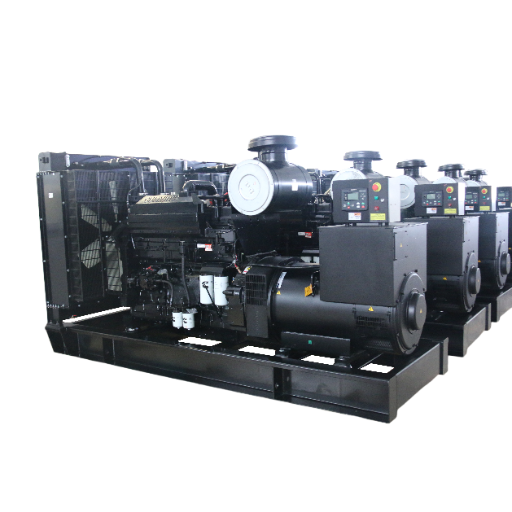
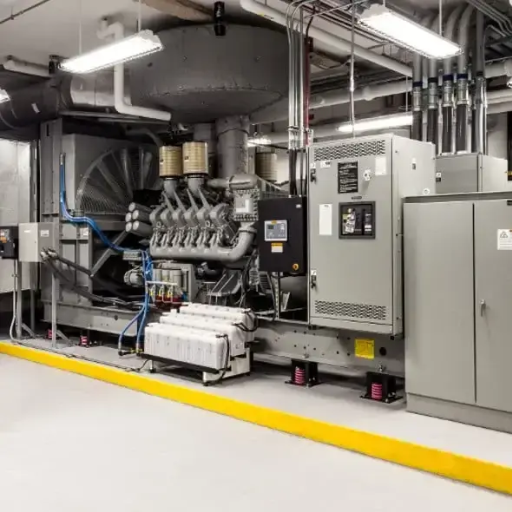
Understanding commercial generator installation cost starts with knowing what the process includes. It covers everything from unloading the unit to flipping the switch that connects it to your building’s electrical system.
The eight core components are:
- Delivery and unloading: Crane or forklift rental to move the generator from truck to pad.
- Concrete pad or foundation: A reinforced base that handles vibration, weight, and weather.
- Fuel infrastructure: Diesel tank, natural gas line, or propane connection sized for your runtime needs.
- Electrical tie-in: Wiring from the generator output terminals to your main distribution panel.
- Automatic transfer switch (ATS): The bridge between utility power and generator power that prevents dangerous backfeeding.
- Permits and inspections: Electrical, mechanical, and environmental permits required by your local authority.
- Commissioning and load bank testing: Documented proof that the system performs at rated capacity under real load.
- Operator training and documentation: Handover manuals, startup procedures, and staff training for safe operation.
What buyers routinely forget are the secondary items: exhaust routing, ventilation systems, sound attenuation enclosures for open-set units, remote monitoring setup, seismic anchoring in earthquake zones, and spare parts provisioning for remote sites. If you’re importing a generator set from China, these items are your responsibility to coordinate locally.
Commercial Generator Installation Cost by Size (2026)
The single biggest driver of your commercial generator installation cost is generator size. If you haven’t sized your unit yet, use our generator sizing calculator first. Larger units require heavier foundations, bigger ATS units, more fuel storage, and significantly more electrical labor.
Cost-Per-kW Table
| Generator Size | Equipment Cost | Installation Cost | Total Installed | Install % of Total |
|---|---|---|---|---|
| 20–50 kW | 6,000–6,000–25,000 | 5,000–5,000–15,000 | 12,000–12,000–45,000 | 35–45% |
| 50–100 kW | 16,000–16,000–60,000 | 12,000–12,000–35,000 | 30,000–30,000–95,000 | 35–50% |
| 100–250 kW | 45,000–45,000–90,000 | 25,000–25,000–65,000 | 75,000–75,000–160,000 | 35–55% |
| 250–500 kW | 90,000–90,000–300,000 | 60,000–60,000–125,000 | 150,000–150,000–425,000 | 35–50% |
| 500–1,000 kW | 175,000–175,000–425,000 | 100,000–100,000–200,000 | 300,000–300,000–625,000 | 30–45% |
| 1,500+ kW | 350,000–350,000–1M+ | 150,000–150,000–350,000+ | 500,000–500,000–1.5M+ | 25–40% |
Notice the trend: as kW rating increases, installation cost as a percentage of total project cost decreases. This is because fixed costs like permits, project management, and basic electrical infrastructure don’t scale linearly with generator size. A 2,000 kW unit doesn’t need four times the permitting effort of a 500 kW unit.
For budget-focused options, tax incentives, and load sizing basics tailored to small businesses, see our small business generator cost guide.
Generator Installation Cost Breakdown by Component
| Component | 50–150 kW | 200–500 kW | 1,000+ kW |
|---|---|---|---|
| Concrete pad / foundation | 2,000–2,000–5,000 | 5,000–5,000–15,000 | 15,000–15,000–40,000 |
| Electrical labor and tie-in | 5,000–5,000–15,000 | 15,000–15,000–35,000 | 35,000–35,000–80,000 |
| ATS (supply + install) | 2,000–2,000–8,000 | 8,000–8,000–25,000 | 25,000–25,000–60,000 |
| Fuel tank / system | 3,000–3,000–8,000 | 8,000–8,000–20,000 | 20,000–20,000–50,000 |
| Permits and inspections | 500–500–2,000 | 1,000–1,000–5,000 | 3,000–3,000–10,000 |
| Commissioning and load bank | 1,000–1,000–3,000 | 3,000–3,000–8,000 | 8,000–8,000–20,000 |
| Delivery / crane / logistics | 1,000–1,000–3,000 | 3,000–3,000–8,000 | 8,000–8,000–25,000 |
For buyers comparing diesel generator price options, these installation numbers are critical. A 45,000factory−direct100kWunitmightlooklikeabargainnexttoa45,000factory−direct100kWunitmightlooklikeabargainnexttoa75,000 dealer quote. But once you add $25,000 in installation, the gap narrows significantly.
How Enclosure Type Affects Commercial Generator Installation Cost
The format your generator arrives in changes your commercial generator installation cost more than most buyers expect. ZC Power manufactures three primary configurations, and each has a distinct installation profile.
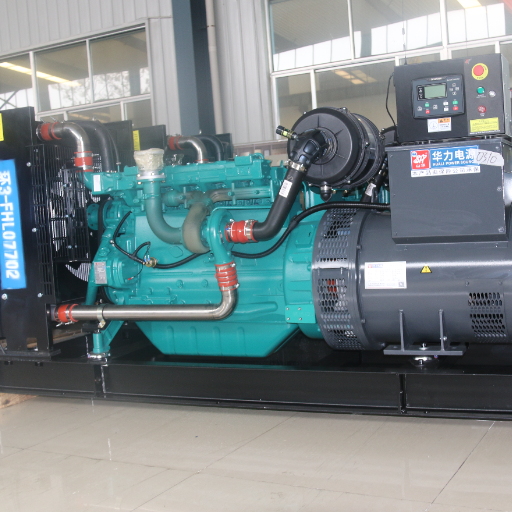
Open-Set Generators
Open-set units arrive as bare engine-alternator assemblies mounted on a steel base frame. They’re the most cost-effective equipment option, but they create the highest installation burden. For buyers evaluating diesel generator installation cost specifically, open-set units require the most additional on-site infrastructure.
You’ll need to source and install a weatherproof enclosure or build a dedicated generator room. You’ll also handle exhaust piping, ventilation, sound attenuation, and environmental protection on-site. Additional costs typically run 5,000–5,000–30,000, depending on size and noise requirements. Open-set units work best when you already have an indoor generator room or existing shelter structure.
Canopy / Silent Generators
Canopy units arrive pre-enclosed in a weatherproof, sound-attenuated steel housing. The factory has already handled acoustic engineering, ventilation, and weather sealing. Installation is limited to foundation work, fuel connection, electrical tie-in, and exhaust outlet routing.
This format strikes the best balance for most outdoor commercial installations. You avoid the enclosure construction entirely while keeping equipment cost reasonable. Canopy units are the most popular choice for hospitals, data centers, and commercial buildings in urban areas.
Containerized Generators
Containerized units ship inside standard 20-foot or 40-foot shipping containers modified into plug-and-play power stations. The container itself becomes the enclosure, complete with ventilation, sound attenuation, fuel tanks, and control systems integrated at the factory.
Installation cost drops by 30–50% compared to an equivalent open-set unit. You need a flat concrete pad, crane access for placement, fuel connection, and electrical bus connection. There’s no on-site enclosure construction, no exhaust routing, and minimal weatherproofing work. Containerized generators are ideal for remote sites, rapid deployment, mining operations, and buyers who want to minimize local contractor coordination.
Choosing the right enclosure is one of the most important cost decisions you’ll make. Before you compare generator brand comparison price tiers, decide which format matches your site’s infrastructure and local contractor capacity.
Factory-Direct vs Dealer: Commercial Generator Installation Cost Reality
How you purchase your generator changes who handles installation, who pays for it, and what your commercial generator installation cost actually totals.
Dealer-Bundled Installation
When you buy through a Caterpillar, Cummins, or Generac dealer, you typically receive a single quote that bundles equipment, delivery, installation, permits, and commissioning. The dealer handles everything. You write one check and wait for the project manager to coordinate the work.
The convenience comes at a premium. Dealer-bundled installation typically adds 25–50% above raw equipment and labor costs. You’re paying for project management, warranty protection, certified technician labor, and the dealer’s overhead. Many dealers also require proprietary ATS units, monitoring systems, and ongoing service contracts to maintain warranty coverage.
Factory-Direct Self-Managed Installation
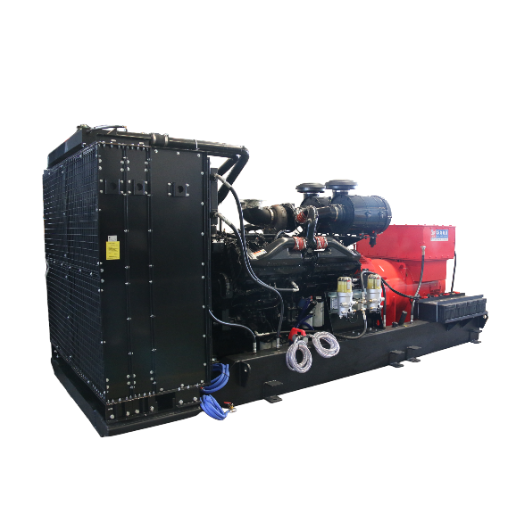
When you buy factory-direct from a manufacturer like ZC Power, your generator arrives as equipment-only. You coordinate all local work yourself or through an EPC contractor.
The savings are real: 20–40% lower total project cost versus a dealer quote. But you assume the project management role. You hire the civil contractor for the pad, the electrician for the tie-in, the fuel contractor for the tank, and the commissioning engineer for startup documentation.
The risk is warranty validation. Many Tier 1 manufacturers require dealer-certified installation to maintain warranty coverage. Factory-direct buyers should hire an independent certified commissioning engineer to document the startup. At ZC Power, we provide detailed installation manuals, wiring schematics, and remote engineering support to help your local contractors get it right.
Ahmad from Lagos saved approximately $35,000 by purchasing his 500kW equipment directly from the manufacturer, compared to the quote provided by the local Cummins dealer. Although the installation cost of $53,000 remained substantial, the total project cost ultimately settled at $138,000—whereas purchasing through a dealer would have driven the cost up to $173,000. For buyers capable of securing local contractors with the requisite professional expertise, the financial savings make this approach an undeniably attractive proposition.
Regional Commercial Generator Installation Cost Variations
Where you install your generator matters as much as what you install. Labor rates, permit complexity, and environmental requirements vary dramatically by region. According to Global Market Insights, the commercial standby generator market is projected to reach $15.2 billion by 2034, with Africa growing at over 10% CAGR and Asia Pacific holding nearly 67% market share.
United States
Licensed electrician rates run 90–90–200 per hour depending on the city. This generator installation labor cost is the single largest variable in most US projects. Permit costs range from 500to500to5,000+. NFPA 110 and National Electrical Code compliance are strictly enforced, especially for healthcare and life safety applications.
Total installed cost typically lands at 300–300–600 per kW for small commercial and 250–250–450 per kW for large industrial. Natural gas line extensions in areas without existing service can add 5,000–5,000–15,000 and occasionally exceed the generator cost itself.
Africa (Nigeria, Kenya, South Africa)
EPC turnkey installations for industrial systems run 500–500–900 per kW. This turnkey generator installation approach is common across Africa because it bundles project management with local compliance. Skilled electrical labor costs 15–15–50 per hour. Containerized units are strongly preferred because they reduce dependence on uncertain local fabrication quality.
The challenge is contractor quality. EPC contractors add a 30–40% management premium, but they also handle the compliance, documentation, and warranty startup that many local electricians aren’t equipped to manage. Small commercial turnkey installations start around 8,000–8,000–15,000.
Middle East (UAE, Saudi Arabia, Qatar)
Turnkey generator installation is the standard model in the Middle East due to the expatriate labor market. Skilled technician rates run 25–25–80 per hour. Extreme heat requires additional ventilation and cooling capacity, adding 10–15% to installation costs.
Containerized and canopy units dominate outdoor installations because they handle sand, heat, and UV exposure better than on-site-built enclosures. Many projects also require Arabic-language documentation and dual-language operator training.
Southeast Asia (Indonesia, Philippines, Vietnam)
Labor rates are the lowest globally at 10–10–40 per hour for skilled electrical work. Import duties on electrical components like ATS units and switchgear can double those specific costs compared to buying domestically.
Containerized generators reduce customs complexity because they ship as a single unit under one HS code. EPC contractors typically add a 25–35% management premium. For buyers planning generator financing, bundling equipment and installation into a single financing structure is common practice in this region.
Dr. Sarah Chen, a facilities manager for a Jakarta data center, purchased six 500 kW canopy units factory-direct from ZC Power. She coordinated a local EPC contractor for parallel installation across all six units. The EPC premium was 35%, but her total installation per unit was 42,000versus42,000versus58,000 if she had purchased through a regional dealer network. Across six units, she saved $96,000 on installation alone.
NFPA 110 Generator Installation Requirements and Commissioning Costs
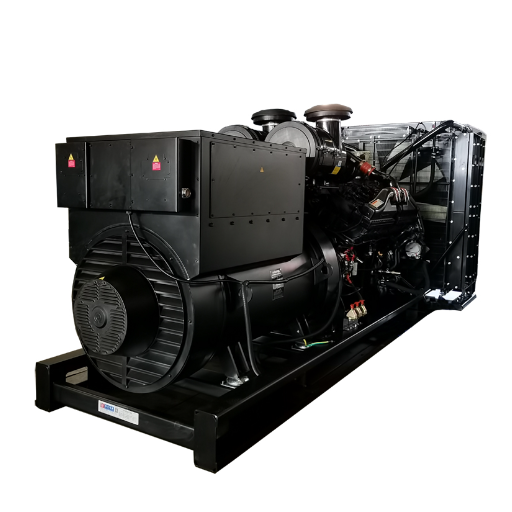
If you’re installing a standby generator in the United States or any jurisdiction that follows NFPA standards, understanding NFPA 110 generator installation requirements is essential. Compliance isn’t optional. It’s a separate budget line that many buyers overlook.
Level 1 vs Level 2 Systems
Level 1 systems serve life safety applications: hospitals, fire pumps, and emergency egress lighting. They require the strictest installation standards, documentation, and testing schedules. Level 2 systems cover less critical standby loads like general commercial buildings. Requirements are reduced but still substantial.
The cost differential is real. Level 1 adds 5,000–5,000–15,000 to commissioning versus an equivalent Level 2 system.
Required Testing and Costs
| Test | Frequency | Cost Range |
|---|---|---|
| Acceptance testing (commissioning) | Once | 3,000–3,000–15,000 |
| Monthly exercise (≥30% load) | Monthly | Self-managed or 200–200–500/service |
| Annual load bank test | Annually | 2,000–2,000–8,000 |
| Triennial Level 1 full-duration test | Every 36 months | 5,000–5,000–12,000 |
| Fuel quality testing | Annually | 500–500–2,000 |
Load bank rental itself costs 500–500–4,000 per day depending on type: resistive banks run 500–500–2,000/day, reactive banks 800–800–3,000/day, and combined resistive-reactive banks 1,200–1,200–4,000/day.
For a typical 250 kW commercial installation, budget 5,000–5,000–8,000 for initial commissioning and acceptance testing. Then plan 3,000–3,000–5,000 annually for ongoing compliance testing and maintenance documentation.
At ZC Power, every generator undergoes rigorous full-load testing in our national standard testing center before shipment. This factory testing doesn’t replace local commissioning, but it gives your installer confidence that the unit performs at 100% rated capacity before it ever reaches your site. For the complete NFPA standard, see Generator Source’s NFPA 110 overview.
Installation Timeline by Project Size
Understanding the timeline helps you coordinate delivery, site readiness, and contractor scheduling. A generator sitting at port while your site isn’t ready costs money in demurrage and storage fees.
| Phase | 50–150 kW | 200–500 kW | 1,000+ kW |
|---|---|---|---|
| Permits and planning | 1–3 weeks | 2–4 weeks | 4–8 weeks |
| Site prep / civil works | 1–2 weeks | 2–4 weeks | 4–8 weeks |
| Mechanical and electrical | 3–5 days | 1–2 weeks | 2–4 weeks |
| Fuel system install | 2–3 days | 3–5 days | 1–2 weeks |
| Testing and commissioning | 1–2 days | 2–5 days | 5–10 days |
| Total | 3–6 weeks | 6–12 weeks | 12–24 weeks |
The permitting phase is where most commercial generator installation cost overruns begin. In some US municipalities, electrical and environmental permit review takes 4–6 weeks. In emerging markets, permitting can be faster but less predictable. If you’re importing equipment, coordinate your shipping schedule so the generator arrives just as the pad is finished and permits are approved.
Need help timing your delivery with site readiness? Our export logistics team coordinates delivery schedules with your local installation timeline to avoid costly demurrage.
Hidden Commercial Generator Installation Costs Most Buyers Miss
Even experienced project managers miss these line items that inflate commercial generator installation costs. Each one can add thousands to your final invoice.
- Electrical panel upgrades: If your existing switchgear can’t handle the generator’s output or the ATS integration, you’ll need new distribution panels. Cost: 3,000–3,000–10,000.
- Natural gas line extension: Running a new gas service to your building can cost 5,000–5,000–15,000. In some cases it exceeds the generator price entirely.
- Sound attenuation retrofit: If you bought an open-set unit and local noise ordinances require below 75 dB at the property line, you’ll need an aftermarket enclosure. Cost: 5,000–5,000–30,000.
- Seismic or fire-rated room construction: Indoor installations in earthquake zones or buildings with strict fire codes require 2-hour fire-rated rooms with special ventilation. Cost: 15,000–15,000–50,000+.
- Remote monitoring system: Cellular or Ethernet-connected controllers that let you monitor fuel level, oil pressure, and voltage from a smartphone. Cost: 2,000–2,000–8,000.
- Operator training and documentation: NFPA 110 requires documented training for operators. Cost: 3,000–3,000–10,000 for on-site training.
- Spare parts kit: For remote sites, a recommended spare parts package includes filters, belts, hoses, and gaskets. Cost: 2,000–2,000–10,000.
- Extended warranties: Beyond the standard 1-year / 1,000-hour warranty, extended coverage runs 1.5–3% of equipment cost per year.
Before you finalize your budget, add a 15–20% contingency fund. Site conditions, code upgrades, and permit delays routinely push projects over the initial estimate.
How to Structure an Installation-Ready Quote
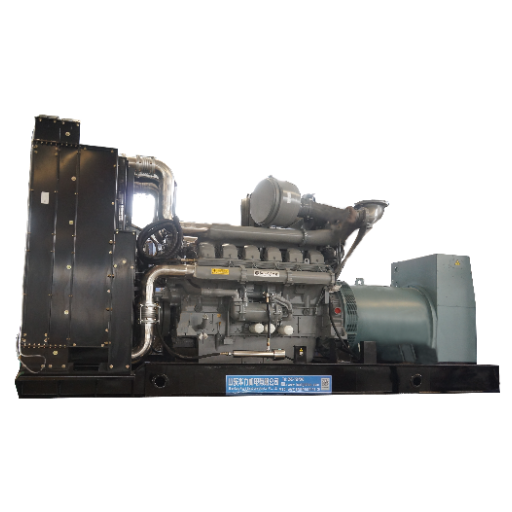
Whether you’re buying factory-direct or through a dealer, understanding your commercial generator installation cost structure helps you budget accurately, compare options, and finance the project.
For Factory-Direct Buyers
- Request an equipment quote with clear Incoterms: FOB, CIF, or DDP. Know exactly where your responsibility begins.
- Separately quote each local component: Civil works, electrical, fuel, and commissioning. Get at least two quotes per category.
- Add 15–20% contingency: Site conditions and code surprises are normal, not exceptions.
- Budget for load bank testing and acceptance documentation: Your local authority and your insurance company will want proof.
- Coordinate delivery with site readiness: Demurrage at port can cost hundreds of dollars per day.
For Dealer-Bundled Buyers
- Demand an itemized quote: Equipment, installation labor, permits, commissioning. If the dealer won’t break it down, that’s a red flag.
- Verify exclusions: Fuel tank, gas line, panel upgrades, and operator training are often left out of the base quote.
- Confirm warranty requirements: Many dealers require their own maintenance contract to keep warranty coverage active.
- Request a fixed-price commitment: Change orders on commercial generator installation projects can add 10–20% to the final bill. A detailed generator installation cost breakdown in the initial quote prevents surprises.
Want a quote structure that separates equipment from installation for easier financing? Contact our engineering team and we’ll provide a detailed proforma that helps your lender or EPC contractor understand the full scope.
Khalid, a logistics director in Dubai, ordered a 1,000 kW containerized unit from ZC Power for a new distribution hub. Because the unit arrived in a standard 40-foot container format, his installation was straightforward: crane rental (4,000),flatpad(4,000),flatpad(12,000), fuel connection (8,000),electricalbustie(8,000),electricalbustie(22,000), and commissioning (8,000).Totalinstallationwas8,000).Totalinstallationwas54,000, just 18% of his equipment cost. The containerized format eliminated enclosure construction, exhaust routing, and weatherproofing work.
Commercial Generator Installation Cost: Frequently Asked Questions
How much does commercial generator installation cost per kW?
Small commercial systems (20–100 kW) typically run 300–300–600 per kW installed. Mid-range industrial units (100–500 kW) land at 300–300–500 per kW. Large megawatt-class systems (1,000+ kW) drop to 250–250–450 per kW due to economies of scale. These commercial generator installation cost per kW ranges are based on 2026 data from Turnkey Industries and regional contractor surveys.
What is the cheapest way to install a commercial generator?
The lowest total project cost usually comes from buying a containerized or canopy unit factory-direct and hiring local contractors for pad, electrical, and fuel work. Containerized units cut installation cost by 30–50% versus open-set units. However, this approach requires competent local contractors and active project management.
Can I install a factory-direct generator myself?
You can manage the project, but you cannot perform the electrical work yourself in most jurisdictions. Licensed electricians must handle grid-tied connections. For warranty protection, hire a certified commissioning engineer to document the startup. ZC Power provides installation manuals, wiring schematics, and remote engineering support to guide your local team.
Does installation cost more for diesel or natural gas generators?
Natural gas installations typically cost more upfront due to gas line plumbing, pressure regulation, and utility coordination. Diesel requires on-site fuel storage, which adds tank and environmental containment costs. For standby-only applications, diesel is usually cheaper to install. For continuous-run applications, natural gas breaks even within 3–5 years.
How long does commercial generator installation take?
Small commercial systems (50–150 kW) take 3–6 weeks total. Mid-range units (200–500 kW) require 6–12 weeks. Large industrial installations (1,000+ kW) can take 12–24 weeks including engineering, permitting, and commissioning.
What permits are required for generator installation?
Almost every jurisdiction requires an electrical permit. Many also require mechanical, environmental, and fuel storage permits. Diesel installations typically face stricter environmental oversight than natural gas. Commercial installations may need workplace safety inspections and operational licenses. Permit processing typically takes 2–4 weeks.
Is load bank testing required by law?
In jurisdictions following NFPA 110, monthly exercise at ≥30% of nameplate load is required. If your building load doesn’t achieve this during normal operation, an annual supplemental load bank test is mandatory. Level 1 life safety systems also require a comprehensive triennial test every 36 months.
How much does a concrete pad for a generator cost?
Small units (50–150 kW) need 2,000–2,000–5,000 for a basic reinforced pad. Mid-range units (200–500 kW) run 5,000–5,000–15,000. Large industrial units (1,000+ kW) require 15,000–15,000–40,000 for engineered foundations that handle vibration, weight, and seismic requirements.
What is the difference between open-set and containerized installation cost?
Open-set generators require on-site enclosure construction, exhaust routing, ventilation, and weatherproofing, adding 5,000–5,000–30,000 to installation. Containerized units ship pre-enclosed in a modified shipping container, cutting installation cost by 30–50%.
Should I hire an EPC contractor or manage installation myself?
Hire an EPC contractor if you lack local technical expertise, need single-point accountability, or are in a heavily regulated market. Manage it yourself if you have reliable local contractors and want to save 20–40% on total project cost. For most international buyers importing factory-direct equipment, a hybrid approach works best: self-procure the generator, hire an EPC contractor for installation management.
Conclusion
Commercial generator installation cost is not an afterthought. It’s a major budget line that equals 25–50% of your total project cost. The exact amount depends on generator size, enclosure type, regional labor rates, and compliance requirements.
Factory-direct buyers face a different challenge than dealer customers. You save 20–40% on equipment, but you must coordinate the commercial generator installation cost as a separate budget line. The key is understanding what your local market actually costs, what your chosen enclosure format requires, and what compliance standards apply to your application.
Containerized units offer the lowest installation burden. Canopy units strike the best balance for most outdoor installations. Open-set units demand the most local coordination but give you maximum flexibility for custom integration.
Before you write a purchase order, get separate quotes for equipment and installation. Add 15–20% contingency. Confirm your fuel infrastructure path. And verify what permits your local authority requires.
At Shandong ZC Power CO., LTD., we don’t just manufacture generator sets. We help you plan the full project. Our engineering team provides installation guidance, wiring schematics, and regional cost benchmarks for every market we serve. From open-set skids to plug-and-play containerized power stations, we’ll help you choose the format that minimizes your installation cost and gets your project online faster.
Ready to plan your complete project budget? Contact the ZC Power engineering team today for a factory-direct quote with installation guidance tailored to your region and site conditions.