Commercial Generator Manufacturer: How to Evaluate and Choose the Right Partner
A reliable commercial generator manufacturer owns its production lines, quality control processes, and testing facilities; holds verifiable ISO9001, CE, and engine OEM certifications; and provides direct engineering support, customization, and global after-sales service. Choosing the right manufacturer reduces unit cost, shortens lead times, and lowers long-term warranty risk compared to buying through dealers or trading companies.
Last year, Ahmed Khalil, a project contractor in Dubai, learned this distinction the hard way. He awarded a $340,000 order for six 500kW standby gensets to a supplier on a B2B platform that promised the lowest quote. The units arrived with non-genuine engine controllers and alternators that overheated under 60% load. When Ahmed demanded warranty support, the supplier disappeared. He eventually re-sourced the project directly from an ISO9001-certified commercial generator manufacturer. The second order cost 18% less per unit after eliminating the trading company’s markup, passed third-party inspection, and included engineering support for ATS integration.
In this guide, you will learn the 10 criteria that define a qualified commercial generator manufacturer, how to verify factory credentials, the real cost difference between manufacturer-direct and dealer channels, and which certifications matter for your market. You will also see how Shandong ZC Power CO., LTD. applies these standards as a direct manufacturer serving global B2B projects.
Key Takeaways
- A true commercial generator manufacturer owns production, testing, and quality control — not just a sales office.
- Factory-direct sourcing typically reduces unit cost by 15-30% compared to dealer or trading company channels.
- Verify ISO9001, CE, CCC, and engine OEM authorization before placing large orders.
- Request a live virtual factory tour and load-bank test report to confirm manufacturing capability.
- Evaluate after-sales support, spare parts availability, and export experience as part of total cost of ownership.
For a deeper look at how standby power fits into commercial procurement, see our complete commercial standby generator buying guide.
What Makes a True Commercial Generator Manufacturer?
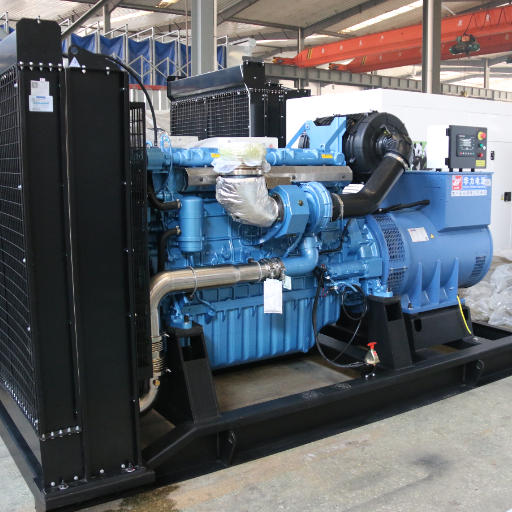
A commercial generator manufacturer is a company that designs, assembles, tests, and ships generator sets using its own or tightly controlled production infrastructure. This is different from an authorized dealer, a broker, or a trading company. The manufacturer controls the bill of materials, the assembly process, the quality checkpoints, and the final load-bank validation.
This distinction matters because the manufacturer is the only party that can guarantee component authenticity, customize configurations, and honor warranty claims without forwarding requests through a chain of intermediaries. When you buy from a dealer, you pay for inventory convenience and local support. When you buy from a trading company, you often pay a markup for access to a factory you never meet.
At ZC Power, we operate a 300,000-square-meter facility in Jining, Shandong, with dedicated production lines for open, silent, trailer-mounted, and containerized gensets. Every unit is assembled, inspected, and load-bank tested in our national standard testing center before shipment.
10-Point Commercial Generator Manufacturer Evaluation Scorecard
Use this scorecard to compare potential manufacturing partners objectively. A qualified commercial generator manufacturer should score well on at least eight of the ten criteria.
1. Manufacturing Scale and Facility Ownership
A credible manufacturer owns or directly operates its production facility. Request facility size, number of production lines, and annual output. A supplier that refuses a virtual tour or provides only stock photos is a red flag.
ZC Power’s 300,000 sqm facility includes sheet metal processing, engine assembly bays, alternator winding stations, canopy fabrication, and a dedicated testing center.
2. Engineering and R&D Capability
Commercial projects rarely need off-the-shelf units. Look for an in-house engineering team that can adapt voltage, frequency, enclosure dimensions, control logic, and fuel systems to your specification.
ZC Power maintains a team of 80+ technical engineers who handle electrical design, mechanical engineering, and control system programming.
3. Certifications and Standards Compliance
Verify that the manufacturer holds relevant quality and safety certifications. The most important are:
- ISO9001: Quality management system
- CE marking: Compliance with EU machinery and EMC directives
- CCC: China Compulsory Certification for products sold in China
- ISO8528-1: Accurate prime, standby, and continuous power ratings
Always request certificate copies and verify them against the issuing body’s database.
4. Engine and Alternator Partnerships
A qualified commercial generator manufacturer uses authentic engines and alternators from recognized suppliers. Common engine brands include Cummins, Perkins, Yuchai, and Weichai. Common alternator brands include Stamford, Leroy-Somer, and Faraday.
Ask for OEM authorization letters or purchase records. Counterfeit or refurbished engines are one of the most common sources of early failure in imported gensets.
5. Product Range and Configuration Options
The manufacturer should offer configurations that match your application:
- Open type for indoor or protected installations
- Silent canopies for noise-sensitive sites
- Trailer-mounted units for mobile power
- Containerized gensets for rapid deployment and harsh environments
Capacity should span commercial needs from roughly 50kW to 2,000kW or more.
6. Quality Control and Load-Bank Testing
Every genset should be tested at full rated load before shipment. Ask for the testing protocol and sample test reports.
At ZC Power, every unit undergoes full-load testing in our national standard testing center. Reports include voltage stability, frequency regulation, oil pressure, coolant temperature, and running noise levels.
7. Customization and OEM/ODM Services
If you are a distributor or have unique site requirements, OEM/ODM capability is essential. The manufacturer should support:
- Custom paint colors and branding
- Language-specific control panels and manuals
- Specialized voltage and frequency configurations
- Modified fuel tanks, exhaust systems, and canopies
8. Global Export Experience
International shipping of heavy machinery requires proper documentation, crating, and Incoterms knowledge. An experienced exporter handles customs paperwork, ocean freight booking, and destination-country voltage compliance.
ZC Power has exported gensets to Africa, the Middle East, Southeast Asia, South America, and Eastern Europe for over two decades.
9. After-Sales Support and Spare Parts Availability
A 15-to-20-year asset needs long-term support. Evaluate warranty terms, spare parts inventory, technical documentation, and remote troubleshooting capability.
Trading companies often cannot provide spare parts because they do not stock them. Manufacturers with OEM engine partnerships can source genuine parts directly.
10. Transparent Quotation and Contract Terms
A professional quotation from a commercial generator manufacturer should include:
- Exact engine and alternator model numbers
- Rated kW/kVA, frequency, voltage, and power factor
- Control panel brand and functions
- Canopy type and noise level
- Fuel tank capacity
- Scope of supply and optional items
- Lead time, payment terms, and Incoterms
- Warranty period and conditions
If a quote is vague, the final product probably will be too.
Manufacturer vs. Dealer vs. Trading Company: Cost and Risk Comparison
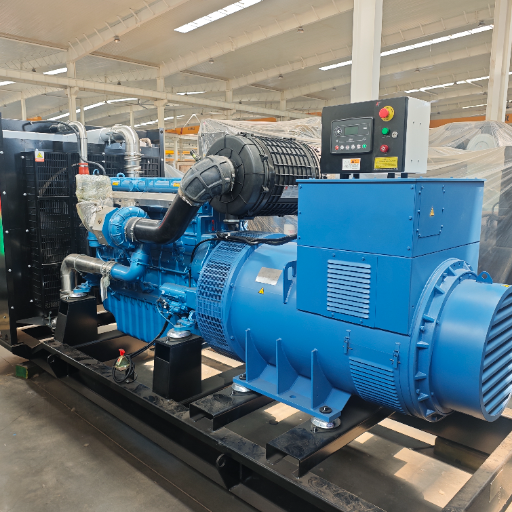
Not every buyer needs to source directly from a manufacturer. The right channel depends on your project size, urgency, technical needs, and risk tolerance.
Direct Manufacturer
Best for projects requiring customization, large volume, export logistics, or tight cost control. Factory-direct pricing typically eliminates the 15-30% markup added by dealers and trading companies. You also communicate directly with engineers who can resolve technical issues.
Authorized Dealer
Useful when you need fast delivery from local stock, local installation support, or familiarity with regional electrical codes. Dealers add cost but reduce logistics complexity for smaller domestic projects.
Trading Company
Trading companies offer convenience but carry higher risk. They rarely control production, often cannot customize technically, and may struggle with warranty execution. The lowest quoted price often reflects hidden substitutions or missing support.
Channel Comparison Table
| Factor | Direct Manufacturer | Authorized Dealer | Trading Company |
|---|---|---|---|
| Typical pricing | Lowest | Higher | Variable; often inflated |
| Customization | High | Limited | Very limited |
| Lead time | 4-8 weeks | 1-2 weeks if in stock | Unpredictable |
| Technical support | Direct with engineers | Through dealer | Often minimal |
| Warranty execution | Strong | Moderate | Weak |
| Quality consistency | High | High | Variable |
| Export logistics | Experienced | Limited | Varies |
For a deeper comparison of sourcing models, see our guide on diesel vs natural gas generator fuel choices.
Factory Verification Checklist for International Buyers
Before committing to a large order, verify who you are actually buying from. The following checklist reduces the risk of dealing with a trading company disguised as a manufacturer.
Documentation to Request
- Business license with manufacturing scope
- ISO9001, CE, CCC certificates with issuing body reference numbers
- Engine OEM authorization letters
- Factory audit report or third-party verification
- Export license and customs registration
- Reference list of completed projects in your region
Virtual Factory Tour Red Flags
- Supplier shows only polished marketing photos or videos
- Cannot provide a live walkthrough of the production floor
- Refuses to show the testing center or load-bank equipment
- No engineering staff is available for a technical discussion
- Production area appears unrelated to generator assembly
On-Site Audit Essentials
If you visit the factory in person, inspect:
- Incoming component inspection stations
- Engine and alternator assembly lines
- Canopy fabrication and painting booths
- Quality control checkpoints during assembly
- National standard testing center with load banks
- Finished goods yard and packing area
- Spare parts warehouse
- Engineering and technical support office
A legitimate commercial generator manufacturer will welcome this audit. A trading company will find reasons to avoid it.
Certifications Every Commercial Generator Manufacturer Should Hold
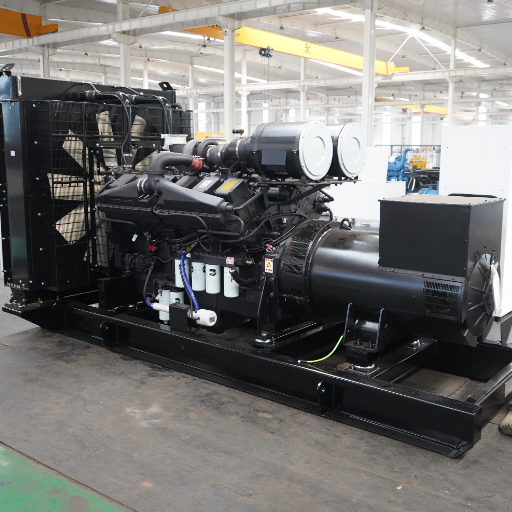
Certifications are not just paperwork. They are evidence that the manufacturer follows consistent processes and meets recognized safety standards.
ISO9001 Quality Management
ISO9001 certifies that the manufacturer has documented quality management processes, traceability, and continuous improvement procedures. Verify the certificate through the issuing accreditation body’s online database.
CE Marking for European Markets
CE marking indicates compliance with EU health, safety, and environmental protection standards. For generator sets, this typically involves the Machinery Directive (2006/42/EC) and Electromagnetic Compatibility Directive. Request the Declaration of Conformity.
CCC Certification for China
China Compulsory Certification (CCC) is required for products sold within China. If your supplier is Chinese but cannot produce a CCC certificate, question whether they are a legitimate manufacturer or an assembler of unverified parts.
ISO8528-1 Power Rating Accuracy
ISO8528-1 defines prime power, standby power, and continuous power ratings. A qualified manufacturer rates its gensets accurately. Be wary of suppliers who advertise standby ratings as prime ratings to appear more competitive.
Industry-Specific Certifications
For marine, oil and gas, mining, or telecom applications, additional certifications may be required. Confirm these with your project’s engineering specification before selecting a manufacturer.
ZC Power: A Commercial Generator Manufacturer Profile
Shandong ZC Power CO., LTD. has manufactured generator sets since 1999. Our facility covers 300,000 square meters and is organized around dedicated production and testing workflows.
Our standard product scope includes:
- Diesel generator sets from 8kVA to 4000kVA
- Open, silent, trailer-mounted, and containerized configurations
- Engine options from Cummins, Perkins, Yuchai, and Weichai
- Copper-wound alternators from Stamford, Leroy-Somer, and Faraday
- Deep Sea Electronics and SmartGen digital controllers
- AMF panels, ATS integration, and parallel synchronization systems
- Custom voltage and frequency for global grids
- Full-load testing in our national standard testing center
- OEM and ODM services for distributors and large projects
For commercial projects that require factory-direct pricing and engineering support, our team provides quotation review, customization planning, and export logistics coordination.
Maria Santos, a distributor in São Paulo, partnered with ZC Power to white-label diesel generator sets for the Brazilian market. We customized 230/380V 60Hz configurations, Portuguese-language control panels, and branded canopies with her company colors. Within 18 months, her line won 12 municipal infrastructure contracts. The direct engineering relationship allowed her to respond to tender technical queries in days instead of weeks.
For a complete look at engine options, fuel storage strategies, and runtime planning, see our focused resource on the diesel standby generator and where it outperforms other fuels.
Common Mistakes When Selecting a Commercial Generator Manufacturer
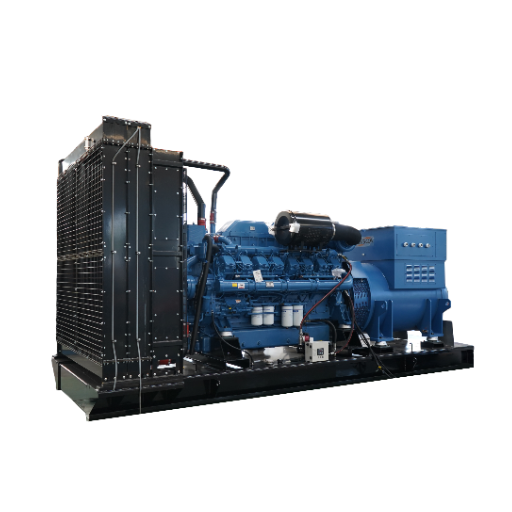
Even experienced procurement teams make these errors:
Mistake 1: Choosing the lowest quote without verifying manufacturing credentials. Price is important, but the lowest quote often hides substitutions, missing accessories, or unsupported warranty terms.
Mistake 2: Ignoring after-sales support. A genset is a 15-to-20-year asset. Verify that the manufacturer can supply spare parts and technical documentation for the full lifecycle.
Mistake 3: Not confirming engine OEM authorization. Some suppliers install refurbished or non-genuine engines. Ask for authorization letters and verify serial numbers on delivery.
Mistake 4: Overlooking voltage and frequency customization. Commercial projects in different countries require specific electrical configurations. Confirm the manufacturer can engineer these correctly.
Mistake 5: Skipping the load-bank test report. A manufacturer that cannot provide verified test data may not be testing every unit. Demand documentation.
Commercial Generator Manufacturer Quick Selection Matrix
Use the matrix below to match your project type with the minimum manufacturer qualifications.
| Project Type | Typical kW Range | Must-Have Certifications | Recommended Channel |
|---|---|---|---|
| Small retail or office | 50-150 kW | ISO9001 | Direct manufacturer or local dealer |
| Medical clinic or school | 150-300 kW | ISO9001, CE | Direct manufacturer |
| Hospital or data center | 500-2,000+ kW | ISO9001, CE, CCC, engine OEM authorization | Direct manufacturer |
| Manufacturing plant | 300-1,500 kW | ISO9001, CE | Direct manufacturer |
| Mining or oil and gas | 500-2,000+ kW | ISO9001, CE, industry-specific certs | Direct manufacturer |
| Distributor/OEM program | 50-4000 kVA | ISO9001, CE, OEM/ODM capability | Direct manufacturer |
This matrix is a starting guide. Always confirm exact requirements with your project’s engineering specification and local authority having jurisdiction.
Conclusion
Selecting a commercial generator manufacturer is a risk management decision. The right partner delivers verified quality, transparent pricing, and long-term support. The wrong partner creates hidden costs that appear years later as warranty failures, spare parts shortages, or compliance problems.
Follow this sequence for your next procurement:
- Define your required kW/kVA, voltage, frequency, and application.
- Apply the 10-point scorecard to shortlist manufacturers.
- Verify certificates and request a live factory tour or audit.
- Compare total cost of ownership, not just unit price.
- Confirm after-sales support, spare parts, and warranty execution process.
At Shandong ZC Power CO., LTD., we have built commercial and industrial generator sets since 1999. Our 300,000-square-meter facility, national standard testing center, and 80+ engineers give B2B buyers the confidence that every unit is built, tested, and supported to specification. Contact our engineering team today to request a factory tour, load-bank test report, or factory-direct quotation for your next commercial generator project.


