
Paralleling Control Failure Modes: Communication Loss and Recovery Review
Review paralleling control failure modes by identifying the failed data path, the permitted degraded operating state and the evidence required for recovery. A communication-loss alarm alone cannot tell you whether a generator has stopped, whether its breaker is open or whether automatic operation may resume.
Illustrative scenario: The supervisory screen turns green after a network repair, but one generator remains excluded from automatic service. The display has recovered; the source’s permission to rejoin is still a separate question.
For procurement engineers, facility teams and integrators, that distinction belongs in the review dossier before acceptance. This guide provides a control-path inventory and a failure/recovery register for an islanded multi-generator system. Use them alongside the wider generator paralleling specification.
Key Takeaways
- Name the lost function, not just the connector or network alarm.
- Record the plant state when the fault occurs.
- Separate unknown feedback from confirmed physical status.
- Assess both real and reactive load behavior during degraded operation.
- Require explicit recovery permissions and traceable observations before closing a review item.
Map the Control Paths Before Reviewing Failure Modes
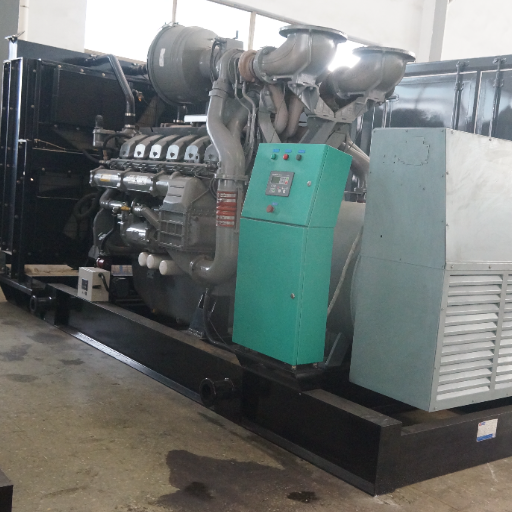
Separate Regulation, Supervision and Display
Start with a drawing that shows what each path carries. CAN means Controller Area Network; the engine ECU is its electronic control unit. A PLC is a programmable logic controller. HMI means human-machine interface, while SCADA provides supervisory control and data acquisition. These labels identify roles, not proof of independence.
A cable marked CAN or Ethernet does not establish its control role. Ask which functions depend on valid messages across that connection, and which remain local. Can a reviewer trace each function from its data source to the decision that uses it?
Use a table like this to turn network labels into review questions:
| Path or dependency | Function to identify | Question when data or power is lost |
|---|---|---|
| Engine ECU link | Engine information and commanded functions | Which local controls, indications and permissions remain available? |
| Generator-to-generator link | Sharing and coordination messages | Which units still exchange valid data, and what fallback is approved? |
| Power management system or PLC | Plant-level start, stop and load decisions | Who owns commands if supervision becomes unavailable? |
| Breaker feedback and remote I/O | Position and permissive information | Can the controller distinguish unknown status from confirmed open? |
| HMI or SCADA | Display, alarms and remote interaction | Is the loss limited to visibility or does this path also carry commands? |
| Control-power supply | Power for controllers, switches and I/O | Which apparently separate paths share the same supply? |
Before discussing the proposed supply, gather the one-line diagram, network drawing and controller/firmware schedule. Discuss the generator scope with ZC Power and request written confirmation of included interfaces and exclusions. Assign integration questions to the party responsible for the complete sequence.
Record Common Power and Network Dependencies
Eaton’s paralleling switchgear design guide distinguishes graphics, load-sharing, building-system and I/O network functions. Its architecture discussion also addresses control power. That is a useful review model; it does not establish which options another proposed package includes.
Trace each redundant path through switches, supplies, interface modules and cable routes. Two cables on a drawing leave an unanswered question if both depend on the same powered device. Ask the designer to identify that dependency and document the intended response to its loss.
Return to the opening scenario: restored screen data might concern the supervisory path while the sharing controller remains unavailable. Resolve that mismatch against the function map. A green display cannot substitute for the missing source-status evidence.
Classify Paralleling Control Failure Modes by Plant State
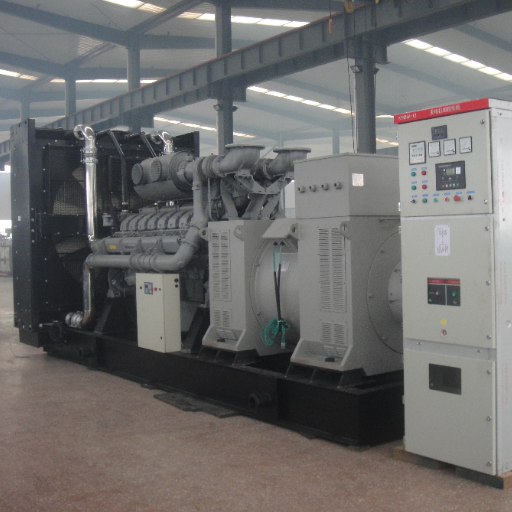
Distinguish Absent, Stale and Contradictory Feedback
An alarm list needs more detail than “communications failed.” Record whether messages disappeared, stopped updating or conflicted with another indication. Ask how the selected controller detects invalid information and what time basis it uses. The approved configuration should supply those answers; a generic article cannot supply the correct timeout.
In Cummins’ system-level control training, the reliability discussion distinguishes HMI, PLC and I/O communications failures. Its breaker example includes open, closed and unknown states. Preserve that distinction when writing the cause-and-effect schedule: missing feedback does not prove an open breaker.
A review row should identify the physical source of position information, the controller receiving it and the function using it. If local indication and remote status disagree, ask which approved evidence governs the affected decision. Record unresolved disagreement explicitly rather than converting it into a convenient assumed state.
For a stale-data row, ask whether the last displayed value remains visible and how the system marks it invalid. A value can look plausible without being current. Require the sequence owner to identify which decisions stop using that value and how the invalid state appears in the retained event record.
Separate First-Close Decisions From On-Load Faults
The same lost link deserves separate rows for different starting states. A system waiting to energize a dead bus faces a different decision from generators already connected and carrying load. Synchronization before closure, unloading and communications restoration each add another decision boundary.
Use these starting rows, then expand them for the actual architecture:
| Starting state | Review question | Expected-response evidence to request |
|---|---|---|
| Idle or dead-bus start | Who may authorize the first close when peers disappear? | Approved arbitration and bus-status logic |
| Synchronizing before close | Which missing data inhibits or changes the close permission? | Selected-controller sequence and permissive diagram |
| Running on load | Which regulation and sharing functions remain valid? | Approved fallback mode and operating limits |
| Unloading or stopping | Who completes, holds or cancels the transition? | Command ownership and state-transition record |
| Communications returning | What confirms readiness for normal control? | Recovery permissions and acceptance observations |
Review cable loss, a powered network-device failure and loss of a controller as distinct events. They may remove different functions even when the operator sees similar alarm wording. Identify whether one unit disappears or the network divides into groups that can still communicate internally.
For each unresolved row, have the sequence owner record detection, action authority and the expected observable result. Link that row to the applicable generator synchronization requirements when closure permissions are involved. Keep this a document review; fault injection and switching belong to the approved project test method.
Review Degraded Operation Without Assuming a Universal Failsafe
Keep OEM Examples Tied to Their Control Family
There is no useful universal answer to “Will communication loss trip the generators?” The answer requires the failed function, operating state, selected equipment and approved configuration. Continued operation under documented fallback and controlled removal of an affected source are possibilities to investigate, not interchangeable instructions.
Caterpillar’s failsafe load-sharing paper uses the Cat ECS 200 as its example. It describes partitioned communication groups and adaptive droop/isochronous behavior. Use that example to ask how the offered controls handle a partition; do not apply its group rules or performance claims to another controller family.
Likewise, a redundant-link feature on a product list does not specify the fallback settings, installed topology or return sequence. Request the selected controller manual, firmware identification and project configuration revision. A proposal should connect those documents to the equipment schedule rather than cite a general product family.
Ask what operations remain permitted during the degraded state. Does the approved sequence allow another start, another close, additional load admission or a change of operating mode? Record restrictions as well as retained functions. “Still running” is an observation; it does not define the complete permitted operating envelope.
Check Real and Reactive Response Together
Review real power in kilowatts (kW) and reactive power in kilovolt-amperes reactive (kVAr) separately. Track voltage and frequency alongside them. The generator load-sharing guide explains why real-load and reactive-load sharing need distinct attention. A record showing only total bus kW leaves the individual units’ reactive behavior unaddressed.
Request unit-level observations that correspond to the proposed fallback. Include the initial load, changes during the event and the stabilized state where applicable. The project design must define limits and acceptable transitions; avoid borrowing a droop percentage or settling time from an unrelated demonstration.
Illustrative scenario: A communications network divides into isolated segments while the electrical bus remains connected. The equipment list still shows the same total nameplate capacity. The reviewer cannot treat that total as proven usable capacity under the degraded sequence.
The missing evidence is the permitted behavior of each group, the connected sources’ operating limits and the load the approved sequence may admit. The reviewer requests that information before accepting the capacity statement. No trip, load split or successful recovery is assumed in this example.
Also distinguish a controller that has lost visibility from a source confirmed unavailable. Explain how the capacity calculation treats each state. If the design cannot determine usable capacity, the operating restrictions need a documented owner and resolution, rather than an optimistic total copied from the normal-mode schedule.
Define Recovery Permissions Beyond Clearing the Alarm
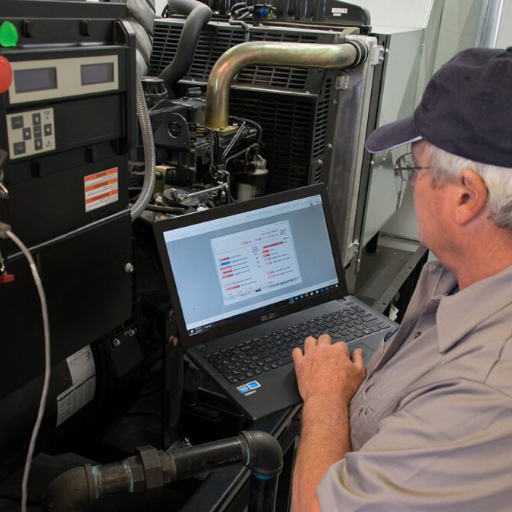
Confirm State and Authority Before Permitting Commands
A restored link is only the start. Review these permissions separately:
- Use the data: What proves that messages are current and valid? Which expected controllers are present, and do their states agree?
- Accept commands: Who owns control after the supervisor returns? How does the sequence handle stale requests or conflicting commands?
- Reset the state: Who may acknowledge the alarm or clear an exclusion? What evidence must they review first?
- Resume automatic service: Which functions may restart, and which remain inhibited until another approval?
A supervisor may have sent commands before local controls entered a degraded mode. Ask how the selected logic resolves those earlier requests. Do not assume the last command still fits the plant state.
For every transition, identify whether it is automatic or requires authorization. Name the responsible role and its evidence. Replace “reset and return to normal” with the specific state and functions the approval permits.
Ask the integrator and owner to resolve any unassigned reset or re-entry authority before accepting the sequence. Bring the cause-and-effect row, the current mode and the missing permissive to that discussion. This produces a reviewable decision rather than a general request to “check the controls.”
Separate Re-Entry From Restoring Shed Loads
A returning source may need its own synchronization and closure review. Identify whether the bus is live or dead at that point, what status information is required and which permissions govern re-entry. The approved documents should explain any exclusions that remain after valid communication returns.
Restoring shed loads is a further transition. Review the connected capacity recognized by the load-management system before additional load is admitted. The generator load-management review covers that broader add/shed and start/stop sequence; this article addresses the communications-related permissions feeding it.
Continue the opening illustrative scenario. The reviewer asks for valid breaker feedback and the source’s availability state before counting the returning generator. They then ask whether the load-restoration sequence recognizes that capacity. These are requests for evidence, not instructions to close a breaker or change a live controller setting.
Include unsuccessful or incomplete recovery in the document review. What happens if one expected controller remains absent, feedback still disagrees or the supervisor returns before the sharing path? Ask which functions stay inhibited and who can close the outstanding item.
Finally, retain the event history through the return. A cleared active-alarm screen may omit the earlier state that explains an exclusion. Request records that connect the original loss, the degraded response and the permitted return, so a later reviewer can follow the same decision without reconstructing it from memory.
Request a Traceable Failure and Recovery Evidence Package
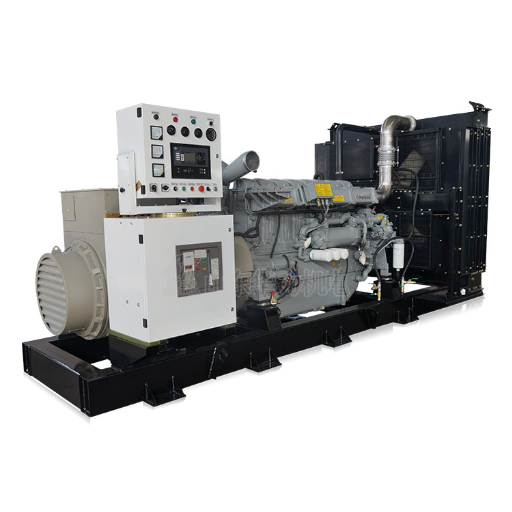
Use an Event-to-Evidence Register
Build the register around decisions someone else must verify. Give each row an identifier and a responsible reviewer. Record the selected equipment and document revisions so an observation from an earlier configuration cannot silently become acceptance evidence for a later one.
| Register field | Evidence or decision to retain |
|---|---|
| Identity and starting state | Controller/firmware, diagram revision, bus state, breaker states, mode and initial load |
| Failure boundary | Named lost path, affected nodes and shared power/device dependencies |
| Detection and authority | Validity checks, approved timing basis and action owner |
| Expected response | Required regulation, sharing, alarms, command restrictions and permitted capacity |
| Observed response | Time-linked unit kW/kVAr, voltage/frequency, feedback and event records |
| Recovery | Valid-data conditions, reset rights, re-entry permissions and load-admission conditions |
| Closure | Simulated interfaces, deviations, remaining checks, responsible party and acceptance decision |
Agree the expected response before reviewing the observations. Otherwise, a trace can become a retrospective justification for whatever happened. Mark a row unresolved when the expected behavior or acceptance basis is missing. Attach the deviation and next evidence request to the same identifier.
For mixed equipment, link the register to the dissimilar-generator interface review. Identify which supplier owns each interface and whether the tested combination matches the proposed combination. One controller’s successful demonstration cannot establish compatibility across a different installed system.
Separate Documents, Simulation and Installed Performance
A reviewed drawing establishes the documented design. A simulated input demonstrates behavior against that simulated condition. An installed-system observation addresses the actual interfaces included in that test. State which kind of evidence each attachment provides and where its boundary ends.
Illustrative scenario: A factory demonstration uses simulated breaker-position inputs. The record can show how the control logic responded to those inputs, while leaving installed feedback wiring and recovery permissions unproven. The reviewer records that limitation and assigns the remaining installed-interface check to a named owner.
The item stays open until the agreed evidence is supplied and reviewed. Do not turn that assignment into a claim that the site subsequently passed. Also identify loads, interfaces or modes excluded from the demonstration; a steady load-bank trace alone does not describe a communications-loss recovery sequence.
Close the package with a concise disposition: accepted for the defined scope, accepted with stated restrictions where the project permits, or unresolved with specified evidence outstanding. Keep the original observations and document revisions with that decision. A summary should lead back to the evidence, not replace it.
Paralleling Control Failure Modes FAQ
Does Communication Loss Always Trip a Paralleled Generator?
No universal trip rule applies. The response depends on the failed path, plant state, controller family and approved configuration. Some documented architectures support degraded operation; another sequence may restrict or remove an affected source. Ask for the selected equipment’s cause-and-effect record and the evidence supporting its expected response in that starting state.
Is SCADA Loss the Same as a Load-Sharing Link Failure?
No. SCADA may provide display and supervisory interaction, while another path carries sharing data between generators. The actual architecture determines whether they share dependencies. Identify the function of the failed path and its command responsibilities before deciding which regulation, monitoring or permissions remain available during the event. Check shared control power too.
Does a Redundant Network Remove Every Single Point of Failure?
No. Review the complete dependency chain, including switches, power supplies, interface modules and physical routing. A redundant communication path does not by itself prove independence from a shared powered device. Request a drawing and failure analysis that identify retained functions and remaining common dependencies for the proposed configuration.
Can a Generator Automatically Rejoin When Communications Return?
That requires an equipment-specific answer. Communication restoration must be distinguished from valid state agreement, reset authority, synchronization permission and permission to admit more load. Ask which transitions are automatic and which require authorization. Do not infer automatic re-entry from a restored display or from an alarm that has cleared.
What Records Demonstrate Recovery After a Communications Fault?
Request a traceable starting state, defined failed path, approved expected response, time-linked observations and explicit recovery conditions. Retain configuration revisions, simulated-interface limitations and deviations. The record should show what was observed before loss, during degraded operation and after return, with a responsible reviewer for each unresolved acceptance item. Distinguish simulated feedback from installed interfaces.
Bring One Unresolved Row to the Project Review
Return to the green supervisory screen in the opening scenario. The useful closing question is whether valid status, command ownership, source re-entry and load-restoration permissions are all evidenced. A recovered display answers only part of it.
Bring the current one-line, controller schedule, network drawing and unresolved register rows when you discuss the proposed generator scope with ZC Power. Request written scope and exclusions, and identify which interface decisions need the integrator, designer or owner. Resolve the missing equipment-specific evidence before closing the acceptance item; a general article cannot approve the installed sequence.


