Natural Gas Generator Maintenance: 2026 Schedule & Checklist
A natural gas generator needs a comprehensive service at least once a year, an oil and filter change every 100 to 200 run hours or annually, spark plugs on a 500 to 1,000-hour clock, and a valve lash check every 300 to 500 hours. Whether the calendar or the hour meter drives that schedule depends on one thing: your duty rating.
Here’s the part that catches owners trained on diesel. The biggest maintenance items on a gas genset are two parts a diesel never had, spark plugs and valve lash, while the diesel systems you learned to baby, fuel filters, injectors, and DPF, barely exist. That reframe matters more in 2026 than ever, because gas gensets are no longer sitting in a corner for 200 hours a year. Data centers, factories, and behind-the-meter sites now run for thousands of prime hours, and most owners inherited a maintenance model built for the other fuel.
This guide gives you the complete natural gas generator maintenance schedule, the checklist for every interval, and the honest comparison against diesel. Still choosing between fuels? Our complete natural gas generators guide covers that decision end-to-end.
Key Takeaways
- A natural gas generator needs a comprehensive service at least once a year plus an oil and filter change every 100 to 200 run hours, whichever comes first.
- Gas maintenance swaps diesel’s fuel system and after treatment work for ignition and valve train work: spark plugs on a 500 to 1,000 hour clock and valve lash checks every 300 to 500 hours.
- The gas train (regulator, shutoff valves, flexible connector) is the fuel system; inspect it at every service. Pipeline gas never degrades, but the train still needs checks.
- NFPA 110 standby rules: exercise 30 minutes under at least 30% of nameplate load monthly, and run a 90-minute annual load test when the building load can’t reach that 30%.
- Plan the overhaul on the hour meter, not the budget cycle: top end at 8,000 to 12,000 hours and major work at 30,000 to 60,000 hours for most gas engines.
Natural Gas Generator Maintenance vs Diesel: What’s Actually Different
Natural gas generator maintenance is not diesel maintenance with a different fuel. The two engines spend their service budgets in completely different places, and once you see the split, every interval below makes sense.
| System | Diesel genset | Natural gas genset |
|---|---|---|
| Combustion | Compression ignition, no spark system | Spark ignition: plugs, coils, and leads to maintain |
| Fuel delivery | High-pressure injection pump and injectors | Gas train: regulator, shutoff valves, pressure controls |
| Fuel quality | Stored fuel: polishing, testing, stabilizers, algae risk | Pipeline gas: no degradation, no stored-fuel testing |
| After treatment | DPF, DOC, and SCR with DEF on newer sets | None on most; rich-burn sets carry a three-way catalyst |
| Valve train | Hydraulic adjusters on many, infrequent service | Fixed lash that closes up and needs periodic adjustment |
| Oil | Heavy soot loading from combustion | Cleaner burn, far less soot, but the oil still degrades |
| Fuel logistics | Deliveries, tank management, winter additives | Utility connection, no deliveries to schedule |
The honest verdict: neither fuel is free. A diesel set spends its budget on the fuel system, after treatment, and fuel logistics. A gas set spends it on ignition, the valve train, and the gas train. Total effort is comparable; the distribution isn’t. Owners usually learn that after a burnt valve here or a DPF regeneration bill there. The diesel generator maintenance guide covers the diesel half in depth.
Here’s a story that makes the point stick. Elena manages a pharmaceutical plant outside Mexico City and inherited a small gas standby fleet. She serviced it exactly like the diesels she’d run for a decade: oil once a year, a Christmas load test, and never a wrench on the ignition. After three years one set misfired in a real outage, and a burnt valve meant an $18,000 head job. The gas engine had been asking for two things her diesels never asked for, spark plugs and valve lash. It wasn’t neglect. It was the wrong mental model.
The Natural Gas Generator Maintenance Schedule by Duty Rating
Your duty rating decides whether you maintain on the calendar or on the hour meter. The three ISO 8528 ratings are stamped at the factory and they set the service model.
Standby vs Prime vs Continuous: Calendar or Hour Meter
A standby unit runs 100 to 500 hours a year, so you maintain it on the calendar: a monthly exercise, an annual comprehensive service, and oil changed on time even when the unit barely runs. A prime-rated unit runs unlimited hours at variable load, so the hour meter takes over and intervals compress. A continuous-rated unit runs at full load around the clock, and at 24/7 duty you’ll change oil every few days, not once a year. How long a natural gas generator can run continuously explains the runtime side. This article is the schedule that supports it.
Oil and Filters
Gas burns cleaner than diesel, so the oil carries far less soot, but it still degrades. That’s why the rule is hours or calendar, whichever comes first. Change the oil and filter every 100 to 200 hours, or at least annually for standby duty, and tighten to every 50 to 150 hours for continuous operation, as Depco’s schedule details. Two gas-specific notes matter.
First, do the break-in oil change at 5 to 30 hours. Ring seating sheds metal that has to leave the engine, and skipping it circulates abrasives through new bearings. Second, don’t grab diesel oil. Rich-burn gas engines with a three-way catalyst need a low-ash oil because conventional ash poisons the catalyst over time. Follow the OEM spec.
Spark Plugs and Ignition
Natural gas burns hotter than the fuels most technicians cut their teeth on, so combustion heat wears plug electrodes faster. Clean and re-gap plugs every 200 to 400 hours, and replace them on a 500 to 1,000-hour clock for typical industrial gensets. At that service, inspect the coils, HT leads, and boots. A cracked lead that leaks spark to the block is a classic intermittent misfire that logs no fault and drives technicians mad.
Valve Lash, the Maintenance Diesel Does Not Have
This is the task diesel owners skip because their engines never ask for it. Gas combustion seats valves deeper over time, closing the clearance, and closed clearance burns valves. The fix is cheap; the failure isn’t. Check and adjust valve lash every 300 to 500 hours and at the first 25 hours on a new unit, per LiYu Power’s maintenance guidance. A valve adjustment is a technician’s work. A burnt valve is a head-off rebuild.
Here is the schedule in one table. Intervals are representative and your OEM manual always wins.
| Task | Standby (calendar) | Prime / continuous (hours) |
|---|---|---|
| Break-in oil and filter change | First 5 to 30 hours | First 5 to 30 hours |
| Oil and filter | Every 100 to 200 h, or annually | Every 50 to 150 h; monthly on 24/7 |
| Air filter | Annually, or at major service | Every 250 to 500 h in dusty sites |
| Spark plugs, clean and gap | Annually | Every 200 to 400 h |
| Spark plugs, replace | At the annual service | Every 500 to 1,000 h |
| Valve lash check and adjust | At the annual service | Every 300 to 500 h |
| Coolant test and flush | Test annually, flush every 2 to 3 years | Flush every 2 to 3 years |
| Battery load test | Monthly; replace about every 3 years | Monthly; replace about every 3 years |
| Comprehensive service | Annually | Every 1,000 to 2,000 h |
Gas Train and Fuel System Checks
A gas genset’s fuel system is the gas train, the system diesel owners ignore because there’s no tank to watch. At every service, inspect the gas regulator, shutoff valves, sediment trap, and flexible connector, and check the delivery line for leaks, deformation, and unstable pressure. A leaking gas connection is a safety issue first and a reliability issue second, so this is trained-technician work under the fuel gas and stationary engine codes that govern it.
Pipeline gas buys you something real on the maintenance side. Because the utility is the tank, you never polish fuel, add stabilizers, test stored fuel, or schedule deliveries the way diesel owners do. NFPA 110’s stored-fuel quality testing applies to fuel in a tank, and a piped-gas generator has no tank. That’s a genuine, ongoing saving, not a brochure claim. What you still own is the train itself, and a regulator that drifts or a shutoff valve that sticks is a top cause of gas generators that refuse to start.
Load Testing and NFPA 110 Compliance for Gas Generators
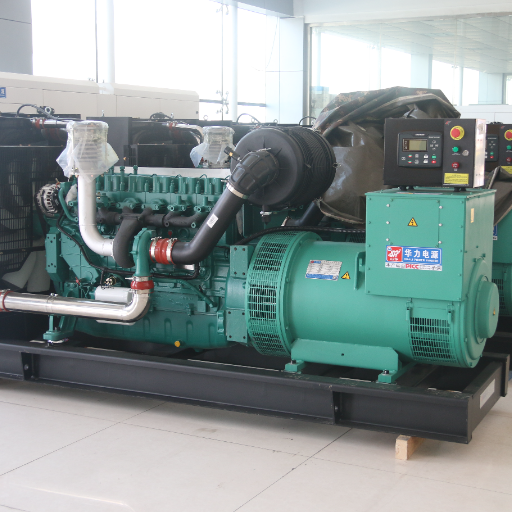
A gas generator that never runs under load is one you don’t actually know works. NFPA 110, the standard that governs emergency and standby power, sets the testing discipline for the facilities it covers, and the gas-specific version is cleaner than the diesel one.
| Test | Frequency | What NFPA 110 requires |
|---|---|---|
| Monthly exercise | Monthly | 30 continuous minutes under at least 30% of nameplate load (or minimum exhaust temperature), exercising the transfer switch |
| Annual load test | Annually, if monthly can’t reach 30% load | 50% of nameplate for 30 minutes, then 75% for 60 minutes (2025 edition) |
| Fuel supply | At installation and inspection | Pipeline gas is a continuous source, exempt from the on-site storage rule |
| Records | Ongoing | Service and test logs are retained for 3 years |
The monthly exercise trips people up. Running an engine unloaded, or under too little load, doesn’t satisfy the standard, and it fouls plugs and leaves deposits that quietly cut real capacity. The annual 90-minute load test is triggered when the building load alone can’t reach 30% of nameplate, common on oversized sets; the generator load bank testing guide walks through the procedure, and Uptime Compliance explains the 2025 edition’s protocol in detail. Authorities still enforcing the older edition expect the earlier two-hour, three-step protocol.
A Midwestern hospital learned this the expensive way. Its standby gas set had passed a no-load monthly exercise for two years on a spotless log. When the building load was actually transferred during a summer storm, the set buckled under load: 24 no-load runs had quietly cut its real capacity. The fix was permanent, exercise under load and log the numbers that prove it.
Common Natural Gas Generator Problems and Troubleshooting
Most gas generator problems cluster into four causes, and the order below is the order in which you check them.
- It won’t start. Battery first. Battery drain is the most common cause of standby starting failure, and batteries typically require replacement around year three regardless of test results. Then check gas pressure at the regulator and the shutoff valves, then the ignition.
- It starts, then misfires or runs rough. Ignition first. The large majority of misfires trace to spark plugs, coils, or HT leads and boots, not to anything exotic. If ignition is clean, check the mixture: a lean-burn engine’s injectors, an intake or vacuum leak leaning out the charge, and gas pressure and quality.
- It runs but derates under load. Look at exhaust temperature per cylinder. A cylinder running cooler than its neighbors is the cylinder that isn’t doing its share, and the thermal signature tells you which one before you pull a plug.
- It was fine last month. Look at the low-load history. Extended no-load or light-load running fouls plugs and deposits carbon, which is exactly why the 30% load rule in NFPA 110 exists.
Keep the logs simple but real: date, run hours, load reached, oil pressure, temperatures, and what you changed. That log makes an intermittent problem findable and a warranty claim defensible.
Overhaul Intervals and Lifespan Economics
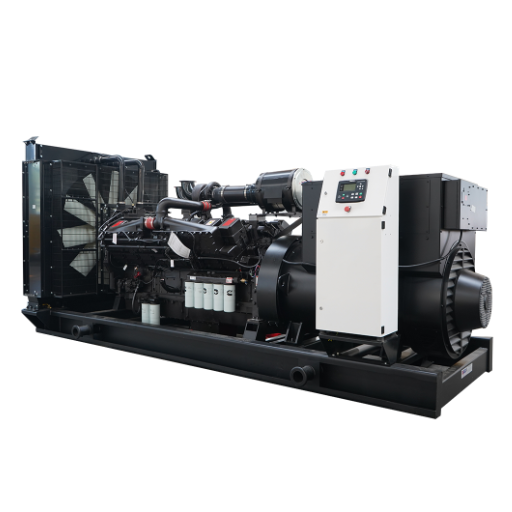
A natural gas generator doesn’t die. It reaches service milestones, and the ones you plan cost a fraction of the ones you don’t. The hour meter is the instrument; the budget cycle isn’t.
| Work scope | Typical interval | What it includes |
|---|---|---|
| Top end | 8,000 to 12,000 hours | Cylinder heads, valve and seat service, gaskets, plugs, ignition |
| Mid-overhaul | About 40,000 hours on large continuous-duty sets | Bearing and liner inspection, reconditioning as needed |
| Major overhaul | 30,000 to 60,000 hours for most gas engines | Full teardown: crankshaft, bearings, pistons, liners |
The top numbers surprise diesel owners. Cummins designs its continuous-duty natural gas generators for 24/7 operation with an overhaul period of around 80,000 hours and a mid-overhaul near 40,000. INNIO Jenbacher’s major overhaul runs at roughly 60,000 hours, and DEUTZ and MWM-CAT gas engines sit in the 48,000 to 64,000 band, stretching toward 80,000 on very clean pipeline gas. Fuel quality moves every one of these numbers: clean pipeline gas extends them, while aggressive fuels like biogas and landfill gas can shorten intervals by 20 to 40 percent, a topic the cluster’s biogas guide covers.
A manufacturer running one gas genset 6,500 prime hours a year pushed its 40,000-hour top-end service to the next budget. At about 44,000 hours a valve dropped, and the unplanned major cost roughly three times the planned top end. The hour meter had been right all along. Plan the overhaul of the meter, budget it annually, and keep a documented service log with OEM parts so the work stays at the planned cost. A well-kept gas genset delivers 20 to 30 years; a skipped interval is how that becomes a rebuild.
Natural Gas Generator Maintenance: Frequently Asked Questions
How often should a natural gas generator be serviced?
At least once a year with an oil and filter change every 100 to 200 hours or annually for standby duty, whichever comes first. Prime and continuous units follow the hour meter with tighter intervals. Duty rating decides the calendar.
Do natural gas generators require more maintenance than diesel generators?
Comparable total effort, different distribution. Gas adds ignition, valve lash, and gas train work. Diesel carries fuel injection, after treatment, and fuel logistics. Neither is maintenance-free, and owners who run gas on a diesel maintenance model get it wrong.
How often do you change the oil in a natural gas generator?
Every 100 to 200 run hours, or at least annually for a standby unit. Continuous duty tightens that toward every 50 to 150 hours, and every unit needs a break-in oil change at 5 to 30 hours.
How often do you change spark plugs on a natural gas generator?
Clean and re-gap every 200 to 400 hours, and replace on a 500 to 1,000-hour clock for typical industrial gensets. Natural gas burns hot and wears electrodes faster than diesel technicians expect.
Do gas generators need load testing and monthly exercise?
Yes. NFPA 110 standby facilities must exercise the set for 30 minutes at at least 30% of nameplate load monthly, and run an annual 90-minute load test if the building load can’t reach that threshold. No-load running fouls plugs and doesn’t prove the set works.
Why won’t my natural gas generator start?
Check the battery first, as it is the most common standby starting failure. Then gas pressure at the regulator and shutoff valves, then the ignition system. A stuck valve or drifted regulator in the gas train is a frequent culprit.
The Bottom Line
Natural gas generator maintenance is not diesel maintenance with a different fuel, and that’s the whole article. Gas swaps diesel’s fuel and after-treatment burden for ignition, valve lash, and gas train work: spark plugs on a 500 to 1,000-hour clock, valve lash every 300 to 500 hours, and a gas train inspected at every service. Your duty rating sets whether the calendar or the hour meter drives it, and NFPA 110 demands a real monthly exercise under load. The hour meter, not the budget cycle, decides when the overhauls happen.
Get the schedule right and a gas genset rewards you with 20 to 30 years of service and the fewest maintenance surprises of any engine you’ll run. Get it wrong, and the burnt valve or unplanned overhaul is how you learn. Start with the checklist and log everything.
Send your unit’s hour meter, duty profile, and service history to ZC Power Engineering, and we’ll build you a maintenance schedule you can hand straight to your technicians. We manufacture gensets from 8 kVA to 4,000 kVA and test every unit under full load before it ships. We’ve answered these exact maintenance questions for fleet owners since 1999.