Float Charger vs Trickle Charger: How to Tell Them Apart
A float charger holds a regulated voltage and lets the battery take what it needs; a trickle charger pushes a roughly constant current whether the battery needs it or not. That single control difference decides whether a battery can be left connected for months or quietly damaged.
Here is the problem with buying on that distinction. The labels have stopped meaning what they say. Devices sold as trickle chargers are sometimes well-regulated float chargers in disguise, and a “maintainer” is usually a multistage charger rather than either name on the box.
So the useful question in float charger vs trickle charger is not only what the words mean. It is which device you are actually holding, and whether it is safe to connect to a standby generator’s starting battery. This article gives you a test you can run on any charger in a few minutes.
At ZC Power we build generator sets from 8 kVA to 4000 kVA, and the charging system on a standby set is one of the parts we check hardest at commissioning. It is small, it is unattended, and it is the reason a set does or does not start during an outage. If you are unsure what your site’s charger is doing, that is worth ten minutes with a multimeter.
Key Takeaways
- The control variable is the whole difference. A float charger regulates voltage and is self-limiting; a trickle charger holds current and cannot limit itself.
- Constant-voltage charging is the standard choice for stationary installations, while constant-current charging is largely a laboratory technique. A standby genset is a stationary installation.
- The label on the box does not reliably tell you which one you have. Test the behaviour, not the name.
- A fixed-current charger on a full battery has nowhere to put the energy, so it damages the battery while apparently maintaining it.
- “Maintainer” is a marketing term, not an engineering one. What matters is whether the device holds a regulated voltage and whether its current falls away as the battery fills.
The One-Line Difference, and Why It Is Not Enough
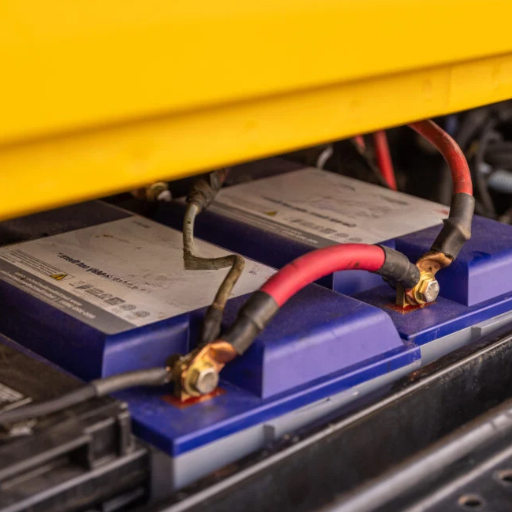
The mechanism is short enough to state once. A trickle charger holds current at a fixed low value. A float charger holds voltage at a fixed regulated value, so the current it delivers tapers as the battery’s own demand falls.
That taper is what makes a float charger self-limiting. It cannot force energy into a battery that will not accept it, which is why it can stay connected indefinitely.
The full explanation of why that matters, and how the float set-point differs by battery chemistry, belongs in our guide to generator battery chargers. What follows here is the buyer’s problem rather than the engineer’s.
Is a Trickle Charger the Same as a Float Charger?
No. A trickle charger holds a roughly constant current; a float charger holds a regulated constant voltage. The first keeps supplying current to a battery that may already be full, which causes gassing and grid corrosion. The second is self-limiting, so it is safe to leave connected for long periods.
That is the short answer, and it is enough to make a purchase decision. What complicates the vocabulary is that the name describes a stage of charging rather than a device, and the industry has never settled on how to use it since.
Technical literature uses the phrase loosely too. A World Bank manual on solar home system components describes the complete three-stage lead-acid process as “trickle charging”, which is not how a charger manufacturer uses the phrase at all. When the phrase is contested in the engineering literature, it is no surprise that it is unreliable on a product label.
Float Charger vs Trickle Charger vs Maintainer: A Comparison
Here is the comparison in the form the decision actually takes: what each device controls, what it does to a battery that is already full, whether you can leave it connected, and what it is for.
| Device | What it controls | Behaviour on a full battery | Safe to leave connected? | What it is for |
|---|---|---|---|---|
| Trickle charger | Roughly constant current | Keeps supplying; energy goes to gassing and grid corrosion | No, not unattended | Slow top-up with supervision |
| Float charger | Regulated constant voltage | Current tapers to near zero; only replaces self-discharge | Yes, indefinitely | Holding a charged battery ready |
| Maintainer (smart, multistage) | Voltage and current in sequence | Bulk, then absorption, then a regulated float hold | Yes, indefinitely | Long-term maintenance of a stored battery |
Read that table as a buying guide and the shape of the decision is clear. A plain trickle charger is the only entry that is not safe to leave connected, and it is also the only one whose name describes a stage rather than a device.
For a standby genset, the requirement points at the third row: a multistage automatic charger with a properly regulated float stage. The word “automatic” is doing real work there, and on an unattended set it is a safety requirement rather than a convenience.
If you are specifying a charger for a set that must start during an outage, get the recharge requirement and the DC load right before you buy. Contact our engineering team with the battery capacity and the standing DC loads, and we will help you size it rather than guess.
The Label Will Not Tell You Which One You Have
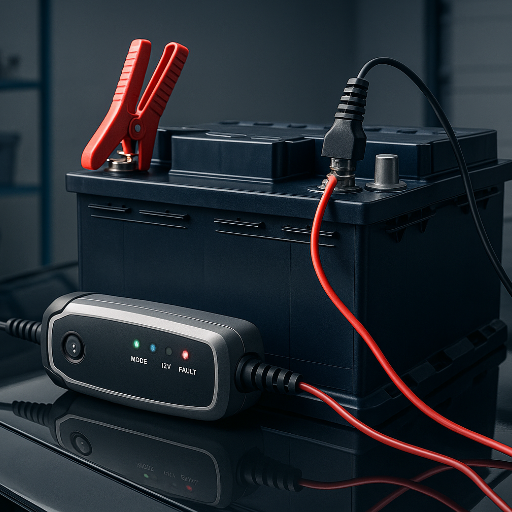
This is where most buying guides stop, and it is where the real problem starts.
Two Tests Anyone Can Run
You can determine which device you are holding without opening it, and without trusting the box.
- Watch the current as the battery fills. Connect the charger to a partly discharged battery with a meter in line, or read the charger’s own ammeter if it has one. On a float charger the current will start high and fall away as the battery approaches full. On a fixed-current trickle charger it will hold roughly steady.
- Watch the voltage at rest. Leave the charger connected to a full battery and measure the terminal voltage over a few hours. A float charger will settle and hold a stable voltage. A crude trickle charger will keep pushing the voltage up, and on a 12 V battery it can creep past the point where gassing begins.
The second test is the one that protects the battery, because it detects the failure mode that actually causes damage. If the voltage keeps climbing instead of settling, the device is not regulating and should not be left connected.
Why “Maintainer” Is a Marketing Word
There is no engineering definition of a maintainer. In practice the word is used for a smart charger that works in stages rather than in a single mode, and that is the right architecture for a standby set.
The problem is what the word guarantees, which is nothing. Two units both sold as maintainers can behave completely differently, and one of them may be a fixed-current charger in a nicer case.
The Test That Settles It
Strip the vocabulary away and one question remains. Does the charger hold a regulated voltage, and does its current fall toward nothing as the battery fills?
If the answer to both is yes, it behaves as a float charger whatever it is called, and it is safe on a standby battery. If the current does not fall, it does not matter what the packaging says.
What a Trickle Charger Does to a Standby Battery
A lead-acid battery at full charge has nowhere to put additional energy. A fixed-current charger keeps supplying it anyway, and the excess goes into electrolysis of the electrolyte rather than into storage.
That has two consequences, and both are expensive. Water is driven out of the electrolyte as gas, and the positive grid corrodes. Corrosion is the mechanism that ultimately ends a lead-acid battery’s life, and it accelerates with temperature.
The reason this matters more on a generator than almost anywhere else is that nobody is watching. A charger connected to a battery in a garage gets noticed when the battery starts to smell or when the case bulges. A charger inside a genset control cabinet on a site that is visited once a month does not.
This is an illustrative composite rather than a record of a specific client. A warehouse kept a spare standby set for seasonal use. A low-cost charger sold as a maintainer was fitted to its starting battery and left connected, as the packaging instructed.
Two seasons later the set would not start, and the battery was found dry and sulfated. The charger had been holding a steady current into a full battery the whole time. The replacement battery cost less than the charger, and the second battery would have failed the same way if the charger had not been tested.
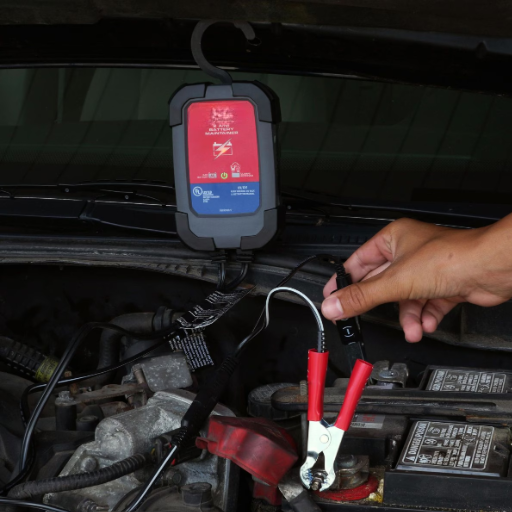
What to Connect to a Generator Battery
Why the Standby Case Is Different From Every Consumer Guide
Most guidance on this topic is written for a battery in a vehicle, a boat or a motorcycle, and in those cases the battery is charged by something else while the machine is in use. The maintainer is only filling in the gaps.
A standby genset is the opposite. The engine alternator charges the battery only while the engine runs, and a standby set runs for half an hour a month at most. Everything else is the charger’s job, and it has to hold a battery at readiness for months at a time without supervision.
That is exactly the duty that constant-voltage charging was designed for. A World Bank manual on solar home system components puts it plainly for lead-acid charging generally: constant-current charging is generally a laboratory technique, while constant-voltage charging is preferred in many stationary installations, particularly for sealed and valve-regulated batteries.
The relevant engineering reference for backup-generator charging is also worth reading if you specify this equipment: IEEE work on lead-acid battery monitoring and charging for backup generators covers the set-points and monitoring arrangements.
The Decision, Applied
Putting the two sections together, the decision collapses to three points.
- Use a multistage automatic charger with a regulated float stage. It is the only category that both recovers a discharged battery and holds a charged one safely.
- Size it so the float current covers the standing DC load. The transfer switch, the control panel and any remote annunciator all draw from the same battery, and a charger that cannot cover them will hold an elevated voltage permanently. The arithmetic is in our guide to sizing a battery charger.
- Do not leave a fixed-current charger connected unattended. Where a battery has to start a machine, the charger is part of a safety function and deserves a device that regulates.
Compliance points the same way. Emergency power standards expect charging that needs nobody to intervene, and that can bring a discharged battery back within a stated period rather than merely holding one that is already full.
That is what turns “automatic” into a specification item, and the NFPA 110 standard is where the requirement sits. Our NFPA 110 compliance guide covers how that charging requirement fits into a wider emergency power system. Confirm the edition in force for your project.
One further point that catches people out, because it cuts in two directions at once. Charging at a fixed current does not simply overcharge every battery. A new battery has a higher counter-voltage and will be undercharged by a fixed-current charger, never quite reaching full.
An aged battery has a lower one and will be overcharged by the same device. One charger, two opposite failure modes, depending on the age of what it is connected to. That is why the device type matters more than the charge rate.
Keeping It Right Over Time
Once the right charger is fitted, two habits keep it right. Test the battery by load rather than by voltage, as set out in our guide to what to do when a generator battery keeps going flat. And check the charger’s float output during routine service, which is where it belongs in the maintenance schedule for a heavy-duty genset.
The charger also draws power continuously from the supply it is connected to, so it belongs in the load calculation like any other sustained demand. That is covered in the guide to generator load calculation.
This is an illustrative composite rather than a record of a specific client. A maintenance engineer inherited a site where several chargers had been bought over the years under different names. Testing them took an afternoon: one held a rock-steady voltage with falling current, one was a regulated unit sold under a misleading label, and one pushed its voltage up steadily with the current never falling. Only the third was dangerous, and it had been quietly damaging a seasonal set’s battery. The labels had given no warning about which was which.
Frequently Asked Questions
Can a float charger recharge a flat battery?
Slowly, and it is not the job it is designed for. A float charger holds a battery that is already charged, so it has no bulk stage to push serious current into a flat one and recovery can take days. If a standby battery is already flat, a multistage charger will bring it back in hours and a float charger will not. A battery that keeps arriving flat is a charging fault rather than a recovery problem, which is covered in our guide to a generator battery keeps going flat.
Can you leave a trickle charger connected to a generator battery?
Not a fixed-current one, and not unattended. A constant-current charger has no way to stop when the battery is full, so on an idle standby set it will damage the battery over a season. A regulated float charger or a multistage maintainer can stay connected indefinitely, and that is the normal arrangement on a standby set.
What is a battery maintainer?
It is a marketing term rather than an engineering one, usually applied to a smart multistage charger that charges, then holds a regulated float voltage. Those units are generally a good choice for a standby battery. The word itself guarantees nothing, so the useful test is whether the device regulates voltage and whether its current tapers as the battery fills.
Should I leave a charger on a standby battery all the time?
Yes, but it has to be the right kind. A standby battery must be ready to start the set after months of idleness, and it will self-discharge without a charger holding it. That continuous hold is what the charging literature calls maintenance charging, and it needs a regulated float stage sized to cover the battery’s self-discharge plus the standing DC loads on the same battery.
How often should a standby battery be charged or boosted?
A battery on a properly regulated float charge is held continuously rather than charged in cycles, so no routine boost is needed for that purpose. Some regimes do apply a periodic elevated charge to counter sulfation, and the recommended interval in the charging literature is on the order of once every few weeks. Whether your site needs it depends on the battery chemistry and the charger, so treat it as a specification decision rather than a habit.
Conclusion
Float charger vs trickle charger comes down to one control variable, and then to a problem the labels create.
A float charger regulates voltage and self-limits. A trickle charger holds current and cannot. Of the two, only the float charger is safe on a battery that sits unattended for months, which is precisely what a standby genset’s starting battery does.
The buying advice is narrower than the vocabulary suggests. Ignore the name on the box. Test whether the charger holds a regulated voltage and whether its current falls away as the battery fills.
If both are true it behaves as a float charger and is safe to leave connected. If the current does not fall, it belongs nowhere near a standby battery.
And if the decision is still open, specify the category rather than the label: a multistage automatic charger with a regulated float stage, sized so its float current comfortably exceeds the DC load the battery has to carry.
Contact our engineering team with the battery capacity, the standing DC load, and how often your set actually runs. We will tell you what the charging arrangement should be, and whether what is fitted already is doing the job.