
Commercial Standby Generator Cost: 2026 Pricing by Capacity (50-2,000+ kW)
The cost of commercial backup generators ranges from $16,000 for a small 50 kW commercial unit to $1.35 million or more for industrial installations exceeding 2,000 kW; for a complete 500 kW backup system, the cost for most medium-sized facilities falls within the $135,000 to $305,000 range. The final cost depends on capacity, fuel type, regulatory compliance level, enclosure specifications, and whether you purchase through a Tier 1 distributor or directly from a certified manufacturer.
In early 2026, Marcus Chen, the facilities director of a 400-bed hospital in Houston, received three quotes for a 1,000 kW diesel backup generator set, with price differences reaching nearly $400,000. A Caterpillar dealer quoted $680,000 (including installation); a Cummins dealer quoted $620,000; and a manufacturer’s direct sales quote for an equivalent unit was $320,000. All three systems utilized Cummins engines and Stamford alternators, and all met the NFPA 110 Type 10, Level 1 requirements. The price discrepancies stemmed not from engineering or technical factors, but rather from procurement channels and brand premiums.
This guide breaks down real 2026 commercial standby generator costs by capacity tier. You will see equipment pricing, installation breakdowns, fuel infrastructure costs, code compliance premiums, and 10-year total cost of ownership for diesel and natural gas options. Whether you are budgeting for a small retail location or a critical data center, the data below gives you a defensible baseline for procurement.
Key Takeaways
- A 500 kW commercial standby generator set costs 135,000to135,000to305,000 installed, with factory-direct options typically 30-50% below Tier 1 dealer quotes.
- Diesel standby systems remain the commercial standard for critical applications, though natural gas suits smaller facilities with pipeline access.
- NFPA 110 Type 10 compliance adds 5,000to5,000to15,000 to installation versus Type 60, while Level 1 life-safety systems increase commissioning costs by 5,000to5,000to15,000.
- Installation equals 25-50% of total project cost, with ATS, fuel storage, and electrical tie-in as the largest line items.
- Over 10 years, fuel and maintenance represent 35-50% of total cost of ownership, making the initial equipment price only part of the financial picture.
Commercial Standby Generator Cost by Capacity (2026)
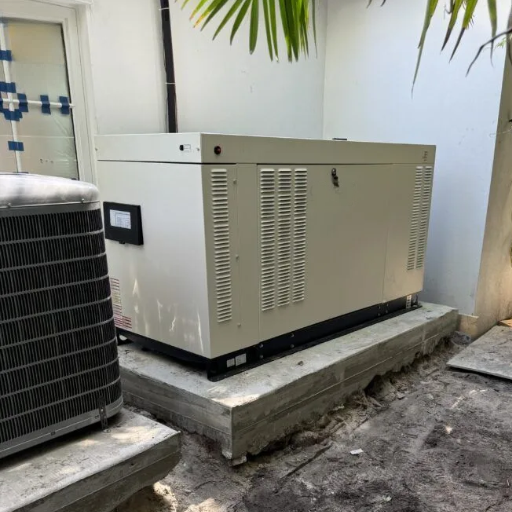
Capacity is the single largest driver of commercial standby generator cost. Below are equipment-only and total installed cost ranges for factory-direct and Tier 1 dealer channels across the full commercial spectrum.
Small Commercial Standby (50-150 kW)
| Capacity | Factory-Direct Equipment | Tier 1 Dealer Equipment | Total Installed (Factory-Direct) | Total Installed (Tier 1) | Typical Applications |
|---|---|---|---|---|---|
| 50 kW | 8,000−8,000−18,000 | 18,000−18,000−35,000 | 16,000−16,000−40,000 | 35,000−35,000−70,000 | Small retail, restaurant, office |
| 75 kW | 12,000−12,000−28,000 | 28,000−28,000−52,000 | 22,000−22,000−56,000 | 50,000−50,000−100,000 | Medium retail, clinic, warehouse |
| 100 kW | 16,000−16,000−38,000 | 35,000−35,000−65,000 | 28,000−28,000−73,000 | 70,000−70,000−130,000 | Large retail, restaurant, office building |
| 150 kW | 28,000−28,000−58,000 | 58,000−58,000−95,000 | 46,000−46,000−106,000 | 95,000−95,000−175,000 | Light manufacturing, medical clinic |
Small commercial standby generators in the 50-150 kW range serve facilities with modest critical loads. A 100 kW diesel genset with canopy enclosure typically powers essential lighting, refrigeration, POS systems, and a small HVAC compressor for a retail or restaurant environment.
Medium Commercial Standby (200-500 kW)
| Capacity | Factory-Direct Equipment | Tier 1 Dealer Equipment | Total Installed (Factory-Direct) | Total Installed (Tier 1) | Typical Applications |
|---|---|---|---|---|---|
| 200 kW | 38,000−38,000−78,000 | 78,000−78,000−140,000 | 63,000−63,000−143,000 | 140,000−140,000−250,000 | Manufacturing, hotel, mid-size commercial |
| 300 kW | 55,000−55,000−110,000 | 110,000−110,000−195,000 | 90,000−90,000−195,000 | 195,000−195,000−350,000 | Large commercial, light industrial |
| 500 kW | 85,000−85,000−180,000 | 180,000−180,000−350,000 | 135,000−135,000−305,000 | 320,000−320,000−600,000 | Industrial, hospital wings, data centers |
The 200-500 kW tier represents the highest-volume segment of the commercial standby market. A 500 kW unit can back up an entire small manufacturing facility, a hospital wing, or a mid-size data center’s critical infrastructure.
Large Industrial Standby (750-2,000+ kW)
| Capacity | Factory-Direct Equipment | Tier 1 Dealer Equipment | Total Installed (Factory-Direct) | Total Installed (Tier 1) | Typical Applications |
|---|---|---|---|---|---|
| 750 kW | 140,000−140,000−280,000 | 280,000−280,000−520,000 | 220,000−220,000−460,000 | 460,000−460,000−850,000 | Large industrial, critical infrastructure |
| 1,000 kW | 200,000−200,000−400,000 | 380,000−380,000−700,000 | 300,000−300,000−620,000 | 620,000−620,000−1.2M | Hospitals, data centers, heavy industry |
| 1,500 kW | 320,000−320,000−650,000 | 600,000−600,000−1.1M | 470,000−470,000−970,000 | 970,000−970,000−1.8M | Large data centers, manufacturing complexes |
| 2,000+ kW | 450,000−450,000−900,000+ | 850,000−850,000−1.6M+ | 650,000−650,000−1.35M+ | 1.35M−1.35M−2.5M+ | Utility-scale backup, large campuses |
Large industrial standby systems often require parallel configurations, redundant starting systems, and sophisticated load management controllers. At this scale, the cost gap between factory-direct and Tier 1 dealer pricing becomes particularly significant, frequently exceeding $500,000 for equivalent specifications.
What Drives Cost Within Each Tier
Even within the same kW rating, several factors shift the price:
- Engine brand: Cummins and Perkins engines command a premium over Weichai or Yuchai alternatives, though all deliver equivalent standby ratings when properly configured.
- Alternator quality: Stamford or Leroy-Somer copper-wound alternators cost 15-25% more than standard Faraday units.
- Enclosure type: Open-set skids cost the least. Sound-attenuated canopies add 15-25%. Containerized housings add 20-35% but reduce installation complexity.
- Control panel sophistication: Basic AMF panels are standard. SCADA-ready controllers with remote monitoring add 2,000−2,000−8,000.
- Emissions tier: Tier 4 Final-compliant engines cost 10-20% more than Tier 3 equivalents.
Explore our full commercial generator cost per kW breakdown for a deeper analysis of how brand, fuel type, and power rating affect per-kW pricing.
How Fuel Type Affects Standby Generator Cost
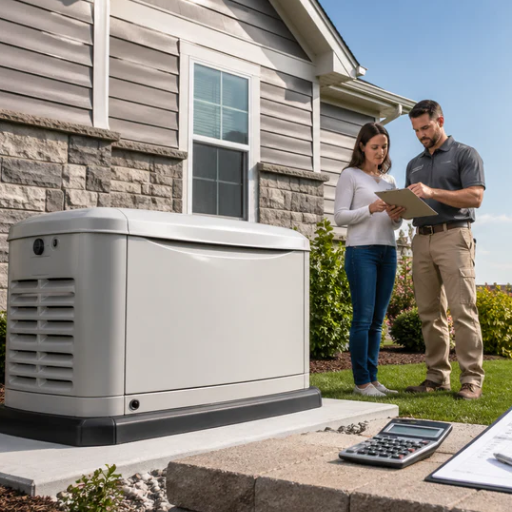
Fuel choice impacts not only the equipment price but also infrastructure, maintenance, and operating costs over the life of the system.
Diesel Standby Generator Cost
Diesel remains the dominant fuel for commercial standby applications above 150 kW. Diesel engines offer the widest capacity range, the highest power density, and on-site fuel independence, critical during natural disasters when natural gas pipelines may fail.
Equipment costs for diesel standby gensets typically fall in the 180−180−400 per kW range for factory-direct units. However, diesel requires fuel storage infrastructure: a day tank (2,000−2,000−8,000), bulk storage tank (8,000−8,000−60,000+ depending on capacity), and NFPA 37-compliant fuel piping and containment. For a 500 kW facility requiring 72 hours of autonomous runtime, fuel infrastructure can add 25,000−25,000−50,000 to the total project.
Natural Gas Standby Generator Cost
Natural gas standby generators eliminate on-site fuel storage. Equipment costs run 10-20% higher than equivalent diesel units, typically 220−220−500 per kW. The main variable is gas line infrastructure: extending a commercial gas line to a generator pad can cost 5,000−5,000−25,000+ depending on distance and pipe diameter.
Natural gas units are generally limited to 50-500 kW for commercial standby applications. Above 500 kW, diesel dominates due to engine availability and fuel energy density. Additionally, natural gas standby systems carry pipeline dependency risk; during earthquakes, hurricanes, or grid emergencies, gas utility shutdowns are common.
Propane (LPG) Standby Generator Cost
Propane serves as a niche alternative for facilities without natural gas access that prefer not to manage diesel fuel. Equipment costs are similar to diesel, but propane tanks (above-ground 3,000−3,000−10,000, buried 8,000−8,000−20,000) and higher fuel costs per kWh make propane the most expensive option to operate long-term.
Fuel Type Cost Comparison
| Factor | Diesel Standby | Natural Gas Standby | Propane Standby |
|---|---|---|---|
| Equipment cost per kW | 180−180−400 | 220−220−500 | 200−200−450 |
| Fuel infrastructure | 5,000−5,000−50,000+ | 5,000−5,000−25,000 | 3,000−3,000−20,000 |
| Fuel cost per kWh | 0.08−0.08−0.15 | 0.06−0.06−0.12 | 0.12−0.12−0.20 |
| Annual maintenance | 3,000−3,000−15,000 | 2,000−2,000−10,000 | 2,500−2,500−12,000 |
| Runtime independence | High | Low | Medium |
| Best for | Critical standby, large loads | Clean burning, small to medium | No gas line, remote |
See our complete diesel vs natural gas generator comparison for a full analysis of fuel choice implications.
Installation Cost Breakdown for Standby Systems
Installation typically equals 25-50% of total project cost for commercial standby generators. For factory-direct buyers, installation is a separate budget line that requires careful coordination.
Automatic Transfer Switch (ATS) Costs
The ATS is the heart of any standby system, automatically transferring the load between utility and generator power.
| Capacity | ATS Equipment | ATS Installation | Total ATS Cost |
|---|---|---|---|
| 50-100 kW | 2,000−2,000−6,000 | 2,000−2,000−5,000 | 4,000−4,000−11,000 |
| 150-300 kW | 5,000−5,000−15,000 | 4,000−4,000−10,000 | 9,000−9,000−25,000 |
| 500-1,000 kW | 15,000−15,000−40,000 | 8,000−8,000−20,000 | 23,000−23,000−60,000 |
| 1,500+ kW | 40,000−40,000−100,000+ | 15,000−15,000−40,000 | 55,000−55,000−140,000+ |
For critical facilities requiring closed-transition or bypass-isolation ATS configurations, equipment costs increase by 30-60%.
Fuel System Infrastructure
Diesel standby systems require the most extensive fuel infrastructure. A typical 500 kW installation includes a 500-gallon day tank (3,000−3,000−8,000), fuel transfer pumps (1,500−1,500−4,000), bulk storage for extended runtime (15,000−15,000−40,000), and NFPA 37-compliant containment and piping (5,000−5,000−15,000).
Natural gas systems require only a pressure regulator, shutoff valve, and flex connection to the building gas line, typically 2,000−2,000−6,000 in equipment.
Electrical and Mechanical Installation
Beyond the ATS, electrical installation includes feeder cables, switchgear modifications, protective relaying, and grounding systems. Mechanical work includes the concrete pad, exhaust piping, cooling ductwork, and ventilation.
| Component | 50-150 kW | 200-500 kW | 1,000+ kW |
|---|---|---|---|
| Concrete pad/foundation | 3,000−3,000−8,000 | 8,000−8,000−20,000 | 20,000−20,000−50,000 |
| Electrical tie-in and switchgear | 8,000−8,000−25,000 | 25,000−25,000−65,000 | 65,000−65,000−150,000 |
| Exhaust system | 2,000−2,000−6,000 | 5,000−5,000−12,000 | 12,000−12,000−25,000 |
| Cooling and ventilation | 3,000−3,000−8,000 | 8,000−8,000−18,000 | 18,000−18,000−40,000 |
Read our detailed commercial generator installation cost guide for a component-by-component breakdown with regional labor rates.
Permits, Inspections, and Commissioning
Commercial standby installations require building permits, electrical permits, and fire marshal approval. Commissioning includes NFPA 110 acceptance testing, load bank testing, and documentation.
| Item | Typical Cost Range |
|---|---|
| Building and electrical permits | 1,000−1,000−10,000 |
| NFPA 110 acceptance testing | 3,000−3,000−15,000 |
| Annual load bank testing | 2,000−2,000−10,000 |
| Operator training and documentation | 2,000−2,000−8,000 |
NFPA 110 Compliance: How Code Requirements Affect Cost
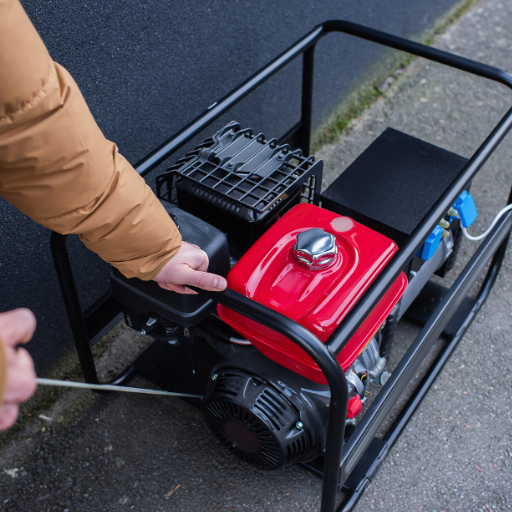
The National Fire Protection Association Standard 110 governs emergency and standby power system installation, maintenance, and testing. Compliance level directly impacts both installation and ongoing costs.
Type 10 vs Type 60 Cost Impact
NFPA 110 classifies standby systems by the maximum time allowed to restore power:
- Type 10: Power must be restored within 10 seconds. Requires a faster ATS, more robust starting batteries, and often redundant starting systems. Adds 5,000−5,000−15,000 to installation versus Type 60. Required for hospitals, data centers, and life safety systems.
- Type 60: Power must be restored within 60 seconds. Standard for general commercial buildings, retail, and non-critical facilities.
When James Oduya, the operations manager at a pharmaceutical distribution center in Nairobi, specified a 300 kW diesel standby system, his initial budget assumed Type 60. Then his insurer and the national pharmacy board mandated Type 10 for cold-chain integrity. The upgrade added 8,500tohisATSandstartingsystemcostsbuteliminateda8,500tohisATSandstartingsystemcostsbuteliminateda50,000 annual insurance premium surcharge.
Level 1 vs Level 2 Installation Cost
- Level 1 applies where failure could result in loss of human life or serious injuries. Stricter installation, testing, and documentation requirements add 5,000−5,000−15,000 to commissioning versus Level 2.
- Level 2 covers less critical applications. Reduced installation and testing requirements lower upfront costs.
NEC Article Requirements
The National Electrical Code adds further cost layers:
- Article 700 (Emergency Systems): Requires separate wiring, signage, and dedicated circuits.
- Article 701 (Legally Required Standby): Mandates specific circuit identification and transfer switching.
- Article 702 (Optional Standby): Most flexible classification with the lowest installation cost.
Factory-Direct vs Tier 1 Dealer: Standby Cost Reality
The purchase channel is one of the most significant, yet least discussed, variables in commercial standby generator cost.
Tier 1 Dealer Standby Pricing
Caterpillar, Cummins, and Kohler dealer networks offer turnkey procurement with bundled warranties and service contracts. However, this convenience carries a substantial premium.
| Capacity | Tier 1 Dealer Equipment | Tier 1 Installed Total |
|---|---|---|
| 100 kW | 35,000−35,000−65,000 | 70,000−70,000−130,000 |
| 500 kW | 180,000−180,000−350,000 | 320,000−320,000−600,000 |
| 1,000 kW | 380,000−380,000−700,000 | 620,000−620,000−1.2M |
Dealer warranties often require mandatory maintenance contracts, proprietary monitoring systems, and certified technician callouts, adding 15-25% to lifetime operating costs.
Factory-Direct Standby Pricing
Certified Chinese manufacturers like ZC Power deliver equivalent specifications using the same core components: Cummins, Perkins, or Deutz engines; Stamford or Leroy-Somer alternators; and Deep Sea or SmartGen controllers.
| Capacity | Factory-Direct Equipment | Factory-Direct Installed Total |
|---|---|---|
| 100 kW | 16,000−16,000−38,000 | 35,000−35,000−75,000 |
| 500 kW | 85,000−85,000−180,000 | 135,000−135,000−305,000 |
| 1,000 kW | 180,000−180,000−380,000 | 300,000−300,000−620,000 |
Factory-direct units carry ISO9001, CE, and CCC certifications. Full warranties are supported directly by the manufacturer without mandatory service contract requirements. Customization is standard, not a special order.
The Real Comparison
For a 500 kW diesel standby genset with canopy, ATS, and basic remote monitoring:
- Tier 1 dealer: $450,000 installed
- Factory-direct: $195,000 installed
- Savings: $255,000 (57%)
The trade-off is coordination. Factory-direct buyers manage local civil, electrical, and commissioning contractors separately. Dealer buyers receive a single point of accountability.
Ready to see how factory-direct pricing applies to your project? Contact the ZC Power engineering team for a customized standby generator assessment and quote.
10-Year Total Cost of Ownership for Standby Generators
The equipment purchase price is only 25-35% of the 10-year total cost of ownership for a commercial standby generator. Fuel, maintenance, testing, and parts replacement dominate the long-term budget.
TCO Breakdown by Percentage
| Cost Category | % of 10-Year TCO | Notes |
|---|---|---|
| Equipment (depreciated) | 25-35% | Largest upfront cost, amortized over 10 years |
| Installation | 10-15% | One-time cost |
| Fuel (exercise + runtime) | 20-30% | Monthly NFPA 110 exercise runs add up |
| Maintenance and service | 15-20% | Oil, filters, belts, coolant, adjustments |
| Load bank testing | 3-5% | Annual NFPA 110 requirement |
| Parts replacement | 5-8% | Batteries, hoses, controls, sensors |
Annual Operating Costs by Capacity
| Capacity | Annual Fuel (Exercise) | Annual Maintenance | Annual Testing | Total Annual |
|---|---|---|---|---|
| 100 kW | 800−800−1,500 | 1,500−1,500−3,500 | 800−800−2,000 | 3,100−3,100−7,000 |
| 500 kW | 3,000−3,000−6,000 | 5,000−5,000−12,000 | 2,000−2,000−5,000 | 10,000−10,000−23,000 |
| 1,000 kW | 6,000−6,000−12,000 | 10,000−10,000−22,000 | 4,000−4,000−8,000 | 20,000−20,000−42,000 |
10-Year TCO Comparison: 500 kW Standby
| Scenario | Equipment | Installation | 10-Year OpEx | 10-Year TCO |
|---|---|---|---|---|
| Tier 1 Dealer | $280,000 | $120,000 | $165,000 | $565,000 |
| Factory-Direct New | $140,000 | $90,000 | $165,000 | $395,000 |
| Savings | $140,000 | $30,000 | $0 | $170,000 |
Operating costs are nearly identical because fuel consumption, maintenance intervals, and testing requirements depend on the engine and runtime hours, not the purchase channel. The $170,000 difference is pure upfront savings.
Downtime Cost Avoidance
Even one significant outage can justify the entire standby investment. Consider these hourly downtime costs:
- Manufacturing: 5,000−5,000−50,000+ per hour
- Data center: 100,000−100,000−1,000,000+ per hour
- Retail: 500−500−5,000 per hour
- Hospital: Life safety (immeasurable)
When Sarah Kim, the operations director of a hosting facility in Singapore, calculated the 10-year Total Cost of Ownership (TCO), she was initially deterred by the $480,000 installation cost of a factory-supplied 1,500 kW backup system. However, she recalled a four-hour outage at a competing facility in the city that had resulted in losses of approximately $2.3 million due to Service Level Agreement (SLA) penalties and customer churn. She realized that the backup generator set was not merely an expense, but a form of “insurance” capable of delivering a quantifiable return.
Regional Cost Variations for Standby Installation
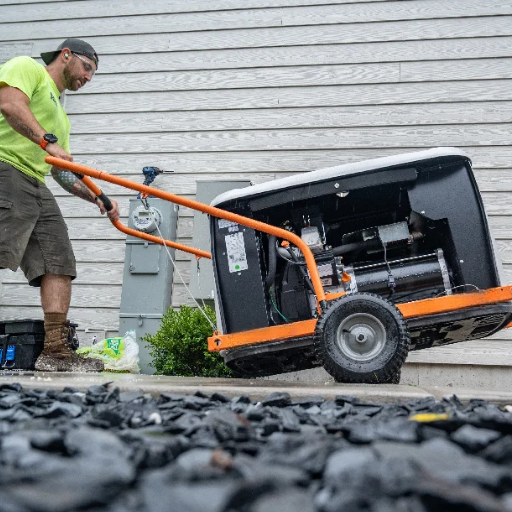
Labor rates, permit costs, and infrastructure requirements vary significantly by region.
United States
- Total installed cost: 300−300−600/kW (small commercial), 250−250−450/kW (large industrial)
- Licensed electrician labor: 90−90−200/hour
- NFPA 110 and NEC compliance strictly enforced
- Permit costs: 1,000−1,000−10,000+
Africa (Nigeria, Kenya, South Africa)
- Total installed cost: 450−450−850/kW
- EPC turnkey installations common due to limited local contractor capacity
- Containerized standby units preferred for lower local installation complexity
- Import duties can add 15-35% to equipment cost
Middle East (UAE, Saudi Arabia)
- Total installed cost: 350−350−650/kW
- Turnkey installations standard due to the expatriate labor market
- Extreme heat requires enhanced ventilation and cooling, adding 10-15%
- Large diesel storage tanks common for grid-independent standby operation
Southeast Asia (Indonesia, Philippines, Vietnam)
- Total installed cost: 280−280−550/kW
- Lower labor rates offset import duties on electrical components
- Canopy units are preferred for tropical weather and monsoon protection
- Frequent grid instability increases actual standby runtime hours
Hidden Costs Most Buyers Miss
Budget overruns on standby generator projects typically stem from items omitted in the initial quote:
- Electrical panel upgrades: 3,000−3,000−15,000 if existing switchgear cannot accommodate the ATS.
- Sound attenuation retrofit: 5,000−5,000−30,000 for open-set units installed in noise-restricted areas.
- Remote monitoring system: 2,000−2,000−10,000 for cellular or Ethernet-based alerting and control.
- Spare parts provisioning: 3,000−3,000−15,000, strongly recommended for remote sites.
- Extended warranties: 1.5-3% of equipment cost per year beyond the standard warranty.
- Fuel polishing system: 5,000−5,000−20,000 for diesel long-term storage to prevent microbial contamination.
- Seismic or fire-rated room: 15,000−15,000−50,000+ for indoor installations in earthquake or fire-code jurisdictions.
- Operator training and certification: 2,000−2,000−8,000 for facility staff.
Frequently Asked Questions
How much does a commercial standby generator cost?
A commercial standby generator costs 16,000to16,000to1.35 million or more installed, depending on capacity. A 100 kW system runs 28,000−28,000−73,000 installed. A 500 kW system runs 135,000−135,000−305,000 installed. Factory-direct sourcing typically reduces these figures by 30-50% compared to Tier 1 dealer quotes.
What is the cheapest commercial standby generator per kW?
The lowest commercial standby generator cost per kW occurs at the largest capacities. Factory-direct 2,000+ kW systems can reach 180−180−250 per kW for equipment, while 50 kW units run 400−400−600 per kW. Economies of scale in engine, alternator, and enclosure manufacturing drive this curve.
Is diesel or natural gas cheaper for standby generators?
Diesel standby generators have lower equipment costs per kW and a wider capacity range. Natural gas units eliminate fuel storage infrastructure but cost 10-20% more for equivalent kW and are limited to smaller commercial sizes. For critical applications, diesel’s on-site fuel independence usually outweighs the modest natural gas equipment savings.
What is the total cost of ownership for a commercial standby generator?
Over 10 years, equipment represents 25-35% of TCO, installation 10-15%, fuel 20-30%, maintenance 15-20%, testing 3-5%, and parts replacement 5-8%. A 500 kW standby system costs approximately 395,000over10yearswhensourcedfactory−direct,versus395,000over10yearswhensourcedfactory−direct,versus565,000 from a Tier 1 dealer.
How much does standby generator maintenance cost per year?
Annual maintenance for a commercial standby generator runs 3,000−3,000−7,000 for a 100 kW unit, 10,000−10,000−23,000 for a 500 kW unit, and 20,000−20,000−42,000 for a 1,000 kW unit. This includes oil and filter changes, coolant checks, battery testing, and preventive adjustments. Load bank testing adds 2,000−2,000−10,000 annually.
How long does a commercial standby generator last?
A well-maintained diesel standby generator lasts 20-30 years or 15,000-30,000 operational hours. The engine typically requires a major overhaul at 12,000-18,000 hours. Regular monthly exercise, annual load bank testing, and adherence to the manufacturer’s maintenance schedule maximize lifespan.
What size standby generator do I need for my facility?
Size your standby generator by calculating the total running kW of all critical loads, adding starting surge requirements for motors (3-7x running current), applying a 20-25% future growth margin, and selecting the next standard capacity. Most small commercial facilities need 50-150 kW, mid-size facilities 200-500 kW, and hospitals or data centers 500-2,000+ kW.
To turn these inputs into a defensible business case, our standby generator ROI guide provides the formulas and scenarios you can present to finance and leadership.
Conclusion
Commercial standby generator cost is not a single number. It is a function of capacity, fuel type, code compliance, installation complexity, and purchase channel. A 500 kW diesel standby system can cost 135,000fromafactory−directmanufactureror135,000fromafactory−directmanufactureror320,000 from a Tier 1 dealer, with identical core components and performance. Over 10 years, fuel and maintenance represent as much of the budget as the equipment itself.
For facilities managers and procurement professionals, the key is to budget holistically. Account for fuel infrastructure, ATS integration, NFPA 110 compliance, regional labor rates, and the hidden costs that inflate projects after the initial quote. The cheapest equipment price rarely equals the lowest total cost of ownership.
When your facility requires a certified commercial standby generator with NFPA 110 compliance, automatic transfer capability, and factory-direct pricing, ZC Power delivers diesel generator sets from 50 kW to 2,000+ kW with ISO9001, CE, and CCC certification. Every unit is tested in our national standard testing center before shipment.
Contact the ZC Power engineering team for a customized commercial standby generator cost assessment and factory-direct quote tailored to your capacity, fuel, and compliance requirements.


