OEM Diesel Generator: The Distributor’s Guide to Sourcing, Branding, and Factory Verification
An OEM diesel generator is a complete generator set built by a source manufacturer and sold under your company’s brand, giving distributors factory-direct pricing, custom specifications, and full control over their product line. It is the model behind most of the generator brands you see in regional markets today.
Here is the counterintuitive part: the biggest risk in OEM sourcing is not paying too much. It is partnering with the wrong type of supplier entirely.
If you have searched for an OEM diesel generator recently, you already know the frustration. The search results are flooded with marketplace listings and product pages, but almost nothing explains how an OEM program actually works. As a source manufacturer established in 1999, we run OEM and ODM programs for distributors across Africa, the Middle East, the Americas, and Southeast Asia. This guide gives you the buyer’s side of that process: what OEM really means in this industry, how a program runs from spec sheet to shipment, and how to verify a factory before you wire a deposit.
Key Takeaways
- An OEM diesel generator is a factory-built genset sold under your brand; understanding the difference between engine OEMs, generator packagers, and vertically integrated factories determines your price, warranty, and accountability.
- Vertically integrated OEM factories typically deliver equipment 30-40% below Western branded equivalents by eliminating the “double margin” on engines.
- A professional OEM program follows five stages: specification, branding, prototype testing, production, and export logistics with spare parts support.
- Always verify a factory with OEM Authorization Certificates, load bank test reports, and a live video tour before committing funds.
- The most expensive mistake in OEM sourcing is choosing the lowest quote from a trading company posing as a manufacturer.
What Is an OEM Diesel Generator?
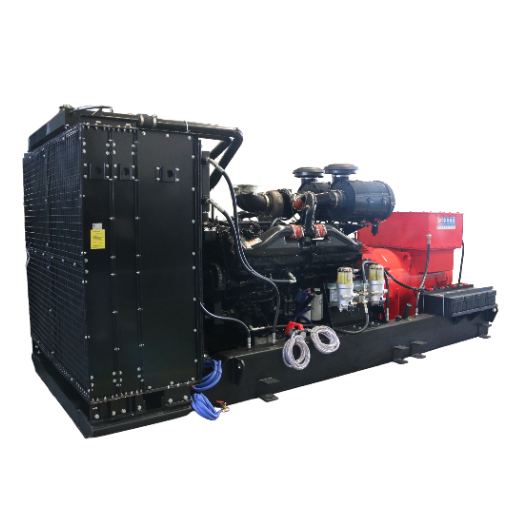
An OEM diesel generator is a diesel generator set manufactured by an original equipment manufacturer that produces the complete unit, including the engine integration, alternator, canopy, and control systems, which is then sold under another company’s brand name. The buyer, typically a distributor or dealer, markets and services the equipment as their own product line.
That definition sounds simple, but the generator industry uses “OEM” loosely. Three very different manufacturing models hide behind the same term, and confusing them is where expensive mistakes begin.
Engine OEM vs. Generator Packager vs. Vertically Integrated Factory
Engine OEMs like Perkins, Cummins, and Volvo Penta manufacture engines only. They do not build complete generator sets. Think of Perkins as the Intel of the generator world: you cannot buy a finished laptop from Intel, and you cannot buy a finished genset from Perkins.
Generator packagers, sometimes called GOEMs, buy engines from engine OEMs and integrate them with alternators, cooling systems, and canopies. Brands like FG Wilson and Himoinsa work this way. They add engineering value, but they also add a margin on top of the engine they purchased.
Vertically integrated factories build the complete genset under one roof. According to industry analysis of the top global diesel generator manufacturers, vertically integrated Chinese factories routinely deliver equipment at 30-40% below Western-branded equivalents, largely because there is no second margin stacked onto the engine.
For a distributor, this distinction is practical, not academic. The model your supplier uses determines your unit cost, who honors the warranty, and who answers the phone when a client’s hospital genset fails at 2 a.m.
OEM vs. ODM: Which Model Fits Your Business?
Buyers frequently mix up OEM and ODM. The difference matters for your product strategy:
| Factor | OEM | ODM |
|---|---|---|
| Who designs the product | Manufacturer designs; you brand it | You specify or co-develop the design |
| Your investment | Low; buy proven configurations | Higher; custom engineering work |
| Time to market | Fast; production lines already exist | Longer; design and prototyping phase |
| Best for | Distributors building a brand quickly | Companies with unique technical requirements |
| Typical MOQ | Lower, often negotiable per model | Higher, to amortize engineering |
Most distributors should start with OEM. You get a tested, certified product line under your logo within a standard lead time, then move toward ODM projects once your volume justifies custom engineering.
Why Distributors Choose OEM Diesel Generators
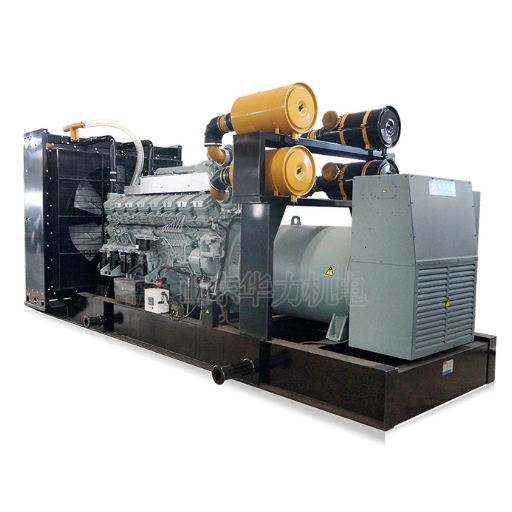
Factory-Direct Pricing and Margin Control
When you buy a branded genset from an authorized packager, you pay for the engine twice: once inside the packager’s cost, and again inside their brand premium. Sourcing an OEM diesel generator directly from a vertically integrated factory removes that stacked margin and hands the difference to you.
Take the example of Daniel, a power equipment distributor in Lagos. In early 2024, he sourced 250kVA silent generator sets—sold under a private label—through a regional trading intermediary at a unit price of $18,400. After evaluating his supply chain, he switched to contracting directly with the original manufacturer for units with identical specifications—featuring the same series of Cummins engines and Stamford-type alternators—thereby reducing his landed cost to $13,900. This 24% cost reduction enabled him to undercut two local competitors on price while simultaneously boosting his profit margin by 11 percentage points. Within just one year, the generator set business surged from his third-largest product line to become his top-selling category.
Building Brand Equity Instead of Renting Someone Else’s
Every branded unit you sell builds the manufacturer’s reputation in your territory, not yours. A private label diesel generator program reverses that equation: your logo goes on the canopy, your colors go on the frame, and your company name goes on the data plate. This white-label approach means that after three to five years of reliable field performance, contractors and facility managers in your market start asking for your brand by name. That equity is an asset you own.
Customization for Local Markets
Off-the-shelf branded equipment rarely matches local grid and regulatory reality. A capable OEM factory configures each order to your market:
- Voltage and frequency: 50Hz or 60Hz, single-phase or three-phase, matched to your national grid
- Canopy type: open, silent (below 75 dB at 7 meters), trailer-mounted, or containerized
- Control systems: AMF panels for automatic mains failure response, ATS integration, or smart cloud monitoring
- Compliance details: local-language labels, documentation packages for import certification, emissions configurations
When your requirements go beyond these standard configurations, partnering with a dedicated custom genset manufacturer lets you engineer each unit around your exact grid, climate, and branding needs rather than settling for the nearest stock model.
How an OEM Diesel Generator Program Works: Step by Step
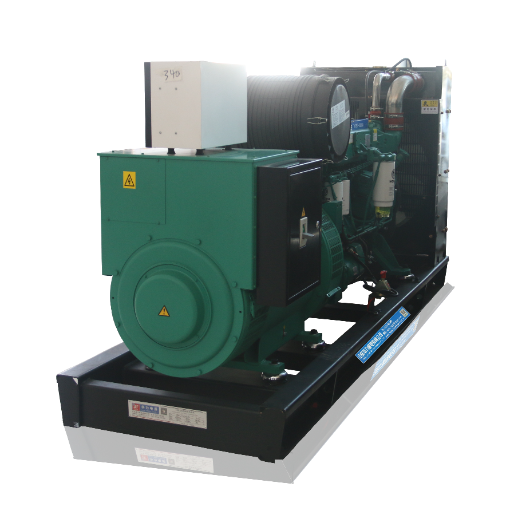
Professional factories run OEM programs as a structured process. If a supplier cannot describe these stages clearly, treat that as a warning sign.
Step 1: Define Your Specifications
Everything starts with a spec sheet. Lock down your kVA ratings, prime versus standby power requirements, engine and alternator brands, canopy type, and target price points. A good factory will challenge your specs constructively. If your market is tropical coastal, expect questions about anti-corrosion coating. If you serve mining clients, expect questions about dust filtration and high-altitude derating.
Step 2: Branding and Design Confirmation
You provide logo artwork, color codes, and data plate requirements. The factory returns canopy renderings and nameplate layouts for approval. Serious manufacturers treat this as an engineering document, not a marketing exercise, because paint systems and plate materials affect durability.
Step 3: Prototype, Load Bank Testing, and Certification
Before volume production, the factory builds and tests a prototype or first article. This is where ISO 9001-certified factories separate themselves from assembly workshops. Every unit should pass full load bank testing verifying 100% of rated output, and you should receive the test reports. Ask for the prototype’s report before authorizing the production run.
Step 4: Production, MOQ, and Lead Times
Confirm minimum order quantities per model, production lead time, and payment terms in writing. Typical OEM lead times run 25-45 days depending on configuration complexity and engine availability. Be suspicious of quotes dramatically faster than this range; speed usually means pre-built stock units with your stickers applied, not genuine OEM production.
Step 5: Export Logistics, Spare Parts, and After-Sales Support
Clarify incoterms early. Most OEM programs run FOB or CIF, and experienced exporters handle container loading, customs documentation, and marine insurance routinely. Equally important: negotiate your spare parts package and warranty terms before the first order, not after the first failure. Your customers will judge your brand on parts availability in year three.
Evaluating factories right now? Ask ZC Power for a sample load bank test report and a live video walkthrough of our production lines. [Contact our engineering team] to schedule one.
How to Verify an OEM Generator Factory Before You Commit
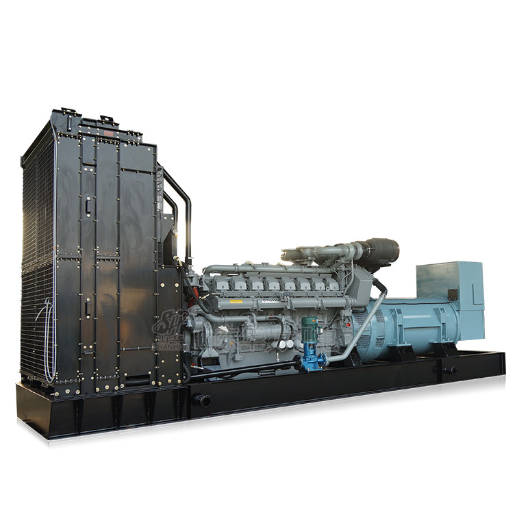
The search results for this keyword are full of factories claiming OEM capability. Separating a certified OEM diesel generator manufacturer from a reseller requires verification on six fronts:
- Request OEM Authorization Certificates for the engines in your build. A factory assembling Cummins or Perkins-powered gensets should hold traceable authorization or supply chain documentation. A sticker on the canopy proves nothing.
- Verify certifications independently. ISO 9001, CE, and CCC certificates have registration numbers you can check with the issuing bodies.
- Demand a live video factory tour. A real manufacturer walks onto the production floor with a phone and shows you assembly lines, welding stations, and the testing bay. Trading companies make excuses.
- Ask for load bank test reports from recent shipments, not just one sample. Every unit should be tested, and the paperwork should exist.
- Check the export track record. Ask for bill-of-lading references or client contacts in markets similar to yours.
- Test the engineering depth. Ask a detailed technical question about alternator winding pitch or AMF panel integration. Factory engineers answer precisely; middlemen forward your email and stall.
The stakes are real. In 2025, a buyer for a Gulf construction group signed for 40 units of what appeared to be a well-known European brand at an improbably low price. The containers arrived with convincing decals and no authorization documentation. Serial number checks with the engine manufacturer came back as unregistered. The “factory” was a workshop applying stickers to unbranded stock, and the warranty paper was worthless. The buyer recovered only a fraction of the deposit, and the project ran three months late while replacement units were sourced. Twenty minutes of certificate verification would have prevented all of it.
Common OEM Sourcing Mistakes to Avoid
Confusing trading companies with source factories. This remains the single most common error international buyers make.
Chasing the lowest quote. A price 30% below every other bid is not a bargain; it is a signal of skipped testing, thinner steel, copper-aluminum alternator windings, or refurbished engines. The cheapest unit frequently becomes the most expensive one over its lifecycle.
Skipping spare parts and warranty terms in the contract. Verbal promises evaporate. Put parts pricing, warranty duration, and response times in the purchase agreement.
Ignoring local compliance. Confirm that voltage, emissions configuration, and documentation match your import market’s requirements before production, not at the port.
Frequently Asked Questions
What does OEM mean for diesel generators?
OEM stands for original equipment manufacturer. In the generator industry, it describes a factory that builds complete generator sets which distributors sell under their own brand names, with custom logos, colors, and specifications.
What is the difference between an OEM and an ODM generator?
With OEM, the factory provides the proven product design and you apply your branding. With ODM, you participate in designing a custom product that the factory engineers and builds for you. OEM is faster and cheaper to launch; ODM delivers deeper differentiation.
How do I verify a Chinese OEM generator manufacturer?
Request OEM Authorization Certificates for engines, verify ISO 9001 and CE certificate numbers with issuing bodies, demand a live video tour of the production floor, review load bank test reports from recent shipments, and confirm an export track record with referenceable clients.
What is the typical MOQ for an OEM diesel generator program?
Minimum order quantities vary by factory and model. Many established manufacturers accept low initial MOQs, sometimes one to five units per model, to let new distributors validate their market before scaling to container-volume orders.
Can an OEM factory customize voltage and frequency for my country?
Yes. A genuine manufacturer configures alternators and control systems to your grid standard, whether 50Hz or 60Hz, single-phase or three-phase, and supplies documentation for local import certification.
Build Your Brand on a Verified Factory Floor
The OEM diesel generator model works because it aligns incentives: the factory focuses on engineering and production quality, and you focus on your market, your customers, and your brand. But the model only pays off when you choose the right partner. Know which manufacturing model you are buying from, follow the five-step program process, and verify everything with documents, test reports, and your own eyes.
That is exactly how Amara, a distributor serving private hospitals in East Africa, built her business. She launched a private-label line of silent gensets in 2023: custom-logo canopies rated below 75 dB, AMF panels for automatic switchover, and a contracted spare parts package. Her first order was eight units. Her reorder, fourteen months later, was sixty, because not one of her hospital clients experienced a failure without a part arriving within days. Her brand now outsells two legacy imports in her territory, and the factory behind it remains invisible to her customers by design.
Shandong ZC Power CO., LTD. has operated as a source manufacturer since 1999, with a 300,000-square-meter facility, a national standard testing center, and a team of 80 technical engineers supporting OEM and ODM partners in more than 50 countries. We build diesel generator sets from 8kVA to 4000kVA in open, silent, trailer, and containerized configurations, each one verified by full load bank testing before dispatch.
Ready to build your own generator brand? [Contact our engineering team today] for a tailored OEM proposal, sample test reports, and a factory-direct quotation.