Open Type vs Silent Type Generator: Which to Choose
An open type generator costs 15-40% less and is faster to service, but it needs a shelter or plant room. A silent type generator costs more upfront and arrives ready for outdoor installation, with noise cut from roughly 78-85 dB(A) down to 60-75 dB(A) at 7 meters. Both hold the same engine and produce the same power.
The enclosure, not the engine badge, is what decides whether your project gets approved. We have watched buyers spend weeks comparing engine brands and then lose a permit because nobody checked the boundary noise limit.
At Shandong ZC Power CO., LTD. (ZC Power), we build both configurations from 8kVA to 4,000kVA, and we load-test every unit in our national standard testing centre before it ships. This guide covers the engineering differences, the numbers that actually matter, and the two specification errors that cause most enclosure disputes.
Key Takeaways
- An open type generator is 15-40% cheaper and gives unrestricted service access, but it has no weather protection and needs a purpose-built room or shelter in almost every urban installation.
- A silent type generator costs more upfront and cuts noise to 60-75 dB(A) at 7 metres, but the premium is often smaller than the generator room you would otherwise build.
- Sound pressure and sound power are different quantities. A datasheet quoting “65 dB(A)” and a tender quoting a sound power limit are not comparable. Confusing the two is the most common specification error we see.
- Canopy IP ratings run from IP21 at the low end to IP56 for harsh sites. IP23 is the industry norm; IP65 usually applies to the control box, not the canopy shell.
- Open enclosures expose the fuel system and control panel. If the site is unattended, lockable doors and concealed fill points belong in the specification from the start.
Choosing between an open and silent configuration for a specific site? Send our engineers your noise limit and installation constraints and we will recommend the enclosure and return a factory-direct quote.
The Short Answer: Open Type vs Silent Type Generator
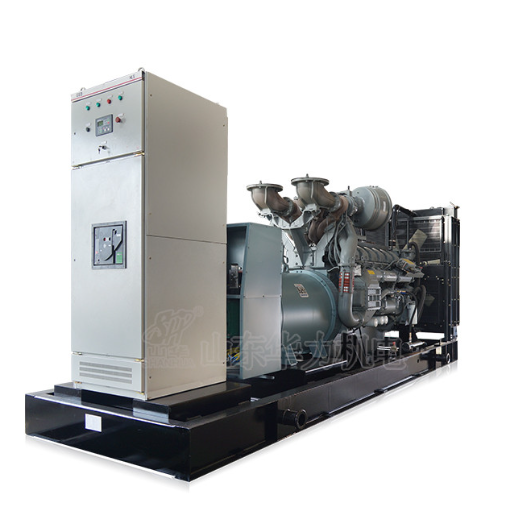
Choose an open type generator when you already have a plant room and want the lowest capital cost with fast maintenance access. Choose a silent type generator when the unit goes outdoors, sits near people, or falls under a noise ordinance.
| Factor | Open Type Generator | Silent Type Generator |
|---|---|---|
| Noise at 7 m | 78-85 dB(A); up to 95 dB(A)+ for large sets | 60-75 dB(A); super-silent 50-65 dB(A) |
| Weather protection | None; shelter required | Built-in, IP23 typical |
| Upfront cost | Baseline | 15-40% higher |
| Installation | Usually needs a generator room or acoustic screen | Concrete pad only |
| Maintenance access | Unrestricted, all sides open | Via lockable side doors and removable panels |
| Cooling | Maximum natural airflow | Engineered ducts; clearance-dependent |
| Security | Components exposed | Lockable canopy, concealed fill points |
| Best for | Existing engine halls, mining, remote camps | Hospitals, data centres, urban sites, telecom |
The engine, alternator, fuel system, and controller are identical between the two. Only the canopy differs. A 500 kVA set burning 105 litres per hour in an open frame burns the same 105 litres per hour inside a properly ventilated canopy. Our fuel consumption guide sets out why.
Open Type vs Silent Type Generator: How the Two Differ
What is an open type generator?
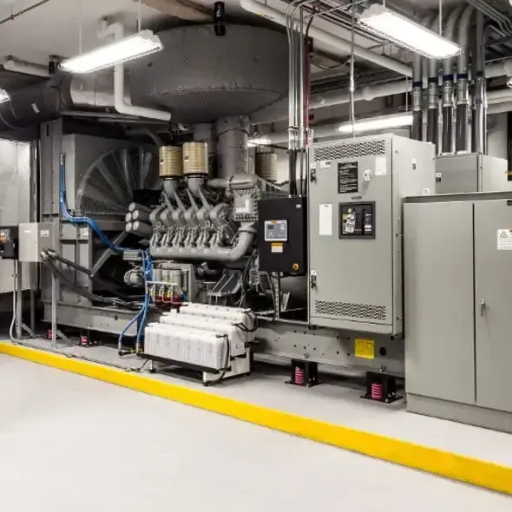
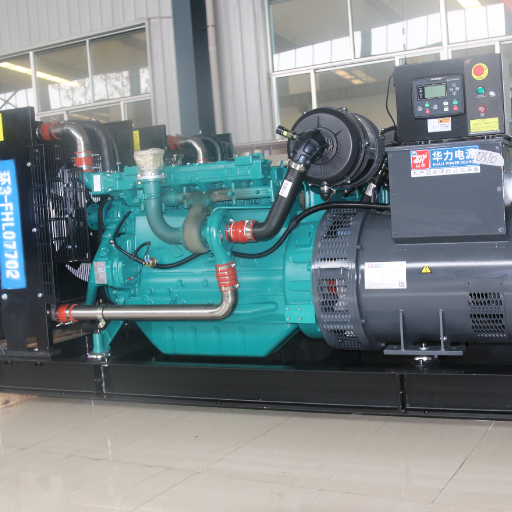
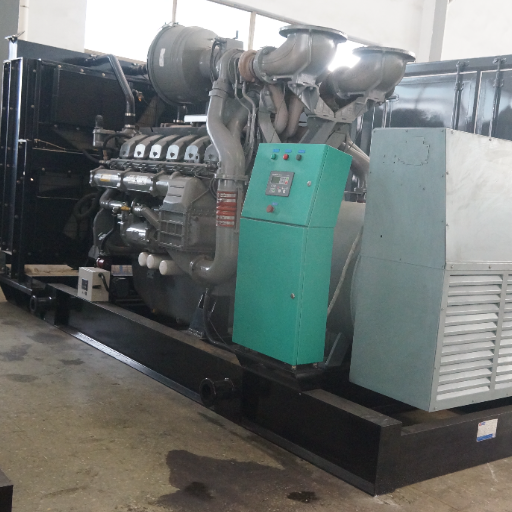
An open type generator is a diesel engine, alternator, radiator, and control panel mounted on a heavy-duty steel base frame with no enclosure. Every component is exposed, which gives technicians full access and lets air move freely around the engine.
Open sets suit sites with a dedicated plant room or engine hall. Mining operations, remote construction camps, and factories with existing acoustic buildings often specify them. The base price is lower and routine service is faster.
The trade-off is that the design offers no protection against rain, dust, or noise. Install one outdoors in an urban area and you’ll need a generator house, acoustic screen, or weather canopy. Those extras frequently cost more than the silent canopy premium would have.
What is a silent type generator?
A silent type generator is an open set inside a steel acoustic canopy. The canopy delivers sound attenuation through dense acoustic lining, uses labyrinth air ducts to control intake and exhaust noise, and includes exhaust silencing and vibration isolators. Because the shell is sealed and glanded, it also serves as a weatherproof generator enclosure, and good canopies add anti-corrosion coating and lockable access doors. Our own silent heavy duty diesel generator range is built to the same specification.
The internal layout matters more than the outer shell. A well-engineered canopy doesn’t just block noise; it manages heat. Engineered ducts, correctly sized cooling fans, and routed exhaust keep the engine within its thermal limits while limiting sound escape. A poorly ventilated canopy raises exhaust temperature and shortens engine life.
A telecom operator in Kenya learned the cooling point the hard way. Their 200 kVA silent units were installed against a perimeter wall to save space, leaving roughly 300 mm of clearance on the air intake side instead of the specified one metre. Two units overheated within a month and derated to about 75% output on hot afternoons. Re-siting them cost less than the first service call, but the site ran on reduced capacity through the hottest weeks of the year.
Generator Noise Levels: What the dB Numbers Actually Mean
A generator noise level dB figure is meaningless without three pieces of context: the measurement standard, the distance, and the load. A supplier who quotes 72 dB(A) without all three has given you an incomplete number. This is where most open type vs silent type generator comparisons quietly mislead.
The industry reference is ISO 8528-10, which specifies how to measure airborne noise from reciprocating engine driven generating sets. Reputable manufacturers report sound pressure level at a defined distance, usually 7 metres from the canopy surface, at 75% or 100% of rated load.
Sound pressure vs sound power: the distinction that changes your spec
This is the specification error we correct most often, and it’s the one that gets generators rejected on delivery.
Sound pressure level (LpA) is what you measure with a meter at a given distance. It depends on where you stand. Sound power level (LwA) is a property of the machine itself, independent of distance. They are different quantities in different units, and they are not interchangeable.
European law makes this concrete. Under the EU Outdoor Noise Directive 2000/14/EC, generator sets above 10 kW must be marked with a guaranteed sound power level in dB per picowatt, measured to ISO 3744. That mark is a legal declaration, and it is a sound power figure.
For a source on a reflecting plane, the two are related approximately by:
LpA at 7 m ≈ LwA − 25 dB
Work it through for a 500 kW set, where the Stage II limit is 95 + log₁₀(P):
| Step | Value |
|---|---|
| EU Stage II limit, 500 kW | 95 + log₁₀(500) ≈ 98 dB LwA |
| Convert to pressure at 7 m | 98 − 25 = approximately 73 dB(A) |
| How the datasheet states it | “72-75 dB(A) at 7 metres” |
Same machine. Two numbers that look unrelated. If a tender specifies a sound power limit and you submit a sound pressure figure, you’re not being compared on the same basis.
Treat the −25 dB conversion as an engineering approximation, not a rule. It assumes free-field conditions over a reflecting plane and a point source, and real installations deviate from that. Confirm the measured value with the manufacturer.
Why distance and load matter
Sound pressure drops by roughly 6 dB(A) every time you double your distance from the source. A set rated 95 dB(A) at 1 m measures about 83 dB(A) at 4 m and about 77 dB(A) at 8 m.
Because local limits are usually written at the nearest dwelling, the number that matters is almost never the number on the datasheet. It’s the number at the receptor, after distance and any barrier.
| Sound source | Approximate dB(A) |
|---|---|
| Normal conversation | 60 |
| Standard silent generator at 7 m | 60-75 |
| Busy traffic | 80-85 |
| Open type generator at 1 m | 95-110 |
| Jackhammer | 110-120 |
Perceived loudness doubles roughly every 10 dB(A). The gap between an open set and a silent set isn’t incremental; it’s the difference between a conversation and hearing protection.
Regional noise limits
| Region / standard | Typical limit | Measurement point |
|---|---|---|
| India (CPCB) | ≤75 dB(A) for new gensets to 1000 kVA | 1 m from enclosure |
| China (GB 12348) | 65 dB(A) day, 55 dB(A) night | Site boundary |
| UK (BS 4142) | Site-specific; typically background +10 dB(A) | Nearest dwelling |
| Australia (AS 1055) | 55-65 dB(A) day, 45-55 dB(A) night | Receptor |
| WHO guidance | 55 dB LAeq(16h) outdoor, 45 dB LAeq night at facade | Outdoor living areas |
Those WHO figures describe two different effects, and they’re not interchangeable. The 55 dB LAeq value protects against serious annoyance in outdoor living areas during the day and evening. The 45 dB LAeq value protects sleep at night, measured at the outside facade. Inside a bedroom the guidance is 30 dB LAeq. The later Night Noise Guidelines for Europe sets a stricter target of 40 dB Lnight,outside, with 55 dB as an interim value.
Confirm the applicable limit with the local authority before you specify. In most noise-sensitive jurisdictions, the compliant path is a properly specified silent generator.
Security, Weather Protection, and IP Ratings
Two details separate a canopy that lasts from one that fails early: ingress protection and physical security.
What the IP rating actually protects
A generator enclosure IP rating follows the IP code (IEC 60529), which describes protection against solids and water. For generator canopies the meaningful range runs from IP21 to IP56 for harsh or coastal sites. IP23 is the norm for a full acoustic canopy: solid objects above 12.5 mm, and water sprayed up to 60° from vertical.
Two things are worth knowing. IP65 usually refers to the control and distribution boxes, not the canopy shell, so a specification claiming “IP65” for the whole enclosure deserves a question. And some tenders set IP21 as the contractual minimum, which is genuinely minimal protection and should be uprated for outdoor or dusty installations.
A canopy also protects the machine mechanically. Rain, dust, and vermin are hard on an exposed alternator and control panel. On coastal sites, specify upgraded anti-corrosion coating regardless of enclosure type.
Lockable enclosures and fuel theft
Generator canopy security is the other half of the specification, and it’s the one buyers most often leave to chance. An open type generator leaves the control panel, battery, and fuel system accessible to anyone who walks onto the site. Diesel theft is common enough that it should be designed out rather than insured against.
| Feature | Open type | Silent type |
|---|---|---|
| Control panel access | Open | Lockable door |
| Fuel fill point | Exposed | Concealed or padlockable |
| Battery | Exposed | Behind lockable access |
| Cable and busbar entry | Exposed | Glanded through the canopy |
On unattended sites, specify lockable door latches, padlockable fill and vent caps, and mesh screens inside the fill pipe. GPS tracking is worth the cost on remote sites.
Lifecycle Cost: Silent vs Open, Including Retrofit
Purchase price is one line item. A complete open type vs silent type generator comparison has to include shelter, installation, permits, and resale.
5-year TCO example for a 500 kVA set
| Cost factor | Open type (no existing plant room) | Open type (plant room exists) | Silent type |
|---|---|---|---|
| Equipment purchase | ~$45,000 | ~$45,000 | ~$58,000 |
| Generator room / shelter | ~$75,000 | $0 | $0 |
| Installation labour | ~$15,000 | ~$15,000 | ~$5,000 |
| Noise compliance and permits | ~$8,000 | ~$8,000 | ~$1,000 |
| 5-year maintenance | ~$12,000 | ~$12,000 | ~$11,000 |
| Resale value at year 5 | −$18,000 | −$18,000 | −$24,000 |
| 5-year TCO | ~$137,000 | ~$62,000 | ~$51,000 |
Read the middle column carefully, because it is the case that gets ignored. If you already have a suitable generator room, the open type is the cheaper option over five years. The silent type wins when the shelter has to be built. That is the situation on most greenfield sites.
Generator room construction typically runs 5,000to5,000to50,000, rising to 50,000to50,000to300,000 on large projects. Canopy premiums scale with unit size, since fabrication is a larger share of a big set’s cost.
A cold storage operator in Cebu compared two quotes for a 400 kVA standby set in early 2025. The open type looked like the obvious choice at roughly $12,000 less on equipment.
Subsequently, the quote for the civil works was also received. The equipment requires installation in a well-ventilated room with fire-rated walls, and the lowest compliant construction quote was 71,000; by comparison, the total installation cost for the soundproofed configuration was approximately 59,000 lower than that of the open-style setup. Previously, the cost of constructing the room had not been factored in.
What a retrofit actually costs
Buyers ask whether they can add a canopy later. Retrofitting is usually a poor trade.
An aftermarket enclosure costs 30-50% of the silent premium, and that is only the shell. Fitting it means re-routing exhaust, re-engineering air intake and discharge, adding vibration isolation, and re-certifying noise performance. A proper retrofit often lands at or above the price of specifying silent from the factory, with no factory noise test report to hand the authority.
If the unit might end up somewhere noise-sensitive, specify silent at the order stage.
Open Type vs Silent Type Generator: Which Fits Your Application?
| Application | Recommended enclosure | Key decision factors |
|---|---|---|
| Hospital / healthcare | Silent or super-silent | Boundary limits, 24/7 readiness, low acoustic footprint |
| Data centre | Silent or containerized | Certified sound power data, uptime, ATS integration |
| Telecom tower | Silent | Remote monitoring, residential boundary noise |
| Mining / quarry | Open, if an engine hall exists | Dust, maintenance access, shelter availability |
| Remote construction camp | Open or containerized | Capital cost, transport, shelter |
| Urban construction | Silent | Permit approval, nearby residents, site mobility |
| Agriculture | Open or silent | Distance to dwellings, budget, weather exposure |
| Events | Silent, trailer-mounted | Noise ordinances, deployment speed, public proximity |
A mining operator in northern Chile had the open type decision go right. The site already had a ventilated engine hall from a decommissioned plant, so the 1,250 kVA units went in as open sets. Capital cost came in roughly 30% below the silent alternative, and technicians could service the machines from every side without unbolting a panel.
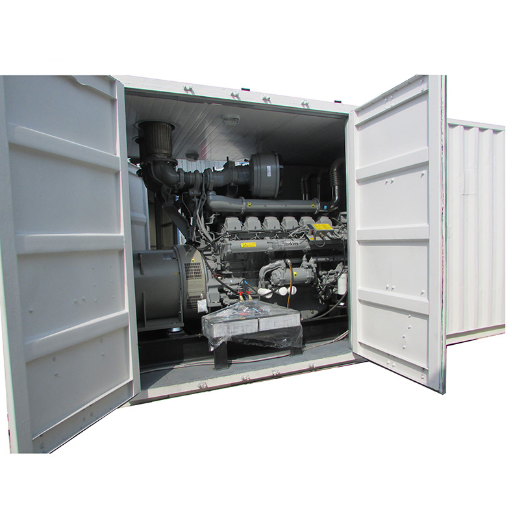
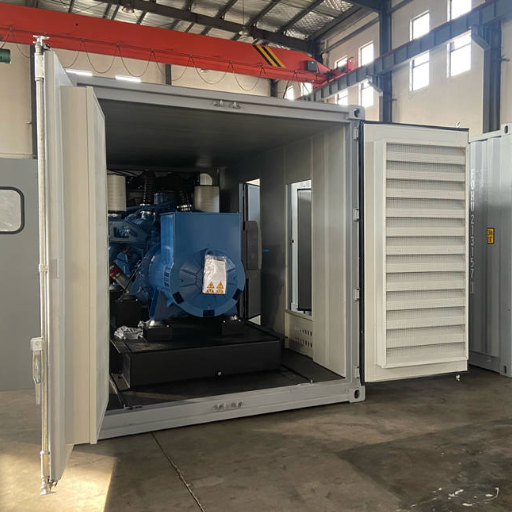
For sites that need the enclosure to travel, our containerized generator sets combine the acoustic performance of a silent canopy with a standard shipping envelope.
Common Mistakes When Choosing an Enclosure
Comparing only the equipment price. A 13,000savingonthegeneratorcanvanishintoa13,000savingonthegeneratorcanvanishintoa75,000 generator room.
Mixing sound pressure and sound power. Quoting “72 dB(A) at 7 m” against a tender’s sound power limit is a category error, and a dB figure without a stated standard, distance, and load isn’t a specification at all.
Buying a weather canopy and calling it silent. Canopies without dense acoustic lining perform very differently from those with it.
Undersizing airflow clearance. Silent canopies need surrounding space for intake and exhaust air, and insufficient clearance causes overheating.
Leaving security out of the specification. On an unattended site, an unlocked fill point is an open invitation.
Frequently Asked Questions
What is the difference between an open type and silent type generator?
An open type generator has no enclosure: the engine and alternator sit exposed on a base frame. A silent type adds a steel acoustic canopy with sound-absorbing lining and labyrinth air ducts. The same engine produces identical power in either, but the canopy cuts noise from roughly 78-85 dB(A) to 60-75 dB(A) at 7 metres.
How loud is a silent type generator?
A standard silent type generator produces 60-75 dB(A) at 7 metres, comparable to a vacuum cleaner or normal traffic. Super-silent models reach 50-65 dB(A) at 7 metres. Confirm the rating states the standard, distance, and load.
Can I use an open type generator outdoors?
Only with a generator house, weather canopy, or acoustic screen. An open set has no protection against rain, dust, or noise. In urban areas, outdoor installation usually fails noise limits and can be shut down by the authority.
Is a silent generator worth the extra cost?
On a greenfield site, usually yes: the silent unit’s 5-year TCO was about 51,000against51,000against137,000 for an open set needing a room built. With a plant room already in place, the open type comes in near $62,000 and wins. It depends on the site, not the product.
What dB level is acceptable in residential areas?
Most jurisdictions limit residential noise to roughly 55 dB(A) by day and 45 dB(A) at night, measured at the nearest dwelling or boundary. Those figures trace to WHO guidance on outdoor annoyance and sleep protection respectively. A standard silent generator usually meets them; an open type rarely does without shelter.
What IP rating should a generator canopy have?
IP23 is the industry norm for a full acoustic canopy. IP21 appears as a contractual minimum in some tenders but is minimal protection outdoors. Coastal and dusty sites warrant IP44 to IP56, and control boxes are often rated separately at IP65.
Does a silent canopy affect fuel consumption or power output?
No, provided the canopy is correctly ventilated. A properly designed canopy doesn’t change the engine’s fuel consumption or rated kW output. Insufficient airflow clearance, however, will cause overheating and derate the set.
How much does it cost to add a canopy later?
More than most buyers expect. An aftermarket enclosure runs 30-50% of the silent premium before labour, plus exhaust re-routing, airflow re-engineering, and re-certification. It often ends up costing as much as factory silent.
Conclusion
The open type vs silent type generator decision comes down to three questions. Does the unit go outdoors? How close is the nearest noise-sensitive receptor? And does a suitable plant room already exist?
Answer those and the choice usually makes itself. Open sets win where a plant room exists, access matters, and capital cost dominates. Silent sets win where the unit sits outdoors near people, where permits must be approved quickly, and where the alternative is building a room. For most outdoor urban installations, a silent diesel generator is simply the lower-risk specification.
Two habits will save you the most money. Establish whether a dB figure is sound pressure or sound power before comparing it to anything. Then price the installed cost rather than the equipment cost, because the shelter is the line item that decides the comparison.
Whichever enclosure you choose, insist on the noise test data, the IP rating, and the load bank certificate. A load bank test is the only way to confirm the set actually delivers its rated output before it leaves the factory. The canopy protects the machine; the factory behind it protects your uptime.
Talk to a ZC Power engineer about your project. We build both open and silent configurations from 8kVA to 4,000kVA and test every unit in our national standard testing centre. We will recommend the enclosure that fits your site, not the one that carries the higher margin. For the wider selection picture, see our heavy duty diesel generator buying guide.