Standby Generator ROI: How to Calculate Payback and Total Cost of Ownership
While backup generators do not generate revenue directly, facilities such as hospitals, data centers, and mines often view them as assets offering some of the highest returns. The reason is simple: the return on investment (ROI) for a backup generator is measured not by the economic gains it produces, but by the catastrophic losses it prevents.
For a mid-sized manufacturing plant, a single four-hour power outage can result in production losses exceeding $200,000. According to data from the Ponemon Institute, downtime in data centers costs between $5,600 and $9,000 per minute. For many facilities, the losses averted during just one grid failure are enough to offset the generator’s purchase cost.
Shandong ZC Power Co., Ltd. (ZC Power) has been dedicated to the R&D and manufacturing of backup power solutions since 1999. This guide explains how to calculate the ROI of backup generators, covering clear formulas, practical cost breakdowns, industry benchmarks, and a calculator template you can use when preparing your next capital expenditure (CapEx) proposal.
Key Takeaways
- Standby generator ROI equals avoided downtime minus total cost of ownership, divided by total cost of ownership.
- The biggest ROI drivers are downtime cost, equipment and installation cost, fuel, maintenance, and asset lifespan.
- Manufacturing, data centers, hospitals, and mining each have very different payback periods due to downtime risk.
- Diesel standby generators often deliver the lowest lifecycle cost where fuel storage, reliability, and remote sites matter.
- Factory-direct pricing shortens the payback period by removing dealer markup and improving parts availability.
For a deeper look at how standby power fits into commercial procurement, see our complete commercial standby generator buying guide.
What Is Standby Generator ROI?
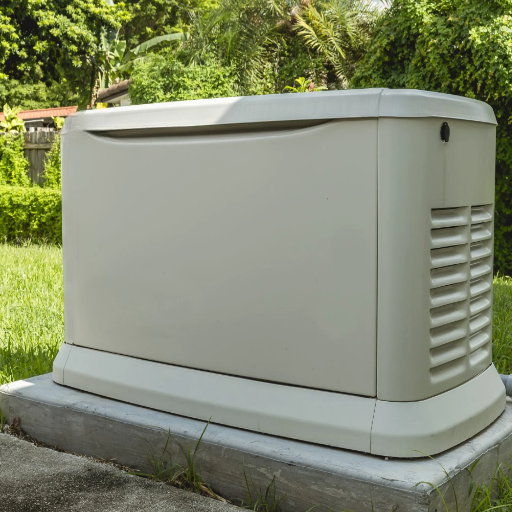
Standby generator ROI is the financial return a facility receives from investing in backup power. It compares the value of avoided downtime, compliance, and risk mitigation against the total cost of owning and operating the genset over its useful life.
The basic formula is:
Standby Generator ROI (%) = (Avoided Downtime Value - Total Cost of Ownership) / Total Cost of Ownership × 100Payback period is simpler. It divides the upfront investment by annual avoided downtime or savings:
Payback Period (years) = Upfront Investment / Annual Avoided Downtime CostTotal cost of ownership (TCO) includes the purchase price, installation, fuel, maintenance, parts, financing, and eventual decommissioning. Most buyers focus only on the invoice price. That is a mistake. A low-capital genset with high fuel burn and expensive parts can easily cost more over 15 years than a slightly higher-priced, efficient unit.
Why Standby Generator ROI Matters Beyond the Spreadsheet
A strong ROI case protects more than the budget. It protects operations, reputation, and lives.
Uptime as risk management. A standby genset is an insurance policy against grid failure. The payout is not cash; it is continued production, patient safety, server availability, or mine ventilation.
Compliance and safety value. NFPA 110 requires emergency power supply systems to be exercised monthly and tested under load annually. Healthcare facilities under Joint Commission standards must test emergency generators at 30% of nameplate kW for 30 minutes each month. Non-compliance can shut down operations or trigger penalties.
Brand and customer trust. A hospital that loses power during surgery faces reputational damage that no marketing budget can repair. A data center that drops service loses customers. The ROI of a standby generator includes the value of trust maintained.
A manufacturing plant in Southeast Asia experienced this firsthand. The facility faced six grid power outages annually, each lasting an average of four hours. The costs associated with production downtime, shipment delays, and the rental of emergency equipment amounted to approximately $480,000 per year. After installing a 1,000 kW backup generator set equipped with an automatic transfer switch, the plant was able to avoid virtually all such losses. The installed cost of the unit, sourced directly from the manufacturer, was $180,000, resulting in a payback period of approximately 13 months.
The Standby Generator ROI Formula
Use this five-step framework to build a defensible business case.
Step 1: Estimate Annual Downtime Cost
Start with historical outage data. How many outages did the facility experience last year? What was the average duration? Multiply outage hours by the cost per hour of downtime.
Annual Downtime Cost = Outage Hours per Year × Cost per Hour of DowntimeCost per hour varies dramatically by industry. A hospital may measure it in lives and regulatory risk. A data center measures it in service credits and churn. A mine measures it in ventilation and hoisting losses.
Step 2: Calculate Avoided Downtime Value
A properly sized standby genset with an automatic transfer switch does not eliminate every second of outage, but it does eliminate the bulk of operational disruption. Assume the genset covers 90-95% of outage hours for critical loads.
Avoided Downtime Value = Annual Downtime Cost × Coverage EffectivenessStep 3: Add Equipment and Installation Cost
Include the genset, automatic transfer switch, switchgear, fuel tank, exhaust, civil works, electrical connections, and commissioning. Factory-direct pricing can reduce this figure by 20-40% compared to dealer or OEM-direct channels.
Step 4: Add Lifecycle Operating Costs
Over 15-20 years, operating costs often exceed the initial purchase price. Include:
- Fuel for testing and actual outages
- Oil, filters, coolant, belts, and batteries
- Scheduled maintenance and service contracts
- Load bank testing and compliance reporting
- Major overhauls at mid-life
- Parts, shipping, and travel for repairs
Step 5: Compute Payback Period and Net ROI
Payback Period = Upfront Investment / Annual Avoided Downtime Value
Net ROI = (Avoided Downtime Value Over Asset Life - TCO) / TCO × 100
Example: A data center invests 350,000inastandbygensetandavoids350,000inastandbygensetandavoids600,000 in downtime cost per year. The payback period is roughly seven months. Over 15 years, even with $280,000 in maintenance and fuel, net ROI exceeds 2,500%.
Cost Categories That Drive Standby Generator ROI
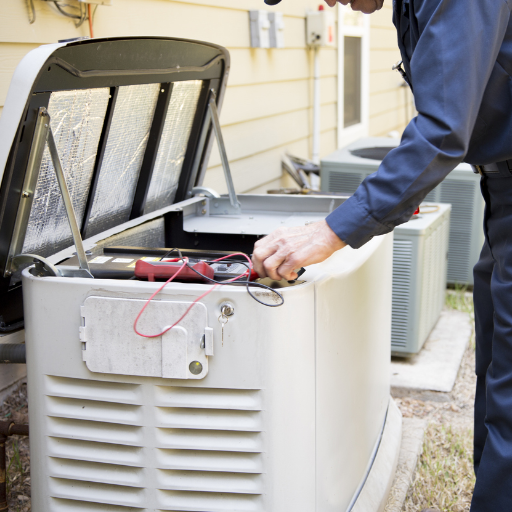
Understanding every cost line is essential. Here is what belongs in a complete TCO model.
| Cost Category | Typical Range | Notes |
|---|---|---|
| Upfront equipment | 50,000−50,000−500,000+ | Depends on kW rating, engine brand, canopy, and controls |
| Installation and commissioning | 15-30% of equipment cost | ATS, fuel tank, exhaust, electrical, civil works |
| Fuel | Varies by run hours | Diesel stores longer; natural gas needs pipeline or storage |
| Maintenance contract | 1,500−1,500−25,000/year | Depends on kW, coverage level, and visit frequency |
| Load bank testing | 500−500−5,000/year | Required annually by NFPA 110 and many insurers |
| Parts and overhauls | 10,000−10,000−80,000 at mid-life | Injectors, turbochargers, alternator rewinds |
| Financing or lease | 3-8% annual cost of capital | CapEx vs OpEx decision |
Upfront capital costs. The largest single outlay. Choose kW rating carefully. Oversizing wastes capital and fuel. Undersizing creates reliability risk.
Installation and commissioning. This often surprises first-time buyers. Remote sites, underground fuel tanks, and complex ATS integration push costs higher.
Fuel costs over asset life. Diesel remains the dominant standby fuel because it stores well and is widely available. Natural gas can be cheaper per kWh but requires pipeline access or compressed gas logistics.
Maintenance and service contracts. A generator maintenance contract turns unpredictable repair bills into fixed annual costs. It also preserves warranty and compliance records.
Load bank testing and compliance. Annual testing prevents wet stacking and proves the genset can carry rated load. It is not optional for critical facilities.
Replacement parts and major overhauls. Plan for a mid-life overhaul around 10,000-15,000 operating hours or 10-12 years.
Financing or lease costs. Leasing converts CapEx to OpEx but raises total cost. Buying factory-direct with cash or standard financing usually produces the best lifetime ROI.
For a broader look at standby generator pricing that includes ATS package costs, see our commercial standby generator cost breakdown.
Industry-Specific ROI Benchmarks
Downtime cost and generator sizing vary by industry. Use these benchmarks to sanity-check your model.
| Industry | Typical Downtime Cost | Common Genset Size | Typical Payback |
|---|---|---|---|
| Hospitals and healthcare | Lives + $100,000+/hour | 500kW-2,000kW | Immediate (non-financial) |
| Data centers | 5,600−5,600−9,000/minute | 1,000kW-10,000kW+ | 3-12 months |
| Manufacturing and warehousing | 50,000−50,000−250,000+/hour | 250kW-2,500kW | 6-18 months |
| Mining and construction | 25,000−25,000−150,000+/hour | 500kW-3,000kW | 6-24 months |
| Commercial buildings | 5,000−5,000−50,000/hour | 100kW-800kW | 12-36 months |
Hospitals and healthcare. The ROI is not purely financial. Regulatory compliance, patient safety, and accreditation are the primary drivers. A failed emergency generator can shut down surgical suites and trigger Joint Commission findings.
Data centers. Downtime is measured in seconds and dollars. Tier III and Tier IV facilities use N+1 redundancy. Even a brief outage can cost millions in service credits and customer churn.
Manufacturing and warehousing. Lost production, spoiled inventory, and missed delivery windows dominate. A properly sized standby generator can pay for itself in a single outage.
Mining and construction. Remote locations often have weak grids or no grid at all. Standby gensets protect ventilation, hoisting, and dewatering systems where failure endangers workers.
Commercial buildings. Office towers, hotels, and retail centers protect revenue, tenant comfort, and elevator safety. Payback periods are longer but still favorable in outage-prone regions.
Diesel vs Natural Gas vs Bi-Fuel: Which Has Better ROI?
Fuel choice changes the entire ROI model.
Diesel. Higher upfront cost per kW than some gas options, but superior storage life, energy density, and global availability. Best for critical standby, remote sites, and hospitals. Diesel fuel stores 12-24 months with proper stabilization.
Natural gas. Lower emissions and no on-site fuel storage in pipeline-served locations. However, earthquakes and severe weather can disrupt gas pipelines. Maintenance intervals are often shorter due to hotter combustion.
Bi-fuel. Starts on diesel and transitions to natural gas, blending the reliability of diesel starting with lower gas operating costs. Adds controller complexity and higher initial cost.
For most international and mission-critical standby applications, diesel delivers the most predictable standby generator ROI because it does not depend on pipeline availability.
How Factory-Direct Pricing Improves Standby Generator ROI
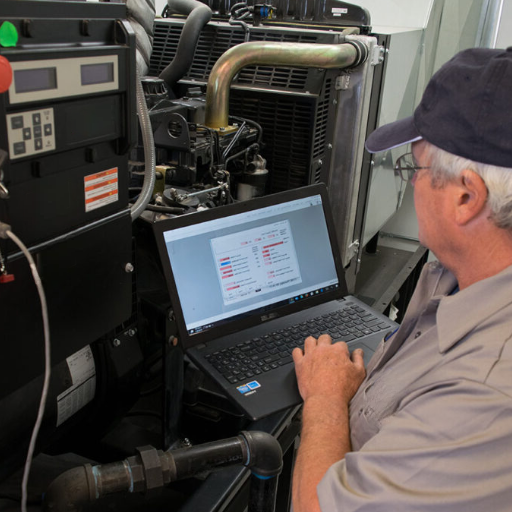
Where you buy the genset changes the numbers as much as what you buy.
Eliminate dealer markup. Trading companies and local dealers often add 20-40% above factory cost. As a source manufacturer, ZC Power delivers factory-direct pricing without that layer.
Right-size the unit. Oversizing by 20% adds capital, fuel, and maintenance cost for decades. Factory engineers can review your actual load profile and recommend the correct kW rating.
Faster parts availability. When a control module or injector fails, waiting weeks for a dealer to source parts is expensive. Direct manufacturer support air-ships the correct OEM component and provides remote troubleshooting.
Reduce hidden export costs. A manufacturer with global logistics experience handles packaging, customs documentation, and container loading correctly. This reduces damage, port delays, and unexpected fees.
For a data center project in the Middle East, ZC Power delivered custom 2,000kW silent gensets with ATS integration. By working factory-direct, the client saved an estimated 25% on capital cost and received engineering support that optimized the fuel tank and exhaust design for local codes.
Common ROI Mistakes to Avoid
Even experienced procurement teams make these errors.
Ignoring partial-load fuel efficiency. A genset runs at partial load during most outages. Fuel curves at 50% load can differ significantly from full-load ratings. Use manufacturer-specific fuel tables.
Undersizing or oversizing. Undersizing causes overload and failure. Oversizing increases capital cost, maintenance, and fuel consumption. Accurate standby generator sizing is essential.
Forgetting maintenance contract costs. Maintenance is not a minor line item. Over 15 years it can equal 30-50% of the equipment cost. Include it from day one.
Overlooking fuel storage and delivery. Diesel tanks, fuel polishing, and delivery logistics add cost. Natural gas requires pipeline capacity or compressed gas infrastructure.
Using unrealistic downtime assumptions. If your region averages eight outages per year, do not model two. Use historical utility data and stress-test the model.
Conclusion
Standby generator ROI is not a guess. It is a calculation built on outage history, downtime cost, equipment price, and lifecycle operating expenses. The facilities that treat it as a strategic financial model, rather than a line-item purchase, get the best outcomes.
Start with the formula. Add realistic TCO numbers. Benchmark against your industry. Compare fuel types. And consider how factory-direct pricing changes the payback period.
At Shandong ZC Power CO., LTD., we help global clients size, configure, and procure standby gensets that match both their technical needs and their financial targets. From 100kW commercial units to 4,000kVA containerized power stations, our engineering team can build a detailed ROI case for your project.
Contact ZC Power today to request a customized standby generator ROI analysis or download our free calculator and start modeling your payback now.