Automatic Transfer Switch Sizing: A Commercial & Industrial Guide
To size an automatic transfer switch correctly, select an ATS with a continuous current rating equal to or greater than the largest of three values: the generator full-load amperage, the main service breaker rating, or the calculated connected load current. Then add the NEC continuous-load margin, round up to the next standard ampere rating, and verify voltage, phase, pole count, and short-circuit withstand rating.
That single decision can make the difference between a standby power system that protects your facility and one that destroys itself during the first outage. In 2023, a manufacturing plant in West Africa installed a 400 A ATS on a 500 kW genset because the procurement team matched the nameplate kW figure without converting it to full-load amps. During the next peak-load transfer, the switch overheated, the contacts welded shut, and the plant lost both utility and emergency power. The repair, emergency rental power, and lost production cost more than a properly specified 800 A ATS would have cost upfront.
This guide explains automatic transfer switch sizing for commercial and industrial projects. You will learn how to calculate ampacity, choose the right transition type, verify NEC, NFPA 110, and UL 1008 compliance, and avoid the most common sizing mistakes. You will also see how Shandong ZC Power CO., LTD. coordinates genset and ATS sizing in our national standard testing center before shipment.
Key Takeaways
- Size the ATS for the largest of generator full-load amps, main breaker rating, or calculated load current, then apply a 125% continuous-load margin.
- Match voltage, phase, frequency, pole count, and short-circuit withstand rating (WCR/AIC) to the actual installation.
- NEC Articles 700, 701, and 702, plus NFPA 110 and UL 1008, govern emergency and standby transfer switch selection.
- Open transition is standard; closed transition and bypass-isolation ATSs add cost but solve specific uptime and maintenance problems.
- A factory-coordinated genset + ATS package avoids the mismatch risks that cause contact welding, slow transfers, and AHJ rejection.
What Is an Automatic Transfer Switch and Why Sizing Matters
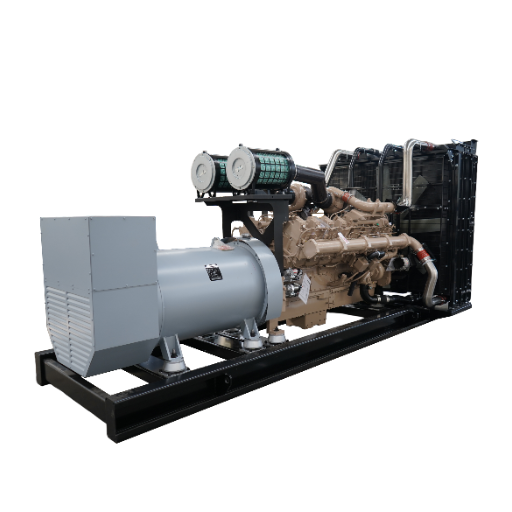
An automatic transfer switch (ATS) is the electromechanical interface between the normal power source, the emergency power source, and the protected load. When the utility fails, the ATS sends a start signal to the generator set, senses when the emergency source reaches acceptable voltage and frequency, and transfers the load from utility to generator. When utility returns, it retransfers the load to the normal source and signals the genset to cool down and shut off.
Sizing the ATS is not simply a matter of buying a switch with a higher amp rating than the generator nameplate. The switch must carry the full load current continuously, interrupt the available fault current safely, and transfer within the time limits defined by the applicable code. An undersized ATS runs hot, accelerates contact wear, and can weld its contacts during transfer. An oversized ATS wastes capital, may transfer more slowly, and can create breaker coordination problems with downstream protection.
For a deeper look at how standby power systems fit into commercial procurement, see our complete commercial standby generator buying guide.
Key Variables in Automatic Transfer Switch Sizing
Every ATS specification starts with six interrelated variables. Ignore any one of them and the switch may fail on the day it matters most.
Generator Full-Load Amperage
The generator full-load amperage (FLA) is the maximum current the genset can deliver at its rated kW, voltage, and power factor. It is the floor for ATS sizing. A 500 kW genset at 480 V three-phase with a 0.8 power factor delivers approximately 753 A. A 400 A ATS would be dangerously undersized even though the generator is only 500 kW.
Main Service Breaker or Service Entrance Rating
If the ATS is installed as the service entrance equipment, its rating must equal or exceed the main breaker rating. A 2,000 A service needs a 2,000 A or larger service-entrance rated ATS, even if the generator is smaller. For downstream ATSs, the switch must match the downstream panel main breaker.
System Voltage, Phase, and Frequency
The ATS must be rated for the system voltage (e.g., 208 V, 480 V, 400 V), phase (single-phase or three-phase), and frequency (50 Hz or 60 Hz). Using a 480 V switch on a 600 V system is a code violation. Specifying a 60 Hz switch for a 50 Hz site will cause timing, thermal, and certification problems.
Number of Poles and Neutral Switching
- 2-pole ATSs switch line and neutral for single-phase systems.
- 3-pole ATSs switch the three phase conductors only; the neutral is continuous.
- 4-pole ATSs switch all three phases and the neutral, which is required when the generator is a separately derived source or when neutral-ground bonding changes between sources.
Selecting the wrong pole configuration can create ground-fault, harmonics, and safety issues. For more on how generator grounding and neutral switching interact, see our guide on diesel standby generator for critical applications.
Short-Circuit Withstand Rating
The short-circuit withstand rating (WCR), also called ampere interrupting capacity (AIC), is the maximum fault current the ATS can safely interrupt. It must equal or exceed the available fault current from the greater of the normal source or the emergency source. For closed-transition ATSs, the combined contribution from both sources may need to be considered.
Continuous vs Non-Continuous Loads and Environmental Derating
NEC requires conductors and switches for continuous loads to be sized at 125% of the load current. Ambient temperature above 40°C, altitude above 2,000 meters, dust, and corrosive atmospheres can all reduce effective ampacity and may require tropical or tropicalized switchgear.
Step-by-Step Automatic Transfer Switch Sizing Guide
Follow this sequence for any commercial or industrial project.
Step 1: Calculate Total Connected Load Current
List every load the ATS will transfer. Use the appropriate formula:
Single-phase:
Amps = (Watts) / (Volts × Power Factor)
Three-phase:
Amps = (kW × 1000) / (√3 × Volts × Power Factor)
For generator sizing, power factor is typically 0.8. For load calculations, use the actual load power factor where known.
Step 2: Apply the NEC Continuous Load Margin
If the load is continuous (expected to run for three hours or more), multiply the calculated current by 1.25. A 600 A continuous load requires equipment rated for at least 750 A.
Step 3: Compare Generator FLA, Main Breaker, and Load Current
Select the largest of:
- Generator full-load amperage
- Main service breaker rating
- Margined connected load current
This is your minimum continuous current rating.
Step 4: Round Up to the Next Standard ATS Size
Standard commercial ATS ratings include 100 A, 200 A, 400 A, 600 A, 800 A, 1,000 A, 1,200 A, 1,600 A, 2,000 A, 2,500 A, 3,000 A, and 4,000 A. Always round up, never down.
Step 5: Verify Voltage, Phase, Frequency, and Poles
Confirm the switch matches the electrical system. For three-phase systems, decide between 3-pole and 4-pole based on grounding design.
Step 6: Confirm Short-Circuit WCR
Obtain the available fault current from the utility and the generator alternator subtransient reactance. The ATS WCR must exceed the higher value. On large systems, a fault-current study is standard engineering practice.
Worked Example: 500 kW Genset at 480 V Three-Phase
FLA = (500 × 1000) / (1.732 × 480 × 0.8) = 753 A
If the main breaker is 800 A and the connected load is 700 A continuous, the margined load is 875 A. The governing value is the margined load, so select a 1,000 A ATS. If the main breaker were only 800 A and the load non-continuous, an 800 A ATS could be acceptable after confirming WCR and transfer time.
NEC, NFPA 110, and UL 1008 Requirements
Codes and standards define what an ATS must do, not just how big it must be.
NEC Article 445.13
Generator output conductors must have an ampacity of not less than 115% of the generator nameplate current rating. This conductor sizing cascades into ATS and breaker selection.
NEC Article 700, Emergency Systems
- Transfer equipment must be automatic and listed for emergency use.
- Power must be restored within 10 seconds (NFPA 110 Type 10).
- ATSs must be electrically operated and mechanically held.
NEC Article 701, Legally Required Standby Systems
- Transfer equipment must be listed for emergency use.
- Power must be available within 60 seconds (NFPA 110 Type 60).
- These systems may share transfer equipment with optional standby loads under certain conditions.
NEC Article 702, Optional Standby Systems
- ATS sizing must carry the full load being transferred unless automatic load shedding is provided.
- Manual transfer equipment is permitted if the operator selects which loads to run.
For more detail on transfer-time requirements, see our guide to NFPA 110 Type 10 vs Type 60 transfer-time requirements.
NFPA 110 and UL 1008
NFPA 110 Chapter 6 requires transfer switch equipment to be listed for emergency service as a complete factory-assembled apparatus, with mechanical interlocking to prevent paralleling sources. UL 1008 is the listing standard. ATSs are classified as:
- Total System Load, for emergency and legally required standby loads.
- Optional Load, for optional standby loads only.
Specifying the wrong UL 1008 category can result in AHJ rejection.
Automatic Transfer Switch Sizing for Different Transition Types
The transition type affects both performance and cost.
Open Transition
The standard make-before-break transfer briefly interrupts power during transfer. It is cost-effective and suitable for most commercial loads. Sizing follows the same ampacity rules as any ATS.
Delayed Transition
A delayed transition intentionally separates from the normal source for a programmed time, typically to allow inductive loads to decay before reconnecting to the emergency source. It is useful for large motors and transformers but adds complexity.
Closed Transition
Closed transition momentarily parallels the utility and generator sources so the load sees no interruption. Because sources are briefly connected, utility approval is required and the ATS must be rated for the combined available fault current. Closed transition ATSs are common for hospitals, data centers, and manufacturing processes where even a 4-millisecond interruption is unacceptable.
The right transition type depends on the load sensitivity, not just the amp rating. For a deeper look at how generator duty ratings affect ATS continuous current and overload coordination, see our article on prime vs standby power generator ratings.
Bypass-Isolation and Service-Entrance ATS Sizing
Some facilities cannot tolerate an outage for ATS maintenance. In those cases, a bypass-isolation ATS is required.
When Bypass-Isolation Is Needed
Bypass-isolation ATSs are typically specified for:
- Hospitals and surgical suites
- Data centers and financial trading floors
- Air traffic control and critical infrastructure
- Any 24/7 process where ATS maintenance must happen without load interruption
Sizing the Bypass Path
The bypass path must carry the same full-load current as the automatic path. Size it identically to the ATS. Bypass-isolation switches generally start at 200 A and extend to 5,000 A or more.
Service-Entrance Rated ATS
A service-entrance rated ATS can serve as the main disconnect and must meet UL 869A service equipment requirements. If the ATS is not service-entrance rated, a separate main disconnect must be installed upstream.
Cost Impact
Bypass-isolation typically adds 30–60% to the ATS cost. Service-entrance rating and closed transition add further cost but eliminate separate disconnects and transfer-time problems.
Common ATS Sizing Mistakes
Even experienced specifiers make these errors.
Mistake 1: Matching only generator kW. kW is not amps. Always convert generator kW/kVA to full-load amperage before selecting the ATS.
Mistake 2: Ignoring motor inrush. Motors can draw 6–8 times running current at startup. The ATS must handle the inrush without excessive voltage dip.
Mistake 3: Using a non-service-rated ATS as the main disconnect. This will fail inspection and may violate the NEC.
Mistake 4: Selecting the wrong pole configuration. 4-pole switching is required for separately derived sources and many UPS-fed systems.
Mistake 5: Overlooking available fault current. A 10 kA WCR ATS on a system with 65 kA available fault current is a safety hazard.
Mistake 6: Failing to coordinate load shedding. If the generator is smaller than the connected load, the ATS must work with the load-shedding scheme to avoid overload.
ATS Size vs Generator Size: Quick Reference
The table below maps common generator sizes to full-load amps and recommended standard ATS ratings at 480 V three-phase, 0.8 power factor. For 400 V systems, FLA is approximately 20% higher, so round up accordingly.
| Generator Size | Approx. FLA at 480 V | Recommended ATS Rating |
|---|---|---|
| 100 kW | 150 A | 200 A |
| 250 kW | 376 A | 400 A |
| 500 kW | 753 A | 800 A |
| 750 kW | 1,128 A | 1,200 A |
| 1,000 kW | 1,503 A | 1,600 A |
| 1,500 kW | 2,255 A | 2,500 A |
| 2,000 kW | 3,007 A | 3,200 A |
These ratings assume the ATS is sized by generator FLA or main breaker, whichever is larger, and that WCR has been verified. Always confirm the actual site conditions before procurement.
For a broader look at standby generator pricing that includes ATS package costs, see our commercial standby generator cost breakdown.
Cost Impact of Correct vs Incorrect ATS Sizing
A correctly sized ATS is insurance. An incorrectly sized ATS is a liability.
Upfront Cost Progression
ATS cost rises with ampacity and features. A 200 A open-transition ATS is a small fraction of the cost of a 1,600 A bypass-isolation closed-transition ATS. However, the larger switch protects far more capital and uptime.
Cost of Retrofit
Replacing an undersized ATS after inspection or failure means removing the switch, reworking conductors, reprogramming controllers, and re-commissioning the system. Retrofit labor often exceeds the original equipment cost.
Downtime Cost
For a hospital, data center, or continuous process, one hour of downtime can cost tens or hundreds of thousands of dollars. The cost of a properly sized bypass-isolation ATS is usually a small fraction of one unplanned outage.
ZC Power: Factory-Coordinated ATS and Genset Packages
Shandong ZC Power CO., LTD. manufactures diesel generator sets from 8 kVA to 4,000 kVA and supplies matched ATS packages as part of integrated standby power solutions. Our 300,000-square-meter facility in Jining, Shandong, includes a national standard testing center where every genset is load-bank tested before shipment.
Our standard scope for genset + ATS projects includes:
- Cummins, Perkins, Yuchai, and Weichai engine options
- Stamford, Leroy-Somer, and Faraday copper-wound alternators
- Deep Sea Electronics and SmartGen digital controllers
- Open, silent, trailer-mounted, and containerized configurations
- Matched ATS options from 100 A to 4,000 A
- Open, delayed, closed-transition, and bypass-isolation ATS configurations
- Custom voltage and frequency for global grids
- Full-load testing with start-to-load timing documentation
- OEM and ODM services for distributors and large projects
For a hospital project in Southeast Asia, our engineers replaced an undersized 1,000 A ATS with a 1,600 A bypass-isolation unit and implemented a load-shedding sequence for chillers and elevators. Factory testing confirmed transfer within NFPA 110 Type 10 requirements, and the facility passed AHJ inspection on the first witness test.
For a data center project in the Middle East, we supplied a 1,000 kW genset with an 800 A closed-transition ATS. Our team coordinated with the local utility to confirm combined-source fault contribution and WCR before the switch left the factory. The project achieved seamless transfer with no interruption to server loads.
Conclusion
Automatic transfer switch sizing is a calculation, not a guess. The correct ampacity is the largest of the generator full-load amperage, the main service breaker rating, or the margined connected load current. From that foundation, you must verify voltage, phase, frequency, pole count, short-circuit withstand rating, transition type, and code compliance under NEC, NFPA 110, and UL 1008.
To size your ATS correctly, follow this sequence:
- Calculate total connected load current using single-phase or three-phase formulas.
- Apply a 125% margin for continuous loads.
- Select the largest value among generator FLA, main breaker, and margined load.
- Round up to the next standard ATS ampere rating.
- Verify voltage, phase, frequency, pole configuration, and WCR.
- Choose the transition type and bypass-isolation features that match uptime requirements.
- Confirm NEC, NFPA 110, and UL 1008 listing requirements with the AHJ.
At Shandong ZC Power CO., LTD., we engineer and factory-test genset + ATS packages for global standby, prime, and continuous power projects. Our 80+ technical engineers, national standard testing center, and 25 years of manufacturing experience give facility managers and project contractors the confidence that every transfer switch is sized, coordinated, and tested for its rated duty. Contact our engineering team today to request an ATS sizing review, factory tour, or factory-direct quotation for your next standby power project.