Generator Load Bank Testing: Requirements, Procedures & NFPA 110 Compliance [2026]
In October 2023, a pharmaceutical plant in New Jersey accepted delivery of a “certified” used generator. The seller provided a one-page certificate showing 15 minutes at 50% load. Six months later, during the first annual NFPA 110 verification, the unit shut down at 68% load. The seller’s “test” had never validated sustained performance. The rebuild cost $34,000 and three weeks of lost production.
If you manage facilities, engineering, or procurement, you already know that a generator that isn’t tested under real load is just a decorative steel box. You also know that generator load bank testing is the most misunderstood and most falsified step in generator commissioning. Many facilities discover the gap only when the Authority Having Jurisdiction inspector or witness engineer shows up.
This guide explains what generator load bank testing really requires. We’ll cover load bank types, how the 2025 NFPA 110 protocol changed, step-by-step test procedures, wet stacking prevention, and how to read a legitimate test report.
Need the full emergency power picture first? (Read our complete guide to emergency power systems before diving into load bank specifics.)
What Is Generator Load Bank Testing?
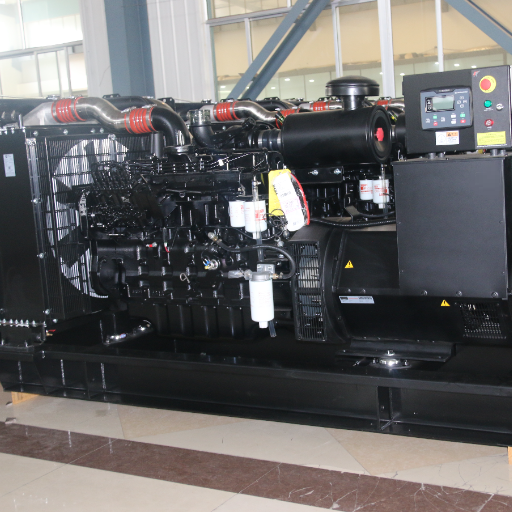
Generator load bank testing is the controlled application of an artificial electrical load to a generator set. The purpose is to verify that the engine, alternator, cooling system, and voltage regulator can deliver their rated output under sustained thermal and electrical stress.
This is fundamentally different from building-load testing. In building-load testing, the generator runs on whatever equipment happens to be operating at the time. That load might be 10% one month and 45% the next. It might not stress the cooling system. It might not reach the exhaust temperatures needed to burn off carbon deposits. Load bank testing removes that uncertainty. You apply exactly the load you want for exactly the duration you need.
Monthly no-load exercise, where the generator runs without any electrical load, is even worse. The engine warms up, but the alternator does no work. Exhaust temperatures stay too low to prevent condensation and carbon buildup. NFPA 110 does not recognize no-load exercise as a substitute for loaded testing.
When is load bank testing mandatory? If your generator cannot achieve at least 30% of its nameplate kW rating, or the manufacturer’s recommended exhaust gas temperature, using the building’s actual emergency load during the monthly test, then annual supplemental load bank testing is required by NFPA 110. For a deeper technical breakdown of generator standards,( see our emergency generator guide).
Types of Load Banks
Not all load banks test the same things. The type you choose determines whether you are validating kW capacity, kVA capability, or both.
Resistive Load Banks
Resistive load banks are the most common type. They apply a purely resistive load, which tests the generator’s real power output in kW. They stress the engine, fuel system, and cooling system. If you only need to verify that a generator can produce its rated kW and reach proper operating temperature, a resistive load bank is sufficient.
Reactive Load Banks
Reactive load banks apply an inductive load, which tests the generator’s apparent power output in kVA. This matters for facilities with large motor loads, such as chillers, fire pumps, and air compressors. Reactive load banks verify voltage regulation under power-factor stress. They are the preferred choice for hospitals and data centers where motor-starting kVA is just as critical as running kW. For more on critical backup for data centers, see our guide to data center backup power.
Resistive-Reactive Load Banks
Resistive-reactive load banks combine both load types. They simultaneously test real power, apparent power, and power factor. This is the most comprehensive validation and is commonly used during factory acceptance testing and final commissioning of mission-critical installations.
NFPA 110 Testing Requirements for 2026
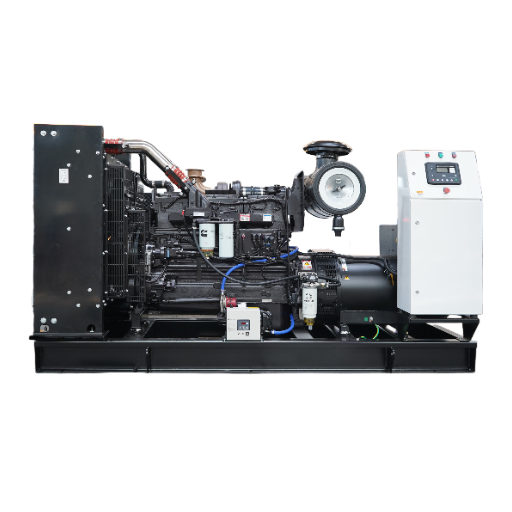
NFPA 110, the Standard for Emergency and Standby Power Systems, governs when and how generators must be tested. The 2025 edition introduced a significant change to the annual load bank test protocol.
Monthly Exercise: The Trigger for Load Bank Testing
Diesel-powered emergency power supply systems must be exercised at least once every month. The test must run for a minimum of 30 continuous minutes using one of the following methods:
- Loading that maintains the minimum exhaust gas temperatures recommended by the manufacturer; or
- Under operating temperature conditions and at not less than 30% of the EPS standby nameplate kW rating.
If the generator cannot meet the 30% threshold using the building’s actual emergency load, the installation must continue monthly exercise with available load and perform an annual supplemental load bank test.
For more details on monthly and annual testing schedules, (refer to our NFPA 110 compliance guide.)
Annual Load Bank Test: The 2025 Protocol Change
The 2025 edition of NFPA 110 revised the annual supplemental load bank test. The previous edition required a 2-hour test with steps at 25%, 50%, and 75% of nameplate kW. The 2025 protocol is now 1.5 continuous hours as follows:
- 50% of nameplate kW for 30 continuous minutes
- 75% of nameplate kW for 60 continuous minutes
This change eliminates the 25% warm-up step and focuses the test on sustained medium-to-high load, which is more effective at burning off carbon deposits and validating cooling system performance. CSDieselGenerators provides a clear summary of the NFPA 110 maintenance requirements simplified for 2026.
Critical safety requirement: If normal utility power fails during the load bank test, the load bank must be automatically replaced with the actual essential building load. Manual switching does not satisfy this requirement.
Triennial 4-Hour Test for Level 1 Systems
Every 36 months, Level 1 systems must undergo a continuous test for the duration of the assigned class. If the class duration exceeds 4 hours, the test may be terminated after 4 continuous hours. The test must be initiated by operating transfer switch test functions or by actually opening the normal power breakers to simulate a real outage. Diesel generators must carry at least 30% of nameplate kW; spark-ignited generators may use available load.
A wastewater treatment plant in Ohio was overworked because it neglected the critical skill. The plant went 18 monthly times with no load tests because “the generator always started fine.” When a winter storm caused a 12-hour blackout in February 2024, the unit overloaded and shut down in 4 hours, due to carbon deposits from chronic under-loading. The dry stack corrective measures involved a complete two-month engine teardown costing $22,000 and violating clean water reporting deadlines that incurred additional fines.
Wet Stacking: The #1 Reason for Load Bank Testing
Wet stacking is the primary failure mode that load bank testing is designed to prevent. It occurs when a diesel generator runs chronically below 30% of its rated load. The exhaust temperature never gets high enough to burn fuel completely. The result: unburned fuel, carbon soot, and moisture accumulate in the exhaust system, on the turbocharger, and inside the combustion chambers.
The Effects of Wet Stacking
The damage is progressive and expensive. Wet stacking reduces engine efficiency by 15-25%. It degrades piston rings, fouls injectors, and can cause exhaust manifold leaks or fires. A generator suffering from wet stacking may appear to start normally during a brief no-load exercise. But when a real emergency demands 60% or 80% load, the carbon deposits restrict airflow and combustion. The unit overheats, produces black smoke, and may trip offline.
Prevention Protocol
Prevention is straightforward but requires discipline:
- Ensure every monthly test achieves at least 30% load for 30 minutes.
- If the building load is too light, install a permanent auxiliary load bank that automatically applies the required load during each exercise.
- Inspect the exhaust system regularly for black liquid drips or heavy soot buildup. These are early warning signs.
- Maintain fuel quality with polishing, biocides, and stabilizers. Degraded fuel burns incompletely, accelerating the problem even at moderate loads.
How to Perform a Load Bank Test
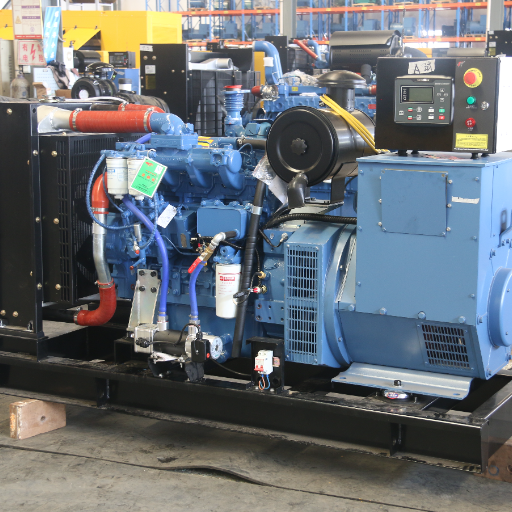
A proper load bank test is a structured procedure, not a random event. Whether you use a portable load bank or a permanent installation, the sequence matters.
Pre-Test Inspection
Before applying load, verify the following:
- Fuel level is adequate for the planned duration plus a safety margin.
- Engine oil level and condition are within specifications.
- Coolant level and freeze protection are correct.
- Battery voltage, electrolyte, and terminal connections are secure.
- Exhaust system is free of leaks, blockages, and visible wet stacking residue.
- Control panels show no active fault codes.
Step-Loading Procedure
Warm the generator at approximately 30% load for 10 to 15 minutes while recording baseline voltage, frequency, oil pressure, coolant temperature, and exhaust temperature. Then apply the test load according to the NFPA 110 protocol:
- 50% of nameplate kW for 30 continuous minutes
- 75% of nameplate kW for 60 continuous minutes
During the test, monitor voltage stability (typically ±1%), frequency (59.8–60.2 Hz for 60 Hz systems), oil pressure, coolant temperature, and exhaust gas temperature. Any sustained drift outside manufacturer limits is a failure and must be corrected before the generator can be certified.
Automatic Transfer Verification
Confirm that the load bank is wired so it automatically disconnects and is replaced by actual building load if utility power is lost during the test. This is an NFPA 110 requirement for safety.
Post-Test Documentation
Allow the generator to cool down unloaded for 5 to 10 minutes before shutting it down. Record all test parameters, any anomalies observed, and corrective measures taken. The documentation shall include the date, the technician’s name, the generator’s identification, the duration of the test’s run, levels of load attained, and stability readings.
Documentation and Compliance Best Practices
Surveyors, AHJ inspectors, and witness engineers do not evaluate your generator by looking at the engine. They evaluate it by looking at your documentation. Incomplete or missing records are among the most common citations during Joint Commission, CMS, and Uptime Institute audits.
What Inspectors Actually Look For
Required documentation typically includes:
- Dated weekly inspection logs with technician signatures
- Monthly test reports showing actual load levels achieved in kW
- Annual and triennial load bank test reports with step-load durations and parameter readings
- Fuel quality test results (ASTM D975 for diesel)
- Battery test records
- Preventive and corrective maintenance logs
Digital CMMS and IoT Integration
In 2026, the shift toward digital compliance is accelerating. A Computerized Maintenance Management System (CMMS) can automate test scheduling, capture timestamped photos and readings, flag out-of-range values, and maintain searchable audit trails. The most valuable IoT monitoring additions are sensors for battery voltage (which predicts roughly 80% of starting failures), fuel level, and coolant temperature.
A hospital facilities director in Michigan discovered the cost of paper-based records in 2024. He maintained three months of generator test logs on paper sheets in a binder. During a Joint Commission survey, the surveyor asked for 12 months of digital, tamper-evident records. Three months of entries showed only “generator tested” with no kW readings. The finding resulted in a conditional accreditation, a 90-day corrective action plan, and $45,000 spent on emergency documentation software and load bank testing.
Record Retention
While NFPA 110 requires records to be maintained on the premises and made available to the AHJ, it does not specify a retention period. Healthcare and mission-critical facilities commonly retain records for at least three years to satisfy Joint Commission, CMS, and Uptime Institute expectations.
ZC Power Load Bank Testing & Factory Certification
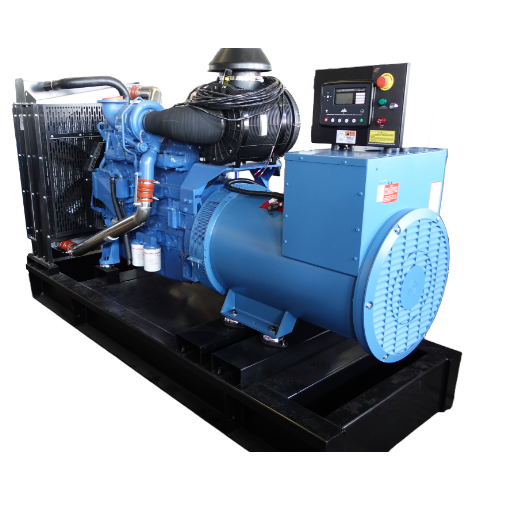
At ZC Power, we don’t just explain load bank testing. We perform it. Every generator that leaves our 300,000-square-meter facility is processed through our national standard testing center and subjected to rigorous, documented load bank testing before shipment.
Certified Pre-Shipment Testing:
- Full-load testing at 100% of rated kW to verify voltage regulation, frequency stability, and thermal performance
- 110% overload testing to confirm margin under real-world surge conditions
- Complete documentation package prepared for AHJ, Joint Commission, and Uptime Institute review
Permanent Load Bank Integration:
- For remote facilities, hospitals, and data centers with chronically light emergency loads, we engineer custom permanent auxiliary load banks that automatically satisfy the NFPA 110 30% minimum load requirement
Global Engineering Support:
- Configurations from 8kVA to 4000kVA
- Custom voltage and frequency for international grid requirements
- ISO9001, CE, and CCC certified
- 80+ technical engineers providing commissioning, startup assistance, and lifetime parts supply
Frequently Asked Questions
How often is generator load bank testing required?
If the generator does not meet at least 30% of the nameplate kW or manufacturer-recommended exhaust temperature during monthly building-load tests, then Level 1 emergency generator systems shall undergo an annual load bank supplemental test. Level 1 systems also require a 4-hour extended load test every 36 months.
What is the difference between load testing and load bank testing?
Load testing uses the building’s actual electrical demand. Load bank testing uses an artificial resistive or reactive load. Load bank testing is more controlled and is required when building load is too light to stress the generator properly.
What is wet stacking in a diesel generator?
Wet stacking is a condition described as a deposit buildup of unburned fuel, carbon, and moisture in the exhaust system because the generator is running too lightly loaded, which leads to a decrease of efficiency and potential engine damage. Wet stacking can be the cause of a shut-down during a real emergency.
What changed in the 2025 NFPA 110 load bank test protocol?
The 2025 edition replaced the previous 2-hour test (25%, 50%, 75%) with a 1.5-hour test consisting of 50% load for 30 minutes and 75% load for 60 minutes. Always verify which edition your local AHJ has adopted.
Can I perform load bank testing myself?
Monthly building-load tests can be performed by qualified on-site staff. Annual and triennial load bank tests should be performed by qualified technicians with calibrated equipment and documented procedures to satisfy NFPA 110 and AHJ requirements.
Conclusion
Generator load bank testing is not a compliance checkbox. It is predictive infrastructure maintenance that separates reliable emergency power from expensive decorative steel.
Key takeaways:
- Use the right load bank type for your application (resistive, reactive, or combined)
- Follow the 2025 NFPA 110 protocol: 50% for 30 minutes, 75% for 60 minutes
- Prevent wet stacking by ensuring every monthly test hits at least 30% load
- Maintain complete, tamper-evident documentation with actual kW readings
- Choose a manufacturer that certifies every unit with pre-shipment load bank testing
At ZC Power, we have spent 25 years building emergency power systems that perform when seconds count. Our ISO9001/CE-certified diesel generators are tested at 110% of rated load in our national standard testing center, and our 80+ engineers stand ready to support your project anywhere in the world.


