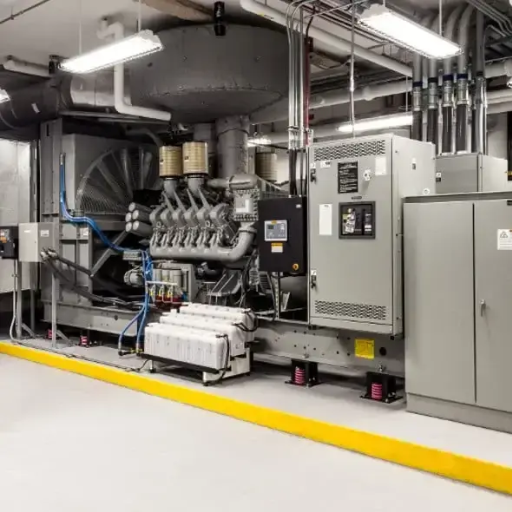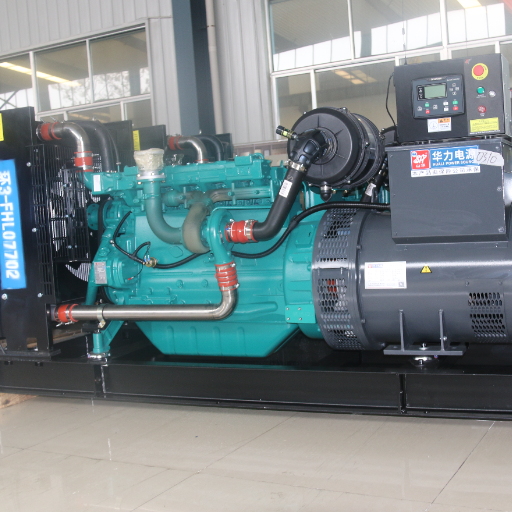
Industrial Stationary Generator 500kW: Specs, Applications, and Total Cost of Ownership [2026]
The Shenzhen electronics assembly plant of Wei Chen installed a 500 kW standby-rated diesel generator to function as prime power for its new production wing in 2024. The engine experienced excessive damage within six months which resulted in warranty cancellation. Standby ratings exist for usage that remains under 200 hours during a single year. The production wing operated for 4000 hours throughout each year. The original purchase cost him 30000 savings which resulted in 80000 downtime and replacement expenses.
The generators established 500 kW industrial capacity act as essential financial assets for your organization. The majority of existing guides in this area contain two main problems. The product catalogs provide limited content because they lack detailed information about how products should be used, whereas the content fails to identify how standby and prime and continuous duty ratings differ from each other.
The guide provides a solution to that issue. The course will teach you about the precise specifications which apply to 500 kW and 1 MW systems, the mathematical principles behind fuel consumption, the architecture of paralleling systems and the specific guidance which applies to different sectors. The presentation will include specifications about duty ratings and fuel data, which will demonstrate how data centers and manufacturing facilities use redundancy systems, while also showing all costs and the compliance requirements which will exist in 2026.
If you are new to permanently installed industrial backup power, start with our complete guide to stationary generators for a foundation on types, fuels, and applications.
500kW Industrial Stationary Generator Specifications
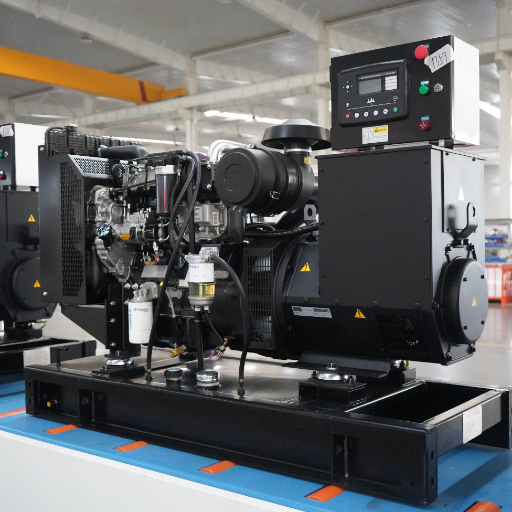
Before you can specify the right unit, you need to understand what the numbers actually mean. A “500 kW” nameplate tells only part of the story.
Real Power vs Apparent Power
Generator capacity is often expressed in kVA (kilovolt-amperes), while your facility’s actual load is measured in kW (kilowatts). The relationship depends on power factor (PF), typically 0.8 for industrial loads:
kVA = kW / Power Factor
For a 500 kW generator at 0.8 PF: 500 / 0.8 = 625 kVA
At 480V three-phase, a 500 kW unit draws approximately 750 amps. At 1,000 kW, that doubles to roughly 1,500 amps. Your switchgear, breakers, and conductors must be sized accordingly.
Engine and Alternator Basics
The 500 kW industrial stationary generator requires a diesel engine which has a displacement range between 12.2 liters and 21.9 liters. The system supports engine configurations which include 6-cylinder inline engines and 12-cylinder V-type engine blocks. The three standard alternator brands Stamford, Leroy Somer, and Mecc Alte all provide brushless alternators which use Class H insulation and electronic automatic voltage regulation systems to maintain voltage levels within a range of ±1%.
The controllers have undergone major transformations since their inception. The 2026 premium units include Deep Sea DSE7320 MKII and SmartGen HGM6120N and Caterpillar GCCP 1.1 systems as their built-in systems. The system enables automatic detection of mains failures while supporting remote monitoring and provides more than 50 customizable alarm options.
Enclosure Options
- Open skid: 8,200 to 10,500 lbs; lowest cost; requires weather protection
- Sound-attenuated: 75 to 85 dB(A) at 7 meters; ideal for urban or hospital environments
- Containerized: 20ft or 40ft CSC-certified enclosures; perfect for remote mining or oil and gas sites
Standby vs Prime vs Continuous: The Rating That Determines Everything
This is where buyers make the most expensive mistake. The same 500 kW engine block can have three very different output ratings depending on duty cycle.
Standby Power Rating (ESP)
Standby-rated generators are designed for emergency backup only. They deliver maximum output during utility outages, but they are not built for continuous operation.
- Typical limit: Less than 200 hours per year
- Average load limit: 70% of rated capacity
- 500 kW standby output: 500 kW / 625 kVA
Prime Power Rating (PRP)
Prime-rated generators are designed for variable load applications where utility power is unavailable or unreliable. They can run for unlimited hours.
- Typical output derate: 500 kW standby derated to ~450 kW prime
- Overload capability: 10% overload for 1 hour in every 12-hour period
- Best for: Remote mining, manufacturing in developing regions, off-grid operations
Continuous Power Rating (COP)
Continuous-rated generators are built to provide a constant 100% load for an unlimited number of hours annually.
- Typical output derate: 500 kW standby derated to ~400 kW continuous
- Best for: Base load power stations, continuous industrial processes, grid support
The rule states that organizations should not purchase standby-rated equipment when their applications exceed 200 hours of operation throughout the year. The short-term savings will be erased by premature engine wear, voided warranties, and unplanned downtime.
Fuel Consumption and Operating Costs
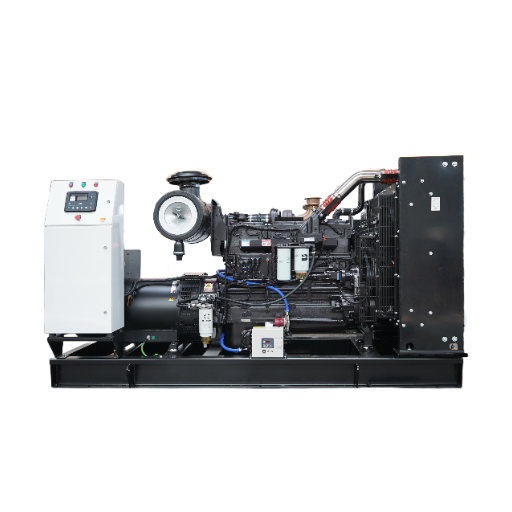
Fuel is the single largest operating expense for any industrial stationary generator 500kW or larger. Understanding consumption by load percentage is essential for TCO planning.
Diesel Fuel Consumption by Load
| Load % | 500 kW (GPH) | 1,000 kW (GPH) |
|---|---|---|
| 25% | ~11 | ~24 |
| 50% | ~18 | ~38 |
| 75% | ~28 | ~58 |
| 100% | ~35 | ~72 |
At 75% load, a 500 kW diesel generator consumes roughly 28 to 33 gallons per hour. A 1,000 kW unit at the same load burns approximately 58 to 65 gallons per hour. Peak efficiency for most engines occurs at 70% to 80% of rated load.
Natural Gas Consumption (500 kW)
Natural gas stationary generators with 500 kW capacity will use between 4,800 and 5,100 cubic feet of gas per hour when operating at 75% load. Natural gas units show increased fuel consumption rates but operate at lower costs when pipeline gas prices remain stable at competitive levels.
Tank Sizing and Runtime
Base fuel tanks on 500 kVA-class units typically hold 300 to 400 gallons, providing only 8 to 12 hours of runtime at full load. For critical standby applications, extended tanks are mandatory:
- 500 gallons: ~17 to 20 hours at 75% load
- 1,000 gallons: ~34 to 40 hours at 75% load
Diesel degrades in storage. For standby generators, plan for fuel polishing systems, biocide additives, and quarterly fuel testing. Fuel-related failures account for 30 to 40% of generator service calls.
Best-Fit Applications for 500kW–1MW Stationary Generators
The 500 kW to 1 MW range sits at the sweet spot for mid-to-large-scale industrial and commercial facilities. These units bridge the gap between large commercial backup and true heavy-duty industrial prime power.
Data Centers and Telecom
For data centers, power interruption is not an option. A 500 kW industrial stationary generator provides backup for servers, cooling towers, power distribution units (PDUs), and networking equipment.
Sizing rule: Size the generator at 1.5x to 2x the total IT equipment power draw to account for cooling, lighting, and security systems.
Redundancy: Most facilities deploy N+1 or 2N configurations. Paralleling multiple 500 kW units provides scalability. You buy for current needs and add capacity in 500 kW increments as the facility grows.
Load response: Diesel generators offer faster transient response, which is critical when large cooling compressors and chiller plants start simultaneously after an outage.
In late 2024, a colocation facility in Lagos was planning a single 1,000 kW diesel block for its 800 kW IT load. ZC Power’s engineers proposed three 500 kW paralleled units in an N+1 configuration instead. The facility gained redundancy through its modular design which allowed maintenance of one unit without power interruptions. The facilities director explained that their three-unit system required 12% higher initial expenditures yet provided dual advantages through elimination of their single point of failure and ability to grow capacity in 500 kW segments as their racks reached full capacity.
Manufacturing and Industrial Plants
Manufacturing facilities use 500 kW to 1 MW stationary generators to prevent production losses from grid failures. The U.S. Department of Energy estimates that power outages cost U.S. businesses over $150 billion annually.
Motor starting surge: A 500 kW unit typically offers 1,000 to 2,800 skVA of motor starting capability depending on voltage. This matters when large compressors, CNC machines, and HVAC chillers start simultaneously.
Peak shaving: Generators are also used to reduce demand charges and avoid overloading the grid during high-consumption production cycles.
For a deeper dive into manufacturing plant calculations, (read our stationary generator sizing guide.)
Mining and Remote Operations
Mining and oil and gas operations frequently occur far from the utility grid, making stationary or containerized 1 MW generators essential for both primary and backup power.
Remote prime power: Containerized 1 MW units are often deployed in sets of two or more in parallel to provide 2 MW+ for drilling platforms and processing sites.
Durability: These generators must withstand dust, vibration, and extreme temperatures. Industrial enclosures with sound attenuation and weather resistance are standard.
Fuel logistics: Diesel is common where pipeline gas is unavailable. Large on-site fuel tanks (1,000+ gallons) are necessary to support extended runtimes.
Jean-Baptiste was managing a cobalt processing site in the Democratic Republic of Congo with no grid connection. The environment required him to have two megawatts of dependable continuous electricity supply, which operated under conditions of high dust and high humidity. ZC Power delivered four containerized 500 kW diesel generators with paralleling cabinets and 1,000-gallon extended base tanks. The team conducted load-bank testing on each unit at its maximum capacity of 500 kilowatts before sending them to customers. “Factory-direct containerization and parallel controls saved us from building a permanent power house,” Jean-Baptiste reported. “We commissioned the first 1 MW in week one and added the second 1 MW three months later.”
Paralleling and Redundancy Architecture

One of the smartest decisions a facility manager can make is to parallel 500 kW units instead of buying a single 1 MW block.
Why Parallel 500kW Units?
- Scalability: Add capacity modularly as the facility grows
- Maintenance flexibility: Take one unit offline without losing all power
- Redundancy: N+1 with three 500 kW units instead of one 1 MW unit with no backup
- Smaller footprint per unit: Easier to transport and position on constrained sites
Synchronization Basics
Modern paralleling systems use PLC-based load sharing with isochronous governors for frequency stability. The system protection features include reverse power protection and automatic load shedding and dead-bus closing as essential functions. The manufacturer needs to work with you when you specify a paralleled system because all units must have identical governor response characteristics and alternator pitch settings.
For data center and hospital applications, the paralleling switchgear must support 10-second Type 10 transfer requirements per NFPA 110.
Cost and Total Cost of Ownership
The capital cost of a 500 kW industrial stationary generator is only the beginning. Installation, fuel, and maintenance dominate the 10-year TCO.
Unit Cost Ranges (2026)
| Rating | Unit Cost Range | Notes |
|---|---|---|
| 500 kW diesel standby | 100,000–100,000–300,000 | Standard open skid to premium sound-attenuated |
| 1,000 kW diesel standby | 300,000–300,000–600,000 | Larger engine, heavier alternator, more complex controls |
| Containerized premium | +15% to 25% | CSC certification, enhanced weatherproofing, integrated fuel tanks |
Installation and Infrastructure
- Concrete pad/foundation: 5,000–5,000–25,000
- ATS and switchgear: 15,000–15,000–75,000
- Fuel tanks and polishing systems: 10,000–10,000–50,000
- Electrical integration and commissioning: 20,000–20,000–100,000
10-Year TCO Factors
Fuel dominates. A 500 kW diesel generator running at 75% load burns approximately 28 GPH. At 2.50pergallonand500runtimehoursperyear,annualfuelcostisroughly∗∗2.50pergallonand500runtimehoursperyear,annualfuelcostisroughly∗∗35,000**. Over 10 years, that is $350,000 — more than the generator itself.
Maintenance: Expect 8,000to8,000to15,000 per year for a 500 kW unit, including oil changes, filter replacements, coolant checks, and annual load bank testing.
For a detailed breakdown of pricing benchmarks across all segments, (see our stationary generator cost breakdown.)
Emissions and Compliance (2026)
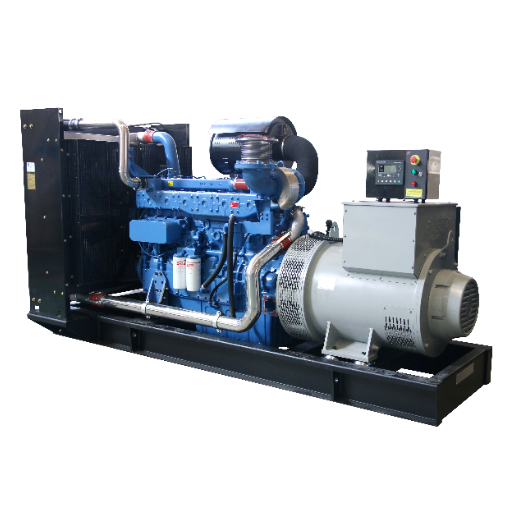
Industrial stationary generators must navigate an increasingly complex regulatory landscape. Getting this wrong can result in permit denials, fines, or forced shutdowns.
EPA Tier Ratings
- Tier 2/3: Common for standby emergency applications; simpler after-treatment
- Tier 4 Final: Required in many jurisdictions for non-emergency use; uses DOC, SCR, and DPF after-treatment systems
Codes and Standards
- NFPA 37: Governs stationary engine installation, clearances, and ventilation
- NFPA 110: Emergency and standby power systems; specifies Type 10 (10-second transfer) for life-safety loads
- ISO 8528: Generator set performance standards and transient response requirements
- NEC 2026: Updated grounding, bonding, and surge protection requirements for mid-range and large installations
For government and military projects, UFGS 26 32 15 specifies detailed submittal requirements for stationary engine-generator sets from 15 kW to 2,500 kW.
Why Partner with a Factory-Direct Manufacturer?
Sourcing a 500 kW industrial stationary generator through a trading company or middleman introduces risk. You rarely know where the unit was actually assembled, and post-sale engineering support is often nonexistent.
At Shandong ZC Power CO., LTD.:
- Custom voltage and frequency: We engineer gensets for 50 Hz or 60 Hz grids, and voltages from 110V to 480V, to match international standards.
- National-standard testing: Every unit is load-bank tested in our national-standard testing center before shipment with certified output reports.
- Paralleling expertise: We design and build parallel synchronization systems from 8 kVA to 4,000 kVA.
- Cross-fuel flexibility: We manufacture diesel, natural gas, propane, and dual-fuel stationary gensets.
- Global export support: Our team of 80+ engineers provides installation guidance, voltage customization, and lifetime OEM parts supply.
Conclusion: Spec Right, Fuel Smart, Build for Scale
A 500 kW industrial stationary generator represents one of the most essential capital expenditures which a facility can undertake. The selection process requires more than evaluating product costs and manufacturer reputations. The three essential elements that determine the outcome appear as three core elements which various outputs depend on three elements when predicting results.
The warranty becomes void within months after you select an incorrect duty rating for your equipment. When you make motor starting equipment too small breakers will activate the moment compressors begin operation. You need to establish paralleling architecture because capacity requirements will force you to use expensive complete equipment replacement.
The optimal choice for mid-sized manufacturing facilities or data centers in 2026 requires a 500 kW to 1,000 kW diesel standby or prime-rated unit which provides 72+ hours of fuel autonomy and allows for easy expansion through paralleled connections. The containerized 500 kW blocks which operate in parallel provide remote mining and prime-power applications with both scalability and durability that single large units fail to deliver.