Stationary Generators: Complete Installation, Sizing, and Cost Guide [2026]
The stationary generator market worldwide will reach an estimated value of $49.1 billion in 2033. Yet many facility managers project contractors and homeowners approach permanent backup power as a simple commodity purchase. They select the least expensive option after analyzing two product specifications and they trust the system to function during power outages.
You already know that hope is not an engineering strategy. A generator will experience overload and subsequent shutdown during its initial motor activation if it has incorrect sizing. The hospital or data center will experience a blackout after 48 hours because of an undersized fuel tank. An installed unit will create a code violation because of insufficient clearances and ventilation requirements.
This guide explains everything you need to know about stationary generators in 2026. The study will examine fuel types and sector-specific applications and the methodology for sizing and actual pricing and installation codes and total costs of ownership. The study will provide you with data which enables you to make an informed decision about securing your home or protecting a 1 000 kilowatt manufacturing facility.
Here is what you will learn:
- How stationary generators differ from portable and standby units
- Which fuel type fits your application: diesel, natural gas, propane, or dual-fuel
- Exact sizing rules including the 125% margin for permanent installations
- 2026 installed costs for residential, commercial, and industrial projects
- NFPA 37, NFPA 110, and NEC installation requirements
- Why factory-direct manufacturing changes the total cost equation
What Is a Stationary Generator?
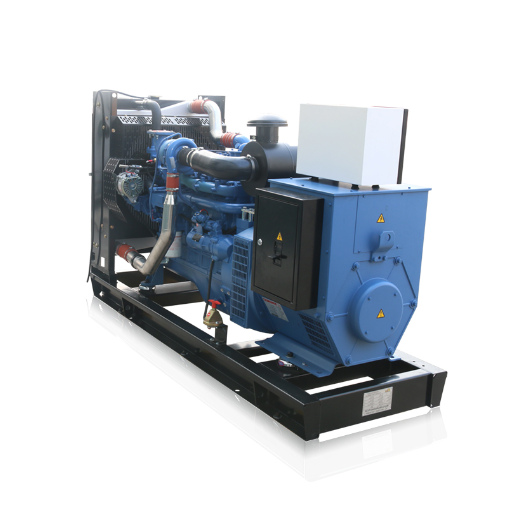
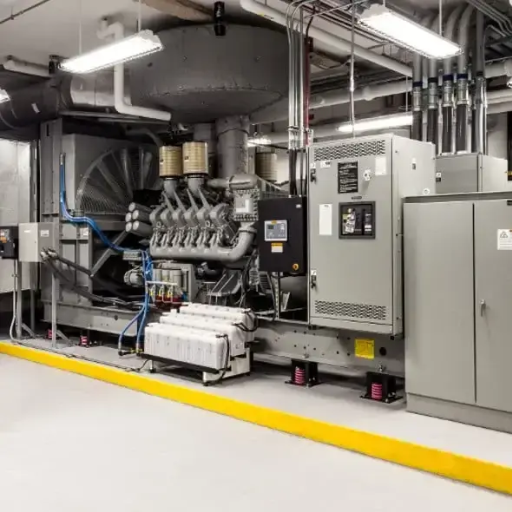
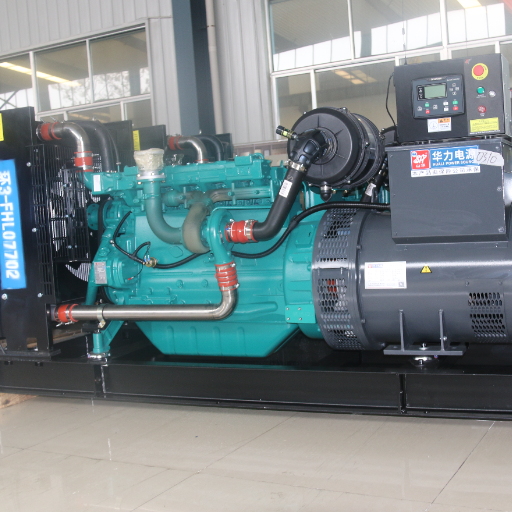
The stationary generator functions as a permanent engine-alternator system which provides electrical power to a specific location. The installation process requires stationary generators to be installed on concrete pads which they use to connect with a building’s electrical distribution system while their automatic transfer switch (ATS) system handles automatic startup procedures.
Stationary vs. Portable Generators
The distinction is more than mobility. It is about duty cycle, automation, and capacity.
- Portability: Portable generators move where you need them. Stationary generators do not.
- Capacity: Portable units typically range from 1 kW to 10 kW. Stationary generators scale from 6 kW residential models to 4,000+ kW industrial power plants.
- Automation: Stationary systems detect utility failure and restore power within 10 to 30 seconds without human intervention. Portable units require manual setup.
- Fuel supply: Stationary generators connect to natural gas pipelines, large propane tanks, or built-in diesel base tanks for extended runtime. Portable units rely on small gasoline cans.
A portable generator at a storm-prone house can power both the refrigerator and several lights. The critical load requirements of a hospital data center and manufacturing plant can only be met through the use of permanent generators.
Stationary vs. Standby Generators — Is There a Difference?
People use the terms as identical because they lack knowledge about their distinct meanings. A standby generator is a type of stationary generator reserved specifically for emergency backup power. The term “stationary” encompasses both prime power and continuous power systems which use generators to supply main or extra power throughout their operational time.
At ZC Power, we engineer stationary generator sets across all three operational ratings:
- Standby Power (ESP): Emergency backup during utility outages. Limited annual runtime.
- Prime Power (PRP): Variable load operation where utility power is unreliable or unavailable.
- Continuous Power (COP): Constant load at 100% rated capacity for unlimited hours.
For a deeper comparison between fixed and mobile backup power, (see our stationary vs portable generator comparison.)
Featured Snippet Table: Stationary vs. Portable vs. Standby
| Feature | Portable | Standby Generator | Stationary Prime Power |
|---|---|---|---|
| Mobility | Mobile | Fixed | Fixed |
| Typical Output | 1–10 kW | 6–150+ kW | 150–4,000+ kW |
| Startup | Manual | Automatic (10–30 sec) | Manual or automatic |
| Fuel | Gasoline | Natural gas, propane, diesel | Diesel, natural gas, dual-fuel |
| Best For | Temporary, low-power needs | Home and commercial backup | Industrial, remote, off-grid |
Ready to see which stationary generator fits your facility? Contact the ZC Power engineering team for a free site assessment and custom sizing analysis.
Types of Stationary Generators
Stationary generators are classified into different categories based on their fuel usage, specific applications, type of housing equipment and their operational performance capabilities. The proper selection of equipment combination will impact both purchase expenses and operational costs and environmental regulations and sound emissions and equipment upkeep throughout its operational lifespan.
By Fuel: Diesel, Natural Gas, Propane, and Dual-Fuel
The stationary market reaches its highest diesel market share at 60-65 percent. Diesel engines provide their users with three key advantages: they deliver maximum energy density, they achieve rapid load changes, and they maintain complete control of their fuel through their ability to store fuel on-location. Hospitals, data centers, and remote industrial sites use this technology as their standard solution.
Natural gas is the fastest-growing fuel type. The natural gas stationary generators establish direct connections with utility pipelines by burning cleaner than diesel while operating without interruption as long as the pipeline maintains its pressurized state. The system suits urban commercial buildings and schools and facilities with strict emissions standards.
Propane offers a middle ground. It functions as an on-site fuel storage solution that operates like diesel yet delivers cleaner combustion. The propane stationary generators maintain their popularity among rural communities that lack access to natural gas and areas with strict diesel storage regulations.
If you wish to delve deeper into stationary propane generators—particularly regarding permanently installed systems—(please refer to our Guide to Stationary Propane Generators.)
Dual-fuel systems can switch between diesel and natural gas depending on availability and price. The units enable mission-critical operations to use multiple fuel types because those operations need to avoid any chance of complete system failure.
For a deeper fuel comparison focused on permanently installed systems, (read our natural gas stationary generator guide.)
By Application: Residential, Commercial, and Industrial
- Residential: 6–48 kW, single-phase 120/240V, sound-attenuated enclosures
- Commercial: 20–150 kW, three-phase 208V/480V, often integrated with building management systems
- Industrial: 150 kW to 4,000+ kW, heavy-duty frames, parallel synchronization capability, advanced remote monitoring
For an in-depth dive into the technical specifications, real-world industrial uses, and long-term cost analysis of 500kW units, (see our industrial stationary generator 500kw guide.)
By Enclosure: Open, Sound-Attenuated, and Containerized
- Open type: Lowest cost, maximum airflow, highest noise. Common in industrial yards and remote sites.
- Sound-attenuated: Acoustic insulation keeps noise below 75 dB at 7 meters. Required for residential, hospital, and urban commercial installations.
- Containerized: 20-foot or 40-foot shipping containers house the generator, fuel tanks, switchgear, and ventilation in one transportable unit. Popular for data centers, mining, and military applications.
By Operational Rating: Standby, Prime, and Continuous Power
The operational rating defines how many hours per year the generator can run and at what load profile. Misapplying these ratings voids warranties and shortens engine life.
- Standby (ESP): Maximum output for emergency use. Typical limit: 200 hours per year.
- Prime (PRP): Variable load for unlimited hours. Must average 70% of rated load over 24 hours.
- Continuous (COP): 100% rated load for unlimited hours. Used in base-load power stations and remote mining camps.
Stationary Generator Applications by Sector
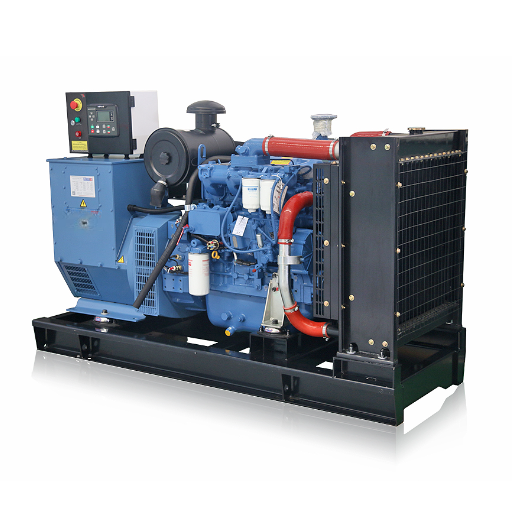
Stationary generators protect revenue, safety, and continuity across virtually every industry. The sizing, fuel choice, and redundancy strategy vary significantly by sector.
Healthcare and Hospitals
The emergency power needs of hospitals represent to the world the most stringent requirements which exist. The Essential Electrical System needs to restore power to life safety and critical branches within 10 seconds according to NFPA 99. Hospitals use stationary generators which have power capacities that range from 250 kW in small clinics to more than 2,000 kW in major medical centers.
Operating rooms require 10 kVA and ICU beds need 3 kVA while CT imaging suites need between 75 and 150 kVA of power. Many jurisdictions now require 72 to 96 hours of on-site fuel or guaranteed delivery contracts.
For a detailed breakdown of healthcare requirements, see our stationary generators for hospitals guide.
Data Centers and Telecom
Data centers need uninterrupted power supply which requires them to maintain continuous electrical flow without any power outages. A 1,000 kW stationary generator can start and accept load in under 10 seconds, but server power supplies are far less forgiving. Data centers use stationary generators together with UPS backup power systems to handle power transfer interruptions.
Modern data center design requires the use of multiple 500 kW to 1,000 kW stationary units instead of one large unit. The N+1 architecture design provides redundancy because a single generator failure will cause the remaining generators to handle the complete critical power requirements. The demand for stationary generators in data centers rose by approximately 16% from 2023 to 2024 because of the growth in AI computing and cloud infrastructure.
For more on data center design, (read our guide to stationary generators for data centers.)
Manufacturing and Warehousing
Manufacturing facilities lose money every minute a production line stops. A 500 kW stationary generator functions as the optimal solution for mid-sized plants operating CNC machines and presses and automated assembly lines. The stationary capacity requirement for large automotive or chemical complexes ranges from 1,000 kW to 3,000 kW.
In March 2023, a Michigan automotive supplier installed a 400 kW stationary diesel generator to protect a single welding line. The generator successfully began operation after a summer storm caused a 4-hour power outage. The welding robots drew a massive inrush current on restart that pushed the generator to 112% of its rated load. The unit tripped offline after 90 seconds, which caused the entire line shutdown that resulted in $47,000 worth of fully assembled components being thrown away. The supplier later upgraded to a 600 kW unit with a 150% surge margin. The upgrade paid for itself in under 18 months.
Commercial Buildings and Retail
Buildings which include office towers hotels and retail complexes and mixed-use buildings use stationary generators to ensure their elevators and HVAC systems and lighting and point-of-sale systems remain operational. Commercial installations typically fall in the 20 kW to 150 kW range though large high-rises may require 300 kW or more.
Emergency lighting and fire alarms must restore their operations because NEC Article 700 requires this function. Article 701 covers legally required standby loads such as ventilation and sewage pumps. Article 702 applies to optional standby loads which include general HVAC systems.
Residential and Estate Properties
Storm-prone areas now use whole-house stationary generators as their standard power backup system. Typical residential sizes range from 7 kW for essential circuits to 48 kW for large homes with electric HVAC, pools, and guest houses. Residential installations primarily use natural gas and propane as their main fuels because these options eliminate the need for diesel tank upkeep and fuel delivery scheduling.
For a comprehensive exploration of household load calculations, associated expenses, and proper installation methods for home standby systems, (see ourresidential stationary generator guide.)
How to Size a Stationary Generator
Sizing is the most critical engineering decision in any stationary generator project. An undersized unit will trip breakers and damage motors. An oversized unit will suffer from wet stacking, carbon buildup, and wasted capital.
The 125% Rule for Permanent Installations
The National Electrical Code and best-practice engineering standards recommend sizing a stationary generator at 125% of the total calculated critical load. This 25% headroom accommodates:
- Motor starting inrush currents
- Future load growth
- Voltage and frequency stability under step loads
- Harmonic distortion from non-linear loads
If your facility’s critical load totals 800 kW, your stationary generator should be rated for at least 1,000 kW.
Load Calculation Methods: Equipment List, Panel Measurement, Utility History
Method 1: Equipment List
List every device that must run during an outage. Record running watts and starting watts for each motor-driven load. Add the largest single starting surge to the total running load, then apply the 125% multiplier.
Method 2: Panel Measurement
Use a clamp-on ammeter on each leg of the electrical service during peak usage.
- Single-phase: Total Amps / 2 × Supply Voltage / 1,000 = kW
- Three-phase: Total Amps / 3 × Supply Voltage × 1.732 / 1,000 = kW
Add 25% reserve capacity.
Method 3: Utility Billing History
Review the past 12 months of utility bills. Find the peak demand in kW and add 25%.
Motor Starting Surge and Voltage Dip
Electric motors can draw 5 to 7 times their running current during startup. A stationary generator must maintain voltage within ±5% and frequency within ±0.5 Hz during these surges. If voltage dips too low, contactors drop out, variable frequency drives fault, and sensitive electronics reboot.
Single-Phase vs. Three-Phase Stationary Generators
- Single-phase (120/240V): Standard for residential and light commercial loads up to ~48 kW.
- Three-phase (208V, 480V, 600V): Required for industrial motors, large HVAC compressors, and data center server racks. Most commercial and industrial stationary generators are three-phase.
Sizing Table: Residential, Commercial, and Industrial Benchmarks
| Application | Typical Load | Recommended Stationary Generator Size |
|---|---|---|
| Small home (essentials only) | 5–8 kW | 10–12 kW |
| Large home (whole-house) | 15–25 kW | 30–48 kW |
| Small retail / office | 20–40 kW | 50–75 kW |
| Restaurant / medical clinic | 50–80 kW | 100–150 kW |
| Mid-size manufacturing | 300–400 kW | 500–600 kW |
| Large data center module | 600–800 kW | 1,000 kW (N+1 redundant) |
| Heavy industrial campus | 1,500+ kW | 2,000–3,000+ kW |
Stationary Generator Cost and Pricing (2026)
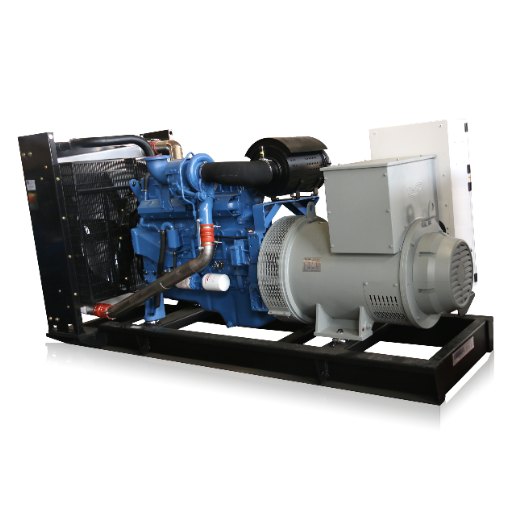
Pricing transparency is rare in the generator industry. Most buyers receive vague estimates that balloon during installation. Here are the real 2026 numbers.
Residential Installed Costs (2,000–2,000–32,000)
| Size | Unit Cost | Total Installed Cost |
|---|---|---|
| 7–10 kW | 1,500–1,500–3,000 | 2,000–2,000–4,500 |
| 13–16 kW | 3,000–3,000–5,000 | 4,000–4,000–7,000 |
| 20–24 kW | 4,500–4,500–8,000 | 7,000–7,000–13,000 |
| 26–48 kW | 7,000–7,000–15,000 | 12,000–12,000–32,000 |
Installation includes the automatic transfer switch, concrete pad, electrical labor, permits, and fuel connection.
Commercial Installed Costs (7,500–7,500–50,000+)
| Size | Typical Application | Total Installed Cost |
|---|---|---|
| 20–45 kW | Small retail, offices | 7,500–7,500–15,000 |
| 70–150 kW | Restaurants, clinics | 20,000–20,000–53,000 |
| 150–300 kW | Large commercial, high-rise | 50,000–50,000–100,000+ |
Commercial projects often require three-phase distribution, sound-attenuated enclosures, and integration with building automation systems.
Industrial Installed Costs (50,000–50,000–500,000+)
Industrial stationary generators start at 150 kW and scale into the multi-megawatt range.
- 500 kW industrial unit: 50,000–50,000–80,000 installed
- 1,000 kW (1 MW) unit: 100,000–100,000–180,000 installed
- 2,000+ kW with paralleling and switchgear: 250,000–250,000–500,000+
Site preparation, fuel tanks, emissions aftertreatment, and custom switchgear can equal or exceed the generator unit cost.
Cost Drivers: Size, Fuel Type, Brand, and Installation Complexity
- Size: The largest variable. Expect roughly 300–300–450 per kW for commercial units.
- Fuel type: Natural gas units typically cost 15–30% more than equivalent diesel units but have lower operating costs.
- Brand premium: Tier-1 Western brands command 30–50% premiums over factory-direct alternatives with identical kW ratings.
- Installation complexity: Concrete pads, electrical panel upgrades, fuel line trenching, and permitting add 3,000–3,000–25,000+ depending on scope.
Factory-Direct Pricing vs. Dealer Markups
When you purchase products through a dealer or distributor, your total cost increases by a markup that ranges between 20 percent and 40 percent above the manufacturer’s pricing. The margin serves to finance showroom operations and inventory costs and sales staff compensation. The system functions without increasing total engine output capacity or engine operational duration.
Shandong ZC Power CO., LTD. operates as a source manufacturer from its 300,000-square-meter manufacturing plant which opened in 1999. Our company constructs and tests stationary generators which we deliver to your project location. You will receive engineering services that meet ISO9001/CE/CCC standards at actual factory prices, without any additional charges from intermediaries.
For a detailed breakdown of commercial and industrial pricing benchmarks, (see our stationary generator cost breakdown.)
Fuel Comparison for Stationary Applications
The fuel you choose affects every aspect of ownership: capital cost, operating cost, emissions, noise, maintenance, and fuel security.
Diesel: Energy Density, Storage, and Fast Load Response
Diesel fuel contains approximately 36 MJ per liter, the highest energy density of any common generator fuel. This results in better fuel efficiency along with quicker load handling and reduced need for storage space.
Diesel stationary generators are the gold standard for:
- Critical standby applications (hospitals, data centers, life safety)
- Remote sites without natural gas pipelines
- Projects requiring fast startup and heavy step-load handling
The trade-offs are higher emissions, louder operation, and the need for on-site fuel storage, spill containment, and periodic fuel polishing.
Natural Gas: Cleaner Emissions and Pipeline Dependency
Natural gas emissions produce fewer NOx and particulate matter and carbon dioxide emissions when burned. The process enables easier air-quality permit acquisition for areas with strict regulatory requirements.
Natural gas stationary generators are ideal for:
- Urban commercial buildings with pipeline access
- Facilities running extended exercise cycles or prime power
- Projects where avoiding on-site fuel storage is a priority
The main threat exists because the system depends on its pipelines. Earthquakes and severe storms and excavation damage cause interruptions to gas supply. Natural gas engines require higher initial investment than diesel engines and their load response time develops more slowly.
Propane: Storage Flexibility and Rural Applications
Propane stores indefinitely without degrading, unlike diesel which can grow algae and absorb water. A 1,000-gallon propane tank can supply a 20 kW residential generator for roughly 10–14 days of continuous operation.
Propane stationary generators are popular for:
- Rural homes and farms without natural gas service
- Facilities where diesel storage regulations are restrictive
- Cold climates where diesel gelling is a concern
The downside is lower energy density than diesel and the need for bulk tank installation and delivery logistics.
Dual-Fuel: The Best of Both Worlds?
Dual-fuel stationary generators can operate on diesel alone or they can use a mixture that combines diesel with natural gas. The system will function at full diesel capacity when the gas pipeline system experiences a failure. The operator will switch to gas use when diesel prices increase to their highest point.
These systems add complexity and cost, but they eliminate the single-point-of-fuel-failure risk for the most critical applications.
TCO Crossover Analysis — When Does Natural Gas Win?
The total cost of ownership crossover depends on annual runtime.
- Standby / low runtime (< 500 hours/year): Diesel wins. The lower capital cost dominates.
- Prime / continuous power (> 2,000 hours/year): Natural gas wins. Fuel savings compound and offset the higher initial investment.
For a deeper fuel comparison, read our diesel vs. natural gas generator analysis.
Featured Snippet Table: Diesel vs. Natural Gas vs. Propane
| Factor | Diesel | Natural Gas | Propane |
|---|---|---|---|
| Upfront Cost | Lowest | Highest | Mid-range |
| Fuel Efficiency | Highest | Lowest | Mid-range |
| Emissions | Highest | Lowest | Low |
| Load Response | Fastest (5–10 sec) | Slower (10–30 sec) | Fast |
| Storage | On-site tank required | Pipeline (no storage) | On-site tank required |
| Runtime | Limited by tank size | Virtually unlimited | 10–14 days (1,000 gal) |
| Best For | Critical standby, remote sites | Urban, high-runtime | Rural, cold climates |
Stationary Generator Installation Requirements
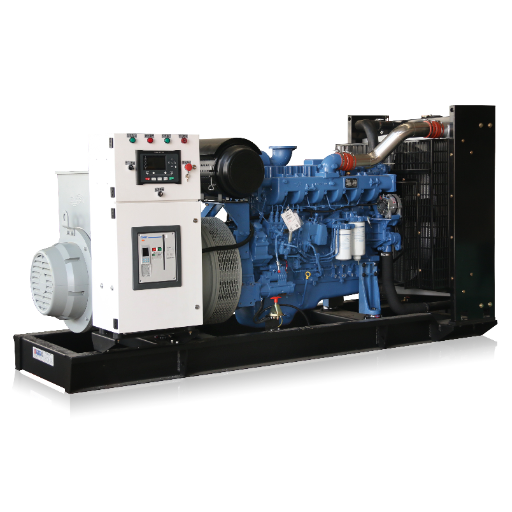
A stationary generator is only as reliable as its installation. Cutting corners on codes, clearances, or fuel systems creates safety hazards and inspection failures.
NFPA 37, NFPA 110, and NEC Article 445/700/701
NFPA 37 defines the rules for building installations that use stationary combustion engines. The guidelines specify requirements for mounting systems and housing structures and engine locations and their required safety spaces and their fuel delivery systems and their exhaust system design.
NFPA 110 defines performance requirements for emergency and standby power systems. The system classification system uses three criteria which include Level (life safety vs. less critical), Type (transfer time: Type 10, Type 60), and Class (fuel duration: Class 48, Class 96).
NEC Article 445 describes the construction and installation requirements for generators and includes nameplate marking rules and neutral bonding guidelines. The emergency systems use Article 700 while the legally required standby systems use Article 701 and the optional standby systems use Article 702.
For a detailed breakdown of code requirements by sector, see our emergency power requirements guide.
Permits, AHJ Approval, and Inspections
Every stationary generator installation requires coordination with the local Authority Having Jurisdiction (AHJ). Typical requirements include:
- Building permits for electrical, mechanical, and structural work
- Electrical inspection of the generator and transfer switch connections
- Fire department review of fuel storage and clearances
- Environmental permits for industrial diesel engines in some regions
Skipping permits voids insurance coverage and creates liability exposure.
Concrete Pads, Clearances, and Ventilation
Stationary generators require a level concrete pad sized to support the unit’s weight and resist vibration. A general rule is that the pad should extend 6 inches beyond the generator footprint on all sides.
Clearance requirements vary by manufacturer and code, but common minimums include:
- 5 feet from building openings, combustible vegetation, and overhangs
- 36 inches between multiple generators per NFPA 110
- Adequate ventilation for combustion air and heat rejection
Indoor installations require a dedicated engine room with a 1-hour to 2-hour fire-resistance rating depending on the application.
Fuel Storage Tanks, Containment, and Refueling
Diesel stationary generators need fuel tanks which must have either spill containment basins or double-walled protection. Shared indoor tanks have a maximum capacity of 660 gallons. Larger installations use external tanks with day-tank transfer pumps.
Propane systems require bulk tanks and pressure regulators and vaporizers which must be sized according to the generator’s fuel consumption rate. Natural gas installations require pressure regulators together with gas trains and leak detection systems.
Automatic Transfer Switches and Paralleling
The automatic transfer switch (ATS) serves as the control center for the stationary generator system. The system continuously monitors utility voltage and uses power failure detection to start the generator while it automatically transfers power back to the utility when electricity service resumes.
Multiple stationary generators can be used in large facilities to create a system that shares energy requirements while delivering N+1 redundancy. The process of paralleling generators requires all units to maintain synchronized voltage and frequency together with their phase angle.
For a full overview of regulatory codes, mandatory permits, and industry best practices governing stationary generator setups, (see our stationary generator installation requirements.)
Maintenance and Testing for Stationary Systems
Even the most rugged stationary generator will fail if neglected. A disciplined maintenance program is essential for operational readiness.
Monthly Exercise Runs
The NFPA 110 standard requires all emergency stationary generators to undergo testing every month. The machine needs to operate with a load for a minimum period of 30 minutes. Some areas allow no-load testing however, testing with actual loads is the preferred method because it tests the fuel and cooling systems under real world conditions.
Annual Load Bank Testing
The generator test results show that it can produce its complete kW capacity after conducting a two-hour full-load test with a resistive load bank. Load banking also burns off carbon deposits that accumulate from light-load operation, preventing wet stacking.
Fuel Polishing and Tank Maintenance
Stored diesel degrades over time. Water condensation and microbial growth together with particulate contamination create obstructions that lead to injector failures and pump damage. A fuel polishing system circulates and filters the fuel to maintain cleanliness. Tanks should be inspected annually and cleaned every 3 to 5 years.
Documentation for Inspectors and Insurance
Every test, repair, and fuel delivery must be documented. Inspectors, insurers, and accreditation bodies will ask for:
- Test dates, load levels, and runtime durations
- Voltage, frequency, and oil pressure readings
- Transfer switch operation times
- Corrective actions and parts replacements
Modern controllers from Deep Sea Electronics or SmartGen can automate much of this logging.
How ZC Power Engineers Stationary Generators
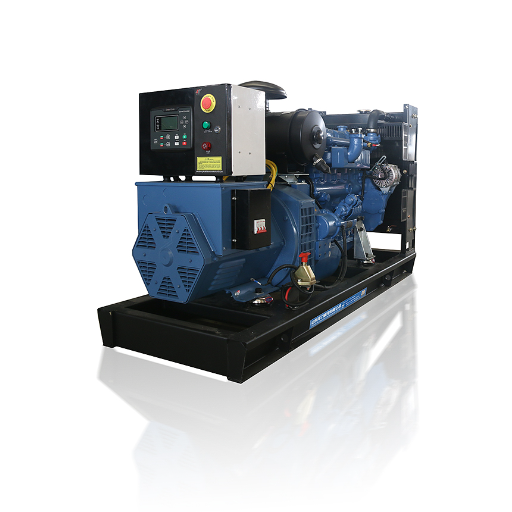
Selecting a stationary generator is not just about horsepower and price. It is about engineering a system that matches your load profile, fuel strategy, site constraints, and regulatory environment. That is where factory-direct manufacturing makes the difference.
Factory-Direct Manufacturing from 8 kVA to 4,000 kVA
Shandong ZC Power CO., LTD. has been designing and manufacturing generator sets since 1999. Our 300,000-square-meter production facility includes a national standard testing center where every stationary generator undergoes rigorous full-load validation before shipment.
We are not a trading company. We own the production lines. That means you deal directly with the engineers who design your alternator winding, select your controller, and tune your engine for your altitude and temperature conditions.
Cross-Fuel Engineering: Diesel, Natural Gas, Propane, and Dual-Fuel
Our engineering team of 80 plus members creates the best solution for your project which requires a diesel standby unit for data centers or a natural gas prime power system for commercial campuses or a propane backup generator for remote farms.
We establish partnerships with top engine manufacturers which include Cummins Perkins Yuchai and Weichai. Our alternators use copper windings from Stamford and Leroy-Somer and Faraday. The control systems operate with Deep Sea Electronics and SmartGen modules which provide remote monitoring capabilities.
Custom Voltage, Frequency, and Enclosure Options
Every grid is different. We engineer stationary generators for 50 Hz or 60 Hz, single-phase or three-phase, and any voltage from 120/240V residential to 480V and 600V industrial. Enclosure options include open skid, sound-attenuated canopies, and fully customized 20-foot or 40-foot containerized power stations.
National Standard Testing Center and Global Certifications
Quality at ZC Power functions as a measurable process which establishes its value. All units undergo load-bank tests which confirm their full rated output capacity together with voltage control and frequency stability and sound performance. Our shipments include ISO9001 and CE and CCC certifications along with complete factory testing documents.
We have exported our stationary generators to Africa and the Middle East and Southeast Asia and South America and Eastern Europe. Our company handles all export logistics operations which start with customs documentation and end with secure container loading.
Ready to engineer your stationary power solution? Contact the ZC Power engineering team today for a free site assessment, custom sizing analysis, and factory-direct quote.
Conclusion
Stationary generators are the backbone of resilient power infrastructure. In 2026, the market offers more fuel choices, smarter controls, and tighter emissions standards than ever before. But the fundamentals remain unchanged: size with margin, install to code, test under load, and choose a partner that can engineer for your specific site.
Here are the key takeaways:
- Match the fuel to the duty cycle: Diesel for critical standby, natural gas for high-runtime urban sites, propane for rural flexibility.
- Size with the 125% rule: An undersized generator will fail when you need it most.
- Plan for the real installed cost: Residential projects run 2,000–2,000–32,000; commercial 7,500–7,500–50,000+; industrial 50,000–50,000–500,000+.
- Never skip codes and permits: NFPA 37, NFPA 110, and NEC compliance are non-negotiable.
- Test under load: Monthly exercise and annual load bank testing separate ready systems from expensive paperweights.
If you are evaluating a stationary generator for your home, facility, or industrial project, do not settle for generic specifications. Partner with a manufacturer that engineers every unit for your exact voltage, fuel, and environmental requirements.
If you are looking to select a stationary generator suitable for your specific application, we recommend first reading our Stationary Generator Selection Guide to receive more detailed recommendations.