Stationary Generator Sizing: How to Calculate the Right kW or kVA for Your Facility [2026]
A $40,000 stationary generator can fail on day one because it was undersized by 5 kW. It is more common than you would admit. A facility manager installs a unit that seems, as per his calculations, adequate for completion, and then he finds himself having to bear with the embarrassment of motor starting surge, altitude derating, or a new EV charger pushing the real demand past the limits.
As is likely already evident to you, most sizing guides fall victim primarily to one of two pitfalls. They are either too elementary, meant only for homeowners adding toaster ovens together, or one can hang on commercial engineering so senseless that it still has no way of imagining the complete framework where capacity sizing is identical. Real money is wasted here in downtime, replacement parts, and failed tests.
Solving this problem, this guide offers a definite formula which I require to size up a stationery generator for both residential, commercial and industrial use. We shall discuss mathematical equations concerning three-phase electrical calculations, Motor-starting Surge, Environmental Derating, and the Load Factors of 2020 ignored by older guides. Now, you know this, regardless scopes, from a family home to a manufacturing plant: right mathematical equation=Actual Load + Safety Factor + environmental realities (supporting the generator).
If you are new to fixed backup systems, start with our complete guide to stationary generators for a foundation on types, fuels, and applications.
What Is Stationary Generator Sizing and Why Does It Matter?
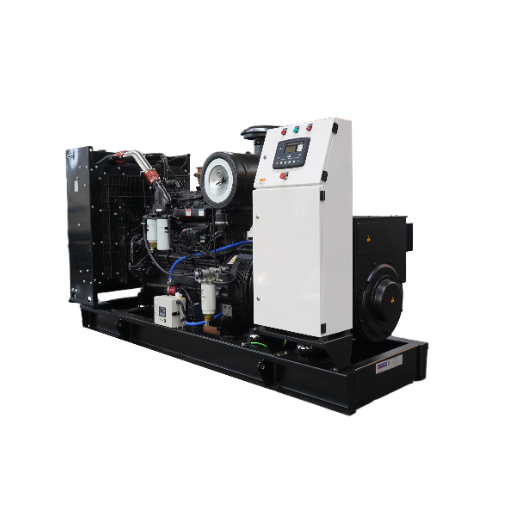
Sizing the generator talks about matching the generator specified in kW or kVA to whatever load it is supposed to handle. This is an important step in designing generator units. If one goes wrong here, he/she will bear with an expensive problem in the future.
Any sized generator, which is lower in capacity than the load, fails outright. The voltage will dive, the breakers will trip, and motors will be raw. These situations are in doubt for the likes of hospitals and data centers, risking life and money. Oversizing is less dramatic but an expensive venture. A diesel generator being run consistently below 30% of its rated load could wet stack, where unburned fuel and carbon deposition in the exhaust system, choke engine life, and destroy fuel.
Our range of sizing covers from 8 kVA residential applications to industrial power plants as large as 4000 kVA. The foundation is the same in any case: exact measurement, add safety margins, and test under actual load before commission.
How to Size a Stationary Generator for Residential Use
Homeowners searching for whole house generator sizing typically have three reliable methods available. Each has strengths depending on how much electrical data you already have.
Method 1: Full Load Capacity by Measurement
Checking the actual current consumption at your main electrical panel is a highly accurate home-based approach. On a hot summer afternoon when the house is running at peak load, an electrician will wrap the clamp around the main service conductors. In such cases the air conditioning, pool pumps, and laundry are most likely operating simultaneously.
The formula is simple:
kW = (Amps x Volts) / 1,000
For a 240V single-phase panel measuring 85 amps at peak:
(85 x 240) / 1,000 = 20.4 kW
Add a 25% reserve capacity:
20.4 kW x 1.25 = 25.5 kW minimum generator size
This method is detailed [residential standby generator sizing guide], which remains one of the clearest technical references for homeowners.
Method 2: Full Load Capacity by Utility History
In case you have no access to an electrician, peak demand can be judged from your electrical bill. Usually, the highest kilowatt-hour usage in any single hour would be the best estimate over the preceding 12 months; otherwise, some smart meters may even directly record that information. For the peak kW, multiplied by 1.25, the rest is reserve capacity.
It should work well in homes with fairly stable seasonal patterns; however, should the test be preceded by any consequential loads, such as a Level 2 EV charger, a home server rack, a hot tub, or joint use sauna stand, the test may not be totally fair.
Method 3: Appliance-by-Appliance Calculation
Just list every appliance that will be powered for new construction or off-grid living. Only the running wattage of all models to be run concurrently is added. Only the starting surge wattages for the biggest single appliances, rather than all motors’ surges combined, are summed.
Quick-reference residential loads:
- Refrigerator / freezer: 800W run / 2,400W start
- Central AC (3-ton): 4,500W run / 9,000W start
- Electric water heater: 4,500W run / 4,500W start
- Well pump: 1,200W run / 3,600W start
- Level 2 EV charger: 7,200W run / 7,200W start
- Home office server rack: 1,500W run / 1,500W start
Residential Size Tiers (2026)
| Home Profile | Typical Load | Recommended Generator Size |
|---|---|---|
| Essentials only (lights, fridge, router) | 4-8 kW | 8-12 kW |
| Partial home + small AC | 10-14 kW | 14-20 kW |
| Whole house, average home | 16-20 kW | 22-26 kW |
| Large home / multi-AC / EV charger | 24-36 kW | 32-48 kW |
These days, these tiers have risen. The 2026 homeowner is more often in possession of electric vehicle charging, with work-from-home equipment and battery backups starting at the bottom and thereby falling below sizing guide experience.
In February 2026, Jennifer Okonkwo of Denver, a patron, bought a 20 kW standby generator for her 2,800 sq ft house. The sizing was again based solely on square footage. When the power went out with the March snowstorm, the generator briefly surged and then stopped; after 10 minutes, the utilities restored still more of Jennifer’s load, for full inclusion was another Level 2 EV charger (7,200 W), standing along with a home office server rack (2,000 home machines), on top of the original undervalue. At 6,500 feet elevation, that 20 kW generator would now be derated to around 17.4-kW. Jennifer had to buy that 26-kW genset, taking a “$4,500 bath.” “If only someone would have gone through with me and asked about new appliances,” she says, with much sorrow.
For a detailed breakdown of what different sizes cost, see our stationary generator cost breakdown.
How to Size a Stationary Generator for Commercial Buildings
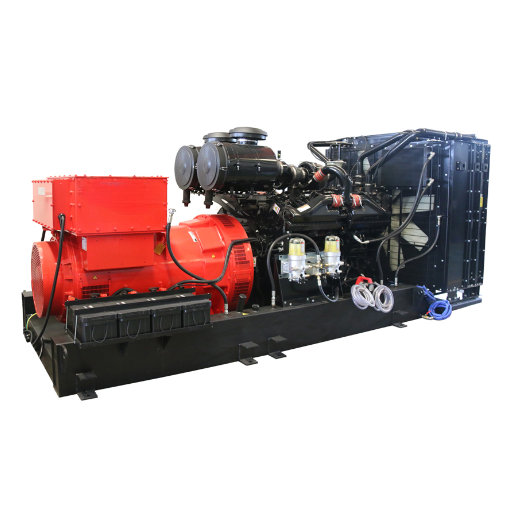
Commercial stationary generator sizing introduces three-phase power, power factor, and load diversity. These factors mean you cannot simply scale up the residential math.
Three-Phase Power Basics
Most commercial buildings in North America use 208V or 480V three-phase power. Three-phase systems deliver more power with less conductor material than single-phase, which is why they dominate offices, retail centers, and restaurants.
For stationary generator sizing, the key difference is the square root of 3 multiplier (1.732) used in three-phase calculations.
The kVA Formula
Generator capacity is often listed in kVA (kilovolt-amperes), while your building’s actual load is measured in kW (kilowatts). The relationship depends on power factor (PF):
kVA_required = kW_load / Power Factor
Typical commercial power factors range from 0.8 to 0.85. For a building with 80 kW of load and a 0.8 PF:
80 / 0.8 = 100 kVA generator minimum
If you are measuring amps directly at a three-phase panel:
kVA = (Amps x Volts_L-L x 1.732) / 1,000
For 120 amps at 480V three-phase:
(120 x 480 x 1.732) / 1,000 = 99.8 kVA
Add 25% reserve: 99.8 x 1.25 = 124.8 kVA minimum
Demand Factor and Load Diversity
In reality, not all the lights, plugs, or appliances in a larger commercial building continue to 100% at the same time. This is where demand factor comes in. Typically a mixed-use retail or office building operates at 70% to 80% of its connected load at peak.
However, do not be mistaken here; demand factors for some spaces may go up quite high. Restaurants, commercial kitchens, and data centers all show much higher simultaneous demand. In such a case, for a critical facility, such as that of a hospital, the demand factor should be getting close to 100% because every circuit working are lives at stake.
Commercial Size Estimates
| Building Type | Rule of Thumb | 5,000 sq ft Example |
|---|---|---|
| Retail store | 50 kW + 10 W per sq ft | 100 kW |
| Office building | 50 kW + 5 W per sq ft | 75 kW |
| Restaurant | 15-20 kW per 1,000 sq ft | 75-100 kW |
| Medical clinic | 20-25 kW per 1,000 sq ft | 100-125 kW |
These rules of thumb provide a starting point for budgetary discussions. Final stationary generator sizing should always be confirmed with measured load data and a professional engineering review.
For a detailed technical breakdown of redundancy architectures, precise load sizing, and optimized fuel planning for mission-critical data center systems, (see our stationary generators for data centers guide.)
How to Size a Stationary Generator for Industrial Facilities
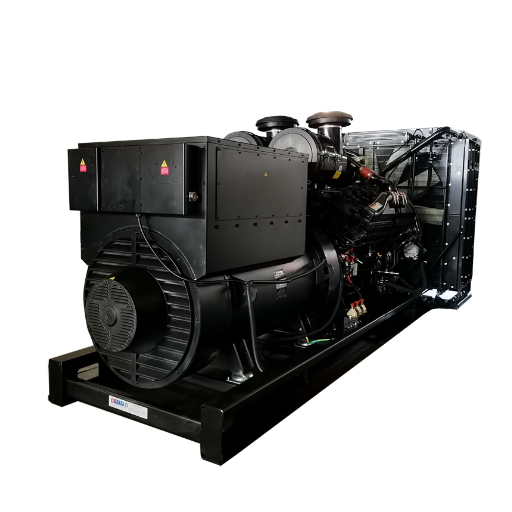
Industrials stationary generators, unlike residential standby generators, move from general rule of thumb sizing into load profiling, step-loading and long term expansion planning. There is no chance that a manufacturing plant would ever afford to go experience the running out of suitable equipment with its first outage.
The 80% Rule
Industrial generators operate most efficiently and reliably when running at 70% to 80% of their rated capacity. This leaves headroom for motor starting surge, voltage regulation, and thermal cycling. It also extends engine life.
If your measured peak load is 320 kW, do not buy a 350 kW unit. Apply the 80% rule:
320 kW / 0.80 = 400 kW rated generator minimum
This ensures the engine runs in its optimal zone while preserving capacity for unexpected demand spikes.
Accounting for Motor Starting Surge (Locked Rotor Amps)
Thus, compressor, pump, CNC machine, and HVAC System big electric motors may start 3 to 6 times their running amperage. They surge to locked rotor amp (LRA) (at LRA Amps one starts the device and then lets go for running amperage at LRA; the starting time: only a few seconds). But the LRA surge is sufficient to trip over-current protection of an under-sized generator.
You have two options when motor starting surge is significant:
- Oversize the generator to handle the combined surge of all motors that might start simultaneously.
- Install a staggered-start controller that sequences motor startup to reduce the peak surge demand.
Option 2 is usually more cost-effective for plants with multiple large motors.
Load Profile and Step Loading
Step loading refers to the maximum single-step increase in load that a generator must accept. Non-linear loads like UPS systems, variable frequency drives (VFDs), and rectifiers add harmonic distortion that can affect voltage stability. Your stationary generator sizing must account for both the magnitude and the quality of the load.
Future Expansion Margin
Industrial facilities should consider adding 45%-50% extra capacity to their largest planned project to account for future equipment, since he believes a backup generator is a 15- to 20-year investment. But most probably the user’s power needs will go up long before the engine wears out.
The first campaign opened Carlos Mendez’s new 3500-sq-ft eatery in Miami in January 2026. It was back in the restaurant’s first power-cut that the breaker tripped from starting loads of his walk-in cooler compressor and exhaust hood fan at nearly the same moment. The two motors’ combined locked-rotor amps of high horsepower called for a 140 kVA supply during startup-100 kW was inappropriate! After calling in an engineer, Carlos swapped out the 100 kW generator for a 150 kW unit with a soft-start controller. In his lesson, the workload is not about what runs all day. It’s about what starts at the exact same second.
For an in-depth dive into the technical specifications, real-world industrial uses, and long-term cost analysis of 500kW units, (see our industrial stationary generator 500kw guide.)
Environmental Derating: Altitude and Temperature
A 500 kW generator at sea level is not a 500 kW generator at 6,000 feet elevation. Air density drops as altitude increases, reducing the amount of oxygen available for combustion. Similarly, high ambient temperatures reduce cooling efficiency. Both factors reduce real-world output.
Altitude Derating
Diesel and natural gas generators lose approximately 4% of their rated output for every 1,000 meters (3,280 feet) of elevation above sea level.
Temperature Derating
Generators also lose roughly 1% of rated output for every 10C (18F) above 25C (77F) ambient temperature.
Derating Quick-Reference Table
| Condition | Output Adjustment | 500 kW Equivalent |
|---|---|---|
| Sea level, 25C | 100% | 500 kW |
| 1,000 m (3,280 ft) elevation | 96% | 480 kW |
| 2,000 m (6,562 ft) elevation | 92% | 460 kW |
| 35C (95F) ambient | 99% | 495 kW |
| 45C (113F) ambient | 98% | 490 kW |
These adjustments are cumulative. A generator installed at 2,000 meters elevation and 35C ambient would be derated to approximately 95% of its nameplate rating. Always apply derating before adding your 20-25% safety margin.
The 2026 Load Impact Everyone Forgets
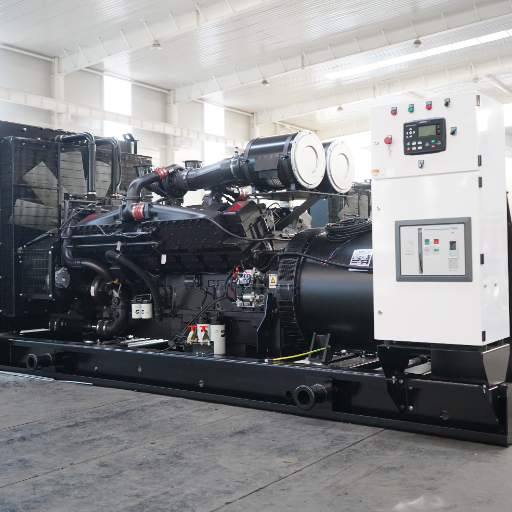
Two load categories are pushing traditional stationary generator sizing assumptions beyond their limits in 2026: electric vehicle chargers and remote work infrastructure.
Level 2 EV Chargers
A Level 2 EV charger draws 7,200 to 9,600 watts continuously while charging. That is equivalent to running a second central air conditioner. If your sizing calculation was based on 2020 load profiles, an EV charger can push a “22 kW is plenty” assumption straight into overload territory.
Home Server Racks and Remote Offices
The post-2020 shift to remote work means more homes now have dedicated server racks, network equipment, and climate-controlled office spaces. These loads add 1,500 to 3,000 watts of continuous demand that older guides rarely mention.
Commercially, the trend is similar. Hybrid office buildings now maintain 24/7 IT infrastructure even when occupancy drops. Do not assume reduced headcount equals reduced generator load.
Common Sizing Mistakes to Avoid
After decades of factory engineering, we see the same errors repeat across projects of every size. Avoid these five mistakes, and you will save thousands in replacement costs and downtime.
- Ignoring starting watts for motors. A motor’s running load tells only part of the story. Locked rotor amps at startup can be 3-6x higher.
- Assuming kW equals kVA. At a 0.8 power factor, a 100 kVA generator delivers only 80 kW of real power. Always confirm both ratings.
- Forgetting altitude and temperature derating. A generator sized for sea-level performance will fail at high elevation or in extreme heat.
- Skipping the 20-25% safety margin. Growth happens. Equipment gets added. Margin is not optional.
- Sizing for today’s load without expansion headroom. Your next production line, EV charger, or HVAC upgrade is closer than you think.
For a full overview of regulatory codes, mandatory permits, and industry best practices governing stationary generator setups, (see our stationary generator installation requirements.)
When to Call a Professional Engineer
Some projects require more than a sizing guide. They require certified engineering review, code compliance verification, and load-bank testing before commissioning.
You should involve a professional engineer when:
- The project must comply with NEC Articles 700-708 for emergency, legally required standby, or critical operations power systems.
- The facility has complex three-phase loads with variable frequency drives, large motor starting surges, or sensitive medical equipment.
- The installation site operates at high altitude, extreme temperatures, or corrosive environments that require custom enclosures and engine tuning.
- You need documented proof that the generator will deliver 100% of its rated output under real load conditions.
At ZC Power, every industrial generator set undergoes rigorous full-load testing in our national-standard testing center before shipment. We do not guess kW output. We verify it with load banks and certified output reports. Our team of 80+ engineers provides free sizing assessments, custom voltage and frequency configuration, and global export logistics support.
In late 2025, Adeola Manufacturing sized a backup generator for their Lagos assembly plant. Their peak measured demand was 320 kW. They initially selected a 400 kW unit, but ZC Power’s engineers pointed out three critical factors: the site operated at 35C ambient (1% derating), the load included three 75 kW milling machines with high starting surge, and the plant planned to add a second production line within 18 months. The final recommendation was a 500 kW stationary diesel generator with a 625 kVA alternator. After full-load testing in ZC Power’s national-standard testing center, the unit was shipped with a certified output report. “Factory-direct engineering saved us from buying twice,” the facilities manager said.
If you are still deciding between fixed and mobile backup power, our stationary vs portable generator comparison can help you choose the right approach for your application.
Conclusion: Size Once, Size Right
Sizing a standby generator is by no means a shoot-in-the-dark: it is an engineering exercise of thoroughly evaluating your actual peak load, identifying motor starting surges, taking into consideration the environmental deratings, and laying on a 20-25% margin for growth. This principle applies to homes, restaurants, and manufacturing facilities alike.
Take the necessary time to calculate—underestimating is lethal for you-investment-invest long term longevity or underestimating might lead to costly breakages, potential short cycle replacements, and eventual downtime when you need the generator the most.