
Commercial Standby Generator Sizing: How to Calculate the Right kW for Your Facility (2026)
A commercial standby generator sized correctly for your facility typically runs between 50 kW for small retail locations and 2,000+ kW for large hospitals or data centers, with most manufacturing plants falling in the 200 kW to 1,000 kW range. Commercial standby generator sizing is not guesswork. It is a disciplined process of measuring actual load, accounting for motor starting surge, applying environmental derating, and reserving margin for future growth.
In 2023, a food processing plant in Nairobi installed a 400 kW diesel standby genset based on a vendor’s rough estimate. Six months later, a grid outage hit during peak production. Three 75 kW refrigeration compressors tried to start simultaneously. The generator overloaded instantly, voltage collapsed, and the entire facility lost power along with $120,000 worth of temperature-sensitive inventory.
The real required capacity was 650 kW. The $40,000 they “saved” on a smaller unit cost them three times that in a single afternoon.
That scenario is preventable. In this guide, we will walk you through the exact methodology our engineers at Shandong ZC Power CO., LTD. use to size commercial standby generators for facilities worldwide. You will learn three proven load calculation methods, how motor starting surge can double your required capacity, industry-specific sizing benchmarks, environmental derating factors, and the NFPA 110 requirements that govern commercial standby system design.
Key Takeaways
- Most commercial facilities require 25-30% more generator capacity than their steady-state load due to motor starting surge and future growth.
- A manufacturing plant typically needs 200-1,000 kW, a hospital 500-2,000+ kW, and a retail location 50-150 kW for standby power.
- Motor starting surge (locked rotor amps) can demand 3-6 times running wattage, making it the most commonly overlooked sizing factor.
- Altitude above 1,000 meters and temperatures above 40°C reduce effective generator output by 3-5% per increment.
- NFPA 110 requires standby generators to handle the full connected load without exceeding nameplate rating during the emergency period.
What Is Commercial Standby Generator Sizing?
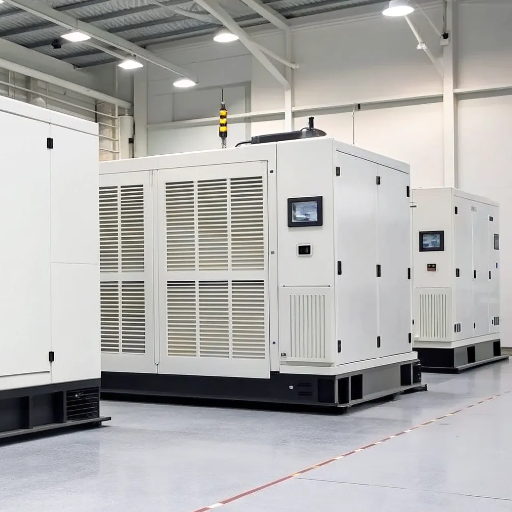
Commercial standby generator sizing is the engineering process of matching a generator’s rated output capacity to the actual electrical demand of a commercial or industrial facility during a utility grid outage, plus safety margins for motor surge, environmental conditions, and future expansion.
Under ISO 8528, a standby power rating (ESP) means the generator can deliver its full nameplate kW for the duration of an emergency outage, typically up to 200-500 hours per year. This is distinct from prime power (PRP), which allows continuous variable load operation, and continuous power (COP), which supports 100% constant load indefinitely.
For commercial buildings connected to a municipal grid, standby is the correct rating. The generator rests until needed, then must carry the entire designated emergency load without exceeding its rated capacity. If your calculations show a steady-state load of 400 kW, you cannot install a 400 kW standby generator. You need headroom.
Why Sizing Accuracy Matters
An undersized generator fails when it matters most. When total demand exceeds rated capacity, voltage and frequency sag below acceptable limits. Motors overheat, breakers trip, and sensitive equipment shuts down. In a hospital, that means ventilators and surgical suites go dark. In a data center, it means server crashes and corrupted databases.
An oversized generator wastes capital and fuel. Diesel engines running below 30% of rated load suffer from “wet stacking,” where unburned fuel and carbon accumulate in the exhaust system. This degrades engine life, increases maintenance costs, and reduces efficiency. The right size is precise, not approximate.
Explore our complete commercial standby generator buying guide for a full overview of system selection, fuel types, and code compliance.
How to Calculate Your Facility’s Total Electrical Load
Accurate commercial standby generator sizing starts with knowing your actual load. There are three reliable methods, and the best one depends on the data you have available.
Method 1: Equipment List with Running and Starting Watts
This is the most thorough method for facilities where you can inspect every piece of equipment. Create a spreadsheet listing every load the generator must carry during an outage.
For each item, record:
- Running watts: The continuous power required to keep the equipment operating.
- Starting watts: The surge power required to start electric motors (typically 3-6 times running watts for the first 2-3 seconds).
- Power factor: For three-phase loads, the ratio of real power (kW) to apparent power (kVA). Most commercial motors run at 0.8 power factor.
The formula for three-phase load is:
kW = (Amps x Volts x Power Factor x sqrt(3)) / 1,000
For a 480V three-phase motor drawing 50 amps at 0.85 power factor:
(50 x 480 x 0.85 x 1.732) / 1,000 = 35.4 kW running load
If that motor has a locked rotor amp (LRA) ratio of 5:1, the starting surge is 177 kW. Your generator must supply that surge without voltage dropping below 85% of nominal.
Sum all running loads, then identify the single largest motor starting surge. Add that surge to the total running load of all other equipment. This gives your worst-case starting demand.
Method 2: Historical Utility Bill Analysis
If your facility has been operational for at least 12 months, your utility bills contain the data you need. Look for the “peak demand” or “maximum demand” line item, usually expressed in kW or kVA.
Peak demand represents the highest load your facility drew during the billing period. For standby sizing, use the highest peak demand from the last 12 months. This number already includes motor starting surge and coincident load factors.
Apply the following adjustments:
- Convert kVA to kW: kW = kVA x Power Factor (use 0.85 if unknown).
- Add 25% margin: Multiply by 1.25 for future growth and safety.
- Verify critical load segregation: Confirm the peak demand represents only the loads you intend to back up. If you are backing up only critical systems (not the entire facility), this method overestimates.
Method 3: Peak Demand Meter Reading
For the most accurate real-time data, install a temporary clamp-on power meter at your main electrical panel. Record demand over a typical production week, capturing both normal operations and peak startup sequences.
This method is especially valuable for manufacturing plants where multiple large motors start simultaneously during shift changes. The meter captures the true coincident load, which is often 15-20% lower than the sum of individual equipment ratings because not everything runs at full load at the same time.
Use our generator sizing calculator for a quick initial estimate based on facility type and square footage.
Why Motor Starting Surge Changes Everything
Motor starting surge is the single biggest reason commercial standby generators fail during outages. When an electric motor starts, it draws locked rotor amps (LRA) for 1-3 seconds. This inrush current can be 3 to 6 times the motor’s full-load running amps.
A 100 HP three-phase motor might draw 124 amps while running but 620 amps at locked rotor. At 480V, that is 103 kW running and 515 kW starting. If your generator is sized only for running load, the voltage collapses when the motor starts.
Strategies for Managing Motor Starting Surge
There are four engineering approaches to handling surge without oversizing the entire generator:
- Staggered starting sequence: Program the automatic transfer switch or building management system to start motors in sequence, not simultaneously. This reduces peak demand to the largest single motor plus running loads.
- Reduced voltage starters: Install soft starters or variable frequency drives (VFDs) on large motors. These devices ramp up voltage gradually, reducing starting current to 1.5-2.5 times running amps instead of 5-6 times.
- Oversize the alternator only: Some manufacturers offer generators with oversized alternators relative to the engine. The larger alternator handles the brief magnetic inrush while the engine supplies steady-state power.
- Load shedding: Design the system to temporarily disconnect non-essential loads during startup, then reconnect them after the motors reach full speed. This is common in hospital and data center designs.
At ZC Power, we routinely specify soft starters for motors above 50 HP in standby applications. The added cost of 2,000−2,000−5,000 per starter often allows a 20-30% smaller generator, saving 15,000−15,000−40,000 in equipment.
Commercial Standby Generator Sizing by Industry
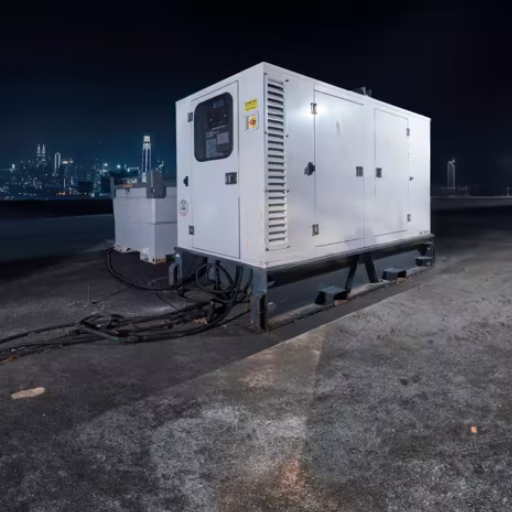
Different industries have radically different load profiles. A hospital’s life-safety systems behave nothing like a manufacturing plant’s motor load. Below are practical sizing benchmarks based on our 25 years of project experience.
Manufacturing Plants
Manufacturing facilities are motor-dominant. CNC machines, compressors, pumps, and conveyors create high starting surge and variable load profiles.
| Facility Size | Typical Critical Load | Recommended Standby Capacity | Common Applications |
|---|---|---|---|
| Small (10,000-30,000 sq ft) | 150-300 kW | 200-400 kW | Light assembly, packaging, food processing |
| Medium (30,000-100,000 sq ft) | 300-700 kW | 400-1,000 kW | Heavy machining, plastics, metalworking |
| Large (100,000+ sq ft) | 700-2,000 kW | 1,000-2,500 kW | Automotive, steel, chemical processing |
For manufacturing plants, always size based on the largest motor’s starting surge plus 25% margin. If the facility uses electric forklifts or EV charging, add those loads explicitly. They were not common five years ago, but they are standard now.
When Raj Patel, operations director at a 60,000-square-foot plastics extrusion plant in Gujarat, sized his standby system in 2024, he initially calculated 520 kW based on running loads. His ZC Power engineer identified three 100 HP cooling pumps with simultaneous starting requirements. The corrected sizing was 850 kW.
During a monsoon-season outage in August 2025, the system started every motor without voltage sag. Raj’s competitor across the street, running an undersized 600 kW unit, suffered a complete production line shutdown.
Hospitals and Healthcare
Hospitals represent the most demanding standby sizing environment. NFPA 99 and NFPA 110 Level 1 requirements mean failure is not an option.
| Facility Type | Typical Load | Recommended Standby Capacity | Notes |
|---|---|---|---|
| Small clinic | 75-150 kW | 100-200 kW | Life safety + critical care only |
| Medium hospital (200-400 beds) | 400-1,000 kW | 600-1,500 kW | Include MRI, CT, surgical suites |
| Large hospital (500+ beds) | 1,000-3,000 kW | 1,500-4,000 kW | Full facility backup, chiller plants |
Hospital sizing requires coordination with the electrical engineer of record. The critical branch, life safety branch, and equipment branch each have different start sequences. Chiller plants alone can demand 500-1,000 kW in tropical climates. Modern hospitals also have significant IT load, often 50-100 kW just for server rooms and network infrastructure.
Type 10 restoration (within 10 seconds) is mandatory for Level 1 systems. This affects generator selection beyond raw kW, as engine starting systems and alternator excitation must reach stable output within that window.
Data Centers
Data centers size standby capacity based on IT load plus mechanical cooling, with N+1 redundancy for critical tiers.
| Data Center Size | IT Load | Mechanical Load | Total Standby Capacity | Redundancy |
|---|---|---|---|---|
| Edge / Small (1-5 racks) | 20-50 kW | 30-75 kW | 75-150 kW | N+0 or N+1 |
| Medium (100-500 racks) | 200-1,000 kW | 300-1,500 kW | 750-3,000 kW | N+1 typical |
| Hyperscale (1,000+ racks) | 5,000+ kW | 7,500+ kW | 15,000+ kW | 2N or N+2 |
Data centers rarely use diesel for the full IT load continuously. The standby generator supports the UPS systems during extended outages while the UPS handles the instantaneous transfer. Still, the genset must be sized for 100% of design load plus any concurrent maintenance scenarios.
Retail and Hospitality
Retail, restaurants, and hotels have lighter motor loads but significant HVAC and refrigeration requirements.
| Facility Type | Typical Load | Recommended Standby Capacity |
|---|---|---|
| Small retail (5,000-15,000 sq ft) | 30-75 kW | 50-125 kW |
| Large retail / mall anchor | 150-400 kW | 200-500 kW |
| Restaurant / fast food | 40-100 kW | 75-150 kW |
| Hotel (100-200 rooms) | 200-500 kW | 300-750 kW |
For retail and hospitality, the primary sizing question is whether to back up the entire facility or only critical systems (lighting, POS, refrigeration, security). Partial backup typically reduces required capacity by 40-60%.
Office Buildings
Commercial office buildings have relatively light loads dominated by HVAC, elevators, lighting, and IT infrastructure.
| Building Size | Typical Load | Recommended Standby Capacity |
|---|---|---|
| Small office (10,000-25,000 sq ft) | 75-150 kW | 100-200 kW |
| Medium office (25,000-75,000 sq ft) | 200-500 kW | 300-750 kW |
| High-rise (100,000+ sq ft) | 750-2,000 kW | 1,000-2,500 kW |
Modern office buildings with high IT density and electric vehicle charging stations can surprise owners. A Class A office building that required 400 kW in 2018 may need 650 kW in 2026 due to server consolidation, EV chargers, and upgraded HVAC.
Environmental Derating Factors That Reduce Effective Capacity
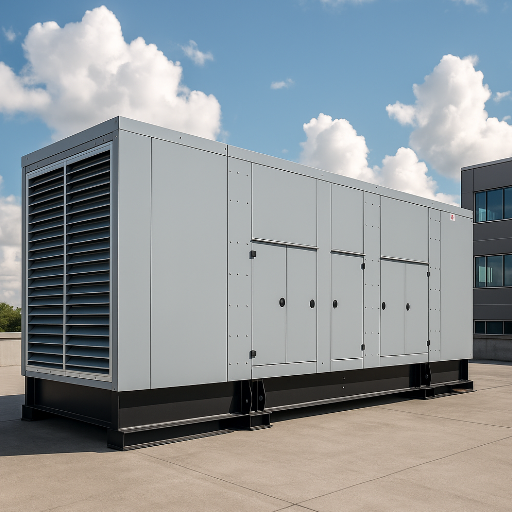
A generator rated at 500 kW at sea level and 25°C is not a 500 kW generator at 2,000 meters altitude and 45°C ambient. Environmental derating reduces effective output, and ignoring it leads to undersizing.
Altitude Derating
Diesel engines require oxygen for combustion. As altitude increases, air density decreases, and the engine produces less power.
- Above 1,000 meters (3,280 ft): Derate 3% per 300 meters (1,000 ft)
- Above 2,000 meters (6,560 ft): Derate 4% per 300 meters
A 500 kW generator installed at 2,500 meters altitude loses approximately 20% of its rated output. Effective capacity is 400 kW. You must size for 500 kW effective, which means selecting a 625 kW unit.
Temperature Derating
High ambient temperatures reduce air density and cooling efficiency.
- Above 40°C (104°F): Derate 2-3% per 5°C increase
- Above 50°C (122°F): Derate 3-4% per 5°C increase
A generator in a desert climate with 50°C ambient temperature and 2,000 meters altitude might lose 30% effective capacity. That 500 kW nameplate becomes 350 kW reality.
Other Environmental Factors
- Dust and sand: Clogged air filters reduce airflow. Specify heavy-duty filtration for mining and desert environments.
- Humidity: Extremely high humidity (above 80%) slightly reduces air density, though the effect is minor compared to altitude and temperature.
- Enclosure restrictions: Sound-attenuated canopies reduce cooling airflow. Add 5-10% capacity margin for silent enclosures in hot climates.
The 80% Rule and Future Growth Margin
Even with perfect load calculations and environmental corrections, never size a generator to run at 100% of rated capacity during normal emergency operation. The 80% rule is an industry standard that provides three forms of protection:
- Operating efficiency: Diesel generators run most efficiently between 70% and 80% of rated load. Above 85%, fuel consumption per kWh increases disproportionately. Below 50%, wet stacking becomes a risk.
- Contingency headroom: Emergencies create unexpected loads. A fire pump activates. Someone plugs in additional equipment. The building automation system behaves differently under stress. The 20% margin absorbs these surprises.
- Future growth: A commercial standby generator should serve the facility for 15-20 years. During that time, equipment upgrades, expansions, and new technologies (EV charging, additional server racks) increase load. Size for year 10, not year 1.
The practical formula is:
Generator Size = (Total Load + Largest Motor Surge) x 1.25
If your calculated worst-case demand is 600 kW, specify a 750 kW unit minimum. If altitude or temperature derating applies, divide the 750 kW by the derating factor. At 20% derating, you need a 938 kW nameplate unit, which rounds up to a 1,000 kW commercial standby generator.
NFPA 110 Sizing Requirements for Commercial Standby Systems
NFPA 110, Standard for Emergency and Standby Power Systems, governs commercial standby generator sizing in the United States and is referenced by building codes worldwide. Two provisions directly affect sizing:
Load Capacity: The generator must be capable of supplying the full connected load within its standby rating. You cannot assume load shedding or demand factors reduce the required capacity unless the system is specifically designed and approved for automatic load shedding.
Voltage and Frequency Stability: During starting of the largest motor, voltage must not drop below 85% of nominal, and frequency must not drop below 95% of nominal. If your motor starting surge causes a larger dip, the generator is undersized.
Fuel Supply: For Level 1 systems, NFPA 110 requires on-site fuel for the full demand period. While fuel supply is not strictly a sizing issue, it affects system design. A 1,000 kW diesel generator at full load burns approximately 250 liters per hour. A 96-hour supply (common hospital requirement) needs 24,000 liters of on-site storage.
Type 10 systems also require the generator to reach rated voltage and frequency within 10 seconds. This affects engine selection and starting system design, not just kW rating.
Review our NFPA 110 compliance guide for full details on Type 10 vs Type 60 and Level 1 vs Level 2 requirements.
Common Sizing Mistakes That Cost Facilities Millions
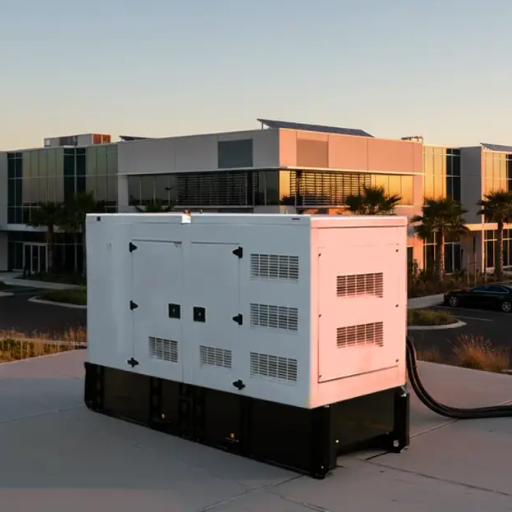
After sizing thousands of generators, our engineers see the same errors repeatedly. Here are the most expensive mistakes and how to avoid them.
Mistake 1: Ignoring motor starting surge
The number one cause of standby generator failure is sizing for running load only. Always calculate locked rotor amps for the largest motor and any motors that start simultaneously.
Mistake 2: Using nameplate ratings instead of actual load
Equipment nameplates show maximum possible load, not typical operating load. A 50 HP motor nameplate might indicate 37 kW, but if it normally runs at 60% load, its actual demand is 22 kW. Using nameplate ratings without demand factors oversizes the generator by 30-50%.
Mistake 3: Forgetting environmental derating
A generator purchased for a coastal facility and later relocated to a high-altitude mine will underperform. Always apply altitude and temperature derating before selecting the unit.
Mistake 4: No margin for future growth
Facilities that size for current load alone typically need replacement generators within 5-7 years. The cost of oversizing by 25% is far less than replacing an entire unit.
Mistake 5: Confusing standby and prime ratings
A prime-rated 500 kW generator is not equivalent to a standby-rated 500 kW unit for emergency backup. Prime ratings allow overload capacity and variable load profiles that standby ratings do not. Always specify ESP (standby) ratings for backup power applications.
For a broader look at standby generator pricing that includes ATS package costs, see our commercial standby generator cost breakdown.
Commercial Standby Generator Sizing Quick Reference
Use this table as a starting point for budgetary planning. Final sizing always requires a detailed load analysis.
| Facility Type | Size Range | Typical Standby Capacity | Key Sizing Factor |
|---|---|---|---|
| Small retail / restaurant | 5,000-15,000 sq ft | 50-150 kW | HVAC + refrigeration |
| Office building | 25,000-100,000 sq ft | 300-750 kW | HVAC, elevators, IT |
| Manufacturing plant | 30,000-100,000 sq ft | 400-1,000 kW | Motor starting surge |
| Hospital (200-400 beds) | 200,000+ sq ft | 600-1,500 kW | Life safety + chillers |
| Data center (medium) | 100-500 racks | 750-3,000 kW | IT load + cooling |
| Hotel (200+ rooms) | 150,000+ sq ft | 300-750 kW | Kitchen, laundry, HVAC |
For exact sizing, use the three methods described above or consult an engineer. Budgetary estimates based on square footage alone have an error margin of plus or minus 30%.
When to Bring in an Engineer
You can perform preliminary commercial standby generator sizing using the methods in this guide. However, certain situations demand professional engineering review:
- Facilities with total load above 500 kW
- Hospitals, data centers, or any NFPA 110 Level 1 application
- Sites above 1,500 meters altitude or with extreme temperatures
- Facilities with motors larger than 100 HP
- Projects requiring parallel generator operation
- Any installation where life safety depends on backup power
A professional load study includes power quality analysis, harmonic distortion assessment, and coordination with the automatic transfer switch. The engineering fee, typically 2,000−2,000−8,000 for commercial projects, is insignificant compared to the cost of an incorrectly sized system.
At Shandong ZC Power CO., LTD., our team of 80+ engineers provides complimentary preliminary sizing assessments for projects above 100 kW. We analyze your load list, apply derating factors, and recommend a specification with factory-direct pricing. Every recommendation is backed by 25 years of manufacturing experience and national-standard testing verification.
Conclusion
Commercial standby generator sizing demands accuracy. Undersize, and the system fails when your facility needs it most. Oversize, and you waste capital, fuel, and engine life. The right size comes from measuring actual load, adding margin for motor starting surge and future growth, and applying environmental derating for your specific site conditions.
Start with your equipment list or utility bills. Apply the 25% growth margin. Check your largest motor’s locked rotor amps. Factor in altitude and temperature. Then select a unit that delivers the required effective capacity within its standby power rating.
Commercial standby generator sizing is not a rounding exercise. It is the foundation of a backup power system that protects revenue, equipment, and lives for the next two decades.
Request a free sizing assessment from ZC Power’s engineering team and receive a detailed load analysis, derating calculation, and factory-direct quote for your next commercial standby generator project.


