Generator Maintenance Contract: A Complete Procurement Guide for 2026
A strong generator maintenance contract is a procurement document that protects uptime, controls lifecycle cost, and keeps your genset compliant. The best contracts define exactly what is serviced, which parts are covered, how fast emergency help arrives, and who is accountable when something fails.
Data center downtime costs between 5,600 and 5,600 and 9,000 per minute, according to Ponemon Institute research. Yet many facility managers sign generator service agreements that do not guarantee emergency response times or cover the OEM parts most likely to fail. The result is predictable: a grid outage strikes, the genset does not start, and the “savings” from a cheap contract turn into catastrophic losses.
At Shandong ZC Power CO., LTD. (ZC Power), we have supported global power projects since 1999. We know that a genset is only as reliable as the maintenance contract behind it. In this guide, you will learn what a generator maintenance contract should include, how the four main contract types compare, what drives pricing, and how to negotiate terms that actually protect your operation.
Key Takeaways
- A generator maintenance contract should explicitly cover scheduled service, OEM parts, load bank testing, emergency call-outs, and response-time SLAs.
- Preventive, comprehensive, inspection-only, and time-and-materials contracts differ sharply in cost, risk transfer, and best-fit use cases.
- Pricing depends on kW rating, run hours, visit frequency, parts coverage, and whether the provider can source genuine components globally.
- Red flags include vague scope language, hidden consumable exclusions, missing load bank testing, and auto-renewal traps.
- Factory-direct support networks often provide faster OEM parts availability and more predictable remote engineering support for international projects.
For a deeper look at how standby power fits into commercial procurement, see our complete commercial standby generator buying guide.
What Is a Generator Maintenance Contract?
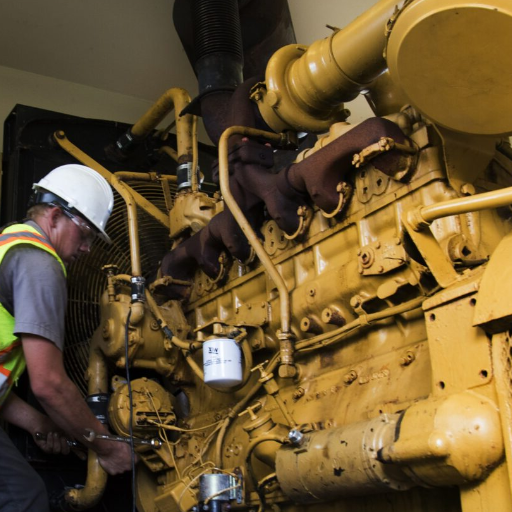
A generator maintenance contract is a written agreement between a genset owner and a service provider that defines scheduled inspections, preventive maintenance tasks, parts replacement, emergency repairs, and performance standards over a fixed term.
In practice, the term is used interchangeably with “generator service contract” and “generator maintenance agreement.” In some markets, especially Asia and the Middle East, you will also hear “generator annual maintenance contract” or “AMC.” The label matters less than the content. What matters is whether the document answers four questions:
- What will be done at each service visit?
- Who pays for parts, labor, travel, and consumables?
- How fast must the provider respond to an emergency?
- For how long is the provider accountable?
A hospital in Southeast Asia learned this the hard way. The facility signed a low-cost local maintenance contract that excluded OEM injectors and turbocharger service. For 18 months, the monthly test runs looked fine. When a real grid outage hit, the genset failed to carry load. A factory-direct contract with scheduled load bank testing and genuine parts would have caught the degradation long before the emergency.
Why a Written Generator Maintenance Contract Matters
A verbal agreement or a one-page invoice labeled “service plan” is not enough for critical infrastructure. A written generator maintenance contract matters for four reasons.
Uptime protection. The contract forces the provider to perform scheduled oil changes, filter replacements, coolant checks, and battery tests at defined intervals. Missed intervals are documented, so accountability is clear.
Compliance and liability. NFPA 110 requires emergency power supply systems to be exercised monthly and tested under load annually. The Joint Commission requires healthcare facilities to test emergency generators at 30% of nameplate kW for 30 minutes each month. A written contract ties these regulatory tasks to a responsible party.
Budget predictability. Instead of unpredictable repair bills, a comprehensive or preventive contract turns maintenance into a fixed operational cost. This makes CapEx planning easier and reduces the risk of emergency procurement at inflated prices.
Warranty preservation. Most OEM warranties require proof of scheduled maintenance using approved parts and fluids. A formal contract generates the service records you need if a major component fails within the warranty period.
Types of Generator Maintenance Contracts
Choosing the right contract type is the first negotiation decision. Each model shifts risk and cost differently.
Preventive / Planned Maintenance Contract
This is the most common generator service contract. The provider visits at set intervals to change oil, filters, coolant, belts, and batteries, and to inspect the engine, alternator, and control panel. Parts and labor for scheduled work are included. Breakdown repairs are usually billed separately.
Best for: Facilities that want predictable scheduled costs and are willing to self-insure major failures.
Comprehensive Full-Risk Contract
A comprehensive generator maintenance contract covers scheduled maintenance and breakdown repairs, including major components, within agreed limits. The provider absorbs most of the mechanical risk. Monthly or annual fees are higher, but there are no surprise invoices.
Best for: Hospitals, data centers, and other critical sites where downtime costs far exceed the contract premium.
Inspection-Only or Basic Contract
This model covers visual inspections, fluid checks, and test-run verification. It is inexpensive, but it excludes parts, labor, and repairs. It is rarely adequate for industrial gensets.
Best for: Small standby units in low-risk environments where the owner has in-house technical staff.
Time and Materials (Pay-as-You-Go)
Not really a contract, but a common arrangement. You call the provider when something breaks and pay for labor and parts at market rates. It offers flexibility but zero price predictability and often the slowest emergency response.
Best for: Sites with redundant systems and experienced on-site technicians.
OEM-Authorized vs Independent vs Factory-Direct Support
- OEM-authorized service uses genuine parts and factory-trained technicians, but may be expensive and geographically limited.
- Independent contractors can be cost-effective, but parts traceability and technical depth vary widely.
- Factory-direct support from a source manufacturer like ZC Power provides direct access to the engineers who built the machine, genuine OEM parts, and global logistics for international projects.
| Contract Type | Typical Coverage | Cost Range (Annual) | Best Fit |
|---|---|---|---|
| Inspection-only | Visual checks, test runs | 500–500–1,500 | Small standby units, low risk |
| Preventive / planned | Scheduled service + consumables | 1,500–1,500–8,000 | Commercial and industrial standby |
| Comprehensive full-risk | Scheduled + breakdown coverage | 3,000–3,000–25,000+ | Hospitals, data centers, critical sites |
| Time and materials | On-demand repairs only | Variable | Sites with in-house expertise |
What Should a Generator Maintenance Contract Include?
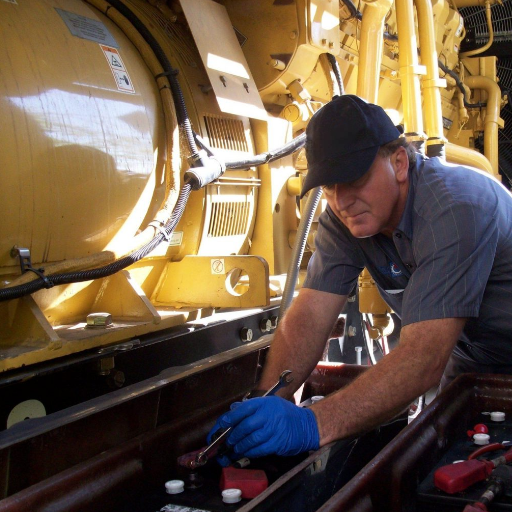
This is the section procurement managers should copy into their RFP. A complete generator maintenance contract should include the following clauses.
1. Scope of Scheduled Maintenance
List every task and its frequency. For a diesel standby genset, typical intervals include:
- Weekly: Visual inspection, coolant level, fuel level, battery voltage.
- Monthly: Test run under load, belt inspection, leak check.
- Quarterly: Oil and filter change, coolant test, fuel filter check.
- Annually: Load bank test, cooling system service, control panel calibration.
2. OEM Parts and Consumables
Specify that all replacement parts must be genuine OEM or factory-approved equivalents. Define who pays for oil, filters, coolant, belts, hoses, and batteries. Some contracts exclude “consumables” entirely, which turns a fixed-cost agreement into a variable one.
3. Labor and Travel
Confirm whether on-site labor, travel time, and mileage are included. For remote mining or construction sites, travel charges can exceed labor charges if they are not capped.
4. Load Bank Testing
Load bank testing is essential for diesel gensets. Running a unit lightly or unloaded causes wet stacking and carbon buildup. The contract should require annual load bank testing to at least the percentage mandated by local code or NFPA 110.
5. Emergency Call-Out and Response Time SLA
Define response time in hours, not business days. A 4-hour response might be reasonable for an urban hospital. A 24-hour response may be acceptable for a remote construction site. Include penalties or service credits if the SLA is missed.
6. Remote Monitoring and Diagnostics
Modern control panels from Deep Sea, SmartGen, and similar brands can stream voltage, frequency, oil pressure, coolant temperature, and fault codes. The contract should state whether remote monitoring is included and who acts on alarms.
7. Reporting and Documentation
Require a service report after every visit, including run hours, test results, parts replaced, and recommendations. These records support warranty claims, insurance disputes, and regulatory audits.
8. Exclusions and Limitations
No contract covers everything. Read the exclusions carefully. Common exclusions include fuel contamination, vandalism, acts of nature, and major overhauls outside the contract term. Make sure the exclusions are specific, not open-ended.
9. Term, Renewal, and Termination
Avoid auto-renewal clauses that lock you in without notice. A 12-month term with 60-day renewal notice is standard. Include termination rights if the provider misses SLAs repeatedly.
10. Pricing Structure and Payment Terms
Clarify whether pricing is fixed, tiered by run hours, or indexed to parts costs. Ask for a sample invoice so you understand exactly what you will pay.
Want a printable version of this checklist? Contact the ZC Power engineering team and request our Generator Maintenance Contract Checklist. It includes every clause above in RFP-ready format.
Generator Maintenance Contract Cost: What Drives Pricing
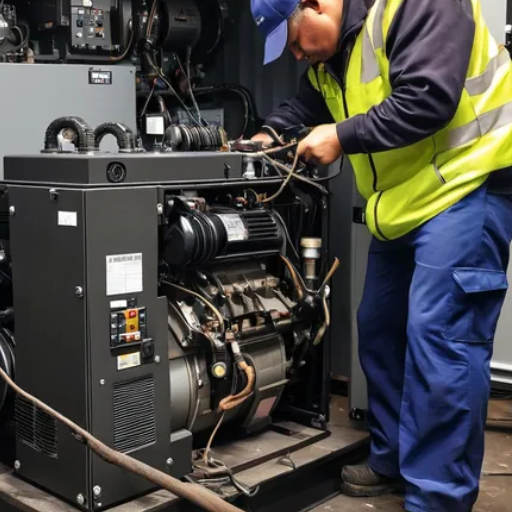
There is no universal price for a generator maintenance contract. Pricing depends on six factors.
kW / kVA rating. Larger gensets require more oil, larger filters, bigger cooling systems, and longer service times. A 2,000kW unit will cost significantly more to maintain than a 100kW unit.
Run hours and application. A prime power genset running 8,000 hours per year needs more frequent service than a standby unit tested for 30 minutes monthly. Prime power contracts are priced by operating hours.
Number of service visits per year. More visits mean higher fees, but also lower risk of undetected failures. Critical sites usually choose quarterly or monthly visits.
Parts coverage level. A contract that includes injectors, turbochargers, and alternator repairs costs more than one that covers only oil and filters.
Geographic location and travel. Urban sites with multiple local providers pay less than remote mines or offshore platforms where technicians must fly in.
Brand and parts availability. If your genset uses proprietary controllers or hard-to-source engines, the provider may charge a premium. Factory-direct support networks reduce this risk by maintaining direct parts pipelines.
As a rough benchmark, preventive maintenance for a small-to-mid commercial diesel genset typically runs 300to300to800 per visit. Large industrial units can cost 1,500to1,500to5,000 or more per visit. Comprehensive full-risk contracts multiply these figures based on the coverage ceiling.
Red Flags and How to Negotiate Better Terms
Not every generator maintenance contract is written in the owner’s interest. Watch for these red flags.
Vague scope language. Phrases like “routine maintenance as needed” or “industry standard service” give the provider unlimited wiggle room. Insist on a task list with frequencies.
Excessive exclusions for consumables. If oil, filters, coolant, and belts are excluded, your fixed-cost contract is not fixed. Request an all-inclusive rate or a capped consumables allowance.
No load bank testing. A contract that only runs the genset unloaded is incomplete. Demand annual load bank testing tied to NFPA 110 or local code.
Unclear response time commitments. “Best effort” emergency response is worthless for a hospital or data center. Negotiate a written SLA with defined response windows and remedies.
Non-OEM parts without disclosure. Some providers install aftermarket parts to protect their margins. Require written confirmation that OEM or factory-approved parts will be used.
Auto-renewal traps. Many contracts renew automatically unless you cancel 90 days in advance. Strike this clause or reduce the notice period to 30 days.
When negotiating, request at least three quotes. Ask each provider to bid against the same task list and SLA. This removes ambiguity and forces apples-to-apples comparison.
Choosing Between OEM, Dealer, and Factory-Direct Support
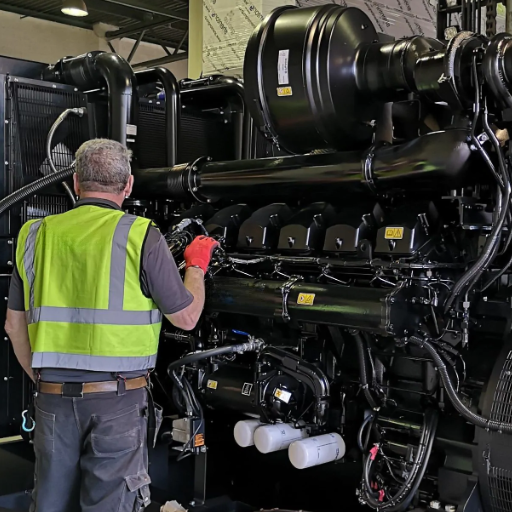
The service provider you choose is as important as the contract itself.
OEM-authorized service offers brand-certified technicians and genuine parts. The downside is cost and geographic coverage. If your site is outside a major service corridor, response times can stretch.
Local dealer networks balance cost and proximity. Quality varies, so verify technician certifications and parts inventory before signing.
Independent contractors are often the least expensive option. However, they may lack access to proprietary diagnostic tools or OEM parts, and turnover can mean the technician who serviced your unit last year is gone next year.
Factory-direct support is especially valuable for international projects. At ZC Power, our 80+ technical engineers provide remote diagnostics, installation guidance, and direct OEM parts supply. Because we built the genset, we retain the exact build schematics and can air-ship the correct components anywhere our clients operate.
For a facility in North Africa that purchased ZC Power containerized gensets, factory-direct support meant a failed controller was diagnosed remotely, a replacement DSE module was shipped within 48 hours, and local contractors were guided through installation by video call. Downtime was limited to one day instead of the weeks a parts search might have taken.
Industry-Specific Considerations
Different applications place different demands on a generator maintenance contract.
Hospitals and healthcare. Contracts must meet NFPA 110 and Joint Commission requirements. Monthly loaded testing, annual load bank testing, and immediate emergency response are non-negotiable. The contract should name the responsible technician and require signed test reports.
Data centers. Uptime tiers and N+1 redundancy influence contract design. Contracts should cover parallel synchronization systems, ATS testing, and fuel polishing. Response SLAs are usually measured in minutes, not hours.
Mining and construction. Dust, vibration, and remote locations accelerate wear. Contracts should include frequent air and fuel filter changes, cooling system cleaning, and ruggedized parts. Travel time must be clearly defined.
Commercial buildings and manufacturing. These sites often balance cost and reliability. A preventive contract with quarterly visits and annual load bank testing is usually the right starting point.
Conclusion
A generator maintenance contract is not an administrative afterthought. It is the operational backbone that keeps your genset ready, compliant, and cost-effective over its entire lifecycle. The best contracts define the scope in plain language, cover OEM parts and load bank testing, set real response-time SLAs, and avoid auto-renewal traps.
Before you sign, compare at least three providers against the same checklist. Ask hard questions about parts, travel, exclusions, and emergency response. And remember that the lowest-price contract often becomes the most expensive one the moment the genset fails when it matters most.
At Shandong ZC Power CO., LTD., we help global clients design generator maintenance contracts that match their application, environment, and uptime requirements. Whether you need OEM parts, remote engineering support, or a full-service agreement for a critical installation, our engineering team is ready to assist.
Contact ZC Power today to request a customized generator maintenance contract quote or to download our free Generator Maintenance Contract Checklist.