
Standby Generator Sizing: How to Calculate the Right kW/kVA for Backup Power (2026)
Standby generator sizing is the process of matching a backup generator set’s rated kW or kVA output to the actual electrical load it must carry during a utility outage. For most homes and small businesses, the correct standby genset falls between 10 kW and 250 kW, while clinics, retail centers, and light industrial facilities typically need 100 kW to 500 kW.
Get it wrong in either direction, and the consequences are expensive. An undersized unit will trip offline the moment your largest motor tries to start. An oversized unit will waste fuel, accelerate wear, and eventually suffer from wet stacking. In 25 years of manufacturing gensets at our facility in Jining, Shandong, we have seen both failures repeatedly.
This guide gives you a practical standby generator sizing methodology that works across residential, commercial, and light industrial applications. You will learn how to calculate total load, account for motor starting surge, apply environmental derating, and avoid the mistakes that turn a backup power investment into a liability.If you want the wider methodology that covers every generator type, not just standby units, our complete guide to how to size a generator walks through the full 10-step process from load list to final specification.
Key Takeaways
- Standby generator sizing starts with a complete load inventory, not a guess based on square footage.
- Motor starting surge, often 5 to 7 times running current, is usually the factor that drives the final kW rating.
- Apply a 20% to 25% future-growth margin, then target a genset that runs at 70% to 80% of its rated load.
- Altitude and high ambient temperature can reduce effective capacity by 20% or more.
- When the load includes large motors, mission-critical systems, or extreme site conditions, ask a factory engineer to review the calculation.
What Is Standby Generator Sizing?
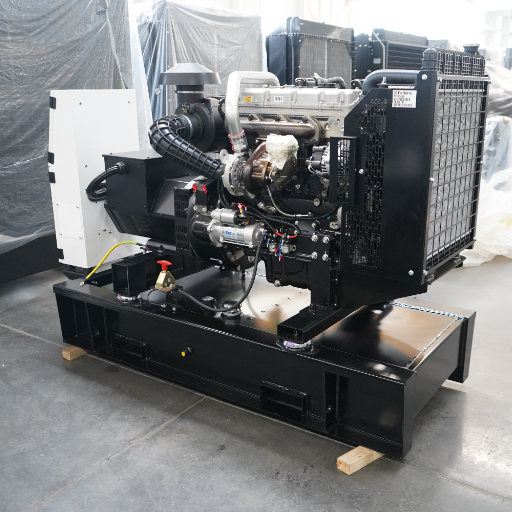
Standby generator sizing is the engineering calculation that determines how much backup power capacity a facility needs when the main grid fails. The goal is simple: select a genset that can start every critical load, maintain stable voltage and frequency, and leave room for future growth.
The calculation is governed by standards such as ISO 8528, which defines standby power (ESP) as the maximum output available during a utility power outage. ESP-rated gensets are not designed for continuous operation. They are built for emergency run times, typically limited to 200 hours per year with occasional overload capacity.
This matters because standby generator sizing is different from sizing a prime power or continuous power unit. A standby genset can be rated closer to peak demand because it runs only during outages. Prime power units, which run continuously in off-grid applications, must be sized with more conservative load factors and longer service intervals.
For a deeper explanation of how these ratings affect selection, see our guide to prime vs standby power ratings.
The Standby Generator Sizing Process
Accurate standby generator sizing follows seven steps. Skip any of them, and you risk either a failed transfer or an inefficient machine.
Step 1: List Every Load That Needs Backup Power
Start with a load inventory. Walk through the facility and record every piece of equipment that must operate during an outage.
For a home, the list typically includes:
- Refrigerators and freezers
- HVAC systems and heat pumps
- Well pumps and sump pumps
- Lighting and security systems
- Medical equipment and home offices
- Electric vehicle chargers
For a commercial or light industrial facility, the list expands to:
- Servers, switches, and telecommunications gear
- Fire alarms, emergency lighting, and elevators
- Production machinery and conveyors
- Air compressors, chillers, and pumps
- Point-of-sale systems and refrigeration
Separate critical loads, those that protect life safety, inventory, or revenue, from convenience loads that can wait for grid restoration. This distinction often determines whether you need a 50 kW unit or a 200 kW unit.
Step 2: Record Running and Starting Wattage
Every load has two power values: the watts it consumes while running, and the surge watts it demands at startup. Motors are the main reason starting watts exceed running watts.
For single-phase loads:
Watts = Volts × Amps × Power Factor
For three-phase loads:
kW = (Amps × Volts × Power Factor × √3) / 1,000
A 480V three-phase motor drawing 50 amps at 0.85 power factor consumes:
(50 × 480 × 0.85 × 1.732) / 1,000 = 35.3 kW
That same motor may draw 5 to 7 times its full-load current during direct-on-line starting. The generator must supply that surge without allowing voltage to collapse.For a step-by-step treatment of these formulas with worked totals for a full load list, our dedicated guide to generator load calculation shows how to turn each nameplate into a defensible demand figure.
Step 3: Apply Diversity and Demand Factors
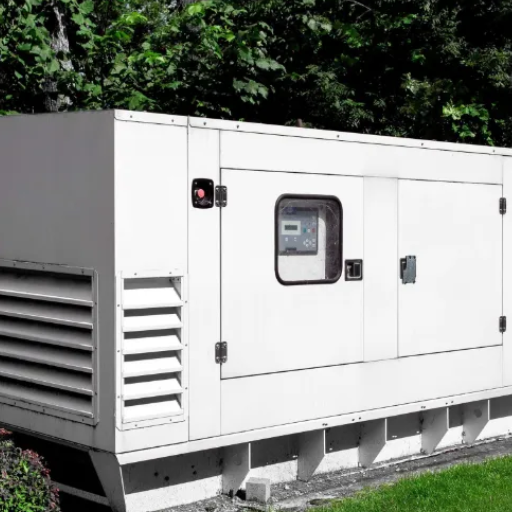
Not every load runs simultaneously. A demand factor recognizes that reality.
For example, a restaurant may have 80 kW of connected kitchen equipment, but only 50 kW operates at peak because not every fryer, oven, and mixer runs at full power at the same time. A typical demand factor for commercial kitchens is 0.6 to 0.7.
Demand factors vary by application:
- Residential: 0.7 to 0.85
- Office buildings: 0.6 to 0.75
- Retail stores: 0.7 to 0.8
- Light industrial: 0.8 to 0.9
Apply the demand factor to your total connected load to estimate the maximum demand the generator will actually see.
Step 4: Add the Largest Motor Starting Surge
Here is where standby generator sizing often succeeds or fails. The generator must be large enough to start the biggest motor in the system while every other load is already running.
A direct-on-line motor can pull 5 to 7 times its full-load amps for 1 to 3 seconds. That 35 kW motor from our earlier example might demand 175 kW to 250 kW at the instant it starts.
Voltage dip limits matter. NFPA 110 requires Level 1 emergency systems to maintain at least 85% of nominal voltage during motor starting. If your calculation shows a deeper dip, you must either increase the generator size or use a reduced-voltage starter.
Step 5: Apply a Safety Margin and Future Growth
Once you have the maximum demand plus the largest motor surge, add 20% to 25% for future growth and contingency. This is the 80% loading rule: a generator running at 70% to 80% of its rated load operates efficiently, leaves headroom for unexpected loads, and avoids wet stacking.
The practical formula is:
Generator Size = (Maximum Demand + Largest Motor Surge) × 1.25
If your calculated peak is 200 kW, target a 250 kW standby genset.
Step 6: Apply Environmental Derating
A generator’s published kW rating is based on standard conditions: sea level, 25°C ambient temperature, and clean intake air. Real sites rarely match those conditions.
Altitude reduces output because thinner air carries less oxygen to the engine. A common rule is 3% capacity loss per 300 meters above 1,000 meters. At 2,500 meters, a 250 kW genset effectively becomes a 200 kW machine.
High temperature has a similar effect. Above 40°C, expect roughly 2% to 3% capacity loss per 5°C increase. Dust, humidity, and restricted airflow around an enclosure can reduce cooling further.
If your site is at high altitude or in a hot climate, divide your required kW by the derating factor to find the published rating you actually need.
Step 7: Select the Final Standby kW/kVA Rating
Round up to the next standard genset size. Manufacturers typically offer standby ratings in fixed increments: 10 kW, 15 kW, 20 kW, 30 kW, 50 kW, 75 kW, 100 kW, 150 kW, 200 kW, 250 kW, and so on.
Always specify in kW at a given power factor, or in kVA if power factor is uncertain. At the standard 0.8 power factor, a 250 kVA genset delivers 200 kW. If your load has a lower power factor, you will need a larger kVA rating to deliver the same real power.
kW, kVA, and Power Factor for Standby Generators
Real power, measured in kilowatts (kW), is the actual work a load performs. Apparent power, measured in kilovolt-amperes (kVA), is the total power the generator must supply, including both real power and reactive power.
The relationship is:
kW = kVA × Power Factor
Most standby gensets are rated at 0.8 power factor. That means a 250 kVA generator can deliver 200 kW of real power. If your facility has many motors, transformers, or fluorescent lighting, the power factor may drop below 0.8, and you will need a larger kVA rating than the kW figure alone suggests.
Voltage also matters. North American homes use 120V/240V single-phase. Commercial and industrial sites often use 208V, 480V, or 600V three-phase. The formula for three-phase power is:
kW = (Amps × Volts × PF × √3) / 1,000
Always confirm your facility voltage before specifying a genset. A mismatch between generator output voltage and facility distribution voltage is an expensive mistake.
Motor Starting Surge: The Sizing Wildcard
When an electric motor starts from standstill, it behaves like a short circuit for a brief moment. The locked rotor amps (LRA) listed on the motor nameplate tell you exactly how much current the motor draws at startup.
Starting methods change the surge dramatically:
| Starting Method | Surge Multiplier | Typical Application |
|---|---|---|
| Direct-On-Line (DOL) | 5–7× FLA | Small pumps, compressors |
| Star-Delta | ~3× FLA | Medium motors |
| Soft Starter | 2–2.5× FLA | Large motors, frequent starts |
| Variable Frequency Drive (VFD) | 1–1.5× FLA | Controlled acceleration |
Because DOL starting produces the highest surge, it often dictates generator size. One practical way to reduce the required genset is to convert large motors to soft starters or VFDs. The upfront cost is usually lower than buying a larger generator.
Another strategy is staggered starting. If your control sequence starts the largest motor first, then brings smaller loads online one by one, the generator sees a much lower peak demand. Pair this approach with an automatic transfer switch that supports load-shedding logic.
Standby Generator Sizing by Application
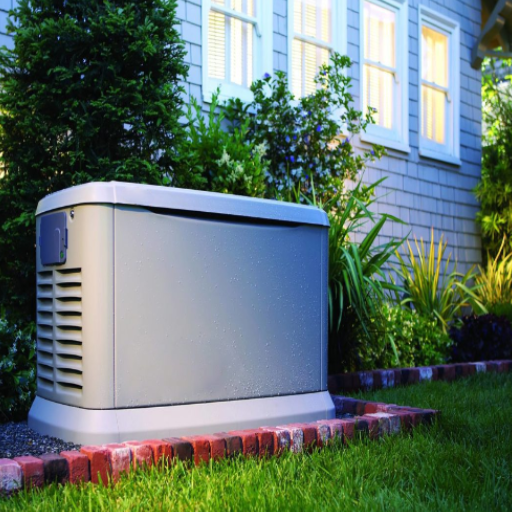
The same calculation principles apply everywhere, but the inputs change by facility type.
Residential Standby Generators
A typical 2,000 to 2,500 square foot home with central air, a well pump, and standard appliances needs 20 kW to 24 kW. Add a Level 2 EV charger or a heat pump, and the requirement climbs to 24 kW to 30 kW.If you are still narrowing down the ballpark for your property, our overview answering what size generator do i need gives quick sizing charts by home size, fuel type, and EV charging setup.
When Priya upgraded her home near Austin with a heat pump and a 7.2 kW EV charger, her original 20 kW standby plan no longer worked. After recalculating the load with the charger and heat pump startup surge, she selected a 27 kW unit. During the next winter storm, the system started automatically and carried the entire house for 18 hours. For a room-by-room method that applies NEC demand factors to residential backup, our detailed guide to whole house generator sizing shows how to build the load list and pick the right capacity.
Small Commercial Standby Generators
Offices, retail stores, and restaurants usually need 50 kW to 150 kW. The deciding factor is whether you back up the entire building or only critical circuits.
Full-building backup for a 5,000 square foot office with HVAC, servers, and lighting typically requires 100 kW to 150 kW. Critical-load-only backup for the same space might need only 50 kW to 75 kW.
Healthcare and Essential Services
Clinics, nursing homes, and small hospitals have strict life-safety requirements under NFPA 110. These facilities need enough capacity to power medical gas systems, surgical lighting, refrigeration for medications, and emergency communications.
A small clinic often needs 75 kW to 150 kW. A 100-bed hospital can require 500 kW to 1,000 kW or more, depending on chillers and imaging equipment.
Light Industrial Standby Generators
Small manufacturing plants, warehouses, and workshops typically need 150 kW to 500 kW. The largest motor usually drives the sizing decision. A facility with a 100 HP compressor may need 300 kW to 400 kW of standby capacity unless it uses a soft starter.
Environmental Derating for Standby Generators
Environmental conditions reduce the power a genset can actually deliver. Always account for them before finalizing the unit.
Altitude Derating
Above 1,000 meters, engine output drops because air density decreases. Use approximately 3% derating per 300 meters of elevation.
A 250 kW genset at 2,500 meters:
- Elevation above 1,000 m: 1,500 m
- Derating: 1,500 ÷ 300 × 3% = 15%
- Effective capacity: 250 kW × 0.85 = 212.5 kW
If your site needs 250 kW of effective power at 2,500 meters, specify at least a 294 kW unit, which rounds up to a 300 kW genset.
Temperature Derating
High ambient temperature reduces air density and cooling efficiency. Above 40°C, apply roughly 2% to 3% derating per 5°C increase.
Dust, Humidity, and Enclosure Selection
Dusty environments clog air filters and radiators. Humid or coastal sites accelerate corrosion. In these conditions, choose a genset with heavy-duty air filtration, anti-corrosion powder coating, and adequate clearance around the enclosure. For noise-sensitive sites, a sound-attenuated canopy keeps operational noise below 75 dB while protecting the engine from dust and moisture.
Common Standby Generator Sizing Mistakes
Even experienced buyers make these errors:
- Ignoring motor starting surge. Using running watts alone guarantees a failed start.
- Using nameplate ratings instead of actual load. Nameplate values are maximums; real operating current is usually lower.
- Forgetting environmental derating. A sea-level rating means little at 2,500 meters.
- Skipping the future growth margin. A genset should last 15 to 20 years; your load will grow.
- Confusing standby and prime ratings. A standby-rated genset cannot run continuously off-grid.
- Neglecting ATS and AMF coordination. The transfer switch must handle the generator output and the load switching sequence.
When Carlos, a facility manager in Mexico City, installed a 200 kW standby genset for his packaging plant, he did not account for altitude. At 2,240 meters, the unit effectively delivered only 170 kW. During the first outage, the generator started every load except the 40 HP compressor. The facility lost a full production shift. Upgrading to a 250 kW unit with a soft starter on the compressor solved the problem permanently.
Standby Generator Sizing Quick Reference
| Application | Typical Load Range | Key Sizing Factor |
|---|---|---|
| Small home | 10–20 kW | Largest motor (HVAC, pump) |
| Large home with EV/heat pump | 22–30 kW | EV charger + heat pump startup |
| Small office/retail | 50–100 kW | HVAC and server load |
| Restaurant | 75–150 kW | Kitchen equipment demand factor |
| Medical clinic | 75–150 kW | Life-safety and imaging loads |
| Light industrial | 150–500 kW | Largest motor starting surge |
Use this table for early budgeting only. Always confirm the final size with a detailed load calculation.
When to Bring in a Standby Power Engineer
Some projects are straightforward. Others need professional review. Call an engineer when:
- The facility has motors larger than 50 HP.
- The application is a hospital, data center, or other mission-critical site.
- The site is above 1,500 meters or regularly exceeds 40°C.
- You need parallel operation or N+1 redundancy.
- The power factor is below 0.8.
- Local code requires documented load studies or NFPA 110 compliance.
At Shandong ZC Power CO., LTD., our team of 80+ engineers provides complimentary standby generator sizing assessments. We review your load list, site conditions, and voltage requirements, then recommend a genset configuration that fits your exact needs, whether that is an open-type unit, a silent canopy, or a containerized power station.
Contact our engineering team for a free site assessment and factory-direct quote.
Conclusion
Standby generator sizing is not a guessing game. It is a structured engineering calculation that starts with your actual load, adds the largest motor surge, applies a growth margin, and adjusts for the environment where the genset will run.
The most expensive mistake is buying on square footage or a rough estimate. The second most expensive mistake is oversizing so severely that the unit never reaches a healthy operating load. The right size keeps your critical systems online, protects your equipment, and delivers reliable backup power for the full life of the machine.
If you are evaluating a standby genset for a home, business, or industrial facility, start with a complete load inventory. Then work through the seven steps in this guide, or reach out to a manufacturer who can validate the calculation with factory engineering support.
Request your free standby generator sizing assessment from ZC Power today. Our engineers will review your project, confirm your kW and kVA requirements, and recommend a standby genset built for your exact site conditions.


