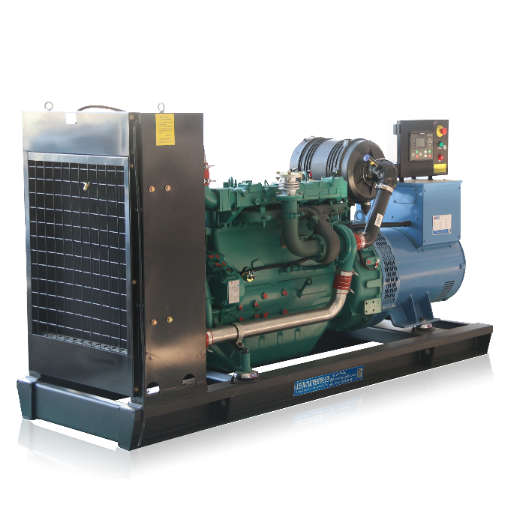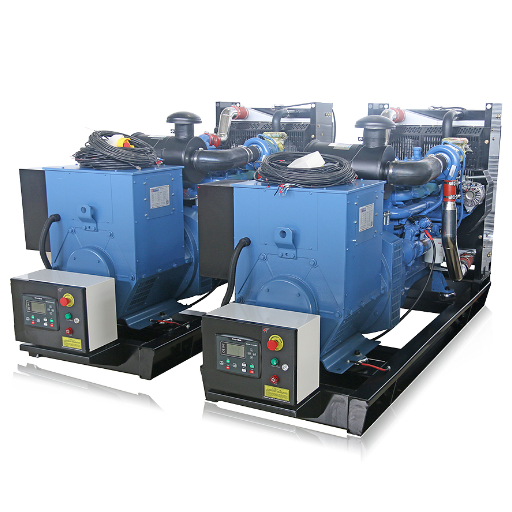
Custom CSC Certified Generator Containers: A Buyer’s Guide
A CSC plate certifies that a freight container is structurally safe for international transport. It doesn’t certify the generator inside. That distinction matters because custom CSC-certified generator containers are, by definition, modified containers, and their plates are provisional until an authorized inspection body reassesses the design.
Most suppliers don’t mention that part.
Elena runs procurement for an EPC contractor in Rotterdam. She ordered 12 containerized gensets for a gas plant, and every supplier confirmed CSC certification in writing.
Six weeks before sailing, her forwarder asked for the plate number. Each plate belonged to the donor shipping container, not the modified enclosure around her 1,250 kVA sets. Two units were re-booked as breakbulk.
If you are specifying a unit now, you are at the same decision point Elena was. This guide covers what the plate actually proves, which modifications threaten it, how the mass arithmetic works, and what to write into the purchase order. Our covers the hardware. This page covers the approval that lets the hardware travel.
If you already have a container specification, our will review the modification schedule against your shipping plan before you commit to steel.
Key Takeaways
- A CSC plate is issued against a container design type approved by a national Administration. It isn’t a factory certificate, and it says nothing about the genset.
- Cutting openings for exhaust, radiator air, cable entry or personnel doors is a modification. Under CSC Annex I Regulation 1(c), a modification that voids the original approval obliges the owner to remove the plate.
- Re-approval by an Authorized Inspection Body is a design re-assessment, not a depot survey. Budget engineering time and drawing review, not a surveyor’s afternoon.
- ISO 668 sets a 30,480 kg gross mass ceiling for most stock containers, with 36,000 kg permitted under later amendments. The plate governs, and exceeding it blocks loading.
- DNV 2.7-1 is not CSC. An offshore container can carry both approvals, and most offshore projects need both.
What a CSC Certified Generator Container Actually Means
CSC stands for the International Convention for Safe Containers, adopted in 1972 under the International Maritime Organization. It governs the structural safety of freight containers moving in international transport. Every approved container carries a CSC safety approval plate, at least 200 mm by 100 mm, normally fixed to the left door.
The plate isn’t a certificate. It’s a statement of which approval the box was built under, and what that approval covers.
The CSC safety approval plate, field by field
The field layout is standardized, and the explains each line.
| Field | What it tells you |
|---|---|
| Country of approval and reference number | Which Administration approved the design, and under which approval |
| Date of manufacture | Starts the five-year clock for the first examination |
| Manufacturer’s identification number | Ties the physical box to the approval record |
| Maximum operating gross mass | The hard ceiling for tare plus everything bolted inside |
| Allowable stacking load at 1.8 g | What can sit on top of the box, and under what |
| Transverse racking test load | Structural stiffness, which matters once you cut side openings |
| Next examination date or ACEP mark | Whether the plate is currently valid |
Read the last row carefully. A young container can legitimately show no next examination date, because the first one falls due at five years. An older plate with no date and no ACEP mark is the one to question.
PES and ACEP: the two examination regimes
The Convention offers two ways to keep a container in service. Under the Periodic Examination Scheme, the first examination happens no later than five years after manufacture, then at intervals of no more than 30 months. The plate is stamped with the next examination date, or NED.
The alternative is an Approved Continuous Examination Program. The plate carries the owner’s ACEP reference and no examination date, because examination happens continuously under an approved procedure rather than at fixed intervals.
Either way, the obligation sits with the owner. If you buy a containerized genset and become the owner, the examination duty transfers to you.
What a CSC plate does not cover
This is where most of the confusion lives. The plate says nothing about electrical performance, fire rating, acoustic performance, hazardous area classification, offshore lifting duty, or whether the genset inside suits your load and site conditions.
None of those are CSC questions. A supplier who answers them with “CSC certified” has answered a different question. Containerized generator certification covers the box, and the genset carries its own documentation.
Why Customization Puts the CSC Plate in Question
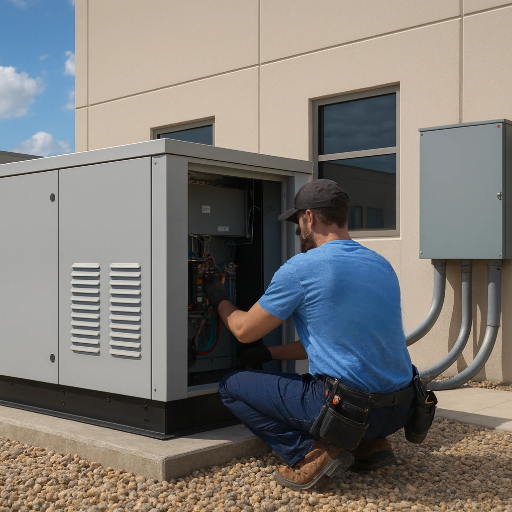
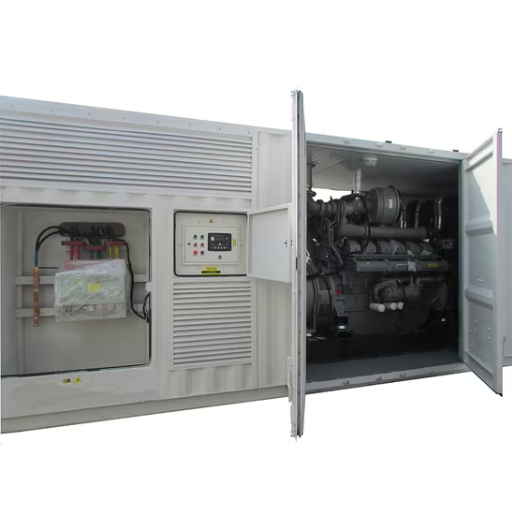
Here is the part that changes a purchase order for custom CSC-certified generator containers. A generic shipping container leaves the factory as a closed steel box. A generator container leaves it with a hole for the exhaust, louvers for radiator air, penetrations for cable and fuel lines, and a personnel door. It usually carries a different base frame, with several tonnes of machinery on it.
Every one of those is a departure from the design the plate refers to.
The four modifications that matter
Not all changes are equal. These four carry the most weight in a re-assessment:
- Structural penetrations. Exhaust stacks, radiator inlet and outlet louvers, cable entries, fuel and drain lines. Each opening interrupts a wall or roof that was tested as a continuous surface.
- Mass added beyond the plate rating. Engine, alternator, base frame, fuel tank and enclosure can add 10 to 20 tonnes to a box whose plate was written for an empty shell.
- Changes to the structural envelope. Extra doors, a removable roof section, a raised canopy, or welded brackets on the side walls all alter racking and stacking behavior.
- Changes to lifting and securing provisions. New fork pockets, repositioned lifting points, or added lashing rings change how the unit is handled, which is exactly what the Convention regulates.
Regulation 1(c): when the plate must come off
The Convention is unusually direct about this. Under CSC Annex I, , the owner must remove the Safety Approval Plate if the container has been modified in a manner that would void the original approval and the information on the plate.
Read that again. The Convention does not say the plate becomes inaccurate. It says the owner must take it off.
That’s why “the donor container was CSC certified” isn’t an answer. The certification belonged to a box that no longer exists in the form it was approved.
Regulation 11 and the Authorized Inspection Body route
Removing the plate is not the end of the process. Annex I Regulation 11 requires the owner of a structurally modified container to notify the Administration or an approved organization, which may require retesting before recertification. On a genset package, that is the CSC plate re-certification step most quotations leave out.
In practice, that means an Authorized Inspection Body appointed by the competent authority of the Administration. The is explicit: modifications to a container’s original design require the CSC type approval to be re-assessed by an AIB.
The same guidance requires modified containers that fall outside CSC or ISO compliance to be declared to the carrier at booking.
There’s a route that avoids all of this, and it’s worth knowing before you cut anything. If the enclosure is built and approved as a purpose-built containerized genset rather than converted from a standard box, the design can be type-approved in its finished configuration. No conversion, no re-assessment argument. That’s a specification decision, not a paperwork one, and it has to be made before fabrication.
The Mass Problem: ISO 668 Limits Versus Genset Weight
The plate carries a gross mass figure for a reason. It is the number that decides whether the unit loads, not the number on the genset datasheet.
30,480 kg, 36,000 kg, and what your plate actually says
ISO 668 sets dimensions and ratings for series 1 freight containers. The traditional maximum gross mass is 30,480 kg for both 20 ft and 40 ft units. Amendment 2, published in 2016, raised the permitted rating to 36,000 kg for all standard sizes except 10 ft.
Those are defaults, not guarantees. Individual containers are plated at whatever their design approval supports, and older boxes often still carry 30,480 kg. The plate always wins over the standard.
Working the arithmetic for a 1,000 kVA unit
Take a 1,000 kVA set at 0.8 power factor in a 40 ft container. A typical dry mass breakdown looks like this:
| Component | Approximate mass |
|---|---|
| Engine | 4,500 kg |
| Alternator | 2,200 kg |
| Base frame | 1,200 kg |
| Enclosure, lining and exhaust | 1,000 kg |
| Fuel, 1,000 liters | 850 kg |
| Control panel, radiators, sundries | 400 kg |
| Genset package | ~10,150 kg |
| Container tare | 3,800 kg |
| Gross mass | ~13,950 kg |
Against a 30,480 kg plate, that leaves roughly 16.5 tonnes of headroom. At this rating, mass isn’t your constraint.
On most projects the limit that binds first isn’t container mass at all. It is the road axle limit on the route to site and the crane capacity at the pad, both of which usually sit well below 30,480 kg.
Now push to 2,500 kVA. The machinery alone runs to about 17,000 kg, fuel adds another 1,275 kg, and the gross figure lands near 22,000 kg. Still compliant, but the margin is no longer comfortable. At 3,000 kVA and above, or when a large set goes into a 20 ft box, gross mass becomes the first check rather than the last.
Kwame found that out the hard way. His team specified a 3,200 kVA set in a 40 ft high cube and reused a donor container plated at 30,480 kg. The finished unit weighed 31,200 kg wet.
The terminal refused it at the gate. The options were draining fuel and pulling the exhaust silencer for the voyage, or re-booking the shipment. The plate had been the last thing anyone checked.
Stacking, racking and one-door-off ratings
Two more plate figures matter on a generator container.
The allowable stacking load at 1.8 g sets what can sit on top. Genset containers are rarely stacked in service, but vessel stowage still applies the figure, and a low rating can push your unit to deck stowage at a higher freight rate.
The transverse racking test load describes resistance to side-to-side distortion. A long louver opening in a side wall reduces it. That is one reason an AIB asks for the modification drawing rather than a photograph.
How to Specify a Custom Containerized Generator That Can Still Be Plated
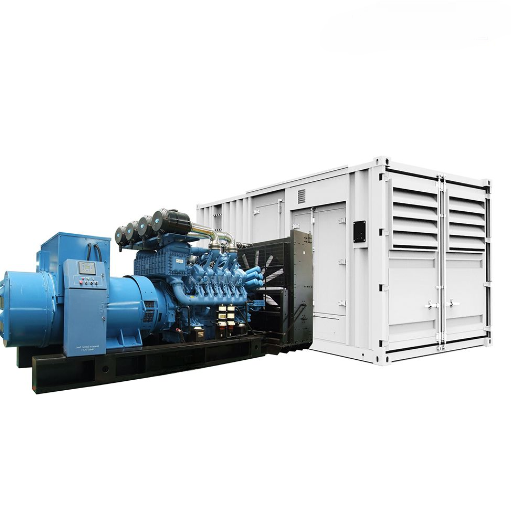
The cheapest way to handle CSC on a custom build is to decide the approval route before the first cut. Specifying a custom containerized generator is an engineering exercise wrapped in a certification exercise, and three documents do most of the work.
The specification schedule for the purchase order
Put these in the technical annex, not the covering email:
| Item | What to state |
|---|---|
| Approval route | Purpose-built type approval, or conversion with AIB re-assessment |
| Design basis | Container design type and approval reference the build follows |
| Modification schedule | Every opening, door, penetration and base change, with dimensions and positions |
| Mass budget | Dry mass, wet mass, gross mass against the plate rating |
| Stacking and racking | Required rating, and whether stacking is prohibited |
| Examination regime | PES with next examination date, or ACEP registration |
| Evidence package | Plate photographs, approval reference, modification approval, examination record |
| Ownership transfer | Who holds the approval and who carries the examination duty after delivery |
The modification schedule is the document that decides how long approval takes. A schedule written after fabrication is a schedule written from photographs.
Choosing between examination and re-assessment
These are two different services and they are routinely confused.
An examination is the routine check under PES or ACEP. A qualified examiner confirms the container is in a condition that does not endanger anyone. It keeps an existing approval alive. The sets the bar at knowledge and experience rather than a formal license.
A re-assessment is what happens when the approval itself is in question because the design changed. It involves an AIB, the modification drawings, the mass calculation, and a decision on whether the original type approval still applies. It is an engineering review, and it takes longer than an inspection.
If a supplier offers “CSC certification” on a modified unit as a short line item, ask which of the two is meant. The same confusion turns up when a project schedule lists modified shipping container certification as a routine task.
Who owns the approval after delivery?
This is the question that catches buyers at the five-year mark. The plate belongs to the container, but the duty belongs to the owner. When the unit ships to your site, you inherit the obligation to examine it on schedule.
Two practical consequences. Name the responsible person in the handover pack. And confirm whether the ACEP or PES arrangement survives the export, because a program registered under one Administration does not automatically transfer to another.
If you would rather not manage that transfer alone, our team can document the design basis and the approval route as part of the build package. Send us your container specification and we will tell you which route your modification schedule actually needs.
CSC Is Not DNV 2.7-1: The Offshore Distinction
Offshore projects run into a second certification and often conflate the two.
CSC covers structural safety in intermodal transport: ship, rail and road. It says nothing about lifting a container by crane onto a platform in open sea.
DNV 2.7-1, now DNV-ST-E271, and EN 12079 cover offshore containers designed for repeated crane lifting, dynamic lifting factors and open-sea supply-vessel transport. ISO 10855 is emerging as EN 12079’s successor framework.
The relationship between them is the useful part:
- A DNV 2.7-1 container isn’t required to carry a CSC plate.
- A CSC plate doesn’t qualify a container for offshore lifting.
- Neither approval substitutes for the other.
- Dual certification is common, and most offshore projects specify both.
There’s a third gap worth naming. DNV 2.7-1 certifies the container and its lifting set. It doesn’t certify the equipment inside, so fire rating, hazardous area classification and electrical protection each need their own basis.
What to Ask Before You Sign
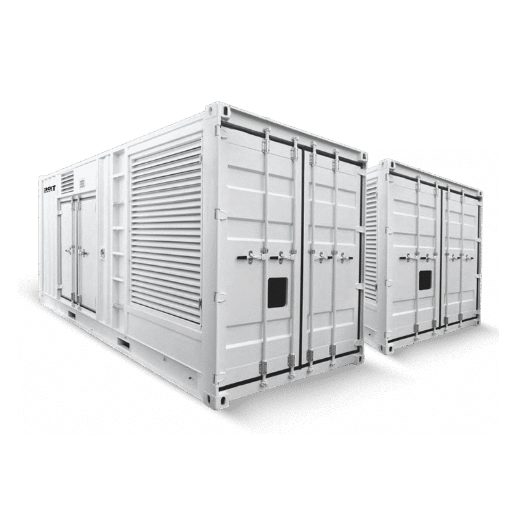
Four questions separate a supplier who understands the Convention from one who repeats a marketing line.
- Is this container a converted stock box, or a purpose-built design approved in its finished configuration?
- Which Administration approved the design, and what is the approval reference on the plate?
- What is the gross mass at wet weight, and against what plate rating?
- Which examination regime applies, and what does the handover pack contain?
If the answers to questions 1 and 3 don’t exist in writing, the CSC claim in the quotation is a claim about a different container.
One more document is worth requesting. The GA drawing is what an AIB will read, because it shows the openings and the base frame in relation to the approved design. Our guide to explains what to look for.
If the enclosure includes substantial louver area for radiator airflow, the covers how those openings interact with thermal performance.
Frequently Asked Questions
Is a CSC certified generator container safe to ship as a normal container?
Yes, if the plate is valid and covers the unit as built. It ships as standard freight, which avoids breakbulk handling and out-of-gauge rates. The plate must reflect the modified design, not the donor box.
Does modifying a container void its CSC certificate?
It can. Under CSC Annex I Regulation 1(c), the owner must remove the Safety Approval Plate if a modification voids the original approval. Whether your specific modification does that depends on whether it changes the structural envelope, the mass, or the lifting and securing provisions.
How long does CSC plate re-certification take for a modified container?
It depends on the Authorized Inspection Body and the Administration, and on how complete your modification drawings are. Treat it as engineering review time rather than inspection time, and raise it at the specification stage rather than after fabrication.
What is the difference between a CSC plate and DNV 2.7-1?
A CSC plate certifies structural safety for intermodal transport. DNV 2.7-1 certifies an offshore container for repeated crane lifting. Neither substitutes for the other, and offshore projects commonly require both.
How long is a CSC plate valid?
The first examination falls due no later than five years after manufacture, then at intervals of no more than 30 months unless the owner operates an Approved Continuous Examination Program.
Conclusion
Custom CSC certified generator containers are specified, not ordered from a catalog. The plate on a stock box describes a design that no longer matches a box with an exhaust stack, four louver openings and 12 tonnes of machinery inside it.
Three decisions prevent most of the problems. Choose purpose-built type approval or conversion-with-re-assessment before fabrication, not after. Write the modification schedule and the mass budget into the purchase order. And confirm who carries the examination duty once the unit leaves the factory.
Ines did all three on a 1,600 kVA build for a port project. She engaged the inspection body before the first cut, submitted the modification drawings with the fabrication package, and had the plate reissued with the modification date stamped alongside the original. The approval added five weeks. Found at the terminal instead, it would have added more.
If you are at the specification stage, send your container drawings, modification list, wet mass and shipping route to our engineering team. We will tell you which approval route your design needs, and quote the build factory-direct from our plant in Jining, Shandong. or read the companion guide on for the freight side.