How to Import a Generator from China: The Complete 2026 Guide
To import a generator from China, follow seven steps: define your specification, find and verify a supplier, negotiate payment and Incoterms, arrange pre-shipment quality control, book sea freight with the correct documents, clear customs under the right HS code, and commission the unit on arrival. Budget 25-40% above the ex-factory price for your true landed cost, and allow 8-14 weeks from first inquiry to delivery.
Here is the part that surprises first-time importers: negotiating the purchase price is the easy half. Margins on imported generators are won or lost in freight choices, document timing, and HS codes, not at the negotiating table.
If you are planning to buy a generator from China right now, you have probably already seen the price gap. A 100kVA silent diesel genset that costs $25,000 from a Western dealer is quoted at half that from a Chinese factory. You are right that the savings are real. You are also right to wonder where buyers get burned. This guide walks through the complete import process with the numbers nobody else publishes: a worked landed-cost calculation, a week-by-week timeline, and a compliance matrix for six major destination markets. We write this from the shipping side of the table. Shandong ZC Power CO., LTD. has exported diesel generator sets to more than 50 countries since 1999, and this is the exact process our export team walks buyers through every week.
Key Takeaways
- The 7-step import process: define spec, verify supplier, negotiate payment and Incoterms, pre-shipment QC, shipping and documents, customs clearance, delivery and commissioning.
- True landed cost typically runs 25-40% above the ex-factory price once you add freight, insurance, duty, broker fees, and inland delivery. Our worked example below lands at +38%.
- Diesel gensets classify under HS codes 85021100 (up to 75kVA), 85021200 (75-375kVA), 85021310 (375kVA-2MW), and 85021320 (above 2MW). The wrong code means delays or overpaid duty.
- Payment safety follows structure, not trust: T/T 30/70 against a bill of lading copy, or an irrevocable letter of credit for orders above roughly $50,000.
- Plan for 8-14 weeks end to end. Production takes 25-45 days and sea freight takes 20-40 days before customs even sees your container.
Still sizing your unit? Start with our guide on how to size a standby generator for your facility, because every downstream cost in this article scales with the kVA you choose.
How to Import a Generator from China in 7 Steps
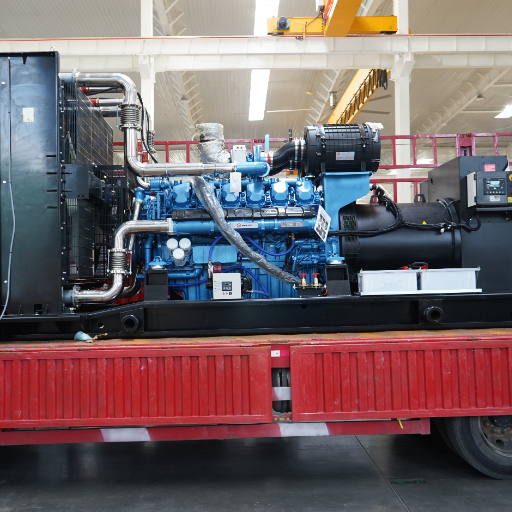
- Define your specification. kVA rating, voltage, frequency, phase, engine brand, and canopy type.
- Find and verify a supplier. Confirm you are dealing with a real factory, not a reseller.
- Negotiate price, payment terms, and Incoterms. T/T 30/70 or L/C; FOB is the default for most buyers.
- Arrange pre-shipment quality control. Factory test reports plus a third-party inspection ($250-500).
- Book sea freight and prepare documents. Invoice, packing list, bill of lading, certificate of origin, compliance certificates.
- Clear customs. Correct HS code, destination compliance documents, and a licensed customs broker.
- Receive, inspect, and commission. Site prep, installation, first-load testing, and warranty registration.
Each step below includes the details that generic guides skip.
Step 1: Define Your Specification Before You Request Quotes
Vague inquiries get vague quotes. A supplier who receives “I need a generator, best price please” will quote the cheapest configuration possible, and you will compare prices across quotes that are not actually comparable.
kVA Tiers by Application
| Application | Typical Range | Common Configuration |
|---|---|---|
| Home and small office backup | 5-30 kVA | Silent canopy, single phase |
| Commercial buildings, telecom | 50-250 kVA | Silent canopy, three phase, ATS |
| Industrial and mining | 500-1000 kVA | Open or containerized, prime rated |
| Power plants, large facilities | 1000-2000+ kVA | Containerized, parallel synchronization |
Voltage, Frequency, and Environmental Factors
Your destination grid decides the electrical spec: 50Hz or 60Hz, 230/400V or 120/208V, single or three-phase. A competent factory builds to your grid, not theirs. Also flag site conditions early. Altitude above 1,000 meters requires engine derating. Coastal sites need anti-corrosion coating. Noise ordinances near hospitals or residential zones demand a silent canopy engineered below 75 dB at 7 meters. Every one of these is cheap to specify at order time and expensive to fix after shipping.
Step 2: Find and Verify a Supplier
Sourcing Channels
You have four realistic channels. B2B platforms like Alibaba and Made-in-China offer the widest selection and payment protection programs. Trade shows, especially the Canton Fair, let you inspect units and meet engineering staff face to face. Direct factory websites work well once you know what you want. Sourcing agents handle everything for a 5-10% commission, which makes sense for buyers managing multiple product lines but rarely for a single genset purchase.
Factory vs. Trading Company
This distinction matters more for generators than for almost any other product. A trading company adds a 20-40% markup, cannot customize the build, and has no engineers to support you after the sale. A real manufacturer quotes factory-direct, modifies voltage and canopy on the production line, and stocks spare parts for years. Our detailed breakdown of factory vs. trading company verification shows the three checks that expose middlemen: a live video factory tour, a business license showing “manufacturing” scope, and a technical question only engineers can answer. If you want to know what genuine factory-direct sourcing should look like, our guide to choosing a diesel generator set manufacturer walks through the certifications, testing, and accountability that separate a real factory from a reseller.
Certification Checks
For EU-bound units, CE compliance is a documentation discipline, not a logo. Demand the Declaration of Conformity and Technical File index, not just a certificate PDF. Our guide on how to verify CE certification before you buy includes the six-step workflow and the EU NANDO database check. For private-label programs, our OEM diesel generator sourcing guide covers the full factory audit.
Want to skip the verification learning curve? ZC Power publishes its ISO 9001, CE, and CCC documentation openly. Ask our export team for the full compliance package with your first inquiry.
Step 3: Negotiate Price, Payment, and Incoterms
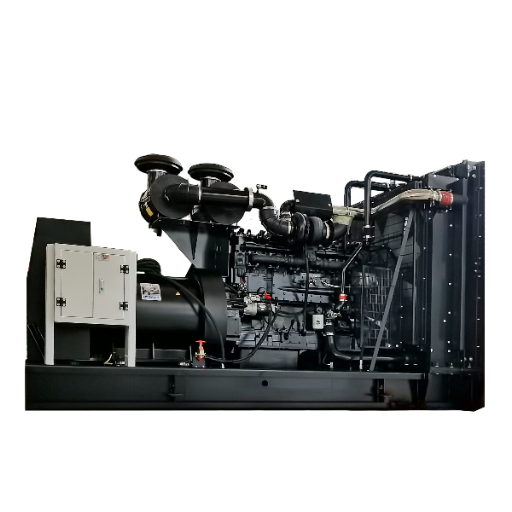
Payment Safety: T/T 30/70, L/C, and Trade Assurance
The standard structure for importing diesel generators from China is T/T (telegraphic transfer) with a 30% deposit to start production and a 70% balance against a copy of the bill of lading. This balances risk: the factory commits materials on your deposit, and you hold the majority of funds until the unit is built, tested, and loaded.
For orders above roughly $50,000, consider an irrevocable letter of credit (L/C). Your bank pays only when the documents match the contract terms exactly, which protects large orders but adds bank fees and paperwork rigidity. Alibaba Trade Assurance covers order value disputes on the platform, but read the coverage limits carefully for heavy machinery. It helps with spec mismatches and shipping deadlines; it does not replace an inspection.
One rule overrides everything: never pay 100% in advance, and never pay the final balance before you have seen the load bank test report and loading photos for your specific unit.
EXW vs FOB vs CIF vs DDP
| Incoterm | Seller Handles | Buyer Handles | Best For |
|---|---|---|---|
| EXW | Nothing beyond factory gate | Everything from pickup onward | Buyers with their own China forwarder |
| FOB | Delivery to port, export clearance, loading on vessel | Ocean freight, insurance, import | Most buyers; the recommended default |
| CIF | Everything through ocean freight and insurance to your port | Import clearance and inland delivery | Buyers who want freight handled but control of customs |
| DDP | Everything to your door, duties included | Unloading and installation | First-timers buying 1-2 units who accept the premium |
FOB is the default for good reason: the factory handles Chinese export formalities (which foreign buyers cannot easily do), and you control the ocean leg and import side. EXW looks cheaper on the quote but shifts export customs risk onto you. DDP is genuinely convenient for a first single-unit order, priced accordingly.
Step 4: Quality Control Before Shipment
Once your genset clears the port, quality disputes become slow and expensive. Everything must be verified before the container closes.
Ask for the factory’s own test documentation first: load bank test reports showing the unit held 100% rated output, plus photos and video of your specific serial number under test. Then book a third-party pre-shipment inspection through SGS, Bureau Veritas, or a similar body. At $250-500, it is the cheapest insurance in the entire transaction. The inspector verifies quantity, spec compliance, nameplate data, accessories, and packing condition against your purchase order.
A factory with nothing to hide welcomes this. At ZC Power, every unit passes full load bank testing in our national standard testing center before dispatch, and we treat third-party inspections as routine. Treat hesitation about inspection as a signal to walk away.
Step 5: Shipping and Documents
Sea Freight Costs and Transit Times
Heavy machinery like diesel generators moves by sea; air freight costs more than the machine. A 20ft container handles most gensets up to roughly 500kVA in silent configuration; larger or multiple units need 40ft containers or flat racks. Current market rates run approximately $2,000-5,000 per 20ft container depending on the destination lane, with transit times of 20-40 days. Shanghai to the US West Coast sits at the fast end; West Africa and South America run longer. Rates move with fuel and capacity cycles, so get fresh quotes at booking time, not from an article, including this one.
The Document Checklist
Your shipment needs six documents, and errors in any of them stall clearance:
- Commercial invoice: matches your contract value and payment records
- Packing list: weights and dimensions matching the actual crate
- Bill of lading (B/L): the title document; your balance payment typically releases it
- Certificate of origin: required by many customs regimes for duty rates
- Compliance certificates: CE for the EU, EPA for the US, SONCAP for Nigeria, per the matrix below
- Insurance certificate: marine cargo insurance at 110% of CIF value
A competent manufacturer prepares the export-side documents as standard practice. Our export team issues the invoice, packing list, certificate of origin, and loading photo sets for every shipment, because document errors are the single most common cause of port delays.
Step 6: Customs, Duties, and Compliance
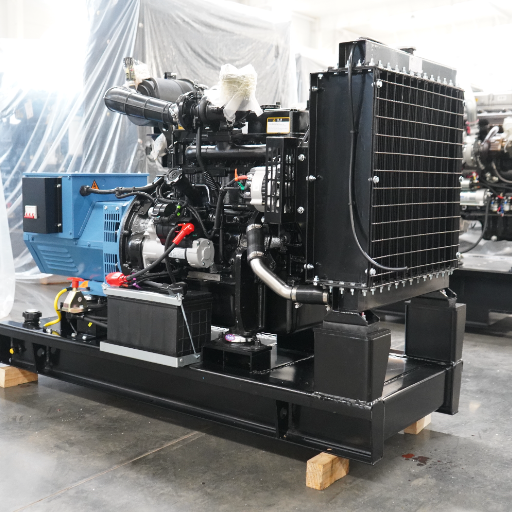
HS Codes for Diesel Generators
Classification drives your duty rate. Diesel gensets fall under HS heading 8502, split by output:
| HS Code | Output Range | Typical Use |
|---|---|---|
| 85021100 | Up to 75 kVA | Residential, small commercial |
| 85021200 | 75-375 kVA | Commercial, telecom, mid-industrial |
| 85021310 | 375 kVA-2 MW | Industrial, mining |
| 85021320 | Above 2 MW | Power plants, utilities |
Declare the code that matches your unit’s rated output. A wrong classification does not save money; it triggers reclassification, penalties, and delays that cost more than the difference.
Destination Compliance Matrix
| Market | Key Requirement | Notes |
|---|---|---|
| United States | EPA emission certification; CARB for California | Section 301 tariffs add 25% for China-origin gensets; customs bond required above $2,500 |
| European Union | CE marking (Machinery, LVD, EMC directives), Stage V emissions for many applications | Self-declared by manufacturer; verify the DoC and Technical File |
| Nigeria | SONCAP certification | Pre-shipment verification through approved bodies; no SONCAP, no clearance |
| Saudi Arabia | SASO/SABER platform registration | Product certificate required before shipping |
| Colombia | RETIE electrical certification | Applies to electrical installations and equipment |
| Australia | Compliance with Australian electrical safety standards | RCM marking for electrical components |
Confirm requirements with a local customs broker before you order, not after. Emission rules in particular can disqualify an engine configuration entirely, and retrofitting after import is rarely economical. For US-specific duty and bond details, USA Customs Clearance’s guide to importing generators goes deep on the entry process.
What Your Customs Broker Does
For $300-800, a licensed broker files your entry, classifies the goods, pays duties on your behalf, and coordinates release. Clearance typically takes 1-3 days with clean documents. Hire one before your vessel sails. Your broker needs the document set from Step 5 in advance, not when the container is already accruing storage fees.
Step 7: Delivery, Commissioning, and After-Sales
Clearance is not the finish line. Plan site preparation before the container arrives: a level concrete pad, fuel system, cable runs, and an ATS connection if the unit is standby-rated. Inspect the crate against the packing list at delivery, before the driver leaves. Photograph any transport damage immediately for the insurance claim.
Commissioning matters more than most buyers expect. First startup should include fluid checks, battery verification, a controlled load test, and ATS switchover testing. Register the warranty with the manufacturer and confirm the spare parts channel: who ships filters, belts, and controllers to your country, and how fast. This is where the factory-vs-trader decision from Step 2 pays off for the second time. A source manufacturer with 80+ engineers answers troubleshooting emails directly and air-ships genuine parts; a trading company forwards your email to a supplier you have never met.
What Does It Really Cost? A Worked Landed-Cost Example
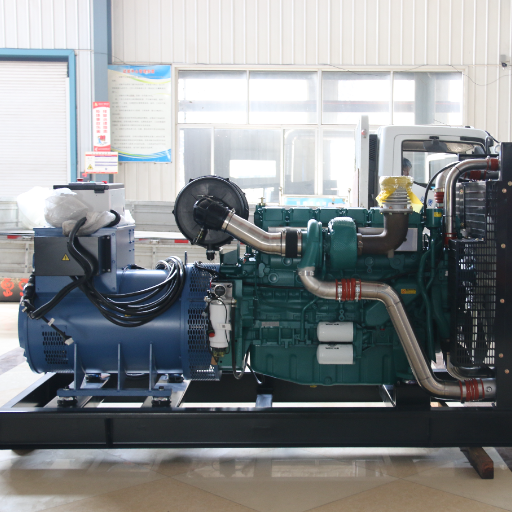
Every guide tells you to budget “25-40% above ex-factory.” Here is what that actually looks like for a real order: one 100kVA silent diesel genset, FOB China, imported into a market with a 10% duty rate (illustrative figures; get live quotes for your lane).
| Cost Item | Amount (USD) |
|---|---|
| Ex-factory price, 100kVA silent genset | $14,500 |
| Sea freight, 20ft container | $2,800 |
| Marine insurance (110% CIF) | $40 |
| Import duty, 10% of CIF ($17,340) | $1,734 |
| Customs broker and port fees | $650 |
| Inland delivery to site | $350 |
| Total landed cost | $20,074 |
That is +38% over the ex-factory price, inside the expected range. Even so, the landed cost typically sits well below the equivalent unit from a Western distributor, which is why the import route exists.
Watch the hidden costs that do not appear on any quote: demurrage at $100-200 per day per container when documents arrive late, bank transfer and L/C fees, and the pre-shipment inspection. None is large alone. Together, they separate buyers who budgeted honestly from buyers who did not.
Timeline: 8-14 Weeks from RFQ to Delivery
First-time importers consistently underestimate this. A realistic schedule for a custom-built unit:
- Weeks 1-2: RFQs, supplier verification, negotiation, proforma invoice
- Week 3: Deposit paid; production slot confirmed
- Weeks 3-8: Production and assembly (25-45 days depending on customization)
- Week 8: Load bank testing and third-party inspection
- Weeks 8-9: Balance payment, vessel booking, container loading
- Weeks 9-12: Ocean transit (20-40 days by lane)
- Weeks 12-13: Customs clearance (1-3 days with prepared documents)
- Weeks 13-14: Inland delivery, installation, commissioning
Stock units compress weeks 3-8 considerably. Custom containerized builds can stretch past 14 weeks. Either way, if your project needs power on a fixed date, work backward from commissioning, not from the quote.
5 First-Time Importer Mistakes to Avoid
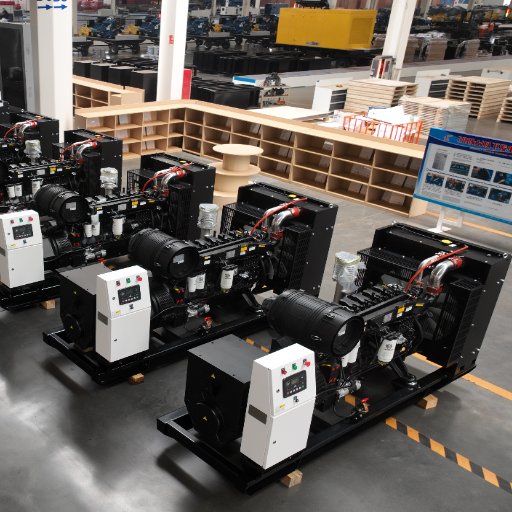
1. Choosing EXW without a freight forwarder. In early 2025, Joseph, a contractor based in Nairobi, opted for an EXW (Ex Works) quote when purchasing a 60kVA generator set, hoping to save $400. However, he subsequently discovered that EXW terms required him to handle export customs clearance in China—a task for which he lacked a local entity to manage the process. To resolve this issue, he had to hire a freight forwarder to coordinate the logistics, causing the equipment to remain stranded at the factory for a full five weeks. The $400 he had initially saved ultimately cost him an extra $1,100 in additional expenses and caused the project to miss its delivery deadline. FOB (Free on Board) terms were established precisely to prevent such situations.
2. Letting documents arrive late. Chidi, a first-time importer from Nigeria, wired the final payment on time but failed to track the progress of the shipping documents. Consequently, the Bill of Lading (B/L) and SONCAP certification documents arrived in Lagos nine days after the container had already reached the port. With demurrage charges ranging from $100 to $200 per day, this delay cost him over $1,300—an amount exceeding the combined total of customs brokerage fees, inspection charges, and inland transportation costs. Always remember: the flow of documents must move faster than the shipment of goods.
3. Classifying under the wrong HS code. Some suppliers offer to declare a lower output code or a lower invoice value to “save duty.” This is customs fraud, and the importer of record, meaning you, carries the legal exposure. Penalties and seizures erase years of margin.
4. Paying the balance before proof of testing. The bill of lading copy is for your use. A supplier pushing for final payment before the load bank report and loading photos is a supplier with something to hide.
5. Skipping destination compliance research. Rosa, a Colombian distributor, almost ordered six units before her broker flagged RETIE certification. She switched her RFQ to require compliant configurations and documentation from the factory. Her first DDP order arrived in Barranquilla, cleared in two days, and her second container was booked within a month. The compliance check cost her one email; skipping it would have cost her the shipment.
Frequently Asked Questions
Is it safe to buy a diesel generator from China?
Yes, when you verify the supplier is a real manufacturer, structure payment as T/T 30/70 or L/C, and commission a third-party pre-shipment inspection. The risks come from skipping verification, not from the country of origin. Factories with ISO 9001, CE, and CCC certification and decades of export history ship reliable equipment daily.
How much is import duty on generators?
It depends on your destination and HS classification. Many markets charge 5-15% on the CIF value for gensets under HS 8502, plus VAT or GST. US importers currently pay an additional 25% Section 301 tariff on China-origin units. Confirm your exact rate with a local customs broker before ordering.
FOB vs CIF: which should a first-timer choose?
FOB for most buyers: the factory handles export formalities, and you control freight and insurance through your own forwarder, which keeps costs transparent. Choose CIF only if you lack a forwarder, and compare the seller’s freight quote against a forwarder’s before accepting.
Can I import a single generator, or is there a minimum order?
Most factories accept single-unit orders, especially for larger gensets where one unit fills a container. Small portable units sometimes carry minimums because per-unit logistics costs dominate. A single 100kVA+ unit is a perfectly normal order for a source manufacturer.
How long does shipping take from China?
Sea freight takes 20-40 days depending on the destination lane, plus 3-7 days for booking, loading, and port handling at origin. US West Coast is the fastest; Africa, the Middle East, and South America run longer. Add 1-3 days for customs clearance with prepared documents.
The Process Is the Product
Importing a generator from China is not a gamble; it is a process with known steps, known costs, and known failure points. Buyers who define their spec, verify the factory, structure payment safely, and respect the timeline routinely land equipment at 30-50% below local dealer prices. Buyers who chase the lowest quote and skip the paperwork fund the demurrage stories in this article.
Your next step is a single email: send your kVA requirement, voltage, and application to a verified manufacturer and compare the response quality against everything in this guide.
Shandong ZC Power CO., LTD. has manufactured and exported diesel generator sets from 8kVA to 4000kVA since 1999, with ISO 9001, CE, and CCC certification, full load bank testing on every unit, and complete export documentation support to more than 50 countries. We handle the factory side of this entire process, from custom engineering to container loading photos.
Ready for a quote with the paperwork included? Send your specification to our export team and receive a factory-direct quotation with full compliance documentation, a production timeline, and a landed-cost estimate for your destination.