CE Certified Generator Manufacturers: What the Mark Means and How to Verify It
CE-certified generator manufacturers are suppliers whose generator sets conform to all applicable EU directives, including the Machinery, Low Voltage, and EMC directives, and who back that conformity with a Declaration of Conformity and a documented Technical File. For most generator categories, CE is a manufacturer’s legal self-declaration, not a certificate handed down by Brussels.
That last point is where buyers get hurt. The CE certificate PDF a supplier emails you is the easiest document in the export business to fake, and the least important one to check.
If you source generators for the EU market, or use CE as a quality proxy for other regions, you already know that nearly every listing claims certification. You are right to be skeptical of how those claims hold up. This guide explains what CE marking legally means for a generator set, which directives and standards actually apply, what a genuine compliance package contains, and a six-step verification workflow you can run on any supplier in under an hour.Before you dig into the paperwork, it helps to know what a genuine diesel generator set manufacturer looks like, because certification only means something when there is a real factory behind it.
Key Takeaways
- CE marking is a legal declaration of conformity with EU directives; for most generators it is self-declared by the manufacturer, so the Declaration of Conformity and Technical File matter more than any certificate PDF.
- Diesel generator sets typically fall under the Machinery (2006/42/EC), Low Voltage (2014/35/EU), and EMC (2014/30/EU) directives, with EN ISO 8528-13:2016 as the core safety standard.
- Verify any CE certified generator manufacturer in six steps: demand the full document package, check directive and model coverage, vet the issuing body in the EU NANDO database, confirm the certificate number directly, inspect the physical mark and nameplate, and verify the factory itself.
- Watch for the “China Export” lookalike mark, certificates covering only one directive, and certificate mills selling paperwork without testing.
- Certification is the floor, not the ceiling. Testing capability, authentic components, and after-sales support separate real manufacturers from paper-compliant resellers.
Evaluating suppliers right now? Our OEM diesel generator sourcing guide covers the broader factory-verification process that pairs with the CE checks in this article.
What Does CE Certified Mean for a Generator?
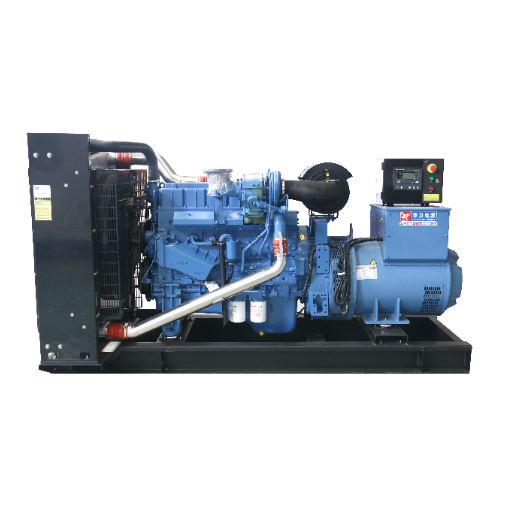
CE marking on a generator means the manufacturer declares the unit conforms to every applicable EU health, safety, and environmental directive and accepts legal responsibility for that claim. It is a passport for sale in the European Economic Area, supported by documentation that the manufacturer must produce on demand.
Two implications follow, and both surprise buyers.
CE Is a Legal Declaration, Not a Quality Award
CE does not mean “tested by the EU” and it does not mean “premium quality.” It means the manufacturer asserts conformity with minimum legal safety requirements. A barely adequate genset and an exceptional one can both carry the mark legitimately. This is why CE should be your entry ticket for supplier evaluation, never the deciding factor.
The Self-Declaration Reality Most Buyers Miss
For most generator categories, no third-party approval is required. The manufacturer assesses conformity, compiles the evidence, signs the Declaration of Conformity (DoC), and affixes the mark. Third-party certificates from bodies like SGS or TÜV add assurance, but they are voluntary for typical gensets. The legal weight sits with the DoC and the Technical File behind it. A supplier waving a glossy certificate who cannot produce a DoC and Technical File index is showing you decoration, not compliance.
Which EU Directives and Standards Apply to Diesel Generators
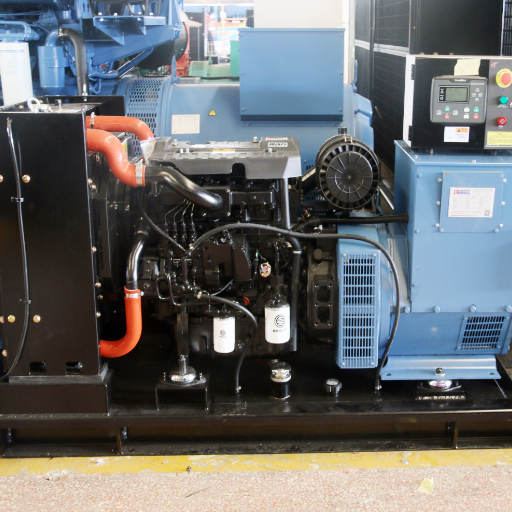
A compliant generator set typically answers to several directives at once. The exact stack depends on the configuration:
| Directive / Standard | Number | What It Covers | Applies When |
|---|---|---|---|
| Machinery Directive | 2006/42/EC | Overall mechanical safety, guards, emergency stops | Always |
| Low Voltage Directive | 2014/35/EU | Electrical safety of equipment in voltage range | Always for standard gensets |
| EMC Directive | 2014/30/EU | Electromagnetic emissions and immunity | Always (control systems) |
| ATEX Directive | 2014/34/EU | Equipment in explosive atmospheres | Only for ATEX-rated builds |
| Outdoor Noise Directive | 2000/14/EC | Sound power limits for outdoor equipment | Open/silent sets used outdoors in the EU |
| Genset Safety Standard | EN ISO 8528-13:2016 | Generating-set-specific safety requirements | Core harmonized standard |
| Risk Assessment | EN ISO 12100 | Machinery risk assessment methodology | Supports Machinery Directive |
| Electrical Safety | EN 60204-1 | Electrical equipment of machines | Supports LVD compliance |
| EMC Immunity/Emissions | EN 61000-6-2 / -6-4 | Industrial EMC testing | Supports EMC compliance |
Two practical notes. First, EN ISO 8528-13:2016 replaced the older EN 12601 in June 2017, so documents citing only the superseded standard are outdated. Second, if a supplier’s paperwork references just one directive, the package is incomplete. A standard diesel genset needs at minimum Machinery, LVD, and EMC coverage.
Inside a Genuine CE Compliance Package
When ZC Power’s compliance team certifies a generator line, the work produces a specific paper trail. Knowing what a real package contains tells you exactly what to demand.
Declaration of Conformity (DoC)
The DoC is the legal core: a signed document naming the manufacturer, the product models, every applicable directive, and the harmonized standards used. Check that the model numbers on the DoC match the models on your quotation. A DoC covering “5-50kVA silent sets” does nothing for the 500kVA open unit you ordered.
The Technical File
The Technical File is the evidence locker: design drawings, risk assessments, test reports, component certificates, and calculations demonstrating conformity. Manufacturers must produce it for authorities on request. You will not receive the full file as a buyer, but a legitimate factory can describe its structure and share extracts. A supplier who has never heard of a Technical File does not have one.
Test Reports and Nameplate Requirements
Genuine compliance shows up physically. EN ISO 8528-13:2016 drives concrete requirements: guards on moving parts, protection against hot surfaces, minimum IP23M ingress protection on enclosed sets, a 1000V dielectric withstand test after rain exposure testing, an accessible emergency stop, lifting points rated to 1.5 times the unit’s weight, and a nameplate stating maximum output, IP rating, model and serial number, voltage, frequency, and current. Walk a unit on a video call and check these details. Performance testing under ISO 8528 (voltage regulation, frequency stability, transient response) rounds out the picture.
Want to see a real package? Ask ZC Power for a sample Declaration of Conformity and load bank test report with your next inquiry. Contact our engineering team and we will share redacted examples.
How to Verify a CE Certified Generator Manufacturer
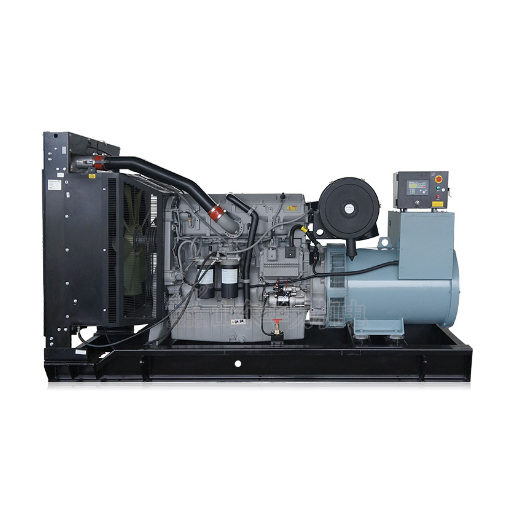
Run this six-step workflow before any purchase order:
- Request the full document package. Ask for the DoC, a Technical File index or extract, and test reports referencing specific standards such as EN ISO 8528-13:2016. Do not accept a certificate alone.
- Check directive and model coverage. Confirm the documents cover Machinery, LVD, and EMC at a minimum, and that your exact models and power ratings appear by number.
- Vet the issuing or testing body. If a third-party certificate exists, identify the body and check it in the EU’s NANDO database of notified and recognized organizations. No listing, no credibility.
- Confirm the certificate number directly. Contact the issuing body through its official website, not the contact details on the certificate itself. Quote the certificate number and ask for confirmation.
- Inspect the physical mark and nameplate. The genuine CE mark has defined proportions; the letters are formed from two circles with specific spacing. Check the nameplate for complete technical data matching the DoC.
- Verify the factory behind the paper. Confirm the manufacturer actually tests what it builds: a testing center, a documented QA system, and a live video tour of production. Paper without a factory is just paper.
Steps 1 through 4 take less than an hour of email work. Whether you are evaluating European assemblers or CE-certified generator manufacturers in China, this workflow filters out the majority of hollow claims before you spend anything on inspections.For a full walkthrough of that last step, our guide on how to verify a Chinese generator factory shows exactly how to audit the production line, business license, and testing capability before you wire a deposit.
Red Flags: Fake and Hollow CE Claims
The “China Export” Lookalike Mark
Importers have documented a lookalike mark for years: the letters “CE” rendered with the wrong spacing and proportions, jokingly decoded as “China Export.” It resembles the conformity mark closely enough to pass a casual glance at a nameplate photo. The genuine mark has strictly defined geometry, and the difference is visible once you know to look. Treat any close-but-wrong mark as a hard stop.
Certificates Covering One Directive When Several Apply
A certificate citing only the EMC Directive for a complete diesel genset is a red flag, not a partial pass. It signals a supplier who bought a narrow test to generate paperwork. The directive table above is your checklist; anything missing is a question to ask.
Certificate Mills and Voluntary-Basis Paper
A small industry exists to sell official-looking certificates with no testing behind them. Consider Tomas, a procurement manager for a Polish construction firm. In late 2024, his team received 12 gensets at Gdansk accompanied by a handsome certificate from an impressive-sounding European institute. Polish customs requested the Technical File. There wasn’t one. The certificate traced back to a document vendor, the units sat bonded for seven weeks, and Tomas paid storage, re-testing, and legal fees that erased the order’s entire margin. The supplier stopped answering emails within days.
The pattern repeats constantly because it works: buyers frame certificates on office walls instead of reading them.
The Importer’s Legal Role: What EU Law Puts on You
Buyers often assume CE compliance is entirely the manufacturer’s problem. Under EU law, it is not. When you place a generator on the EU market as an importer, you become a legally defined economic operator with obligations of your own:
- Verify before you sell. You must confirm the manufacturer has carried out the conformity assessment, compiled the Technical File, and affixed the CE mark correctly.
- Keep the Declaration of Conformity. Importers must hold a copy of the DoC for ten years and produce it for market surveillance authorities on request.
- Ensure traceability. The unit must carry the manufacturer’s identification, and you must add your own importer details to the product or its packaging.
- Act on doubt. If you have reason to believe a unit is non-compliant, you must not place it on the market. If a suspect unit is already circulating, you must inform the authorities.
One trigger matters especially to distributors: if you import under your own brand name, the law treats you as the manufacturer, with full manufacturer obligations. Private-label buyers should read that twice. Our OEM diesel generator sourcing guide covers how to structure private-label orders so compliance responsibilities stay explicit in the contract.
For buyers outside the EU, the practical consequence is simpler. Even where CE carries no legal force locally, a supplier who can produce a real DoC and Technical File is demonstrating manufacturing discipline that transfers to any market.
Choosing Among CE Certified Generator Manufacturers
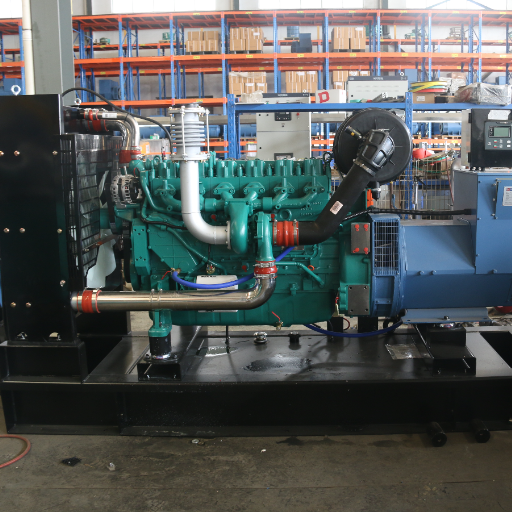
Once verification clears the field, CE stops being the differentiator. The real separation happens here:
- Testing capability: Does the factory load bank test every unit at 100% rated output, or sample-test a few? Ask for reports from recent shipments. If you want to know exactly what a credible test involves, our generator load bank testing procedure guide walks through the hold times, monitored parameters, and pass/fail criteria you should see in any report.
- Component authenticity: Genuine engines and alternators with traceable serials. If you are weighing engine brands, our Cummins vs Perkins generator comparison breaks down the decision.
- Manufacturing depth: A source factory answers technical questions directly and customizes voltage, frequency, and canopy to your market. Resellers forward emails.
- After-sales accountability: Certification gets a unit through customs. Spare parts availability and engineering support keep it running in year five.
A distributor in East Africa we work with now applies exactly this filter. Grace runs a power equipment dealership supplying hospitals and banks. Since 2023, every RFQ her team sends demands the DoC, Technical File index, and a recent load bank report with the first response. Roughly a third of suppliers never reply, and another group replies with certificate-only packages. She tells us the filter costs her nothing and has eliminated two potentially disastrous purchases. Her approved list is short, but every name on it ships compliant equipment on schedule.
Frequently Asked Questions
Do all generators sold in the EU need CE marking?
Yes. Generator sets sold in the European Economic Area must carry CE marking demonstrating conformity with all applicable directives, including the Machinery, Low Voltage, and EMC directives. Selling non-compliant equipment can result in customs seizure, fines, and forced recalls.
Is a CE certificate proof of quality?
No. CE marking declares conformity with minimum EU safety requirements; for most generators it is a manufacturer’s self-declaration rather than independent approval. Quality differences between two CE marked gensets can be enormous, which is why verification and factory assessment matter.
What is the difference between a CE certificate and a Declaration of Conformity?
The Declaration of Conformity is the legally required, manufacturer-signed document listing applicable directives, standards, and covered models. A CE certificate from a third-party body is typically voluntary supporting evidence. Authorities ask for the DoC and Technical File, not a certificate.
How can I check if a CE certificate is fake?
Identify the issuing body and verify it in the EU NANDO database, then contact the body directly through its official channels with the certificate number. Cross-check that the document covers your exact models and all applicable directives, and request the Technical File index that must exist behind any genuine claim.
Who is legally responsible for CE compliance when importing generators into the EU?
Responsibility is shared. The manufacturer must carry out the conformity assessment, compile the Technical File, and sign the Declaration of Conformity. The EU importer must verify that all of this exists, keep a copy of the DoC for ten years, and ensure product traceability. Importers who rebrand equipment under their own name take on full manufacturer obligations.
What is EN ISO 8528-13?
EN ISO 8528-13:2016 is the harmonized European safety standard for generating sets. It specifies requirements such as guarding of moving parts, hot-surface protection, IP23M minimum ingress protection, dielectric withstand testing, emergency stops, and complete nameplate data. It replaced EN 12601 in 2017.
Buy the File, Not the Logo
CE marking is a documentation discipline, not a decoration. When you evaluate CE-certified generator manufacturers, the winners are the ones who can produce a complete Declaration of Conformity, a real Technical File, standard-referenced test reports, and a factory that tests every unit it ships. The six-step verification workflow above takes under an hour and eliminates most hollow claims before money moves.
Certification gets your equipment through customs. Manufacturing quality, authentic components, and lifetime engineering support determine what happens after. Demand evidence of both.
Shandong ZC Power CO., LTD. has manufactured CE, ISO 9001, and CCC-certified diesel generator sets since 1999, from 8kVA to 4000kVA, with every unit verified by full load bank testing in our national standard testing center before export to more than 50 countries.