Best Silent Diesel Generator for Hospitals: Sizing, dB & Procurement Guide (2026)
There is no single best silent diesel generator for a hospital. The right unit matches two site-specific numbers: the critical load your clinical services draw, and the noise limit your local ordinance enforces at the nearest property line. Most hospital genset orders get at least one of those wrong.
Here’s the figure that disqualifies more hospital generator sets than any other. It isn’t the engine badge. It’s a decibel rating measured at the wrong distance.
What catches teams out is sequencing. The noise limit and permit conditions tend to surface late, sometimes after the purchase order is signed, and by then the enclosure specification is locked and the pad is poured.
This guide covers the four inputs a hospital power decision needs: a selection table by facility tier, dB(A) targets at the correct distance, the property-line limits named jurisdictions enforce, and 2026 price bands.
ZC Power has built diesel gensets from 8 kVA to 4,000 kVA since 1999, and every unit is load-tested in our national standard testing centre before it ships.
Key Takeaways
- There’s no single best unit. Enclosure class and duty rating decide hospital suitability, and the engine badge decides neither.
- Silent canopies usually land at 65–75 dB(A) at 7 m. Super-silent packages reach 55–65 dB(A), and true sub-55 dB(A) needs bespoke acoustic engineering at a real premium.
- Property-line limits in the US commonly sit between 45 and 65 dBA, with testing often capped at 30 minutes per 7-day period, daytime only.
- Bed count is a screening shortcut, not a load study. A 300-bed district hospital often lands between 1,000 and 1,250 kVA once motor starting and growth are applied.
- Excluding licensing and installation costs, the approximate reference price range for 2026 is as follows: a 50 kVA silent generator set costs around $15,000, while a complete 2 MVA unit is priced at $500,000 or more.
What Makes a Silent Diesel Generator Different for Hospital Use?
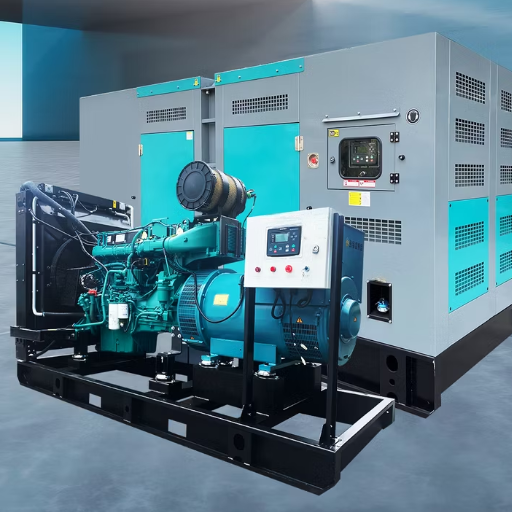
Three things separate a hospital genset from a commercial one: duty rating, transfer time, and a noise limit measured at a property line rather than at the machine.
Duty rating comes first. ISO 8528-1 defines the operating classes, and hospital standby service almost always sits in the emergency standby power (ESP) class, which has a defined annual hour allowance and no sustained overload capability. Our standby diesel generator guide works through those classes in full. Push an ESP-rated unit past its allowance and the warranty won’t hold.
Transfer time is second, though it belongs to the switchgear rather than the genset. A hospital essential branch has to pick up within ten seconds under NFPA 110 Level 1, and the transfer switch delivers that.
The third causes the most rework. A commercial building cares how loud the genset sounds next to it. A hospital cares how loud it sounds in the nearest patient room and at the nearest residential boundary. Designing to the wrong one is the most expensive error in hospital power.
“Silent” is a marketing word, not an engineering value. The same label covers a canopy that attenuates 20 dB(A) and one that attenuates 35 dB(A). Always ask for three things together: the dB(A) figure, the measurement distance, and the load condition.
How Quiet Does a Hospital Generator Actually Need to Be?
Quiet enough to stay under the property-line limit at full load, and quiet enough that the nearest patient room stays below the 30 dB(A) night-time guidance in the WHO Environmental Noise Guidelines. For most hospitals that means a super-silent package at 55–65 dB(A) at 7 meters.
Then comes the trap. Hospital backup generator noise level is usually published as a single number, and it means nothing without its distance. Genset sound pressure ratings are conventionally quoted at 7 metres, the reference distance used across the ISO 8528-10 noise measurement family. Some manufacturers quote at 1 metre instead. Sound pressure drops roughly 6 dB(A) for every doubling of distance, so a figure taken at 1 m reads about 16 to 17 dB(A) higher than the same machine at 7 m.
| Unit class | Typical dB(A) at 7 m, full load | Where it fits |
|---|---|---|
| Open frame | 78–105, rising with size | Remote or industrial sites with no neighbours |
| Silent canopy | 65–75 | Hospitals in commercial or mixed districts |
| Super silent canopy | 55–65 | Hospitals near a residential boundary |
| Ultra silent or bespoke enclosure | Below 55 | Urban sites facing a 45 dBA night limit |
Distance is free mitigation, and it’s the most underused lever in hospital siting. A genset rated 60 dB(A) at 7 m reads about 54 dB(A) at 14 m and 48 dB(A) at 28 m.
Inside the building the numbers fall further, because the envelope does most of the work. A genset at 60–65 dB(A) outdoors typically translates to 35–45 dB(A) in the nearest patient room, depending on wall construction and glazing. The full acoustic engineering treatment lives in our silent generator technology guide, and the open type vs silent type generator comparison covers the case for going without an enclosure.
What Size Silent Diesel Generator Does a Hospital Need?
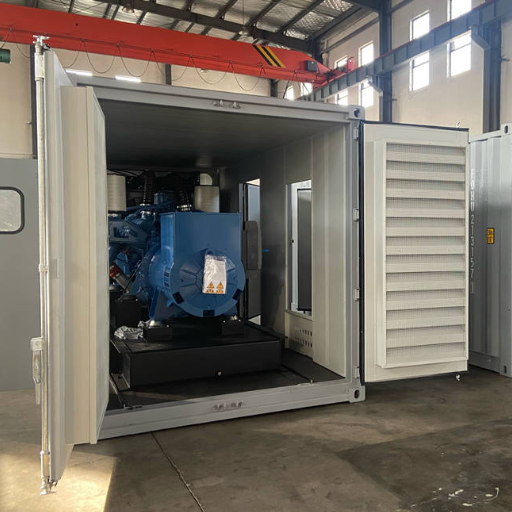
Sizing the best silent diesel generator for hospitals starts with facility tier and bed count. A 50-bed community hospital typically needs 200 to 400 kVA. A 300-bed district hospital typically needs 1,000 to 1,250 kVA, and a tertiary referral centre with surgical suites and imaging usually starts at 1,500 kVA. Above roughly 1 MVA, most facilities specify N+1.
Hospital generator sizing by bed count and facility tier
| Facility tier | Typical beds | Critical load (kW) | Recommended capacity (kVA) |
|---|---|---|---|
| Outpatient clinic or day surgery | No inpatient beds | 60–150 | 100–200 |
| Community hospital | 20–75 | 160–320 | 200–400 |
| District general hospital | 150–400 | 800–1,000 | 1,000–1,250 |
| Tertiary referral centre | 400–1,000 | 1,200–2,000 | 1,500–2,500 |
| Specialist campus (cardiac, oncology) | Varies | 1,500–2,500 | 2,000–3,000 |
Assumes a 0.8 power factor and a diversified critical load. Treat it as a screening band, not a specification.
This is a shortcut, not a load study. The full method, covering load inventories, diversity factors, and branch demand, is in our stationary generators for hospitals guide.
Diane Kowalczyk managed facilities for a 300-bed district hospital outside Kraków. In March 2025 her team built the specification from a flat connected-load list, the kind an electrical contractor produces for a permit application rather than procurement. It totaled 640 kW, so they specified 800 kVA. The load study told a different story. Two chiller banks and the medical vacuum plant started together on transfer, and motor-starting surge alone added nearly 300 kVA. The real requirement hit 1,073 kVA, and the 800 kVA unit would have tripped on the first transfer.
Noise Limits at Your Property Line: What the Ordinance Says
This is the part almost no supplier publishes.
Property-line limits for hospital and standby generators commonly fall between 45 and 65 dBA, with lower caps at night in residential districts. The limit applies at the nearest residential property line, not at the machine, and routine testing is usually capped at 30 minutes per 7-day period during daytime hours.
| Jurisdiction | Limit | Measured at | Notes |
|---|---|---|---|
| Riverside County, CA (Ord. 847) | 55 dBA day / 45 dBA night | Nearest residential property line | Testing capped at 30 minutes per week; emergencies and outages exempt |
| Stockton, CA | 76 Lmax dBA | 23 feet | Requires a sound-absorbing enclosure |
| Scotts Valley, CA | 75 dBA | Property line | Service-facility emergency generators |
| New Rochelle, NY (Ch. 213) | About 65 dBA day / 50 dBA night | Residential property line | Penalties up to $1,000 per day |
| Aurora, CO | 55 dBA day / 45 dBA night | Residential property line | Vehicle noise also restricted near a hospital |
| Archbald, PA | 67 dBA day / 57 dBA night | External property line | Testing restricted to 7 AM to 8 PM |
| India (CPCB / TNPCB) | 75 dB(A) | 1 metre from the enclosure | Different measurement basis, a common spec trap |
Figures compiled from published ordinance text. Confirm the current version with your local authority.
What the permit application actually requires. Most jurisdictions treat a hospital standby generator as a regulated noise source, so approval takes longer than a straightforward electrical permit. Expect three items. A building permit for the pad and enclosure. An electrical permit for the connection and transfer switch. And a noise submission, the one teams forget: either a manufacturer acoustic data sheet or a site-specific acoustic analysis. Riverside County requires the building and electrical permits together and applies its 55 dBA day and 45 dBA night standards at the property line.
Most jurisdictions then require a field measurement with a calibrated sound level meter before final inspection. Exceed the limit at that point and you’re retrofitting an enclosure on an occupied site, which is the most expensive way to solve a noise problem.
What the emergency exemption does not cover. Nearly every ordinance exempts operation during a declared emergency, a utility outage, or a public safety power shutoff. Almost none exempts routine testing, load bank runs, peak shaving, or scheduled maintenance. That matters for the budget, because the annual NFPA 110 load bank test has to fit inside the ordinance’s testing window. If your night cap is 45 dBA and your only test slot falls at 2 AM, the test isn’t compliant no matter how quiet the machine is.
Does the Engine Brand Decide How Quiet a Generator Is?
Largely, no. At any given power class, the enclosure package and the exhaust system decide how quiet a generator is. Engine brands matter for reliability, parts availability, and service coverage, not for noise.
The sharpest evidence is a pair of machines that share a power plant. The Kohler 2000REOZMD and the MTU 20V4000 G83 are built around the same MTU engine. Kohler sources that powerplant and packages it with its own enclosure, controls, and cooling system. Two brand names, two price points, one engine. The acoustic difference between the finished units comes from the package each manufacturer builds around it.
That isn’t an argument against buying a Tier 1 engine. It’s an argument against paying a Tier 1 premium for a canopy that doesn’t meet your dB(A) target. Our silent heavy duty diesel generator guide covers the enclosure engineering in depth.
| Engine family | Typical positioning | Service strength | Noise nuance |
|---|---|---|---|
| Cummins | Tier 1, global network | Authorised dealers in most markets | Quiet comes from the enclosure, not the engine |
| Perkins and Cat | Tier 1, strong in standby | Dense coverage in Europe and North America | Package-led attenuation, same range |
| MTU | Tier 1, high power | Strong above 1 MVA, thinner at small ratings | Frequently OEM’d into other brands’ packages |
| Weichai, Yuchai | Volume industrial | Excellent parts cost and availability across Asia and Africa | Equivalent attenuation from an equivalent canopy |
What the badge does buy. A global engine brand buys a service network, a published parts catalogue, and predictable lead times. Where the brand has an authorised dealer within a few hundred kilometres, that’s worth real money across a 15 to 20 year service life. Where coverage is thin, a common industrial engine with widely stocked parts can be the better choice. Specify the enclosure to your ordinance limit first, then choose the engine family.
What Does a Silent Hospital Generator Cost in 2026?
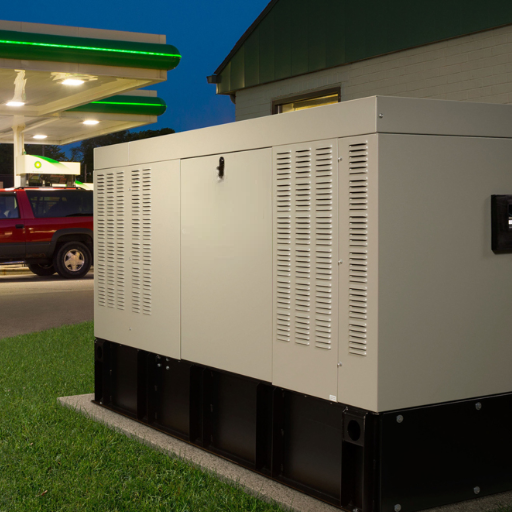
Indicative 2026 pricing for a silent-canopy hospital genset runs from roughly 15,000fora50kVAunitto15,000fora50kVAunitto500,000 and above for a 2 MVA package. A silent enclosure typically adds 20% to 40% over an equivalent open-frame set. These are budgeting bands, not quotations.
| Capacity class | Indicative 2026 price band, silent canopy | Typical hospital application |
|---|---|---|
| 50–150 kVA | 15,000–15,000–40,000 | Clinic, day surgery, remote health post |
| 150–250 kVA | 30,000–30,000–65,000 | Small community hospital |
| 250–750 kVA | 55,000–55,000–150,000 | Community and mid-size district hospital |
| 750 kVA–1 MVA | 120,000–120,000–260,000 | District general hospital |
| 1–2 MVA | 250,000–250,000–500,000 | Tertiary referral centre |
| Above 2 MVA | $500,000 and up | Specialist campus, often several units |
Bands assume a single unit with a standard control panel. Paralleling gear, extended tanks, freight, and installation are additional.
Sub-60 dB is an engineering project, not a catalogue option. Standard silent canopies on 400 kVA to 1,500 kVA hospital sets commonly measure 61 to 64 dB(A) at full load, even from reputable manufacturers. Getting below 60 dB(A) at 7 m usually means a bespoke enclosure with thicker attenuation, a residential-grade exhaust silencer, sealed penetrations, and often a larger footprint so the lining doesn’t choke cooling airflow. Expect a real premium, and expect it to be unavoidable when your property line sits in a residential zone with a 45 dBA night cap.
Sunita Halvorsen was the estates lead for a 180-bed hospital on the edge of a residential district. The tender called for standard silent canopies, and the two units were quoted at 63 dB(A) at 7 m. The team signed, the units went in, and the first monthly test run produced three noise complaints before 7 AM. The limit at the nearest property line was 50 dBA at night, and the canopy class couldn’t reach it. The ultra-silent retrofit cost roughly $180,000 across both units. An ultra-silent specification at tender would have cost about a third of that.
Send us your bed count and your property-line limit. Our engineers will tell you which enclosure class clears the limit before you commit to a vendor, and whether relocating the unit is cheaper than upgrading the canopy.
Reference Installations: What 62–65 dB Looks Like in Practice
Two publicly documented hospital installations show what compliant noise performance looks like in the field.
| Project | Configuration | Published noise figure | What it shows |
|---|---|---|---|
| Krankenhaus Bozen, Italy | Five Cummins C2250 units in soundproofed containers | 65 dB | Containerised acoustic packaging at scale |
| NHS Scotland | Cummins C220D5e Stage V in a silent canopy | 62 dB(A) at 7 m | A catalogue silent canopy meeting a European hospital spec |
Both share one characteristic: the enclosure was specified to a target and the engine followed. Bozen’s containers do the acoustic work for five large units at once, and the NHS Scotland unit uses a standard silent canopy that meets its requirement because the requirement was defined before the order.
Ravi Deshmukh inherited a plant upgrade at a 240-bed hospital in Pune. The team had budgeted for an ultra-silent retrofit to clear a tightened local limit. Before committing, Ravi’s engineer measured the site and found the existing genset sat 80 meters from the ward block but only 12 metres from the residential boundary. Relocating the pad to 35 metres from that boundary, with the exhaust facing away from the residential side, dropped the boundary level by 9 dBA. The hospital cleared its limit with the canopy it already owned.
Compliance and Testing: NFPA 110 Duty for a Hospital Standby Generator
A US hospital standby generator is normally classified NFPA 110 Level 1, Type 10, Class 96. That means it must carry the essential load within 10 seconds, complete transfer and retransfer inside a 10-second window, and hold 96 hours of fuel autonomy at rated load. NFPA 110 sets the classification and the testing cadence, and the exact Type and Class depend on your facility’s risk profile. Our NFPA 110 Type 10 vs Type 60 comparison works through the difference.
NFPA 99, the Health Care Facilities Code, defines what the generator has to feed, splitting the essential electrical system into life safety, critical, and equipment branches. That structure belongs with the compliance material rather than in a procurement guide.
Two testing facts matter for noise planning. A full-load load bank test is louder than a normal outage transfer, so schedule it inside your ordinance’s testing window. Our load bank testing guide covers what the annual test involves. And the ten-second requirement is delivered by the switchgear rather than the genset, so automatic transfer switch sizing determines whether the essential branch can be picked up at the moment of transfer.
Common Mistakes When Choosing the Best Silent Diesel Generator for Hospitals
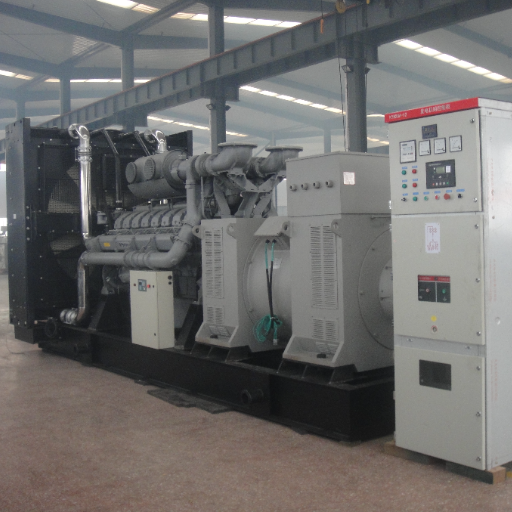
These account for most hospital genset rework, and every one is cheaper to avoid at specification stage than to fix after installation.
- Specifying dB(A) at 1 metre instead of 7 metres. A 75 dB(A) figure at 1 m is roughly 59 dB(A) at 7 m. Two vendors can quote the same number and mean machines 16 dB(A) apart.
- Buying the engine brand instead of the enclosure. The badge governs service coverage and parts. It doesn’t govern noise.
- Sizing to a flat connected-load list. A transfer that starts chillers, medical vacuum, and lifts together draws far more than the running total suggests.
- Treating “silent” as a specification. Ask for the figure, the distance, and the load condition together, or you’re comparing adjectives.
- Discovering the property-line limit after the order. Read the ordinance before the specification is written, not after the pad is poured.
- Forgetting that distance is free and enclosures aren’t. A 6 dB(A) drop per doubling of distance is often cheaper than the next enclosure class up.
Best Silent Diesel Generator for Hospitals: Frequently Asked Questions
What size generator does a hospital need?
Most hospitals land between 200 kVA for a 50-bed community facility and 2,500 kVA for a tertiary referral centre. The driver isn’t bed count but the diversified critical load at a 0.8 power factor. Use bed count as a screening figure, then confirm with a load study before you tender.
How quiet should a hospital generator be?
Quiet enough to stay under your local property-line limit at full load, and quiet enough to keep the nearest patient room below the 30 dB(A) night-time guidance in the WHO Environmental Noise Guidelines. In practice that’s a super-silent package at 55 to 65 dB(A) at 7 metres.
What is the quietest generator for hospital use?
Bespoke acoustic enclosures measured below 55 dB(A) at 7 metres at full load, usually built for hospitals with a residential boundary and a night limit near 45 dBA. Standard silent canopies on 400 kVA to 1,500 kVA sets generally land at 61 to 64 dB(A), so “quietest” is a package decision rather than a brand decision.
Is a super silent generator hospital specification worth the cost?
Yes when the property line is inside a residential zone or the ordinance caps night operation at 45 to 50 dBA. It’s harder to justify when the nearest neighbour is 100 metres away, because distance falloff does most of that work for free.
Does a hospital standby generator for NFPA 110 need a Class 96 fuel supply?
Not automatically. Class 96 means 96 hours of fuel autonomy at rated load, and it’s common for Level 1 hospital installations in the US, but the required class depends on your risk profile and the NFPA 110 edition in force where you build.
Can a silent generator be installed inside a hospital building?
It can, and it changes the compliance path. An indoor installation needs a plant room with acoustic treatment, a remote radiator or ducted cooling, and an exhaust route that doesn’t discharge near air intakes or windows. Most hospitals place the genset outdoors and let the building envelope handle the final stage of attenuation.
The Bottom Line
Choosing the best silent diesel generator for hospitals comes down to four numbers, and none of them is the engine badge. Your critical load in kVA. Your enclosure class in dB(A) at 7 metres. The limit your ordinance enforces at the nearest residential property line. And the permit conditions that govern how and when you can test.
Get those right and the shortlist gets short. Get them wrong and you’ll discover the error during commissioning, on an occupied site.
The sequence: size from the clinical load rather than the nameplate, specify the enclosure to your property-line limit, confirm the three-phase generator configuration your essential branch needs, and verify the package with a field noise measurement before final inspection.
Send us your bed count, your critical load list, and a site plan showing the nearest property line. Our engineering team will come back with a recommended enclosure class, a dB(A) target at 7 metres, and a factory-direct quote against a stated noise specification. Contact the ZC Power engineering team →