Open Type vs Silent Type Generator: A Factory-Direct Buyer’s Guide (20kVA–2,000kVA)
The choice between an open-type vs silent type generator is usually more important than the engine badge. Both enclosures can hold the same diesel engine, alternator, and controller. The real difference is noise, weather protection, installation cost, and where local authorities will let you run it.
A silent-type generator wraps the engine in a sound-attenuated canopy. It typically produces 60–75 dB(A) at 7 meters. An open type generator leaves the engine exposed on a steel frame and can reach 95–128 dB(A) at 1 meter. That gap decides whether you can install the unit outdoors near a hospital, or whether you need a separate generator room.
At Shandong ZC Power CO., LTD. (ZC Power), we build both configurations from 8kVA to 4,000kVA. This guide explains the engineering differences, the true lifecycle cost, and how to match the enclosure to your application.
What Is an Open Type Generator?
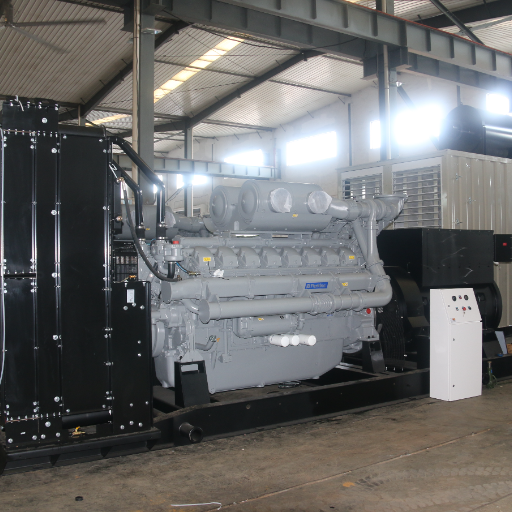
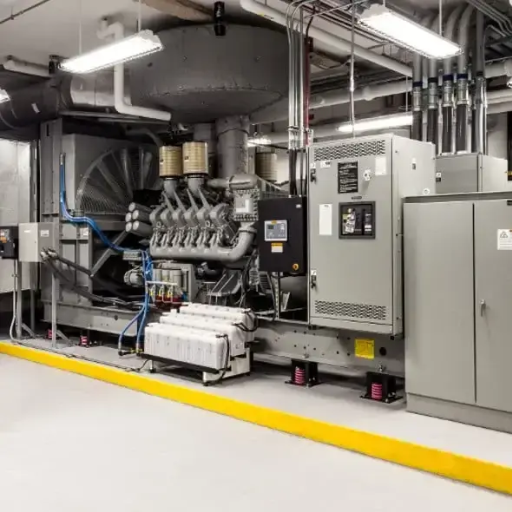
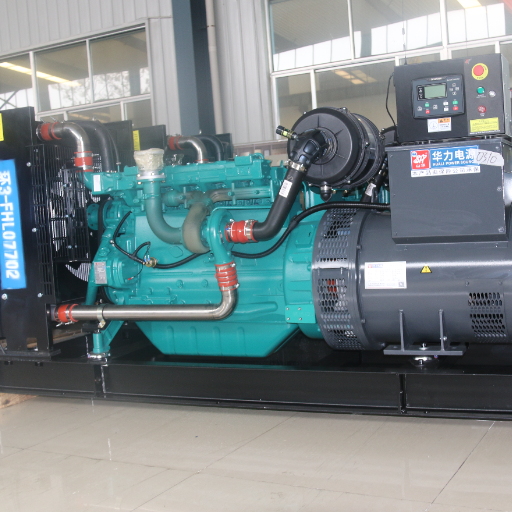
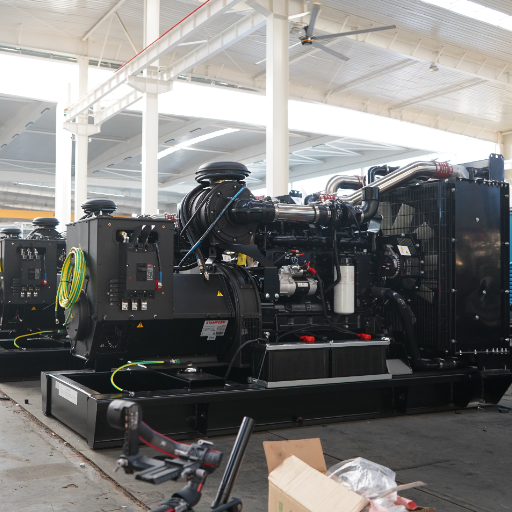
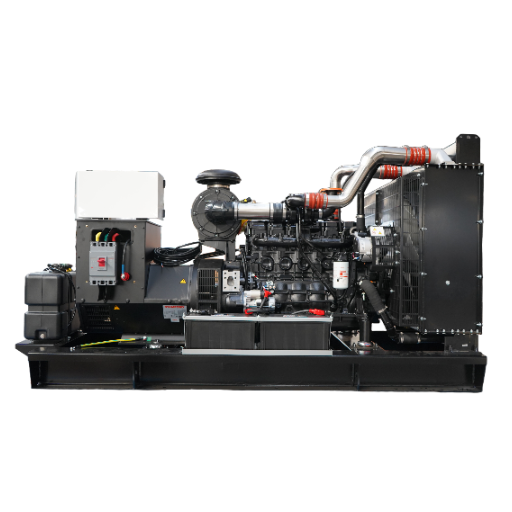
An open type generator is a diesel engine, alternator, radiator, and control panel mounted on a heavy-duty steel base frame. There is no enclosure. All components are exposed, which gives technicians full access and allows unrestricted airflow around the engine.
Key Takeaways
- Open type generators are cheaper to buy, easier to service, and cool better, but they usually need a separate shelter or generator room to meet noise and weather requirements.
- Silent type generators cost 15–40% more upfront, but they include weatherproofing, sound attenuation, and faster outdoor installation.
- Noise, not power, is the deciding factor: both enclosures deliver the same kW output from the same engine.
- A 5-year total cost of ownership (TCO) calculation often shows the silent type is cheaper once shelter, permits, and installation are included.
- Always confirm the dB rating measurement standard and distance (ISO 8528-10 at 7 meters is the industry reference).
Need help choosing the right enclosure? Contact a ZC Power engineer for a site-specific recommendation and factory-direct quote.
What Is an Open Type Generator?
An open type generator is a diesel engine, alternator, radiator, and control panel mounted on a heavy-duty steel base frame. There is no enclosure. All components are exposed, which gives technicians full access and allows unrestricted airflow around the engine.
Open type generator sets suit industrial sites that already have a dedicated plant room or engine hall. Mining operations, remote construction camps, and factories with existing acoustic buildings often prefer them. The base price is lower and routine maintenance is faster.
The trade-off is that the open design offers almost no protection against rain, dust, or noise. Install an open type generator outdoors in an urban area and you will usually need a generator house, acoustic screen, or weather canopy. Those extras can cost far more than the silent canopy premium.
Typical open type generator characteristics
- Noise level: 95–128 dB(A) at 1 meter; roughly 78–85 dB(A) at 7 meters
- Weather protection: Minimal; requires shelter for outdoor use
- Maintenance access: Excellent; all sides open
- Cooling: Best natural airflow
- Upfront cost: Lower than an equivalent silent set
- Best for: Existing generator rooms, remote industrial sites, mining, agriculture
What Is a Silent Type Generator?
A silent type generator is an open type generator enclosed in a steel acoustic canopy. The canopy is lined with sound-absorbing material, uses labyrinth air ducts to control intake and exhaust noise, and includes vibration isolators and exhaust silencers. High-quality canopies also provide weatherproofing, anti-corrosion paint, and lockable access doors.
Silent type generator sets suit noise-sensitive environments. Think hospitals, hotels, schools, residential developments, telecom sites, and urban construction. They can usually be installed outdoors on a concrete pad, so you don’t need a separate building.
The internal layout matters. A well-engineered silent canopy does more than block noise; it manages heat. Engineered air ducts, cooling fans, and exhaust routing keep the engine within its thermal limits while limiting sound escape.
Typical silent type generator characteristics
- Noise level: 60–75 dB(A) at 7 meters for standard silent; 50–65 dB(A) at 7 meters for super-silent
- Weather protection: Built-in; outdoor installation ready
- Maintenance access: Moderate; panels must be opened
- Cooling: Engineered ventilation; requires proper airflow clearance
- Upfront cost: 15–40% higher than an equivalent open set
- Best for: Hospitals, data centers, telecom, urban construction, residential areas, events
Open Type vs Silent Type Generator: Side-by-Side Comparison
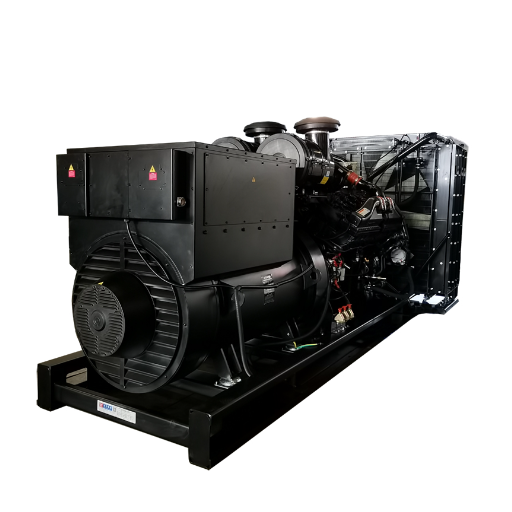
The core engine, alternator, fuel system, and controller are the same. The canopy is what changes the ownership equation in any open type vs silent type generator decision.
| Factor | Open Type Generator | Silent Type Generator |
|---|---|---|
| Noise at 7 m | 78–85 dB(A), up to 95+ dB(A) for larger sets | 60–75 dB(A); super-silent 50–65 dB(A) |
| Weather protection | None; needs shelter | Built-in weatherproof canopy |
| Upfront cost | Lower | 15–40% higher |
| Installation | May need generator room or acoustic screen | Direct outdoor installation on a pad |
| Maintenance access | Fast and unrestricted | Requires opening panels |
| Cooling efficiency | Maximum natural airflow | Engineered; clearance dependent |
| Weight | Lighter | Heavier due to steel canopy |
| Permits / compliance | Often harder in urban/residential areas | Easier approval in noise-sensitive zones |
| Resale value | Lower in urban markets | Higher where noise limits apply |
The performance and fuel consumption of the generator set are essentially identical. If a 500kVA Cummins engine burns 105 liters per hour at full load in an open frame, it will burn the same 105 liters per hour inside a properly ventilated silent canopy.
For a deeper look at fuel consumption across engine brands, see our heavy duty diesel generator fuel consumption guide.
Generator Noise Levels: What dB Numbers Actually Mean
Decibel ratings are only useful if you know how and where they were measured. A manufacturer who quotes 72 dB(A) without stating the distance, load, and standard is giving you an incomplete picture.
The industry reference is ISO 8528-10:2022. It specifies how to measure airborne noise from reciprocating engine driven generator sets. Reputable suppliers report sound pressure level at a defined distance, usually 7 meters from the canopy surface, at 75% or 100% rated load.
Why measurement distance matters
Sound pressure drops by roughly 6 dB(A) every time you double the distance from the source. A generator rated at 95 dB(A) at 1 meter becomes about 83 dB(A) at 4 meters and about 77 dB(A) at 8 meters. A unit rated at 72 dB(A) at 1 meter falls to about 60 dB(A) at 4 meters and about 54 dB(A) at 8 meters.
This is why local noise limits are usually measured at the property boundary or nearest sensitive receptor, not at the generator itself.
Common noise benchmarks
| Sound source | Approximate dB(A) |
|---|---|
| Normal conversation | 60 dB(A) |
| Vacuum cleaner | 70 dB(A) |
| Standard silent generator at 7 m | 60–75 dB(A) |
| Busy traffic | 80–85 dB(A) |
| Open type generator at 1 m | 95–110 dB(A) |
| Jackhammer | 110–120 dB(A) |
When comparing quotes, ask the supplier to confirm the standard, distance, and load. A 5 dB(A) difference may not sound like much, but every 10 dB(A) increase is perceived as roughly twice as loud.
Regional Noise Regulations and Why They Matter
A silent type generator is not a luxury in many jurisdictions; it is a legal requirement.
| Region / Standard | Typical limit | Measurement point |
|---|---|---|
| India (CPCB) | ≤75 dB(A) for new gensets up to 1000 kVA | 1 meter from enclosure |
| China (GB 12348) | 65 dB(A) daytime, 55 dB(A) nighttime at boundary | Factory / site boundary |
| UK (BS 4142) | Site-specific; typically background +10 dB(A) | Nearest dwelling / boundary |
| Australia (AS 1055) | 55–65 dB(A) daytime, 45–55 dB(A) nighttime | Receptor location |
| WHO guideline | 55 dB(A) daytime, 45 dB(A) nighttime | Outdoors, residential areas |
| UAE / Dubai | 55 dB(A) residential, 45 dB(A) at night | Property boundary |
In 2024, a contractor in Lagos installed an open type 250kVA genset on a rooftop to save money. Within a week, neighbors filed complaints. The environmental authority measured 84 dB(A) at the property boundary and ordered the unit shut down until noise fell below 60 dB(A). The retrofit, acoustic fencing, exhaust silencer, and vibration pads, cost more than a factory-built silent canopy would have.
Before selecting an enclosure, confirm the applicable noise limit with the local authority. In many cases, the cheapest path to compliance is a properly specified silent type generator.
Lifecycle Cost: Silent Type vs Open Type Generator
The purchase price is only one line item. A full comparison of open-type vs. silent-type generators must include shelter, installation, permits, maintenance access, and resale value.
5-year TCO example for a 500kVA diesel generator set
| Cost factor | Open type generator | Silent type generator |
|---|---|---|
| Equipment purchase | ~$45,000 | ~$58,000 |
| Generator room / shelter | ~$75,000 | $0 |
| Installation labor | ~$15,000 | ~$5,000 |
| Noise compliance / permits | ~$8,000 | ~$1,000 |
| 5-year maintenance | ~$12,000 | ~$11,000 |
| Resale value at year 5 | ~$18,000 | ~$24,000 |
| 5-year TCO | ~$137,000 | ~$51,000 |
The numbers are illustrative, but the pattern is real. Open type generators often look cheaper on the quote until you add the civil works required to make them acceptable on site.
That said, if you already have a generator room or operate in a remote industrial zone with no noise restrictions, the open type remains the lower-cost choice. The right decision is site-specific, not universal.
Request a factory-direct TCO comparison for your exact installation and duty cycle.
How Acoustic Canopies Reduce Generator Noise
A quality silent canopy is an engineered system, not just a metal box. The main noise-control elements are:
- Sound-absorbing lining: Rockwool or fiberglass behind perforated steel panels absorbs airborne engine noise.
- Labyrinth air ducts: Intake and exhaust air paths are bent and lined to block direct sound escape while allowing cooling airflow.
- Exhaust silencer: A heavy-duty muffler can reduce exhaust noise by 30–50 dB(A).
- Vibration isolators: Engine and alternator mounts prevent structure-borne noise from traveling through the base frame.
- Sealed doors and gaskets: Prevent sound leakage around access panels.
Cheap canopies often skip the dense acoustic lining or use thin single-skin steel. They may still look like silent generators, but the dB reduction is poor and the engine overheats. Always request a factory noise test report that references ISO 8528-10.
At ZC Power, every silent type generator is load-bank tested in our national standard testing center. We document noise, output, and exhaust temperature before shipment.
How to Match the Enclosure to Your Application
Use the matrix below as a starting point, then adjust for your local noise limit, climate, and maintenance plan.
| Application | Recommended enclosure | Key decision factors |
|---|---|---|
| Hospital / healthcare | Silent / super-silent | Urban noise limits, 24/7 readiness, minimal acoustic footprint |
| Data center | Silent / containerized | Uptime, sound power certification, ATS integration |
| Telecom / mobile tower | Silent | Remote monitoring, low noise at residential boundaries |
| Mining / quarry | Open or silent depending on site | Existing engine hall, dust, maintenance access |
| Remote construction camp | Open or containerized | Cost, shelter availability, transport |
| Urban construction | Silent | Permit approval, nearby residents, site mobility |
| Agriculture / farm | Open or silent | Distance to dwellings, budget, weather exposure |
| Events / outdoor festivals | Silent / trailer-mounted | Noise ordinances, rapid deployment, public proximity |
For high-altitude, extreme heat, or corrosive environments, the canopy specification matters as much as the engine. Coastal sites may need upgraded anti-corrosion powder coating. Desert sites need oversized air filters and cooling capacity. Cold climates may need block heaters and insulated battery boxes.
For projects that demand fast deployment in remote or harsh locations, our guide to the containerized heavy duty diesel generator covers CSC certification, integrated fuel systems, and weatherproofing in detail.
To choose the right power rating for your load, see our heavy duty diesel generator sizing guide. For help picking the engine brand inside either enclosure, read our heavy duty diesel generator brands guide.
Common Mistakes When Choosing Open or Silent Generators
Even experienced buyers make expensive errors. Watch for these:
Comparing only the equipment price. A 13,000savingonthegeneratorcandisappearintoa13,000savingonthegeneratorcandisappearintoa75,000 generator room.
Ignoring the measurement standard. “72 dB(A)” at 1 meter is not the same as 72 dB(A) at 7 meters.
Buying a canopy without acoustic lining. Some sellers offer weather canopies that look like silent enclosures but provide minimal noise reduction.
Undersizing airflow clearance. Silent canopies need enough surrounding space for intake and exhaust air. Poor placement causes overheating and premature engine wear.
Choosing open type for an urban site. If local limits are 55 dB(A) at the boundary, an open generator will fail inspection before it runs its first hour.
Forgetting maintenance access. A tightly packed canopy may look compact, but it can double service time and cost.
Engine Brand and Alternator Still Matter
The enclosure decision does not replace the engine, alternator, and controller decision. A silent canopy on a low-quality engine will still fail prematurely. An open frame with a premium engine will still be too loud for a hospital.
A complete genset specification should name:
- Engine brand and model
- Alternator brand and model
- Controller brand and model
- Enclosure type and rated noise level
- OEM testing standard and load-bank certificate
At ZC Power, we build open and silent gensets with engines from Cummins, Perkins, Weichai, Yuchai, and other major brands, paired with Stamford or Leroy-Somer alternators and Deep Sea Electronics or SmartGen controllers.
Frequently Asked Questions
What is the difference between an open type and silent type generator?
An open type generator has no enclosure: the engine, alternator, and radiator sit exposed on a base frame. A silent type generator adds a steel acoustic canopy lined with sound-absorbing material and labyrinth air ducts. The same engine can produce identical power in either enclosure, but the silent canopy reduces noise from roughly 78–85 dB(A) down to 60–75 dB(A) at 7 meters and provides weather protection.
How loud is a silent type generator?
A standard silent type generator produces 60–75 dB(A) at 7 meters, comparable to a vacuum cleaner or normal traffic. Super-silent models can reach 50–65 dB(A) at 7 meters. Always confirm that the rating follows ISO 8528-10 and states the measurement distance and load.
Can I use an open type generator outdoors?
Only if you add a generator house, weather canopy, or acoustic screen. An open type generator offers no protection against rain, dust, or noise. In urban or residential areas, outdoor installation of an open set usually fails noise ordinances and can be shut down by authorities.
Is a silent generator worth the extra cost?
For noise-sensitive or outdoor sites, yes. The upfront premium of 15–40% is often offset by avoiding generator-room construction, faster permits, and lower installation labor. In our 500kVA example, the 5-year TCO of a silent type generator was roughly one-third that of an open type once shelter and compliance costs were included.
What dB level is acceptable for residential areas?
Most residential guidelines limit noise to 55 dB(A) during the day and 45 dB(A) at night at the property boundary or nearest sensitive receptor. This aligns with WHO guidance and standards such as Australia’s AS 1055 and China’s GB 12348. A standard silent generator typically meets these limits; an open type generator rarely does without additional shelter.
Does a silent canopy affect fuel consumption or power output?
No. A properly ventilated silent canopy does not change the engine’s fuel consumption or rated kW output. The key is engineered airflow: the canopy must allow enough cooling air to enter and hot air to escape while keeping noise inside.
Open Type vs Silent Type Generator: The Bottom Line
The question is not which generator type is better. It is which one fits your site, your budget, and your local requirements.
Choose an open type generator when you already have a plant room, operate in a remote or industrial zone, need the lowest capital cost, and want fast maintenance access.
Choose a silent type generator when you need outdoor installation, must meet noise ordinances, want faster permit approval, and prefer to avoid the civil cost of a generator room.
This open type vs silent type generator decision always comes back to site conditions, not brand preference.
Either way, verify the noise data, measure the total lifecycle cost, and source from a manufacturer that tests every unit before shipment. The enclosure protects your investment. The factory behind it protects your uptime.
Talk to a ZC Power engineer about your project. We will recommend the right open type or silent type generator configuration, calculate the installed cost for your site, and deliver a factory-direct genset built to your exact specifications.
For a broader overview of industrial generator selection, read our heavy duty diesel generator buying guide.