What Can a 500W Power Station Run?
A 500W power station can run any device that draws under 500 watts continuously. That covers laptops, routers, phones, LED lighting, small fans, a television, and a mini-fridge. It will not run a microwave, a kettle, a space heater, or a full-size refrigerator.
The wattage on the box is a ceiling, not a battery gauge. What actually decides whether an appliance runs is its own power draw, and what decides how long it runs is a separate number entirely.
Most buying advice stops at a device list. The list matters less than the arithmetic behind it, because once you know the two numbers involved you can answer the question for any appliance in your house.
At ZC Power we size generating equipment professionally, and the same two numbers govern every load study we run. This guide gives you the runtime table, explains why a 500W station shuts down when a fridge tries to start, and covers the point at which a battery station stops being the right tool.
Key Takeaways
- A 500W station supplies 500W continuously and roughly 1,000W in short surges. Anything drawing over 500W will not run, however full the battery is.
- Watts decide what runs. Watt-hours decide how long. A 500Wh battery gives about 430Wh of usable energy after inverter losses.
- Runtime is roughly usable watt-hours divided by the device’s watts. A 50W laptop runs about 8 hours; the same battery runs a 10W router for about 40.
- A larger battery does not raise the output ceiling. Buying 1,000Wh instead of 500Wh still will not run a microwave.
- A 500W station cannot start a full-size refrigerator. A fridge needs roughly 2,000W to start, which is beyond the station’s surge rating.
If your interest is the load arithmetic rather than the battery, the generator load calculation guide walks through the same method for a whole building. The section below on surge explains the part that catches most buyers out.
What Can a 500W Power Station Run? The Short Answer
Every appliance asks two questions of the power source, and they are different questions. How much power does it draw? Decides whether it runs at all. How long do you need it? Decides whether the battery is big enough.
Get those two straight and the device list takes care of itself.
Watts Limit What Runs, Watt-Hours Limit How Long
The 500W on the label is the station’s continuous output: the rate at which it can deliver power without shutting down. An appliance drawing more than that will trip the inverter’s protection, usually within seconds.
The watt-hours are the size of the tank. A station in this class typically stores around 500Wh, spread across models from roughly 377Wh to 518Wh.
Think of it as a tap and a tank. The 500W is how wide the tap opens. The 500Wh is how much water is behind it. Opening a second tank does not widen the tap, which is why upgrading capacity never solves an output problem.
The Runtime Table, With Assumptions Stated
Every row below uses the same assumptions, which is more than most published tables do: about 430Wh usable from a 500Wh rating, allowing for inverter losses, and the device drawing its figure steadily.
| Device | Typical draw | Estimated runtime |
|---|---|---|
| Smartphone charge | 5 W | many recharges |
| WiFi router | 10 W | ~40 hours |
| LED lamp | 10 W | ~40 hours |
| Laptop | 50 W | ~8 hours |
| Television | 80 W | ~5 hours |
| Mini-fridge or cooler | 60 W | ~7 hours |
| Small coffee maker | 350 W | ~1.2 hours |
| Any device at the ceiling | 500 W | ~0.9 hours |
The assumptions are the point. A vendor table that omits the efficiency figure will quietly overstate every runtime on it, and the overstatement flatters the larger, more expensive model.
Devices That Stay Comfortably Inside 500 Watts
The practical use case for a station in this class is electronics and light-duty, not appliances:
- Laptops, tablets, phones and cameras
- Routers, modems and network equipment
- LED lighting and small fans
- Televisions and soundbars
- CPAP machines and other small medical devices
- A mini-fridge or cooler
All of these sit far enough below the ceiling that the station never has to work hard. That is the sign you have sized it correctly.
What a 500W Power Station Cannot Run
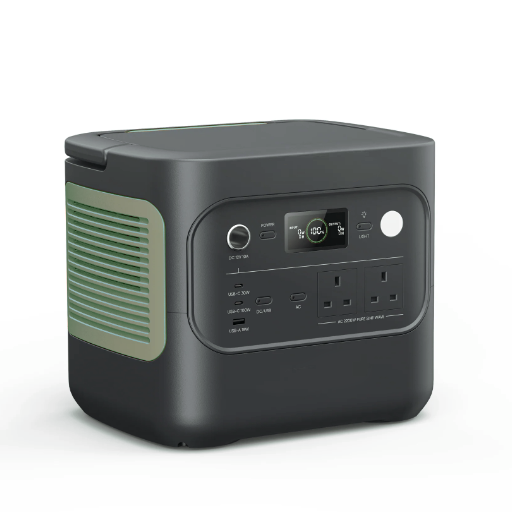
The exclusions are not arbitrary. They follow from one property that a handful of common appliances share.
Heating Appliances and Why They Break the Rule
Anything that makes heat is almost always out of reach, because turning electricity into heat takes a lot of it.
A standard kettle draws 1,200 to 1,500W or more. A microwave runs 700 to 1,000W. A space heater sits at 1,300 to 1,800W. An induction hob, an electric frypan and a hair dryer all land in the same territory.
Every one of those exceeds 500W, so every one is refused by the inverter at the moment of switch-on. Nothing about the battery’s size changes it.
This is an illustrative composite rather than a record of a specific client. A household settled in for a forecast four-hour outage with a 500W station, a router, two lamps and a laptop. It carried all of them comfortably and still had charge left. Then someone put the kettle on, and the station shut down instantly. Nothing was wrong with the unit. The load was about three times its ceiling, and the protection worked exactly as designed.
Why a Bigger Battery Does Not Fix an Output Limit
This is the most expensive misunderstanding in the category.
A buyer who wants to run a microwave often concludes that the station was too small, and goes shopping for more capacity. They return with a 1,000Wh unit and discover the microwave still will not run, because the output ceiling on that model is also around 500W. Capacity was never the constraint.
Capacity buys hours. Output rating buys appliances. If you need a 900W microwave to run, you need a station rated above 900W continuous, and buying more watt-hours will not get you there.
The Surge Question: Motors, Fridges and Compressors
There is one more layer, and it is the reason two appliances with similar wattage ratings can behave completely differently.
Running Watts Versus Starting Watts
Motors draw a brief spike of current when they start. A compressor, a pump or a fan motor needs several times its running watts for the second or two it takes to get moving.
Utility guidance on backup power puts this plainly: an appliance’s starting power is the wattage it needs to start up, while its rated power is what it needs to keep running. Some appliances draw no extra starting power at all, and some draw a great deal.
Municipal guidance for household emergency power makes the same warning in stronger terms: surge watts can throw a sizing calculation off entirely if they are not accounted for, and they are the step most people skip.
Resistive loads show zero additional starting power. A space heater, a water heater or an incandescent lamp draws the same at switch-on as it does an hour later. That is why they are easy to start and hard on capacity.
Motor loads are the opposite. A refrigerator, a sump pump, a well pump or an air conditioner can need two to three times its running watts to start, and a 500W station’s surge ceiling is typically only around 1,000W.
Why a Mini-Fridge and a Full-Size Fridge Differ
This is where the question “can a 500W power station run a fridge” splits into two answers, and the split is useful.
| Appliance | Rated power | Starting power | Runs on a 500W station? |
|---|---|---|---|
| Mini-fridge or cooler | ~60 W | ~180 W | Yes |
| Full-size refrigerator/freezer | ~700 W | ~2,000 W | No |
| Window air conditioner (12,000 BTU) | ~1,200 W and up | higher still | No |
The mini-fridge works because both its running and starting figures sit inside the station’s limits. The full-size fridge fails twice over: its rated draw alone is above the continuous ceiling, before the starting surge is even considered.
That is worth noticing. The fridge is not a borderline case. It is refused at both stages, which means no amount of patience or battery capacity will make it work.
How to Check a Surge Rating Before You Buy
Two figures need to be on the specification sheet, and one of them often is not:
- Continuous output, usually the headline number.
- Surge or peak output, which is the one that decides motor loads.
If a listing gives only the continuous figure, assume the surge rating is modest and treat motor-driven appliances as out of scope. Manufacturers that publish a short-time overload curve, for instance a percentage above rating for a stated number of seconds, are giving you better information than one that does not.
The City of Bluffdale’s power seminar is a useful public example of the same lesson for household backup, covering why refrigerator and pump surges have to be counted separately from running watts.
How Long Will a 500W Power Station Actually Last?
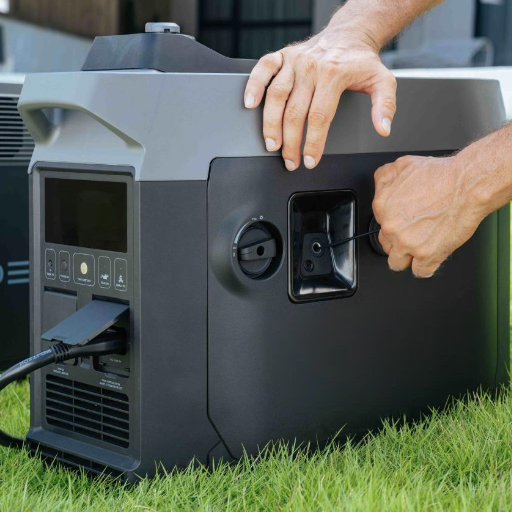
Runtime is the easiest calculation in this whole subject, and the one most often done with the wrong numbers.
The Runtime Formula
Runtime in hours ≈ usable watt-hours ÷ device watts.
Two adjustments go into “usable” watt-hours:
- Inverter losses. Converting battery DC to household AC wastes some energy. A modern sine-wave inverter runs around 90 to 95 percent efficient, so a 500Wh battery offers roughly 430 to 460Wh of usable output.
- Battery ageing. A battery loses capacity over its life, and a unit several years old will not deliver its original figure.
A Worked Example
Take a 500Wh station on a four-hour evening:
| Device | Draw | Hours needed | Watt-hours used |
|---|---|---|---|
| WiFi router | 10 W | 4 | 40 |
| LED lamp | 10 W | 4 | 40 |
| Laptop | 50 W | 3 | 150 |
| Television | 80 W | 2 | 160 |
| Total | 390 Wh |
At about 430Wh usable, that evening fits with charge to spare. Add a 350W coffee maker for twenty minutes and the total rises by about 115Wh, which is the sort of margin that decides whether the station finishes the night.
Running a load schedule like this before an outage is the habit that prevents surprises. It is the same arithmetic as the generator load calculation method, just at a smaller scale.
When a 500W Power Station Is Not Enough
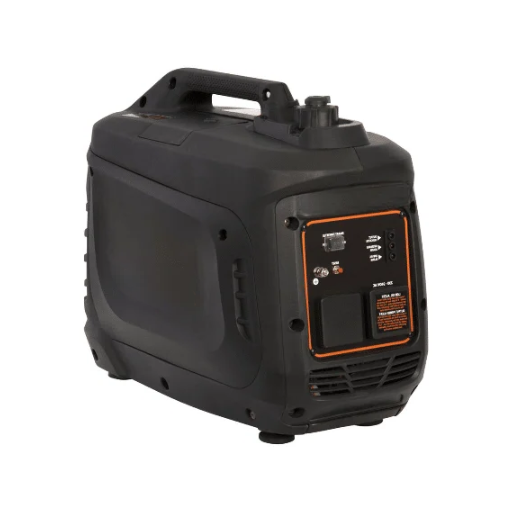
A station in this class is excellent at what it is designed for. Knowing where its design ends saves you an expensive mistake in both directions.
The Loads That Need a Fuel Generator
Three things put a load beyond a battery station of any size:
- Sustained high draw. Anything above the output ceiling, for any length of time.
- Heavy motor starting. Pumps, compressors and air conditioners, where the surge alone breaks the rating.
- Long duration. A battery is measured in hours. A multi-day outage is measured in fuel.
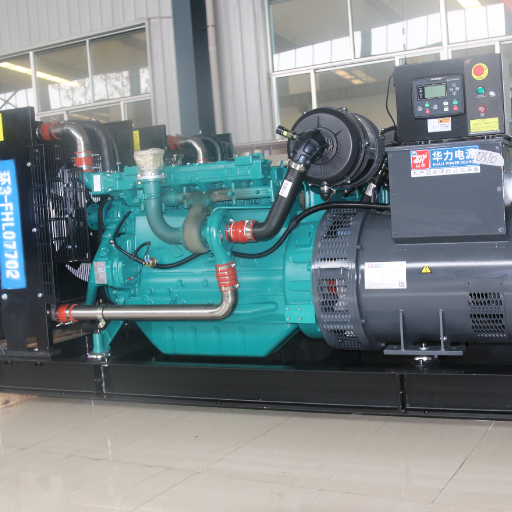
For those cases the tool is a fuel-driven generator set. The electrical reasoning is identical, which is why the motor starting surge guide applies to a 500W station and a 500kVA genset equally: the surge figure, not the running figure, decides whether the motor turns.
Inverter Generators and Clean Power for Electronics
If what you actually want is clean, stable power for sensitive electronics, a battery station is not the only option. An inverter generator produces power electronically, the same way a battery station does, and is safe for laptops and televisions. It runs on fuel, so it has no runtime limit.
That comparison is worth making properly rather than by assumption, and our guide to inverter generator technology covers how the two differ.
The Home Backup Alternative
When the goal shifts from a camping weekend to keeping a house running through an outage, the sizing question changes scale entirely. A home standby system is sized on the circuits you want live, not on a device list.
That is the point where a proper load study pays for itself, and our guide to sizing a generator walks through it. The home backup generator guide covers the equipment side for residential installations.
If you are weighing a battery station against a fuel generator for a facility rather than a household, our engineering team can run the load numbers with you. Contact us for a site assessment and a factory-direct quote.
Frequently Asked Questions
What can a 500W power station run?
Any device drawing under 500 watts continuously. In practice that means laptops, phones, routers, LED lighting, fans, televisions, CPAP machines and mini-fridges. It will not run heating appliances, a full-size refrigerator, or anything with a heavy motor.
What can a 500W power station not run?
Kettles, microwaves, space heaters, induction hobs, air conditioners, full-size refrigerators and freezers, and power tools with large motors. Each either exceeds the 500W continuous ceiling or needs more starting surge than the station provides.
How long will a 500W power station last?
Runtime equals usable watt-hours divided by device watts. A 500Wh station offers about 430Wh usable, so a 50W laptop runs roughly 8 hours, a 10W router about 40 hours, and a device at the full 500W about 50 minutes.
Can a 500W power station run a refrigerator?
A mini-fridge or cooler, yes, at around 60W running. A full-size refrigerator or freezer, no. It draws roughly 700W while running and about 2,000W to start, which is above both the continuous ceiling and the surge rating.
Can a 500W power station run a TV?
Yes. A modern television draws roughly 80W, which gives about 5 hours on a 500Wh battery. A larger set with a soundbar and a set-top box can push the figure past 120W and cut that runtime accordingly.
Is a power station the same as a generator?
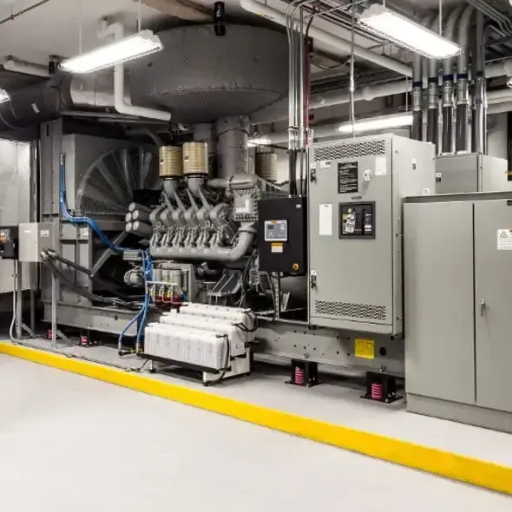
No, and the naming causes confusion in both directions. A power station in the consumer sense is a battery with an inverter, silent and exhaust-free, with runtime measured in hours. A generator produces electricity from fuel and has no runtime limit, but needs ventilation and maintenance. The term “power station” is also used in industry for a containerized generator set, which is a fuel-driven unit in a shipping container and a completely different product from a battery box.
Can I run a 500W power station while it is charging?
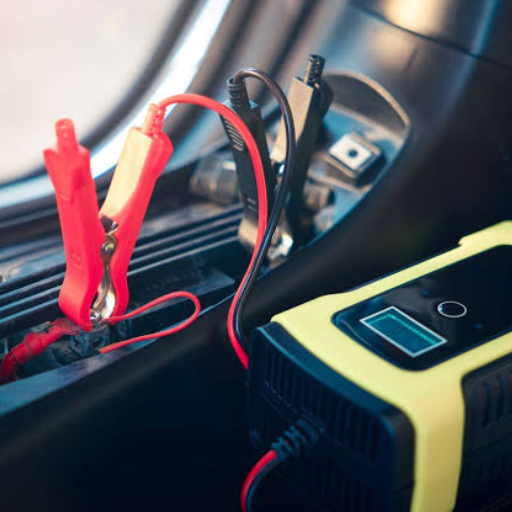
On most models, yes, though the charge rate drops and total runtime is reduced. Check the manual, because some units restrict simultaneous charge and discharge. Never charge one from a generator or an outlet in a wet location, and never run one indoors if it uses a fuel source, which battery units do not.
Conclusion
The answer to what a 500W power station can run comes down to two numbers and one rule.
- 500W is an output ceiling. Anything drawing more runs not at all.
- Watt-hours are the tank. Runtime is usable watt-hours divided by device watts, with roughly 430Wh usable from a 500Wh rating.
- Capacity buys hours; output rating buys appliances. A bigger battery will not run a microwave.
- Starting surge decides motor loads. A full-size fridge needs about 2,000W to start, well beyond a 500W station’s surge rating.
- Know where the design ends. Sustained high draw, heavy motor starting and multi-day outages are fuel generator territory, not battery territory.
If your loads have outgrown a battery station, the right next step is a proper load study rather than a larger battery. Contact our engineering team to work through your actual requirements and get a factory-direct quote on a set sized for them.