
Remote Monitoring for Standby Generators: What It Can’t See
Remote monitoring for standby generators reports what the controller can sense on a machine that is almost never running. It catches a failed start between service visits, proves the monthly exercise happened, and tells a technician which fault to bring parts for. It doesn’t measure battery capacity, fuel condition, or anything else that only shows up when the engine turns.
That boundary is where most buying decisions go wrong.
A monitoring package is genuinely useful. It’s also sold, fairly often, as predictive maintenance a standby set can’t support: the set sits at rest for weeks, the sensors report resting values, and the dashboard is accurate and uninformative at once.
Our sets run from 8 kVA to 4,000 kVA, with cloud connectivity or BMS integration available on request. Here’s what the codes require remotely, what the data misses, and what to specify.
If you’re reviewing a monitoring proposal, our engineers can check the controller and communications against your site.
Key Takeaways
- NFPA 110 requires remote audible annunciation of a listed set of conditions, not a dashboard. Table 5.6.5.4 has 22 indicator functions; the remote column means a common alarm sounder.
- A work site staffed 24 hours a day may not have to sound a remote alarm at all.
- Battery charger AC failure gets a remote visual indicator. Low cranking voltage gets a remote sounder. The two battery faults aren’t treated alike.
- Battery capacity, fuel condition and coolant are measured with a load test or a sample, not a sensor.
- Monitoring fails quietly, and every one of its failure modes presents as green.
What Remote Monitoring for Standby Generators Actually Does
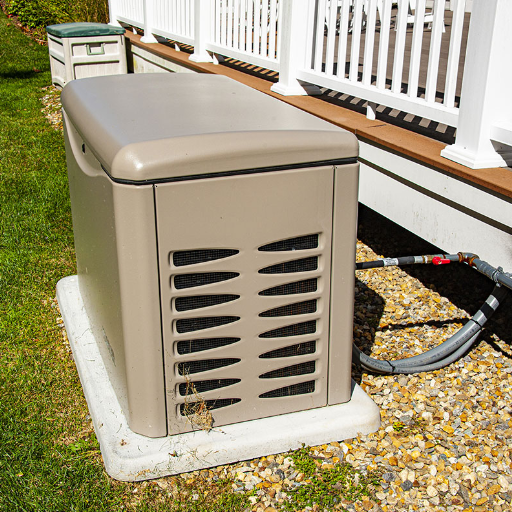
Three different things sold as one
Remote annunciation is hard-wired signalling. A condition occurs, and a lamp and sounder operate away from the generator room. It’s defined by codes and works when the network doesn’t.
Remote monitoring is data: values and events leave the site over a network for a portal or BMS to trend and store.
Remote control is actuation: someone starts, stops, transfers or resets the set from elsewhere. It carries the security consequences and is least often needed.
A single product may do all three, which doesn’t make them one requirement. Conflating them is how a site ends up with a cloud subscription and no sounder in the control room.
What NFPA 110 requires remotely, and what it doesn’t
NFPA 110 doesn’t require remote monitoring. It requires remote annunciation, and it defines exactly which conditions.
Table 5.6.5.4, in the 2022 edition, lists 22 indicator functions across Level 1 and Level 2 systems. Each is marked across three columns: CV for a control-panel visual, S for a shutdown and RA for a remote audible alarm. The slice below shows the visual and audible columns:
| Indicator function | Panel visual | Remote audible |
|---|---|---|
| Overcrank | Required | Required |
| Low lube-oil pressure | Required | Required |
| High engine temperature | Required | Required |
| Overspeed | Required | Required |
| Low fuel in main tank | Required | Required |
| Low coolant level | Required | Required |
| Control switch not in automatic | Required | Required |
| Low cranking voltage | Required | Required |
| Low voltage in battery | Required | Not required |
| Battery charger AC failure | Required | Not required |
Note (5) widens it: “All required CV functions shall be visually annunciated by a remote, common visual indicator.” Every required CV function has a remote twin.
Note (6) then covers the audible side, for functions in the RA column: “shall be annunciated by a remote, common audible alarm”. A sounder wired to the panel. Not a trend chart, not an email, not an app notification.
Note (1) is narrower than it looks. Item (p), the contacts for local and remote common alarm, “shall be provided, but a separate remote audible signal shall not be required when the regular work site in 5.6.6 is staffed 24 hours a day.” A continuously manned plant need not sound a remote alarm; the remote visual indicator still applies.
Battery charger AC failure gets a remote lamp. Low cranking voltage gets a sounder. Both are battery-system faults. Only one reaches the audible list, so only one will wake anyone.
If a monitoring package treats “battery” as a single status, it’s coarser than the code it replaces. The charger side of that same mismatch is set out in what NFPA 110 requires of a charger.
The monitor is a load on the battery it watches
A generator telematics gateway, a cellular modem, a remote annunciator lamp and the controller’s own memory all draw from the DC system. On a standby set that system is the starting battery, held up by a float charger.
Those loads join everything else on the same battery, which is how a set ends up going flat. Usually the charger covers the total. It stops being fine when the monitor sits on the battery side of a failed charger, or when a gateway must run for months on a battery that also has to crank an engine.
The battery charger guide covers sizing. The point here is narrower: put the monitoring load on the list. A gateway that flattens a starting bank has caused the failure it was installed to prevent.
The Data a Standby Set Produces, and What It Leaves Out
The alarm set is short and mostly binary
A controller’s event list is a set of thresholds that have been crossed. Oil pressure low, coolant temperature high, overcrank, charger failed, switch not in auto. These are true or false, and the useful information is the timestamp.
That’s genuinely valuable. A set that failed to start on Tuesday and reset itself is invisible to a monthly visit and obvious in an event log.
The trends worth trending
Three numbers are worth keeping over time, and none needs the engine running. Fuel level, because a remote site can run dry between deliveries. Run hours, because service intervals are counted in hours and exercising accumulates them faster than the schedule assumes. Starts and last crank duration, because a crank that is getting longer is a battery problem before it is a failure.
On a set that runs, add load percentage, coolant temperature under load and exhaust temperature; they show wet stacking and cooling problems, and exist only while loaded.
What a dashboard cannot see
This is the part that decides whether remote monitoring is worth its price.
- Battery capacity. Resting voltage stays near 12.6 V while cranking amps fade. Capacity is measured under load, or not at all.
- Fuel condition. Water, microbial growth and age don’t appear in a level sensor.
- Coolant strength. Freeze protection has to be checked with a refractometer.
- Sensor health. A failed sensor usually reads a plausible value, not zero.
A dashboard reports the values its sensors produce, not the condition of the machine. On a standby set that gap is most of the risk.
This is an illustrative composite rather than a record of a specific client. A plant ran a monitoring portal for two years and it showed a battery voltage of 27.4 V every day. The number was correct. On a cold morning in the third winter the set cranked slowly and did not fire: the batteries had lost the capacity to deliver cranking current, which a resting voltage never measures.
Where Remote Monitoring Fails Quietly
A monitoring system that stops working looks exactly like a generator that is fine.
Stale data that looks current
Every portal shows the last value it received. Few make the age of that value prominent.
This is an illustrative composite rather than a record of a specific client. A cellular gateway at a remote site ran out of prepaid data in March. The portal kept displaying the last values it had received, in the same green, with the timestamp in small grey text. Nobody noticed for five months.
Nothing had failed. The link had simply stopped, and the display had not.
The fix is procedural. Ask for a data-age field on every tile, and an alarm when the site stops reporting. A monitoring system should alert on its own silence.
Alarms with no owner
An alarm is only as good as the person who receives it and does something.
This is an illustrative composite rather than a record of a specific client. A facility routed its alarms to the facilities manager’s address. He left eleven months later. The route was never updated, and alarms kept arriving at an account nobody read until an insurance auditor asked for the maintenance file.
Decide four things before commissioning: who receives the alarm, who receives it second, what happens out of hours, and what counts as an acknowledgement. If those answers aren’t written down, it’s a data logger with an email feature. A maintenance contract is where they belong.
String voltage and the battery behind it
On a 24 V set, two 12 V batteries in series report one voltage, and that voltage is the sum. A pair sitting at 12.6 V and 11.8 V reads 24.4 V, which looks like a resting set rather than one with a failing battery.
The series arithmetic behind that is covered separately. A system reporting only the string total has the same blind spot as the person who checks it with a meter once a month, so if battery condition is why you’re buying, specify per-battery readings.
Monitoring Does Not Replace Exercising
The most common misunderstanding about these systems is that they substitute for testing.
What NFPA 110 still requires
NFPA 110 §8.4.2 requires emergency power supply systems in service to be exercised “at least once monthly, for a minimum of 30 minutes”, with the load level set by §8.4.2.1.1. A set that can’t reach that load on site gets a supplemental annual load bank test under §8.4.2.4.
None of that changes because a gateway is installed. A set that starts and runs unloaded every month while the dashboard reports success has still not been tested at load, and light running is how a diesel accumulates wet stacking. The load bank test exists to prove the set at load, and the load bank procedure explains what it involves.
There’s one legitimate overlap. If the set carries real load during an actual outage, that run can sometimes count toward testing when it meets the duration and load thresholds, subject to your AHJ, and remote monitoring proves it. That’s documenting a test, not performing one.
A 2020 Applied Energy analysis of two large emergency generator datasets found reliability varying by more than an order of magnitude with maintenance level, and even well-maintained single-generator setups are only about 80% likely to carry a two-week outage (Marqusee & Jenket, 2020). Maintenance is the variable that moves.
What monitoring does replace?
The paperwork. Every exercise needs a record: date, duration, load, parameters, who ran it. A system that timestamps the run and captures the parameters removes a manual step and the temptation to reconstruct the log from memory.
Some site visits, in some jurisdictions. US Air Force operations guidance allows equipment more than 20 miles from the servicing installation to be inspected monthly where “the batteries and generator operation are monitored by a remote monitoring system complying with UFC 4-010-06” (UFM 3-540-07, Table note 3). UFM is guidance, not enforceable criteria, so treat it as precedent, not a rule.
Specifying One: Connectivity, Alarms, Security
The specification decides whether a remote monitoring system is useful in three years.
Cellular, ethernet or BMS: pick by site
Ethernet to a building management system suits a staffed building where IT already runs the network. The controller speaks a protocol the BMS understands, usually Modbus RTU or TCP and sometimes BACnet, so the alarm appears on the same screen as everything else. The integrated standby system guide covers the integration side.
Cellular suits an unmanned site with no network. It brings a subscription, a coverage question and a data-plan owner, and all three need a named person.
Whichever you choose, keep the hard-wired annunciation. It’s the part that works when the network, the portal and the subscription don’t.
The standard that says don’t provide remote access
A generator controller is a small industrial control system, and it should be treated as one.
UFC 4-010-06, the US Department of Defense criteria for facility-related control systems, is blunt about the default. Section 4-4 is headed, in the document’s own capitals, DO NOT PROVIDE REMOTE ACCESS, and continues: “Do not provide remote (off-site) access to the control system.” (UFC 4-010-06, 2023, §4-4). Section 4-5 adds that wireless networks should, for the most part, be avoided in these systems.
You don’t have to follow DoD criteria. What matters is which way the default points. A cellular modem bolted to a controller, holding a vendor account, reachable from the internet, is a deliberate risk decision, made with the site’s IT or security owner and not by the person selling the gateway.
Practical requirements that follow:
- Outbound-only telemetry where the platform allows it, with no inbound port open to the controller.
- A separate network segment, with named ownership of the SIM, the account and the credentials recorded at handover.
- A written answer on who can remote-start the set, and whether that is needed at all.
Commission it by pulling the charger fuse
A monitoring system is commissioned when you have proved it reports a fault, not when the installer has logged in.
Simulate each alarm at source and confirm it arrives where it should. Pull the charger supply and check that the charger failure alarm registers. Trip the emergency stop. Disconnect the communications link and confirm the portal reports loss of data.
Then write down what happened, and repeat it annually. A monitoring system nobody has tested has an unknown failure mode.
Frequently Asked Questions
Can I monitor my standby generator from my phone?
Yes. Most modern controllers support a cloud gateway or a mobile app directly. What reaches your phone is the controller’s parameter set and event log, not battery capacity, which needs the engine under load, or fuel condition, which needs a sample.
Is remote monitoring required by code?
Not in the way most people mean. NFPA 110 requires remote audible annunciation of the conditions in Table 5.6.5.4, and waives that where the work site is staffed 24 hours a day. It doesn’t require a portal or a subscription, though your AHJ may ask for more.
What should a standby generator monitoring system measure?
At minimum: fuel level, battery voltage, coolant temperature, oil pressure, run hours, controller mode and the full alarm set. Add load percentage and exhaust temperature if the set runs loaded often. Add per-battery readings if battery condition is why you’re buying.
Does remote monitoring replace monthly generator testing?
No. NFPA 110 §8.4.2 still calls for a monthly run of at least 30 minutes, with a supplemental annual load bank test in §8.4.2.4 for sets that can’t reach the required load. Monitoring documents the test and catches faults between visits. It can’t apply load.
What happens if the internet goes down at the site?
Nothing, as long as you kept the hard-wired annunciation. The local alarm still works and the controller still protects the set. The portal stops receiving data, which is why it should alarm on its own silence.
Conclusion
Remote monitoring for standby generators is worth buying for three things: catching a no-start between visits, proving the monthly exercise happened, and getting the right technician to the right fault with the right part.
It isn’t worth buying as predictive maintenance. A set that isn’t running doesn’t produce the data prediction needs, and the failures that stop a start are measured with a load test and a sample.
Two distinctions decide whether a package is any good. Annunciation is not monitoring: the code wants a sounder where a person is. Data is not condition: the dashboard reports what the sensors see, while the machine can diverge for years.
Specify per-battery readings if batteries are your concern, alarm on data loss, name the person who receives the alarm, and keep the hard-wired annunciator regardless of what the portal promises.
Reviewing a monitoring proposal? Send us the controller model and the site’s connectivity, and an engineer will check that the specification covers what the code requires and what your site actually needs.


