Why Is My Diesel Generator Smoking? Diagnose It by Color
If you are asking why my diesel generator is smoking, the exhaust color is the fastest clue. Black smoke means too much fuel or too little air. White smoke means unburned fuel or water.
Blue smoke means lube oil. Gray or brown smoke points to poor atomization, timing, or fuel quality.
Color narrows the fault. It doesn’t identify it.
A standby set that puffs white for 20 seconds on a cold morning is normal. The same set smoking white after warm-up is not. Timing, load, temperature, and smell separate the two.
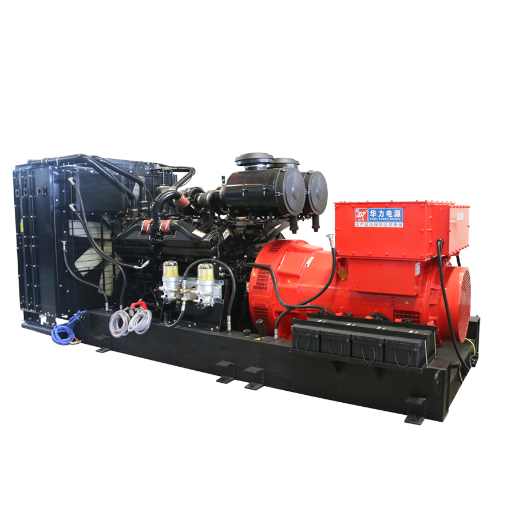
This guide gives you a condition-based triage for industrial diesel sets: color chart, diagnostic order, and stop rules. ZC Power builds diesel and gas gensets from 8 kVA to 4,000 kVA. If the set is smoking under load now, .
Key Takeaways
- Black smoke under steady load means too much fuel or too little air. A brief startup puff can be normal.
- White smoke that smells sweet, comes with coolant loss, or turns the oil milky means stop now.
- Blue smoke means lube oil is burning. Check oil level and grade first.
- Running below roughly 30% of rated load causes wet stacking. NFPA 110’s monthly exercise is 30 minutes at 30% or more of nameplate kW.
- Record color, load, temperature, and smell.
Why Is My Diesel Generator Smoking? Start With the Color
Color is useful only when paired with conditions. Ask four questions before you touch a wrench:
- When does it appear? At crank, during warm-up, at steady load, or after a load change.
- What load is the set carrying? Read the controller, not the nameplate.
- How warm is the engine? Cold coolant or a failed thermostat changes combustion.
- What does it smell like? Raw diesel, hot oil, and sweet coolant point to different fluids.
| What you see | What it usually means | Normal or fault |
|---|---|---|
| White plume for 20 to 60 seconds after a cold start | Condensation and partly burned fuel | Normal if it clears and coolant stays level |
| Brief black puff when load is applied | Fuel delivered faster than air can follow | Normal on many mechanical engines |
| White or gray haze during regeneration | Aftertreatment raising exhaust temperature | OEM-defined; check the manual |
| Thin white vapor that disappears | Steam from a cold exhaust or humid air | Normal |
| Black smoke at steady load | Air restriction, over-fueling, or overload | Fault |
| Blue smoke after warm-up | Oil entering the combustion chamber | Fault |
Normal diesel exhaust is nearly colorless. Brief white vapor on a cold start and a brief black puff on load pickup can both be normal. They should clear quickly, and steam should disappear a few feet from the outlet.
A diesel engine has no spark plug and no carburetor. If a search result tells you to check the choke, it’s describing a gasoline generator. Diesel faults live in the air path, fuel system, cooling system, and lubrication.
A regeneration on an aftertreatment engine can produce white or gray haze. The manual defines how long it lasts. A solid black plume under steady load is not normal.
Dana, a technician in Manitoba, logged a 25-second white plume on a January start. Coolant held and the smoke cleared. The log later showed the block heater cycling normally.
Diesel Generator Smoke Color Chart
Use this table to narrow why my diesel generator is smoking. The sections below explain the checks behind each row.
| Smoke color | Most likely cause | Typical condition | First check | Urgency |
|---|---|---|---|---|
| Black | Too much fuel or too little air | Under load or overload | Air filter, intake, boost hoses, turbo | Medium to high |
| White, diesel smell | Unburned fuel | Cold start, low load, injector fault | Injectors, fuel quality, compression | Medium |
| White, sweet smell | Coolant entering the cylinder | Any temperature, with coolant loss | Coolant pressure test, oil condition | Stop now |
| Blue | Lube oil burning | Startup, after idle, or continuous | Oil level and grade, turbo, rings | Medium to high |
| Gray or brown | Poor atomization, timing, or fuel quality | Steady load | Injectors, fuel quality, timing | Medium |
| Steam | Condensation | Cold ambient, cold exhaust | Coolant level | Normal if it clears |
Diesel exhaust contains fine particles and gases. The links exposure to respiratory and cardiovascular effects. Don’t stand in the plume.
Black Smoke: Why Is My Diesel Generator Smoking Soot?
Black smoke is soot from incomplete combustion. The cylinder got more fuel than it could burn.
Air-Side Causes
Check the air path before the fuel system. A dirty filter, a collapsed intake hose, a blocked aftercooler, or a weak turbo all leave the engine short of air.
- Read the air-filter restriction indicator.
- Inspect the intake hose for cracks or a collapsed lining.
- Check boost hoses, clamps, exhaust, and enclosure louvers.
- Compare boost pressure with the OEM specification.
Fuel and Injection Causes
If the air path is clear, look at fuel delivery. Worn injectors spray poorly. A worn injection pump can over-fuel one cylinder. Retarded timing leaves fuel burning late.
Don’t turn up the fuel screw to “clean up” the exhaust. That usually makes it worse and can void the warranty. Test the injectors and pump on a bench.
Load and Mechanical Causes
An overloaded set smokes because the load asks for more power than the engine can deliver at that ambient condition. Reduce the load and see if the smoke clears.
Mechanical causes include low compression, incorrect valve clearance, and a leaking head gasket. These usually bring hard starting, blow-by, oil consumption, or white smoke. Gray or brown smoke is a partial-combustion signal, so use the same air, fuel, and timing checks.
Black Smoke at Startup vs. Under Load
A brief black puff at startup or load pickup can be normal, especially on older mechanical engines. Persistent black smoke at steady load is not. If it stays after warm-up and the load is within rating, work through the air and fuel checks.
White Smoke: Why Is My Diesel Generator Smoking?
White smoke is unburned fuel vapor, water, or coolant. The smell and the coolant level separate the three.
Why Is My Diesel Generator Smoking White Smoke at Startup?
Cold cylinders don’t vaporize diesel well. A short white plume after a cold start is common. Glow plugs, an intake grid heater, or a block heater improve cold combustion. If it clears within a minute and coolant stays level, log it.
If white smoke continues after warm-up, the cause isn’t cold combustion. Check for a dribbling injector, low compression, retarded timing, or contaminated fuel.
White Smoke That Smells Like Diesel
Raw diesel smell points to unburned fuel. A worn injector can dribble fuel after the injection event. Low compression leaves the charge too cool to ignite.
Start with the fuel-water separator and filters. Then have the injectors tested.
White Smoke That Smells Sweet
A sweet, syrupy smell points to coolant. Coolant can enter through a failed head gasket, a cracked head or liner, or a leaking EGR cooler.
Stop for white smoke that doesn’t clear, falling coolant, milky oil, bubbles in the radiator, or a sweet exhaust smell. Pressure-test the cooling system and check the oil. Coolant in the cylinder can hydrolock the engine.
Steam Is Not Smoke
Steam appears on cold, humid mornings and disappears a few feet from the outlet. It has no acrid smell and leaves no oily film. If coolant is stable, steam isn’t a fault. If the level drops, treat it as a leak.
Blue Smoke: Why Is My Diesel Generator Smoking Oil?
Blue smoke is lube oil burning in the cylinder. Oil can enter past the rings, valve guides, or turbo seals.
Oil Level and Oil Grade
Check the dipstick on level ground with the engine stopped. An overfilled crankcase raises pressure and pushes oil past the rings. Wrong viscosity or an oil that doesn’t meet the OEM spec can do the same.
Correct the level and use the grade in the owner’s manual.
Rings, Valve Guides, and Turbo Seals
Worn rings and liners let oil climb into the chamber. Worn valve guides do the same, especially after a long idle. A leaking turbo seal pushes oil into the intake or exhaust.
Look for blue smoke after a long idle, oil in the intake piping, oil consumption without a leak, and crankcase pressure. A compression test and turbo inspection confirm the source. A restricted crankcase breather can also carry oil mist into the intake.
Blue Smoke After an Oil Change
Blue smoke right after an oil change usually means overfill, the wrong oil, or a mineral-to-synthetic switch in an older engine. explains how excess oil reaches the chamber.
Correct the level and confirm the specification. Don’t use a stop-smoke additive.
The Load Factor: Wet Stacking and Light-Load Smoking
A generator can smoke because it works too hard. It can also smoke because it works too little. If you are wondering why your diesel generator is smoking at light load, wet stacking is a common cause.
Why Low Load Causes Smoke
Below roughly 30% of rated load, a diesel cylinder may not reach the temperature needed to burn the fuel completely. Unburned fuel and soot collect in the exhaust. The result is wet stacking: black oily residue at exhaust joints, a smoky stack, and carbon inside the engine.
Over time, it fouls injectors, sticks rings, glazes bores, and contaminates oil. The set may still start, but it may not carry load when needed.
Oversizing is a common cause. A set chosen for a future load that never arrived spends its life at light load. Our guide to explains how to check the profile.
How to Confirm Wet Stacking
Read the load percentage. Look for black oily residue at exhaust joints and turbo flanges. Check for black smoke at light load that clears at higher load. Send an oil sample for soot and fuel dilution.
Exercise and Load Bank Testing
requires a monthly exercise of at least 30 minutes at 30% or more of nameplate kW, or until exhaust temperature reaches the manufacturer’s minimum. That helps keep emergency sets from wet-stacking.
A no-load exercise doesn’t raise cylinder temperature enough to burn off deposits. A load bank does. Follow the and the OEM’s load steps.
Marcus runs maintenance at a food-processing plant. A 500 kVA standby set passed every monthly no-load start for two years. During an outage, it smoked black at 25% load and would not accept the production line. A load bank run and a revised exercise plan cleared the wet stacking.
Why Is My Diesel Generator Smoking Under Load? A 30-Minute Diagnostic Sequence
Work in order. The goal is to rule out the cheap, common causes before you open the engine.
Step 1: Record the Conditions
Write down the smoke color, timing, load percentage, coolant and ambient temperature, smell, and duration. Note the last fuel delivery and service. A photo and a controller screenshot help.
Step 2: Check Air, Fuel, Coolant, and Oil
- Air: restriction indicator, intake hose, boost hoses, aftercooler, exhaust outlet.
- Fuel: water separator, filter condition, fuel quality, tank contamination.
- Coolant: level, condition, external leaks, oil sheen.
- Oil: level, grade, condition, fuel dilution, coolant contamination.
- Turbo: shaft play, oil in the intake or exhaust, boost pressure.
The full service calendar is in our .
Step 3: Isolate the Cylinder
On a mechanical engine, a cylinder cut-out test can show which cylinder is misfiring or over-fueling. On a common-rail engine, use the OEM software instead of cracking injector lines. High-pressure fuel can cause serious injury.
Step 4: Confirm With Tests
Don’t replace parts on a guess. Confirm the fault with the matching test:
- Boost pressure against the OEM specification
- Compression or leak-down test
- Injector bench test and spray pattern
- Cooling-system pressure test
- Oil analysis for soot, fuel, coolant, and wear metals
Step 5: Decide: Stop, Monitor, or Repair
| Finding | Risk | Action |
|---|---|---|
| White smoke with coolant loss, milky oil, or sweet smell | Coolant in the cylinder, possible hydrolock | Stop now. Pressure-test and inspect |
| Any smoke with knock, overheating, or low oil pressure | Mechanical damage in progress | Stop now. Do not restart |
| Blue smoke with rapid oil consumption | Ring, guide, or turbo failure | Stop if the level is dropping |
| Black smoke at steady load within rating | Air or fuel fault, possible wet stacking | Reduce load and diagnose |
| Brief startup puff that clears | Normal cold combustion | Monitor and log |
If the engine runs away, meaning it revs without control and will not shut down, do not stand in front of the intake. Use the emergency air shutoff if fitted and evacuate. Follow the OEM procedure.
How to Prevent Smoke From Coming Back
Smoke is a symptom. Prevention means removing the condition that caused it.
Fuel and Storage
Buy fuel from a supplier who provides a current quality report. Keep water out of the tank, drain the separator, and test for microbial contamination after long storage. Contaminated fuel can cause smoke in a healthy engine.
Air, Exhaust, and Cooling
Service the air filter on the restriction indicator or OEM interval. Inspect intake hoses at every service. Keep the radiator, aftercooler, and louvers clear. A restricted exhaust or hot engine changes combustion.
Load and Exercise
Size the set to the real load profile. Keep sustained load above the OEM minimum. Exercise at load, not just at no load. Use a load bank when the building load cannot reach the target.
Records That Support Service and Warranty
Log the smoke observation, load, temperature, fuel delivery, and service history. If the fault becomes a warranty claim, the record shows whether the set was overloaded, underloaded, or run on contaminated fuel. Our guide to covers the service schedule.
Frequently Asked Questions
Why is my diesel generator smoking?
The color identifies the fault family. Black means too much fuel or too little air. White means unburned fuel or water. Blue means lube oil.
Confirm the cause with timing, load, temperature, and smell before replacing parts.
What color smoke is bad for a diesel generator?
Persistent smoke of any color is a fault. White smoke with coolant loss is the most urgent. Blue smoke with falling oil level and black smoke at steady load also need diagnosis.
Why is my diesel generator smoking under load?
Common causes are overload, a restricted air filter, a boost leak, a worn injector, or wet stacking from long periods at low load. Check the load percentage and the air path first.
Is white smoke at startup normal?
A short plume that clears within about a minute and leaves coolant stable is normal. White smoke that continues after warm-up is not.
Can I run a diesel generator that is smoking?
Run it only if the smoke is a brief startup puff that clears. Stop for white smoke with coolant loss, any smoke with knock or overheating, or blue smoke with rapid oil consumption.
Conclusion
A smoking diesel generator is not a single fault. It points to one of four systems: air, fuel, coolant, or lubrication. Read the color, then the conditions.
A brief startup puff can be normal. Persistent smoke at operating temperature is not.
Three rules cover most cases. Stop the engine for white smoke with coolant loss, smoke with knock or overheating, or blue smoke with falling oil level. Check the air path before the fuel system on a black-smoking set. Treat long-term light load as a cause, not just a symptom.
If you are still asking why your diesel generator is smoking, send our team the model, load reading, service history, and a photo of the exhaust. ZC Power builds from 8 kVA to 4,000 kVA for standby, prime, and continuous duty. We will help you narrow down the fault before it becomes an engine repair.


