Heavy Duty Diesel Generator Maintenance: Industrial Service Guide & Checklist
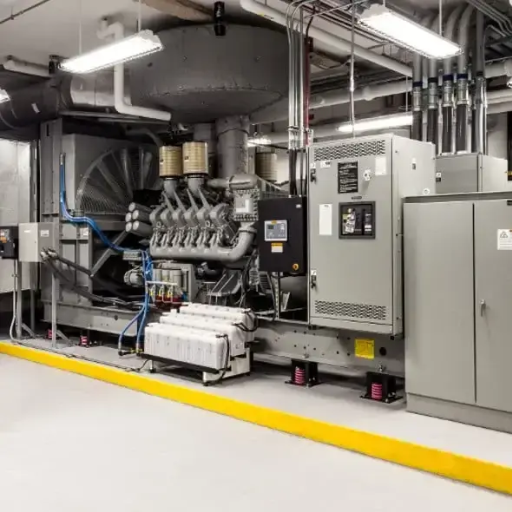
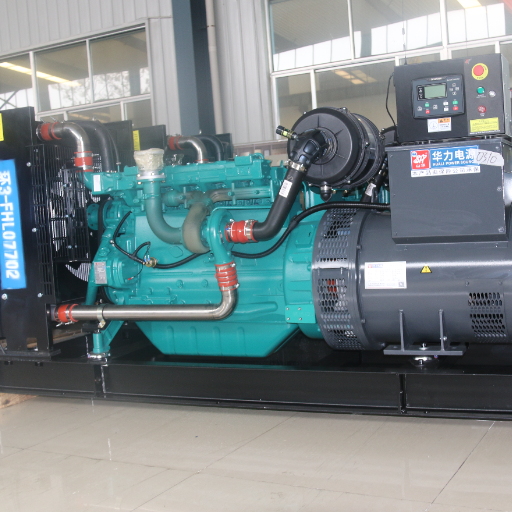
Heavy duty diesel generator maintenance is the scheduled inspection, servicing, and testing that keeps industrial gensets ready to start and able to run at rated output. A typical program combines daily visual checks, weekly or monthly exercise runs under load, quarterly fluid and filter servicing, and annual load-bank testing, all driven by run hours as much as by calendar time.
In 2023, a 1,000kW standby genset at a Nigerian data center failed during a grid outage. The engine turned over but stalled within seconds. The cause wasn’t a failed alternator or controller; it was 12 centimeters of water and microbial sludge in the day tank.
The emergency fuel-system cleaning and injector service cost 38,000 and took 14 hours.A 38,000 and took 14 hours.A 900 annual fuel-polishing service would have prevented it.
That case illustrates the difference between owning a generator and keeping it reliable. Industrial units aren’t large versions of residential standby sets. They run hotter, work harder, and operate in environments where dust, humidity, and fuel degradation accelerate wear. This guide explains how to build a heavy-duty diesel generator maintenance program that protects uptime and controls lifecycle cost.
Key Takeaways
- Maintenance intervals for a heavy duty diesel generator depend on run hours and duty cycle, not just calendar dates. Prime-power units need service far more often than standby units.
- Load-bank testing is essential: run the genset monthly at ≥30% rated load, or conduct annual full-load testing to prevent wet stacking and verify performance.
- Fuel quality management is the most overlooked failure point. Diesel degrades in 6–12 months, and water bottoms must be removed regularly.
- A well-maintained industrial genset can operate 20,000–30,000 hours before major overhaul; neglected units often need major repairs at 5,000–8,000 hours.
- Factory-direct OEM parts and documented service records protect warranty coverage and simplify inspections by the Authority Having Jurisdiction (AHJ).
Need a maintenance plan for your fleet? Contact a ZC Power engineer for service schedules, spare-parts kits, and factory-direct support.
Why Heavy Duty Diesel Generator Maintenance Is Different
Standby, Prime, and Continuous Duty
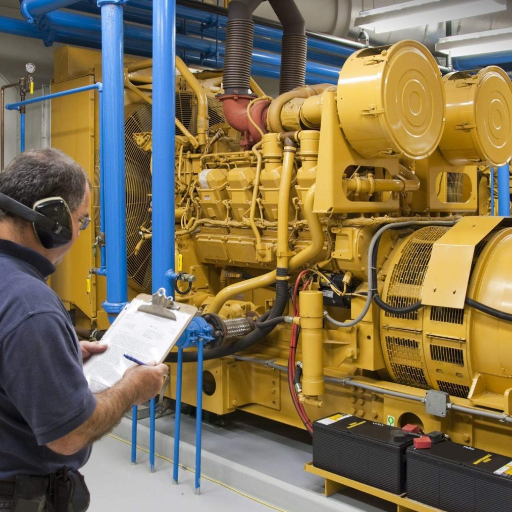
A standby generator runs only when utility power fails. A prime-power generator runs every day as the main source of electricity. A continuous-duty generator runs at a steady base load for unlimited hours. The difference between prime and standby power directly determines how often oil, filters, and coolant must be changed.
Standby units accumulate low hours but sit for long periods. Their biggest risks are battery discharge, fuel degradation, and wet stacking from light-load exercise.
Prime and continuous units accumulate hours rapidly. Their biggest risks are oil breakdown, coolant degradation, valve wear, and turbocharger deposits. A standby genset may need an annual oil change. A prime-power unit may need the same service every 250 hours.
This is why OEM maintenance charts list intervals in both time and run hours, with a “whichever comes first” rule. Service intervals make far more sense once you know how a unit is rated. Our complete heavy-duty diesel generator buying guide explains open, silent, trailer, and containerized gensets, kVA sizing, and prime vs. standby ratings.
The Cost of Neglect
Most generator failures come from poor maintenance, not factory defects. The failure modes are predictable: dead batteries, contaminated fuel, clogged filters, low coolant, or stuck fuel injectors. Each one is preventable.
The financial impact is lopsided. A basic oil change might cost 500.Anemergencycallouttoreplaceaturbochargerdamagedbydirtyoilcancost500.Anemergencycallouttoreplaceaturbochargerdamagedbydirtyoilcancost15,000 or more, before downtime is counted.
Over a 10-year life, fuel and maintenance typically exceed the purchase price of a heavy-duty genset by a significant margin. Skipping scheduled service doesn’t save money; it moves costs into a larger, less predictable repair bill.
Heavy Duty Diesel Generator Maintenance Schedule
Daily and Weekly Inspections
These quick checks prevent small problems from becoming emergency failures. Assign them to on-site operators and keep a log.
Daily checks (before operation or during rounds):
- Walk around the unit. Look for leaks, puddles, or unusual debris.
- Check engine oil, coolant, and fuel levels.
- Verify the control panel is in AUTO and shows no active alarms.
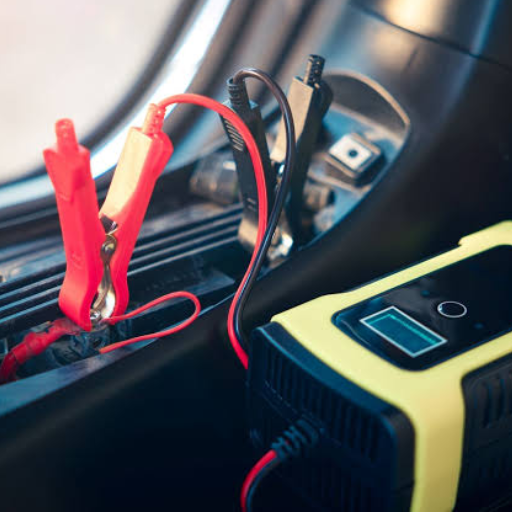
- Confirm the battery charger is on and showing float voltage.
- Inspect the area for blocked ventilation, rodents, or obstructions.
Weekly checks:
- Start the genset and let it run unloaded or under light load for several minutes.
- Listen for abnormal vibration, knocking, or exhaust smoke.
- Verify block-heater operation in cold climates.
- Check battery voltage and terminal condition.
- Inspect louvers, dampers, and intake screens.
Monthly Maintenance
Monthly service is where many standby failures are caught early.
- Run the genset under load for at least 30 minutes at ≥30% of rated capacity. This prevents wet stacking and ensures the engine reaches full operating temperature.
- Inspect belts and hoses for cracking or glazing.
- Drain water and sediment from the fuel-filter/water separator.
- Check engine oil and coolant condition by sight and smell.
- Record run hours, operating parameters, and any faults in the maintenance log.
This monthly loaded run aligns with NFPA 110 generator testing requirements. For emergency power systems, documented monthly testing isn’t optional; it’s required by code. For a deeper look at the 10-second transfer rule and Class requirements for Level 1 emergency systems, see our guide to NFPA 110 Type 10 requirements.
Quarterly and Semi-Annual Maintenance
Quarterly service goes deeper into systems that degrade over hundreds of hours.
- Take an oil sample for laboratory analysis.
- Inspect or replace the air filter based on restriction gauge reading or environment.
- Clean the radiator, aftercooler, and intake screens.
- Check coolant concentration with a refractometer or test strips.
- Torque electrical connections at the alternator, control panel, and automatic transfer switch (ATS).
- Test safety shutdowns and alarms: low oil pressure, high coolant temperature, overspeed, and over-crank.
Annual Maintenance
Annual service is the most comprehensive interval for most standby units.
- Change engine oil and oil filter.
- Replace fuel filters (primary and secondary) and air filter.
- Flush and refill the cooling system with OEM-approved coolant and supplemental coolant additives (SCA).
- Replace hoses, clamps, and belts that show wear.
- Load-test batteries and replace any cell below 80% capacity.
- Perform a full generator load bank test at stepped loads, commonly 2 hours at 100% rated kW for emergency standby systems.
- Inspect and exercise the ATS contacts.
- Calibrate gauges, sensors, and protection relays.
- Update service records and warranty documentation.
Run-Hour-Based Maintenance
For prime and continuous units, run hours are the controlling factor.
| Run Hours | Typical Service |
|---|---|
| 25–50 hours | Break-in oil and filter change |
| 100–250 hours | Oil and filter change for prime/continuous units |
| 500 hours | Oil, oil filter, fuel filters, and air filter for standby units with frequent runtime |
| 1,000–2,000 hours | Valve adjustment, injector service, coolant flush |
| 6,000–12,000 hours | Top-end inspection, turbocharger review, alternator check |
| 15,000–30,000 hours | Major overhaul based on oil analysis and compression tests |
High-hour operators should treat the genset like any other piece of critical rotating equipment: sample fluids, trend vibrations, and plan overhauls before failure forces the issue.
Heavy Duty Diesel Generator Maintenance: Component-by-Component Procedures
Engine Oil and Lubrication System
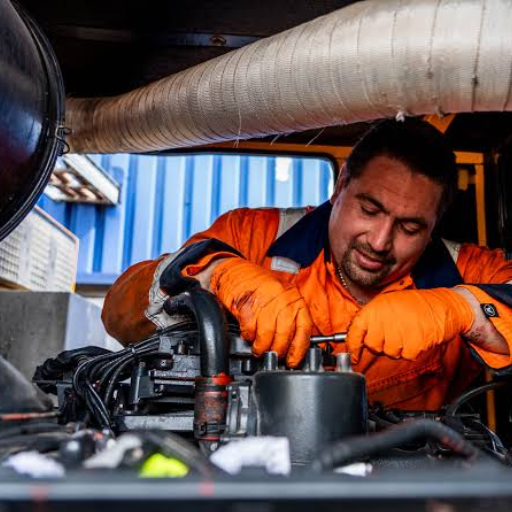
Engine oil is the lifeblood of the diesel engine. Use the viscosity and API classification specified by the engine manufacturer, commonly CI-4 or CK-4 for modern heavy-duty diesels.
Check oil level with the engine shut down and cool. Overfilling can cause as much damage as underfilling. Change oil based on the earlier schedule, and always replace the oil filter at the same time.
Oil analysis is one of the best predictive tools available. A lab report can reveal fuel dilution, coolant leaks, excessive wear metals, or oxidation. Trend samples every 500 hours for prime units and annually for standby units.
Fuel System Maintenance
Fuel problems are the leading cause of no-start failures. Diesel fuel begins degrading after 6–12 months without treatment. Water enters tanks through condensation, and microbial growth feeds at the fuel-water interface.
That microbial growth forms sludge that clogs filters and injectors. It’s the single most common reason a generator that ran last month won’t start this month.
Fuel system checklist:
- Keep tanks as full as practical to minimize condensation.
- Drain water and sediment from tank bottoms and water separators monthly.
- Inspect fuel filters and replace them per the run-hour schedule or when restriction gauges indicate.
- Test fuel quality quarterly for water, particulates, and microbial contamination.
- Use fuel stabilizers or biocides in long-term storage.
- Consider diesel generator fuel polishing for large storage tanks or standby units that sit for months.
Fuel polishing circulates fuel through filters and water separators, removing contamination without discarding the diesel. For facilities with thousands of liters in storage, it’s more economical than replacement.
Cooling System
The cooling system removes roughly one-third of the fuel energy as waste heat. A failure here causes overheating, head-gasket damage, and piston scoring.
- Check coolant level weekly. Never open a hot radiator cap.
- Test coolant concentration and SCA levels quarterly. Correct dilution protects against freezing, boiling, and cavitation erosion.
- Flush and refill coolant every 1–2 years or per OEM guidance.
- Clean radiator and aftercooler fins monthly in dusty environments.
- Inspect hoses for cracking, swelling, or soft spots. Replace clamps that show corrosion.
Air Intake and Exhaust
A diesel engine moves massive volumes of air. Any restriction reduces power and increases fuel consumption.
- Monitor air-filter restriction with a gauge. Replace the filter when restriction reaches the manufacturer limit, or annually.
- Inspect intake ducts for leaks, cracks, or loose clamps. Unfiltered air destroys cylinder liners and pistons.
- Check the exhaust system for leaks, corrosion, and loose mounts.
- Inspect turbocharger blades for deposits or damage during scheduled service.
In mining, quarrying, and desert environments, pre-cleaners and more frequent filter changes are essential. Some sites need daily air-filter inspection.
Battery and Starting System
A generator can’t start if its battery is weak. Voltage alone isn’t a reliable indicator of battery health.
- Keep terminals clean, tight, and coated with anti-corrosion compound.
- Perform load testing, not just voltage checks. A battery can show 12.6 V at rest and still fail under cranking load.
- Replace batteries every 2–3 years, or sooner if capacity drops below 80%.
- Verify battery charger output and electrolyte levels on flooded cells.
- Test the auto-start circuit and control panel crank signal monthly.
Alternator and Electrical System
The alternator converts mechanical power into electricity. Its reliability depends on clean windings, tight connections, and stable excitation.
- Check insulation resistance with a megohmmeter annually.
- Inspect voltage regulator and excitation system connections.
- Verify control panel readings, gauges, and fault-code history.
- Test protection relays and circuit breakers.
- Confirm neutral-to-ground bonding and ground connections meet local codes.
Wet Stacking: Causes, Prevention, and Correction
What Wet Stacking Is
Wet stacking, sometimes called exhaust slobber, happens when a diesel engine doesn’t reach its designed operating temperature. Unburned fuel, carbon soot, oil residue, and moisture then accumulate in the exhaust system, so combustion is incomplete.
The residue appears as thick black liquid dripping from the exhaust stack, manifold, or turbocharger. Once it starts, it tends to get worse unless the engine is run under enough load to clean itself out.
Why It Happens
The root cause is chronic low-load operation. When a genset runs below roughly 30% of rated capacity, exhaust temperatures stay too low to burn fuel completely. Causes include:
- Oversized generators that never see meaningful load.
- Short exercise runs without load.
- Long idle periods.
- Cold ambient temperatures.
- Poor maintenance of injectors, air filters, or fuel quality.
How to Prevent and Correct It
Prevention is straightforward: a disciplined heavy duty diesel generator maintenance program runs the generator hot enough, long enough, and often enough.
- Exercise monthly at ≥30% of rated load for at least 30 minutes.
- Size the generator closer to actual demand to avoid chronic under-loading.
- Conduct annual generator load bank testing at full rated load.
- For early-stage wet stacking, run the genset at 75–100% load for several hours to burn off deposits.
- Severe cases require professional cleaning, injector service, and possible turbocharger inspection.
Load Bank Testing Requirements
When Load Bank Testing Is Required
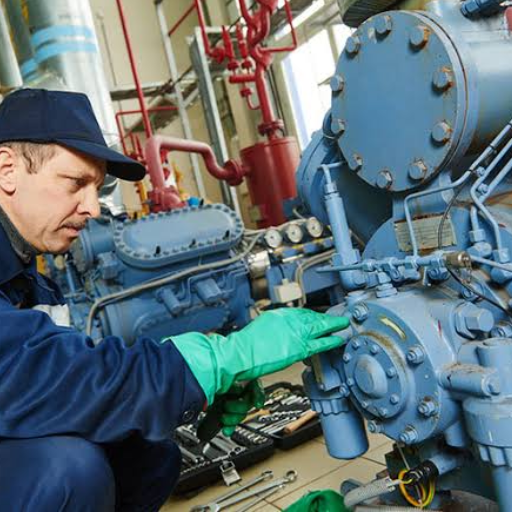
Load-bank testing is a core element of heavy duty diesel generator maintenance. NFPA 110 requires emergency generators to run under load monthly. If the building load can’t reach 30% of the genset’s rated kW, the code requires annual generator load bank testing instead.
Many facilities also test annually even when monthly loaded runs are possible. That’s the only way to verify full-load performance.
Load Bank Test Procedure
A proper test follows a stepped profile:
- Preparation: Inspect fluids, belts, and connections. Confirm coolant and oil temperatures are normal.
- 25% load: Apply 25% of rated kW for 30 minutes. Monitor voltage, frequency, and coolant temperature.
- 50% load: Increase to 50% for 30 minutes. Watch for smoke, vibration, or abnormal noise.
- 75% load: Hold 75% for 60 minutes. Confirm cooling system keeps pace.
- 100% load: Hold 100% for 30 minutes to 2 hours, depending on the standard being followed.
- Cooldown: Gradually reduce load and let the engine cool before shutdown.
For Level 1 emergency systems, NFPA 110 also requires a 4-hour continuous load test every 36 months to verify the genset can run for its assigned class duration.
Documentation for Compliance
The Authority Having Jurisdiction (AHJ), insurance inspectors, and accreditation bodies want records. For each test, document:
- Date, technician name, and generator serial number.
- Run hours at start and end.
- Applied load in kW and as percentage of rated capacity.
- Voltage, frequency, and exhaust temperature readings.
- Ambient conditions and fuel level.
- Deficiencies found and corrective actions taken.
Keep these records for the life of the equipment plus any required retention period.
Maintenance Costs and Budgeting
DIY vs. Professional Maintenance
Operators can safely handle daily generator preventive maintenance tasks such as inspections, fluid level checks, filter replacements, and record keeping.
More complex work belongs to trained technicians: load-bank testing, coolant system flushing, alternator insulation testing, control calibration, and major repairs.
Warranty coverage often requires service by authorized personnel using OEM parts. Before doing work in-house, confirm the warranty terms. A well-meaning operator can void coverage by using the wrong oil or filter.
Annual Maintenance Cost Estimates
Costs vary by location, labor rates, and contract scope. The table below is a 2026 planning guide for industrial diesel generators in standby or light prime service.
| Generator Size | Basic PM Contract | Comprehensive Contract |
|---|---|---|
| 100–250 kW | 1,500–1,500–3,500 | 3,500–3,500–6,000 |
| 500 kW | 3,000–3,000–6,000 | 6,000–6,000–12,000 |
| 1,000 kW | 6,000–6,000–12,000 | 12,000–12,000–25,000 |
| 2,000+ kW | $12,000+ | 25,000–25,000–50,000+ |
A basic contract typically covers scheduled inspections, oil changes, and filter replacements. A comprehensive contract adds load-bank testing, fuel polishing, battery replacement, ATS inspection, emergency callouts, and priority parts.
For context on operating costs beyond maintenance, see our heavy duty diesel generator fuel consumption guide.
What Should a Maintenance Contract Include
When evaluating service providers, ask for a clear scope:
- Frequency of inspections and service visits.
- Which parts and fluids are included.
- Whether load-bank testing and fuel polishing are included.
- Emergency response time and after-hours coverage.
- Technician qualifications and OEM authorization.
- Documentation format and delivery.
- Parts availability and lead times for non-stock items.
A contract that looks cheap may exclude the very items that prevent failure. Read the exclusions carefully.
Maintenance in Extreme Environments
Dusty and Desert Conditions
Dust is abrasive. It accelerates cylinder wear, fouls coolers, and clogs filters. In desert mining or construction sites:
- Use pre-cleaners or cyclonic air intakes.
- Inspect air filters daily in severe dust.
- Clean radiator fins weekly.
- Seal control panels and check gaskets regularly.
- Store spare filters on-site; they’re consumables in dusty environments.
Cold Climates
Cold weather thickens oil, reduces battery capacity, and makes starting difficult.
- Install block heaters and battery warmers.
- Use cold-weather oil with the correct viscosity rating.
- Maintain coolant freeze protection well below the lowest expected temperature.
- Keep fuel treated for cold-flow properties.
- Exercise the genset long enough to reach operating temperature.
Tropical and Coastal Environments
Humidity and salt accelerate corrosion and microbial growth.
- Apply anti-corrosion coatings to enclosures and exhaust components.
- Inspect electrical connections for green corrosion.
- Drain water from fuel tanks more frequently.
- Use dehumidifiers or heaters inside enclosures to reduce condensation.
- Check insulation resistance more often than in dry climates.
Documentation and Record Keeping
Required Maintenance Records
Documentation isn’t bureaucracy; it’s evidence of reliability. Use this generator maintenance checklist as a starting point for required records:
- Weekly inspection logs.
- Monthly loaded-run records.
- Annual load-bank test reports.
- Oil and coolant analysis reports.
- Filter and parts replacement log.
- Warranty service records.
- Corrective action reports.
The NFPA 110 testing and service requirements PDF from Cummins provides a detailed reference for emergency power systems.
Digital Maintenance Tracking
Many facilities still use paper logbooks, but computerized maintenance management systems (CMMS) reduce errors and simplify audits. At minimum, use a shared spreadsheet with columns for date, run hours, technician, task, findings, and follow-up. For larger fleets, a CMMS with scheduled reminders and parts inventory pays for itself quickly.
ZC Power Maintenance Support
Factory-Direct OEM Parts
As a source manufacturer, ZC Power supplies genuine parts for Cummins, Perkins, Weichai, Yuchai, MTU, and other common engine platforms, plus Stamford, Leroy-Somer, and Faraday alternators, and Deep Sea Electronics or SmartGen controllers. Buying direct avoids the markup and delay of third-party traders.
For remote sites, we recommend a spare-parts kit tailored to the operating environment and service interval. A typical kit includes oil filters, fuel filters, air filters, belts, hoses, coolant, and common sensors.
Technical Engineering Support
Our team of 80+ engineers provides heavy duty diesel generator maintenance guidance, troubleshooting support, and service planning. Because we design and assemble the gensets, we can identify the correct part from the serial number and ship it quickly.
Global Export Service
ZC Power has shipped generators to more than 100 countries. We understand the documentation, customs, and logistics challenges of maintaining equipment in remote locations. When an urgent part is needed, we can air-freight it to reduce downtime.
Talk to a ZC Power engineer about a maintenance plan, spare-parts kit, or service schedule for your heavy duty diesel generator fleet.
Frequently Asked Questions
How often should a heavy duty diesel generator be serviced?
Heavy duty diesel generator maintenance frequency depends on duty cycle and run hours. Standby units typically need annual comprehensive service plus monthly loaded exercise. Prime-power units need oil and filter changes every 250–500 hours, with major inspections at 6,000–12,000 hours. Always follow the engine manufacturer’s maintenance chart.
What is included in diesel generator maintenance?
Maintenance includes fluid checks and changes, filter replacements, fuel-system cleaning, cooling-system service, battery testing, belt and hose inspection, electrical connection torque checks, control-panel verification, and load-bank testing. Documentation and trend analysis are also part of a complete program.
How much does industrial generator maintenance cost?
For 2026, basic preventive maintenance for a 500 kW industrial diesel generator ranges from 3,000to3,000to6,000 per year. A 1,000 kW unit ranges from 6,000to6,000to12,000 for basic service, and 12,000to12,000to25,000 for a comprehensive contract including load-bank testing and fuel polishing.
What is wet stacking and how do you prevent it?
Wet stacking is incomplete fuel combustion caused by chronic low-load operation. It produces black, oily exhaust deposits and can damage the engine. Prevent it by exercising the genset at ≥30% rated load for at least 30 minutes monthly, or by conducting annual full-load testing.
How often should generator oil be changed?
For standby generators, change oil and filter annually or every 100–250 hours, whichever comes first. For prime-power generators, change oil every 250–500 hours. Break-in oil should be changed at 25–50 hours on new engines.
What is load bank testing and when is it required?
Load bank testing applies an artificial electrical load to the generator to verify full-load performance. NFPA 110 requires it annually if monthly exercise can’t achieve 30% of rated load. Many facilities also test annually as part of a best-practice maintenance program.
Can I service my own industrial generator?
Operators can perform daily checks, fluid level checks, filter changes, and record keeping. Complex work such as load-bank testing, alternator insulation testing, control calibration, and major repairs should be done by qualified technicians. Check warranty terms before performing service.
What causes diesel generators to fail during outages?
The most common causes are dead batteries, contaminated fuel, clogged filters, low coolant, and wet stacking from under-loading. Most of these are preventable with disciplined maintenance and regular loaded exercise.
How long does a well-maintained diesel generator last?
A properly maintained heavy-duty diesel generator can operate 20,000–30,000 hours before major overhaul. Neglected units often require major repairs at 5,000–8,000 hours. With good care, a standby genset can last 25 years or more.
What fuel maintenance is required for standby generators?
Standby generator fuel requires water and sediment removal, periodic filter changes, fuel-quality testing, and treatment for microbial growth. For long-term storage, consider fuel polishing or biocide treatment. Diesel fuel degrades after 6–12 months without treatment.
How do you maintain a generator in extreme environments?
In dusty environments, inspect and replace air filters frequently and clean coolers often. In cold climates, use block heaters, battery warmers, and correct coolant freeze protection. In tropical or coastal areas, control corrosion, drain water from tanks, and check insulation resistance regularly.
What should a generator maintenance contract include?
A maintenance contract should specify service frequency, included parts and fluids, load-bank testing, fuel polishing, emergency response time, technician qualifications, documentation format, and exclusions. The cheapest contract is rarely the most protective.
Heavy Duty Diesel Generator Maintenance: The Bottom Line
Reliability isn’t an accident. It’s the result of a disciplined heavy duty diesel generator maintenance program that matches service intervals to run hours, loads the engine during exercise, manages fuel quality, and keeps records that prove readiness.
The difference between a generator that starts instantly and one that fails when the grid drops is usually not the brand on the engine. It’s the quality of the maintenance performed over the years. A disciplined heavy duty diesel generator maintenance program protects the standby generator ROI that justified the investment in the first place.
At ZC Power, we build heavy-duty diesel generators from 100kVA to 4,000kVA and support them with factory-direct OEM parts, technical engineering guidance, and global export logistics.
Whether you operate a single standby unit or a fleet of prime-power gensets, our engineering team can help you design a maintenance program that protects uptime and controls cost.
Contact the ZC Power Engineering Team to discuss service schedules, spare-parts kits, or factory-direct maintenance support for your next project.