Does a Generator Charge Its Own Battery? Yes, While Running
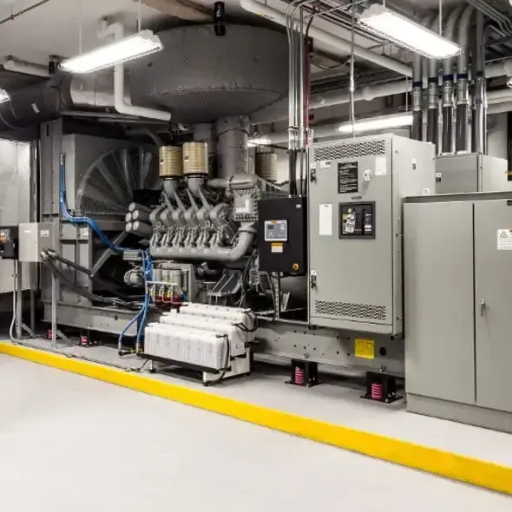
Yes, while the engine runs, but not by the alternator you are probably picturing. A generator has two machines that carry that name. The large one makes your power. A small belt-driven one charges the starting battery.
When the set is idle, neither is working, and a separate AC-powered charger takes over. That answer is short. The confusion behind the question isn’t, and it’s worth clearing up, because the device doing most of the work on a standby set is one most owners have never looked at.
Two machines, one name
Here is the thing nobody tells you. The word “alternator” is used twice on a generator set, for two components that share nothing but a principle.
This is an illustrative composite rather than a record of a specific client. A facilities engineer at a cold-storage site asked us to quote a replacement “alternator” after his set failed to start. He had priced the wrong part. The alternator he meant was the one making the site’s 400 V output. The one that had actually failed was a 14 V accessory the size of a coffee can, bolted to the engine and driven by a fan belt. The second costs a fraction of the first, and no one had ever mentioned it to him.
If you are specifying a set and want the charging arrangement documented rather than assumed, our engineers will walk the DC side with you. Send us the battery capacity and the standing loads, and we will tell you what the charging system needs to be.
The alternator that makes your power
This is the main alternator, and it is the reason the machine exists.
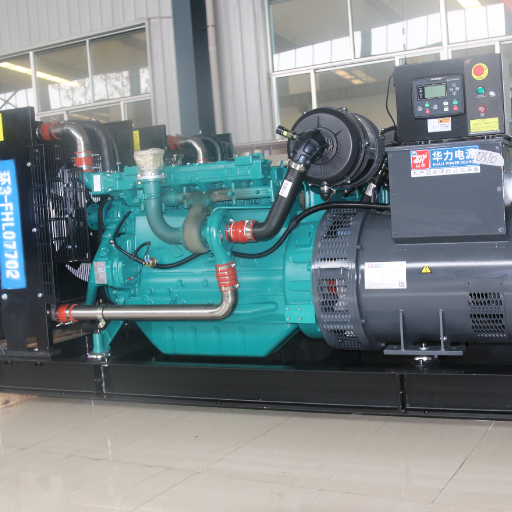
It is a large synchronous machine coupled to the engine, and it produces the AC output the site runs on. On the sets we build, that ranges from a few kVA up to 4000 kVA. Its output goes to the control panel, through the breaker, and out to the load.
It’s got nothing to do with the battery at all. It doesn’t charge it, monitor it, or care about it.
The alternator that charges the battery
This one is small, belt-driven, and easy to miss. It is an automotive-type machine, usually producing 14 V or 28 V DC depending on whether the set is a 12 V or 24 V system.
Its only job is to top the starting battery up while the engine runs. It is a peripheral, not the product.
| Main alternator | Charging alternator | |
|---|---|---|
| What it makes | AC output for the site | DC for the starting battery |
| How it is driven | Coupled to the engine | Belt from the engine |
| Typical output | kVA to MVA | Tens of amps at 14 or 28 V |
| Works when the engine is stopped | No | No |
| Is it the reason you bought a generator | Yes | No |
Read the last two rows together, because they carry the whole point. Neither machine does anything at rest, and only one of them is what you paid for.
This is the distinction that gets lost whenever the subject comes up. People talk about the generator alternator charging the battery as though there were one component doing both jobs, and on most sets there are plainly two.
Key Takeaways
- A generator charges its own battery only while the engine is running, through a small belt-driven charging alternator that is a different machine from the main AC alternator.
- On a standby set, the engine is stopped for roughly 8,700 hours a year, so the charging alternator contributes almost nothing to keeping the battery ready.
- The device that actually maintains the battery is a separate AC-powered charger, and it is not part of the generator at all.
- On most sets that charger runs from the utility supply, so it is live exactly when the grid is up and dead exactly when the grid is down. The battery has to be full before the outage starts.
- Above 1,000 kW, institutional practice permits compressed-air starting instead, which moves most of the starting duty off the battery and onto air receivers. The battery stays, but in a smaller role.
Which alternator charges the battery, and when
The critical word in all of this is when.
Both alternators are driven by the engine. The main one is coupled to the crankshaft. The charging one runs off a belt. If the engine isn’t turning, neither is producing anything.
So the answer to how does a generator charges its battery is really an answer about running time. Charging happens only inside the window in which the engine turns, and that window is the whole mechanism.
The arithmetic of an idle set
Now apply that to the machine most people actually own.
A standby set is tested for around thirty minutes a month and runs during outages. Call it six hours of running a year. There are 8,760 hours in a year, so the engine is stopped for roughly 8,700 of them.
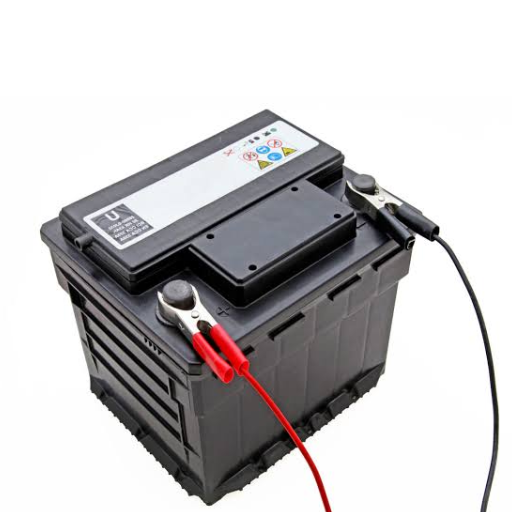
For those 8,700 hours, both alternators are inert. The battery sits there losing charge to its own internal chemistry, week after week. At the same time it feeds the control panel, the transfer switch and any remote annunciator, none of which ever switch off.
That combination, slow internal loss plus a constant small load, is the design problem the published literature on backup batteries keeps returning to. It is also why maintenance charging and battery monitoring are usually studied together rather than separately (IEEE, lead-acid battery monitoring and charging for backup generators).
So the honest answer to whether a generator charges its own battery is: for about six hours a year, yes. For the rest, something else has to. Ask instead whether a standby generator charges its battery, and the answer is barely at all.
The full treatment of how that charging is arranged, and why the duty cycle decides the answer, is in our guide to the generator battery charger. How the ratings themselves are defined, and what a standby duty cycle actually commits the machine to, is covered in the standby generator technical specification.
What actually charges the battery isn’t part of the generator
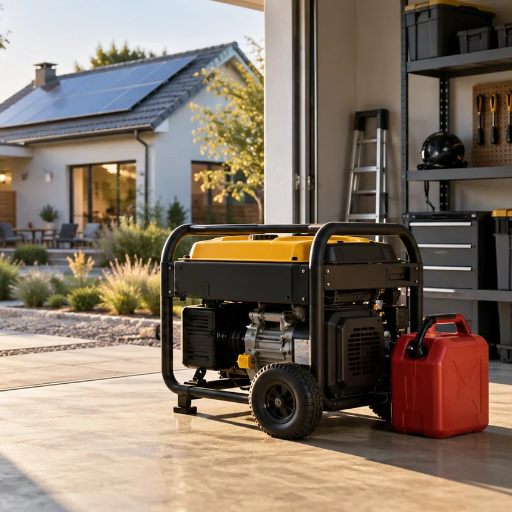
On any installed standby set, the component doing the real work is a static battery charger. It isn’t fitted by accident, and it isn’t there to top the battery up occasionally.
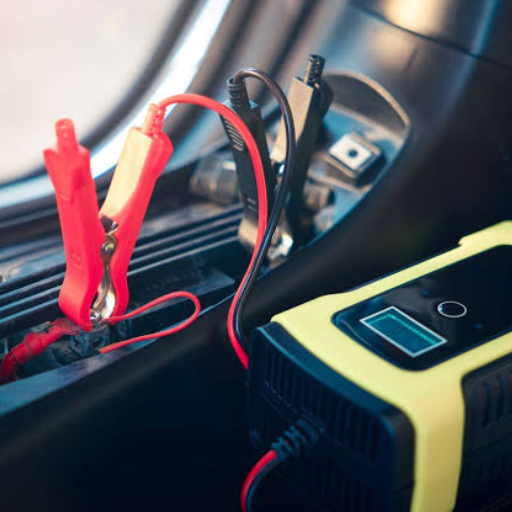
It’s a box, usually mounted in or near the control panel. It takes AC in and puts regulated DC out to the battery. It runs continuously, whether the engine is running or not.
Two things about it surprise people. The first is that it isn’t part of the generator in any meaningful sense. The second is where its power comes from.
Where the charger gets its power
On the great majority of installed standby sets, the charger is fed from the utility side of the installation rather than from the generator’s output. The Pacific Northwest National Laboratory guide to standby generator operation and maintenance puts it as a charger “typically connected to utility power”, and that qualifier is worth keeping.
That’s deliberate, and it’s the detail that makes the usual arrangement make sense. The charger’s job is to have the battery ready for an outage, so it has to work during the long periods when the generator is off. Feeding it from the generator would mean it only worked when the battery no longer needed charging.
The consequence is an inversion worth sitting with. On a set wired this way, the charger is live exactly when the grid is up, and dark exactly when the grid is down. It prepares the battery for an outage during the only period in which it cannot operate during one.
Which side of the transfer switch is your charger on?
There is a second arrangement, and it matters if your set has ever failed to start during an outage rather than before one.
A charger fed from the emergency side of the transfer switch stays live while the generator is running. On that wiring the charger keeps working during an outage, so the inversion above doesn’t apply. It’s a recognised design, and it changes what a failure looks like.
The practical check takes a minute. Find the charger’s supply, and ask whether it is dead when the utility is dead. If it stays live with the set running, you have the second arrangement. If it goes dark, you have the first, and the battery has no backup once the grid drops.
Why a monthly test run hides a dead charger
This inversion has a failure mode that catches people out for years at a time.
Run the set for its monthly test and the engine turns, so the charging alternator works and tops the battery up. The set starts cleanly, the test passes, and the log records a healthy machine. A set with a charger that has been dead for a year will pass that test indefinitely.
This is an illustrative composite rather than a record of a specific client. A packaging plant replaced its control panel during an upgrade and the new panel’s charger was never wired to a supply. Nobody noticed, because the monthly run test charged the battery through the belt-driven alternator every time. The set started reliably for fourteen months. It failed on the first real outage, from cold, with a battery that had been flat for weeks.
The lesson isn’t that testing is pointless. It is that a test which runs the engine cannot test the thing that matters when the engine is stopped.
Test the charger separately from the run test. Confirm its AC supply is live while the set is off, and read its DC output. Our guide to a generator battery keeps going flat works through that diagnostic in order.
Does a generator charge its own battery when it is off?
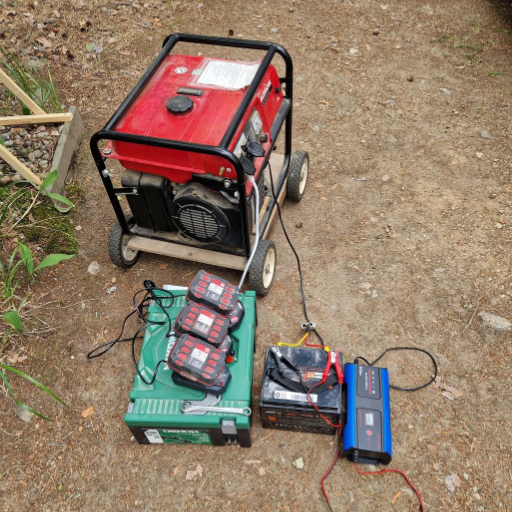
No. Nothing on the generator charges anything while the engine is stopped.
What happens instead is that the static charger maintains the battery. So the battery does stay charged while the set sits idle, but the generator isn’t the thing doing it.
This distinction matters when the power goes out. Three things happen at once, and only one of them helps:
- The utility supply to the charger fails, so on a set wired that way the charger stops working at exactly the moment it is needed.
- The generator starts, drawing its cranking current from the battery and nothing else.
- The battery has to carry the start alone, because there is no second source.
Everything therefore depends on the battery being full before the outage began. That’s what the charger was doing for the previous weeks, and it’s why a charger fault is so dangerous. It removes the reserve silently, long before anyone needs it.
Once the engine is running, the charging alternator takes over and replenishes what the start consumed. That part works. It’s the standby period that has no backup.
Above 1,000 kW, the battery may no longer be the main event
There is a further wrinkle that most articles on this question ignore entirely, and it applies squarely to the kind of set ZC Power builds.
Battery starting isn’t the only method. For larger machines, institutional engineering practice permits a dedicated compressed-air starting system instead. The Los Alamos National Laboratory engineering standards manual (ESM STD-342-100, Chapter 7, Section D5090, Rev. 5, 12/19/2013) specifies a battery starting system for sets under 1,000 kW and permits either battery starting or dedicated compressed-air starting at 1,000 kW and above.
This is an illustrative composite rather than a record of a specific client. A contractor specifying a 1,200 kW set for a remote site asked for the battery charger schedule as a matter of course. The answer was that the machine cranked on compressed air from receivers, and that the battery on the set did a different and much smaller job than he had assumed.
That last point is the one that’s usually lost. An air-start set is not a battery-free set.
The same standard that permits compressed-air starting specifies that one of the two starting-air compressors is driven by a dual electric-motor and diesel-engine arrangement, and that this engine drive itself has a battery start. The battery hasn’t gone away. It’s moved to a smaller, secondary duty.
What changes is the emphasis. Where an air system is used, the main starting energy is stored as compressed air rather than as chemical charge, and the maintenance burden shifts with it:
- Starting energy comes from receivers charged by compressors, not from a large cranking battery.
- Routine attention moves to compressors, receivers and automatic drain traps.
- The battery remains, but as a smaller package serving the compressor drive rather than the engine.
Neither arrangement is better in the abstract. They suit different sizes and different sites, and the point is only that the question changes shape above a certain rating.
If you are specifying above 1,000 kW, this is a decision to make deliberately rather than inherit.
What the standard actually requires of the charging system
Here is the part that reframes the whole question.
The requirement that governs all of this is written around the charger and the battery, not around the charging alternator. A belt-driven charging alternator appears nowhere in the clause. A set can meet it without one, provided a charger keeps the battery ready without anyone attending to it.
The institutional standard referenced above is specific about this, and it is worth quoting its shape rather than its wording. It asks for an automatic battery charger, with an equalization charge timer, built to the performance standard for chargers for engine starting batteries. The battery itself has to meet the matching cranking-battery standard.
Note what is missing from that list. The charging alternator is not in it. The requirement is written around the charger and the battery, which are the two components that decide whether a set left standing for months will still crank.
The NFPA 110 standard is where the emergency power requirement sits, and it expects charging that operates without anyone intervening.
A note on what is set out here. This is a paraphrase of what the requirement covers, not the text of any standard. These documents are purchased, their wording changes between editions, and any figure you put in a tender should be read from the edition your project is governed by.
The practical upshot is simple. When someone asks whether a generator charges its own battery, the compliance-relevant answer isn’t about the alternator at all. It’s about whether an automatic charger is fitted, supplied, and working.
Sizing that charger is its own exercise, covered in our guide to sizing a battery charger for a generator.
Frequently asked questions
Why is my generator battery not charging while the engine is running?
If the engine is running and the battery is still going flat, suspect the charging alternator’s belt before anything else, then its output. A slipping or broken belt is common and cheap to spot. After that, check the battery’s own condition, because an aged battery can accept charge poorly even from a healthy alternator.
Do all generators have a charging alternator?
Most engine-driven sets with electric starting have one, but it isn’t universal and it isn’t what makes a set compliant. Some large sets crank on compressed air, where the battery is reduced to starting the compressor drive rather than the engine. What matters for readiness is the automatic charger, not the belt-driven machine.
How long does it take to recharge a generator battery?
Once the engine is running, the charging alternator replaces what the start consumed within a short run. Recovering a deeply discharged battery is a different job and belongs to the static charger, which is why charger sizing is specified against a recharge window rather than left to whatever the alternator can manage.
Can I charge a generator battery with a normal car charger?
You can, as a temporary measure, but it isn’t a substitute for the installed charger. A car charger isn’t sized for continuous unattended service, and leaving one connected indefinitely is how batteries get damaged. The installed charger exists because the battery must be held ready for months without anyone attending to it.
Does a generator charge its battery during an outage?
On a set whose charger is fed from the utility side, no, because that supply is gone. On a set with the charger on the emergency side of the transfer switch, yes, it keeps working once the generator is up.
Either way, the cranking itself is not covered. Once the engine starts, the belt-driven charging alternator replenishes the battery. Before that, the battery has to carry the start on its own, which is why the charger’s work in the preceding weeks is what actually determines whether the set starts.
Conclusion
Does a generator charge its own battery? While it runs, yes, through a small belt-driven machine most owners have never noticed. The rest of the time, no, and the rest of the time is almost the whole year.
The useful reframe is that a generator set has two alternators and one of them isn’t really part of the charging story at all. The component that keeps a standby battery ready is an AC-powered charger, fed from the utility side on most sets, sitting outside the generator and doing its work in the long quiet periods when nothing else is running.
That’s also why the failure is so quiet. A dead charger is invisible to a monthly run test, because the test itself charges the battery. It shows up on the one day it matters.
Check the charger while the set is off, not while it is running. That single change to a maintenance routine catches the fault that the standard test cannot.
If you want the charging arrangement on a new set specified rather than assumed, or an existing installation reviewed, our engineering team works through the DC side with you before anything is ordered. The maintenance schedule for a heavy-duty genset is the natural place to fold the charger check into an existing routine.