Dual Fuel Generator: Natural Gas + Diesel Flexibility Explained
A dual-fuel generator (natural gas + diesel) is a diesel engine that starts on 100% diesel, then automatically introduces natural gas into the intake and runs mostly on gas, with a small diesel pilot flame for ignition. If the gas supply ever fails mid-run, it switches back to 100% diesel without losing power.
That automatic switchback is the answer to the single biggest fear buyers raise about natural gas: what happens if the gas supply is disrupted? Most people assume a gas generator stops dead when the pipeline does. A dual-fuel unit does not. The diesel is the insurance policy, the natural gas is the everyday fuel, and the machine decides between them on its own.
This guide explains how dual-fuel generators work, what the fuel mix really is, what they cost, and when they are worth it. You will get the honest trade-offs too, because dual-fuel is not always the right answer.
Key Takeaways
- A dual fuel generator is a diesel engine that runs mostly on natural gas (roughly 75%) with a small diesel pilot for ignition, and switches back to 100% diesel automatically if the gas supply fails.
- It starts on diesel, ramps natural gas in after the load is accepted, and continuously adjusts the mix as the load changes.
- Dual-fuel mode stretches diesel runtime dramatically: a 300 kW unit at 80% load burns about 20.5 gallons per hour on diesel but only about 2.4 gallons per hour in dual-fuel, extending a 183-gallon tank from roughly 9 hours to 76 hours.
- Expect gas-mode output roughly 5 to 10 percent below the diesel rating, weaker transient response in gas mode, and a $30,000-80,000 retrofit premium if converting an existing unit.
- It is the direct answer to the top natural-gas objection: if the pipeline fails during an outage, the generator keeps running on diesel.
What Is a Dual Fuel Generator?
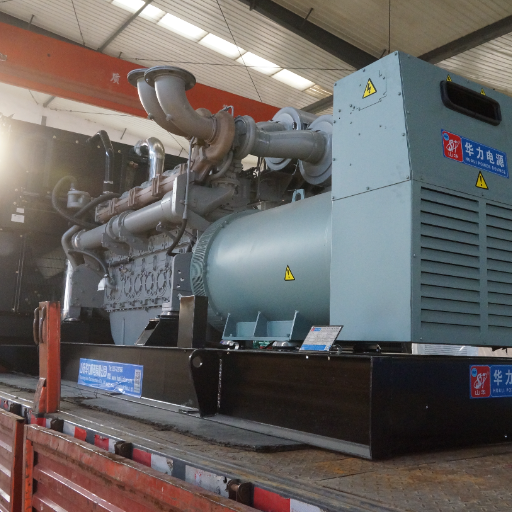
A dual-fuel generator, also called a bi-fuel generator, is a diesel engine modified to burn natural gas as its main fuel, using a small amount of diesel as a pilot for ignition. It starts on 100% diesel, introduces gas under load, and switches back to diesel automatically if the gas pressure drops. The engine stays a compression-ignition diesel throughout; the gas is simply added to the fuel mix.
How Does a Dual Fuel Generator Work?
Diesel Pilot Ignition
The trick is in how the two fuels ignite. Diesel fuel auto-ignites at about 500 to 750 degrees Fahrenheit when compressed. Natural gas needs about 1,150 to 1,200 degrees, so it will not ignite on compression alone. A dual-fuel engine solves this by injecting a small pilot of diesel at the end of the compression stroke. The pilot flame ignites the air-and-gas mixture, and the gas burns from there.
This is why a dual-fuel generator is always a diesel engine at heart. The Generac bi-fuel white paper describes the ignition and switching logic in detail, and it is the reference most OEM engineers work from.
The Fuel Mix: About 25% Diesel, 75% Natural Gas
The unit does not run on a fixed recipe. The sequence is:
- Start on 100% diesel. The engine must be running and stable before gas enters the picture.
- Ramp gas in. After the load is accepted, the controller introduces natural gas and gradually trims diesel back.
- Hold the mix. At steady load, a typical unit settles near 25% diesel and 75% natural gas.
- Adjust on load change. If the load jumps, the controller adds diesel for responsiveness and backs gas off, then restores the mix once things stabilize.
That 25/75 figure is consistent across manufacturers. A Heinzmann case study of a 450 kW Volvo Penta genset in continuous operation shows the same split: 135 kW from diesel and 315 kW from natural gas, a 30/70 ratio.
| Mode | Fuel | Ignition | When |
|---|---|---|---|
| Start | 100% diesel | Compression | Every start, until the load is accepted |
| Running | ~25% diesel / ~75% natural gas | Diesel pilot flame | Steady load, the normal state |
| Load spike | Diesel increases, gas backs off | Compression + pilot | Large motor or block load |
| Gas failure | 100% diesel | Compression | Gas pressure drops below the set point |
Automatic Switchback: The Gas-Failure Insurance
This is the feature that answers the pipeline-disruption objection. The controller monitors gas pressure continuously. If pressure falls below the set point, the gas valves close and the engine reverts to 100% diesel, with no interruption in output. When gas pressure recovers, the unit returns to dual-fuel operation on its own.
The system also protects against knock. Piezoelectric sensors on the cylinders detect pre-ignition approaching, and the controller cuts gas and adds diesel to keep the engine within safe limits. Dual-fuel adds control logic, but that logic is precisely what makes the fuel redundancy safe to rely on.
The result: a generator that runs on the cheap fuel most of the time and falls back to the reliable fuel the moment it is needed. Want to see how fuel flexibility fits the rest of the decision? Start with our [complete natural gas generators guide].
Why Buy Dual Fuel? The Risk-Mitigation Case
The Pipeline-Disruption Objection, Answered
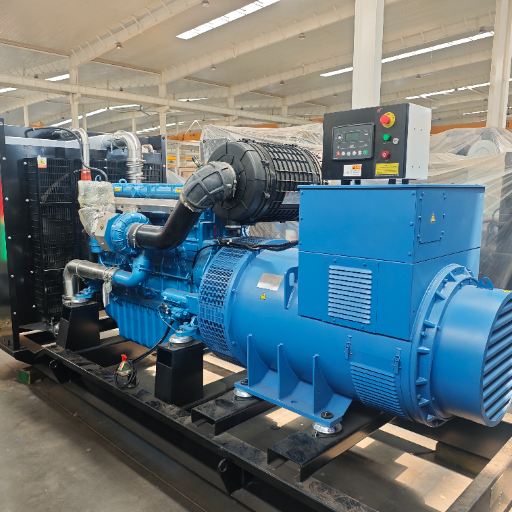
Natural gas utilities occasionally shut pipelines off. During hurricanes, gas is sometimes cut deliberately to prevent fires, exactly when a facility needs its generator most. A pure gas generator becomes a paperweight in that moment. A dual-fuel generator keeps running on diesel because the switchback takes milliseconds.
For facilities in disaster-prone regions, that single scenario justifies the premium. The dual-fuel unit is not a cheaper diesel; it is diesel reliability with gas economics bolted on.
Run-Time Extension: 9 Hours to 76 Hours on a Tank
Here is the number that sells the concept. Generac’s white paper cites a 300 kW genset at 80% load burning about 20.5 gallons of diesel per hour in straight diesel mode, versus about 2.4 gallons per hour in bi-fuel mode. On a standard 183-gallon tank, that is roughly 9 hours of runtime versus about 76 hours.
For a remote telecom site paying a premium for diesel delivery, that math is life-changing. Four refueling trips a week become one every two weeks. For a facility that sizes its tank for three days of outage, dual-fuel buys two weeks of runway on the same tank.
Fuel Cost: Gas at Roughly Half the Price per kWh
The fuel cost for natural gas is typically about half that of diesel on a per-kilowatt-hour basis. According to fuel cost data provided by Generac, a published comparison showed that a 100 kW unit cost approximately 0.50 Rand per kWh when running on natural gas, compared to roughly 0.83 Rand per kWh for diesel. Since dual-fuel units operate primarily on natural gas, they benefit from this cost advantage for the majority of their operating time, while diesel consumption remains at a low level.
Need to size the fuel supply for a dual-fuel or gas-flexible unit? [Contact our engineering team] for a free load and fuel-supply review before you commit to a configuration.
OEM Dual Fuel vs. Retrofit Conversion
You can get dual-fuel capability two ways, and the right route depends on whether you already own a diesel genset.
Retrofit Kits: $30,000-80,000 Plus a Gas Line
An aftermarket kit converts an existing diesel engine to burn gas. The equipment itself runs roughly 30,000 to 30,000 to 80,000, per Powergen’s cost analysis, and you still need the gas line and metering infrastructure to feed it. Retrofits make sense when you have a fleet of healthy diesel units and a gas supply available, but they add controllers and injectors to an engine not designed for them, so the engineering matters.
OEM Dual-Fuel Units
A factory-built dual-fuel genset comes with the gas train, injectors, knock sensors, and switchback control integrated and tested as a system. That matters for reliability: a purpose-built unit has one warranty, one set of schematics, and one source of responsibility. For new procurement, OEM is almost always the cleaner answer.
Which Route Fits Your Fleet?
- Own a healthy diesel genset with years of life left and a gas line available? Retrofit is worth modeling.
- Buying new, or is the genset approaching overhaul age? Buy OEM dual-fuel.
- Aging or mixed fleet, uncertain gas availability? Retain pure diesel and buy gas flexibility elsewhere.
A facility manager in Jakarta modeled both routes for a 500 kW unit. The retrofit kit plus a gas line came to roughly the same capital cost as the incremental premium on a new OEM dual-fuel unit, but the retrofit carried a derating risk on an engine already ten years old. They bought new, and the factory-integrated switchback gave them the reliability they actually needed.
The Honest Trade-Offs of Dual Fuel
Gas-Mode Derating: 5-10% Below Diesel Rating
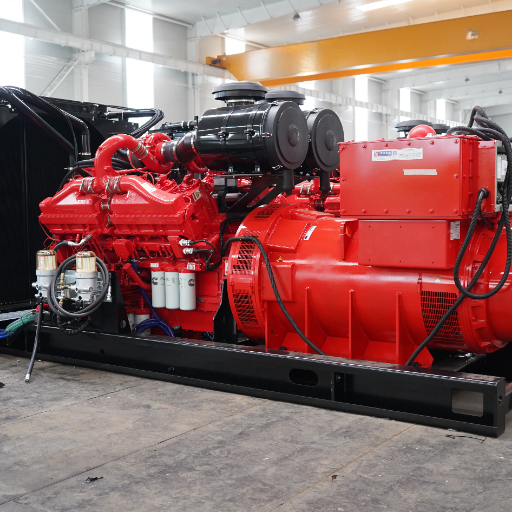
A dual-fuel genset does not deliver its full diesel rating in gas mode. Expect output to be roughly 5 to 10 percent lower when running predominantly on natural gas, so size for the gas-mode rating if that is the primary mode. Buyers who size on the diesel nameplate get caught short on the fuel they planned to use most.
Transient Response in Dual-Fuel Mode
Gas-mode response to sudden load steps is weaker than pure diesel, for the same throttle-and-mixture reasons that affect gas engines generally. A large motor starting can dip the frequency more in dual-fuel mode than in diesel mode. Staged starting and soft starters on big motors help, and some installations pair the genset with batteries to cover the gap.
Complexity and Maintenance
Dual-fuel adds parts: gas valves, injectors, knock sensors, a gas pressure train, and a more sophisticated controller. More parts mean more to maintain and more skills are required on site. Oil change intervals differ from straight diesel too, because gas burns cleaner, so the oil that would normally degrade at 500 to 750 hours can often run longer in high-substitution operation. The trade is real: higher capability, higher complexity.
Dual Fuel vs. Diesel vs. Natural Gas: Which Is Right?
| Factor | Pure Diesel | Dual Fuel | Pure Natural Gas |
|---|---|---|---|
| Fuel supply | On-site tank only | Tank + pipeline | Pipeline only |
| Gas failure mid-outage | No dependency | Auto-switchback to diesel | Stops |
| Fuel cost per kWh | Highest | Mid (gas share at ~half diesel) | Lowest |
| Equipment cost | Lowest | Premium | Highest at scale |
| Runtime between refuels | Limited by tank | Greatly extended | Unlimited |
| Transient response | Strongest | Weaker in gas mode | Weaker than diesel |
| Emissions | Highest PM/NOx | Lower than diesel | Cleanest |
| Maintenance complexity | Lowest | Highest | Mid |
Choosing by Application, Not by Fuel Alone
Dual-fuel is not the universal answer. For a low-hours standby site with a reliable gas line, pure natural gas is simpler and cheaper to run. For continuous prime power where transient response is critical, pure diesel remains hard to beat, as our [natural gas vs diesel generator] comparison explains. For sites with no gas line at all, see the [natural gas vs propane generator] comparison for the stored-fuel alternative. Dual-fuel earns its premium where fuel security is the top concern: disaster-prone regions, remote sites with unreliable fuel delivery, and facilities that cannot afford either fuel to fail.
The same question applies to runtime and duty rating. See [how long can a natural gas generator run] to understand the ratings a dual-fuel unit carries and how the fuel mix changes that picture.
Frequently Asked Questions
Can you convert a diesel generator to run on natural gas?
Yes. A retrofit kit adds a gas train, injectors, knock sensors, and a switchback controller to an existing diesel engine. Kits run roughly 30,000 to 30,000 to 80,000 plus gas-line infrastructure, and the engine typically loses 5 to 10 percent output in gas mode.
How long can a dual-fuel generator run on natural gas?
As long as the gas supply lasts. A dual-fuel unit at 80% load with a 183-gallon diesel tank burns about 2.4 gallons of diesel per hour, stretching a tank that would last 9 hours on diesel to about 76 hours of runtime before refueling.
Is a dual-fuel generator worth it?
It depends on your fuel security risk. If the gas pipeline is your outage risk, the automatic switchback to diesel justifies the premium. If fuel cost per kWh drives your decision, the gas share captures roughly half the per-kWh cost of diesel most of the time.
What happens if the natural gas supply fails during an outage?
The controller closes the gas valves and the engine reverts to 100% diesel automatically, with no interruption in output. When gas pressure recovers, the unit returns to dual-fuel operation by itself.
Dual Fuel: Diesel Reliability, Gas Economics
A dual-fuel generator gives you both worlds: it starts on diesel, runs mostly on the cheaper natural gas, and snaps back to 100% diesel the moment the gas supply falters. It answers the objection that keeps buyers off gas, extends diesel runtime by a factor of eight on a tank, and cuts the per-kWh fuel cost most of the time.
It is also more complex, slightly derated in gas mode, and more expensive to buy or retrofit. So the decision comes down to your fuel security risk. If that risk is real, dual-fuel is the insurance that pays for itself on the first outage.
[Contact the ZC Power engineering team] to spec a dual-fuel or fuel-flexible genset built around your fuel supply and duty cycle.