
Emergency Power Requirements: Codes and Project Readiness
Last updated:
Emergency power requirements depend on the adopted codes, the loads that must stay supplied, and the needs of the specific project. Set out those needs before you choose a generator or accept a quote.
A generator rating leaves gaps. Which circuits must return first? Where do you measure transfer time?
How long must the fuel supply last? This guide turns those questions into a rules register and a proof checklist. It uses US codes as examples.
Sites elsewhere need their own local rules.
Key takeaways
- Confirm the adopted edition, local amendments and permit date before you use a code-year label.
- Classify individual loads, then specify NFPA 110 Level, Type and Class separately.
- Base size and fuel plans on known load behavior and site needs.
- Match every readiness claim to a clear test, record and named reviewer.
Confirm which emergency power requirements apply
Start with location and scope
Start with the site address, building use, work scope and permit status. New sites, added rooms and replacement sets may need different checks. Ask the design engineer which rules govern the work.
Check with the authority having jurisdiction (AHJ) too. Note the answers before you place an order.
The National Electrical Code (NEC), NFPA 110 and sector rules have different roles. A reference to one standard does not answer every question about the building, loads or installation. For an introduction to the equipment chain, see our emergency power systems overview.
Record adoption rather than assuming it
The year printed on a code is not the date every jurisdiction starts applying it. Aspen provides a concrete example: its notice applies the 2026 NEC to electrical permit filings from August 1, 2026. Earlier filings keep the edition in force when filed.
The electrical permit date sets the rule in this notice. Check the rule for your own city too. City of Aspen adoption notice.
Illustrative scenario A: Two project teams prepare similar generator specifications. They file for electrical permits on either side of Aspen’s transition date. Each team must check when it filed.
It cannot just copy the other team’s code list. Similar sets do not prove that both designs will pass review.
Use a short register like this, and mark the fields still to check:
| Authority or requirement | Edition | Local amendment | Permit trigger | Confirmation record |
|---|---|---|---|---|
| Electrical authority | Enter adopted edition | List applicable changes | Record submission date | Written response or permit document |
| Building or fire authority | Confirm applicable rules | Record project conditions | Confirm scope | Approved design reference |
| Sector regulator or accreditor | Identify applicable program | Record facility obligations | Confirm applicability | Compliance review reference |
Before requesting equipment, share your project location and current requirements with ZC Power. Include which items the design team has confirmed and which remain open. That keeps an equipment inquiry tied to the site brief.
Classify the loads before selecting the source
A building can contain required safety loads and business loads chosen by the owner. Don’t give every circuit the same label simply because one generator serves the site. The load category guides checks on transfer, power paths and load order.
For context, NEC Articles 700, 701 and 702 address emergency, legally required standby and optional standby systems. Check the adopted edition and special-system rules. Healthcare essential electrical systems, fire pumps and other specific loads need their own design checks. Caterpillar’s edition-labeled design discussion explains the interfaces using NFPA 110-2016 and related code editions.
| Load grouping | Main question | Useful design evidence |
|---|---|---|
| Emergency | Which safety function requires restoration? | Circuit list, governing requirement and transfer sequence |
| Legally required standby | What law or rule requires backup? | Requirement reference and permitted interruption |
| Optional standby | What continuity goal has the owner chosen? | Owner’s load priorities and operating plan |
| Special or sector-specific system | Which additional rules apply? | Relevant system drawings and reviewed branch schedule |
List loads by circuit or piece of equipment. Include the load identifier, normal source, backup source, transfer switch and reason for backup. Ask the designer to state the permitted interruption and load sequence. Mark which needs come from the owner and which come from law or code.
In scenario A, office IT continuity and an egress safety function might both appear on the owner’s wish list. That list alone cannot establish that they have the same classification or transfer priority. The next useful document is a reviewed load schedule, rather than a larger undifferentiated generator total.
This list also shows what is left out. If a quote omits a transfer switch or downstream circuit, name that boundary. Ask who supplies and tests the omitted work. Use our emergency generator selection guide for the next equipment discussion once the required load scope is clear.
Keep NFPA 110 Level, Type and Class separate
These three terms answer different questions. Level concerns the risk if the system fails. Level 1 covers failure that could cause loss of life or serious injury.
Level 2 covers failure that poses less risk to life and safety. Type concerns the allowed interruption. Class concerns duration.
One label cannot stand in for all three.
This table follows Cummins’ March 2021 NFPA 110 seminar, which uses the 2016 edition. It explains the terms. Check them against the edition adopted for your site.
| Term | What it describes | What to request |
|---|---|---|
| Level | Consequence of system failure, including risk to people | Specified Level and the requirement behind it |
| Type | Maximum interruption in seconds at transfer-switch load terminals | Required time, measurement points and test method |
| Class | Minimum duration at rated load without refueling or recharging | Specified duration and the fuel or energy basis |
Check the timing endpoint
Type 10 and Type 60 refer to seconds in that timing framework. They are not universal assignments for every building in a sector. Nor is an engine-start time, by itself, the transfer time at the load terminals. Ask which event starts the clock and which measurement shows the required supply has returned.
Give duration its own basis
Class describes a minimum duration, not a maximum runtime limit. State the basis for Class X in the project brief. CMS discusses it in its April 16, 2021 Appendix Z guidance.
The duration depends on the application, code or user. It does not supply one hospital runtime for every situation. CMS Appendix Z, E-0041.
Illustrative scenario B: A specifier receives a quotation labeled “Level 1 generator.” The document does not state Type or Class. The specifier asks for the transfer-time requirement, duration basis and system boundary before judging whether the offer covers the brief. The label alone does not answer those questions.
Starting batteries and chargers belong in the system review too. Our guide to edition-specific battery charger requirements covers that narrower topic. Record the applicable edition and equipment manual alongside any charger specification.
Apply sector requirements without generic sizing shortcuts
Healthcare: review the essential system and emergency plan
A hospital label cannot determine every branch load, transfer sequence or fuel allowance. Obtain the facility’s reviewed essential electrical system drawings and branch schedules. Ask the design team to identify which functions need which restoration sequence. Equipment-branch sequencing should not be assumed identical to life-safety and critical-branch sequencing.
For facilities subject to the relevant CMS provisions, CMS Appendix Z’s E-0041 guidance discusses fuel planning in relation to the emergency plan or evacuation. It also addresses delivery delays and competing demand. Use the provider-specific requirements and facility plan to establish the duration basis. A generic tank-hours table cannot replace that work.
In scenario B, the missing information might be a branch schedule as well as a generator classification. Request both before treating all healthcare loads as one transfer block. For related reading, see hospital emergency power; check the rules in the primary sources and your site documents.
Data centers: follow the continuity path
Map the supply path from utility loss through uninterruptible power supply (UPS) operation to generator supply and recovery. Request the UPS input behavior, recharge settings, transfer arrangement and maintenance-state assumptions. A generator’s steady rating does not describe how those interfaces work together.
For a Tier goal, ask for the relevant project review and certification scope. An equipment list is not that review. Keep the availability goal clear in the brief, and ask which documents support it.
Commercial premises: separate safety from owner priorities
Use the same load-register discipline for commercial sites. Ask which required functions must be restored, which owner-selected operations can wait, and how capacity is allocated during recovery. A request to keep the whole building operating is an owner objective that needs a defined load and operating basis.
For each sector, ask for a reviewed load list. Add the restart order, runtime basis and test plan. Those documents let equipment suppliers respond to the same scope. They help the owner spot gaps before buying.
Specify capacity, usable fuel and system interfaces
Describe running, starting and recovery loads
The size check starts with connected watts. Motors, nonlinear loads and recovery conditions can affect selection.
Cummins’ T-030 application manual, Issue 9 dated February 2015, shows why starts and peaks matter as well as steady load. The file path does not date the text. Nor does the manual prove what a ZC Power model can do.
Use a worksheet. State the load condition behind each value:
- Running kW and kVA, voltage, phase and power factor.
- Motor starting method and starting demand from equipment data.
- Load-step order, simultaneous starts and loads that can be delayed.
- UPS input demand, charging limits and recovery settings.
- Load-maker limits for voltage or frequency dip and recovery.
- Site temperature, altitude and other conditions for the proposed rating.
Illustrative scenario C: A team’s running-load total looks acceptable, but its worksheet omits a motor start during UPS recharge. The next step is to obtain both input profiles and review their sequence. This example does not establish a failed installation or justify a new set size. It shows which missing data could change the size check.
Do not use one fixed percentage in place of that check. Ask for the model’s rating basis and load-step proof for the stated site conditions. If a supplier adds a margin, ask why.
What does it cover? Which load data does it depend on?
Check usable fuel as well as tank size
Note the planned loads, the model’s fuel use and the runtime needed. State how much fuel you can use, not just the tank size. Record the planned reserve too. Check units and loads when you compare fuel-runtime figures.
For a first estimate at one steady load, divide usable fuel by fuel use per hour at that load. The result is an estimate under those assumptions, not a complete emergency plan. Review it again if loads, reserves or delivery access change. CMS’s dated guidance is useful here because it asks facilities to consider delayed deliveries and wider demand during emergencies.
Check transfer and protection design
Ask the electrical designer to confirm the automatic transfer switch (ATS) arrangement, neutral treatment and protection coordination. Caterpillar’s guide links these choices. Do not assume every site needs the same grounding scheme. Ask for drawings and the studies behind the design.
Share this worksheet with the project team before comparing quotes. Ask each supplier to list its exceptions against the same worksheet. Keep those exceptions beside the price, so the scope stays clear.
Mark missing starting data, unconfirmed UPS settings and unresolved interface responsibilities as open items. Compare prices on the same load and test basis.
Prove readiness through inspection, testing and records
An engine run, a factory test and an installed-system acceptance test answer different questions. Decide what each test must prove before you accept its report. Then a reviewer can check the result against the claim.
Keep inspection separate from an exercise run
Joint Commission’s generator inspection FAQ distinguishes inspection from unloaded operation. It cites NFPA 110-2010. It lists checks on engine systems and power distribution up to the transfer switches.
The April 21, 2026 update note concerns links to manuals and chapters. It does not announce a new technical rule. Joint Commission inspection FAQ.
Keep separate records for inspection and loaded exercise. An inspection records what staff found. A loaded run shows how the set worked under the test conditions. Each record should state just what the work proved.
Define the load test and site test scope
Build the schedule from the adopted rules and equipment manual. Include the site’s other duties too. Generac’s maintenance guide connects a maintenance program to manufacturer guidance and the AHJ. It does not set one schedule for all sites.
For a load-bank test, ask what load was applied, where it was connected and what the team measured. A resistive-load result shows what the set did with that test load. It does not, by itself, prove reactive-load performance, downstream transfer or restoration of each required circuit. Our generator load-bank testing guide provides related background; use the adopted edition and agreed test plan to set the pass limits.
Factory records need a clear scope too. Ask which interfaces must still be checked after installation, including transfer-switch action and the return of load power. Name who will do each check still needed at the site. Do not leave gaps between supply packages.
Ask for records that support the result
Use this evidence checklist when reviewing a report:
| Evidence field | What the reviewer needs |
|---|---|
| Scope | Equipment, circuit and ATS identifiers; test location |
| Requirement | Governing source, approved limit and acceptance basis |
| Conditions | Load steps, power factor, fuel basis and site conditions |
| Measurement | Instruments, timing endpoints and recorded traces |
| Result | Measured values compared with each required limit |
| Closure | Exceptions, corrective work, retest and reviewer sign-off |
For scenario C, ask whether the test reproduced the motor-start and UPS-recharge overlap. Then check whether the test points match the requirement. A test with a different load order may still help. It cannot answer that question on its own.
Keep open findings in view. Record the required follow-up and the evidence needed to close each one. An observation without a retest should not be relabeled as a verified correction merely because the generator ran afterward.
Prepare an emergency power requirements handoff
Before you ask for a final quote, put the project data in one packet. Let each reviewer see the same basis. Include the rules register, load schedule, planned load order and required runtime. Add site conditions, interface drawings and the requested test records.
Give each open question an owner. Ask the AHJ to confirm local adoption. Ask the designer to set load categories and interfaces.
Ask suppliers for data on the proposed model. The owner needs to define goals for keeping business loads powered. Keep those roles visible in the packet.
Does every project use NEC 2026?
No. Confirm the edition adopted for the installation and the permit conditions that apply. Aspen’s August 1, 2026 transition illustrates why electrical permit timing matters locally. It is not evidence of universal adoption.
Does every hospital need the same fuel hours?
No single duration follows from the sector label alone. Identify the applicable facility obligations and emergency plan. CMS’s April 2021 guidance discusses Class X and fuel planning for the relevant providers; use the actual application to document the required basis.
Does a load-bank report prove the whole system?
Only the stated test scope is supported by its results. Review whether it covered the required load behavior, transfer path and measurement points. Identify the installed-system checks that remain outside that report.
The three illustrations leave three practical requests: the permit record, the complete classification and branch schedule, and the missing load-step evidence. Each request closes a specific gap in the brief without inventing a capacity or compliance conclusion.
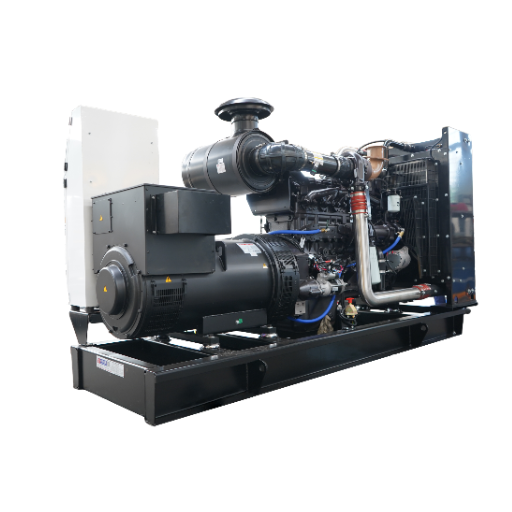
To discuss equipment scope, send ZC Power your location, confirmed rules, load list and requested evidence. State the open design questions as well. Clear emergency power requirements give your team a shared basis for choosing, testing and handing over the equipment.


