
Low Noise Diesel Generator: How to Verify a 75 dB Claim
A low-noise diesel generator rated at 75 dB is a genuinely quiet machine, but only if that figure was measured at 7 metres from the canopy at load. The same number taken at 1 metre describes something roughly 16 dB(A) quieter at any given distance. The two datasheets look identical.
That is the whole problem in one sentence: a decibel figure is not a specification until it carries its measurement conditions, and most quotations do not carry them. Buyers collect three quotes, line up the numbers, and pick the lowest. The instinct is sound and the comparison is not.
This guide picks up where the other noise guides stop. It covers what to do with a 75 dB figure once you have one: how to write a noise clause a supplier can be held to, how to witness the test that proves it, and what your options are when the delivered set turns out louder than the number on the order.
At Shandong ZC Power CO., LTD., we build silent and containerized gensets from 8 kVA to 4,000 kVA and load-test every unit in our national standard testing centre before it ships. The disputes that reach us are almost never about engineering. They are about what the contract said.
Holding a quote with a decibel figure on it and no stated distance? Send it to our engineering team and we will tell you what it actually commits the supplier to.
Key Takeaways
- A bare “75 dB” claim commits a supplier to almost nothing. Until the distance, load, and measurement accuracy grade are named, the figure cannot be tested and cannot be enforced.
- 75 dB(A) at 1 metre and 75 dB(A) at 7 metres are different machines. Sound pressure falls about 6 dB(A) per doubling of distance, which puts roughly 16 dB(A) between the two at any single reference point.
- The essential emission value in ISO 8528-10 is sound power level (LwA), which is distance-independent. If your tender states a limit in LwA, submitting an LpA figure is a category error rather than a near miss.
- Ask for grade 2 accuracy (ISO 3744 engineering) rather than grade 3 (ISO 3746 survey). Grade 3 is a screening method, and a screening number is a poor basis for a payment milestone.
- When a delivered set reads high, re-test before you complain. Most first-pass failures are measurement faults, not machine faults.
Why a Low Noise Diesel Generator 75 dB Claim Cannot Be Accepted On Its Own
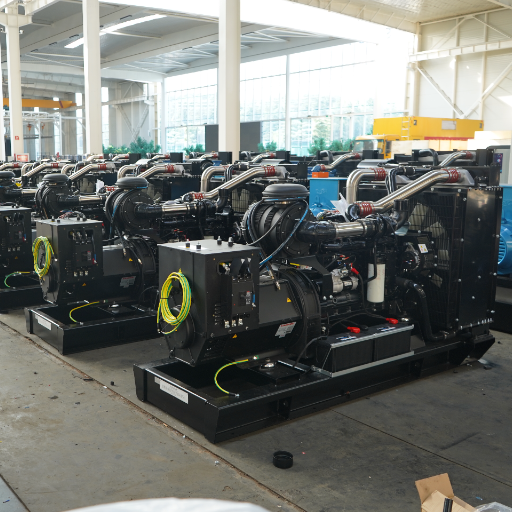
Two suppliers can both write “75 dB(A)” on a quotation, both tell the truth, and describe machines that differ by more than a factor of three in perceived loudness. Nothing in either document is misleading. The number is simply incomplete.
This matters more for a low-noise diesel generator than for most equipment, because the number is the entire reason you are buying one. The enclosure premium you are paying exists to move that figure down. If the figure cannot be verified on delivery, you have bought a canopy on trust.
The three variables a bare decibel figure hides
A figure missing any one of these cannot be tested, and a figure that cannot be tested cannot be enforced.
Distance. Without it there is no measurement, only a reading.
Load. A genset at no load and at full load are acoustically different machines. The condition is a percentage of rated output in the clause.
Accuracy grade. A survey-grade number is not a contractual number. Ask for engineering grade, not survey grade.
Miss any one of the three and the number is a marketing claim wearing a specification’s clothes.
75 dB at 1 metre versus 75 dB at 7 metres
Sound pressure drops by roughly 6 dB(A) every time you double your distance from the source, which is what puts the two common quoting distances so far apart. A set measuring 75 dB(A) at 1 metre reads about 58 to 59 dB(A) at 7 metres. A set measuring 75 dB(A) at 7 metres reads roughly 91 to 92 dB(A) at 1 metre. The same two-digit number on two quotations, and around 16 dB(A) of real difference between them.
| What the quote says | At 1 m | At 7 m | Verdict |
|---|---|---|---|
| “75 dB(A)” measured at 1 m | 75 | ~58-59 | A quiet set, honestly described |
| “75 dB(A)” measured at 7 m | ~91-92 | 75 | A standard silent set |
| “75 dB(A)” with no distance | Unknown | Unknown | Not a specification |
Perceived loudness roughly doubles for every 10 dB(A). A 16 dB(A) gap is not a rounding difference between competitors. It is the difference between a set your neighbours notice and one they do not.
Amina Haddad, a procurement manager at a district health authority, is an illustrative composite of that situation in a live tender. Her 2025 tender for two standby sets returned three quotes, all advertising 75 dB(A). Two gave 7 metres. One gave 1 metre. She shortlisted the 7-metre pair on the assumption that the third had been vague about its conditions, and a colleague caught the error during technical review. The 1-metre unit was the quietest of the three by a wide margin. It was also the most expensive, which is why nobody had questioned it.
What to Write Into the Noise Clause for a Low Noise Diesel Generator
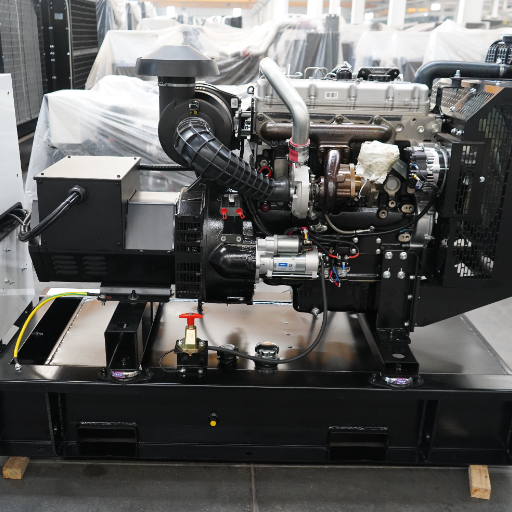
The clause is where this is won or lost, and it is usually written by somebody working from a template rather than from the measurement standard. That is how “silent, 75 dB or better” ends up in a purchase order, a phrase that means nothing and settles nothing.
Name the standard, not the factory’s own method
Require ISO 8528-10, the airborne noise measurement standard for reciprocating engine-driven generating sets. The current edition is 2022, which superseded the 1998 version, so cite the edition rather than the standard number alone.
A supplier who tests to an internal method is not automatically dishonest. It does mean the result cannot be compared to another supplier’s, or to a limit written by an acoustic consultant. Internal methods are for internal use.
Fix the distance, the load, and the grade
Spell out all three. A workable form of words runs roughly: sound pressure level not exceeding 75 dB(A) at 7 metres from the canopy surface, measured to ISO 8528-10:2022 at grade 2 accuracy, at 75% of rated prime power, with no tolerance applied to the limit.
Change any element of that sentence and you are buying something different.
Say whether the limit carries a tolerance. A grade 2 measurement carries roughly 1.5 to 2 dB(A) of uncertainty of its own, so a set reading of 75.5 dB(A) against a 75 dB(A) limit is simultaneously inside the measurement uncertainty and over the stated figure. Both parties can be right, which is exactly the argument the clause exists to prevent. Naming “no tolerance” makes the limit a hard ceiling. Naming an explicit band, such as 75 dB(A) plus or minus 2 dB(A), settles more easily and guarantees less. Either works, as long as the clause picks one rather than leaving the point open.
Two details are worth flagging. The 7-metre reference distance is the convention across the ISO 8528-10 family, and 1-metre quoting is common enough to be worth ruling out explicitly. The load percentage is the element buyers most often leave out, and it decides whether the number holds when the set is working. A figure at 75% load and a figure at 100% load are not interchangeable.
Grades are set out in the standard as grade 2, engineering accuracy under ISO 3744, and grade 3, survey accuracy under ISO 3746. Grade 3 exists so a rough measurement can be taken quickly, and a rough number is a weak basis for a retention payment.
Ask for sound power level when the limit is written that way
This is the specification error we correct most often, and it costs buyers money at the acceptance stage.
Sound pressure level (LpA) depends on where you stand when you measure. Sound power level (LwA) is a property of the machine and does not change with distance. They are different quantities and they are not convertible by rule of thumb outside a stated set of assumptions.
ISO 8528-10 identifies the essential emission value as sound power level, precisely because it is the distance-independent one. If your acoustic consultant has written a sound power limit into the specification and your supplier responds with a sound pressure figure at 7 meters, the two documents are not describing the same thing. It surfaces later as an argument rather than as a failure.
Our silent generator technical guide covers how the canopy itself produces whichever figure you end up specifying, and the silent heavy duty diesel generator range notes set out typical values by unit size.
Witnessing and Accepting the Noise Test
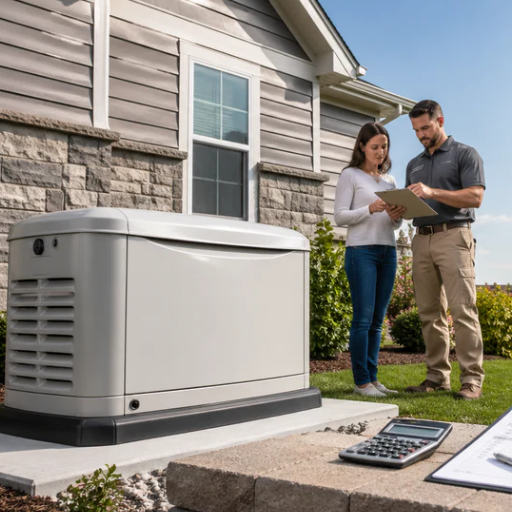
A noise test report is a document, and documents can be written after the fact. The clause gives you the right to a number. The witnessing arrangement decides whether the number is real.
What a usable report contains. The standard and edition, the accuracy grade, the measurement distance, the number and position of measurement points, the load condition during the test, the measured background level, and the ambient conditions. The 2022 edition specifies eight measurement positions at 7 metres from the set surface and 1.2 metres above floor level, so a report describing a different arrangement should say why.
Background noise is the quiet failure. Every measurement of a sound source happens against whatever else is making noise nearby. If the background sits close to the source level, the result cannot be corrected reliably and stops being valid at the claimed grade. A test done at a factory with other units running, or on a site beside a road, can produce a number that is technically a measurement and practically meaningless. Ask what the background level was against the set’s own reading.
Factory-declared versus third-party witnessed. A factory noise test is normal and useful, and every unit we ship gets one. It is not the same thing as an independent measurement. If the figure carries a payment milestone or a permit condition, budget for third-party witnessing and agrees who pays, because that argument has a way of arriving at the worst possible moment.
Test on site, and understand what changes. A factory test is taken in a controlled space. An on-site test is taken beside a wall, a fence, or a neighbouring building, any of which reflects sound back toward the microphone and raises the reading. If acceptance happens on site, the clause should say whether the limit applies in the as-installed position and whether a reflective surface is allowed to be present. Otherwise you will compare a factory number against a site number and both parties will be right.
When the Delivered Set Misses the Figure
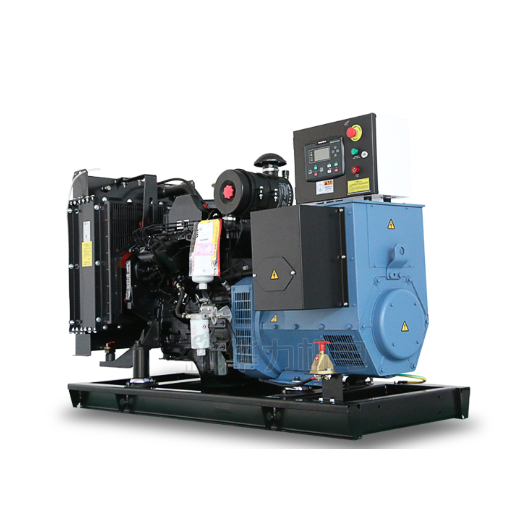
A set reading above its declared figure on arrival is not automatically a bad set. It is a set with a problem, and the useful question is which one. Work the possibilities in this order, because the cheap explanations come first.
| Step | Action | Why it sits here |
|---|---|---|
| 1 | Re-measure under controlled conditions | Most first-pass failures are measurement faults: wrong distance, grade 3 standing in for grade 2, a load that never reached the stated percentage, or background noise too close to the source |
| 2 | Move the set away from the receptor | Distance is free. A set reading 80 dB(A) at 7 m reads roughly 74 dB(A) at 14 m |
| 3 | Attack the dominant source | On an open set the exhaust outlet usually dominates, so a better silencer beats a canopy rebuild. On an enclosed set, cooling-air and canopy radiation often dominate instead. Ask for a source breakdown before spending |
| 4 | Upgrade the enclosure | Acoustic lining, door gaskets, duct silencers, vibration isolators. Real work, and often factory-only |
| 5 | Build a site barrier | Effective where nothing else fits, and the option most often under-designed. Ask for a predicted insertion loss figure |
Rejection is the sixth option, and the clause decides whether you have it. A rejection argument needs a declared standard, a stated distance, a load condition, and a grade. Without those, the supplier’s position is that the set meets its specification and yours is that it does not, and neither side can prove anything.
Erik Lund, a project engineer on a Swedish district heating upgrade, is an illustrative composite of that outcome. His 2024 order specified a 78 dB(A) ceiling without naming a standard, a distance, or a load. The delivered set measured 84 dB(A) on site, and the supplier’s factory report showed 79 dB(A) at 7 metres at 75% load. Both figures were correct. The difference was the measurement conditions, and the missing clause meant nobody had agreed which conditions governed. The site spent roughly EUR 40,000 on a barrier and a silencer upgrade that a properly drafted sentence would have avoided.
Frequently Asked Questions
Is 75 dB(A) a good noise level for a diesel generator?
At 7 metres from the canopy and at load, 75 dB(A) is a genuinely quiet set and a figure a well-specified silent canopy can meet. The catch is that the number is only meaningful with its conditions attached. The same 75 dB(A) quoted at 1 metre describes a far quieter machine, so the figure alone cannot tell you whether it is good.
Should a noise limit be written as dB(A) or dB?
Use dB(A) for anything involving how loud the installation sounds to people. The A-weighting filter adjusts the measured spectrum to approximate human hearing at moderate levels, and every noise ordinance you are likely to encounter is written in dB(A). A flat dB figure is a sound power declaration in a specialist context, not a noise level anybody hears.
What is the difference between sound power level and sound pressure level?
Sound pressure level (LpA) depends on where you stand when you measure. Sound power level (LwA) is a property of the machine and does not change with distance. ISO 8528-10 identifies sound power as the essential emission value for exactly that reason. They are different quantities and are not convertible by rule of thumb outside a stated set of assumptions.
At what distance should generator noise be measured?
Seven metres from the set surface is the convention across the ISO 8528-10 family. The 2022 edition specifies eight measurement positions at 7 metres from the set surface and 1.2 metres above floor level, so a report describing a different arrangement should say why. One-metre quoting is common enough in the market to be worth ruling out explicitly in the clause.
What accuracy grade should a generator noise test use?
Ask for grade 2, engineering accuracy under ISO 3744. Grade 3, survey accuracy under ISO 3746, exists so a rough measurement can be taken quickly, and a rough number is a weak basis for a retention payment. A grade 2 measurement carries roughly 1.5 to 2 dB(A) of uncertainty of its own, which is why the clause also needs to say whether the limit carries a tolerance.
What background noise level is acceptable during a noise test?
There is no single permitted figure, but the test is invalid at the claimed grade if the background sits close to the source reading, because the correction cannot be applied reliably. A test taken at a factory with other units running, or on a site beside a road, can produce a number that is technically a measurement and practically meaningless. Ask what the background level was against the set’s own reading.
Can the noise test be done on site instead of at the factory?
It can, but the two numbers are not comparable. A factory test is taken in a controlled space, while an on-site test is taken beside walls, fences, or neighbouring buildings, any of which reflect sound back toward the microphone and raise the reading. If acceptance happens on site, the clause should say whether the limit applies in the as-installed position and whether a reflective surface may be present.
Conclusion: Make the 75 dB Claim Testable
A low noise diesel generator purchase turns on one unglamorous question: could you prove, eight months from now, that the delivered machine met the figure you were quoted? For most buyers the honest answer is no, because the figure arrived without its measurement conditions and nobody wrote them into the order.
Ask every supplier for the distance, the load, and the grade behind any decibel figure, and treat a bare number as an incomplete answer rather than a good one. Write the standard, the distance, the load percentage, and the grade into the clause, in that order, because each one is useless without the others. Decide the witnessing and payment arrangement before the order is placed rather than after the set arrives.
None of that requires acoustic expertise. It requires knowing which four questions to ask while the quotation is still a document you can change.
If you have a decibel figure in front of you and want to know what it is worth, our engineering team will tell you straight, whether or not it leads to an order.
For the wider picture on enclosure choice, limits by jurisdiction, and lifecycle cost, our heavy duty diesel generator buying guide is the place to start. To understand the electrical acceptance test that usually runs alongside the acoustic one, see our generator load bank testing procedure.


