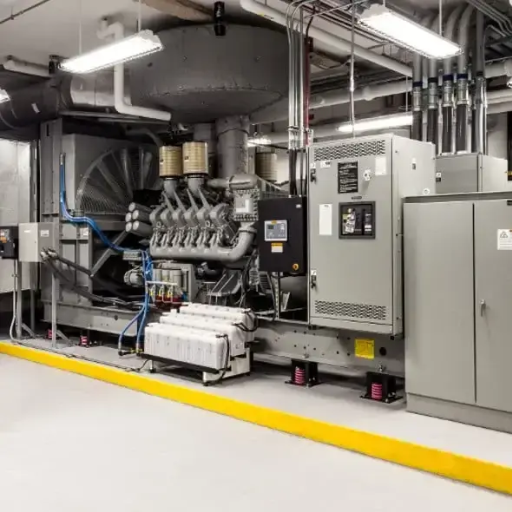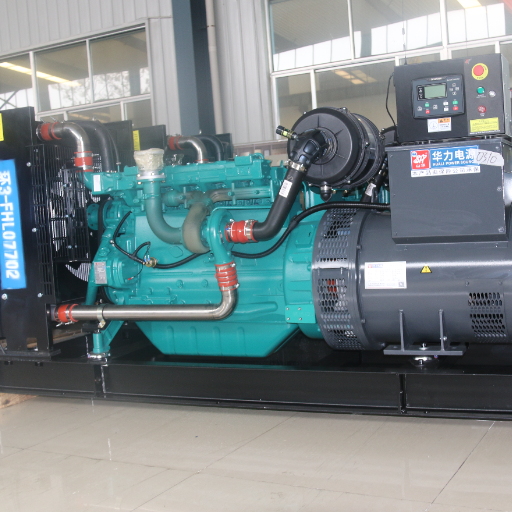
Heavy Duty Diesel Generator Sizing: Industrial Engineering Guide (500kW–4,000kW)
Heavy duty diesel generator sizing is the process of matching a generator’s kVA/kW rating to your facility’s actual electrical demand while accounting for motor starting surge, load diversity, site conditions, and future growth. For industrial applications from 500kW to 4,000kW, a sizing error can mean either a catastrophic outage or hundreds of thousands of dollars in wasted capacity.
Most procurement teams begin with a simple question: “How many kilowatts do we need?” That question is necessary, but it is not sufficient. The real answer depends on how the loads start, how many run at once, how hot or high the site is, and whether the generator will run for minutes per year or hours per day. A 1,000kW running load can demand a 1,500kW genset if a single large motor starts direct-on-line, or it may only need a 1,125kW set if motors are sequenced and soft-started.
At Shandong ZC Power CO., LTD. (ZC Power), our engineers size heavy-duty diesel generators for mines, data centers, manufacturing plants, and remote infrastructure projects every day. In this guide, we will walk through the exact methodology our team uses, with formulas, worked examples, and practical rules of thumb you can apply immediately.
Key Takeaways
- Heavy duty diesel generator sizing starts with kW/kVA conversion, then adds the largest motor starting surge, diversity factor, future margin, and site derating.
- Industrial power factor typically ranges from 0.8 to 0.95; poor power factor increases the required alternator kVA.
- Motor starting kVA often governs generator size; DOL start draws 5–7x running kVA, while soft starters can cut surge by 50–70%.
- Site derating for altitude (~1% per 100m above 1,000m) and temperature (~3% per 10°C above 40°C) must be applied before final selection.
- Aim to operate at 70–80% of rated capacity for fuel efficiency, engine longevity, and headroom for load growth.
For a comprehensive buying guide covering voltage selection, pricing, and safety, please refer to our industrial-grade heavy-duty diesel generator buying guide.
What Is Heavy Duty Diesel Generator Sizing?
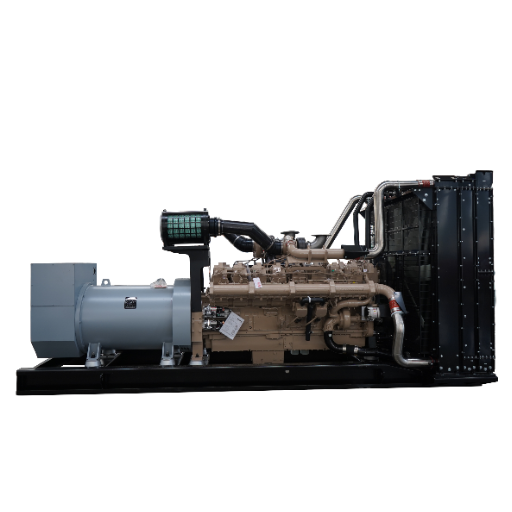
Heavy duty diesel generator sizing is the engineering process of selecting a genset large enough to start and run all connected loads reliably, but not so large that it wastes fuel and capital. Heavy duty diesel generator sizing applies to industrial generator sets typically rated from 500kW to 4,000kW or more, used in mining, manufacturing, data centers, oil and gas, and critical infrastructure.
The process differs fundamentally from residential or small commercial sizing. At an industrial scale, the governing factor is rarely the running load alone. Large motors, harmonic loads from variable frequency drives (VFDs), strict voltage dip limits, and extreme environmental conditions all push the required generator rating well above a simple sum of connected kW.
Sizing also depends on duty cycle. A standby generator only needs to carry peak load during an outage. A prime power generator must respect ISO 8528-1 load-factor limits over long operating periods.
A continuous power generator runs at 100% rated load indefinitely. Each duty cycle changes the relationship between nameplate rating and usable output.
Mini-Story: The 600hp Motor That Shut Down a Mine
In 2023, a procurement team at a copper mine in Zambia ordered a 1,250kW genset for a 980kW running load. The running load calculation was correct.
What they missed was the 600hp ball mill motor, which drew nearly six times its running kVA during direct-on-line startup. The first time the mill tried to start on generator power, the voltage dip collapsed the control voltage for the conveyors and tripped the entire crushing line. Two days of lost production cost more than the price difference to upgrade to a properly sized 1,500kW unit.
kW, kVA, and Power Factor for Heavy Duty Sizing
Accurate heavy-duty diesel generator sizing starts with the relationship among kW, kVA, and power factor. Generators are rated in kilovolt-amperes (kVA), but loads are usually listed in kilowatts (kW). The relationship between them is:
kW = kVA × Power Factor
For most industrial loads, the power factor ranges from 0.8 to 0.95. A 1,000kVA generator at 0.8 power factor delivers 800kW of real power. If your facility has a poor power factor due to motors, transformers, or welding equipment, you need either power-factor correction capacitors or a larger alternator.
For three-phase systems, apparent power is calculated as:
kVA = (√3 × V × I) ÷ 1,000
Where V is line-to-line voltage and I is line current. This formula is essential when you only have current measurements from switchgear or a utility bill.
Worked example: A manufacturing plant has a measured load of 1,200kW at 0.85 power factor. The required kVA is 1,200 ÷ 0.85 = 1,412kVA. At 0.8 power factor, the same load would require 1,500kVA. The difference is why power factor matters.
Step-by-Step Heavy Duty Diesel Generator Sizing Process
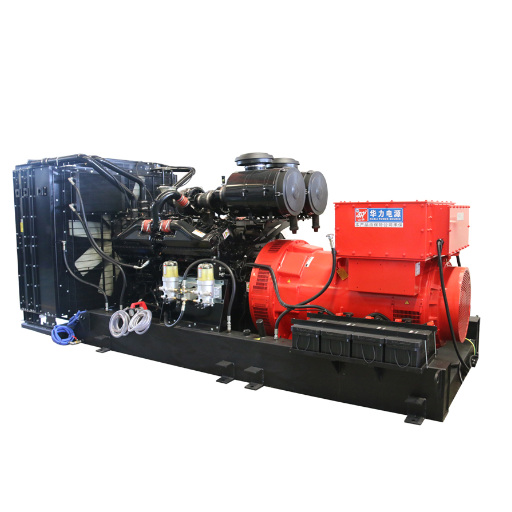
The heavy duty diesel generator sizing workflow used by ZC Power engineers follows nine steps. Each step builds on the previous one, and skipping any step is where expensive mistakes happen.
1. Create a Complete Load Inventory
List every piece of equipment the generator must supply, including its running kW, running kVA if known, and duty cycle. Separate motor loads from static loads. Motors are the dominant sizing factor in most industrial plants. A complete load inventory is the foundation of accurate heavy-duty diesel generator sizing.
2. Identify Motor Loads and Starting Methods
For each motor, record horsepower or kW, starting method (DOL, star-delta, soft starter, VFD), and code-letter or locked-rotor kVA. In heavy duty diesel generator sizing, the starting method determines how much the generator must supply beyond the running load.
3. Convert Running kW to Running kVA
Use the load power factor to convert running kW to running kVA in heavy-duty diesel generator sizing. If power factor is unknown, use 0.8 as a conservative estimate for industrial motor loads.
4. Calculate the Largest Motor Starting kVA
Motor starting surge is the single most common cause of errors in heavy duty diesel generator sizing. Typical multipliers are:
| Starting Method | Starting kVA Multiplier |
|---|---|
| Direct On Line (DOL) | 5–7× running kVA |
| Star-Delta | 2–3× running kVA |
| Soft Starter | 1.2–1.5× running kVA |
| VFD | 1.0–1.2× running kVA |
5. Apply Diversity Factor
Not all equipment runs simultaneously in heavy duty diesel generator sizing. A diversity factor of 0.7 to 0.95 is typical for manufacturing, depending on operating shifts and process design. Data centers often use 0.95 or higher because servers run continuously.
6. Add Future Expansion Margin
Generators last 20 to 30 years, so heavy duty diesel generator sizing should include 20–25% margin for future load growth. This also keeps the generator in its efficient operating range.
7. Apply Site Derating
Altitude and temperature reduce engine output and cooling capacity in heavy duty diesel generator sizing. Typical rules:
- Altitude: ~1% derating per 100m above 1,000m
- Temperature: ~3% derating per 10°C above 40°C
8. Select the Correct ISO 8528 Duty Rating
Choose standby (ESP), prime (PRP), or continuous (COP) based on how the generator will run. Heavy duty diesel generator sizing must match the duty rating to the real operating profile, because prime and continuous ratings affect alternator thermal capacity and engine load-factor limits.
9. Choose the Next Standard Generator Size
After all calculations, select the next standard commercial rating above your requirement. Target normal operation at 70–80% of rated capacity.
Motor Starting kVA and Voltage Dip Analysis
Even a brief voltage dip during motor starting can trip sensitive controls, collapse contactor coils, or damage electronics. The generator must supply enough reactive power to limit the dip to acceptable levels.
Typical allowable voltage dip limits are:
- Industrial motors: up to 15%
- Data centers and hospitals: 10% or less
- General lighting and HVAC: up to 20%
The alternator’s subtransient reactance largely determines how much voltage dip occurs for a given motor-starting kVA. A lower reactance means less dip. When voltage dip is critical, specify an oversized alternator or one with permanent magnet generator (PMG) excitation.
Worked example: A 400kW motor at 0.85 power factor has a running kVA of 471. With DOL starting at 6×, the starting kVA is 2,824. If the plant running load is 1,200kW (1,412kVA at 0.85 PF), the peak demand is roughly 1,412 + 2,824 = 4,236kVA before diversity.
Applying a 0.85 diversity factor and 25% margin gives 3,827kVA. With a soft starter reducing surge to 1.5×, the same calculation drops to about 1,840kVA, allowing a much smaller generator.
This is why motor starting analysis often dominates heavy duty diesel generator sizing. For industrial diesel generator sizing projects with multiple large motors, specifying soft starters, sequencing large motor starts, or using reduced-voltage starters is usually cheaper than buying a generator twice the necessary size.
Site Condition Derating for Heavy Duty Generators
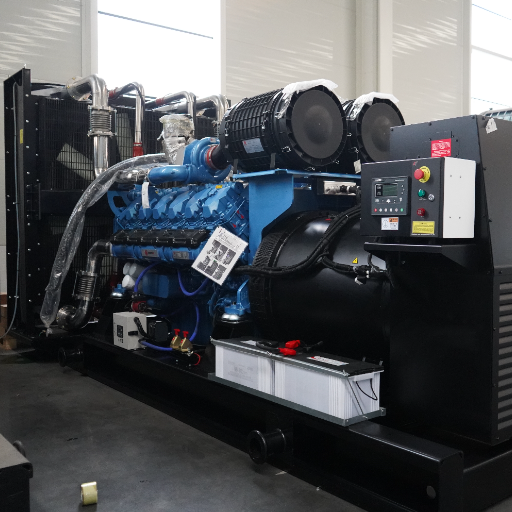
Heavy duty diesel generator sizing must account for the fact that a generator specified for sea-level conditions will not deliver its nameplate rating at a high-altitude mine or in a desert summer. Derating must be applied before selecting the final unit.
Altitude Derating
Engine output drops because thinner air reduces combustion oxygen. A common rule is approximately 1% derating for every 100m above 1,000m. A 2,000kW generator at 3,000m may effectively deliver only 1,800kW without modification.
Temperature Derating
High ambient temperature reduces cooling system capacity. A common rule is approximately 3% derating for every 10°C above 40°C. At 50°C, the same 2,000kW generator may be effectively derated to roughly 1,940kW.
Combined Derating Example
A 2,000kW generator installed at 3,000m and 50°C might be derated as follows:
- Altitude derating: 2,000m above 1,000m × 1% = 20% → 1,600kW
- Temperature derating: 10°C above 40°C × 3% = 3% → 1,552kW
In this case, the buyer should either specify a larger generator or order a high-altitude, high-temperature package with oversized radiator and adjusted fuel injection.
Dust, Humidity, and Salt Spray
Dust clogs air filters and radiators, forcing more frequent maintenance and reducing effective cooling. Humidity accelerates corrosion. Salt spray demands marine-grade enclosures and coatings. These factors do not always change the nameplate rating, but they must influence enclosure, filtration, and maintenance planning.
Sizing for Different Duty Cycles
Duty cycle is another critical input in heavy duty diesel generator sizing. It changes how a generator’s rating translates to real-world usable power. The three ISO 8528-1 ratings are:
Emergency Standby Power (ESP)
ESP is the maximum output available during a utility outage, limited to a maximum number of hours per year and with no overload capability. For standby applications, size for the peak load you must protect during the worst-case outage scenario.
Prime Power (PRP)
PRP allows variable load operation for unlimited hours, but the average load factor over 24 hours is typically limited to 70% of PRP. For prime power, size for the average load plus headroom for peak demand periods.
Continuous Power (COP)
COP is constant 100% load for unlimited hours. Continuous applications such as base-load mining or islanded microgrids require generators rated exactly for the constant load, with careful thermal management.
For more detail on duty-cycle differences, see our guide on prime vs. standby power ratings.
Sizing Worked Examples by Application
Example 1: 1,000kW Manufacturing Plant Standby
A food processing plant needs standby power in this heavy duty diesel generator sizing example. The load inventory totals 950kW running load. The largest motor is a 150kW compressor with DOL starting.
- Running kVA at 0.85 PF: 950 ÷ 0.85 = 1,118kVA
- Compressor running kVA: 150 ÷ 0.85 = 176kVA
- DOL starting kVA at 6×: 1,059kVA
- Peak before diversity: 1,118 + 1,059 = 2,177kVA
- Diversity factor 0.85: 1,850kVA
- Future margin 20%: 2,220kVA
- Site conditions: sea level, 35°C → no significant derating
- Final selection: 2,500kVA (2,000kW at 0.8 PF) standby-rated genset
The generator will normally run at about 74% of rated kVA, leaving room for growth and limiting voltage dip during compressor startup.
Example 2: 1,500kW Mining Prime Power with Large Motor Start
A remote gold mine provides another challenging heavy duty diesel generator sizing case. Running load is 1,200kW. The largest motor is a 400kW ball mill with DOL starting.
- Running kVA at 0.8 PF: 1,200 ÷ 0.8 = 1,500kVA
- Ball mill running kVA: 400 ÷ 0.8 = 500kVA
- DOL starting kVA at 6×: 3,000kVA
- Peak before diversity: 1,500 + 3,000 = 4,500kVA
- Diversity factor 0.80: 3,600kVA
- Future margin 20%: 4,320kVA
- Site derating: 2,500m altitude → 15% derating
- Adjusted requirement: 4,320 ÷ 0.85 = 5,082kVA
- Final selection: 5,250kVA (4,200kW at 0.8 PF) prime-rated genset
Alternatively, adding a soft starter to reduce ball mill starting surge to 1.5× would drop the requirement to roughly 2,600kVA, a massive reduction in generator size and cost.
Example 3: 2,000kW Data Center N+1 Standby
A Tier III data center provides another useful heavy duty diesel generator sizing case study. Each UPS module demands 1,800kW with a 0.95 power factor. Harmonic content from rectifiers requires an alternator sized for non-linear loads.
- Module kVA: 1,800 ÷ 0.95 = 1,895kVA
- N+1 configuration: 2 × 1,895 = 3,790kVA total installed capacity
- Each generator must carry one module: 1,895kVA
- Future margin 15%: 2,179kVA
- Voltage dip limit 10% → specify alternator with low subtransient reactance
- Final selection per unit: 2,500kVA (2,000kW at 0.8 PF) standby-rated genset
Data center sizing also requires coordination with UPS battery ride-through, ATS transfer time, and generator voltage regulation accuracy.
Common Heavy Duty Sizing Mistakes
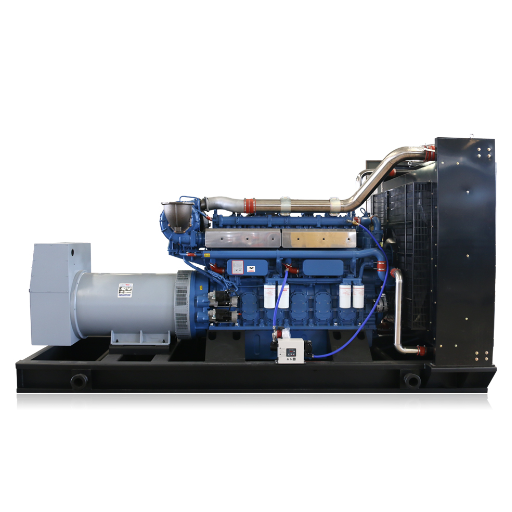
Even experienced engineers make these heavy duty diesel generator sizing errors. Avoiding them is the fastest way to protect your investment.
Ignoring Motor Starting Surge
This is the most expensive mistake in heavy duty diesel generator sizing. A generator sized only for running load will trip the first time a large motor starts. Always calculate locked-rotor or starting kVA for the largest motor.
Neglecting Power Factor
A load list in kW does not tell you the required alternator kVA. Poor power factor means you need a larger alternator even if the engine kW seems sufficient.
Forgetting Site Derating
Altitude and temperature can reduce usable output by 20% or more in heavy duty diesel generator sizing. Derating must be applied before selecting the generator, not after installation.
Oversizing and Causing Wet Stacking
A generator that runs consistently below 30% load suffers from incomplete combustion, fuel dilution of engine oil, and carbon buildup in the exhaust. This is called wet stacking. Proper sizing targets 70–80% normal load.
Wrong Duty Rating
Buying a standby-rated generator for continuous prime power voids warranties and causes premature failure. Match the duty rating to the actual operating profile.
Ignoring Harmonic Loads
VFDs, UPS systems, and rectifiers produce harmonic currents that heat alternator windings. Non-linear loads may require oversized alternators or K-rated windings.
When to Involve a Factory Engineer
Some industrial diesel generator sizing projects are straightforward, but others require factory engineering support. Contact a manufacturer engineer when:
- Total load exceeds 1,000kW
- Individual motor starts exceed 200kW
- The site is above 1,500m altitude or regularly exceeds 45°C
- Loads include large VFDs, UPS systems, or DC rectifiers
- Multiple generators must operate in parallel
- Custom voltage or frequency is required
- The project needs containerized or trailer-mounted configuration
At ZC Power, our team of 80+ engineers provides load assessment, site derating analysis, motor starting studies, and custom generator specification. We build diesel generator sets from 8kVA to 4,000kVA in open, silent, containerized, and trailer configurations, and every unit is load-bank tested in our national standard testing center before shipment.
Conclusion
Heavy duty diesel generator sizing is not a single calculation. It is a chain of calculations that starts with kW and kVA, adds motor starting surge, adjusts for diversity and future growth, and then derates for altitude, temperature, and duty cycle. Each link in the chain matters. A weak link anywhere can turn a reliable power system into a liability.
The best heavy duty diesel generator sizing exercise produces a generator that runs efficiently, starts every critical motor, withstands site conditions, and leaves room for future expansion. It also produces a clear specification that manufacturers can quote against accurately.
At ZC Power, we have sized, built, and commissioned heavy duty diesel generators for some of the world’s most demanding industrial environments for more than 25 years. If you are evaluating a new project, our engineers can validate your load list, recommend the right duty rating, and deliver a custom genset tested to its full rated output before it leaves our factory.
Because so many outages trace back to poor site integration rather than the machine itself, our guide to heavy duty diesel generator installation covers foundations, ventilation, exhaust routing, and code compliance step by step.
Request Your Free Load Assessment Today and get a factory-direct quote for a heavy duty diesel generator sized exactly for your site.