Small Business Generator Cost: 2026 Pricing Guide (20–100 kW)
Small business generator cost ranges from 8,000 to 8,000 to 75,000 installed in 2026, depending on generator size, enclosure type, fuel choice, and your region. A 20–30 kW unit for a small retail shop or office typically runs 8,000–8,000–22,000 fully installed. A 75–100 kW system for a restaurant or medical clinic costs 35,000–35,000–75,000. These figures include the generator set, automatic transfer switch, installation labor, and basic fuel infrastructure.
Maria in São Paulo found this out the hard way. She runs a 40-seat restaurant in a neighborhood where power outages strike three to four times a month. After a four-hour blackout spoiled her entire refrigerated inventory, she started shopping for backup power. Every dealer she contacted quoted her 45,000–45,000–55,000 for a 50 kW standby system. Then she discovered factory-direct pricing. Her total project cost, including shipping from China, local installation, and commissioning, came to 28,000.Shesavedroughly28,000.Shesavedroughly20,000 and her generator paid for itself in 11 months through avoided spoilage losses.
Most cost guides on the internet assume you are buying through a US dealer network. They do not address what small business owners in Africa, Southeast Asia, Latin America, or the Middle East actually pay. At Shandong ZC Power CO., LTD. (ZC Power), we have manufactured generator sets from 8kVA to 4000kVA since 1999 and exported to over 50 countries. We have seen the full spectrum of small business budgets, from a Nairobi pharmacy installing its first 30 kW unit to a Jakarta data center adding six 500 kW canopy generators.
In this guide, you will get a precise small business generator cost breakdown. We will cover exact equipment pricing by kW rating, how enclosure type changes your total investment, regional labor cost differences, fuel type economics, and the hidden expenses that inflate project budgets. Whether you operate a restaurant, retail store, medical clinic, or small warehouse, you will know exactly what to budget before your generator ever leaves the factory.
Key Takeaways
- Small business generator cost ranges from 8,000–8,000–22,000 for 20–30 kW systems and 35,000–35,000–75,000 for 75–100 kW systems fully installed in 2026.
- Factory-direct purchasing from a manufacturer like ZC Power reduces equipment cost by 20–40% compared to dealer retail pricing.
- Canopy and containerized generators cut installation complexity and cost for small businesses with limited contractor access.
- Diesel is typically the most cost-effective fuel for small business standby applications; natural gas breaks even only for continuous-run scenarios.
- Total cost of ownership over 5 years often exceeds the initial purchase price due to fuel, maintenance, and parts.
What Size Generator Does Your Small Business Need?
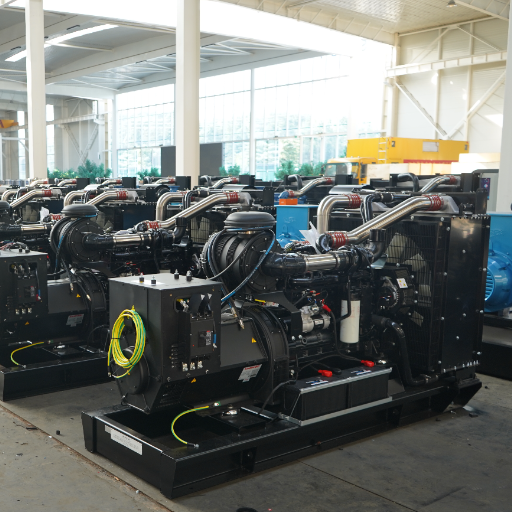
Understanding small business generator cost starts with understanding your actual power requirement. Most small businesses oversize their generator and waste capital, or undersize it and discover the hard way during the first outage.
Load Calculation Basics
The correct way to size a generator is to calculate your critical load, not your total building load. You rarely need to back up every circuit. Start with the equipment you cannot afford to lose:
- Refrigeration and HVAC: These are the largest loads for restaurants, medical clinics, and retail stores.
- Point-of-sale systems and security: Small but critical for revenue and safety.
- Lighting: Emergency and operational lighting for customer and staff safety.
- Medical equipment: Refrigerated vaccines, diagnostic machines, and life-support systems.
- IT infrastructure: Servers, routers, and phone systems for modern business continuity.
For each piece of equipment, note both running watts and starting watts. Electric motors, compressors, and air conditioners draw three to six times their running power at startup. If your generator cannot handle the starting surge, it will trip its breaker the moment your largest motor kicks in.
If you haven’t calculated your load yet, use our generator sizing calculator before you request any quotes. Sizing wrong is the single most expensive mistake a small business owner can make when buying a generator.
Common Small Business Power Requirements
| Business Type | Typical kW Need | Critical Loads |
|---|---|---|
| Small retail store | 20–40 kW | Lights, POS, refrigeration, security |
| Restaurant (40–80 seats) | 40–80 kW | Kitchen equipment, walk-in cooler, HVAC, lights |
| Medical clinic | 50–100 kW | Diagnostic equipment, vaccine refrigeration, HVAC, lights |
| Small warehouse | 60–100 kW | Conveyor systems, forklift chargers, lights, security |
| Office building | 30–75 kW | Servers, HVAC, lights, elevators, security |
| Small hotel | 80–150 kW | Elevators, HVAC, hot water, kitchen, lights |
These ranges are starting points. Your actual requirement depends on your specific equipment list, local climate, and whether you need full-building backup or critical-circuit-only backup.
Sizing Mistakes Small Businesses Make
The three most common errors we see from small business buyers:
- Guessing instead of calculating: “Our building is about 2,000 square feet, so we probably need 50 kW.” This approach routinely produces wrong results. Square footage has almost no correlation with electrical load.
- Ignoring starting surge: A 5-horsepower compressor might run on 3.7 kW but needs 18–22 kW to start. If your generator is sized for running load only, it fails during the first motor startup.
- Oversizing for growth: Adding 50% margin “just in case” sounds prudent, but it wastes fuel, increases maintenance cost, and can cause wet stacking in diesel engines. A 10–20% margin is sufficient for most small businesses.
Small Business Generator Cost by Size (2026)
Generator size is the single biggest driver of small business generator cost. If you have not sized your unit yet, this table will give you a realistic budget range for each common small commercial size.
Factory-Direct Equipment Cost
| Generator Size | Typical Use Case | Equipment Cost (FOB) |
|---|---|---|
| 20 kW | Small retail, office, café | 3,500–3,500–8,000 |
| 30 kW | Restaurant, small clinic, boutique | 5,000–5,000–12,000 |
| 50 kW | Medium retail, warehouse, restaurant | 10,000–10,000–20,000 |
| 75 kW | Large restaurant, medical clinic, office | 16,000–16,000–30,000 |
| 100 kW | Medical, light industrial, small hotel | 22,000–22,000–40,000 |
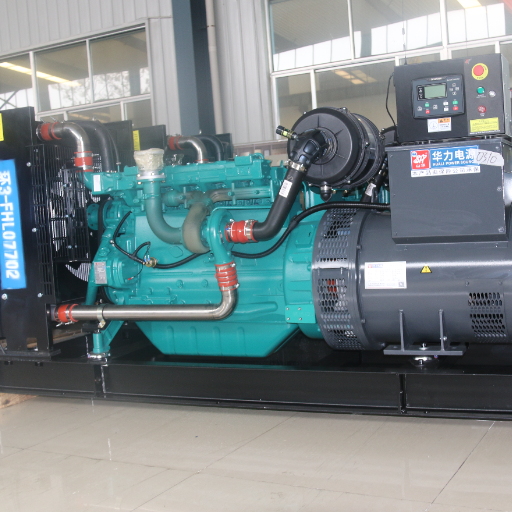
These prices are for diesel generator sets in standard open or canopy configuration, FOB China. The exact price depends on engine brand (Cummins, Perkins, Yuchai, Weichai), alternator specification, control panel features, and enclosure type. At ZC Power, every unit is load-bank tested in our national standard testing center before shipment to verify 100% rated output.
Total Installed Cost by Region
Small business generator cost does not end with the equipment. Installation, permits, fuel infrastructure, and commissioning add significantly to the total project budget. Regional labor rates are the biggest variable.
| Region | Equipment Cost | Installation Cost | Total Installed | Cost per kW |
|---|---|---|---|---|
| United States | 3,500–3,500–40,000 | 5,000–5,000–35,000 | 8,000–8,000–75,000 | 300–300–600 |
| Africa (Nigeria, Kenya, SA) | 3,500–3,500–40,000 | 6,000–6,000–45,000 | 10,000–10,000–85,000 | 400–400–700 |
| Middle East (UAE, Saudi, Qatar) | 3,500–3,500–40,000 | 5,500–5,500–38,000 | 9,000–9,000–78,000 | 350–350–600 |
| Southeast Asia (Indonesia, Philippines, Vietnam) | 3,500–3,500–40,000 | 4,000–4,000–28,000 | 8,000–8,000–68,000 | 250–250–500 |
| Latin America (Brazil, Mexico, Colombia) | 3,500–3,500–40,000 | 5,000–5,000–32,000 | 9,000–9,000–72,000 | 300–300–550 |
Notice the pattern: equipment cost is the same regardless of region when buying factory-direct. The variation comes entirely from local installation labor, permits, and fuel infrastructure. In Southeast Asia, skilled electrical labor costs 10–10–40 per hour. In the United States, licensed electricians charge 90–90–200 per hour. That gap alone can swing your total project cost by 30–50%.
James, based in Nairobi, operates a pharmacy situated in an area where the municipal power supply is highly unstable. Having calculated his pharmacy’s critical load at 28 kW, he purchased a 30 kW silent diesel generator set directly from the manufacturer, ZC Power. The acquisition cost for the unit was 8,500. He subsequently engaged a local EPC contractor to handle the installation of the concrete foundation, electrical grid connection, automatic transfer switch, and fuel tank, for 9,500. The total project cost amounted to 18,000. During the first year of operation, he successfully averted approximately 14,000 in losses resulting from damaged pharmaceuticals and lost revenue. In just 15 months, the generator set had fully recouped its initial investment cost.
For a detailed breakdown of every installation line item by project size, see our guide to commercial generator installation cost.
How Enclosure Type Affects Small Business Generator Cost
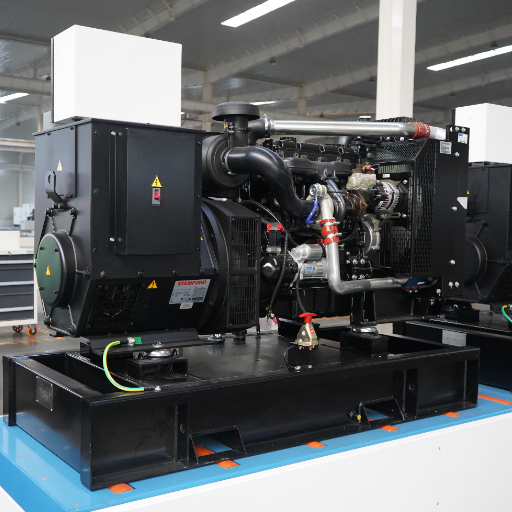
The format your generator arrives in changes your small business generator cost more than most buyers expect. For a small business with limited space and contractor access, this decision is especially important.
Open-Set Generators
Open-set units arrive as bare engine-alternator assemblies mounted on a steel base frame. They are the most cost-effective equipment option but create the highest installation burden.
You will need to source and install a weatherproof enclosure or build a dedicated generator room. You will also handle exhaust piping, ventilation, sound attenuation, and environmental protection on-site. For a small business in an urban area, the noise alone can make this option impractical. Open-set units work best when you already have an indoor generator room, existing shelter structure, or rural location with no noise restrictions.
Additional installation cost for open-set units: 3,000–3,000–15,000, depending on size and local requirements.
Canopy / Silent Generators
Canopy units arrive pre-enclosed in a weatherproof, sound-attenuated steel housing. The factory handles acoustic engineering, ventilation, and weather sealing. Installation is limited to foundation work, fuel connection, electrical tie-in, and exhaust outlet routing.
This format strikes the best balance for most small businesses. You avoid enclosure construction entirely while keeping noise levels below 75 dB at 7 meters, which complies with most urban noise ordinances. Canopy units are the most popular choice for restaurants, medical clinics, retail stores, and office buildings in populated areas.
The equipment premium for a canopy over an open-set unit is typically 1,500–1,500–5,000 depending on size, but you save 3,000–3,000–15,000 on local enclosure construction. For most small businesses, the canopy pays for itself in avoided installation cost.
Containerized Generators
Containerized units ship inside standard 20-foot shipping containers modified into plug-and-play power stations. The container becomes the enclosure, complete with ventilation, sound attenuation, fuel tanks, and control systems integrated at the factory.
Installation cost drops by 30–50% compared to an equivalent open-set unit. You need a flat concrete pad, crane access for placement, fuel connection, and electrical bus connection. There is no on-site enclosure construction, no exhaust routing, and minimal weatherproofing work.
For small businesses with limited local contractor capacity, containerized generators are ideal. They also simplify customs clearance because they ship as a single unit under one HS code. The downside is a higher equipment cost and the need for crane access, which can be challenging on tight urban sites.
Choosing the right enclosure is one of the most important cost decisions you will make. Before you compare diesel generator price tiers, decide which format matches your site’s infrastructure, noise environment, and local contractor capacity.
Diesel vs Natural Gas vs Propane: Small Business Fuel Cost Analysis
Fuel type affects both your upfront small business generator cost and your long-term operating economics. The right choice depends on your runtime expectations, fuel availability, and local infrastructure.
Equipment Cost Comparison
| Fuel Type | Equipment Cost Premium | Typical Availability |
|---|---|---|
| Diesel | Baseline (standard) | Global availability |
| Natural Gas | +2,000–2,000–8,000 | Requires a gas line or a bulk tank |
| Propane (LPG) | +1,500–1,500–5,000 | Requires a bulk tank and vaporizer |
Diesel generator sets are the global standard for standby power. They are widely available, well-understood by local technicians, and require the simplest fuel infrastructure. Natural gas and propane units cost more upfront because they require specialized carburetion, pressure regulation, and spark-ignition systems.
Fuel Cost Over 5 Years
For a 50 kW generator running 200 hours per year (typical for standby use with monthly exercise and occasional outages):
| Fuel Type | Hourly Consumption | Fuel Cost per Hour | 5-Year Fuel Cost |
|---|---|---|---|
| Diesel | 3.5–4.5 gallons | 12–12–20 | 12,000–12,000–20,000 |
| Natural Gas | 5.5–7.0 therms | 8–8–15 | 8,000–8,000–15,000 |
| Propane | 4.5–6.0 gallons | 10–10–18 | 10,000–10,000–18,000 |
Natural gas is typically the cheapest fuel for standby applications, but only if you have an existing gas service. Running a new gas line to a small business can cost 5,000–5,000–15,000, which often exceeds the generator cost itself. For businesses without existing gas service, diesel is usually the more economical total project choice.
Recommendation by Business Type
- Restaurants and retail: Diesel or propane. Diesel is simpler and more widely supported. Propane works well if you already use LPG for cooking.
- Medical clinics: Diesel. Critical reliability, widely supported by local technicians, and no dependency on utility gas lines that may fail during the same outage.
- Offices and warehouses: Diesel or natural gas (if gas line exists). Diesel for standalone reliability; natural gas for lower operating cost.
- Remote or rural locations: Diesel. Global fuel availability and no dependency on utility infrastructure.
For buyers comparing fuel economics in detail, our commercial generator price guide breaks down the total cost of ownership by fuel type and runtime scenario.
Factory-Direct vs Dealer: What Small Businesses Actually Pay
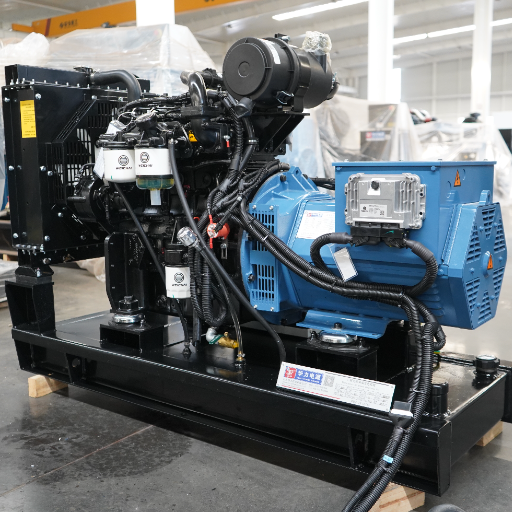
How you purchase your generator changes your small business generator cost by 20–40%. This is the single most important purchasing decision most small business owners face.
Dealer Pricing Reality
When you buy through a local dealer, distributor, or retailer, you typically receive a bundled quote that includes equipment, delivery, installation, permits, and commissioning. The dealer handles everything. You write one check and wait.
The convenience comes at a premium. Dealer-bundled pricing typically adds 25–50% above raw equipment and labor costs. You are paying for project management, warranty administration, certified technician labor, and the dealer’s overhead. Many dealers also require proprietary automatic transfer switches, monitoring systems, and ongoing maintenance contracts to maintain warranty coverage.
For a 50 kW small business generator, dealer quotes typically range from 25,000to25,000to55,000 installed, depending on your region and the dealer’s brand tier.
Factory-Direct Savings
When you buy factory-direct from a manufacturer like ZC Power, your generator arrives as equipment-only. You coordinate local installation yourself or through an EPC contractor.
The savings are substantial: 20–40% lower total project cost versus a dealer quote. For a typical 50 kW small business installation, that difference is 8,000–8,000–20,000. For a 100 kW system, the savings can reach 20,000–20,000–40,000.
The trade-off is project management. You hire the civil contractor for the pad, the electrician for the tie-in, the fuel contractor for the tank, and the commissioning engineer for startup documentation. For small business owners who have access to competent local contractors, the math is compelling.
At ZC Power, we provide detailed installation manuals, wiring schematics, and remote engineering support to help your local contractors get it right. Every generator undergoes rigorous full-load testing in our national standard testing center before shipment, so your installer can be confident the unit performs at 100% rated capacity before it ever reaches your site.
The Chen family operates a small clinic in Manila. After enduring a three-day power outage caused by a typhoon, they decided to install a 75 kW backup generator. The local Cummins dealer quoted them $58,000, inclusive of installation fees. Subsequently, they contacted ZCPower directly and received a factory-direct quote: a 75 kW silent diesel generator set—equipped with an ATS (Automatic Transfer Switch)—for just $22,000. A local EPC contractor was then hired to handle the installation work at a cost of $18,000. Ultimately, the total cost of the project amounted to just $40,000. Through this approach, they saved $18,000; moreover, during subsequent grid outages, the generator automatically activated, ensuring the continuous and uninterrupted operation of the clinic’s vaccine refrigeration units and diagnostic equipment.
Hidden Costs Small Business Owners Miss
Even experienced business owners miss these line items that inflate small business generator cost. Each one can add thousands to your final invoice.
- Automatic transfer switch (ATS): The bridge between utility and generator power. Cost: 1,500–1,500–8,000 depending on amperage and features. Some dealers quote this separately; others bundle it.
- Electrical panel upgrades: If your existing switchgear cannot handle the generator’s output or the ATS integration, you will need new distribution panels. Cost: 2,000–2,000–8,000.
- Fuel tank and environmental containment: Diesel requires on-site fuel storage with secondary containment to prevent spills. Cost: 2,000–2,000–8,000 for a standard above-ground tank.
- Natural gas line extension: Running a new gas service to your building can cost 5,000–5,000–15,000. In some cases, it exceeds the generator price itself.
- Permits and inspections: Almost every jurisdiction requires an electrical permit. Many also require mechanical, environmental, and fuel storage permits. Cost: 500–500–3,000. Processing time: 2–4 weeks.
- Sound attenuation retrofit: If you bought an open-set unit and local noise ordinances require below 75 dB at the property line, you will need an aftermarket enclosure. Cost: 3,000–3,000–15,000.
- Remote monitoring system: Cellular or Ethernet-connected controllers that let you monitor fuel level, oil pressure, and voltage from a smartphone. Cost: 1,500–1,500–5,000.
- Operator training and documentation: Your local authority and insurance company may require documented training. Cost: 1,000–1,000–5,000.
- Spare parts kit: For remote sites, a recommended spare parts package includes filters, belts, hoses, and gaskets. Cost: 1,000–1,000–5,000.
- Extended warranties: Beyond the standard 1-year / 1,000-hour warranty, extended coverage runs 1.5–3% of equipment cost per year.
Before you finalize your budget, add a 15–20% contingency fund. Site conditions, code upgrades, and permit delays routinely push projects over the initial estimate.
Small Business Generator Financing Options
For many small businesses, the upfront small business generator cost is the biggest barrier. Fortunately, several financing structures can spread the investment over time.
Equipment Financing
Most equipment lenders offer terms of 3–7 years for commercial generators. Interest rates typically range from 6% to 12% depending on your credit profile and region. The generator itself serves as collateral, which makes approval easier than unsecured loans.
For a 30,000generatorfinancedover5yearsat830,000generatorfinancedover5yearsat8608. That is often less than the revenue lost from a single multi-hour outage.
Lease vs Buy Analysis
Leasing can make sense for businesses that need backup power for a fixed contract period or want to avoid maintenance responsibility. However, most small businesses benefit from ownership because:
- Generators have a 20–30 year lifespan, so the long-term cost of ownership is lower than leasing.
- You control maintenance quality and scheduling.
- You can claim depreciation and tax deductions.
- The asset adds value to your business if you sell or relocate.
Leasing is generally only advantageous for businesses with severe cash flow constraints or short-term needs.
Tax Deductions and Incentives
- United States: Section 179 allows small businesses to deduct up to 1,250,000ofequipmentcostsinthefirstyear.A1,250,000ofequipmentcostsinthefirstyear.A30,000 generator can be fully deducted in year one, reducing your net cost significantly.
- United Kingdom: The Annual Investment Allowance (AIA) permits 100% first-year deduction on qualifying plant and machinery up to £1 million.
- Emerging markets: Many African, Asian, and Latin American countries offer capital allowance deductions for industrial equipment. Check with your local accountant or tax advisor.
For a detailed breakdown of financing structures and tax strategies, see our generator financing guide.
How to Get an Accurate Quote for Your Small Business
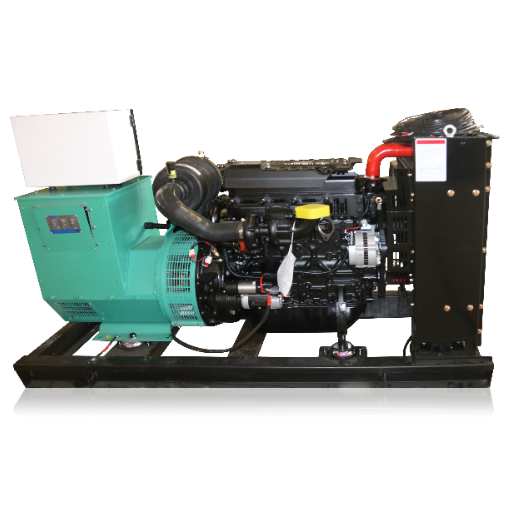
Whether you are buying factory-direct or through a dealer, understanding how to structure your quote request helps you compare options accurately and avoid surprises.
Information to Prepare
Before contacting any supplier, gather:
- Your calculated load: Total running watts and starting watts for all critical equipment.
- Voltage and frequency: Your local grid standard (e.g., 400V/230V, 50Hz or 480V/277V, 60Hz).
- Fuel preference: Diesel, natural gas, or propane.
- Enclosure requirement: Open-set, canopy, or containerized.
- Installation location: Indoor, outdoor, rooftop, or basement.
- Noise restrictions: Local decibel limits at property line.
- Runtime requirement: How many hours of continuous operation do you need?
- Budget range: Your total project budget including installation.
What to Ask Your Supplier
- Is the quote FOB, CIF, or DDP? Know exactly where your responsibility begins.
- What engine and alternator brands are included?
- Is the control panel included? What features (AMF, remote monitoring, paralleling)?
- What is the warranty period and what does it cover?
- Do you provide installation manuals and wiring schematics?
- What spare parts are recommended for the first year?
- Can you provide references from small business buyers in my region?
Red Flags in Quotes
- No itemization: If the supplier will not break down equipment, shipping, and installation costs, that is a warning sign.
- Vague specifications: “50 kW generator” without engine brand, alternator type, or control panel model.
- No testing documentation: A reputable manufacturer tests every unit before shipment. Ask for the load bank test report.
- Unrealistic delivery promises: “Ships tomorrow” for a custom-built generator is almost certainly false.
- No engineering support: For factory-direct purchases, you need technical support to guide your local installer.
Small Business Generator Cost: Frequently Asked Questions
How much does a small business generator cost?
Small business generator cost ranges from 8,000–8,000–22,000 for a fully installed 20–30 kW system and 35,000–35,000–75,000 for a 75–100 kW system in 2026. The exact amount depends on generator size, enclosure type, fuel choice, regional labor rates, and local permit requirements. Factory-direct purchasing can reduce the equipment portion by 20–40%.
What size generator do I need for my small business?
Calculate your critical load, not your total building load. Most small businesses need 20–40 kW for retail and offices, 40–80 kW for restaurants, and 50–100 kW for medical clinics and small warehouses. Always account for motor starting surge, which can be 3–6 times running wattage.
Is a standby generator worth it for a small business?
Yes, for most small businesses with inventory, refrigeration, or revenue-dependent equipment. The average small business loses 5,000–5,000–10,000 per hour during a power outage. A generator that costs 25,000–25,000–40,000 pays for itself in 3–6 outage events. For businesses with refrigerated inventory or medical supplies, the payback period is often under 18 months.
Can I write off a generator on my taxes?
In the United States, Section 179 allows small businesses to deduct up to $1,250,000 of equipment costs in the first year, which typically covers the full cost of a small business generator. In the UK, the Annual Investment Allowance permits 100% first-year deduction up to £1 million. Many other countries offer similar capital allowances. Consult your local tax advisor.
How long does a small business generator last?
A well-maintained diesel generator lasts 15,000–30,000 hours or 20–30 years. For a standby generator running 200 hours per year, that is 75–150 years of calendar life. The limiting factor is typically not engine wear but obsolescence, corrosion, and parts availability. Regular maintenance, load bank testing, and proper storage extend lifespan significantly.
Should I buy new or used for my small business?
For small businesses, new factory-direct units are usually the better investment. Used generators carry unknown maintenance history, may have hidden wear, and often lack warranty coverage. The price difference between a used dealer unit and a new factory-direct unit is often smaller than buyers expect, and the peace of mind is worth the premium. At ZC Power, our factory-direct pricing bridges much of that gap.
How much does it cost to maintain a small business generator?
Annual maintenance for a small commercial generator runs 500–500–2,000 depending on runtime hours and local labor rates. This includes oil and filter changes, coolant checks, battery inspection, and load bank testing. Diesel generators are the simplest and cheapest to maintain. Natural gas units require less frequent oil changes but need periodic spark plug and ignition system service.
Can I install a generator myself to save money?
You can manage the project, but you should not perform the electrical work yourself in most jurisdictions. Licensed electricians must handle grid-tied connections and ATS installation for safety and code compliance. For warranty protection, hire a certified technician to document the startup. ZC Power provides installation manuals, wiring schematics, and remote engineering support to guide your local team.
What is the cheapest fuel type for a small business generator?
For standby-only applications, diesel is usually the cheapest total project fuel because the equipment is less expensive and fuel infrastructure is simpler. Natural gas has lower operating cost but requires expensive gas line installation. For continuous-run applications, natural gas breaks even within 3–5 years due to lower fuel cost per hour.
How loud is a small business generator?
Open-set generators produce 85–105 dB, which violates most urban noise ordinances. Canopy and silent generators keep noise below 75 dB at 7 meters, comparable to a vacuum cleaner. Containerized units typically run 65–72 dB. For small businesses in populated areas, a canopy or containerized unit is essential for neighbor and regulatory compliance.
Conclusion
Small business generator cost is not a single number. It is a range that depends on generator size, enclosure type, fuel choice, regional labor rates, and the purchasing channel you choose. A 30 kW canopy diesel generator set for a small restaurant might cost 18,000–18,000–28,000 installed. A 100 kW system for a medical clinic might run 40,000–40,000–75,000. The exact figure for your business depends on your specific load, location, and infrastructure.
Factory-direct buyers face a different equation than dealer customers. You save 20–40% on equipment, but you must coordinate installation as a separate budget line. The key is understanding what your local market actually costs, what your chosen enclosure format requires, and what compliance standards apply to your application.
Canopy units strike the best balance for most small businesses: reasonable equipment cost, minimal installation burden, and noise compliance for urban locations. Containerized units offer the lowest installation complexity but require crane access. Open-set units demand the most local coordination but give you maximum flexibility.
Before you write a purchase order, calculate your actual load. Get separate quotes for equipment and installation. Add 15–20% contingency. Confirm your fuel infrastructure path. And verify what permits your local authority requires.
At Shandong ZC Power CO., LTD., we do not just manufacture generator sets. We help small businesses plan the full project. Our engineering team provides load calculations, sizing guidance, wiring schematics, and regional cost benchmarks for every market we serve. From 20 kW canopy units for urban retail shops to 100 kW containerized systems for remote clinics, we will help you choose the format that minimizes your total cost and gets your backup power online faster.
Ready to plan your complete backup power budget? Contact the ZC Power engineering team today for a factory-direct quote with installation guidance tailored to your region and business type.