Solar Companies in Minneapolis: How to Choose, and What the Incentives Actually Pay
The Minneapolis solar companies worth shortlisting can answer three questions before you sign: who is physically on the crew, what each warranty actually covers, and which utility serves your address. Everything else on a quote is negotiable. Those three are not.
Most people start with a ranked list, which is the wrong end of the problem. The list tells you who exists. It does not tell you how to tell them apart, and every directory you will find uses the same three signals to do it: NABCEP certification, star rating, and warranty length. None of them explains what those signals mean in practice.
That gap matters more in Minneapolis than in most markets, because the incentive picture here is genuinely confusing. Sources disagree about what the local programs pay, including figures that change whether a project is worth doing at all. If you sign a contract worth five figures, you should know which numbers are solid and which are being repeated without checking. The solar companies in Minneapolis that survive this kind of scrutiny are the ones that welcome the questions.
This guide covers what separates installers, the questions that reveal the difference in a quote, and the Minnesota and Xcel Energy incentives that are actually documented.
Key Takeaways
- Minnesota’s average installed cost is $3.12 per watt as of May 2026, and a typical Minneapolis home system runs 6 to 10 kW
- Xcel Energy’s Solar*Rewards requires pre-approval before installation, is first-come first-served, and its annual funds fill early in the year. Install first and you lose the incentive
- Published sources disagree on the Solar*Rewards rate, on the units used for the income-qualified incentive, and on whether the federal residential tax credit still exists in 2026. Confirm your own case before relying on any of them
- The Minnesota sales tax exemption, the property tax exemption and 1:1 net metering are consistently reported and are not disputed
- Two neighbouring Minneapolis addresses can sit in different utility territories with completely different incentive menus
What Separates Solar Companies in Minneapolis

NABCEP certification, and what it actually obligates
NABCEP is the North American Board of Certified Energy Practitioners. Most Minneapolis solar installers carry the NABCEP certified installer badge, and buyers treat it as a seal of quality without knowing what it certifies.
It certifies individuals, not companies. That distinction matters, because a firm can advertise NABCEP certification when a single employee holds it.
The useful follow-up question is which specific people on your install hold certification, and whether the person designing your system is one of them. Design is where most projects go wrong, well before anyone climbs on your roof.
The two warranties that are not the same warranty
Quotes in this market typically show two warranty figures, and buyers routinely conflate them.
The panel warranty covers the manufacturer’s modules, usually for 25 years, and it is a product performance guarantee. It is backed by the panel maker, not the installer.
The workmanship warranty covers the installation itself: roof penetrations, flashing, wiring, mounting. It typically runs 10 years, and it is backed by the installer.
The second one is the exposure. A panel warranty is only as good as the company standing behind it, and that company is usually a large manufacturer that will still exist in 25 years. A local business backs the workmanship warranty, and if that business closes, your leaky roof penetration becomes your problem. Ask what happens to the workmanship warranty if the company stops trading.
Local code, permitting and winter engineering
Minnesota specifics deserve specific answers. Roof snow load, freeze-thaw cycling on mounting hardware, and the fact that panels spend part of the year under snow all affect design and production estimates.
An installer who works here year-round will answer these without prompting. One who does not will talk about panel efficiency in general terms. The question that separates them is simple: what is the snow load rating on the mounting system you are proposing for my roof, and how did you account for it?
Questions That Reveal the Difference Between Solar Companies in Minneapolis

Are the crews employees or subcontractors?
This is the highest-signal question in the entire process, and almost nobody asks it. An installer using its own licensed electricians has direct control over quality and carries the liability. A company that subcontracts may not know who is on your roof until the week of the job.
Neither answer is automatically disqualifying. What matters is that you get a straight one. An evasive answer here tells you how the rest of the relationship will go.
Production estimates, and the assumptions behind them
Every quote includes an estimated annual production figure. Ask what assumptions sit underneath it: shading, panel orientation, the degradation rate, and the weather data source.
Two quotes for the same roof commonly differ by 15 to 20 percent on production. That difference is not always dishonesty. It is often one installer modelling shade more conservatively. But you cannot evaluate the number without seeing the assumptions, so ask for them in writing before you compare.
What happens to your warranty if the company stops trading
Solar contracting is a volatile business and consolidation is common. If your installer is acquired, closes, or simply stops answering the phone, the workmanship warranty goes with it.
Ask directly how the company handles warranty claims, who performs the work, and how long they have operated under the current ownership. A company that has been here since 2007 answers this easily. One that incorporated eighteen months ago may not have thought about it.
Illustrative composite. A homeowner in south Minneapolis signed with an installer in March, installed in May, and applied for Solar*Rewards in June after the panels were already on the roof. The utility rejected the application because the program requires pre-approval. The system worked exactly as designed, and the household lost roughly a decade of performance payments because of the order of two steps. This scenario is a composite and does not describe a specific customer.
Minnesota and Xcel Energy Incentives, Verified

Minnesota solar incentives are where most published advice becomes unreliable, so this section separates what is consistently documented from what is not.
Solar*Rewards is a performance payment, not a rebate
The Xcel Energy Solar*Rewards program pays customers for the production their system generates over a 10-year term, in exchange for the Renewable Energy Credits. It is not a discount at purchase. It is a payment stream that arrives over a decade.
Estimates regarding the rates vary. Most sources cite a rate of approximately **$0.03 per kilowatt-hour (kWh)**, implying an annual cost of roughly $300 to $400 for a typical residential system. At least one source indicates the rate will rise to 5 cents per kWh in 2026, though this figure comes from an installer’s marketing page rather than an official announcement from the utility company. Be sure to verify the current rate directly with Xcel before performing any calculations.
The pre-approval deadline that catches people out
Solar*Rewards requires pre-approval before installation. Applications are first-come, first-served, and the program has limited annual funds that fill early in the year.
This is the single most actionable fact in this article, and it is buried in a utility FAQ rather than surfaced on any comparison site. If you are planning an installation, apply before you sign anything, not after the panels go up. A system installed first and applied for second may be ineligible.
The documented eligibility conditions are that you are an Xcel customer, you own the property, the system is between 0.5 kW and 20 kW DC, and expected production does not exceed 120 percent of your prior 12 months of usage.
Sales tax, property tax and net metering
Three further benefits are consistently reported across independent sources and are not disputed:
- Minnesota sales tax exemption. Solar equipment is exempt from the state sales tax, which is 6.875 percent. This is applied by the installer, so it should already appear in your quote.
- Property tax exemption. The value solar adds to your property is excluded from its assessed value.
- Net metering. Excess generation is credited 1:1 at the retail rate for systems under 40 kW, reported at roughly 0.14to0.14to0.16 per kWh in 2026.
- Battery storage rebate. Xcel customers can receive 175perkWh∗∗forbatterystorage,cappedat∗∗175perkWh∗∗forbatterystorage,cappedat∗∗5,000.
There is also the Minneapolis Green Cost Share program, which may contribute toward solar for eligible properties. Eligibility is address-specific, so it is worth checking rather than assuming.
Where published sources disagree
Three figures in circulation conflict with each other, and the disagreement is material:
| Figure | What one source says | What another says |
|---|---|---|
| Solar*Rewards rate | About $0.03 per kWh | 5 cents per kWh for 2026 |
| Income-qualified incentive | About $3.00 per watt upfront | About $3.00 per kWh upfront |
| Federal residential tax credit | Available through 2032 | No longer available in 2026 |
The second row is roughly an order of magnitude apart in value depending on which unit is correct. The third row is a direct contradiction about whether a major federal credit exists at all, and at least one source claims the 30 percent credit expired on 31 December 2025.
Do not rely on any published position on the federal credit without confirming it directly against the IRS or the Department of Energy. This is the highest-stakes number in your entire financial model, and the sources do not agree.
Illustrative composite. A homeowner in the Twin Cities received two quotes for the same roof. One estimated 11,400 kWh annually, the other 9,100. The difference was not price, panels, or workmanship. One had modelled a mature oak on the neighbour’s property and the other had not. Because the homeowner asked for assumptions in writing rather than comparing headline numbers, they identified a real discrepancy before signing, and the final contract reflected the shaded figure. This scenario is a composite and does not describe a specific customer.
The Utility Territory Trap
This catches people every year, and it appears in almost no published guidance.
One utility does not serve Minneapolis. Xcel Energy covers most of the Twin Cities metro, but parts of the area sit in cooperative or municipal utility territories, and each has its own incentive menu, its own net metering rules, and its own interconnection process.
Two addresses a few blocks apart can have completely different economics for the same system, because Solar*Rewards belongs to Xcel. If your address is served by a cooperative, that program is not available to you regardless of what any installer’s quote assumed.
Confirm your utility territory before you compare quotes. You can find the serving utility on your most recent bill, or by entering your address in the utility lookup tool. Ask every installer to state in writing which utility they modelled your incentives against. If they cannot, the quote is an estimate built on an assumption nobody checked.
What a Minneapolis System Costs
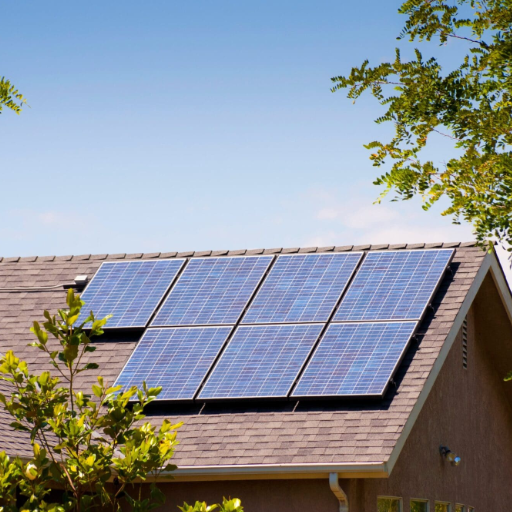
Any Minneapolis solar panel cost estimate should be built on the same baseline, and these figures are consistently reported across independent sources:
| Item | Figure |
|---|---|
| Minnesota average installed cost, May 2026 | $3.12 per watt |
| Typical Minneapolis home system | 6 to 10 kW |
| State sales tax exemption | 6.875 percent |
| Net metering, systems under 40 kW | 1:1 at retail, about 0.14to0.14to0.16 per kWh |
| Battery storage rebate | **175perkWh∗∗,cappedat175perkWh∗∗,cappedat5,000 |
A worked example that appeared consistently: a 7 kW system at roughly $ 21,700 gross, lessabout21,700 gross, lessabout4,200 in incentives, for a net cost near $17,500, with a payback period of 10 to 13 years.
Payback estimates across sources generally land between 8 and 14 years for well-designed systems. Treat any figure below eight years with suspicion, because it usually depends on an incentive assumption that has not been verified.
Frequently Asked Questions
How many quotes should I get?
At least three. When you compare solar companies in Minneapolis, compare them on the specific criteria above rather than on the final number. Ask each installer for a written production estimate with assumptions, the names of the crew, the two warranty terms separately, and the utility they modelled. A quote you cannot interrogate is not a quote.
Is solar worth it in Minnesota given the winters?
The relevant question is annual production, not winter production. Minnesota has good summer irradiance and long days, and systems are designed and modelled over a full year. Snow cover reduces winter output, and a well-designed system accounts for that in its estimate. The payback figures above are the answer, and they are legitimate.
Does the federal tax credit still apply?
Published sources contradict each other on this point, and one states the credit expired at the end of 2025. Verify this against the IRS or the Department of Energy before you factor it into a decision. No article, including this one, should be your source for it.
What is the difference between a lease and a purchase?
A purchase directly gives you the incentives, and the system adds value to your property, which is why the property tax exemption matters. A lease or power purchase agreement usually transfers the incentives to a third party in exchange for no upfront cost. Which is better depends on whether you can use the tax credit and how long you intend to stay.
Who do I contact if something goes wrong?
Start with the installer, in writing. If they are unresponsive, the workmanship warranty is the instrument you are enforcing. This is why the question about what happens if the company stops trading matters more than the warranty’s advertised length.
Conclusion: Choosing Among Solar Companies in Minneapolis
Choosing among solar companies in Minneapolis comes down to verification rather than comparison shopping. The ranked lists all exist, and they all use the same three signals. What they do not do is tell you what those signals mean or how to test them.
Confirm three things before you sign: your utility territory, whether the crews are employees, and the incentive terms directly from Xcel rather than from a quote. Get each of them in writing. Then compare production estimates on their assumptions rather than their headline numbers.
And apply for the incentive before you install, not after. That single sequencing decision is worth more than most of the price differences you will spend weeks negotiating over.
Illustrative composite. A homeowner in a first-ring suburb spent three months choosing between installers on price, then discovered at the utility lookup stage that a cooperative served their address rather than Xcel. The Solar*Rewards figures in all three of their quotes had been modelled against a program they were not eligible for. Three months of comparison had been conducted against a number that never applied to them. This scenario is a composite and does not describe a specific customer.