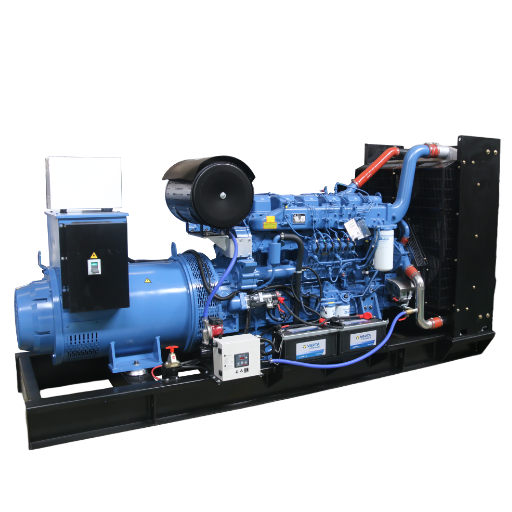
How to Size a Backup Generator for a Data Center
To size a backup generator for a data center, you build the load profile from measured IT draw, add the cooling and ancillary load, check the largest block load rather than the total, add headroom for growth and site derating, convert to kVA at the correct power factor, and then choose a power rating class that permits the runtime your tier assumes. That last step is the one most projects skip, and it decides whether your kilowatt figure is real.
Here’s the uncomfortable part. The kW number on a generator quotation is the least reliable figure on the document. A seller can type any number into a proposal. What cannot be typed in is the rating class behind it, and a 2 MW standby-rated machine and a 2 MW data-center-rated machine are not the same asset, even though both arrive described as “2 MW.”
This guide gives you the sizing sequence our engineering department applies to data center projects, then spends most of its length on the two things that actually break data center power systems: the rating class and step load acceptance. For the full worked calculation, our step-by-step data center generator sizing method covers it in detail.
Key Takeaways
- Size from the load profile, but verify the rating class first. A 500 kW standby (ESP) set is capped at 200 hours a year and a 70% daily average, so the number on the quote is not the number you can run on.
- The largest block load decides the size, not the total load. A plant that holds 100% steady can still fail when 60% of rated load lands in a single step and the UPS transfers to battery.
- Data center loads run near unity power factor and behave as constant-power loads, which makes load acceptance harder than the motor starting that conventional sizing focuses on.
- Tier III and Tier IV assume the generators may run for days, not hours. Uptime Institute treats on-site generation as the primary source, and it will accept a written, site-specific rating certification instead of a class name.
- Ask for the manufacturer’s written no-runtime-limit certification at the quoted rating, for your site conditions. That single document is worth more than any rating label.
Sizing a data center plant and want the load study checked before you commit? Send us your IT load profile and block-load sequence, and our engineering team will return a verified sizing calculation with a factory-direct quote. Request a free assessment.
Start With the Load Profile, Not the kW Figure
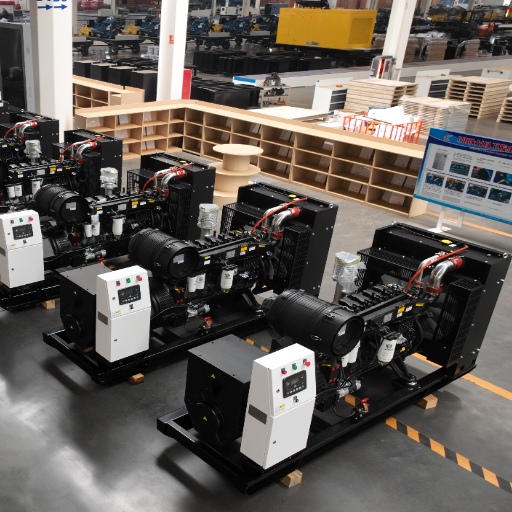
Everything downstream depends on getting this right. Data center generator sizing fails most often at the first step, because the load list is built from nameplate ratings instead of measured draw.
The four load blocks you have to add
A backup generator for a data center carries more than servers. Four blocks belong in the calculation.
- IT load: servers, storage, and network gear, taken from UPS output in kW rather than equipment nameplates.
- Cooling and mechanical: chillers, CRAH and CRAC units, condenser pumps, and humidification. In an air-cooled facility this runs 35 to 55 percent of IT load.
- Ancillary: lighting, security, fire suppression, and building management. Usually 5 to 10 percent of the total.
- UPS recharge: after an outage the batteries pull charging current on top of the live load, adding roughly 10 to 15 percent of the UPS rating.
Measured IT draw at peak typically lands at 60 to 80 percent of nameplate, because nameplates assume worst-case configurations that rarely occur. Building the list from nameplates therefore overstates IT and understates everything else. Our guide to generator load calculation walks through building that list properly.
Why is the total not the sizing number?
Here’s where conventional sizing advice goes wrong. A plant sized to 100 percent of the summed load will hold that load perfectly well. It can still collapse on the first commissioning test.
Generators are not constrained by their steady-state figure. They are constrained by the largest step of load they must absorb without a voltage and frequency excursion tripping the load they are feeding. That distinction is why two facilities with identical IT loads can need plants of very different sizes.
Consider a colocation operator in Southeast Asia, an illustrative composite drawn from projects we quote. Their specification read “N+1, 2 MW” and three vendors returned proposals near that number.
The quote opened first on price turned out to be built on standby-rated machines with no runtime certification at all. Over a three-day outage during commissioning week, the plant would have needed to run at roughly 90 percent of rating for 60 hours, comfortably outside what a standby rating permits. The arithmetic looked fine. The specification did not ask the right question, so nobody caught it until the engineering review.
How to Size a Backup Generator for a Data Center, Step by Step
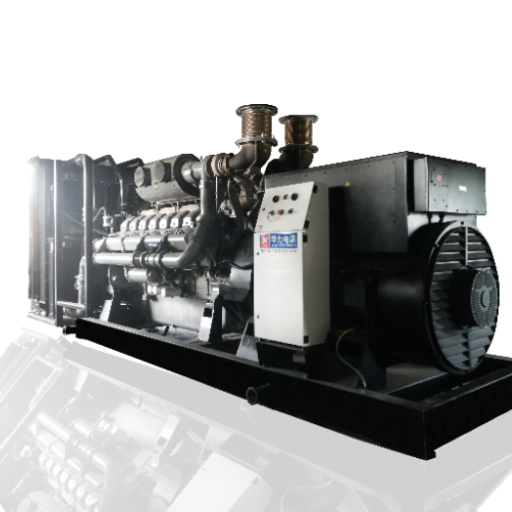
This is the sequence. Keep it in order, because each step depends on the one before it.
1. Establish the critical load in kW
Work from the UPS output in kW. If the facility does not exist yet, use the IT design capacity with a realistic diversity factor rather than a sum of nameplates.
2. Add the mechanical load
Apply the design PUE to capture cooling and distribution together, using the figure you expect at summer ambient conditions rather than the annualized marketing number. A hall designed at 1.4 that operates at 1.55 in August will leave the plant short exactly when the grid is most stressed.
3. Size on the largest block load, not the total
This is the step that separates a plant that works from one that merely adds up. Identify the largest load that can land on the generator in one step, then confirm the alternator and engine can accept it. Chiller compressors draw 5 to 8 times running power at start, CRAH units 3 to 5 times, and general motors 5 to 7 times full-load current. The voltage-dip method is covered in our guide to motor starting generator sizing.
Sequencing helps more than capacity here. Staged starting, where pumps come on before chillers and CRAH units stagger 10 to 15 seconds apart, can cut the required generator size by 20 to 30 percent.
4. Add headroom and apply site derating
Add 20 to 30 percent for growth, alternator aging, and step-load margin. Then derate for the site. Generators lose roughly 10 percent of capacity per 1,000 metres of altitude, with high ambient temperature costing several percent more.
Standard rating conditions assume 25°C and 100 metres, so a site at 1,500 metres and 40°C loses a meaningful fraction of nameplate before the first rack is installed. Our guide to generator altitude derating covers the site corrections in detail.
5. Convert to kVA at the right power factor
Generators are usually rated at 0.8 power factor while modern IT loads often run at 0.9 to 0.95. The alternator has to supply the kVA the load actually draws, so the conversion is not symmetric. Our kVA to kW conversion guide covers the arithmetic.
6. Select the rating class
Only now do you have a number worth specifying. Step six is where most projects stop reading, and it is where the next section begins.
The Rating Class Decides How Much of That Number You Can Use
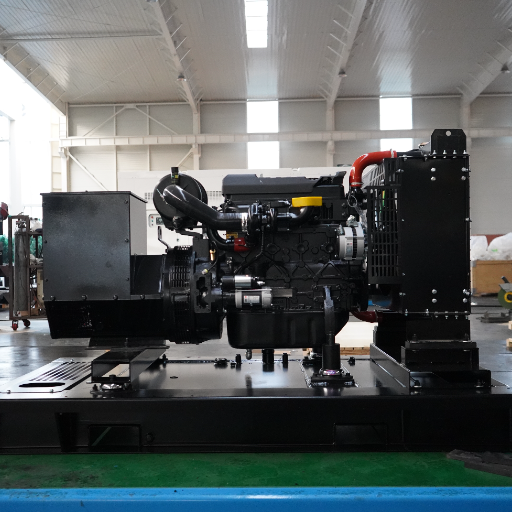
A generator’s kilowatt figure is meaningless without its rating class, because the class defines the load factor and the runtime the machine is built to sustain. The ISO 8528-1 power ratings define the classes, and five matter for a data center.
| Rating | Load type | Runtime limit | Load factor |
|---|---|---|---|
| ESP (standby) | Variable | 200 hours per year | 24 h average ≤70% |
| LTP (limited time) | Variable | 500 hours per year | up to 100%, no overload |
| PRP (prime) | Variable | Unlimited | 24 h average ≤70%, 10% overload 1 h in 12 |
| COP (continuous) | Constant | Unlimited | 100% |
| DCP (data centre, added 2018) | Variable or constant | Unlimited | up to 100% |
The 200-hour ceiling most quotes quietly carry
Standby power is the default rating in most generator quotations, and it’s the wrong one for a data center. ESP permits 200 hours of running a year with a 24-hour average no higher than 70 percent of rating. A single extended grid outage, or one long commissioning week, can exceed that ceiling in one event. Exceeding it is not a paperwork problem but an engine and alternator life problem, and it sits outside the warranty terms that were quoted.
Why continuous rating oversizes, and why DCP is contested
The obvious fix is to specify continuous power, because COP permits unlimited hours at 100 percent. That creates its own problem. COP is rated for a constant load, and data center load is not constant, so specifying COP pushes you into buying capacity for a profile you will never run.
ISO addressed this by adding the Data Centre Power (DCP) rating in the 2018 edition of ISO 8528-1. On paper it is exactly right: unlimited hours, variable or continuous load, up to 100 percent. In practice it is contested.
The position attributed to at least one major manufacturer is that the ISO DCP definition is not appropriate for Uptime Tier III and Tier IV certification, because it presumes the availability of a reliable utility and restricts prolonged parallel operation with one. Uptime’s premise runs the other way: for a Tier III or Tier IV facility, on-site generation is the reliable source and the utility is the economic alternative.
Manufacturers responded by inventing their own classes. You will see proprietary labels such as Data Center Continuous (DCC), all claiming unlimited hours at up to 100 percent and Tier III and Tier IV suitability.
What to specify instead of a class name
Do not buy a class name. Buy a document.
Uptime Institute will accept a site-specific rating, where the manufacturer certifies in writing that there is no runtime limit at a given rating for a given site. That’s a checkable commitment, and it survives every argument about which label is correct. Ask for it at the quoted rating, for your ambient and altitude conditions, and make it a condition of the purchase order rather than an attachment.
Then ask the follow-up question that most buyers miss: what happens to that certification if the site conditions change? A rating certified at 25°C is not automatically a rating at 40°C. Uptime Institute sets out the Tier requirements this certification has to satisfy.
Another illustrative composite, a commissioning engineer in northern Europe spent four days on a commissioning floor convinced his plant was undersized. It was not.
His UPS kept transferring to battery as the load stepped up, and the fix was not a larger generator. Raising the generator voltage setpoint from 400 V to 490 V, which he had resisted as a workaround, stopped the transfers immediately. The next section explains why.
Specifying a data center plant and unsure which rating to call for? Our engineers will review your tier target and load profile and tell you what the rating has to say in writing. Talk to an engineer.
Step Load Acceptance, Not Steady State, Is What Fails
If you take one technical point from this article, take this one. Steady-state capacity is not the binding constraint on a data center generator. The largest step load is.
Why constant-power IT loads are harder than motors
Conventional sizing is built around motors, because motors were historically the difficult load. Data centers add something less familiar: constant-power loads. Modern UPS systems draw close to constant power as voltage varies, and they often operate near unity power factor or even leading.
This characteristic is the exact opposite of that of a resistive load. When the generator voltage drops, a constant-power load does not reduce its consumption accordingly; instead, to maintain power output, it draws more current, thereby causing the voltage to drop further.
The consequence is that a generator comfortably holding 100 percent steady load can still fail frequency and voltage recovery when a large block of that load arrives in one step.
ISO 8528-5 defines transient performance classes G1 through G4, a separate axis from the duty ratings above and the axis that governs here. Data center specifications commonly call for class G3, whose steady-state limits are ±1 percent voltage and ±0.5 percent frequency. G4 is not numerically specified and is a matter of agreement between manufacturer and customer, which is worth knowing before someone promises it to you.
Four failures that show up at commissioning
These are documented in the field rather than in a laboratory, and they are the reason we ask every data center client for a block-load sequence before we quote.
- UPS transfer to battery on a large step. A 0 to 1.2 MW step load drove a UPS onto battery because the generator source was less rigid than utility power and the step pulled voltage below the UPS input threshold.
- Parallel breaker trip. With paralleled generators, a step load exceeding one unit’s capacity tripped that unit’s main output breaker.
- Reverse power trip. Generators tripped on reverse power during UPS-to-static-bypass transfer, as the transfer induced an inrush of apparent power with nowhere to go. A reactive load bank resolved it.
- Voltage sags at static transfer switches. These traced back to an unrelated chiller, and the pump starts dragging down an already unstable generator source.
FacilitiesNet documented these commissioning cases, and they share a shape. Every one was a load-acceptance problem, not a capacity problem. None would have been caught by a sizing spreadsheet working from aggregate kW.
Two practical consequences follow. Send your supplier the block-load list and start sequence, not just the total. Then specify a realistic acceptance test rather than a theoretical one. A test requiring 100 percent instantaneous load acceptance on a constant-power load is harder than the sequence your facility will actually perform, and it can cause a UPS to transfer to battery, making a correctly sized plant look broken.
Redundancy Turns a Size Into an Architecture
Once you have a number and a rating, redundancy decides how many machines deliver it. The N+1 generator redundancy case is the one most Tier III facilities land on, and the count drives the plant size, the switchgear, and the cost.
| Configuration | What it provides | Typical use |
|---|---|---|
| N | Full load with no spare, leaving single points of failure | Not acceptable for Tier III or IV |
| N+1 | One unit beyond the capacity required, so a machine can be serviced or lost without dropping load | Tier III |
| 2N | Two complete independent paths with no shared components | Tier IV |
| 2(N+1) | Redundancy on both halves | The most critical facilities |
The arithmetic interacts with the architecture in a way that catches people out. In an N+1 plant, each unit in the N group must carry its share of the full design load continuously, and the spare must be able to stand in for any one of them. The architecture therefore sets the individual unit rating, not the total. Our companion guide to data center backup power covers the tier topology, and the interface between the plant and data center UPS backup power is where most of the transient behaviour above originates.
Start Time and Fuel Autonomy: Code Minimum vs Data Center Reality
Two requirements usually come from code or from the tier standard rather than from your own analysis, and both affect the fuel system and the enclosure.
NFPA 110 sets start time and on-site fuel for emergency power systems. A Level 1 system must start and accept load within 10 seconds with 8 hours of on-site fuel. Level 2 permits 60 seconds and 2 hours.
Tier III and Tier IV facilities treat the generator as a source that may run for days, so the operator’s risk position usually sets data center autonomy rather than by the code floor. Set yours from your own outage duration and refuelling plan, and confirm it in writing alongside the rating certification.
How to Verify the Rating Before You Sign
The specification is where this becomes real. Five questions, all answerable in writing, separate a defensible plant from a hopeful one.
- What rating class is quoted, and at what ambient and altitude? The class plus the conditions, not the class alone.
- Will you certify in writing that there is no runtime limit at that rating for this site? If the answer is a brochure, the answer is no.
- What is the largest single block load the plant will accept, and at what voltage dip? Ask for a figure with a tolerance, not a statement.
- What is the start sequence, and which loads are staggered? You are entitled to see the sequence the sizing assumed.
- What does the factory acceptance test demonstrate? It should test the block loads and the sequence, not just a progressive ramp to full load.
Our article on the generator load bank testing procedure covers what a meaningful test involves, and the questions to ask a generator manufacturer covers the rest of the pre-purchase checklist. Insist on block loading, and on the test being run at the site conditions you specified.
Frequently Asked Questions
How do I size a backup generator for a data center?
Build the load profile from measured IT draw in kW, add cooling and ancillary load, check the largest block load the plant must absorb in one step, add 20 to 30 percent headroom, derate for altitude and ambient temperature, convert to kVA at the correct power factor, then select a rating class that permits the runtime your tier assumes. That last step decides whether the number can actually be used.
Can a standby-rated generator run a data center?
Not within its rating. A standby (ESP) machine is limited to 200 hours of running per year with a 24-hour average no higher than 70 percent of its rating. A single extended outage can exceed that, which puts the machine outside the conditions it was warranted for. Data center duty needs a rating that permits unlimited hours at the required load factor.
What is step load acceptance and why does it matter more than total capacity?
It’s the largest block of load a generator can absorb in one step without voltage and frequency excursions that trip the loads it feeds. Data center loads are constant-power loads running near unity power factor, so they pull more current as voltage sags rather than less. A plant can hold 100 percent of its rating steadily and still fail when 60 percent of it arrives at once.
What is the difference between DCP and DCC ratings?
DCP is the Data Centre Power rating defined in the 2018 edition of ISO 8528-1, permitting unlimited hours at up to 100 percent load factor on variable or constant load. DCC, or Data Center Continuous, is a manufacturer-proprietary class rather than an ISO class. The ISO DCP definition is contested for Tier III and Tier IV use because it presumes a reliable utility, the assumption Uptime inverts.
How much fuel autonomy should a data center generator have?
Autonomy is a project decision rather than a fixed number. NFPA 110 sets a floor of 8 hours on site for Level 1 and 2 hours for Level 2. Data center projects commonly specify well beyond that, because the operating assumption is that generators may carry the facility for days.
Conclusion: How to Size a Backup Generator for a Data Center Without Buying a Label
Knowing how to size a backup generator for a data center means running two exercises that usually get treated as one. The first is arithmetic: measure the real IT load, add the cooling and ancillary load, size on the largest block rather than the total, add headroom, derate for the site, and convert to kVA correctly. That part is well understood, and our full six-step data center sizing method covers it in depth.
The second exercise decides whether the first one mattered. A kilowatt figure is not a specification until it carries a rating class, a set of site conditions, and a written statement that the machine can run at that rating for as long as your tier assumes. Ask for the document, not the label, and ask for the block-load acceptance figure alongside it.
Those two requests cost you nothing before you sign and eliminate the failure modes that show up most often at commissioning. When you are ready to put them into a specification, send our engineering team your load profile and block-load sequence and we will return a verified sizing calculation with a factory-direct quote.