Three Phase Generator: Complete Guide to Industrial Power Solutions
When a commercial bakery in Ohio installed a 100kW single phase generator to back up their three phase mixing equipment, they discovered the expensive truth during their first power outage: the 45,000investmenttheyhadmadecouldn′trunasinglepieceofcriticalmachinery. Thegeneratorhummedperfectly,butthethreephasemotorssatsilent,costingthebakery45,000investmenttheyhadmadecouldn′trunasinglepieceofcriticalmachinery. Thegeneratorhummedperfectly,butthethreephasemotorssatsilent,costingthebakery8,000 in spoiled product before utility power returned.
This facility is quite the case, but so are many others anywhere, as the difference between single and three-phase power is way more than a few technicalities. Rather, it is a basic engineering differentiation between having an operational emergency with a backup system in place or just another problem. Anyone working in a facility management situation, any electrical contractor, or those trying to engineer projects must be in the clear concerning knowledge about three-phase generators and the main benefits that would help propel their business while withstanding emergencies.
Since 1999, Shandong ZC Power CO., LTD. (ZC Power) has been manufacturing three-phase diesel generators that produce between 20kW and 4,000kW for industrial clients in over 100 countries. This extensive guide will elucidate the operation of three-phase generators, the circumstances under which they are required, and how they are appropriately sized according to your needs.
Wondering about the full scope of electric generators? (Read Electric Generators: Complete Guide to Types, Applications & Selection) for all-around insights into their categories, uses and selection tips.
What Is a Three Phase Generator?
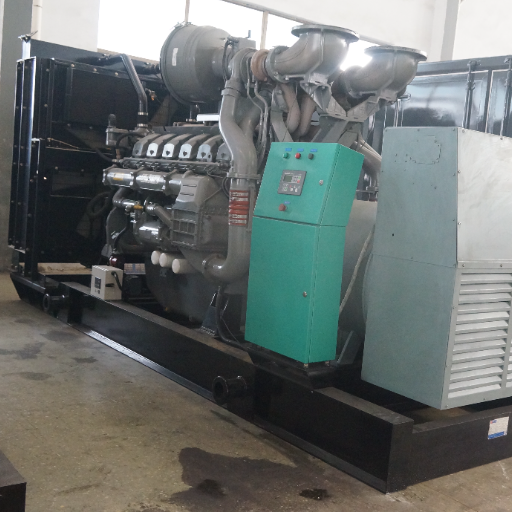
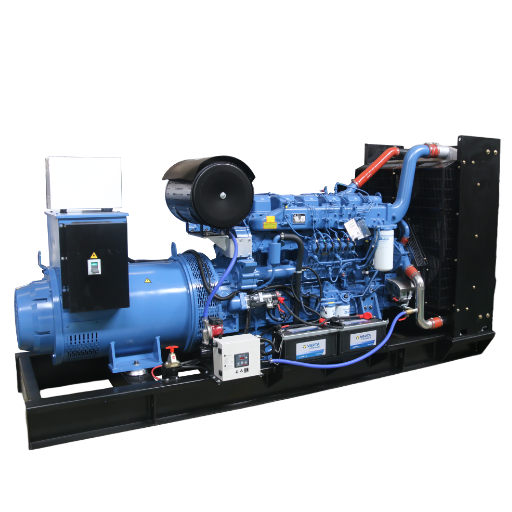
Three-phase generators yield electrical power using three separate alternating currents, set at 120 degree phase; it is also used to keep its power utility efficient and more capable than any single-phase systems. This level of efficiency therefore makes the world of three-phase generators the more common in industrial and commercial use today.
The Engineering Behind Three Phase Power
A three-phase system can be called in electrical engineering a method of generation and distribution of alternating current, that uses three conductors, each carrying the same frequency voltage but offset in time by a third of a cycle (120 degrees). Whenever one phase peaks, the other two are at different stages of their cycle thus keeping power flowing continually.
This continuous delivery provides several technical advantages:
- Constant Power Delivery: Unlike single phase power, which pulsates from zero to maximum 120 times per second (at 60Hz), three phase power maintains relatively constant power output because at any given moment, one of the three phases is near its peak
- Superior Motor Performance: Three phase motors develop rotating magnetic fields naturally, eliminating the need for complex starting mechanisms and enabling higher starting torque
- Conductor Efficiency: Three phase systems can deliver 1.732 times (the square root of 3) more power than single phase using the same conductor material
Why Industries Rely on Three Phase Power
Over 90% of industrial power worldwide uses three phase distribution systems. The reasons extend beyond efficiency to practical operational requirements:
- Strength to Start the Motor: During startup, three-phase motors use 200-250% of the full-load current while their single-phase counterparts can consume anywhere from 600-800%; lower stress is placed upon the generator and the electrical systems affected
- Density of Power: Industrial equipment, such as CNC machines, pumps, compressors, or HVAC system, requires continuous power delivery that is provided only in three-phase systems
- Voltage Versatility: It supports all voltage configurations of 208V, 480V, 400V, and many more within the same setup.
Single Phase vs Three Phase Generator Comparison
Understanding the difference between single-phase and three-phase generators is critical to make proper equipment choice. Your choice impacts initial cost, but in other aspects- operational capability, efficiency, and long-term reliability as well.
At-a-Glance Comparison
| Factor | Single Phase Generator | Three Phase Generator |
|---|---|---|
| Power Delivery | Pulsating (zero 120x/sec) | Continuous, constant |
| Typical Range | 2kW – 50kW | 10kW – 4,000+ kW |
| Motor Starting | Limited torque | High starting torque |
| Efficiency | Lower (one conductor path) | Higher (three conductor paths) |
| Wire Requirements | More copper per kW delivered | 25% less conductor material |
| Applications | Residential, light commercial | Industrial, heavy commercial |
| Generator Cost | Lower per kW at small sizes | Economies of scale above 15kW |
| Standard Voltages | 120V, 240V | 208V, 240V, 480V, 400V |
| Complexity | Simpler installation | Requires qualified electrician |
Power Delivery: The Fundamental Difference
The most significant distinction between single and three phase power lies in how energy is delivered:
Single phase power delivers electrical energy in pulses. The voltage rises from zero to maximum, falls back to zero, then reverses polarity and repeats. At 60Hz frequency, this pulsation occurs 120 times per second. While this works fine for lighting and small appliances, it creates challenges for motors and heavy equipment.
Three phase power maintains relatively constant power output because the three phases are offset. When Phase A is at zero crossing, Phase B is at 87% of maximum, and Phase C is at -87% of maximum. The combined power output never drops to zero, providing the smooth, continuous power that industrial motors require.
Efficiency and Economic Considerations
Three phase systems offer measurable efficiency advantages:
- Conductor Savings: For the same power delivery, three phase systems require 75% of the copper conductor material compared to single phase. In large industrial installations, this wire savings can offset generator cost premiums
- Equipment Longevity: Motors running on three phase power experience less vibration and heating due to constant torque delivery, extending service life
- Transformer Efficiency: Three phase transformers are more efficient than equivalent single phase banks
Mini-story: In March 2024, a metal fabrication shop in Texas had trouble running a 30 hp three-phase CNC lathe using a phase converter connected to a single-phase generator. Each time the spindle started, the voltage imbalance caused by the converter would trip the protection systems on the lathe, thus rendering the $85,000 machine unusable under a power failure. And thus, this shop had to switch to a 75 kW dedicated three-phase diesel generator to completely resolve—allowing the shop to continue its production even when the grid was out.
Voltage Configurations Explained
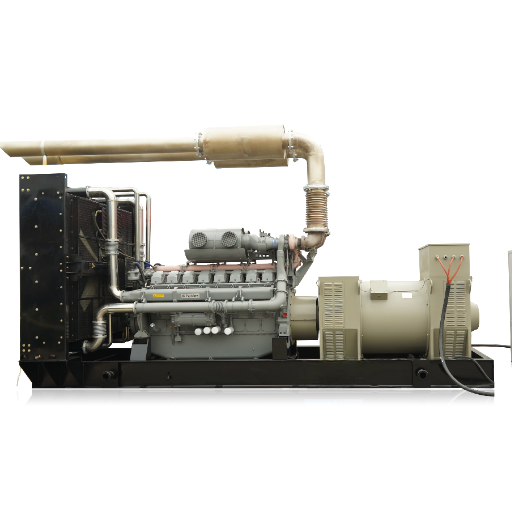
Three-phase alternators are available in multiple voltage configurations in order to be in compliance with regional power requirements and system fit. Understanding these configurations is necessary for correct selection.
North American Standards
208V Three Phase (Wye Configuration)
- Most common in commercial buildings with 120V single phase loads
- Provides 120V phase-to-neutral for standard outlets
- Used for smaller commercial applications, restaurants, retail
- Available from generators 15kW to 150kW
240V Three Phase (Delta Configuration)
- Common in agricultural and light industrial settings
- Used for irrigation pumps, grain dryers, shop equipment
- Higher voltage reduces current draw for the same power
- Available from 20kW to 200kW generators
480V Three Phase (Wye or Delta)
- Standard for industrial facilities in North America
- Used for motors 10HP and larger, HVAC systems, heavy machinery
- Reduced current requirements enable smaller conductors
- Available from 30kW to 4,000+ kW generators
600V Three Phase (Canada)
- Common in Canadian industrial facilities
- Similar applications to 480V in US markets
International Standards
380V/400V/415V Three Phase (50Hz)
- European, Asian, African, Australian, and South American standard
- 400V is the current European standard (previously 380V, 415V in some regions)
- ZC Power manufactures for all these voltages with 50Hz alternators
220V/380V Three Phase (China)
- Chinese domestic standard
- Lower voltage than European systems
525V Three Phase (Mining)
- Specialized mining applications
- Reduces current for high-power underground equipment
Choosing the Right Voltage
Selecting the appropriate voltage involves several considerations:
Equipment Compatibility: Ensure that the generator voltage matches your equipment nameplate ratings. Operating 480V equipment at 400V reduces its performance and could damage motors.
Future Expansion: Higher voltage systems (480V as against 208 V) accommodate future load growth without the need for conductor upgrades.
Global Deployment: International contractors should opt for 400V, 50 Hz generators for European/Asian projects or dual-voltage generators capable of serving all sites while undergoing multi-region deployment.
Distance and Voltage Drop: Higher voltage rivals experience extremely low voltage loss with long cable runs, particularly attractive in a given situation with remote installation of generators.
Applications: When You Need Three Phase Power
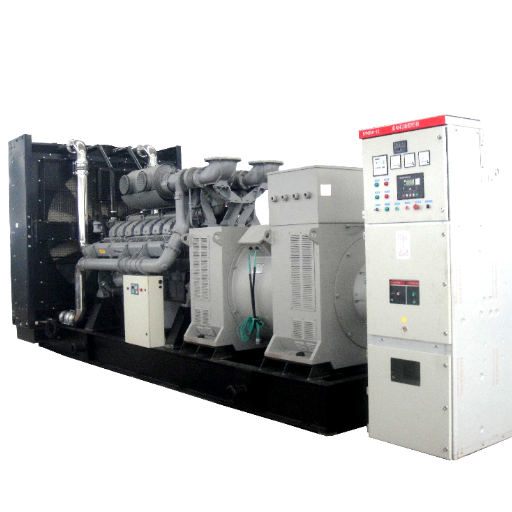
Some uses notably necessitate three-phase electrical generators. Single-phase equipment for this operation in effect brings damage to the equipment, with poor operation, or insufficiency to work.
Industrial Manufacturing
CNC Machines and Machining Centers
Computer numerical control equipment universally uses three phase motors for spindle drives and axis positioning. The precision motion control requires the constant torque that only three phase power provides. Single phase operation causes rough cuts, positioning errors, and premature drive failure.
Industrial Pumps and Compressors
Pumps over 5HP and air compressors over 7.5HP typically require three phase power. The high starting torque requirements exceed single phase motor capabilities. Common applications include:
- Fire pump systems (often code-mandated three phase)
- Booster pumps for high-rise buildings
- Compressed air systems for manufacturing
- Process cooling pumps
Plastic Injection Molding
Injection molding machines use three phase power for hydraulic pumps, barrel heaters, and servo drives. Mold temperature controllers also typically require three phase.
Commercial Facilities
HVAC Systems
Commercial heating, ventilation, and air conditioning systems rely heavily on three phase power:
- Chillers and cooling towers (typically 30kW to 500kW+)
- Rooftop units over 10 tons
- Variable air volume (VAV) systems
- Heat pumps for large buildings
Elevators and Escalators
Commercial elevators universally use three phase motors for traction drives. Hydraulic elevators also require three phase for pump motors. Emergency power for elevators is often code-required in multi-story buildings.
Commercial Kitchens
Large food service operations require three phase for:
- Walk-in refrigerator and freezer compressors
- Commercial dishwashers
- Large mixers and food processors
- Exhaust hood makeup air units
Construction and Mining
Mobile Equipment Power
Construction sites without utility access rely on trailer-mounted three phase generators for:
- Tower cranes and material hoists
- Concrete pumps and batch plants
- Welding equipment (large MIG/TIG welders)
- Site offices and temporary facilities
Mining Operations
Surface and underground mining applications require rugged three phase generators for:
- Conveyor systems
- Crushers and screening plants
- Dewatering pumps
- Underground ventilation fans
Data Centers and Critical Facilities
Server Power Distribution
Data centers distribute three phase power to server racks, where power distribution units (PDUs) convert to single phase for individual servers. Backup generators must match the three phase distribution infrastructure.
Cooling Infrastructure
Computer room air conditioners (CRACs) and chillers require three phase power. The cooling load often exceeds the IT equipment load in data center power calculations.
Medical Facilities
Hospitals require three phase generators for:
- MRI and CT imaging equipment
- HVAC and air handling
- Medical gas compressor systems
- Life safety systems (fire pumps, egress lighting)
Sizing a Three Phase Generator: The Complete Methodology
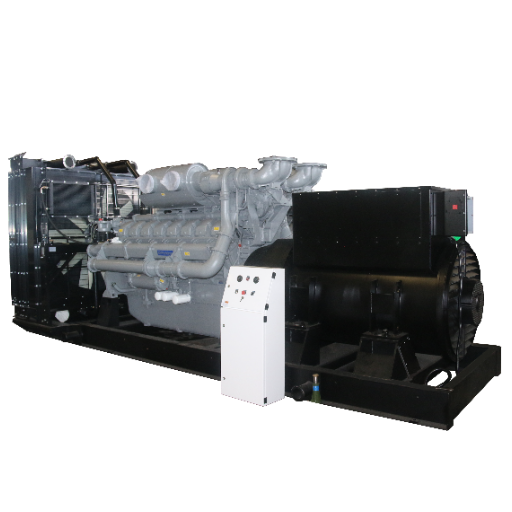
Proper sizing is the most critical aspect of three phase generator specification. Undersizing causes overload failures; oversizing wastes capital and causes operational issues like wet stacking in diesel engines.
Understanding kVA vs kW
Three phase generator ratings involve two key measurements:
kW (Kilowatts): Real power delivered to do work. Motors convert kW to mechanical energy; heaters convert kW to heat.
kVA (Kilovolt-Amperes): Apparent power including both real power and reactive power. Generator alternators are rated in kVA because they must handle both components.
Power Factor: The ratio of kW to kVA, typically 0.8 for industrial loads. A 100kW generator with 0.8 power factor is rated 125kVA.
Critical Rule: Size generators based on kVA requirements, not just kW. A facility with 100kW of load but poor power factor might require 150kVA generator capacity.
Step-by-Step Sizing Method
Step 1: Inventory All Loads
Create a comprehensive list of all equipment the generator will power:
- Motor nameplate ratings (HP or kW)
- Heater and lighting loads (kW)
- Variable frequency drives (VFDs)
- Power factor correction capacitors
Step 2: Calculate Running kW
Sum the running power consumption of all loads:
- For motors: Use nameplate kW or calculate (HP x 0.746)
- For heaters: Use nameplate kW rating
- For lighting: Sum fixture wattages
Apply diversity factors where appropriate—not all equipment runs simultaneously.
Step 3: Account for Starting Requirements
Motor starting (inrush current) often determines generator size:
- Across-the-line (DOL) starting: 5-7 times running current
- Star-delta starting: 2-3 times running current
- Soft starters: 3-4 times running current
- VFD starting: 1-1.5 times running current
Generator Sizing Rule: The generator must supply starting kVA without excessive voltage dip (typically maximum 15-20% dip allowed).
Step 4: Apply Safety Margins
Industry best practices recommend:
- Minimum 20% margin above calculated maximum load
- Additional 10-15% for future expansion
- Final generator size = (Maximum kVA x 1.25) minimum
Step 5: Consider Non-Linear Loads
Modern facilities often include loads that distort the sine wave:
- Variable frequency drives (VFDs)
- Uninterruptible power supplies (UPS)
- Switch-mode power supplies
- LED lighting drivers
These loads may require oversized alternators or special winding configurations to handle harmonic content.
Common Sizing Mistakes
Mistake 1: Using Running Watts Only
Many buyers add up running watts and purchase a generator that cannot start motors. The starting surge causes immediate overload.
Mistake 2: Ignoring Power Factor
Specifying by kW when the load has poor power factor results in insufficient generator capacity.
Mistake 3: Neglecting Future Growth
Installing exactly sized equipment for today’s loads forces expensive replacement or paralleling when facility expands.
Mistake 4: Overlooking Starting Methods
Across-the-line starting of large motors requires dramatically larger generators than the same motors started with VFDs or soft starters.
Mistake 5: Single Phasing a Three Phase Generator
Attempting to power single phase loads from a three phase generator without proper balancing can overload one winding and damage the alternator.
Sizing Example: Manufacturing Facility
Facility: 50,000 sq ft metal fabrication plant
Critical Loads:
- 30HP CNC plasma cutter (22kW running, 110kVA starting DOL)
- Three 10HP air compressors (7.5kW each, soft start)
- 50kW lighting and office loads
- 20kW HVAC (VFD-driven)
Calculation:
- Running kW: 22 + 22.5 + 50 + 20 = 114.5kW
- Running kVA (0.8 PF): 114.5 / 0.8 = 143kVA
- Starting kVA (CNC only): 110kVA
- Maximum kVA required: 143kVA
- With 25% margin: 143 x 1.25 = 179kVA
- Recommended generator: 200kVA (160kW) minimum
Three Phase Generator Types and Configurations
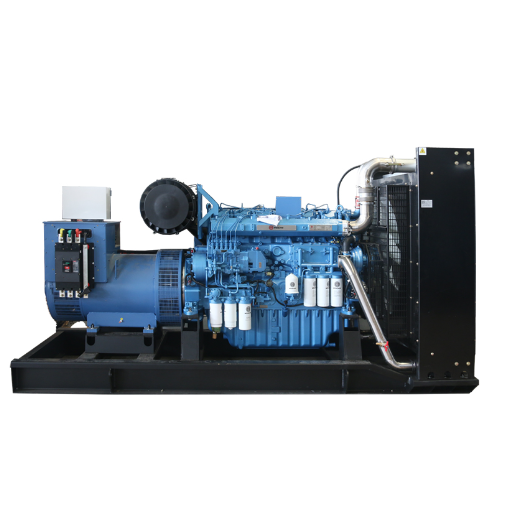
Three-phase generators can be found in numerous configurations optimized for various applications. Understanding these options helps to match the equipment with the operational requirements.
Diesel Three Phase Generators
Diesel generators dominate industrial three phase applications for good reasons:
Reliability: Diesel engines provide proven on-off reliability, fuel stability, and long life to the critical facilities worldwide that rely on diesel as a lifeline source of backup power.
Power Density: The high energy density of diesel fuel (129,000 BTU/gallon) makes compact fuel storage with extended runtime possible. A 500-gallon tank will carry on for 48+ hours operation when feeding a 200kW generator.
Starting Capability: Diesel recur generators usually exhibit motor starting-kVA performance far above that of gas in the same size range because the alternator design is robust and the engine starting torque generous.
Fuel Availability: Diesel fuel is indeed available worldwide despite its impossible presence in remote places where natural gas was not connected.
Applications: Data centers, hospitals, manufacturing, mining, construction, telecommunications, and critical infrastructure.
Natural Gas Three Phase Generators
Natural gas generators offer advantages for specific applications:
Clean Emissions: Cleaner particulate emissions than diesel, a considerable advantage in air quality non-attainment areas.
Unlimited Runtime: Pipeline-connected gas generators can run indefinitely (assuming pipeline availabilities are operational), beneficial for longer outages.
Reduced Maintenance: Spark ignition engines require maintenance capabilities for longer durations when compared to diesel uses or other diesel-based engines.
Limits: Again, natural gas has lower energy density than diesel, which would require larger engines in case of any application needing to generate the same amount of power, risking disaster reliability due to the reliability of pipeline transport. Therefore, borders for such reliability do not hold in situations of pipeline delivery failure.
Applications: Clean Air Zones; facilities that have working gas services; applications with pollutant prioritisations over mechanical reliability.
Portable and Trailer-Mounted Units
Mobile three phase generators serve construction, events, and emergency response:
Trailer Arrangements: Generators mounted on highway-legal trailers can be rapidly deployed to job sites. generators are available in sizes, ranging from 20kW to 500kW.
Skid Installations: Skid-mounted generators provide safeguarding for semi-permanent installation without necessarily being in full enclosures.
Containerized Solutions: Containers come in 20-foot and 40-foot long sizes and hold generators between 500kW and 2,000kW+, providing protection from the weather, noise reduction, and ease of transportation.
Synchronization and Parallel Operation
Large facilities may require multiple generators operating in parallel:
Load Sharing: Sharing load helps optimize operation and reliability of the facility with the availability of multiple generators.
Modular Expansion: With the growth of the facility, there is no need to replace existing generator units with additional ones.
Maintenance Flexibility: This feature allows maintenance to be performed on one generator with the other generators supplying required power loads from the critical loads.
Synchronous requirements: Parallel with automatic gearing and synchronizing controls require the existence of matching voltage regulators for the necessary protection. Not all generators are parallelling capable.
Installation and Code Compliance
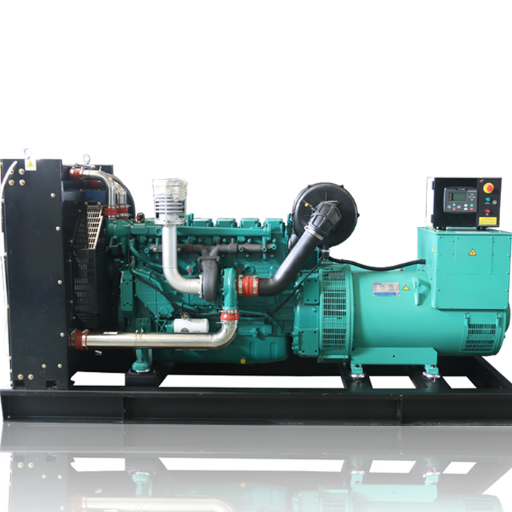
Three phase generator installations must comply with the National Electrical Code (NEC) and local authority requirements. Proper planning prevents costly rework and inspection failures.
NEC Article 445: Generators
The National Electrical Code dedicates Article 445 to generator installations. Key requirements include:
Disconnecting Means: Generators must have readily accessible disconnecting means within sight of the building/structure served.
Overcurrent Protection: Generators require appropriate circuit breakers or fuses sized per Article 240 and 445.13.
Grounding: Generator grounding electrodes must comply with Article 250. Portable generators have specific grounding exceptions.
Conductor Sizing: Generator output conductors must be sized for 115% of nameplate current rating (Article 445.13).
Transfer Switch Requirements
Automatic transfer switches (ATS) transfer load between utility and generator power:
Sizing: The ATS must be rated for the full generator capacity, not just the connected load.
Three Phase Switching: All three phases must transfer simultaneously. Independent pole operation is not permitted for emergency systems.
Transition Types:
- Open Transition: Break-before-make switching (standard)
- Closed Transition: Make-before-break for zero interruption (hospitals, data centers)
- Delayed Transition: Intentional delay for motor loads to decay
Grounding and Bonding
Three phase generator grounding requires careful attention:
Separately Derived Systems: Generators with neutral-ground bonding are separately derived systems requiring their own grounding electrode conductor.
Neutral Switching: For certain configurations, the neutral must be switched with the phases to prevent ground fault issues.
Ground Fault Protection: Solidly grounded wye systems require ground fault protection for services 1,000A and larger.
Inspection and Commissioning
Professional commissioning ensures proper operation:
Load Bank Testing: Verify generator performance at 100% rated load before final acceptance.
Voltage and Frequency Verification: Confirm all three phases are balanced within 2% voltage and frequency within 0.5 Hz.
Protection Testing: Verify overcurrent, reverse power, and ground fault protective functions.
Transfer Switch Testing: Simulate utility failures to verify automatic transfer and retransfer operations.
Installing a three phase generator? [Contact ZC Power] for installation guidance, wiring diagrams, and commissioning support from our 80+ engineer technical team.
Cost Analysis: Investment and Operating Economics
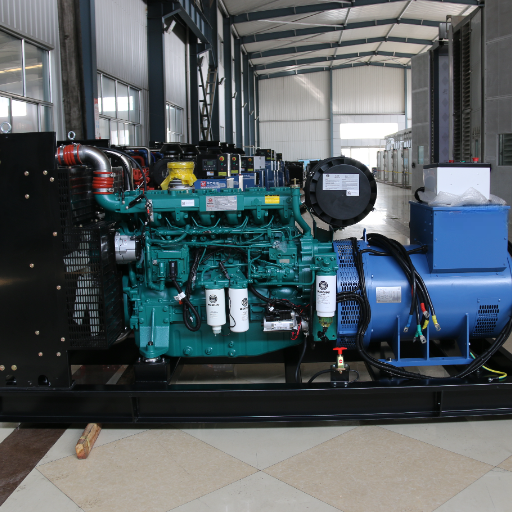
Three phase generators represent significant capital investments. Understanding total cost of ownership helps justify budgets and compare alternatives.
Initial Equipment Costs
Three phase generator pricing varies by capacity, configuration, and features:
| kW Rating | Typical Range (Open Set) | Silent Canopy Addition | Trailer Mount Addition |
|---|---|---|---|
| 30-50kW | 8,000−8,000−15,000 | +3,000−3,000−5,000 | +2,000−2,000−3,000 |
| 100-150kW | 20,000−20,000−35,000 | +5,000−5,000−8,000 | +3,000−3,000−5,000 |
| 200-300kW | 40,000−40,000−70,000 | +8,000−8,000−12,000 | +5,000−5,000−8,000 |
| 500-750kW | 90,000−90,000−150,000 | +15,000−15,000−25,000 | N/A (stationary) |
| 1000kW+ | 180,000−180,000−350,000 | +30,000−30,000−50,000 | Containerized only |
Note: Prices are estimates for quality diesel generators with tier 1 engines (Cummins, Perkins, Volvo). Actual pricing depends on specific requirements.
Installation Cost Factors
Beyond the generator itself, budget for:
Electrical Infrastructure:
- Transfer switch: 2,000−2,000−25,000 depending on size
- Conduit and conductors: 5−5−15 per foot installed
- Distribution panel modifications: 2,000−2,000−10,000
Fuel System:
- Above-ground tank (double-wall): 2,000−2,000−8,000
- Underground tank: 15,000−15,000−40,000
- Fuel piping and fittings: 1,000−1,000−5,000
Site Work:
- Concrete pad: 3,000−3,000−15,000
- Exhaust installation: 1,000−1,000−5,000
- Site preparation and permits: 2,000−2,000−10,000
Operating Cost Comparison
Fuel Consumption (Diesel):
Approximate fuel consumption = 0.07 to 0.10 gallons per kWh
A 200kW generator at 75% load:
- Power output: 150kW
- Fuel consumption: ~12 gallons/hour
- At 100 hours/year: 1,200 gallons annually
- At 3.50/gallon:3.50/gallon:4,200/year fuel cost
Maintenance Costs:
- Routine service (oil, filters): 500−500−2,000 annually
- Major overhauls: Budget 0.005−0.005−0.01 per kWh over generator life
10-Year Total Cost of Ownership
| Cost Component | 100kW Generator | 500kW Generator |
|---|---|---|
| Equipment | $25,000 | $120,000 |
| Installation | $20,000 | $60,000 |
| Fuel (10 years) | $35,000 | $175,000 |
| Maintenance | $15,000 | $40,000 |
| Total 10-Year TCO | $95,000 | $395,000 |
Mini-story: The year 2023 called for a decisive moment when a pharmaceutical manufacturing facility in New Jersey beckoned the question of either upgrading the outdated 1980s-era 300 kW generator or setting aside a new 500 kW unit with ample room for extension. Raj Patel, the facility manager, suggested that the large unit would be able to sustain the plantenance required for installing the planned production lines, hence, without any intervening thought on its replacement. During the five-year life of the old generator, fuel and maintenance costs tantamount to the price for a new generator. By means of deploying a modern, efficient 500 kW diesel generator on the three phase with advanced paralleling capability, Patel would undoubtedly get reliable source energy and also place the plant ready for 20 years without any further generator investment.
ZC Power Three Phase Diesel Generators
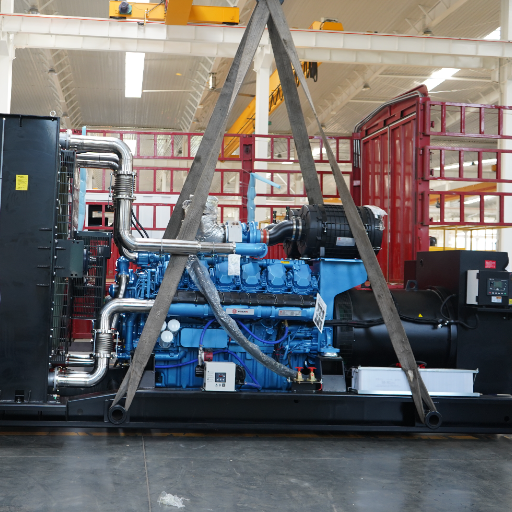
When your facility requires industrial-grade three phase power, ZC Power delivers engineering solutions backed by 25 years of manufacturing expertise.
Manufacturing Capabilities
Complete Product Range:
- 20kW to 4,000+ kW three phase diesel generators
- 208V, 240V, 480V, 600V (North America)
- 380V, 400V, 415V, 690V (International)
- 50Hz and 60Hz configurations
Configuration Options:
- Open type for indoor installations
- Silent canopies (60-75 dB at 7 meters)
- Trailer-mounted for mobile applications
- 20ft and 40ft containerized solutions
- Custom weather-resistant enclosures
Quality Assurance
National Standard Testing Center:
Every three phase generator undergoes rigorous testing:
- Full load bank testing at 100%, 75%, 50%, and 25% load
- Three phase voltage balance verification (within 2%)
- Transient response testing for motor starting capability
- 4-hour continuous run test
- Protection system verification
Certified Components:
- Engine options: Cummins, Perkins, Volvo, MTU, Yuchai, Weichai
- Alternators: Stamford, Leroy-Somer, Marathon, Faraday
- Controllers: Deep Sea Electronics (DSE), SmartGen, ComAp
- Breakers: ABB, Schneider Electric, Siemens
Global Export Expertise
Since 1999, ZC Power has delivered three phase generators to 100+ countries:
Regional Experience:
- Africa: Mining, infrastructure, healthcare
- Middle East: Oil and gas, construction, data centers
- Southeast Asia: Manufacturing, commercial, marine
- South America: Mining, agriculture, utilities
- Eastern Europe: Industrial standby power
Export Services:
- Complete export documentation
- Sea freight and container loading
- Voltage and frequency customization
- Installation guidance and commissioning support
- OEM spare parts supply
Custom Engineering
Voltage Customization:
Standard generators ship with standard voltages, but ZC Power engineers can configure alternators for any voltage requirement your facility needs.
Environmental Packages:
- High-altitude derating and tuning
- Extreme cold weather packages (block heaters, battery warmers)
- Tropical cooling packages
- Desert dust filtration systems
- Marine corrosion protection
Control System Integration:
- AMF (Auto Mains Failure) panels
- Parallel synchronization systems
- Remote monitoring (cloud-based SCADA)
- Building management system (BMS) integration
Frequently Asked Questions
Can I run single phase equipment from a three phase generator?
A three-phase generator can supply, no doubt, a single-phase load by connecting between one phase and neutral (i.e., in a star-connected generator). However, all loads should be balanced across the three phases to prevent one winding from being overloaded. Hence, a single-phase load should ideally not exceed 1/3 of the total kW rating of the generator. If your application will be mostly for single-phase loads, consider using a single-phase generator.
What is the difference between 208V and 480V three phase?
The 208V three-phase electrical system is usually supplied by 120/208V, wye-connected systems that are typically common in commercial buildings. Each phase is 120V to neutral, with 208V phase-to-phase. As for industrial systems, the standard is three-phase 480V, wye-connected systems with 277V to neutral. The 480V system would cut down on current draw for the same power with smaller conductors, with better motor performance up to 10 horsepower for better equipment performance.
How do I convert kW to kVA for three phase generators?
Divide kW by the power factor to get kVA. For most industrial applications, use 0.8 power factor. Example: 100kW load / 0.8 PF = 125kVA generator required. If the power factor is unknown, assume 0.8 for conservative sizing. Some loads like resistive heating have 1.0 power factor (kW = kVA), while motors may have 0.7 or lower.
Can a three phase generator power my entire house?
Very well, it is quite difficult to be putting this up technically. Standard homes use monophase power rated at 240V/120V. A three-phase generator in these residential environs would necessitate electrical work and distribution efforts that 99% of these homes could never accommodate. So, a single-phase standby generator must then be the best choice for complete house backup, with selections ranging between 10kW and 25kW.
Why are large generators always three phase?
Above about 15kW, the three-phase generator becomes more cost-effective with respect to costs as far as economics and practicality are considered. Effective alternator design brings reduced conductor needs, and a large generator usually calls for three-phase power that should be stored in batteries. Owing to these factors, single-phase generators over 50kW are rare.
How do I balance loads on a three phase generator?
Divide your single phase loads as evenly as possible across all three phases. Each phase should carry approximately the same current (within 10-15%). Use a clamp meter to measure current on each phase during operation. Severe imbalance causes overheating in the most heavily loaded winding and reduces overall generator capacity.
What size three phase generator do I need for a 100HP motor?
A 100HP motor (approximately 75kW) started across-the-line requires a generator sized for the starting surge. Rule of thumb: generator kVA = Motor HP x 2.5 to 3. For a 100HP motor, you need approximately 250-300kVA generator capacity. Using a soft starter or VFD can reduce this requirement by 40-50%.
Can I parallel two different size three phase generators?
Usually no. Successful paralleling demands electromotors with compatible voltage regulators, governor responses, and alternator designs. Incompatible units might not share the load properly, and, in the worst-case scenario, may not even synchronize. Paralleling attempts must only be made with generators that are specifically made for it and are most preferably identical models from the same manufacturer.
Are three phase generators more expensive than single phase?
At small sizes (under 15kW), single phase generators are less expensive. At larger capacities (over 25kW), three phase generators become more economical per kW because the alternator design is more efficient. The total installation cost must also consider that three phase systems often require less copper conductor for the same power delivery.
How long will a three phase diesel generator last?
With proper maintenance, industrial three phase diesel generators typically last 20,000 to 30,000 hours of operation. For standby applications (100-200 hours/year), this equates to 20-30 years. Prime power applications (2,000+ hours/year) may require major overhauls after 10-15 years. Quality of maintenance, load factors, and environmental conditions significantly impact longevity.
Conclusion
Three phase generators are the backbone of backup power systems in industry and commerce worldwide. Three-phase systems are so vital in a diverse range of applications from manufacturing facilities to data centers or critical infrastructure because of their outstanding characteristics; continuous power delivery, better motor starting capability, and efficiency.
When specifying a three phase generator, remember these key principles:
- Match the voltage to your equipment requirements—208V, 480V, or 400V depending on your facility and region
- Size by kVA, not just kW, accounting for power factor and motor starting requirements
- Apply safety margins of at least 20% above calculated maximum load for reliable operation
- Consider total cost of ownership including fuel, maintenance, and installation, not just purchase price
- Ensure code compliance with NEC Article 445 and local requirements
- Choose quality components from established manufacturers for 20+ year service life
It is for industrial grade three-phase requirements that a diesel generator is seen as the conventional choice on account of its well-known reliability, assured fuel stability, and worldwide availability. Natural gas remains applicative in certain circumstances; nevertheless, diesel is the standard in matters of critical backup power systems given the fact it is not reliant on pipeline connection and because of some better starting options.
If your project requires three-phase diesel generators engineered for a particular voltage, environment, and load requirement, ZC Power is ready to provide direct factory solutions, with 25 years of manufacturing know-how and an 80-hand-stron team of technical engineering talent to back them up.
Torn between diesel and natural gas generators for your project? (Read Diesel vs Natural Gas Generator: Complete Comparison Guide [2026])for a thorough 2026 performance and application contrast.