
Weather Resistant Generator Canopy: What Actually Fails
A weather-resistant generator canopy is not one property. It is four independent ones, and the IP rating buyers treat as proof of all of them is scoped by its own standard to exclude two. IEC 60529 places protection against corrosion, condensation, icing, and solar radiation outside its scope, and those are the failure modes that destroy canopies in service. That is the standard’s own position rather than ours.
This guide is for the person specifying a canopy that has to survive a real site, not the person shopping for a fabric cover. It covers what an IP rating does and does not commit a supplier to, why a canopy cannot be sealed, how to specify corrosion protection against a classification system rather than an adjective, and how to stop a canopy from corroding from the inside out.
At Shandong ZC Power CO., LTD., we build enclosed gensets from 8 kVA to 4,000 kVA and test every unit in our national standard testing centre. The weather-related failures that reach our service team are rarely about the number on the datasheet. They are about the welding, the coating, and the air.
Key Takeaways
- IEC 60529, the standard behind every IP rating, excludes corrosion, condensation, icing, and solar radiation from its scope. An IP number is evidence about water and solid ingress and nothing else.
- A canopy cannot be sealed, because an enclosed genset depends on engineered airflow. Every louver is an opening.
- ISO 12944 corrosivity category should specify corrosion. A coastal site can be C3 or C5 depending on salinity, and the coating that answers each differs by roughly a factor of three.
- Condensation forms on the coldest internal surfaces whenever the canopy falls below the dew point overnight.
- Louvers, not panels, are where driven rain enters. AMCA 550 is a pass/fail louver test that competitors’ articles do not mention exists.
What an IP Rating Actually Proves About a Canopy
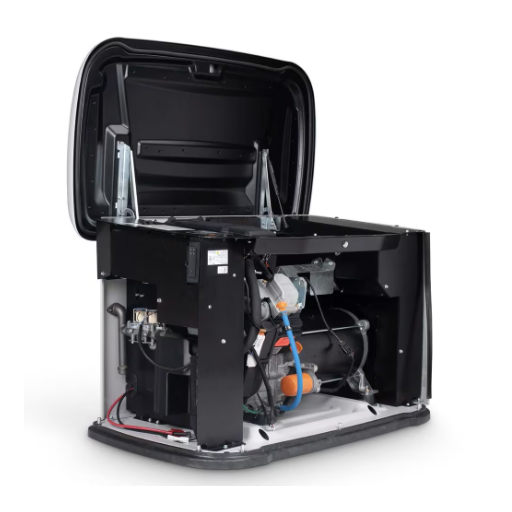
An IP rating describes how an enclosure performs in two specific ingress tests. It is genuine evidence and worth having. It is also narrower than the way it gets used in most generator quotations.
The code carries two digits: the first for solid objects and dust, the second for water. A first digit of 5 means dust-protected and 6 means dust-tight. On the water side, 3 covers spray at up to 60 degrees from vertical, 4 covers splashing from all directions, and 5 and 6 cover low-pressure and powerful jets. Digits 7 and 8 cover immersion.
The scope exclusion that does the real work
Here is the clause almost nobody quotes. IEC 60529 deals only with enclosures otherwise suitable for their intended use, and assigns protection against mechanical impacts, corrosion, corrosive solvents, fungus, vermin, solar radiation, icing, moisture such as condensation, and explosive atmospheres to the relevant product standard instead.
Read that list against a canopy in a coastal yard. Corrosion is outside the standard, condensation is outside it, and icing is outside it. What remains inside is water and dust ingress, which is worth specifying and is not the same thing as weather resistance.
The IEC is direct about the limits of its own test. Axel Klingberg, who convened the maintenance team for the standard, put it this way: “this world-wide agreed (upon) standard is only describing the way to test products, not more, not less.” The IEC’s own framing is that an IP rating indicates how a device was tested, not the conditions in which it can be used.
Published canopy ratings run from IP21 to IP56, with IP23 common on standard canopies, and IP65 usually applies to the control panel, not the whole enclosure. All of that range is marketed under the same two words, so treat the IP number as one input rather than the answer.
Why a Weather Resistant Generator Canopy Cannot Be Sealed
Every buyer eventually asks for a watertight canopy. On a diesel genset it is not achievable. An enclosed set is a machine that has to breathe, and every opening you need for airflow is an opening rain can find.
The airflow an enclosed genset has to pass
A running genset rejects heat from the engine block, the alternator, and the exhaust. In an open set that heat simply leaves. In an enclosed set it has to be carried out by engineered airflow: combustion air in, radiator fan flow through, alternator cooling air circulating.
The capacity of that path is set by the effective open area of the louvers, not their nominal size, so a supplier should quote a figure from the louver manufacturer rather than measuring the hole.
In our own canopy designs, exhaust louver effective area is typically sized 25% to 50% larger than the radiator core’s effective opening, and we target a louver pressure drop below 0.15 in. wg against a design allowance of roughly 0.50 in. WC at the full-load rating point.
Those are not generous margins. Raising inlet air from 30 °C to 35 °C roughly doubles the airflow the set needs to reject the same heat.
You cannot trade airflow away for rain protection without losing output. Any canopy that looks unusually well sealed for its rating should be asked about derating above reference ambient.
The louver is where driven rain actually gets in
Panels are rarely the problem. A welded panel with a proper coating system does not leak. A louver is a deliberate hole with blades in it, and driven rain will find its way through unless the louver was specified for that.
Louvers have their own test standards, which is the piece of information buyers often lack. ANSI/AMCA 500-L grades louver effectiveness in classes rather than pass or fail:
| AMCA 500-L class | Effectiveness | What it tells you |
|---|---|---|
| A | 99 to 100% | Effectively excludes wind-driven rain at rated conditions |
| B | 95 to 98.9% | Good rain rejection, small carry-through |
| C | 80 to 94.9% | Material water penetration under driven rain |
| D | Below 80% | Not a rain-control louver |
ANSI/AMCA 550 is the stronger tool because it is pass/fail. The current edition is 550-22, published in February 2022. A 1 m by 1 m core-area specimen is sprayed with rain at 8.8 in/hr, equivalent to 223.5 mm/hr, across eight intervals at wind speeds of 35, 70, 90, and 110 mph. To pass, no more than 1% of the total sprayed water may penetrate. It is required by the International Building Code, the International Mechanical Code, and the Florida Mechanical Code for louvers in hurricane-prone regions, and it is equivalent to Florida TAS 100A and Miami-Dade TAS 100A.
A buyer who writes “AMCA 550-listed louvers” into a purchase order has a third-party verified, pass-or-fail specification. That is a stronger clause than any IP number, on the exact component where rain enters.
Wind load is a structural question, not a coating one
A canopy that resists rain but deflects in a storm has failed differently and just as completely. Wind acts on the canopy as a structure, and the load case belongs to the local building code, not to the enclosure rating.
Ask for two things in writing: the design wind speed the canopy was checked against, stated with its return period, and confirmation that the frame, cladding fixings, and base connections were checked against the resulting wind pressure rather than only the panels. A canopy quoted against a ten-year gust and one quoted against a fifty-year gust are different structures sold at a similar price.
On cyclone-exposed sites, add windborne debris resistance to the intake and louver specification. A louver that passes a driven rain test still fails if flying debris has already opened it. Every fixing in that load path should also be a non-corroding grade, because a fastener that rusts through fails the structure as surely as an undersized member. Our emergency power systems guide covers how wind, snow, and cold-climate requirements combine on exposed sites.
Corrosion: Specify to ISO 12944, Not to “Anti-Corrosion Coating”
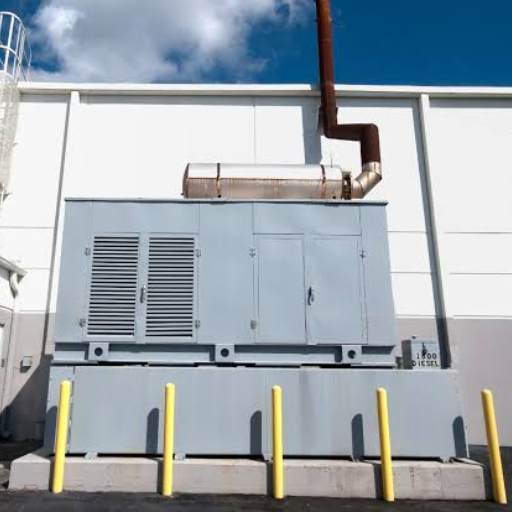
“Anti-corrosion coating” is an adjective, not a specification. It appears on datasheets across a price range of several thousand dollars per canopy and commits a supplier to nothing measurable. The system that replaces it is ISO 12944, the corrosion protection standard for steel structures.
Where your site actually sits
ISO 12944-2:2017 classifies corrosivity from the first-year mass or thickness loss of low-carbon steel and zinc, using values identical to ISO 9223:
| Category | Corrosivity | Typical exterior environment | Steel loss, first year |
|---|---|---|---|
| C1 | Very low | Heated, dry interiors | Up to 10 g/m² |
| C2 | Low | Rural, low pollution | Above 10 to 200 g/m² |
| C3 | Medium | Urban and industrial with moderate SO₂; coastal with low salinity | Above 200 to 400 g/m² |
| C4 | High | Industrial; coastal with moderate salinity, such as harbours and shipyards | Above 400 to 650 g/m² |
| C5 | Very high | Industrial with high humidity; coastal and offshore with high salinity; interiors with almost permanent condensation | Above 650 to 1,500 g/m² |
| CX | Extreme | Offshore and extreme industrial | Above C5 |
Two things matter more than the numbers. First, coastal appears in three categories. A canopy on a sheltered estuary and one on an exposed breakwater are both “coastal” and can sit two categories apart, a coating cost difference of roughly three times. Salinity decides it, not the word coastal.
Second, where a site sits between two categories, the standard’s own guidance is to specify the more conservative one.
One correction, because it trips up a lot of tenders. The 2017 edition cancelled the old C5-I and C5-M split and added CX. Plenty of supplier technical pages still cite C5-M, which is a 1998 edition reference.
What to require from a coating system
| Requirement | Ask for | Why it sits here |
|---|---|---|
| Surface preparation | Abrasive blast cleaning to Sa 2½ under ISO 8501-1 | Coating over mill scale or light rust fails early regardless of what was applied |
| Durability class | ISO 12944-1 class: Low 2 to 5 yr, Medium 5 to 15 yr, High 15 to 25 yr, Very High above 25 yr | Film build rises with both durability class and corrosivity category |
| Film build | Total dry film thickness in µm. A high-durability C5 system commonly lands around 240 to 320 µm in industry practice, against roughly a third of that for a generic powder coat | Ask for the build, not the product name |
| Hardware | A4-80, that is 316-grade stainless, minimum in marine exposure, higher alloy for CX and direct spray | A fastener that rusts through fails the structure |
Powder coating alone is not sufficient in a splash zone. Polyester powder chalks under ultraviolet exposure, and the steel beneath rusts at any chip or scratch, which is where fabricated edges and fixings sit.
How to verify the coating instead of taking it on trust
A coating build is a claim until something has tested it, and for a generator canopy, salt spray test evidence is that something. Ask for exposure to ASTM B117 or ISO 9227, and name the variant, because ISO 9227 covers a neutral spray plus two more aggressive acidified versions that are not interchangeable.
Neither standard fixes a duration, so the exposure hours must come from your specification, not a supplier’s datasheet, and performance is read on a scribed panel as creep from the scribe in millimetres. Treat the result as a ranking between candidate systems rather than a service-life prediction. Salt spray holds a constant wet, saline environment while a real site cycles through wet and dry, so the hours do not convert into field years.
Daniel Okafor, a maintenance planner at a West African port terminal, is an illustrative composite of what that gap looks like in service. His terminal took delivery of four canopy-enclosed standby sets in 2023, specified only as “anti-corrosion coated.” Within 14 months all four were rusting along panel seams and at the door hinges, while the flat sheet faces stayed sound. The cause was not the coating product. The fabricated edges had been coated without a stripe coat over the weld and cut edge, and the hinge pins were plated carbon steel. Rectification cost more than the original coating upgrade would have.
Generator Enclosure Condensation Is the Failure That Starts Inside
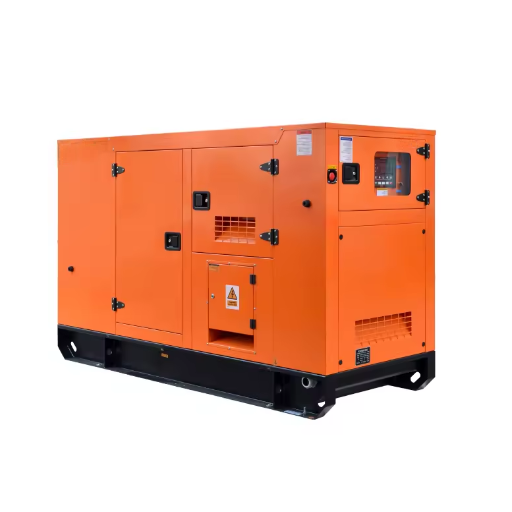
Corrosion that starts outside is visible. Corrosion that starts inside is discovered when a panel corner has already gone or a control board has already failed. This is the failure mode with the least attention paid to it and the highest repair cost.
The dew point arithmetic
A sealed enclosure still contains air, and that air holds water vapour. Overnight the enclosure cools, the relative humidity of the trapped air rises, and when it reaches the dew point, water condenses on the coldest surfaces available. Inside a generator canopy, those are bare steel and electrical components.
Air at 30 °C and 60% relative humidity has a dew point of about 21 °C. Cool that canopy to 20 °C overnight and you have liquid water inside the enclosure. That is an ordinary day-to-night swing in most generator markets, not a monsoon event.
Temperature swings also create pressure differentials that push humid outside air inward through microscopic gaps around doors, cable entries, and fixings. A canopy sealed against water is rarely sealed against air for long.
Why sealing harder makes it worse
Sealing a canopy more aggressively does not make it drier. It traps the vapour that would otherwise have ventilated away and moves the dew point onto the steel.
What actually manages condensation:
- Vapour-permeable breather vents, which allow pressure equalisation without admitting bulk water or maintaining free airflow. These are not the same as an open thermal convection vent.
- Anti-condensation heaters, sized to hold internal relative humidity below about 60%.
- Drainage at a gravitational low point, so whatever does condense leaves the enclosure instead of pooling on steel.
- Desiccant on idle machine internals as a backup. Silica gel regenerates at around 120 °C for two to three hours.
- Conformal coating on control board assemblies, plus periodic insulation-resistance checks on any machine held in damp storage.
Marta Lindqvist, a facilities engineer at a Scandinavian water treatment plant, is an illustrative composite of that failure. Her site had specified a fully sealed canopy for a 250 kVA standby set, and it performed exactly as specified for two winters. In the spring of 2025 the set failed to start and the panel was found with visible moisture and two corroded terminal blocks. The enclosure had no breather vent, no heater, and no drain. The fix was a vent and a heater, at a fraction of the enclosure premium originally paid for the sealing.
Cold, snow, and ice
Cold climates add three requirements. Snow load on the canopy roof is a structural case that should be specified to the local code rather than assumed. Snow and ice drawn into intake louvers can block airflow at exactly the moment the set is needed, so intake location and louver orientation matter more than the rating.
And intake and outlet dampers, which close when the set is stopped to reduce heat loss, must be verified to open fully on start. We specify a thermostatic recirculation damper that feeds a portion of radiator discharge air back in during warm-up, which shortens the cold start and reduces the condensation window.
What to Write Into a Canopy Specification
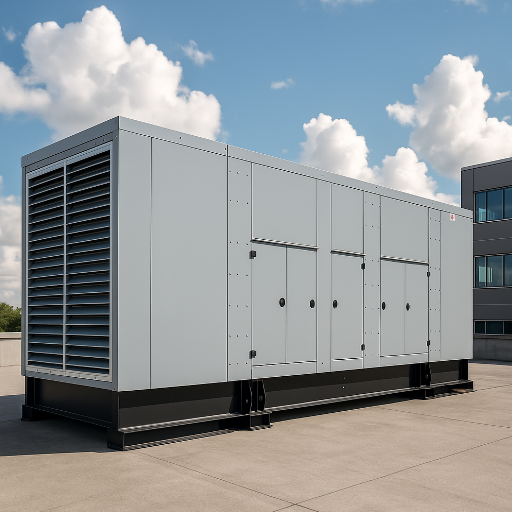
A canopy specification does not need to be long. It needs to name the failure modes. Seven clauses cover the ground:
- Enclosure rating and its scope. State the IP rating and say whether it covers the whole canopy or only the control panel and electrical compartment.
- Corrosivity category to ISO 12944-2 and durability class to ISO 12944-1. Name the category for the site, not the word coastal, and take the more conservative category where the site falls between two.
- Coating build and its verification. Surface preparation to Sa 2½, total dry film thickness, and a stripe coat over welds, cut edges, and fasteners. Add the salt spray standard, variant, and exposure hours you will accept as evidence.
- Hardware grade. A4-80 stainless minimum for marine exposure, higher alloy for CX.
- Louver performance. Require the AMCA 550 listing for intake and exhaust louvers, and the effective open area figure rather than a nominal opening size.
- Airflow and derate. Require the ambient temperature at which the full-load rating is claimed, plus the derate curve above it.
- Condensation management. Require breather vents, anti-condensation heating, and a low-point drain as standard, plus a mist eliminator where the site is dusty or subject to salt mist.
For a set that will be containerised rather than canopied, the enclosure case changes shape and our guide to the containerised heavy-duty diesel generator covers the CSC and ISO 1496 conversion side of that decision.
Frequently Asked Questions
Is an IP65 canopy weatherproof?
Not in the sense most buyers mean. IP65 means the enclosure was tested against dust ingress and low-pressure water jets from all directions. It says nothing about corrosion, condensation, or ultraviolet degradation of the coating, because IEC 60529 excludes all three from its scope. Read it alongside a corrosivity category and a coating build, not instead of them.
What corrosivity category should a coastal generator canopy be specified to?
It depends on salinity rather than distance from the sea. Coastal environments fall into C3 with low salinity, C4 with moderate salinity such as a harbour or shipyard, and C5 with high salinity or an offshore position. Where the site sits between two categories, ISO 12944’s own guidance is to specify the more conservative one.
How long should a generator canopy coating last?
That is set by the durability class you specify, not the coating brand. ISO 12944-1 defines Low at 2 to 5 years, Medium at 5 to 15, High at 15 to 25, and Very High above 25 years. Manufacturer warranties on canopy corrosion commonly run far shorter and exclude salt-water environments and damaged paint, so the conditions most likely to void a warranty are the ones coastal buyers are installing into.
How do I stop condensation inside a generator canopy?
Fit vapour-permeable breather vents so the enclosure can equalise pressure without admitting bulk water, add anti-condensation heating sized to hold internal humidity below about 60%, and provide a low-point drain. Desiccant and conformal coating cover machines held in damp storage. Sealing the canopy harder makes this worse, not better.
What is AMCA 550, and does my canopy louver need it?
AMCA 550 is a pass-or-fail test for high-velocity wind-driven rain resistance in louvers. A one-metre-square specimen is sprayed at 8.8 in/hr across intervals at 35, 70, 90, and 110 mph, and no more than 1% of the sprayed water may penetrate. The IBC, IMC, and Florida Mechanical Code require it in hurricane-prone regions.
Will a fabric cover protect an outdoor generator?
A fabric cover suits a portable set that is stored or used intermittently. It is not a substitute for a canopy on a permanent installation. A non-breathable cover can trap condensation against the machine and cause the corrosion it was bought to prevent, so material and airflow behind the cover matter more than the denier rating.
Does a generator canopy need to be made of stainless steel?
The structure does not have to be stainless. The coating system carries the corrosion duty, and coated carbon steel specified to the right ISO 12944 category will outperform lightly coated stainless in most environments. The hardware should be stainless: A4-80, that is 316-grade, minimum in marine exposure, higher alloy for CX.
Is my canopy leaking, or is that condensation?
The two look similar and have almost nothing in common. A leak tracks rainfall, appears at seams, fixings, and louver edges, and leaves a staining trail below the entry point. Condensation appears on cold internal surfaces, is worst after a cold night rather than during rain, and shows corrosion on steel and components. Identify which you have before spending anything.
What wind speed should a generator canopy be rated for?
There is no universal number, which is why a datasheet quoting a single wind speed tells you little. The rating should come from your site’s design wind speed under the local building code, stated with its return period. Cyclone-exposed sites should add windborne debris resistance on the louvers.
Conclusion: Specify the Failure Mode, Not the Adjective
“A weather-resistant generator canopy” is an adjective wearing a specification’s clothes. It cannot be tested, it cannot be enforced, and it describes four engineering problems that have almost nothing to do with each other.
The clause that makes this concrete is IEC 60529’s own scope statement, which excludes corrosion, condensation, icing, and solar radiation and delegates them to other standards. That is not a loophole. It is the boundary of what an ingress test can tell you.
So specify the four things instead. Name the corrosivity category and the coating build to match. Require AMCA 550 louvers and the airflow figure behind the rating.
Require breather vents, heating, and drainage so the enclosure manages its own moisture. Then the IP rating becomes what it always was, a useful supporting number rather than the whole argument.
For the acoustic side of the same enclosure, our guide to low noise diesel generator 75 dB claims covers it, and the wider heavy duty diesel generator buying guide puts enclosure choice in lifecycle cost terms. If you have a specification in front of you and want to know which of these four it covers, our engineering team will read it and tell you straight whether or not it leads to an order.


