Generator Financing: How to Fund Commercial Generator Purchases in 2026
The best way to finance a commercial generator depends on three things: your location, your credit profile, and whether you are buying through a dealer network or factory-direct. A US-based hospital with excellent credit can secure an equipment loan at 7% APR and deduct the full purchase under Section 179. A contractor in Lagos buying from an overseas manufacturer will structure payment through a 30% TT deposit and a 70% Letter of Credit at sight. Both are generator financing. Neither guide on the internet explains both paths in one place.
Dr. Amara Okafor, the Director of Facilities at a 300-bed hospital in Lagos, faces precisely this dilemma. She requires a 500-kilowatt backup diesel generator set. A Cummins-branded unit purchased from an authorized dealer is priced at $118,000; however, the dealer demands full payment upfront or requires approval through “Cummins Finance”—the latter of which mandates the submission of two years of audited financial statements, a requirement her hospital is unable to meet. In contrast, another unit—sold directly by the manufacturer, ISO 9001 certified, and similarly equipped with a Cummins engine, Stamford alternator, and Deep Sea controller—is priced at a mere $42,000. This manufacturer accepts a 30% deposit via Telegraphic Transfer (TT), with the remaining balance payable upon presentation of the Bill of Lading. She paid $12,600 as a deposit to initiate production. The remaining balance of $29,400 is due only when the generator set is loaded for shipment. This level of flexibility in financing the generator purchase is something that no captive finance arm of any dealership could possibly offer.
You are reading this generator financing guide because you need to know every funding option available, from SBA equipment loans and operating leases to international trade terms like TT and LC. Whether you need commercial generator financing for a single standby unit or a fleet of prime power gensets, this guide applies to your situation. This article breaks down 2026 interest rates by credit profile, compares lease versus buy structures, explains how your generator tier choice locks or unlocks financing flexibility, and gives you a step-by-step framework for structuring payment whether you are in Houston or Hanoi.
Key Takeaways
- Equipment loan rates for commercial generator financing in 2026 range from 6.5% APR for excellent credit to 25% APR for challenged credit, with the generator itself serving as collateral
- Buying factory-direct opens TT deposit terms and Letter of Credit structures that dealer networks do not offer, reducing upfront cash requirements by 50-70%
- Section 179 allows US buyers to deduct up to $1.16 million of equipment cost in year one, making purchase loans far more attractive than leases for profitable businesses
- Installation, shipping, and customs duties can add 30-100% to base equipment cost; 100% financing programs bundle these soft costs into the monthly payment
- Tier 1 manufacturers quote 40-100 week lead times in 2026; rental bridge financing prevents project delays while waiting for permanent equipment delivery
- Credit scores as low as 550 can qualify for generator financing because the equipment itself secures the loan
What Is Generator Financing?
Generator financing is the structured funding of commercial and industrial generator set purchases through equipment loans, leases, SBA programs, or international trade payment terms. Commercial generator financing covers not just the generator itself but also installation, automatic transfer switches, fuel tanks, shipping, and customs duties. For the 25.9billionglobalindustrialgeneratormarketin2026, financing is the primary purchase enabler,becausefewbusinessespay25.9billionglobalindustrialgeneratormarketin2026,financingistheprimarypurchaseenabler,becausefewbusinessespay150,000 for a 500 kW unit from operating cash flow, according to industry market analysis. For a complete overview of generator costs before you structure financing, see our commercial generator price guide.
Generators are uniquely financeable assets. They typically carry 15-30 year service lives, retain strong residual values, and serve essential functions that lenders view as low-risk collateral. A Caterpillar generator that costs 150,000todaywillstillbeworth150,000todaywillstillbeworth90,000 in five years. That depreciation curve gives lenders confidence. For commercial generator financing, the equipment itself is usually the only collateral required.
Generator Financing Options: The Complete Landscape
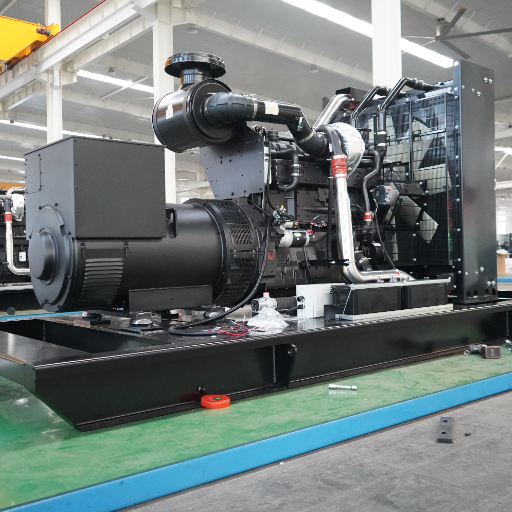
This generator financing and equipment financing for generators guide covers six distinct structures. Most buyers assume generator financing means a bank loan. In reality, the landscape includes six distinct structures, each suited to different buyer profiles, geographies, and project timelines.
Equipment Loans (Buy)
An equipment loan is the most common form of generator financing. The lender purchases the generator on your behalf, holds a lien on the title, and you make fixed monthly payments over 24 to 84 months. At term end, you own the asset free and clear.
Equipment loans typically require 0-20% down depending on credit profile. The generator itself serves as collateral, which means unsecured credit checks are less stringent than for general business loans. Approval decisions from specialty equipment lenders often arrive within 2-4 hours, with funding in 24 hours. For buyers evaluating equipment financing for generators, this speed matters when a project deadline is fixed.
Operating Leases (Rent-to-Use)
An operating lease is a rental agreement with a fixed monthly payment and no ownership transfer at term end. You return the generator, renew the lease, or purchase at fair market value. Monthly payments are lower than loan payments because you are not building equity.
Operating leases make sense for temporary projects, seasonal operations, or businesses that upgrade equipment frequently. The operating lease market is growing at 6.8% CAGR as more companies prioritize capital preservation over asset ownership. For generator lease vs buy decisions, the critical question is whether you need the generator for 3 years or 13 years. This generator lease vs buy framework applies to every size class from 20 kW residential backup to 2,000 kW industrial prime power.
For budget-focused options, tax incentives, and load sizing basics tailored to small businesses, see our small business generator cost guide.
Capital Leases / $1 Buyout (Lease-to-Own)
A capital lease (also known as a “buyout lease”) operates much like a loan. You make monthly payments over a term of 12 to 60 months, after which you pay a nominal final sum—typically just $1—to acquire full ownership of the generator. For tax purposes, this leasing method is treated the same as a direct purchase: you may claim depreciation, deductions under Section 179, and interest deductions.
Capital leases appeal to businesses that want ownership benefits but need the accounting presentation of a lease on their balance sheet. Monthly payments are similar to equipment loans. For commercial generator financing, capital leases and equipment loans are functionally equivalent for most buyers.
SBA Loans (US-Specific)
The US Small Business Administration offers two relevant programs. SBA 7(a) loans cover equipment, working capital, and refinancing with 10-20% down. SBA 504 loans are designed for large fixed-asset purchases, splitting financing 50% bank, 40% Certified Development Company, and 10% borrower, with fixed rates and terms up to $5 million.
SBA Microloans offer up to $50,000 with rates of 8-13% and accept credit scores as low as 500 from select microlenders, according to SBA loan guidelines. For small businesses seeking an SBA loan generator path, microloans are the most accessible entry point.
Export Payment Terms: Export Generator Payment Terms LC TT
For buyers outside the United States, generator financing looks completely different. International trade payment terms, including export generator payment terms LC TT structures, are the primary mechanism for funding generator purchases from overseas manufacturers.
TT (Telegraphic Transfer) is the most common structure. The buyer wires a 30% deposit to begin production, then pays the remaining 70% against the bill of lading before shipment. This splits risk: the manufacturer commits materials and labor after receiving deposit, while the buyer retains leverage by holding the final payment until shipping confirmation.
Letter of Credit at Sight (LC) replaces buyer credit risk with bank credit risk. The buyer’s bank issues a guarantee of payment upon presentation of compliant documents: invoice, bill of lading, packing list, certificate of origin, and inspection certificate. The manufacturer ships, presents documents to their bank, and receives payment within days. LC fees typically run 0.5-2% of the transaction value but provide security that TT cannot match for first-time relationships.
Documents Against Payment (D/P) and Documents Against Acceptance (D/A) are intermediate structures where shipping documents are released to the buyer only after payment (D/P) or after acceptance of a future-dated bill of exchange (D/A).
Open Account is reserved for established relationships with significant order history. The manufacturer ships and invoices; the buyer pays within agreed terms, typically 30-90 days. This is the most favorable generator payment terms structure for buyers, but it requires trust built over multiple transactions.
Ahmad, a construction contractor based in Jakarta, needed to procure six 500 kW diesel generator sets for a 24-month infrastructure project. He secured a direct-from-manufacturer quotation totaling 330,000 yuan. He structured the payment terms for this transaction as follows: a 30% down payment (99,000 yuan) to initiate production, with the remaining 70% (231,000 yuan) to be settled via a Sight Letter of Credit (L/C) against the Bill of Lading. Although opening the L/C incurred 4,600 yuan in bank charges, this arrangement ensured that his funds would be released only after the seller submitted compliant shipping documentation. Compared to the 1.08 million yuan quotation from a Caterpillar dealer—which required either full upfront payment or approval through their internal financing channels—Ahmad successfully saved 750,000 yuan in cash flow. This financing structure for the direct-purchase generators rendered a project that would have otherwise yielded only slim margins financially viable.
For buyers comparing diesel options across all price tiers, our diesel generator price guide covers equipment costs by size class.
Generator Financing Rates in 2026
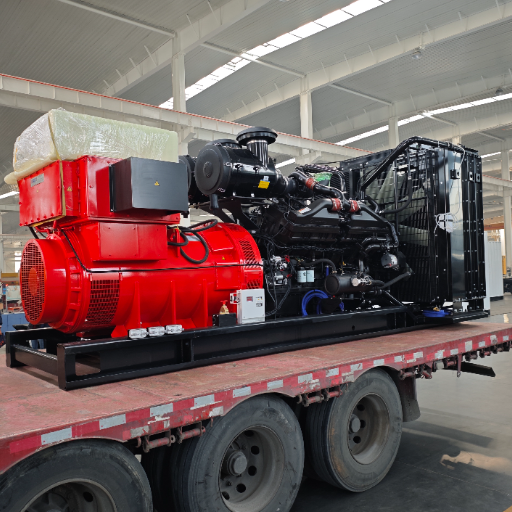
Interest rates for commercial generator financing stabilized in 2026 after the volatility of 2023-2025. The table below shows approximate APR ranges by credit profile for new and used equipment.
| Credit Profile | FICO Range | New Equipment APR | Used Equipment APR | Typical Down Payment |
|---|---|---|---|---|
| Excellent | 720+ | 6.5% – 8.5% | 8.0% – 10.5% | 0% – 10% |
| Good | 680-719 | 8.5% – 11.5% | 10.5% – 13.5% | 10% – 15% |
| Fair | 620-679 | 11.5% – 16.0% | 13.5% – 18.5% | 10% – 20% |
| Below Average | 580-619 | 16.0% – 25.0% | 18.5% – 27.0% | 20% – 30% |
| Startup / Weak Credit | Below 580 | 18.0% – 35.0% | 22.0% – 37.0% | 25% – 40% |
Used generators carry a 1.5-2.5 percentage point premium because lenders factor in higher maintenance risk and shorter remaining service life. Heavy equipment loans, including commercial generator financing, account for approximately 74% of all equipment transactions, while pure operating leases represent 26%.
The second table shows the five-year total cost of a $100,000 generator across three payment structures.
| Payment Structure | Monthly Payment | Total Paid (5 Years) | End of Term | Net Cost Position |
|---|---|---|---|---|
| Cash Purchase | $0 | $100,000 | Own asset | $100,000 with full equity |
| Equipment Loan (9% APR, 10% down) | $1,870 | $122,200 | Own asset | 22,200interestcost,retain22,200interestcost,retain100K asset |
| Operating Lease ($1,800/month) | $1,800 | $108,000 | Return or buy FMV | $108,000 with no equity unless FMV paid |
At similar monthly costs, buying builds equity while leasing preserves capital. For generators, which are long-lived assets with strong residual values, loans and capital leases are generally preferred unless the project timeline is short or technology turnover is high.
For help calculating your exact equipment cost before applying for financing, see our generator sizing calculator.
Tax Strategy: Section 179 and International Equivalents
In the context of financing decisions for power generators, tax treatment often plays a more critical and decisive role than interest rates. In the United States, under the provisions of Section 179, businesses are eligible to claim a pre-tax deduction of up to $1.16 million for qualifying equipment placed in service during 2026. Furthermore, “Bonus Depreciation” policies offer businesses additional pre-tax deduction allowances in the first year. This means that even if you make an initial down payment of just $10,000, a generator valued at $100,000—acquired through a loan or finance lease—could still generate up to $100,000 in pre-tax deduction benefits for you in the very first year it is placed in service.
Operating lease payments are deductible as ordinary business expenses, but you cannot claim depreciation or Section 179. If your business has taxable income to offset, purchasing through a loan or capital lease is almost always the better tax strategy.
For international buyers, tax treatment varies by jurisdiction. VAT or GST on imported generators is often recoverable for registered businesses but must be financed upfront. Import duties, typically 5-15% of CIF value depending on the destination country, add to the total cash required at customs. Some countries offer accelerated depreciation schedules for industrial equipment, allowing full write-off over 3-5 years instead of the standard 10-15. Your generator financing structure should account for these jurisdictional differences.
How Generator Tier Choice Affects Your Financing Options
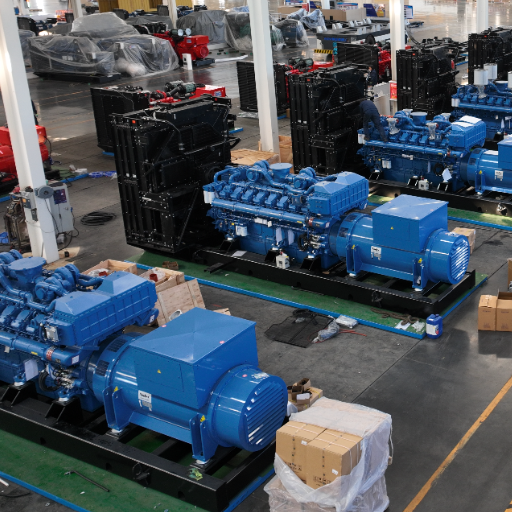
The generator brand you choose determines which financing doors are open and which are locked. This is the most underreported factor in commercial generator financing.
Tier 1 (Caterpillar, Cummins, MTU): Dealer-Locked Financing
Tier 1 manufacturers operate captive finance companies: CAT Financial, Cummins Finance, and MTU Finance. These entities offer competitive rates for qualified buyers, but the terms are rigid. Credit requirements are strict, approval timelines extend to weeks, and the financing is tied to the dealer network. You cannot negotiate payment structure with the manufacturer directly because the dealer is the intermediary.
For buyers with established credit and time to wait, Tier 1 captive finance is straightforward. For buyers with constrained cash flow, tight project deadlines, or limited credit history, dealer-locked financing is a bottleneck.
Tier 2 (Kohler, Generac, Mitsubishi): Moderate Flexibility
Tier 2 brands work through dealer networks that partner with regional equipment lenders. Terms are more varied, and some dealers offer lease-to-own programs. Credit requirements are moderate. However, you are still buying through a distribution layer that adds markup and limits direct negotiation.
Tier 3 Factory-Direct: Maximum Flexibility
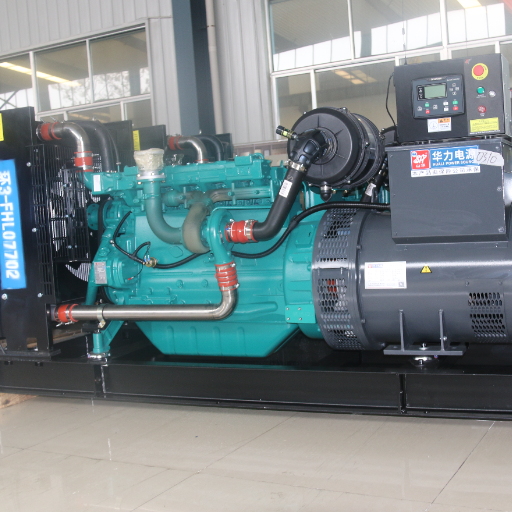
Factory-direct manufacturers like ZC Power offer payment structures that no dealer network can match. Because you are negotiating directly with the source, payment terms are customizable:
- TT deposit structure: 30% to start production, 70% against shipping documents
- Letter of Credit at sight: Bank-guaranteed payment upon compliant document presentation
- Repeat client terms: Extended payment schedules or open account for established relationships
- Lower equipment cost: A 45,000factory−directunitrequiresasmallerloanorleasethana45,000factory−directunitrequiresasmallerloanorleasethana150,000 Tier 1 equivalent
The lower capital requirement is itself a form of generator financing. A buyer who needs 150,000foraTier1unitmayneedonly150,000foraTier1unitmayneedonly45,000 for a factory-direct equivalent with identical engine and alternator specifications. That $105,000 difference is working capital preserved for the project, not spent on a brand badge.
For a detailed breakdown of how brand choice affects total cost, see our generator brand comparison guide.
Financing Soft Costs: Installation, Shipping, and Customs
Equipment price is only the starting point. For commercial generator financing and flexible generator payment terms to be complete, the structure must cover the full project cost.
Installation costs typically increase the base price of equipment by 30% to 100%. For instance, for a generator valued at $100,000, the installation work—including concrete foundation construction, electrical connections, ATS installation, fuel tank placement, and exhaust piping—could incur additional costs ranging from $30,000 to $100,000. International buyers must also bear additional expenses such as ocean freight (ranging from approximately $3,000 to $15,000, depending on the destination and container type), marine insurance premiums, customs duties (calculated at 5% to 15% of the CIF value), and inland transportation costs from the port to the project site.
Some equipment lenders and factory-direct manufacturers offer 100% financing programs that bundle the generator, installation, shipping, and customs clearance into a single fixed monthly payment. These programs typically run 24-72 months and eliminate the need for separate cash outlays during project execution.
Bridging Lead Times: Financing Interim Power
In 2026, Tier 1 manufacturers are quoting 40-100 week lead times for large industrial units. Factory-direct manufacturers with integrated production lines typically deliver in 18-30 weeks. Either way, projects with fixed start dates may need power before the permanent generator arrives.
Rental generators bridge this gap. A 500 kW rental unit costs approximately 8,000−8,000−12,000 per month including fuel and maintenance. Over a 12-month wait, rental expense reaches 96,000−96,000−144,000. Some equipment financiers structure “rental plus purchase” agreements where a portion of rental payments applies to the eventual purchase price. This generator financing bridge strategy is increasingly common in 2026 as lead times stretch beyond 12 months for Tier 1 manufacturers.
The key decision point is whether the rental cost exceeds the value of waiting. For a Tier 1 unit with a 60-week lead time, rental costs of 120,000maywipeouttheperceivedreliabilityadvantageoverafactory−directunitthatdeliversin20weekswith120,000maywipeouttheperceivedreliabilityadvantageoverafactory−directunitthatdeliversin20weekswith40,000 in rental costs during the shorter wait.
Generator Financing for Bad Credit and Startups
The generator itself is the collateral. That single fact makes generator financing accessible to buyers who would not qualify for unsecured business loans.
Equipment lenders regularly approve commercial generator financing for credit scores as low as 550. The logic is simple: if the buyer defaults, the lender repossesses a $100,000 generator that retains 60-70% of its value and can be resold. The asset secures the loan, not the borrower’s credit history.
For startups with no business credit, strategies include:
- Larger down payments: 20-30% down compensates for limited credit history
- Revenue-based lenders: Alternative lenders focus on cash flow ($100,000+ annual revenue) rather than FICO scores
- Co-signers: A personal guarantee from a creditworthy partner satisfies lender requirements
- SBA Microloans: Up to $50,000 with flexible credit requirements and rates of 8-13%
Sarah Chen launched a specialty cold-storage facility in Texas with a 580 personal credit score and six months of business history. No bank would touch her. An equipment lender approved 85,000fora200kWstandbygeneratorat1885,000fora200kWstandbygeneratorat181,650. After 18 months of on-time payments, she refinanced at 9% APR. The generator kept her facility operational through three grid outages in its first year, preserving $340,000 in inventory. Without equipment financing for generators designed for bad credit borrowers, her business would have failed before it started.
How to Apply for Generator Financing: Step-by-Step
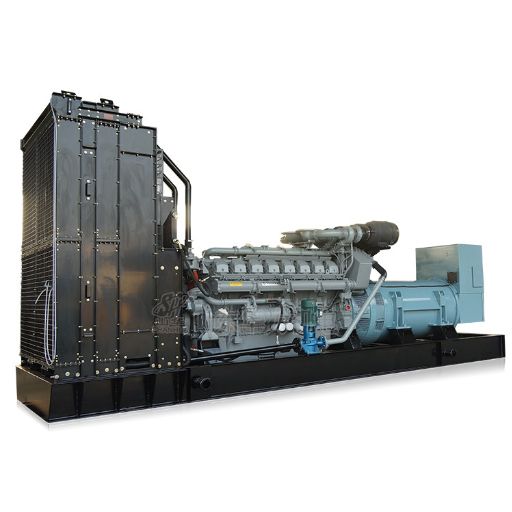
Whether you are applying for an equipment loan, structuring an LC, or negotiating TT terms with a factory-direct manufacturer, preparation determines speed and outcome.
Step 1: Secure a detailed vendor quote. Your lender or manufacturer needs an itemized proposal showing equipment model, specifications, price, lead time, and delivery terms. For soft cost bundling, request separate line items for installation, shipping, and customs.
Step 2: Prepare financial documentation. Equipment lenders typically require two years of business tax returns, three months of bank statements, a current profit and loss statement, and a personal financial statement for guarantors. For international TT or LC arrangements, the manufacturer requires proof of funds or a bank reference letter.
Step 3: Check and improve your credit. Review your personal and business credit reports for errors. Pay down revolving balances below 30% of limits. Even a 20-point FICO improvement can shift your APR bracket by 2-3 percentage points.
Step 4: Compare multiple offers. Request quotes from at least three lenders or manufacturers. Compare APR, term length, down payment, prepayment penalties, and end-of-term conditions. For international purchases, compare TT deposit percentages, LC fee structures, and documentary requirements.
Step 5: Execute and monitor. Once approved, review all documents before signing. For LC arrangements, ensure the documentary requirements match what the manufacturer can produce. For loans, confirm that the monthly payment fits your cash flow projections.
Approval timelines by financing type:
| Financing Type | Typical Approval Time | Funding / Shipment Time |
|---|---|---|
| Equipment Loan (Specialty Lender) | 2-4 hours | 24 hours |
| Equipment Loan (Traditional Bank) | 5-10 business days | 2-3 weeks |
| SBA 7(a) Loan | 30-60 days | 45-75 days |
| SBA Microloan | 2-4 weeks | 3-5 weeks |
| TT Deposit (Factory-Direct) | Same day | 18-30 weeks production |
| Letter of Credit | 3-5 business days | 18-30 weeks production |
Frequently Asked Questions
What credit score do I need for generator financing?
Credit scores as low as 550 can qualify for commercial generator financing because the equipment itself serves as collateral. Excellent credit (720+) unlocks rates of 6.5-8.5% APR. Fair credit (620-679) typically sees 11.5-16% APR. Startups with weak credit should expect 18-35% APR and larger down payments of 25-40%.
Can I finance a used generator?
Yes. Used generator financing is common, but lenders typically require the unit to be less than 10-15 years old and purchased from a reputable dealer or manufacturer. Expect rates 1.5-2.5 percentage points higher than new equipment. The unit must have a verifiable service history and pass inspection.
Is it better to lease or buy a commercial generator?
Buy if you plan to keep the generator for 10+ years, want to claim Section 179 or depreciation deductions, and have taxable income to offset. Lease if you need the lowest monthly payment, run temporary projects, or upgrade equipment frequently. For long-lived assets like generators, buying builds equity that leasing does not.
How long can you finance a generator?
Equipment loans typically range from 24 to 84 months. SBA 504 loans can extend to 10-20 years for large fixed-asset installations. Capital leases usually run 12-60 months. The optimal term balances monthly cash flow with total interest paid. A 60-month term on 100,000at9100,000at92,075 monthly with 24,500totalinterest.An84−monthtermdropsthepaymentto24,500totalinterest.An84−monthtermdropsthepaymentto1,605 but raises total interest to $34,800.
Can I finance generator installation costs?
Yes. Many equipment lenders and some factory-direct manufacturers offer 100% financing programs that bundle the generator, automatic transfer switch, fuel tank, installation labor, electrical interconnection, and even planned maintenance into a single monthly payment. Installation typically adds 30-100% to base equipment cost, so bundling it into financing preserves significant working capital.
What are typical payment terms for international generator purchases?
The most common structure is 30% TT (Telegraphic Transfer) deposit to begin production, with 70% paid against shipping documents or through a Letter of Credit at sight. First-time buyers often use LC for security, while repeat clients may negotiate TT balance against bill of lading or even open account terms of 30-90 days. LC fees typically run 0.5-2% of transaction value.
Does factory-direct manufacturing offer payment flexibility?
Yes. Factory-direct manufacturers can negotiate payment schedules directly, including custom TT deposit percentages, LC at sight acceptance, and extended terms for repeat orders. Because there is no dealer markup or captive finance company, the payment structure is negotiated between buyer and manufacturer. Lower equipment costs also mean smaller financing amounts are required.
Get a factory-direct diesel generator quote with flexible generator payment terms. Our team of 80 engineers will review your application, runtime requirements, and site conditions, then deliver a detailed proposal with a customized TT or LC payment structure. Contact ZC Power Engineering today.
Conclusion
Generator financing is not a one-size-fits-all decision. The right structure depends on your geography, credit profile, generator tier, tax jurisdiction, and project timeline. A US data center with excellent credit and a 35-year facility lease should buy a Tier 1 unit through an equipment loan, capture Section 179, and amortize over seven years. A Jakarta contractor with a 24-month infrastructure project should buy factory-direct, pay 30% TT deposit, preserve $750,000 in cash, and run the units to end-of-life.
The Lagos hospital that paid $76,000 extra for a dealer badge made an expensive financing mistake, not just a purchasing mistake. The Texas cold-storage startup with a 580 credit score made a smart financing decision by using equipment-collateralized lending to preserve its business. The Dubai data center that locked into a 7-year captive finance term for MTU made the right choice for mission-critical uptime.
The three questions that should drive your generator financing decision are simple. First, what is your total project cost including installation, shipping, and customs? Second, does your tax jurisdiction reward purchase deductions or lease expense deductions? Third, are you buying through a dealer network with captive finance, or directly from a manufacturer with flexible generator payment terms and trade terms?
Ready to explore generator financing options for your project? Contact ZC Power Engineering for a factory-direct quote with customized payment terms, exact equipment specifications, and delivery to your site. You can also explore our industrial diesel generator range to view standard and custom builds with flexible TT and LC payment structures.